







Zebra shades, also known as dual roller shades, are a contemporary window treatment that provides seamless, adjustable light control through a unique fabric system. They operate via a single, simple mechanism that aligns or overlaps alternating stripes of sheer and opaque fabric to transition a room from soft light diffusion to complete privacy. This elegant solution offers the precise adjustability of blinds with the clean, streamlined look of modern roller shades, making it a versatile choice for today's homes. Understanding this innovative mechanism is key to appreciating the design and functional benefits of versatile zebra blinds and shades.
Here’s what you’ll learn in this article:
-
A detailed breakdown of the roller mechanism and dual-layer fabric that makes zebra shades unique.
-
A clear comparison of how zebra shades stack up against blinds, roller shades, and cellular shades.
-
A practical guide to the best rooms and situations for installing zebra shades.
-
Key considerations for installation, operation, and long-term maintenance.
-
How to choose the right opacity, fabric, and control options for your needs.
How Zebra Shades Work: The Dual-Layer Mechanism Explained
The magic of zebra shades lies in their construction. Unlike a single sheet of fabric, they consist of two independent layers of material—one sheer and one opaque—bonded together into a single panel. These layers are engineered so that their solid and transparent stripes are perfectly aligned when manufactured.
The Roller System and Light Control
The shade is wound onto a single, sturdy roller tube at the top of the window. When you pull the cord or activate the motor, the entire dual-layer fabric rolls up or down uniformly. The critical function happens in between:
-
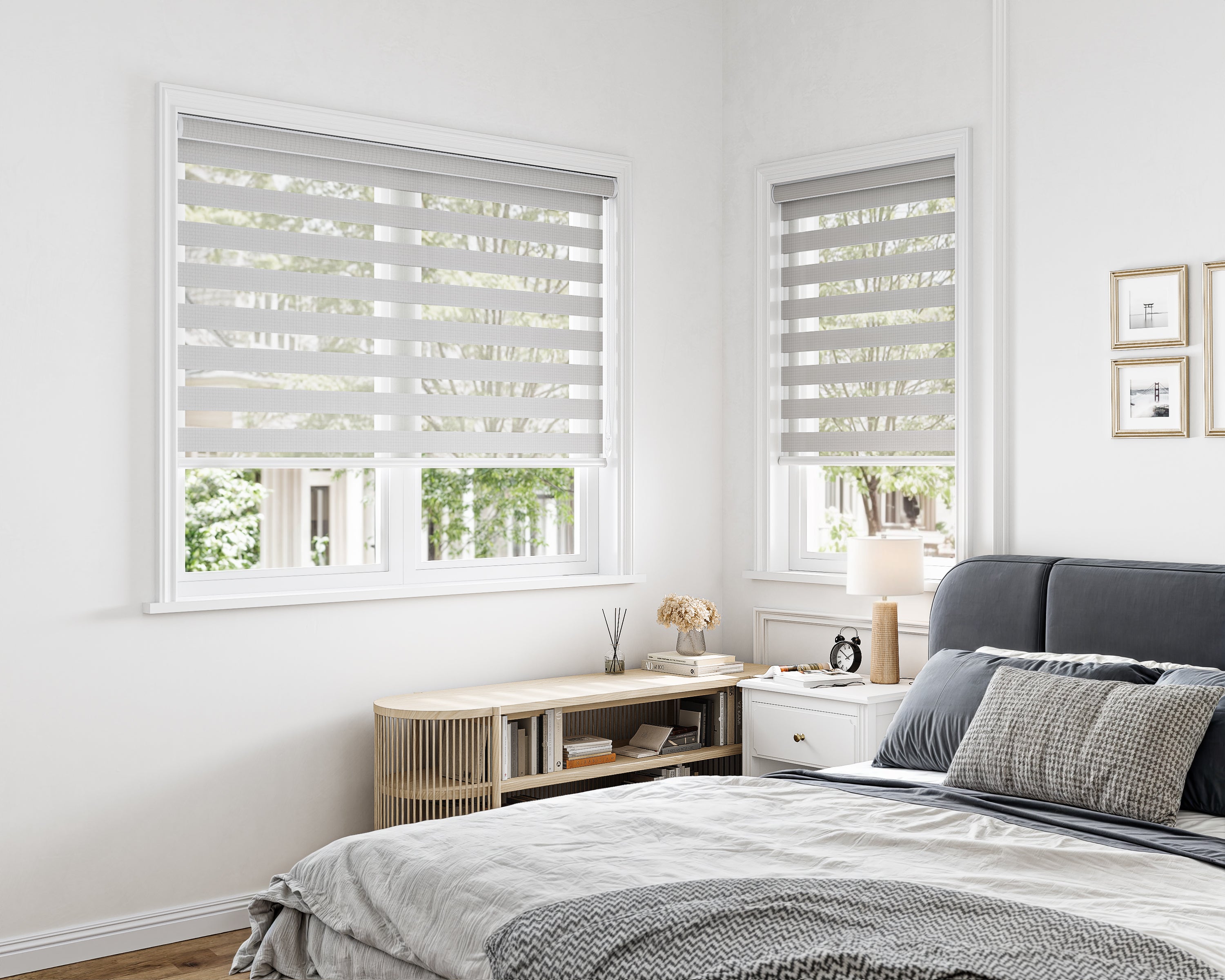
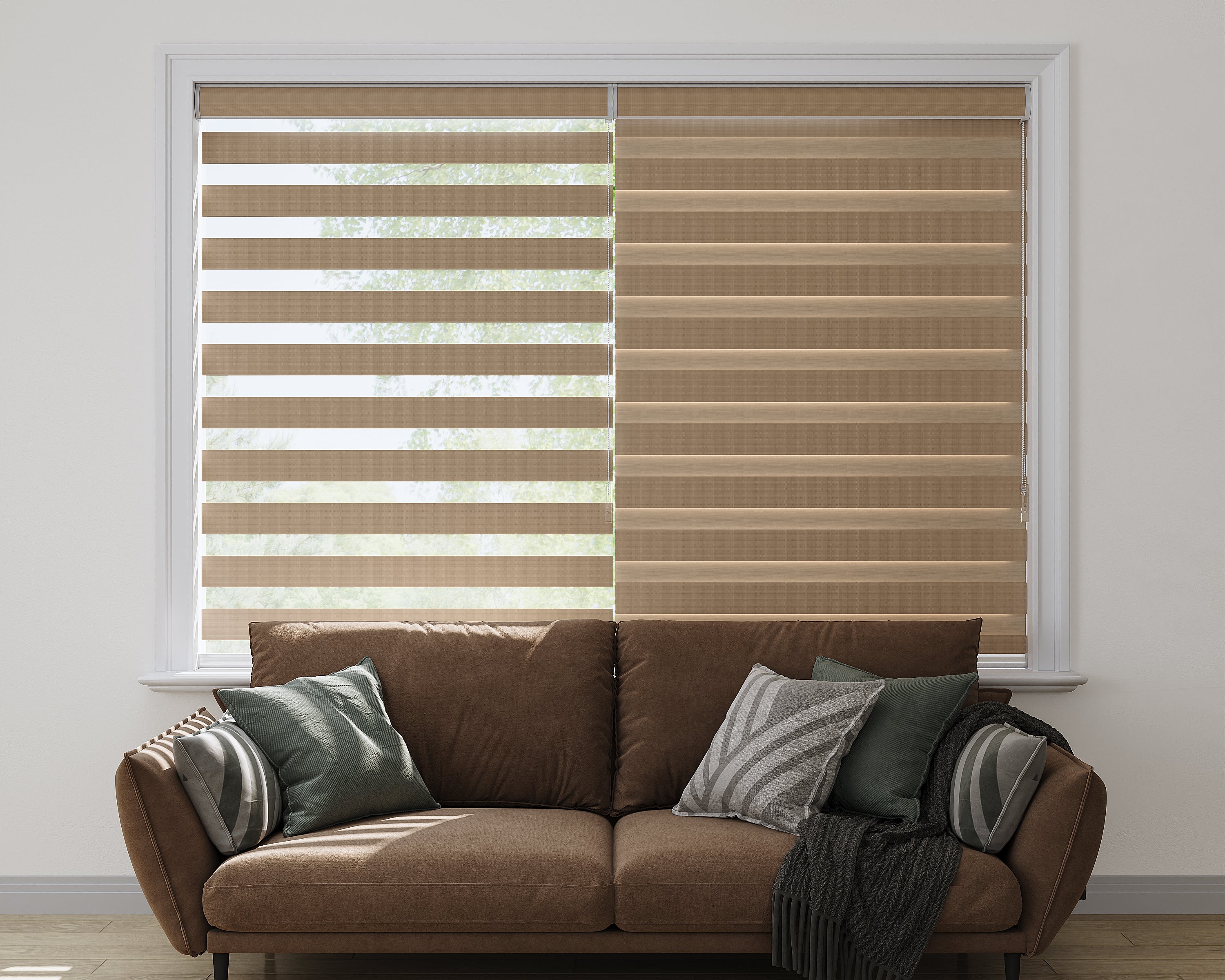
Open/View-Through Mode: When the sheer stripes of both layers align, they create continuous vertical channels of transparency. This allows you to see outside clearly while the solid stripes provide a degree of softened privacy and diffuse incoming light, similar to a sheer curtain.
-
Closed/Privacy Mode: A slight adjustment of the lift mechanism offsets the two fabric layers. The solid stripes of the top layer move to cover the sheer stripes of the bottom layer, and vice versa. This creates a unified, opaque surface that blocks both view and a significant amount of light, offering room-darkening privacy.
This simple back-and-forth adjustment, controlled with precision by the roller mechanism, provides an infinite range of light filtering between the two extremes.
Zebra Shades vs. Other Window Treatments
To understand where zebra shades excel, it helps to compare them to other popular options.
| Feature | Zebra Shades | Traditional Horizontal Blinds | Standard Roller Shades | Cellular Shades |
|---|---|---|---|---|
| Primary Light Control | Adjustable via aligning sheer/solid stripes. | Adjustable via tilting slats; gaps remain. | Either up or down; limited mid-point options. | Either up or down; some light filtering always present. |
| View-Through Capability | Excellent. Can maintain privacy while preserving an outdoor view. | Poor when closed; slats must be fully open for a clear view. | None when down; must be fully raised for a view. | None when down; must be fully raised for a view. |
| Aesthetic | Clean, modern, and streamlined. Minimalist look. | More utilitarian; can look dated. Visible slats and cords. | Very clean and minimal. A single sheet of fabric. | Soft, textured look from honeycomb cells. |
| Insulation | Minimal. Single-layer fabric provides basic solar control but little thermal insulation. | Very poor; significant air gaps between slats. | Very poor with standard fabrics. | Excellent. Honeycomb structure traps air, providing superior insulation. |
| Best For | Rooms where balancing view, light, and privacy is a daily priority (e.g., living rooms, home offices). | Budget-conscious projects where basic light blocking is sufficient. | Simple, bold light blocking or blackout needs (e.g., bedrooms). | Maximizing energy efficiency and temperature control in any room. |
When to Choose Zebra Shades: A Room-by-Room Guide
Zebra shades are not a one-size-fits-all solution, but they are unparalleled for specific needs.
Ideal Rooms and Situations:
-
Living & Dining Rooms: Where you want to soften sunlight, reduce glare on screens, and maintain a connection to the outdoors without sacrificing privacy from the street.
-
Home Offices: Perfect for managing screen glare throughout the day while preserving natural light and a view to reduce eye strain.
-
Modern Interiors: Their sleek, uniform appearance when partially lowered complements contemporary, minimalist, and Scandinavian design styles beautifully.
-
Windows with a View: For patio doors, picture windows, or any window where the outside scenery is a feature you don't want to completely hide.
Less Ideal Situations:
-
Bedrooms Needing Total Darkness: While privacy is excellent, standard zebra shades are not true blackout. For sleep, a dedicated blackout roller or cellular shade is more effective.
-
Extreme Temperature Zones: If reducing heating/cooling bills is the primary goal, the insulating properties of cellular shades are far superior. Our guide on the insulation benefits of cellular shades details this key difference.
Key Selection and Installation Factors
Choosing Opacity and Fabric
Zebra shades come in varying opacities for the solid stripes. A "light filtering" opaque stripe will glow softly when closed, while a "room darkening" stripe will block more light. The sheer fabric density also varies, affecting the clarity of the view in the open position.
Installation: Inside vs. Outside Mount
As with all custom window treatments, fit is critical for a polished look and function.
-
Inside Mount: Provides the cleanest, built-in appearance. Requires precise measuring of your window's recess dimensions.
-
Outside Mount: Can make a window appear larger and is necessary if the window depth is too shallow. Helps block more light leakage around the edges.
Operation: Cordless, Motorized, and Smart Features
Modern zebra shades are available with cordless operation for safety and a clean look, or with full motorization. Motorized zebra shades can be integrated into smart home systems, allowing for voice control, scheduling, and remote operation—a perfect match for their adjustable nature.
Conclusion and Key Takeaways
Zebra shades are the sophisticated solution for homeowners who refuse to choose between natural light, outdoor views, and interior privacy. By mastering the interplay of two fabrics in one, they deliver dynamic control that adapts to your needs throughout the day.
Key Highlights:
-
Dual-Layer Design: The core innovation is two layered fabrics with alternating stripes, controlled by one roller.
-
Unmatched Adjustability: They offer a seamless gradient between a clear view with soft light and full privacy, a feature unique to this style.
-
Modern Aesthetic: They provide a clean, minimalist look free of slats or cords when cordless or motorized.
-
Know Their Role: They excel in living spaces for light and view management but are not the best for total blackout or maximum insulation.
-
Customization is Key: Choosing the right fabric opacity and control system (cordless vs. motorized) tailors them perfectly to your lifestyle.
By understanding how they work and where they shine, you can determine if zebra shades are the ideal window treatment to elevate the function and style of your rooms.
Explore Custom Zebra Shades


Frequently Asked Questions (FAQ)
Can zebra shades be made truly blackout?
While you can select a room-darkening fabric for the opaque stripes, achieving 100% blackout with a standard zebra shade is challenging due to the potential for minimal light bleed between the fabric layers and around the edges. For true sleep-grade darkness, a dedicated single-layer blackout roller shade is a more reliable choice.
Are zebra shades easy to clean?
They are relatively easy to maintain. Regular dusting with a microfiber cloth or vacuum brush attachment is recommended. Most fabrics can be spot-cleaned with a mild detergent. Because they are a single, flat panel without cells or pleats, they don't trap dust as easily as some other shade types.
How do zebra shades differ from cellular shades in terms of energy efficiency?
The difference is significant. Cellular shades are engineered for insulation, with honeycomb cells that trap still air. Zebra shades are primarily designed for light and view control; their flat, single-ply fabric offers little to no insulating R-value. If energy savings are a top priority, cellular honeycomb shades are the definitive choice.
Can I install zebra shades on a sliding glass door?
Yes, they are an excellent choice for sliding doors due to their wide, unbroken visual plane and easy adjustability. For large doors, a motorized system is highly recommended for convenience. Ensure you choose a product rated for the width and weight, and professional installation is often advised to guarantee secure mounting and smooth operation.
Do zebra shades come in different stripe widths?
Yes. The visual impact of the shade can change dramatically with stripe size. Common options include 2", 3", and 4" stripes. Wider stripes create a bolder, more dramatic modern look, while narrower stripes offer a subtler, more textured appearance. The choice is a matter of personal style and the scale of your window.
