
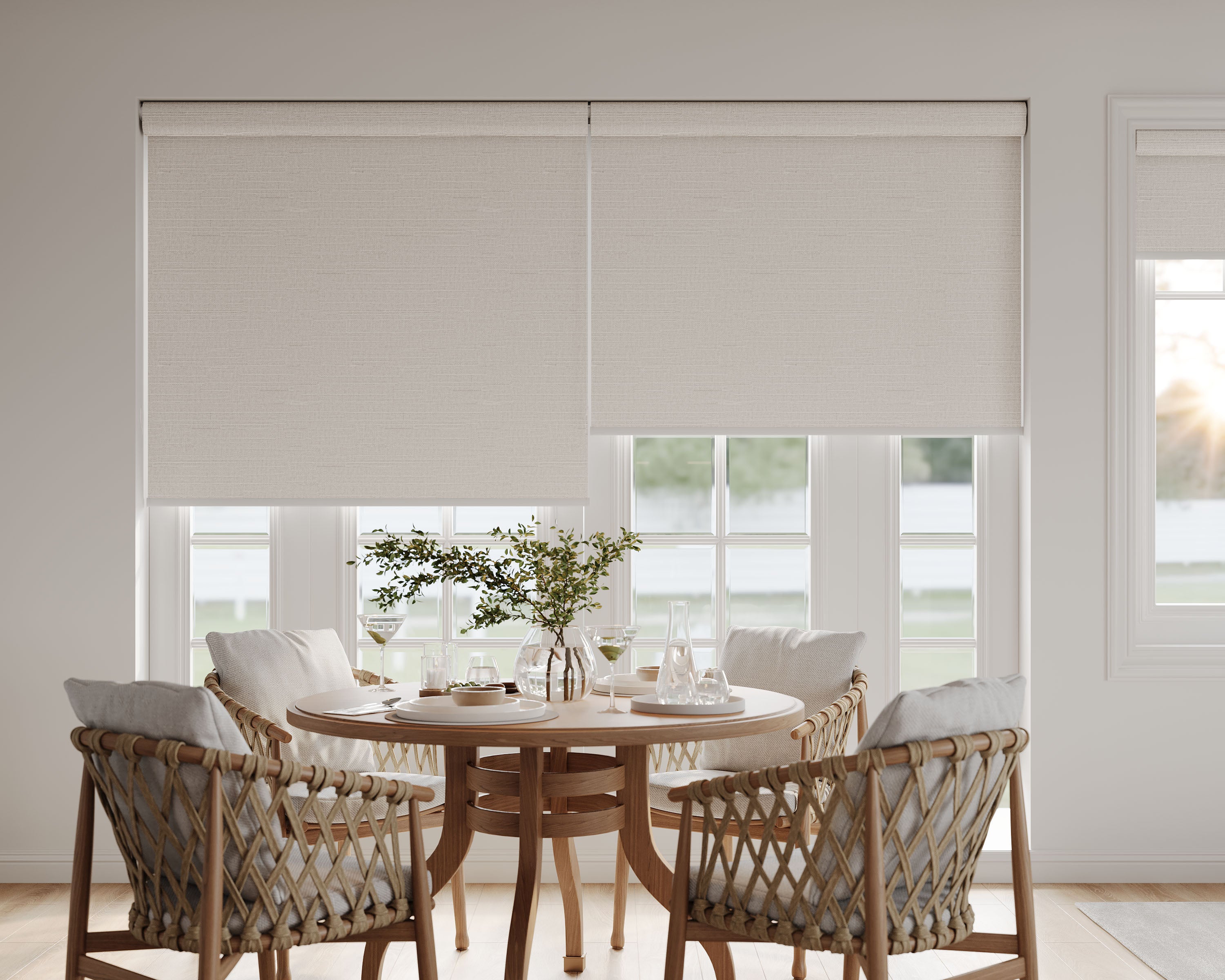


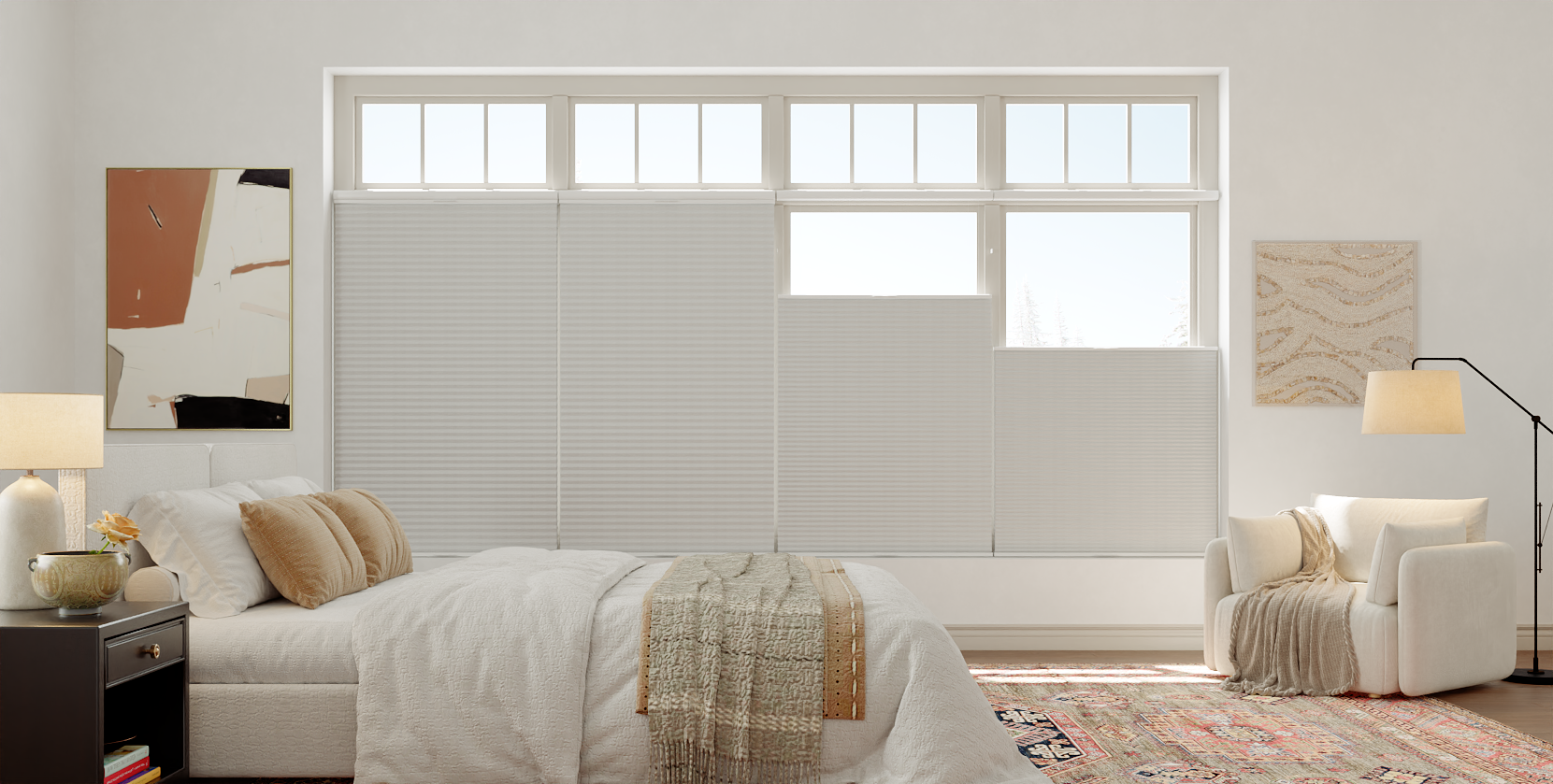


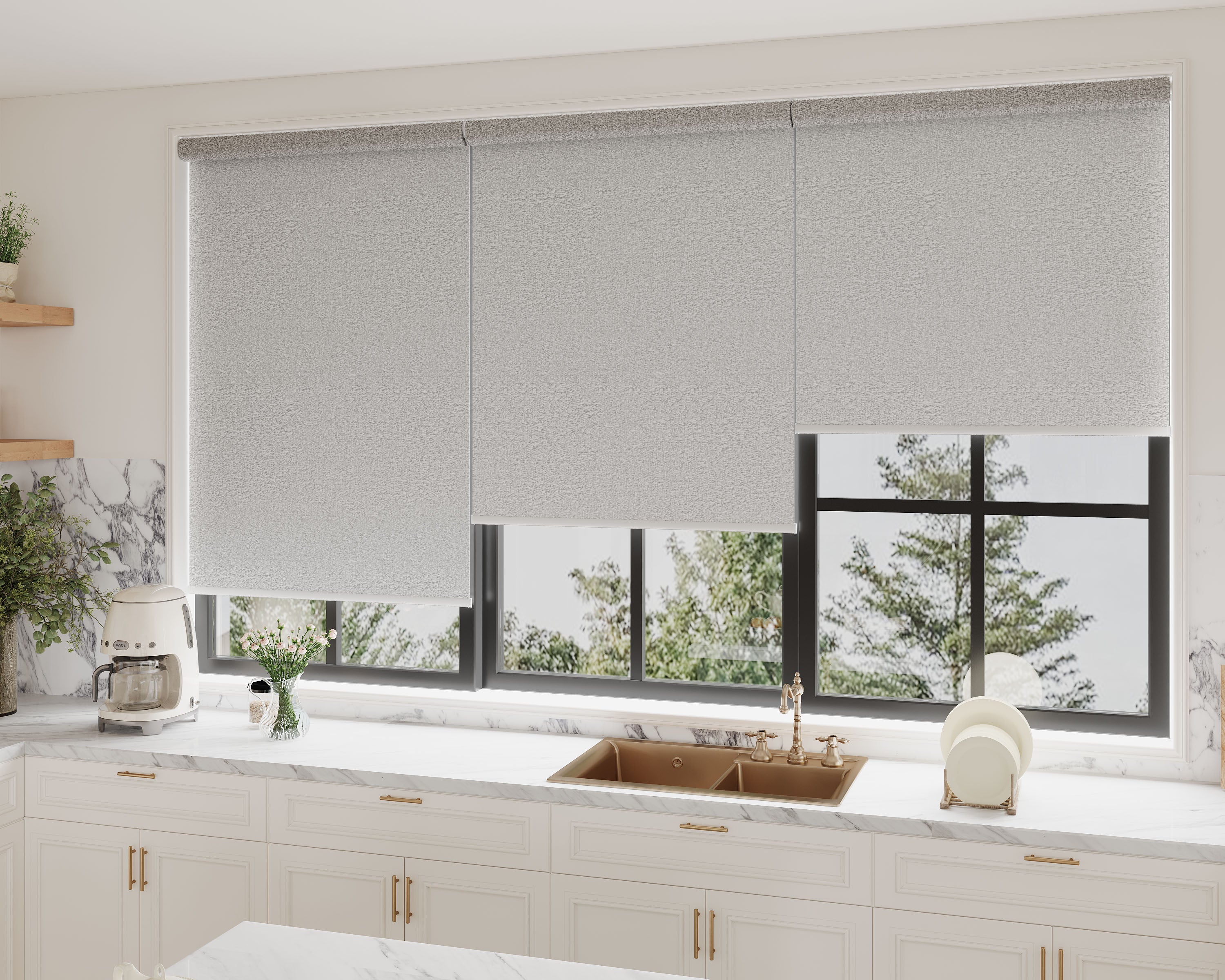

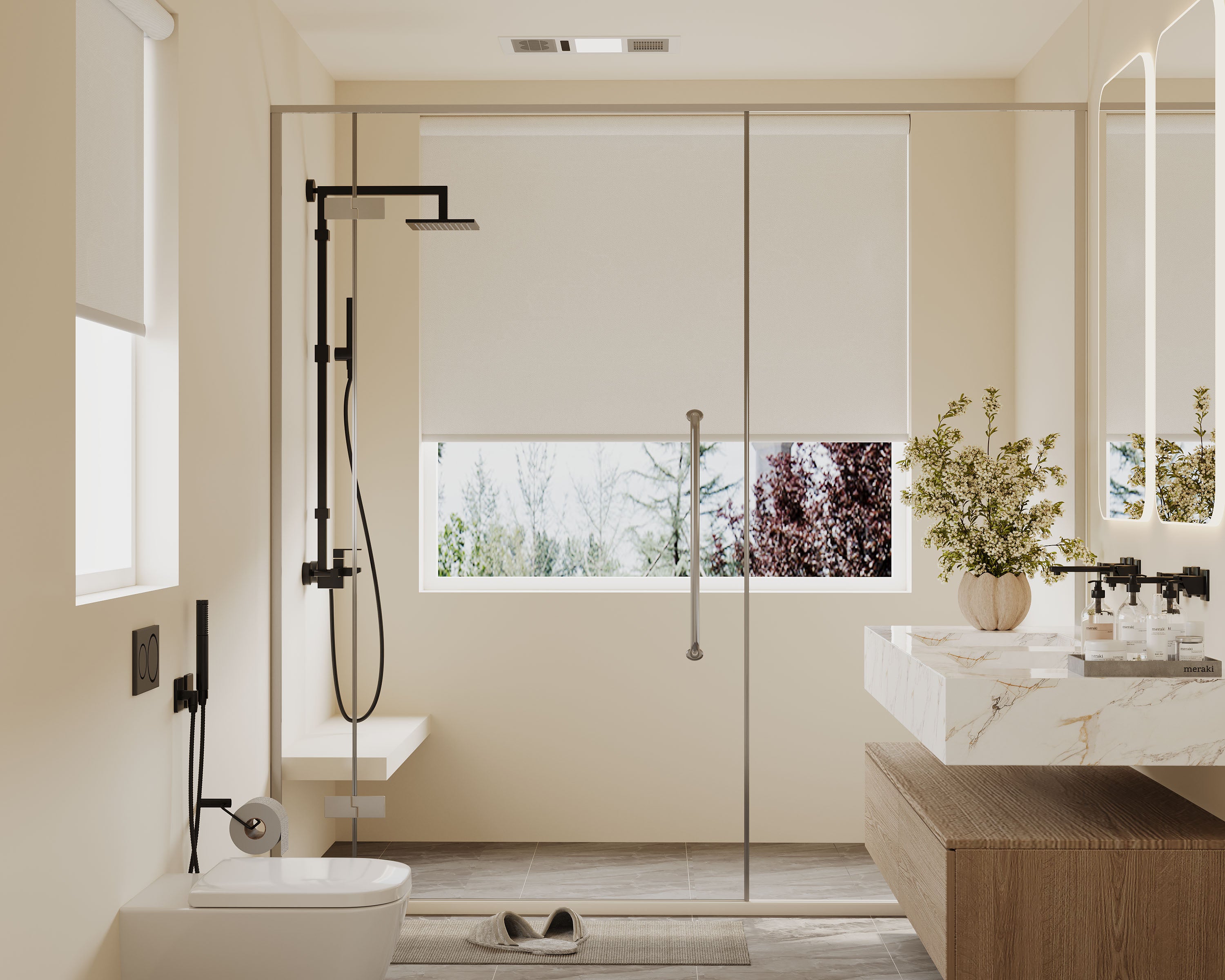


Choose bathroom window coverings by the exposure at the window, then by privacy and the way you want to control light. A moisture-resistant fabric for a ventilated room is a different requirement from a complete product used inside a shower. Insulation, cordless operation and fabric certification do not by themselves establish waterproof performance.
The waterproof window treatment collection brings together several material and shade styles. Use it to compare specific options; do not assume every cellular, roller or zebra fabric has the same water tolerance.
First decide whether the window gets wet
| Situation | Your first check | Then compare |
|---|---|---|
| Powder room with little moisture | Privacy and routine cleaning | Appearance, opacity and lift |
| Steamy bathroom away from the shower | Approved humidity/splash exposure and drying | Coverage, care and clearances |
| Window close to repeated splashes | Exact fabric and hardware instructions | Placement and maintenance |
| Window inside a shower/wet zone | Explicit suitability of the complete selected assembly | Mount, controls and all exposure limits |
If moisture remains on the window or frame, address the cause and ventilation. A shade does not remove humidity, repair a leak or prevent all mold. Honeycomb air cells can affect thermal performance, but that is not a dehumidification function.
Waterproof roller options to compare
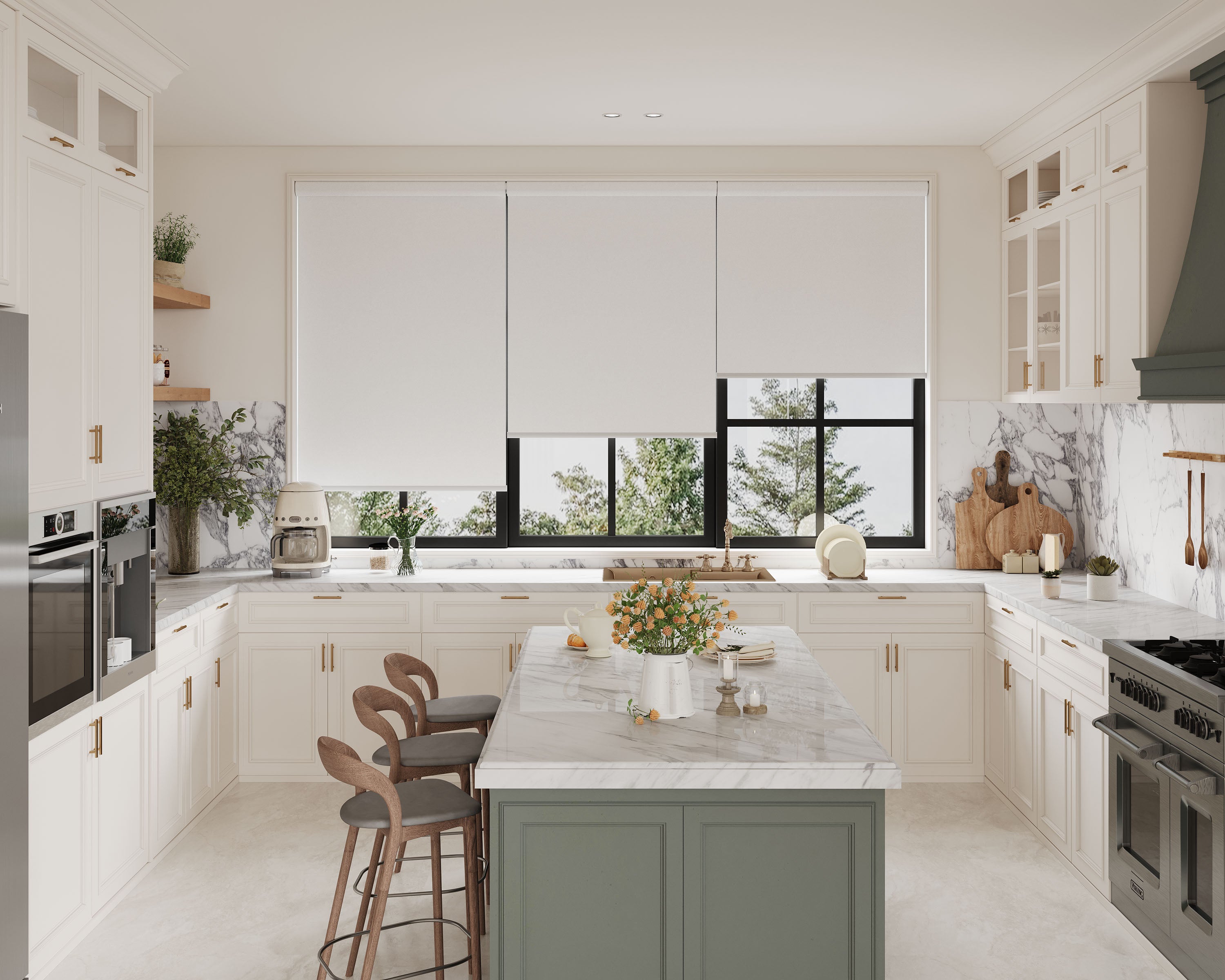
Standard waterproof blackout roller shades
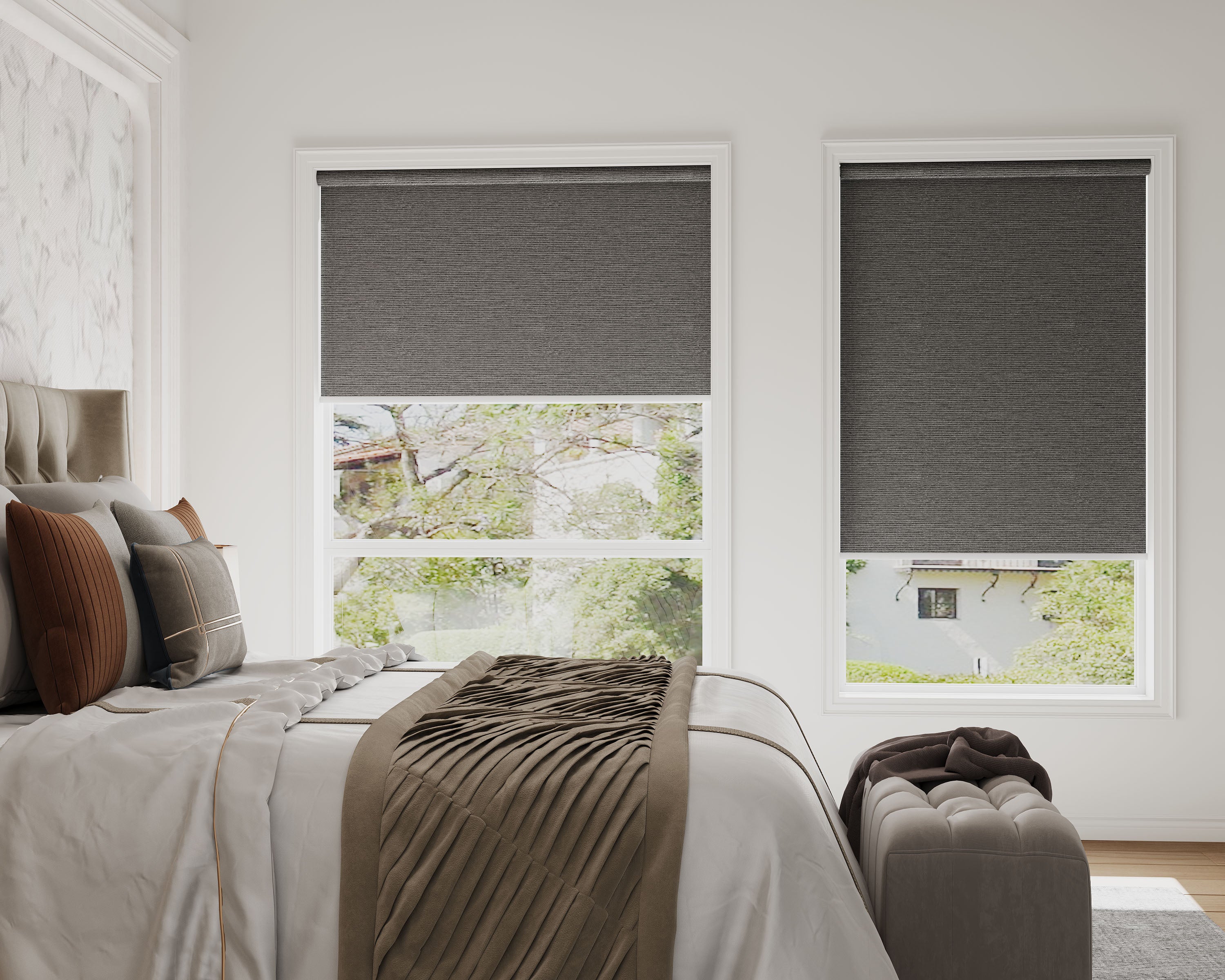
The existing waterproof blackout roller shade remains a useful starting point for comparing the vendor-described PVC option. Check the current selected fabric, lift, permitted location and cleaning instructions. Blackout describes light blocking through the fabric; it does not guarantee a completely dark room around its edges.

Premium product for shower and wet-zone requirements
SenseBlinds also presents a premium waterproof roller product for showers and wet zones. Compare its specific installation requirements with the actual location of your window. This is a separate product choice, not an assumption that every waterproof roller assembly can be directly sprayed.
Ask which fabric, headrail, motor and other components are suitable for the planned exposure. Keep charging points, electrical parts and controls within their stated environmental limits. Product-specific instructions take precedence over a general bathroom material list.
Zebra and cellular shades need model-specific selection
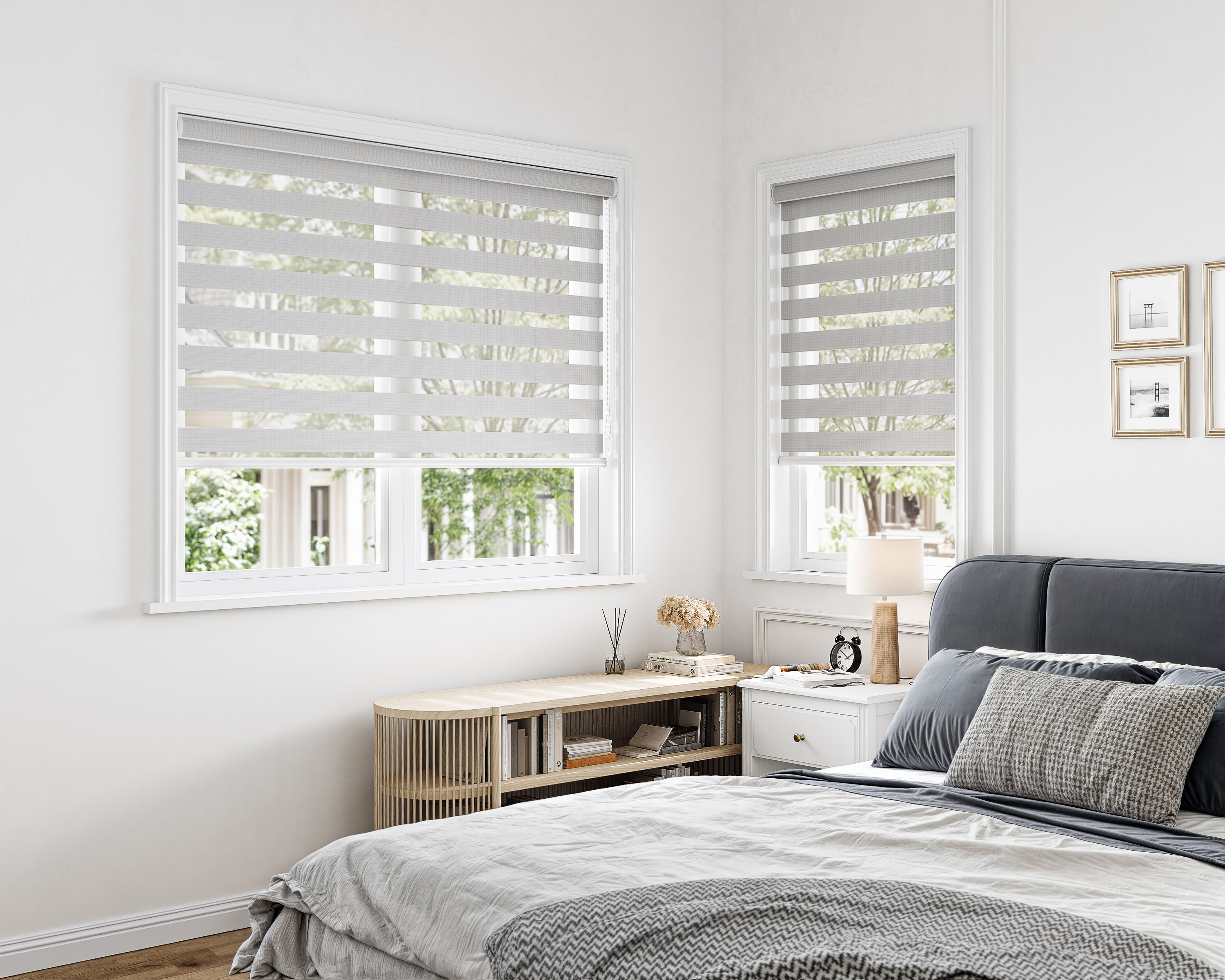
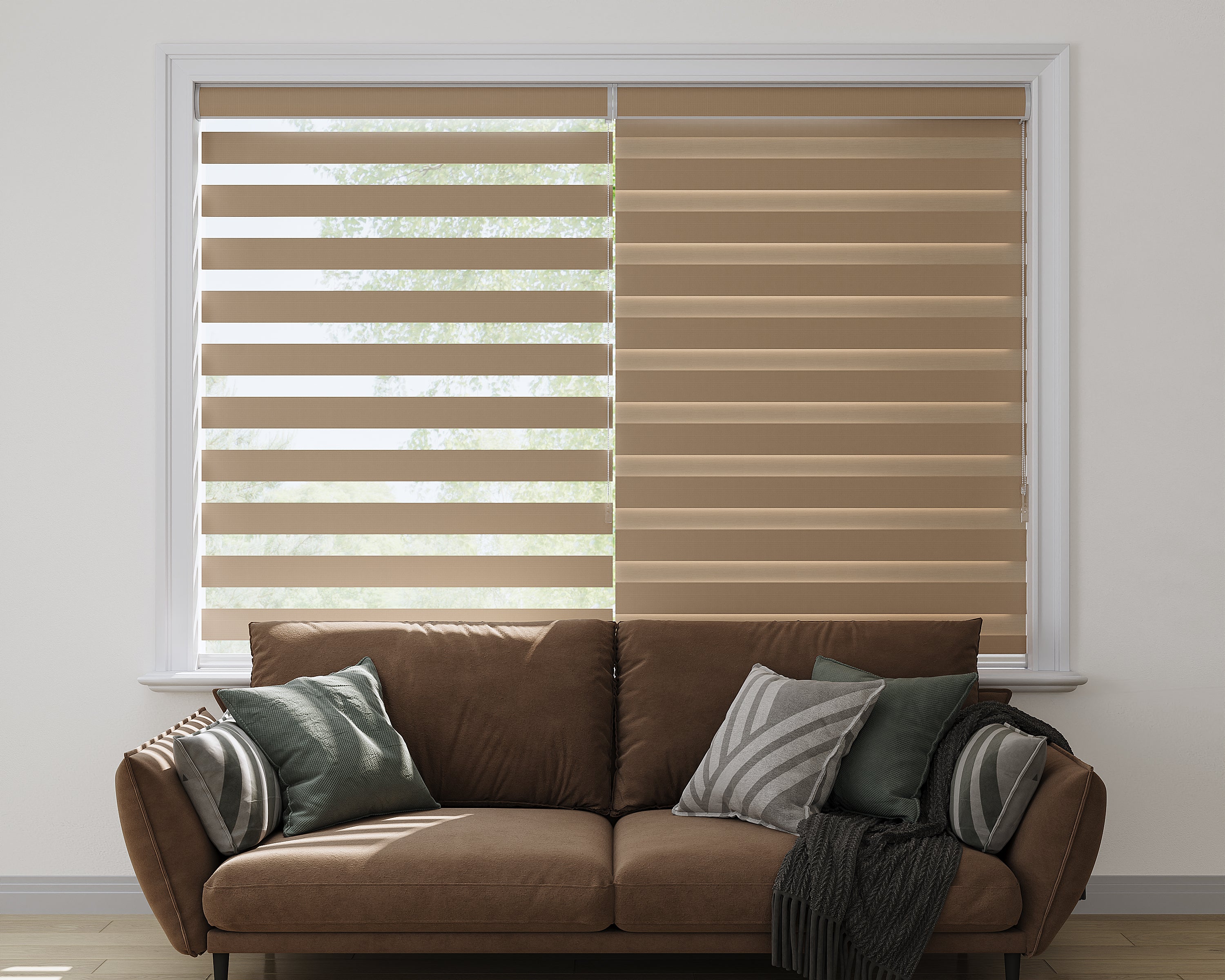
A zebra design offers adjustable sheer/solid bands, while a cellular design can offer a different privacy arrangement and insulating structure. Neither style name establishes water resistance.
Compare the specifically described waterproof zebra option when you want that banded appearance in a moisture-prone room. Check both its approved exposure and the privacy of the selected fabric under nighttime lighting; light filtering is not automatically an opaque privacy barrier.
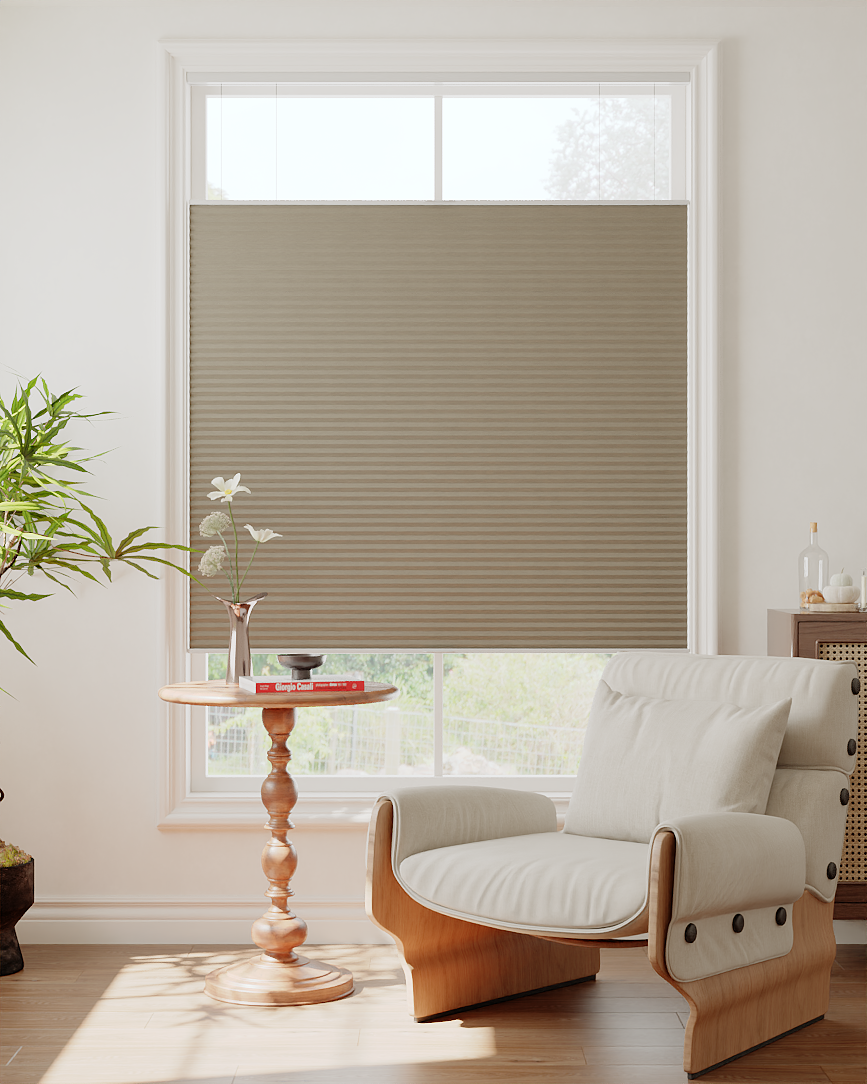
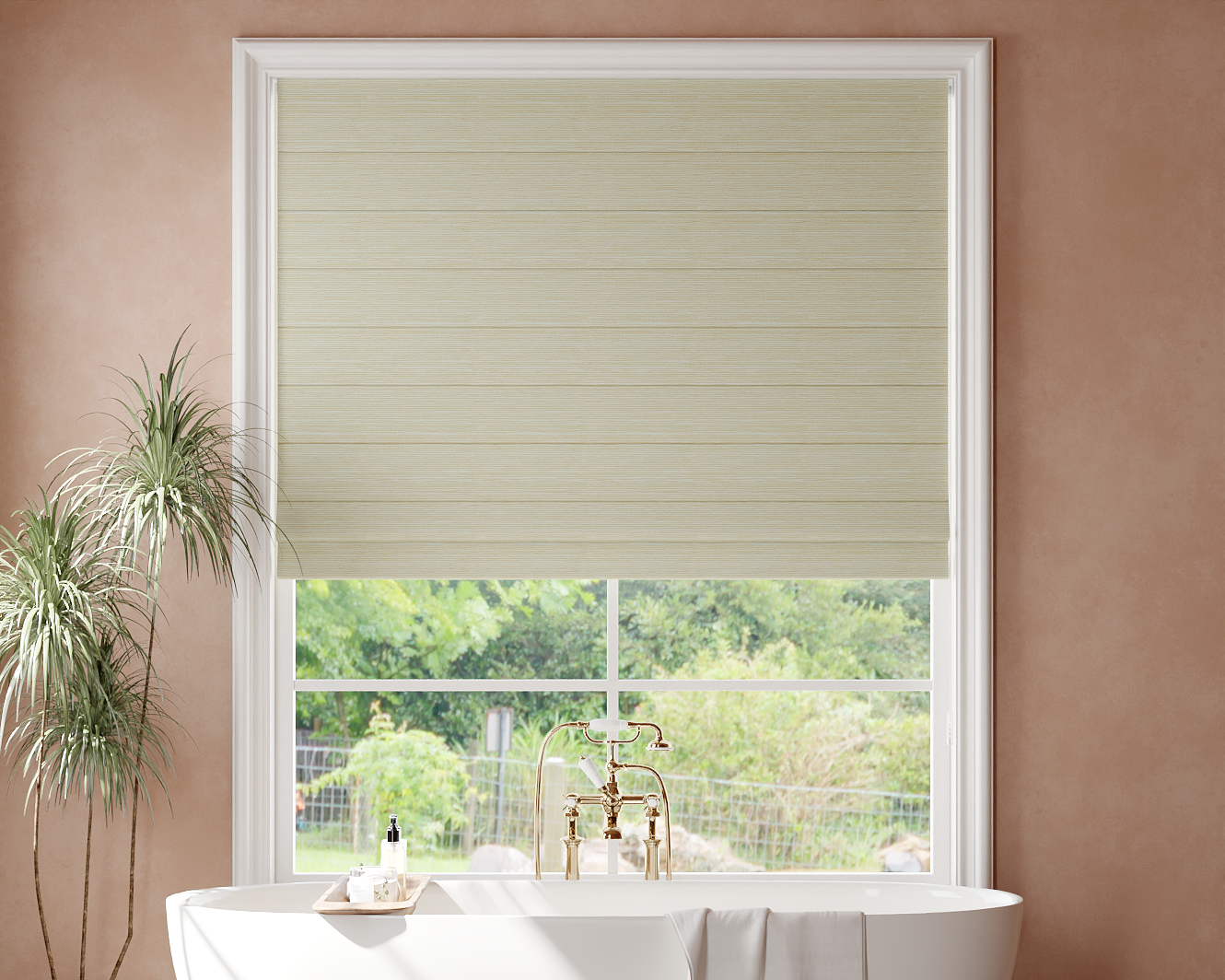
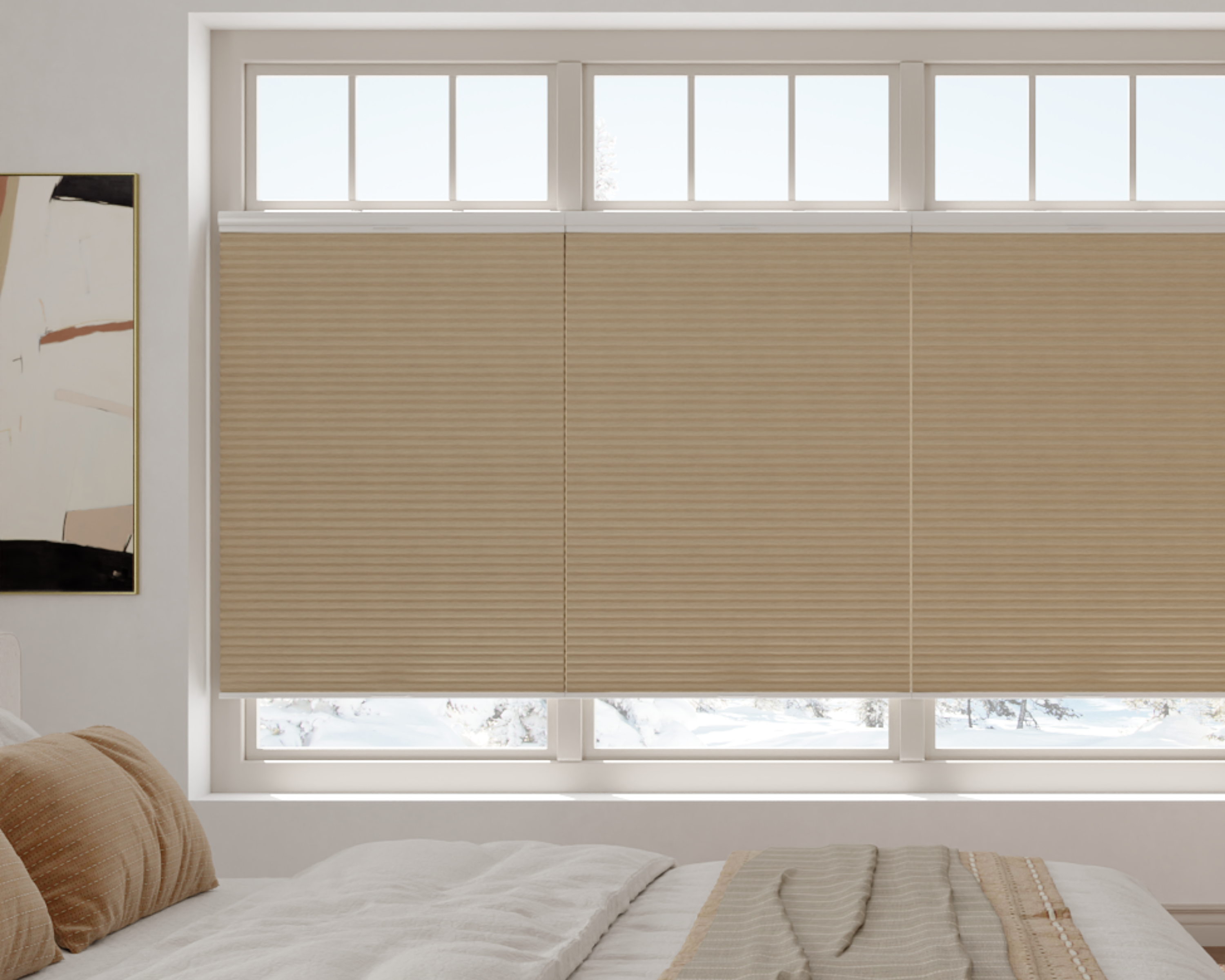
Selected waterproof cellular options are described by the vendor as water-repellent. Do not extend that claim to every honeycomb fabric, or interpret water repellency as approval for immersion or continuous shower spray. Confirm the exact model and room conditions before choosing it.
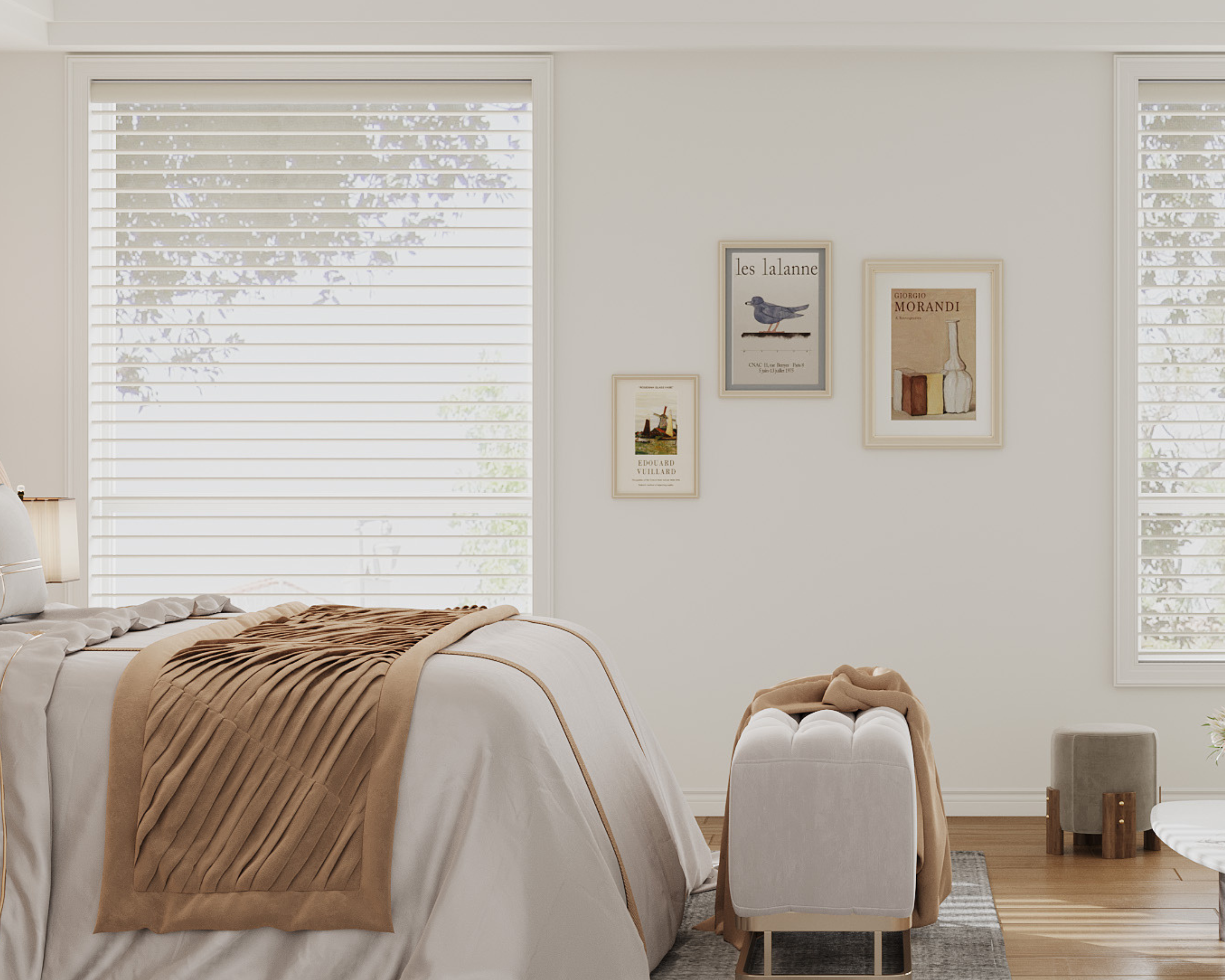
Ordinary blackout, light-filtering, top-down/bottom-up or day-night products can be relevant to an adjacent dry room. Their opacity or operating style alone is not a reason to include them in a waterproof bathroom shortlist. Choose a moisture-appropriate model first, then assess the layout you prefer.
Check privacy with the room's lights on
Privacy is an independent requirement. Bright indoor lights after dark can reveal outlines through some light-filtering fabrics. Examine the selected material and account for sightlines around the sides, top and bottom of the installed covering.
An opaque fabric can block view through its surface while edge gaps remain. Inside and outside mounts create different coverage and clearance requirements. Use the chosen product's dimensions and installation instructions rather than assuming a custom size eliminates every gap.
For a street-facing window, establish whether you need an opaque surface all the time or only at particular hours. If a top-down/bottom-up arrangement appeals to you, verify that the actual moisture-appropriate product offers that feature; it is not a standard capability of every roller or zebra shade.
Cleaning, controls and certification
Follow the actual care guidance. Wipeability of one PVC fabric does not approve detergent, soaking or steam for another material, and it does not mean the headrail should be saturated. Inspect for persistent dampness, corrosion, damage or loose fixing points.
Manual cordless and motorized lifts are different options. Select a control you can operate comfortably and safely in the permitted location. For homes with young children, follow the CPSC's cordless guidance. Motorization does not remove every window or installation hazard.
If low-emissions certification is part of your buying decision, check the exact fabric/product certificate and its scope. GREENGUARD addresses defined chemical-emissions testing; it does not prove waterproofing, mold prevention or universal health safety. Do not substitute a certification label for wet-location instructions.
Use samples for color and feel
Samples help compare material appearance against tile, paint and fixtures. The AYM-1 White sample listing can help with color/material comparison; check current sample and delivery terms. It is not a full shade and is not proof that the eventual assembly is approved for your bathroom.
Keep three decisions separate when reviewing a sample: Does it look right? Does its opacity meet privacy needs? Is the complete product approved for the exposure? The first two can inform your shortlist; the third requires the product's actual specification and instructions.
Choose the next bathroom route
| Your window condition | Useful next destination | Keep with the request |
|---|---|---|
| Inside a shower or receiving frequent direct splashes | Shower window shade shortlist | Exposure photos, proposed mount, selected premium fabric and control location |
| Humid room outside repeated direct shower spray | General bathroom shade options | Material, opacity, drying conditions and care instructions |
| Treated cellular appearance is preferred | Water-repellent spray-rating guide | Exact fabric code, stated rating and matching report request |
The shower shortlist currently centers on the premium wet-zone roller product. It does not turn other bathroom fabrics into shower products. Keep the standard waterproof roller, premium PVC-and-fiberglass roller, treated cellular fabric and closed-band zebra privacy decisions distinct.
Send SenseBlinds the product and color you selected, the proposed lift, raw opening measurements and a photo showing where water reaches the window. Ask for the complete-assembly placement and care confirmation alongside the quote. A motor option remains a separate configuration and requires an appropriate control and charging location.
If the moisture and privacy problem is at a low basement opening rather than a bathroom window, use the basement shade planning guide for dampness, sightlines and usable glass. Keep the room's actual exposure attached to the selected product.
Bathroom buying checklist
- Record whether the window receives steam, occasional splashes or direct spray.
- Confirm the selected material and complete assembly are appropriate for that exposure.
- Check nighttime privacy and intended coverage, including edge sightlines.
- Verify mounting dimensions, window movement, controls and charging access.
- Read the care instructions and establish how the window area will dry.
Then compare the appropriate waterproof collection options. For a closer explanation of the labels, read waterproof versus water-resistant roller shades for bathrooms. Prioritize a documented fit for your window over a longer list of products with unverified moisture claims.
