







A controlled budget works best when motorization is reserved for windows where it solves a recurring problem. High openings, shades behind furniture and groups adjusted together can benefit more than a small window you can reach comfortably.
Use motorized shades to identify supported configurations. This guide focuses on allocating upgrades across rooms; compare the complete configured-cost guide for the individual quote.
Rank windows by the job they need to do
List each opening and how often you adjust it. Record reach, furniture obstructions, privacy requirements and difficult sun exposure. This turns a vague whole-home upgrade into a set of practical choices.
| Window situation | Upgrade to investigate | Keep in the comparison |
|---|---|---|
| High or awkward to reach | Supported motorized lift | Charging/power access and safe installation. |
| Several windows adjusted together | Grouped control where supported | Ability to operate one shade separately. |
| Easy to reach, seldom adjusted | Suitable manual configuration | Actual cord-safety and operating requirements. |
| Bedroom needing darkness | Appropriate opaque fabric and coverage | Motorization does not fix edge light. |
| Shared living/work room | Daylight control suited to the task | Privacy after dark and glare at the actual seat. |
Choose the fabric and fit even where a motor is selected. A remote cannot compensate for the wrong opacity or a shade that interferes with a handle.
Spend on controls you will use
A handheld remote may cover the daily need. App access, voice integration and schedules can be valuable when they support a routine, but confirm the exact motor/controller and any bridge cost before choosing them.
Avoid paying twice for an assumed later conversion. A manual cordless unit is not automatically compatible with a drop-in motor. If a phased project is planned, ask about the actual path and current supported options without relying on future availability.
Refined appearance can come from fit and consistency
Accurate coverage, coordinated fabric color and suitable hardware can make a room feel finished. Texture is a design preference; wool-look, silk-like or linen-look does not establish actual fiber composition, durability or certification.
Compare samples together in the room and under evening lighting. Matching a few practical elements can be more useful than buying the most expensive fabric at every opening. Do not assume a brushless motor label guarantees a silent or longer-lived product; ask about the actual motor if its sound matters.
Compare roller and zebra options by function
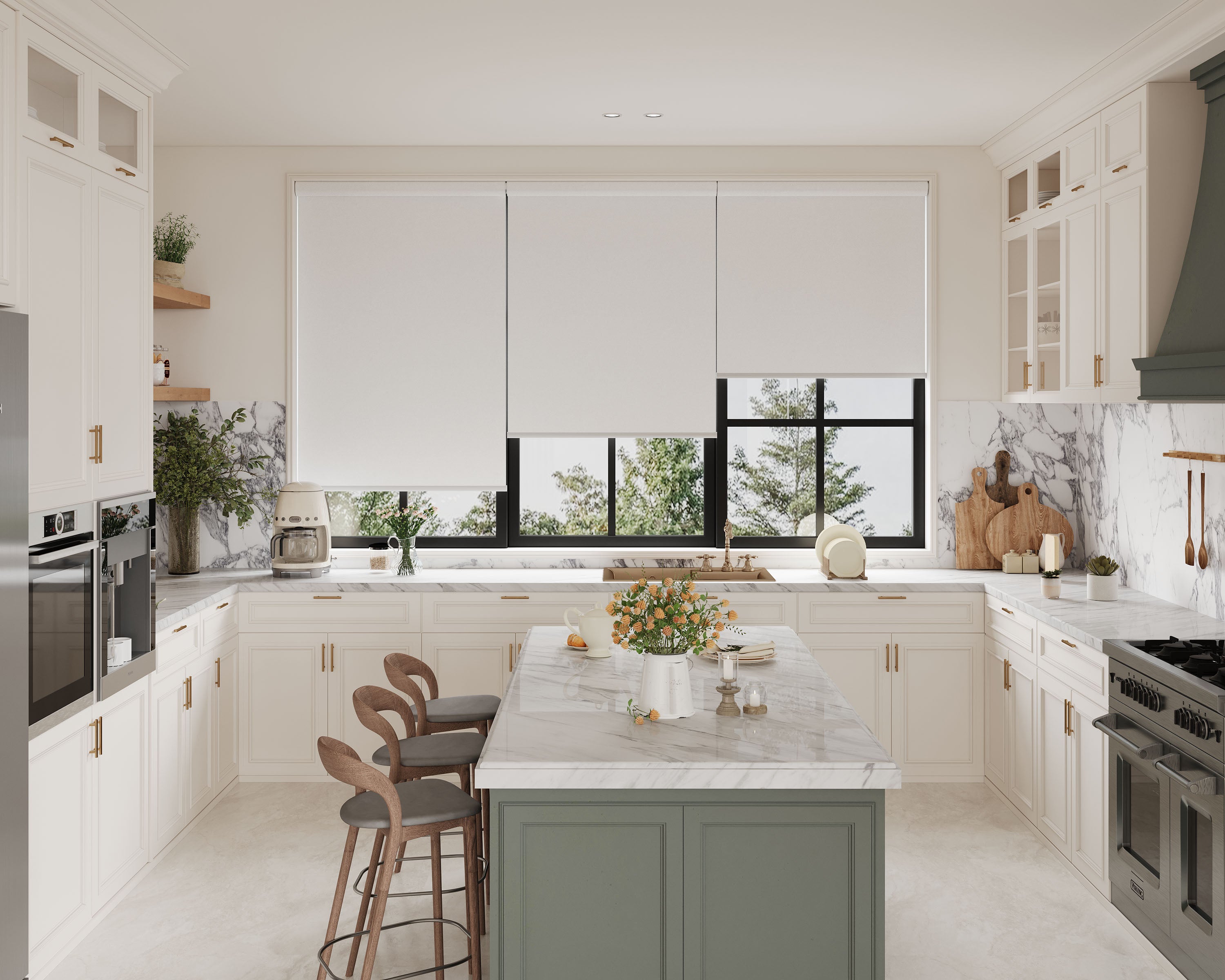
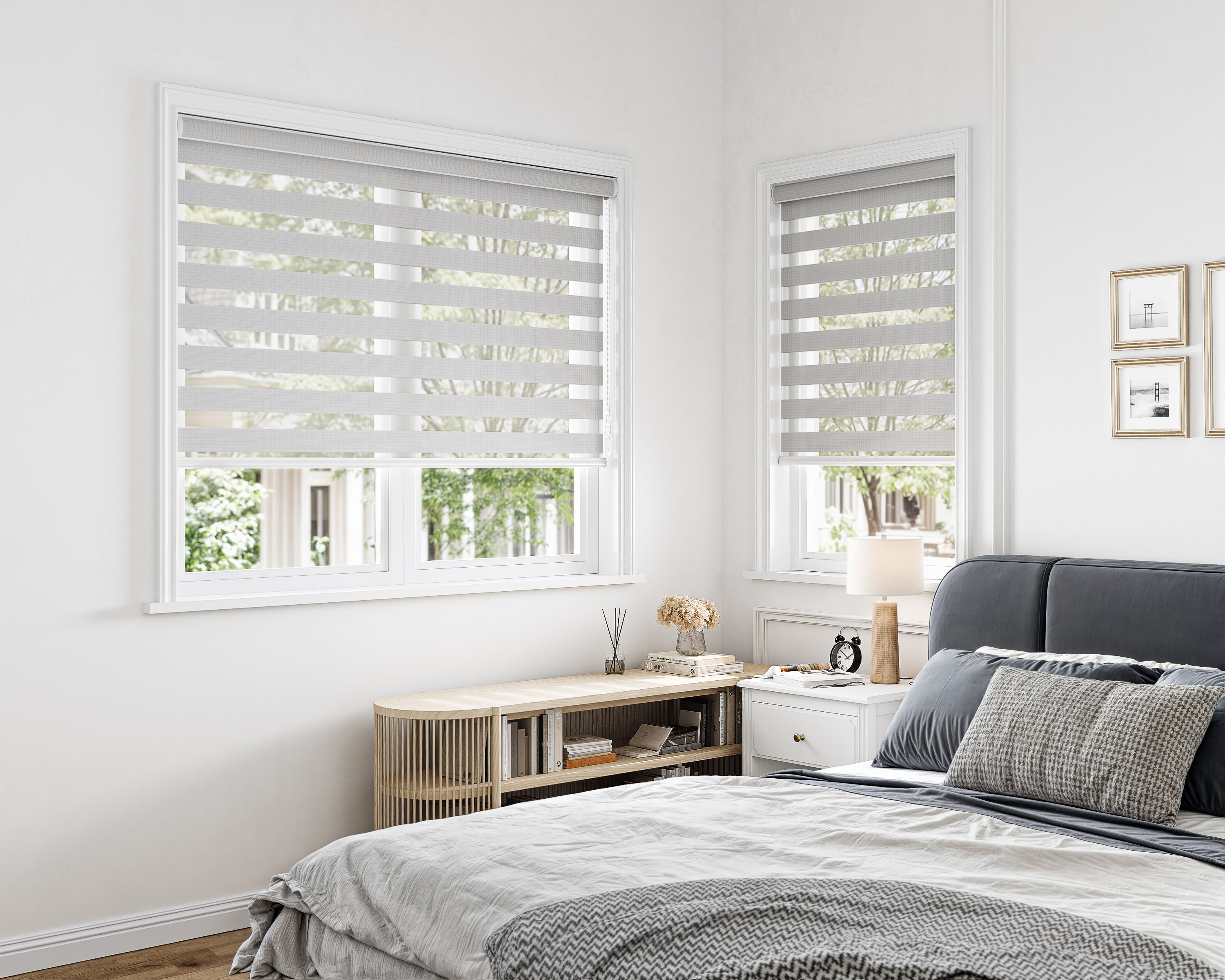
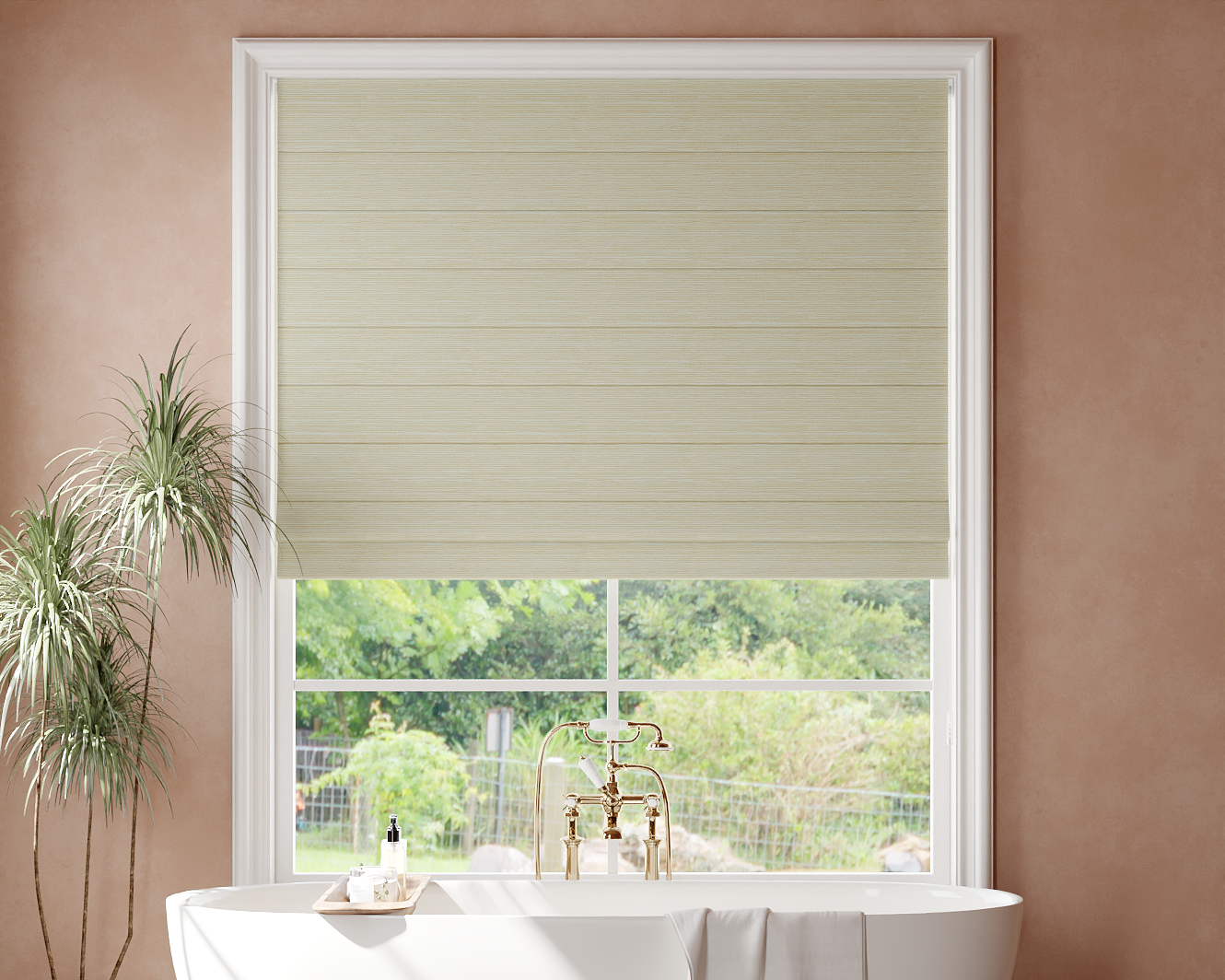
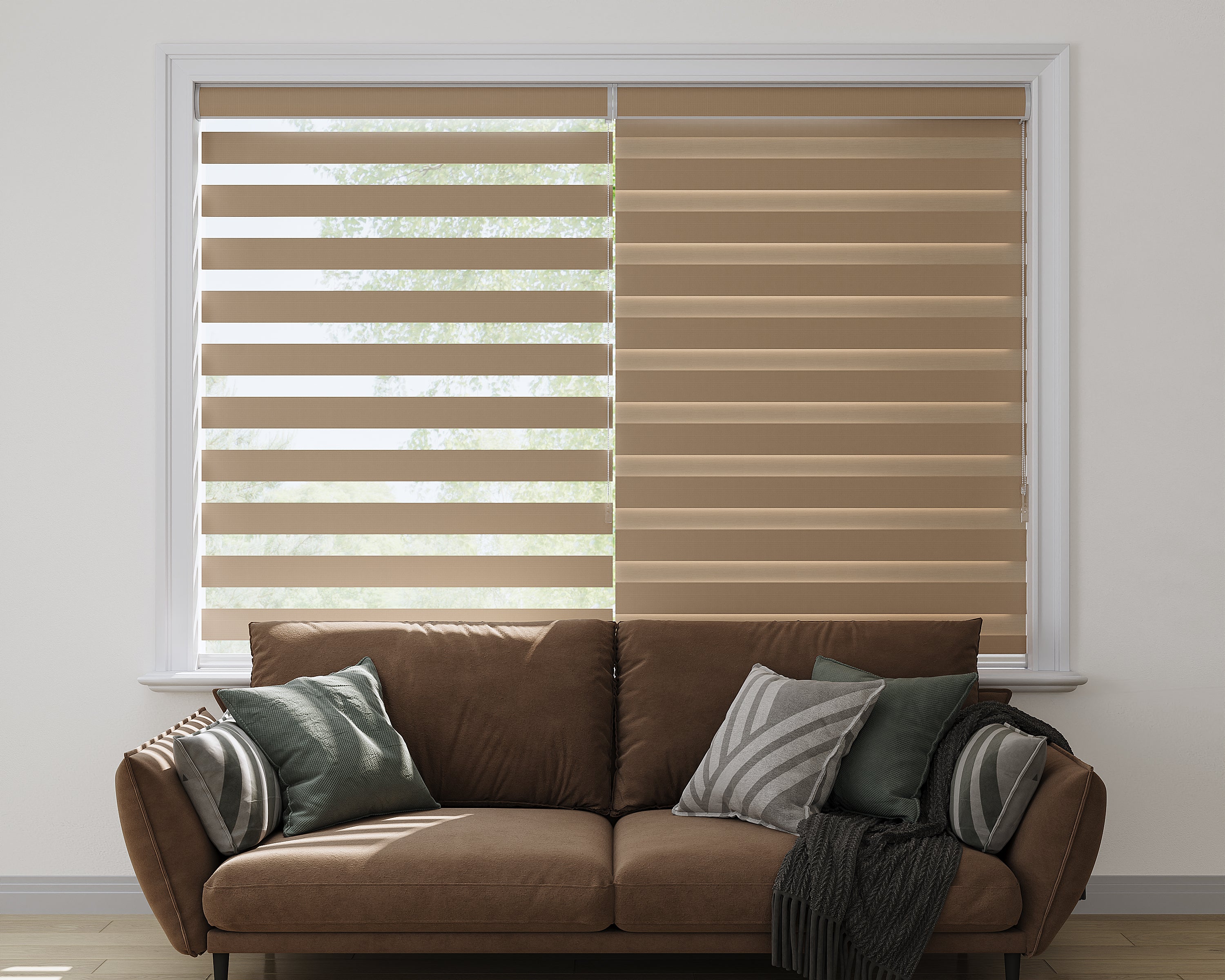
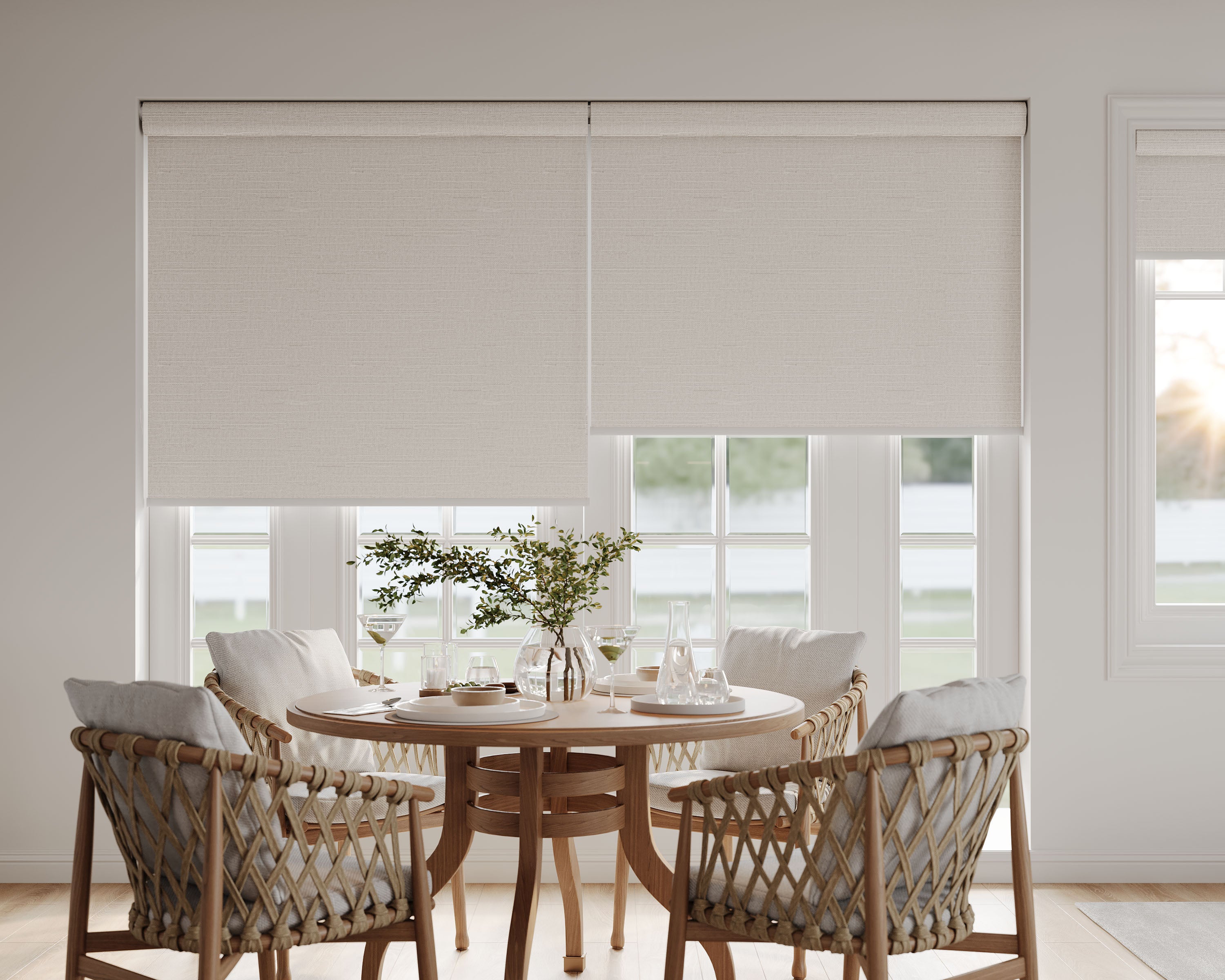
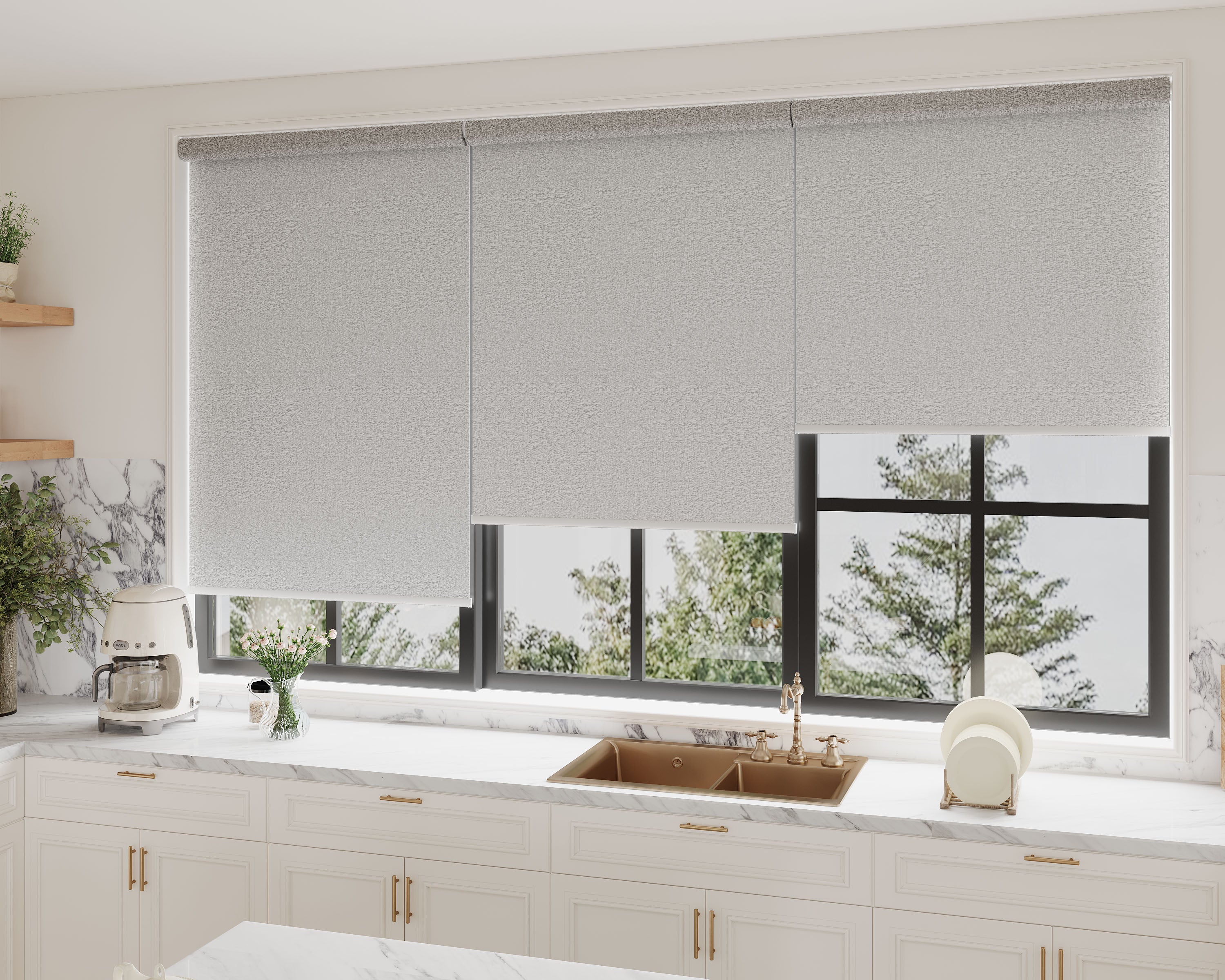
Light-filtering roller shades offer a continuous fabric appearance. Light-filtering zebra shades and room-darkening zebra shades offer adjustable bands with different fabric starting points. Check nighttime privacy and the selected motorized configuration.
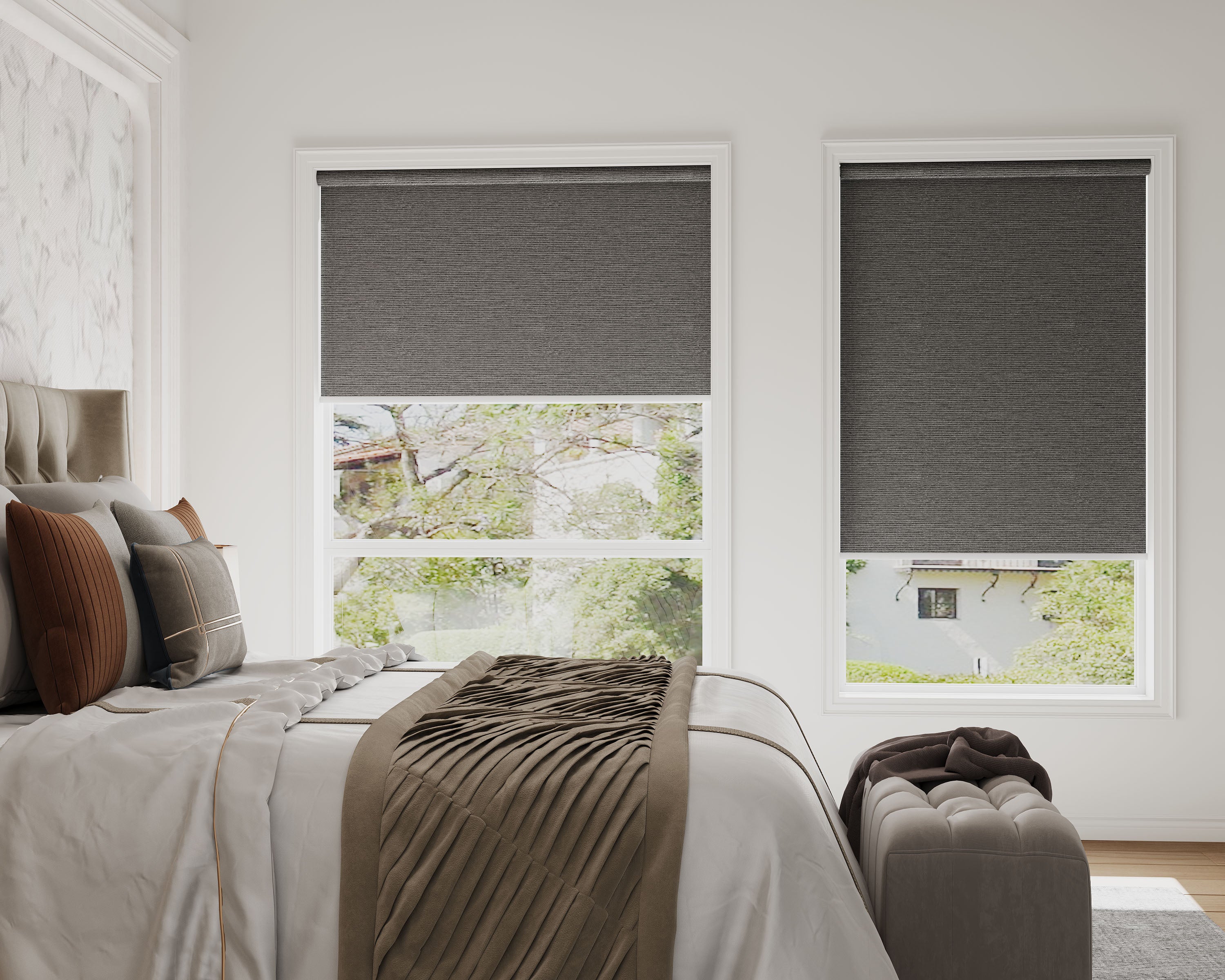
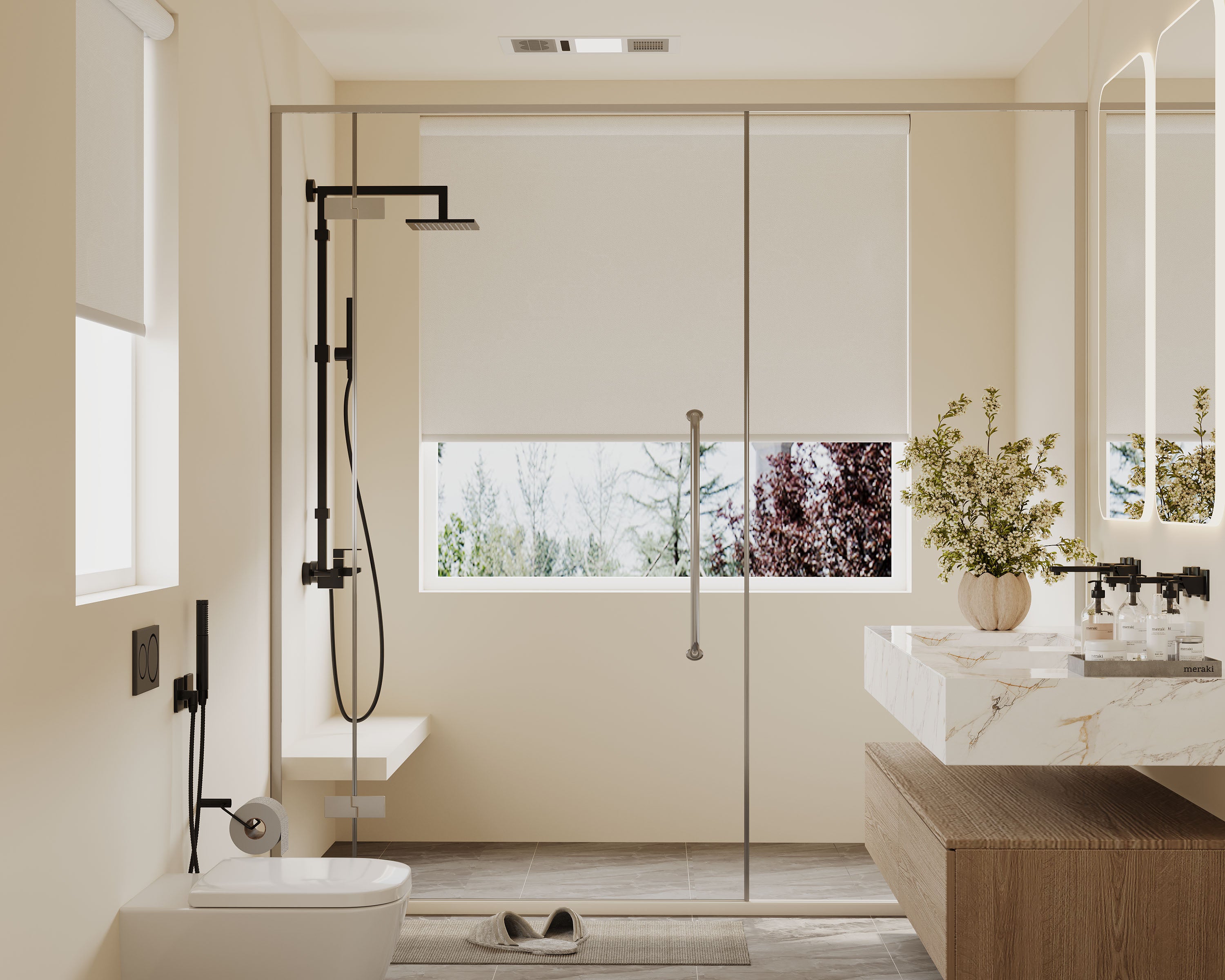
For stronger blocking through the fabric, compare blackout rollers, while planning edge coverage separately. At a humid window, compare the standard waterproof blackout roller within its exposure limits. A motorized lift is not proof of shower approval.
Add other movement features only when useful
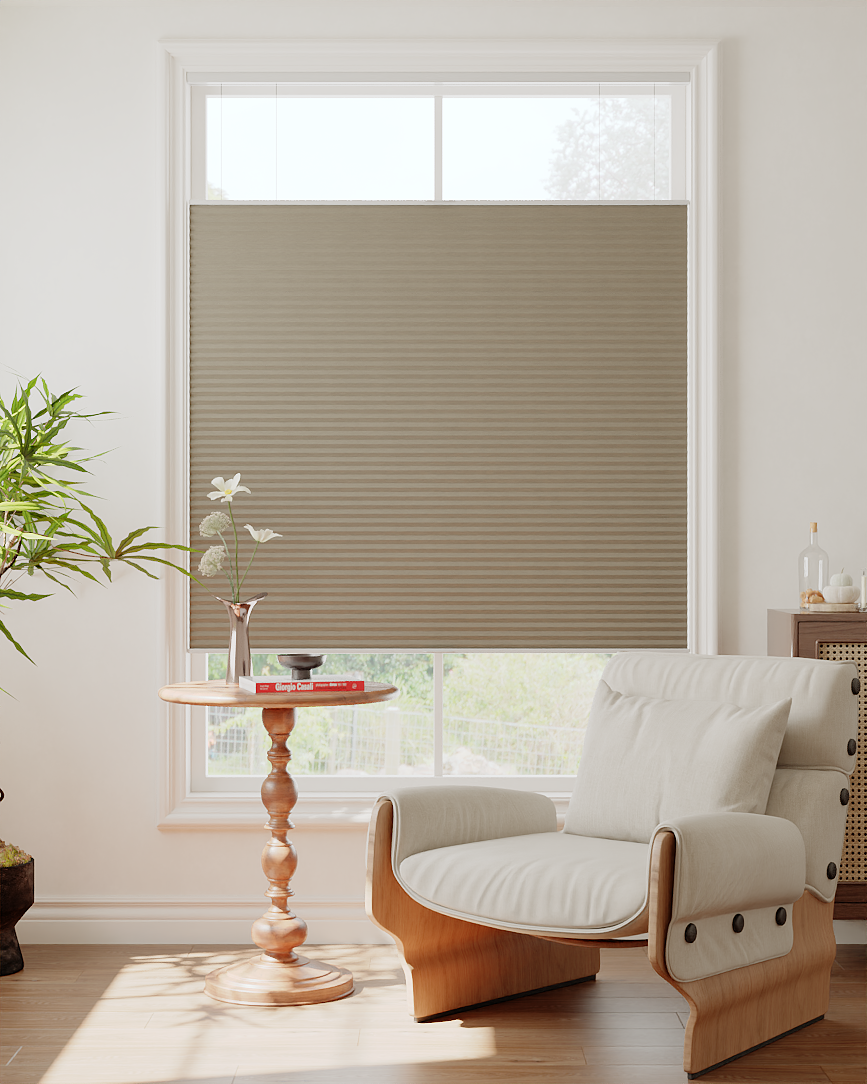
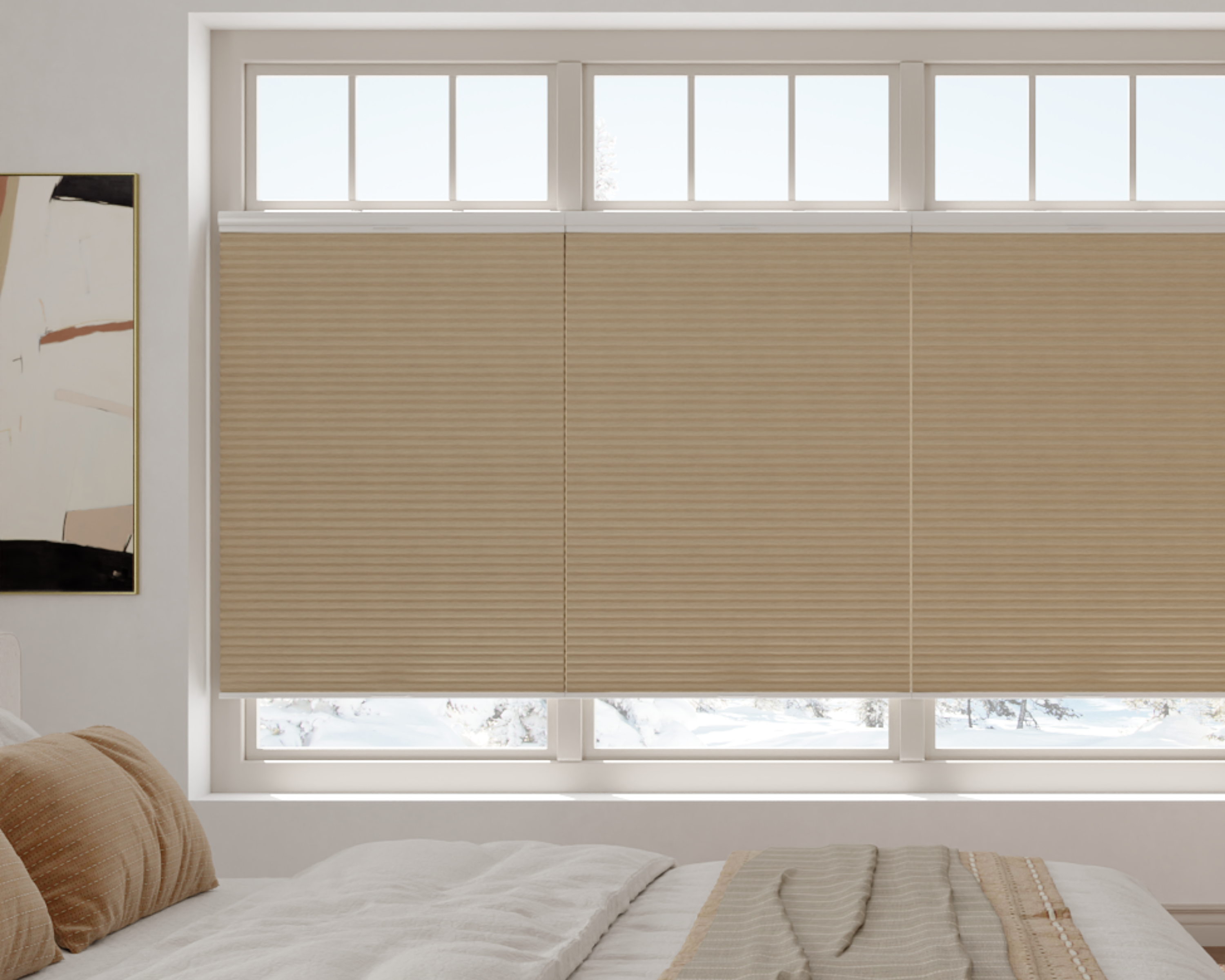
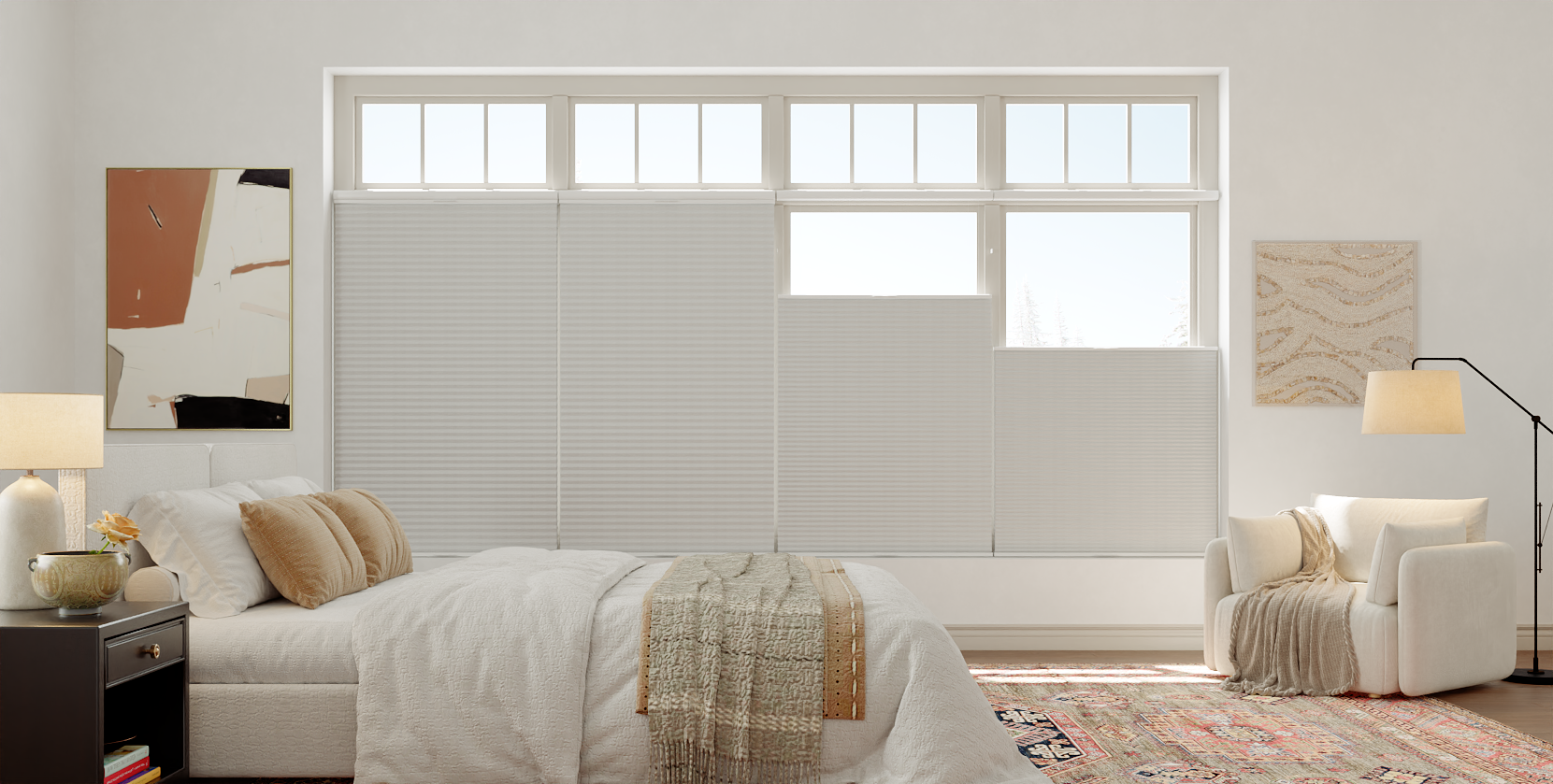
Light-filtering top-down-bottom-up cellular and blackout top-down-bottom-up cellular can be worth investigating when upper/lower coverage is part of the room's privacy plan. Confirm the selected lift and supported rail movements.
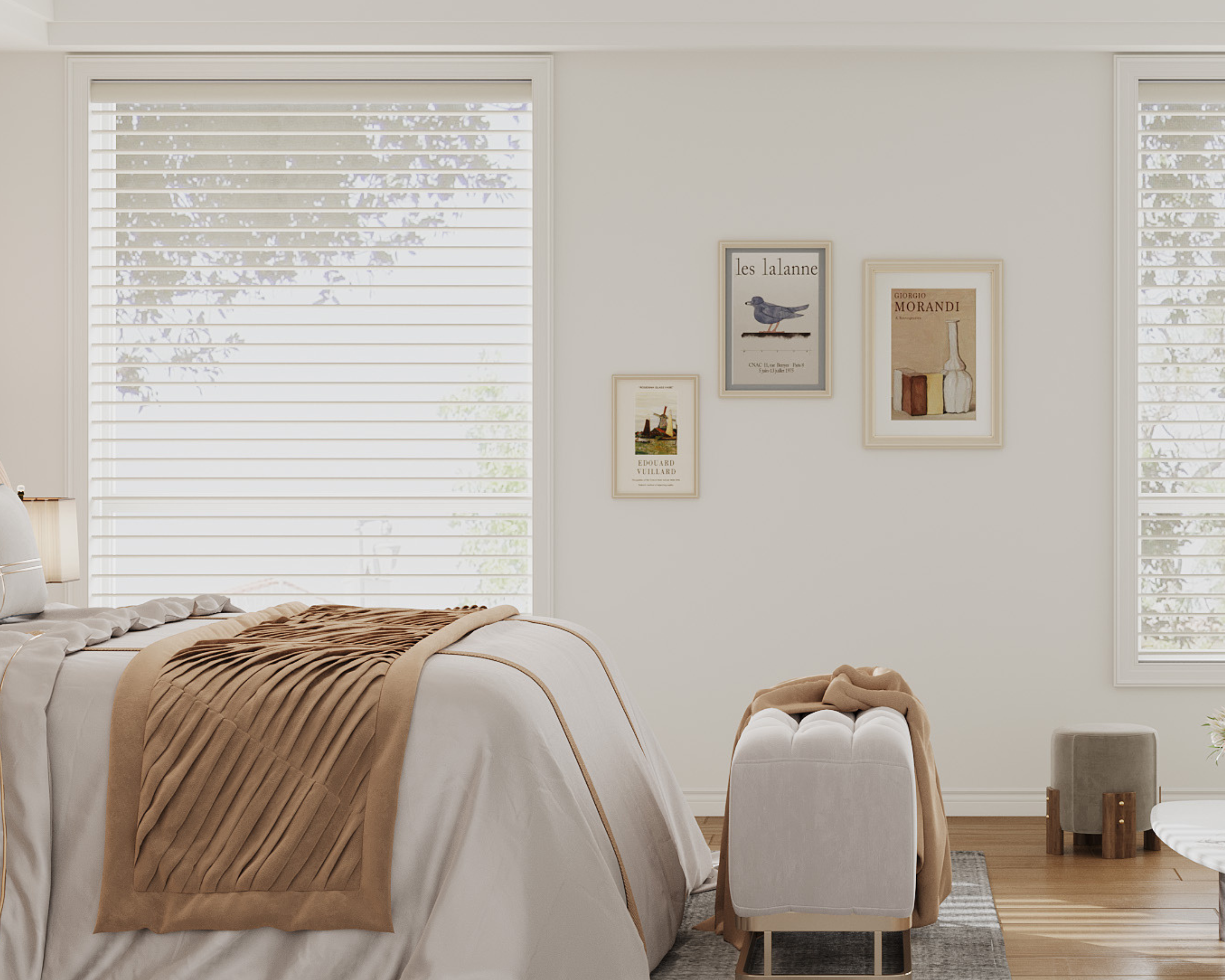
Day-night honeycomb and premier day-night honeycomb address fabric-section choices. Two opacities, cell count and independent-rail motor control are separate specifications. Pay for the combination you will use, rather than treating every added feature as a necessary upgrade.
Compare the complete project price
Record the configured shade, controls, chargers/power, accessories, measuring and installation for each opening. Add applicable delivery and tax. Check what is already included so a low entry price is not compared with a complete installed quote.
Professional help can be appropriate for height, weight, substrate or electrical work. Confirm the actual scope and current terms rather than expecting a universal installation fee or guaranteed result.
For homes with young children, follow CPSC's cordless guidance and assess the actual operating system. Budget choices should not be made without resolving safety and permitted installation requirements.
Make a staged plan
If needed, start with the windows presenting the greatest reach or daily-control difficulty. Resolve the fabric and control configuration, then assess the result before expanding. Keep measurements and specifications for the remaining rooms rather than assuming every opening matches.
Return to motorized configurations with that priority list. The useful upgrade delivers a daily function and a finish you like without unnecessary controls or unsupported performance promises.
Frequently asked questions
Do I need motors in every room?
No. Compare reach, adjustment frequency and the actual task. A suitable manual system may be enough at an easy-to-reach opening.
Does an expensive fabric make a motorized system better?
It may provide an appearance you prefer, but it does not establish control compatibility or motor performance. Compare those specifications separately.
