







The quest for perfect light control often leads to a showdown between two popular options: classic blinds and modern sheer shades. While both cover your windows, they approach light management in fundamentally different ways, leading to vastly different results in your room's ambiance, functionality, and style. This definitive guide compares sheer shades and blinds head-to-head, focusing specifically on their performance with light, to help you determine which is the superior choice for your needs.
Here’s what you’ll learn:
-
The core mechanical difference in how blinds and sheer shades manipulate light.
-
A direct performance comparison on glare reduction, privacy, and view preservation.
-
How material and design impact light quality, from harsh slats to soft diffusion.
-
Which option is best for specific rooms like home offices, living rooms, and bedrooms.
-
Practical considerations for maintenance, durability, and child safety.
For the ultimate in adjustable, soft light filtration, begin your search with our collection of custom sheer shades engineered for superior light control.
The Core Difference: Blocking vs. Diffusing Light
The most critical distinction lies in their fundamental approach to sunlight.
Blinds (Horizontal or Vertical) function on a principle of blocking and compartmentalizing light. Their solid slats (vanes), made of aluminum, wood, or faux wood, act as physical barriers. When tilted open, light streams through the gaps between slats in distinct bands. When closed, they aim to block light completely, creating sharp lines of shadow and brightness.
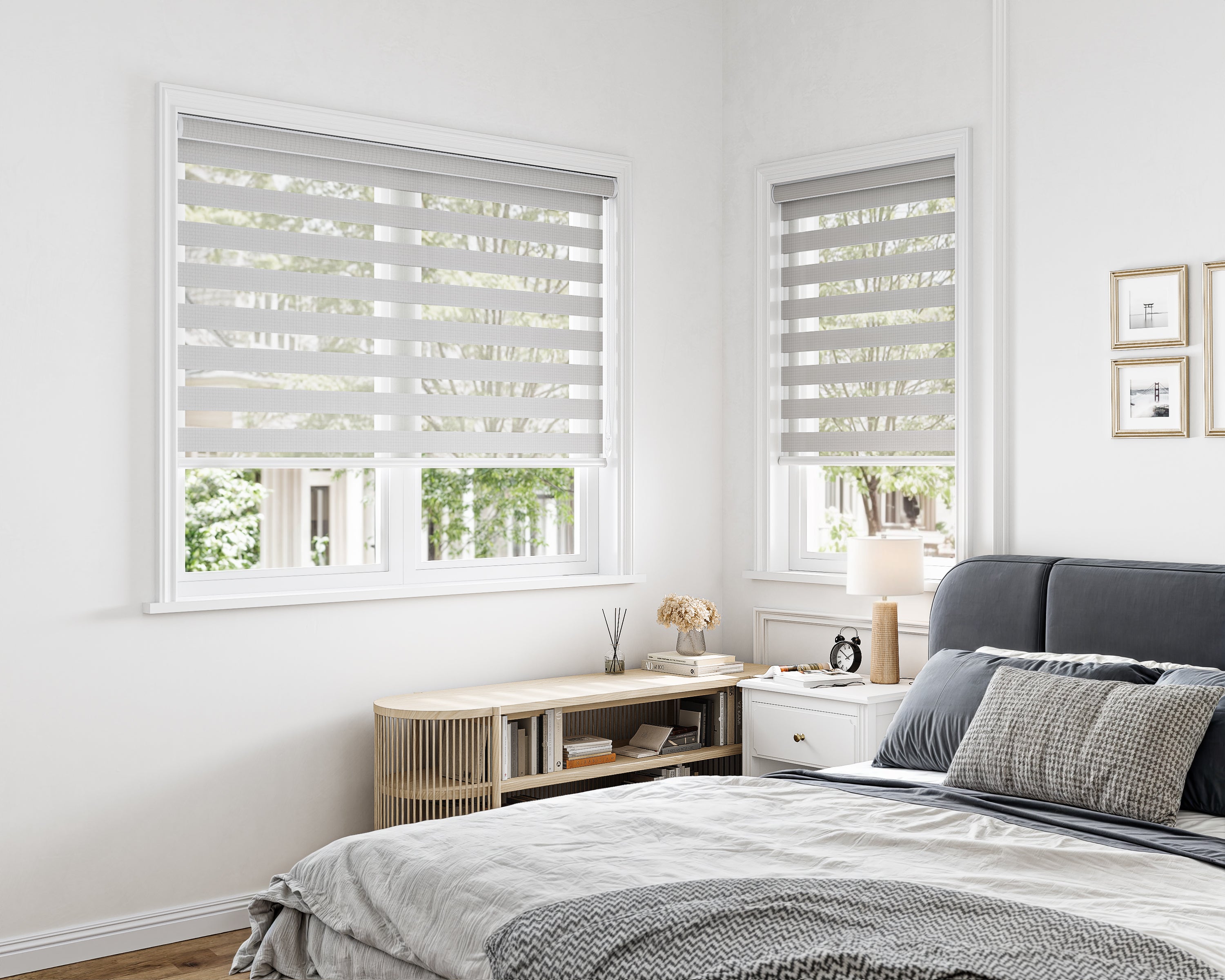
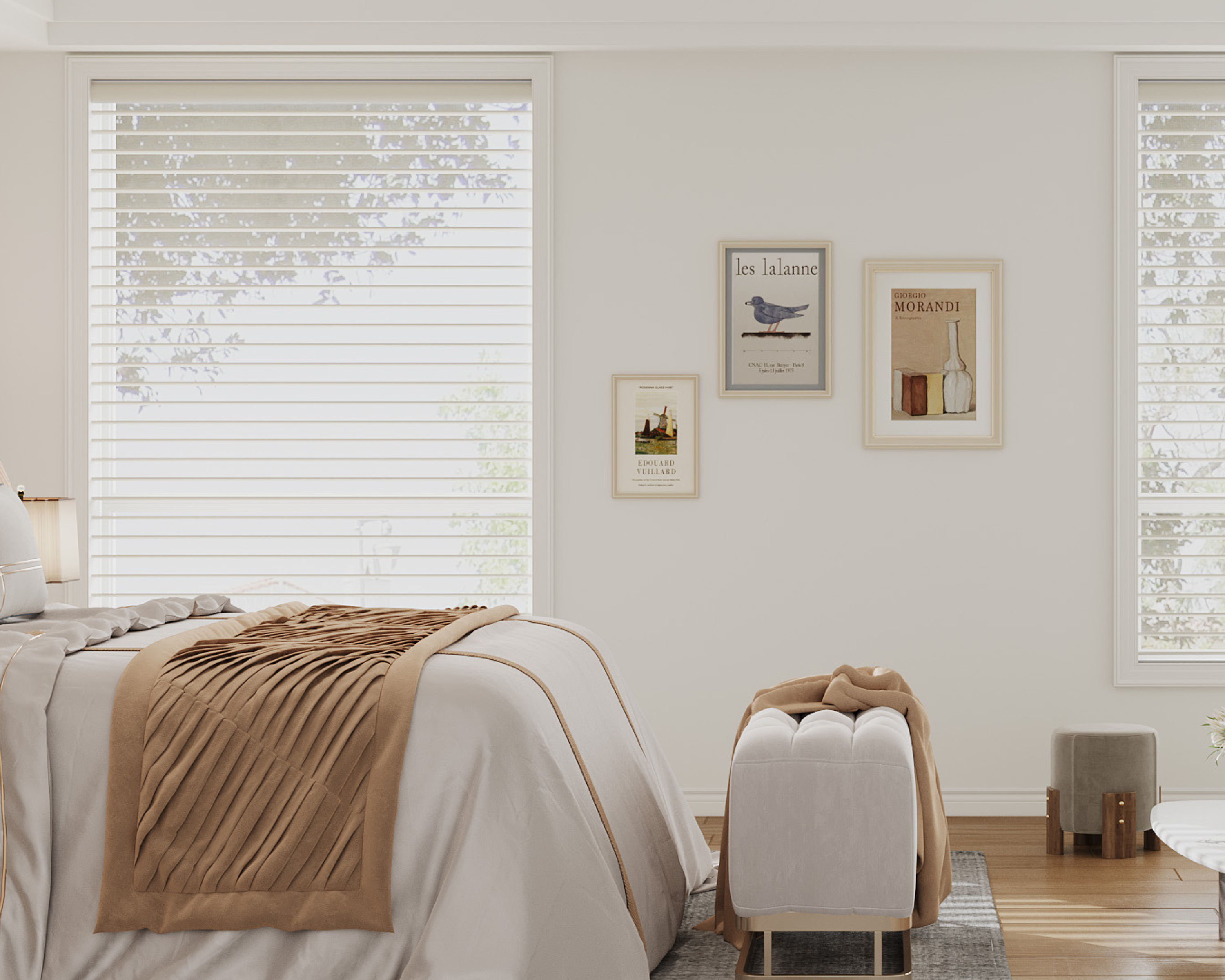
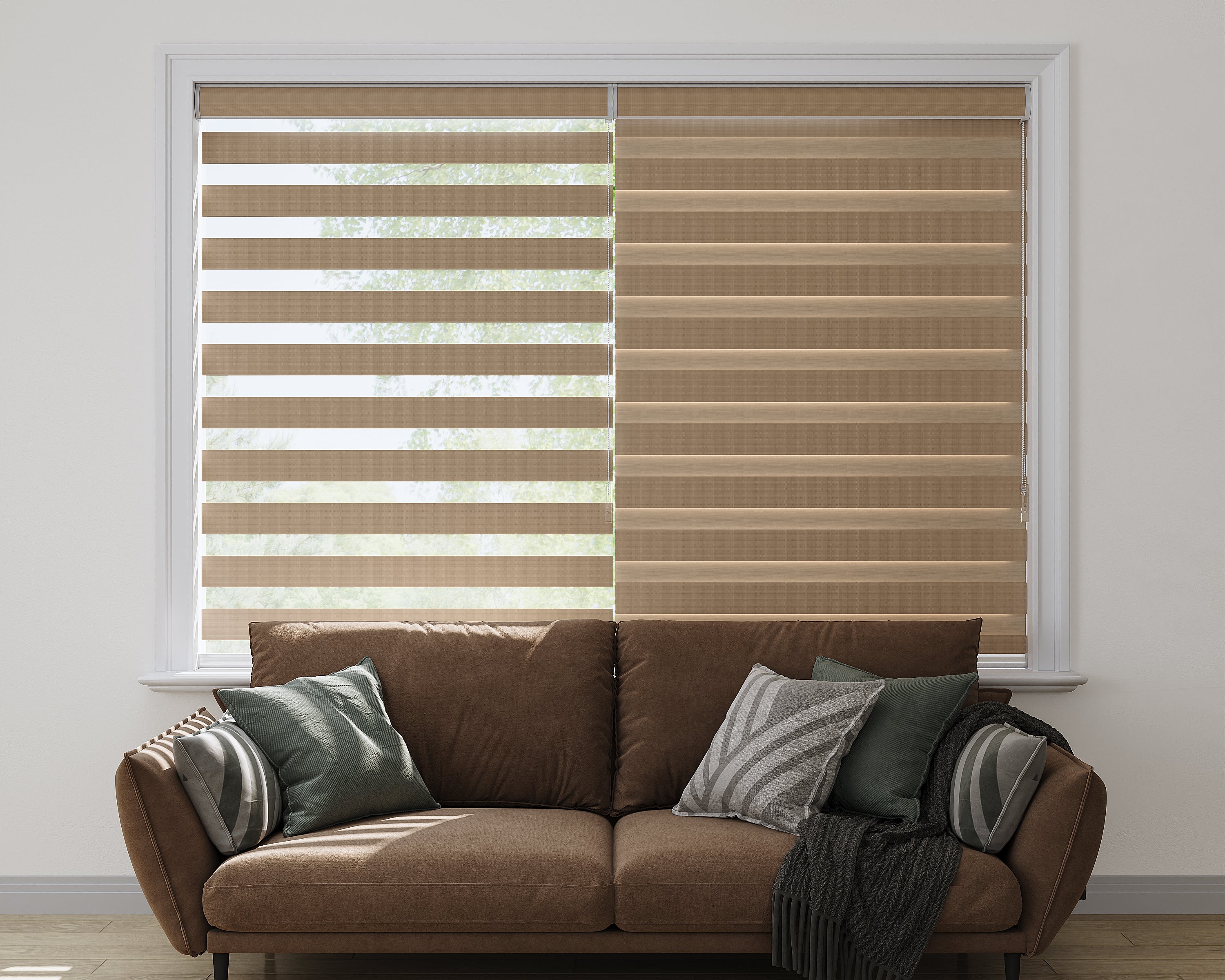
Sheer Shades operate on a principle of filtering and diffusing light. They consist of soft, adjustable fabric vanes suspended between two layers of sheer, translucent cloth. Instead of creating hard lines of light and dark, they scatter incoming sunlight, transforming harsh rays into a soft, even, ambient glow throughout the room, regardless of the vane position.
Head-to-Head: Light Control Performance
To understand which is "better," we must define what superior light control means for you. Is it total blockage, glare elimination, or preserving a view while softening light?
Glare Reduction: The Clear Winner
-
Sheer Shades: Exceptional. This is their superpower. The fabric vanes and sheer layers act like a sophisticated light diffuser, eliminating harsh glare on screens, walls, and floors without plunging the room into darkness. They are the definitive choice for home offices, media rooms, or any space where screen visibility and visual comfort are priorities.
-
Blinds: Moderate. Blinds can block direct beams of light when angled precisely, but they often create intense contrast between lit and unlit areas, which can be its own form of visual discomfort. Glare can "leak" around the edges of slats.
Precision and Direct Light Blockage
-
Blinds: Excellent. If your goal is to completely block out sunlight for sleep or to darken a room for movie watching, traditional blinds with opaque slats can achieve near-total darkness when fully closed, especially with side channels.
-
Sheer Shades: Not Designed For This. Sheer shades are not blackout products. Their purpose is to manage and soften light, not eliminate it. A soft glow will always permeate the room. For true darkness, they would need a separate blackout layer behind them.
View Preservation with Privacy
-
Sheer Shades: Superior. With vanes open, you enjoy a clear, slightly filtered view. With vanes closed, the sheer outer layers allow you to see out (and light to enter) while obscuring the interior view from outside—a unique "view-through privacy" that maintains a connection to the outdoors.
-
Blinds: Binary. The view is either completely open (slats open) or completely blocked (slats closed). There is no in-between state that maintains outward visibility while providing privacy.
Light Control Comparison: Sheer Shades vs. Blinds
| Feature | Sheer Shades | Traditional Blinds (Wood/Aluminum) |
|---|---|---|
| Primary Light Action | Diffuses & scatters light into a soft glow. | Blocks or allows light in distinct bands. |
| Glare Reduction | Excellent. Eliminates harsh glare and hotspots. | Good. Can block direct beams but creates contrast. |
| Light Quality | Even, ambient, and shadow-free illumination. | Can be stark, creating patterns of light and shadow. |
| View-Through Privacy | Yes. Maintains outward view while obscuring interior. | No. View is either fully open or fully blocked. |
| Total Light Blockage | Not possible; always allows a soft glow. | Yes, with fully closed opaque slats. |
| Best For Light Goal | Creating a softly lit, visually comfortable room. | Complete light blockage or simple on/off control. |
Choosing Based on Room and Material
Room-by-Room Application
-
Home Office & Living Rooms: Sheer shades are typically the better choice. Their superior glare reduction creates ideal conditions for working on screens or relaxing without harsh light. The preserved view and airy feel enhance the space. Learn more about optimizing a home office for focus.
-
Bedrooms: The choice depends on the sleeper. Blinds (especially with blackout options) are better for those needing total darkness. Sheer shades are perfect for those who prefer a gentle, natural wake-up with soft light and a relaxed ambiance. For a deeper dive, see our blackout vs. light-filtering comparison.
-
Modern & Minimalist Interiors: Sheer shades offer a cleaner, more unified look with their single-panel design and hidden vanes, aligning with contemporary aesthetics.
Material and Design Impact
-
Blinds: Material choice (wood, faux wood, aluminum) affects durability, insulation, and look but doesn't change the fundamental hard-light quality.
-
Sheer Shades: The "openness factor" (e.g., 1%, 5%, 10%) of the sheer fabric is crucial. A lower percentage offers more privacy and UV protection, while a higher percentage provides a clearer view. This is a key specification explored in our guide on how sheer shades actually work.
Practical Considerations: Maintenance, Safety, and Cost
-
Cleaning & Maintenance: Sheer shades have an advantage as dust is largely trapped between the two sheer layers, making them easier to dust with a vacuum attachment. Blinds have multiple exposed slat surfaces that require regular, detailed dusting.
-
Child & Pet Safety: Modern versions of both come in cordless options. However, the soft fabric vanes of sheer shades are less hazardous than the hard slats of blinds if bumped into.
-
Durability: High-quality blinds (especially faux wood) are extremely durable and moisture-resistant. Sheer shades, while durable, use fabrics that may be less suited for high-splash zones like kids' bathrooms.
-
Cost: Custom blinds can be very cost-effective, especially in standard sizes. Custom sheer shades often come at a premium due to their more complex layered construction and mechanisms. Understanding what drives the cost of custom treatments is helpful.
Conclusion: Which is Truly Better for Light Control?
The answer is not universal—it depends entirely on your definition of "control."
Choose Traditional Blinds if:
-
Your primary need is complete, on/off light blockage (especially for sleep).
-
You want the most budget-friendly custom option for simple light blocking.
-
You need a highly moisture-resistant option for bathrooms or kitchens.
Choose Sheer Shades if:
-
Your primary need is superior glare reduction and visual comfort without darkening a room.
-
You want to preserve outdoor views while maintaining daytime privacy.
-
You value soft, even, ambient light quality and a modern, streamlined aesthetic.
-
Your priority is creating a comfortable environment for home offices, living rooms, or sunrooms.
For most living spaces where people are active during the day, sheer shades provide more sophisticated and comfortable light control. They manage light as a quality of illumination, not just as an on/off switch, making them the technologically and aesthetically advanced choice for modern light management.
Key Highlights:
-
Philosophy of Light: Blinds block; sheer shades diffuse. This core difference dictates every other performance aspect.
-
Glare is the Decider: If eliminating screen and surface glare is your goal, sheer shades are the definitive winner.
-
Privacy with a View: Sheer shades uniquely offer privacy without sacrificing your connection to the outdoors.
-
Room Dictates Choice: Match the treatment to the room's function—blinds for sleep darkness, sheer shades for daytime living comfort.
Shop Sheer Shades by Light Control


Frequently Asked Questions (FAQ)
Can sheer shades make a room look bigger?
Yes, their light-diffusing quality can help. By eliminating harsh shadows and bathing walls in even light, sheer shades can make a room feel more open and airy. The preservation of an outward view also enhances the sense of space.
Are there "blackout" sheer shades?
No, the terms are contradictory. Sheer fabrics, by definition, allow light to pass through. If you need both the soft diffusion of sheer shades and true blackout capabilities, the solution is to layer them with a separate dedicated blackout roller shade that can be lowered behind them when needed.
Which option is better for UV protection and preventing furniture fade?
Both can offer good UV protection, but for maximum protection, look for sheer shades with a low openness factor (1-3%) or blinds with UV-coated slats. The tight weave or coating blocks a high percentage of harmful rays. Sheer shades diffuse UV light, while blinds block it directly.
Do sheer shades come in vertical styles?
While less common than horizontal, vertical sheer shades do exist. They operate on the same principle—fabric vanes rotating between sheer layers—but are designed for sliding glass doors or floor-to-ceiling windows. They offer the same soft light control in a vertical format.
Is motorization available for both?
Yes, and it's a highly recommended feature for both, especially for hard-to-reach windows or multi-window sets. Motorization allows you to easily adjust vanes and raise/lower the treatment to perfectly tune light throughout the day.
