
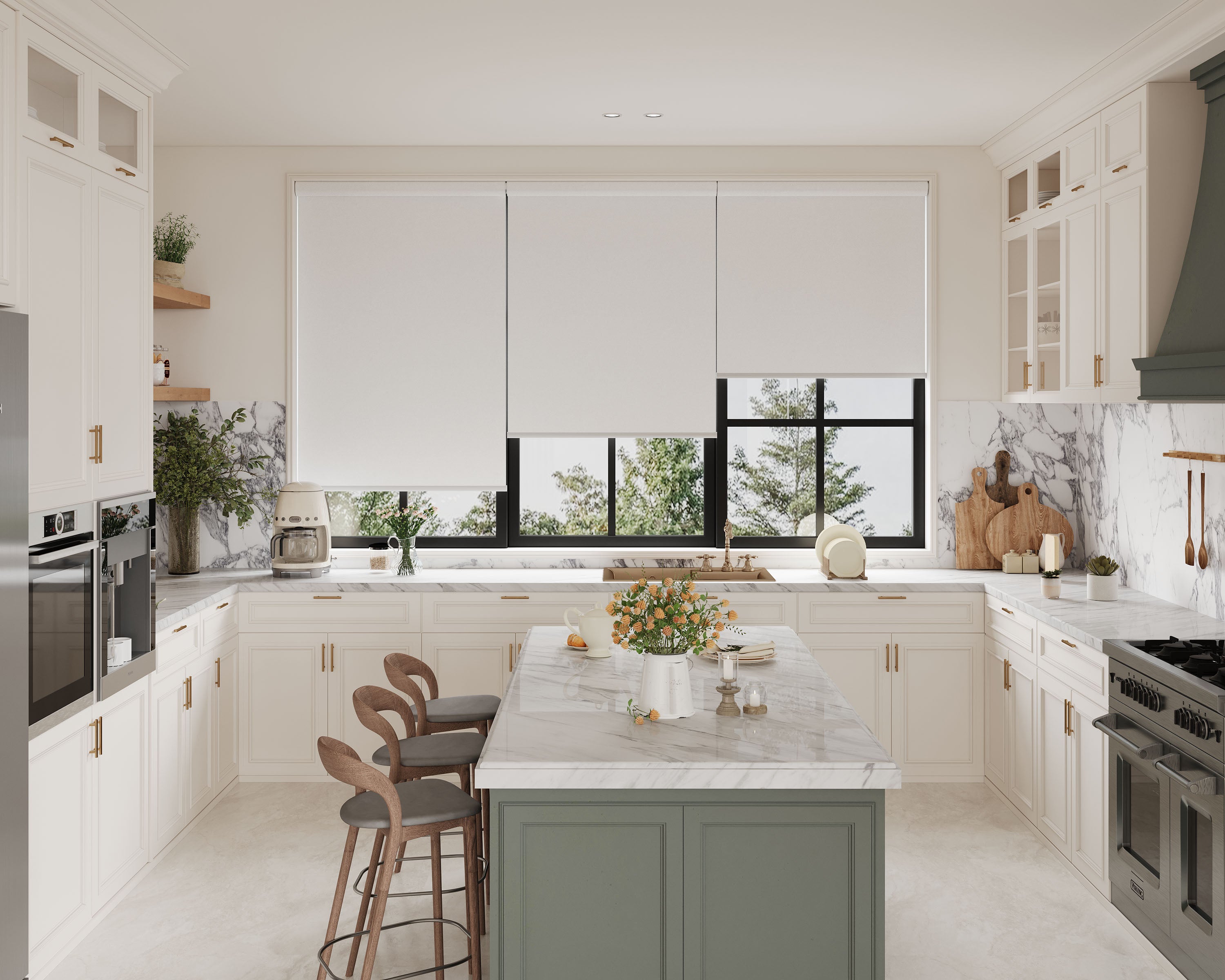
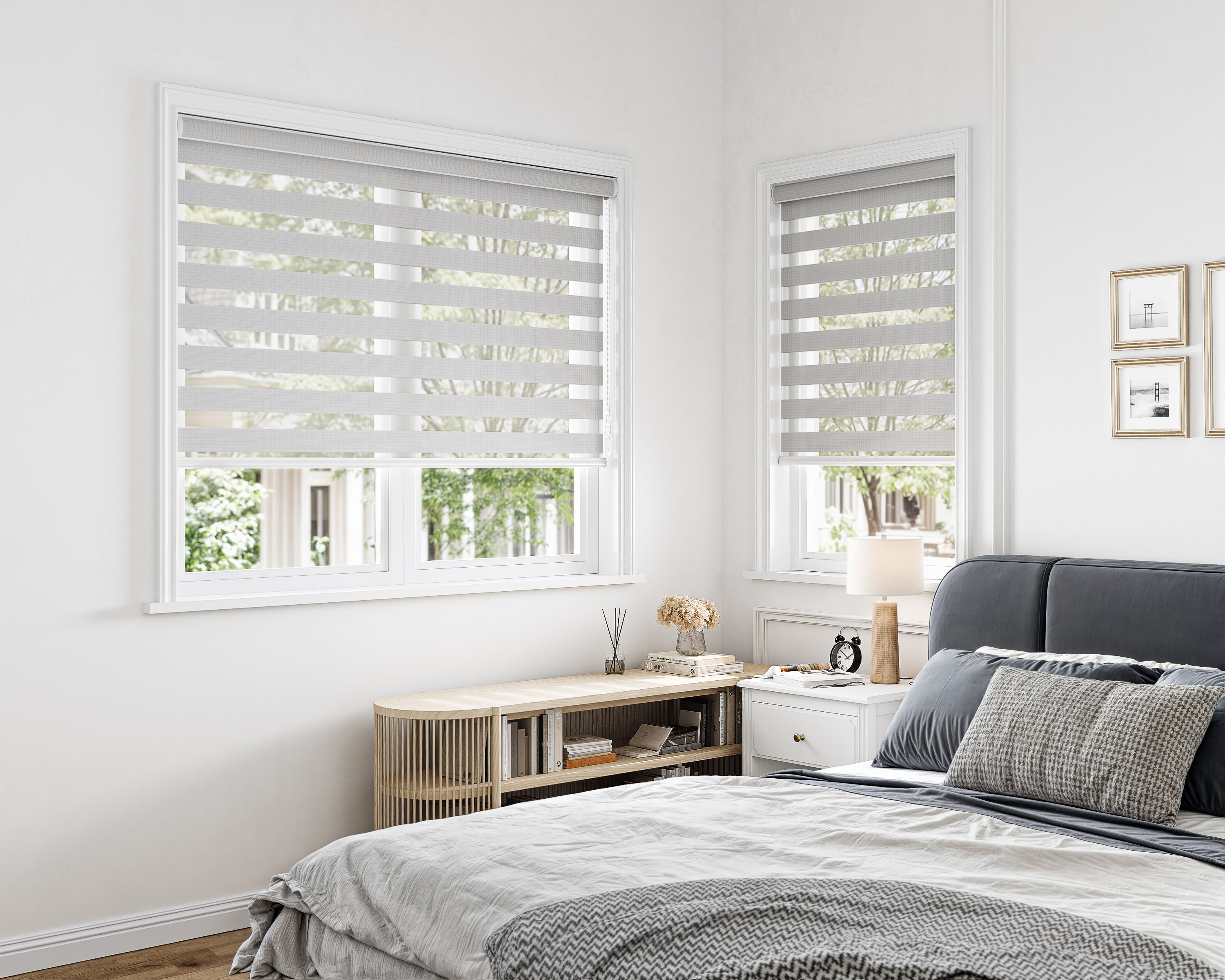
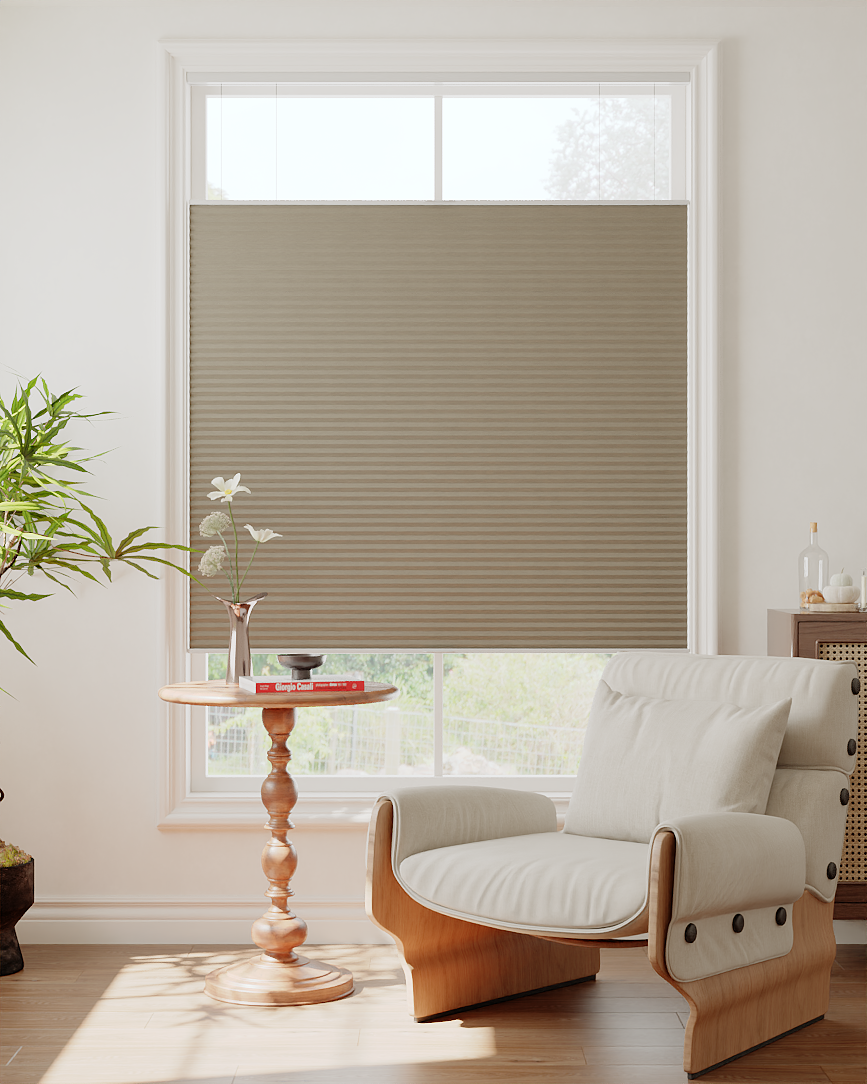
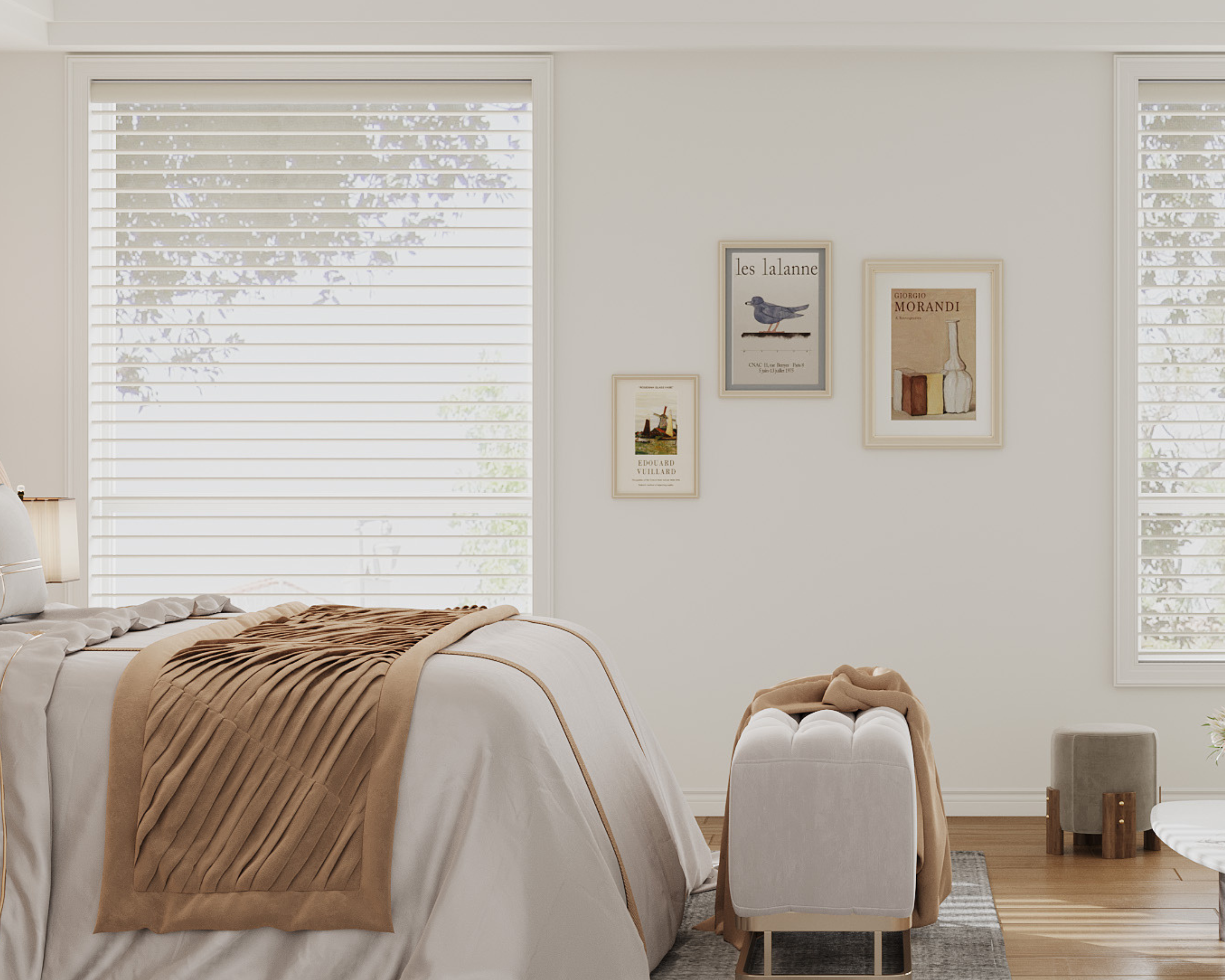
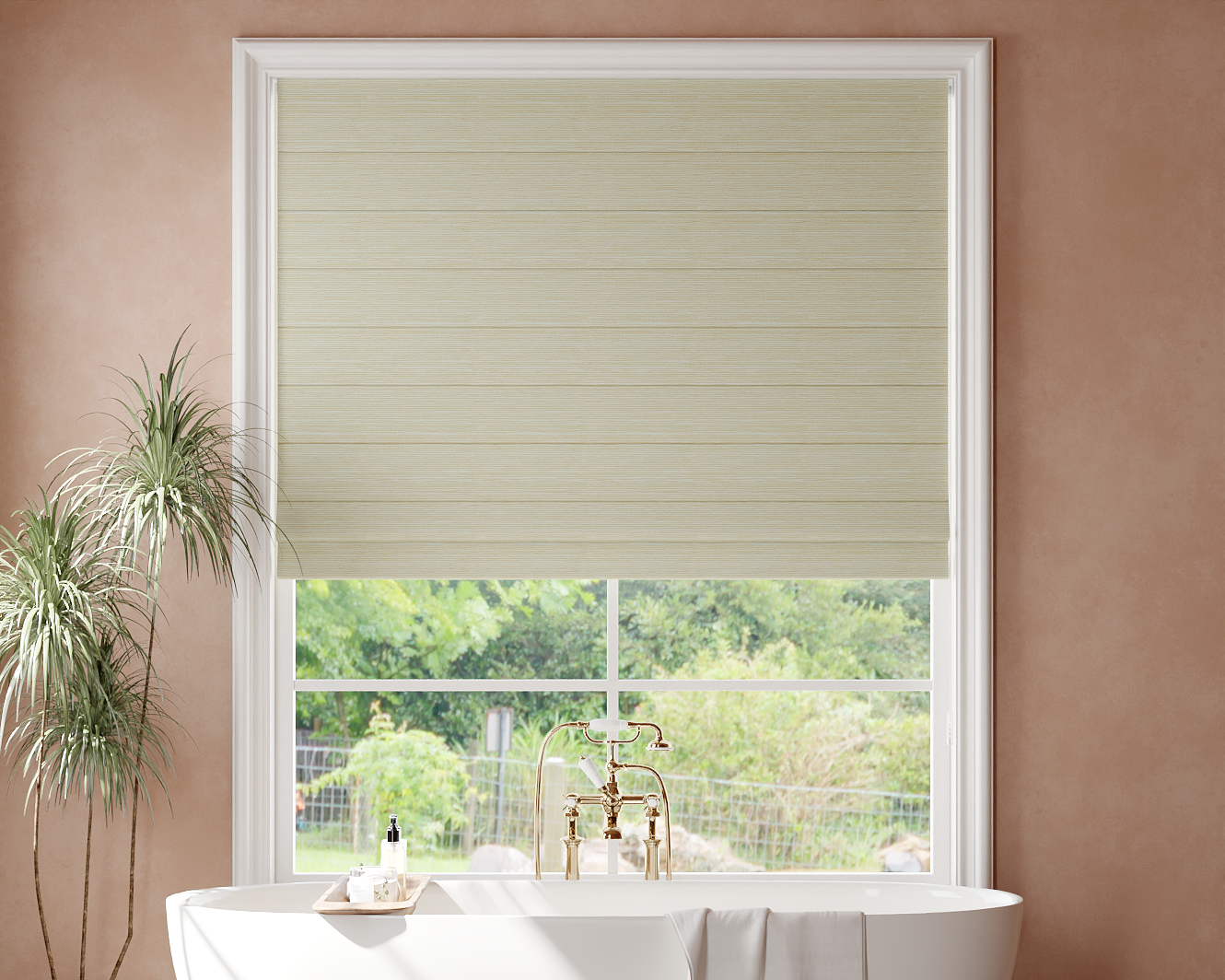
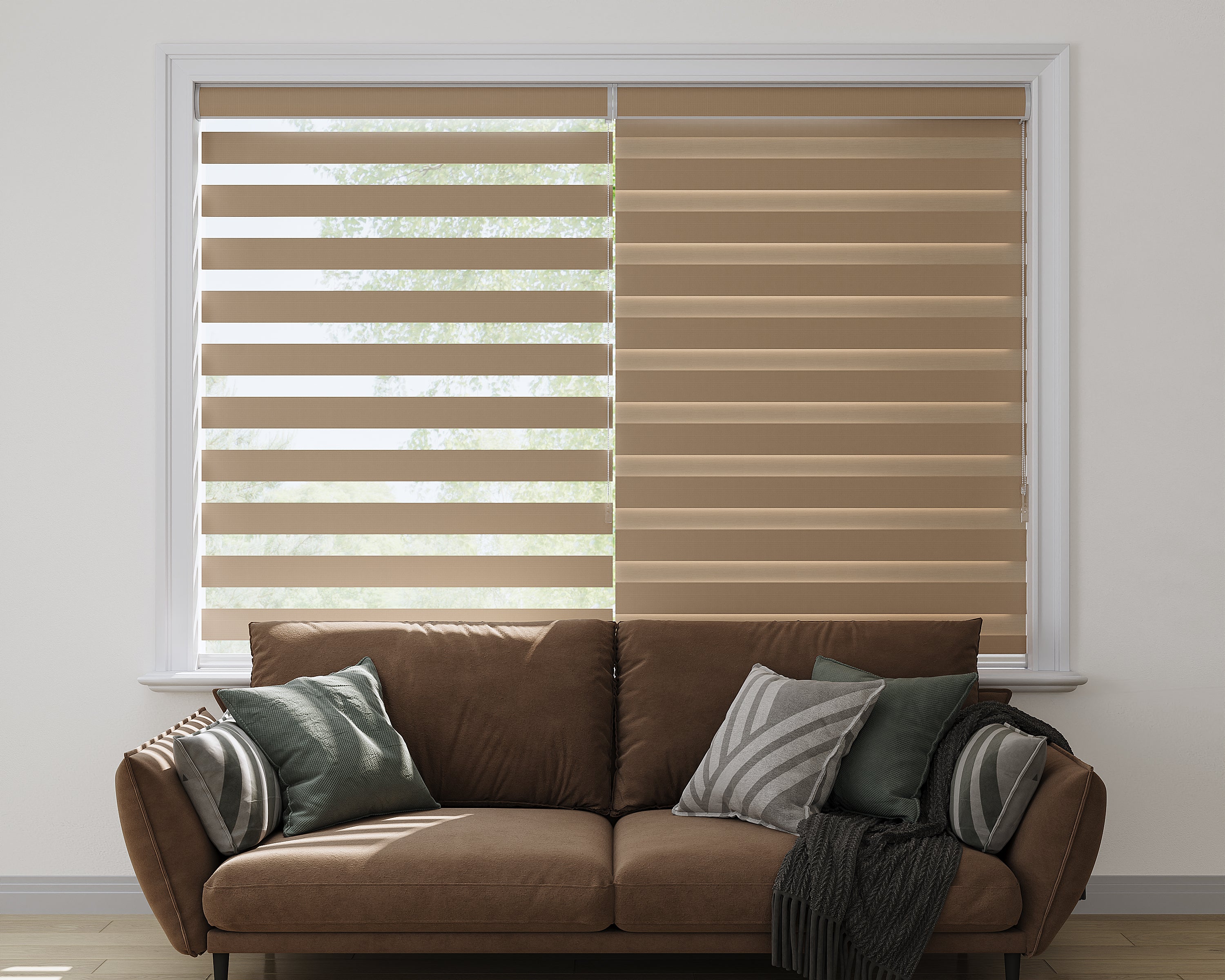
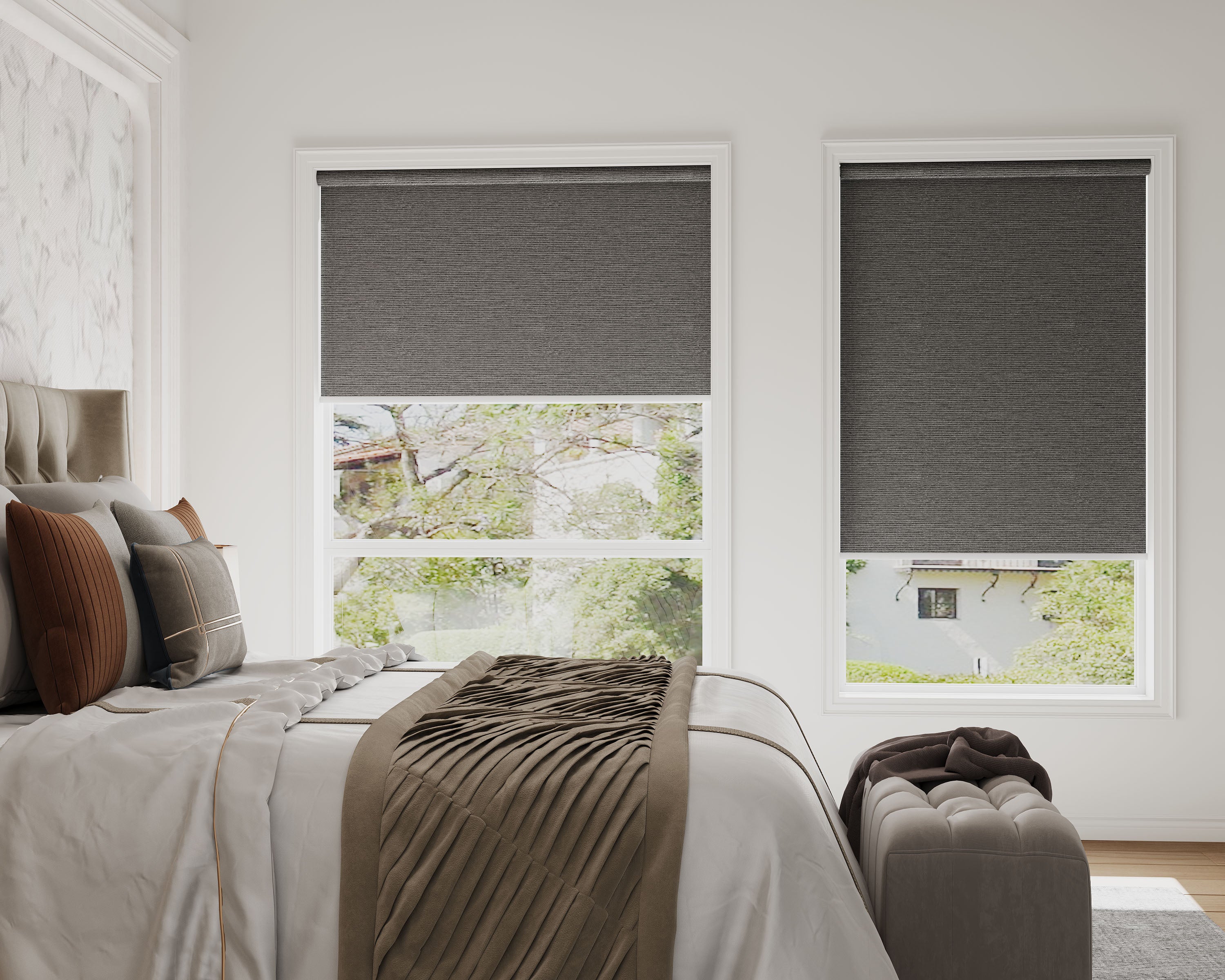
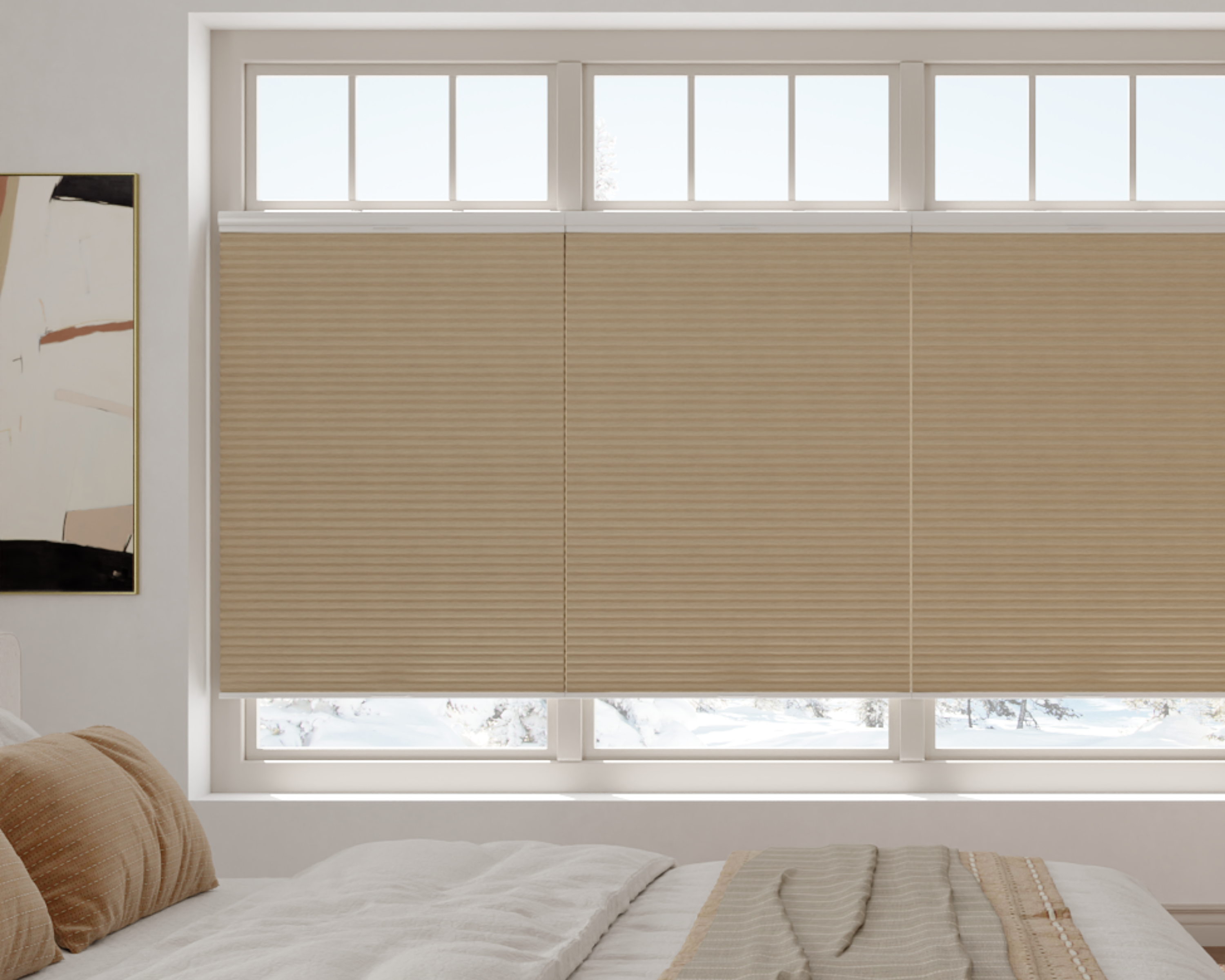
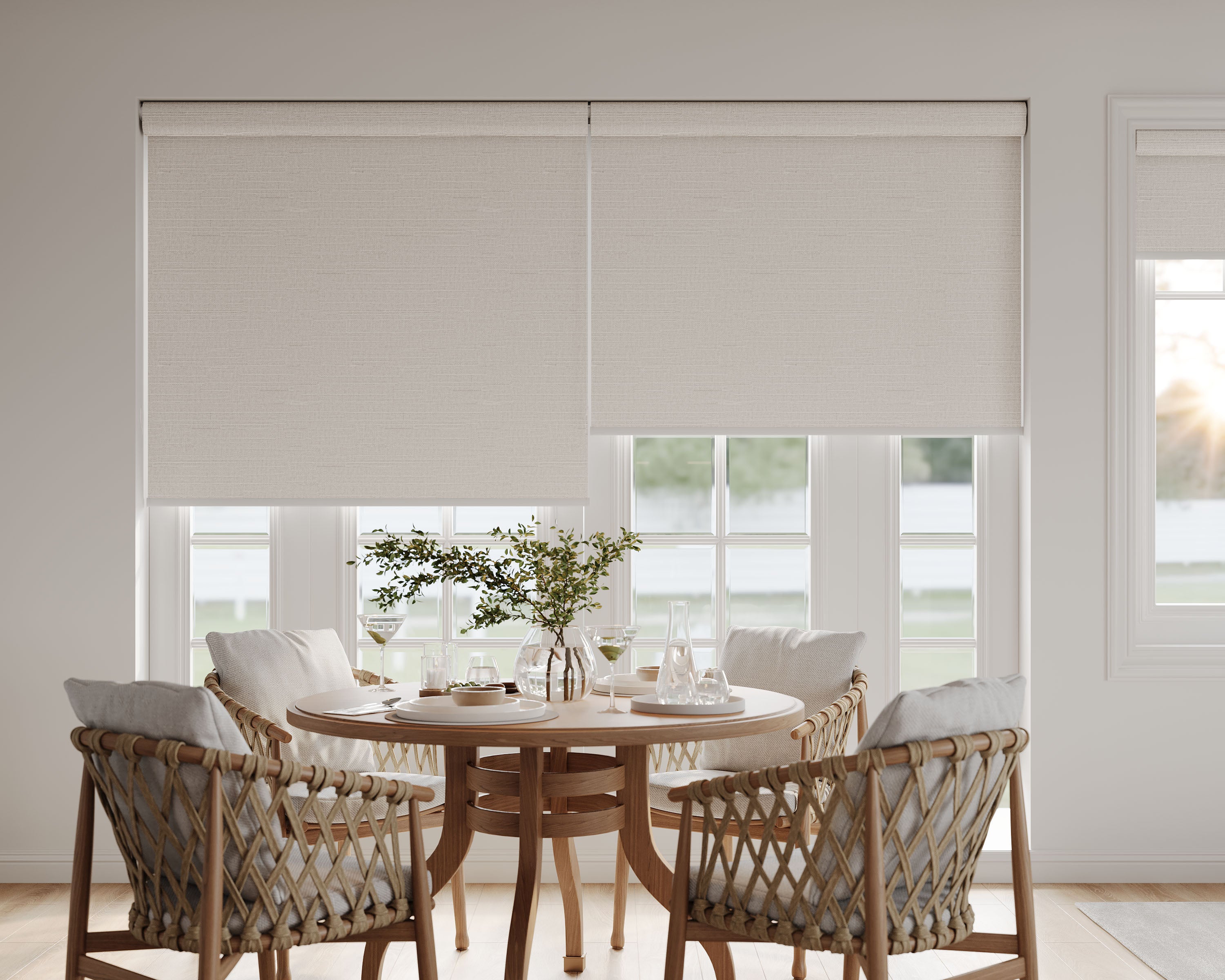


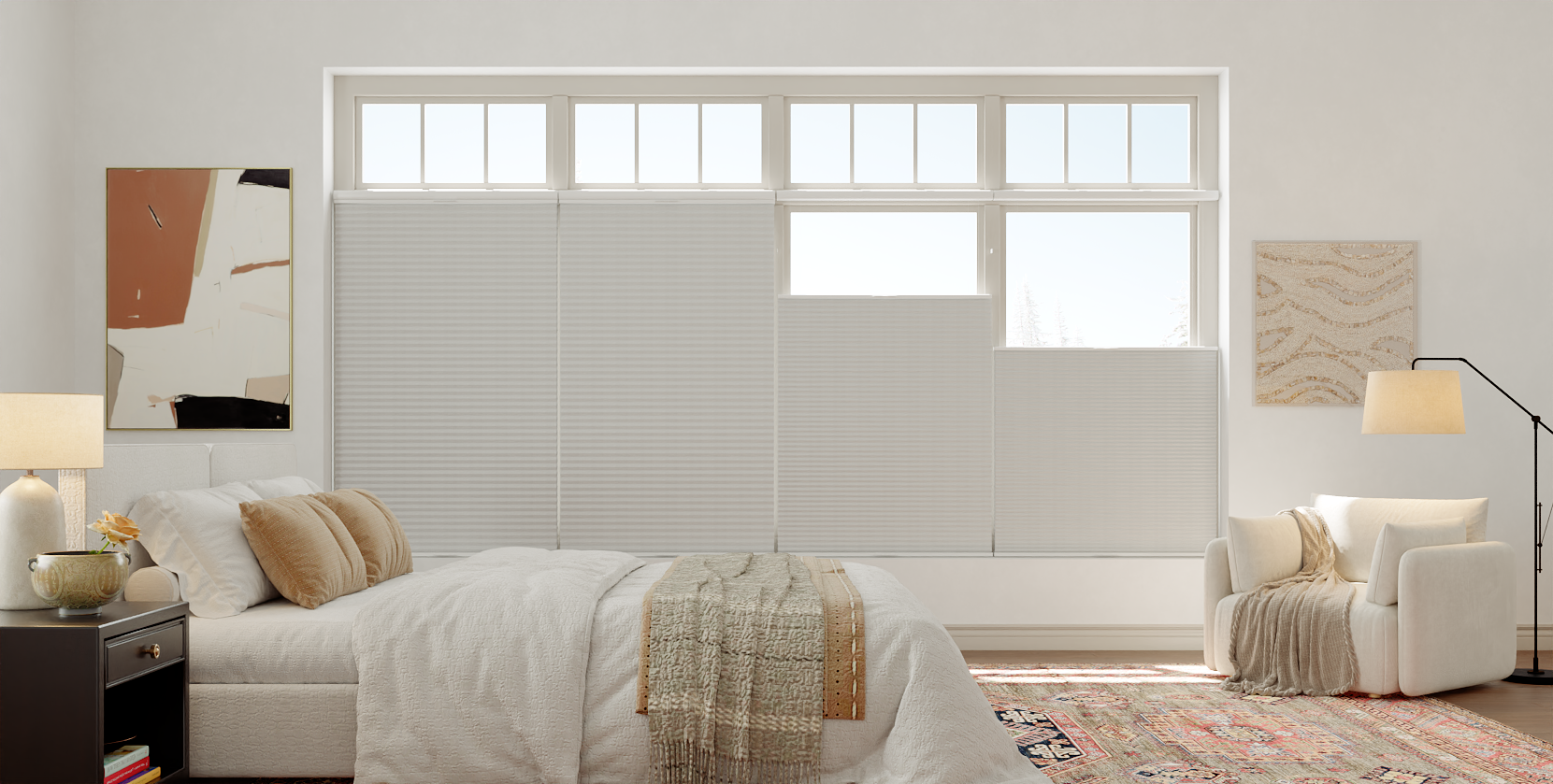


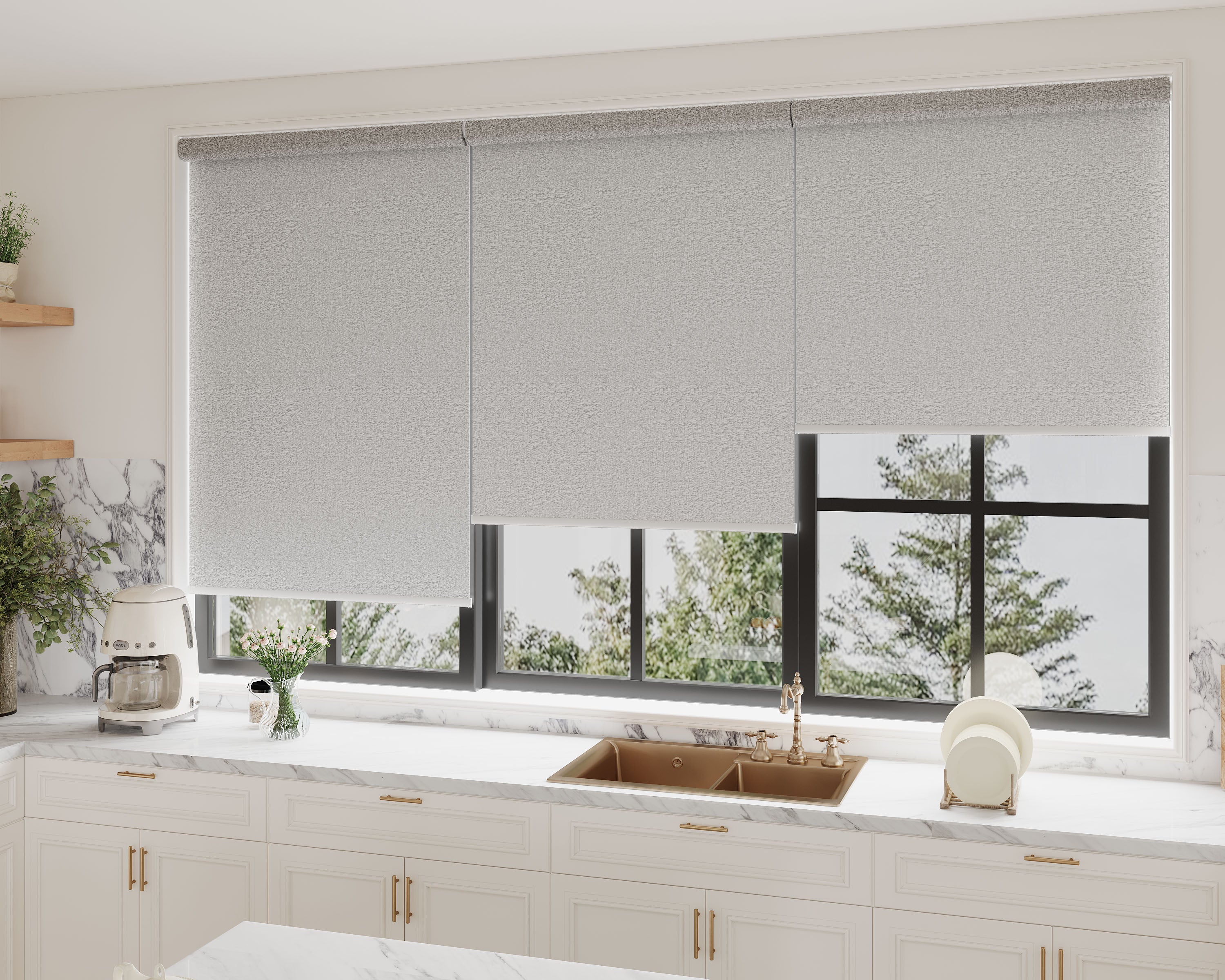

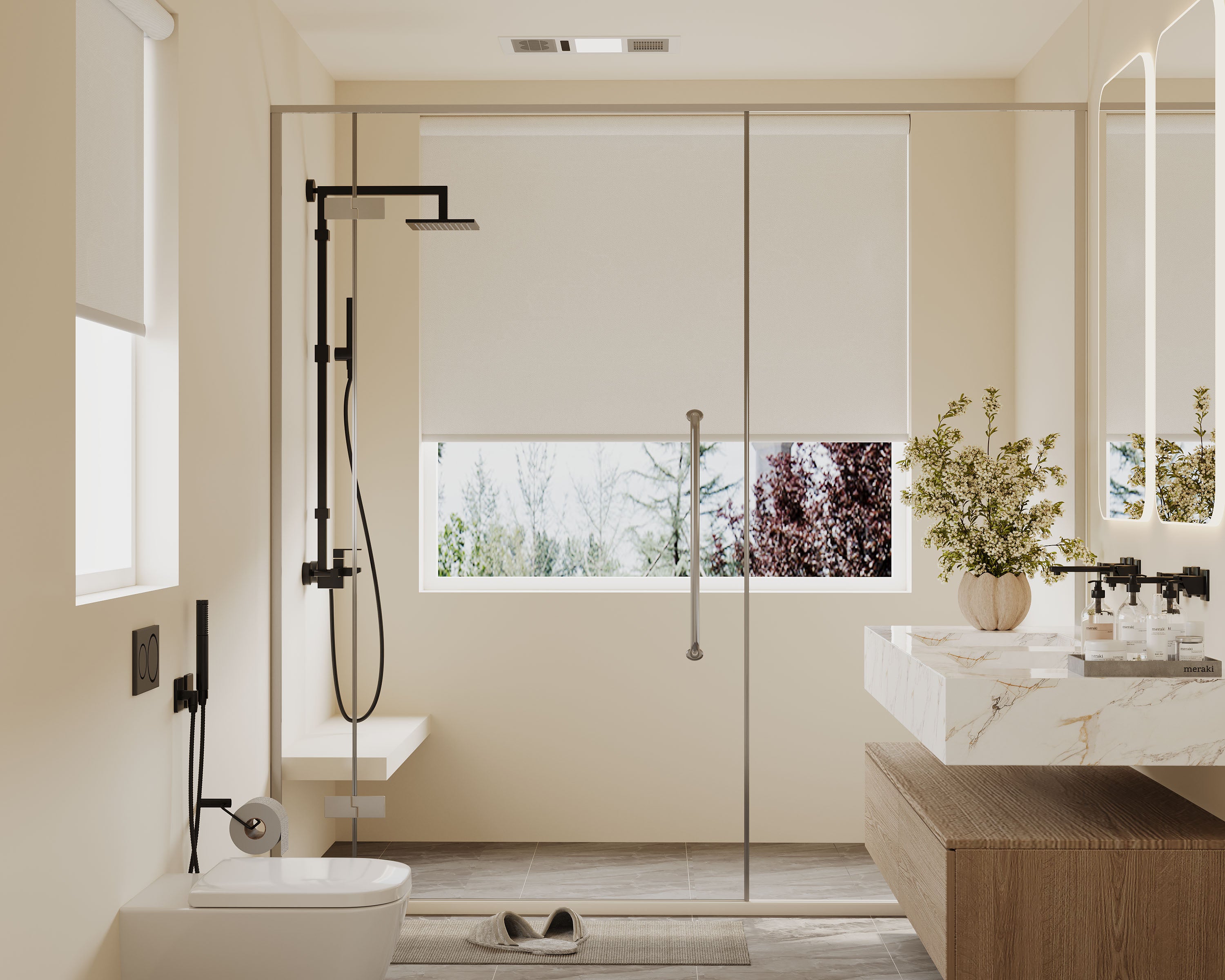


Choose sheer shades for adjustable light diffusion when that mechanism suits the room; choose curtains for fabric coverage, framing and the options available in the selected fabric and lining. Neither category is automatically better at privacy, insulation, safety or ease of cleaning.
Start with custom sheer shades if you want a tailored shade at the window, then compare a curtain or layered configuration against the same practical needs. Compare appearance and performance separately.
Compare the daily experience
| Decision | Sheer shades | Curtains |
|---|---|---|
| Changing daylight | Vane-based models can alter diffusion and coverage within their operating limits. | Panels can be opened partly or fully; fabric and lining determine transmission. |
| Privacy after dark | Depends on fabric, vane position and sightlines. | Depends on opacity, coverage and panel overlap. |
| View while covered | A filtered view may remain through sheer material. | A sheer panel can also retain a filtered view; opaque panels obscure it. |
| Space around the window | Check headrail projection, rolled stack and handles. | Check rod projection, stacking width and furniture clearance. |
| Cleaning | Follow the exact shade's delicate-fabric and mechanism instructions. | Follow the fabric/lining label; laundering is not suitable for every panel. |
| Cost | Compare the configured size, fabric, lift and installation. | Compare panel fullness, lining, hardware and installation. |
A sheer-vane shade and a sheer curtain are both light-diffusing coverings. Neither should be treated as an opaque screen merely because it looks private in daytime photographs.
Privacy needs a nighttime check
View the window from outside with the room lights on. Check nearby windows and street-level sightlines, not just the view straight across the room. Closing vanes may improve coverage, but privacy depends on the selected fabric and complete installation.
For a bedroom or bathroom, choose adequate opacity and coverage rather than assuming a sheer can provide full privacy while keeping an unrestricted view. If a secondary opaque covering is required, include it in both the budget and mounting plan.
Choose for the room's actual task
In a home office, test a fabric sample with the monitor in its working position. Glare depends on the sun, screen angle and fabric, so there is no universal sheer-shade winner. Curtains can be adjusted partly, and a shade can be raised or tilted within its model's limits.
For bedrooms, decide whether reducing light is sufficient or whether you need a more complete blackout arrangement. Blackout roller shades are another style to compare, but fabric opacity does not remove edge gaps automatically. Lined curtains also depend on side coverage, top light leakage and the selected lining.
In a living room, appearance may decide the choice once light and privacy needs are met. Sheer shades can provide an integrated window finish; curtains can introduce scale, color, pattern and softer folds. These are design preferences rather than evidence of better engineering or longer life.
Check the opening before choosing hardware
Measure recess depth, handles, tilt-in or opening sections and the space needed for the treatment when raised or stacked. A custom size does not establish that a product fits every bay, French door or sliding opening.
For doors, consider how often someone needs access and whether the covering must be moved completely. Confirm the selected system's available widths, mounting surfaces and projection. Compare a drawing or dimensioned specification rather than assuming the shade is flush or the curtain will interfere.
Layering can solve two different needs
Layering can work well when the shade provides convenient daylight control and curtains add the desired appearance or evening coverage. Allow space for both systems and confirm that brackets, fabric and controls do not collide.
Use the secondary layer deliberately. An opaque curtain may address nighttime privacy; decorative stationary panels may only frame the window. Neither is a guaranteed soundproofing or thermal system. Any quantified UV or energy claim needs evidence for the specific fabric and configuration.
Maintenance and operation
Use the manufacturer's care instructions for both layers. Avoid heat, steam, aggressive vacuuming, soaking or generic spot cleaners on a delicate shade without approval. Curtain panels with linings, trims or special finishes may require different care from a plain washable fabric.
Motorized systems are available in some shade and curtain ranges, but raising, tilting, traversing, app control and scheduling are separate capabilities. Confirm the selected motor/controller and charging or wiring access before purchase.
Where young children live or visit, follow CPSC's cordless guidance. Compare actual operating cords and hardware; do not assume every sheer shade is cordless or that ordinary manually drawn curtains require hazardous draw cords.
What to compare in a quote
Ask for the complete width and drop, fabric/lining, mounting projection, stack or roll dimensions, operation and installation scope. Add any second privacy layer to the same comparison. This makes a ready-made curtain quote and a custom sheer shade quote easier to assess fairly.
Browse sheer shade options after deciding how much light and privacy the room needs. Choose the look once the practical arrangement works at your window.
Frequently asked questions
Which protects furnishings from fading better?
Compare fabric-specific UV and visible-light performance at the intended position. Sun fading has multiple causes; neither treatment guarantees prevention or a category-wide protection percentage.
Which lasts longer?
Fabric, sun exposure, care, hardware and daily use matter more than a universal lifespan range. Compare the actual warranty and replaceable components rather than assuming a fixed shade-versus-curtain service life.
Can I combine sheer shades and curtains?
Yes, where the mounting space and chosen systems allow it. Confirm clearances and make sure the opaque layer provides the coverage you expect if nighttime privacy is its purpose.
Related product choices
Compare the selected fabric, lift and configuration for the task described above.
