
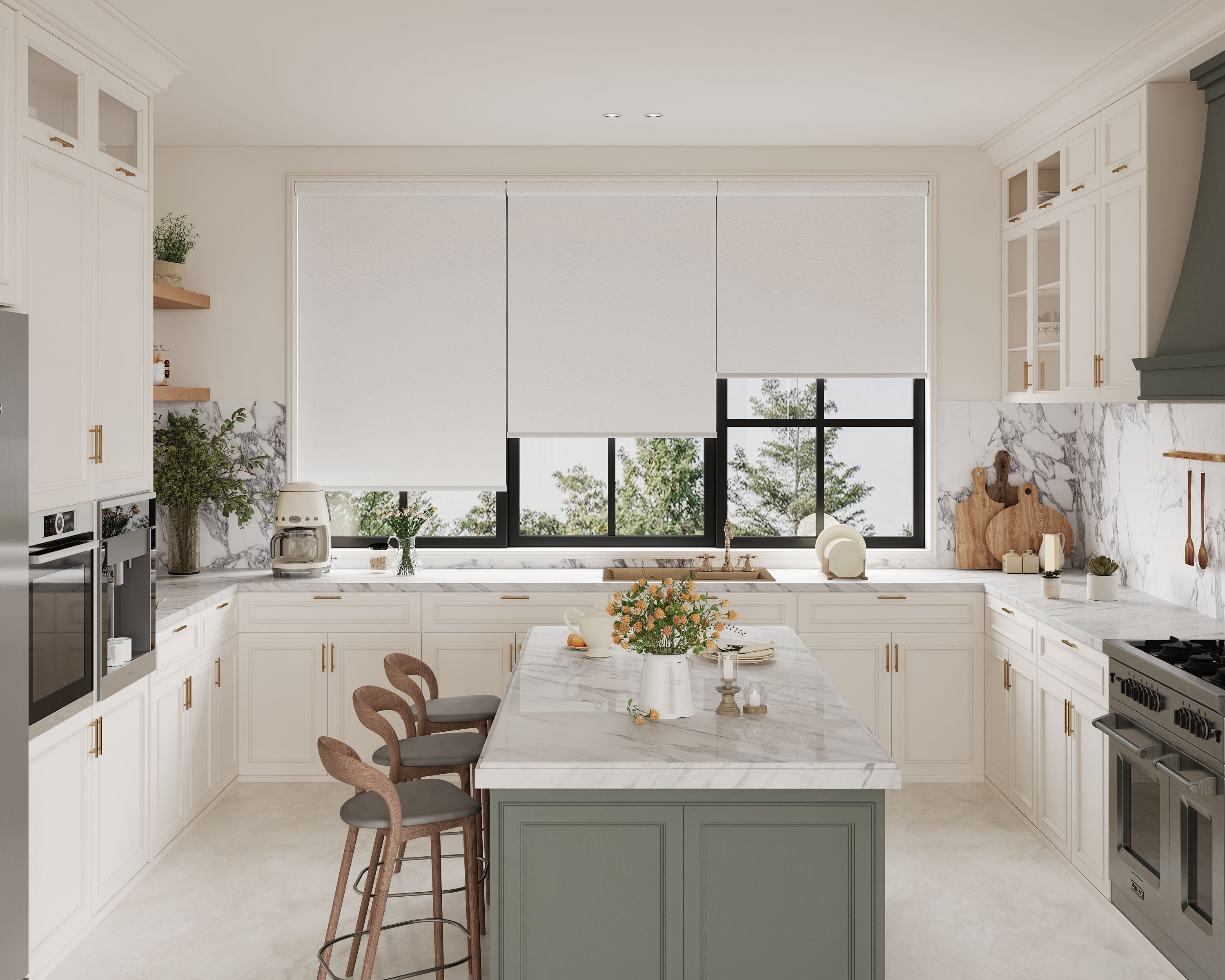
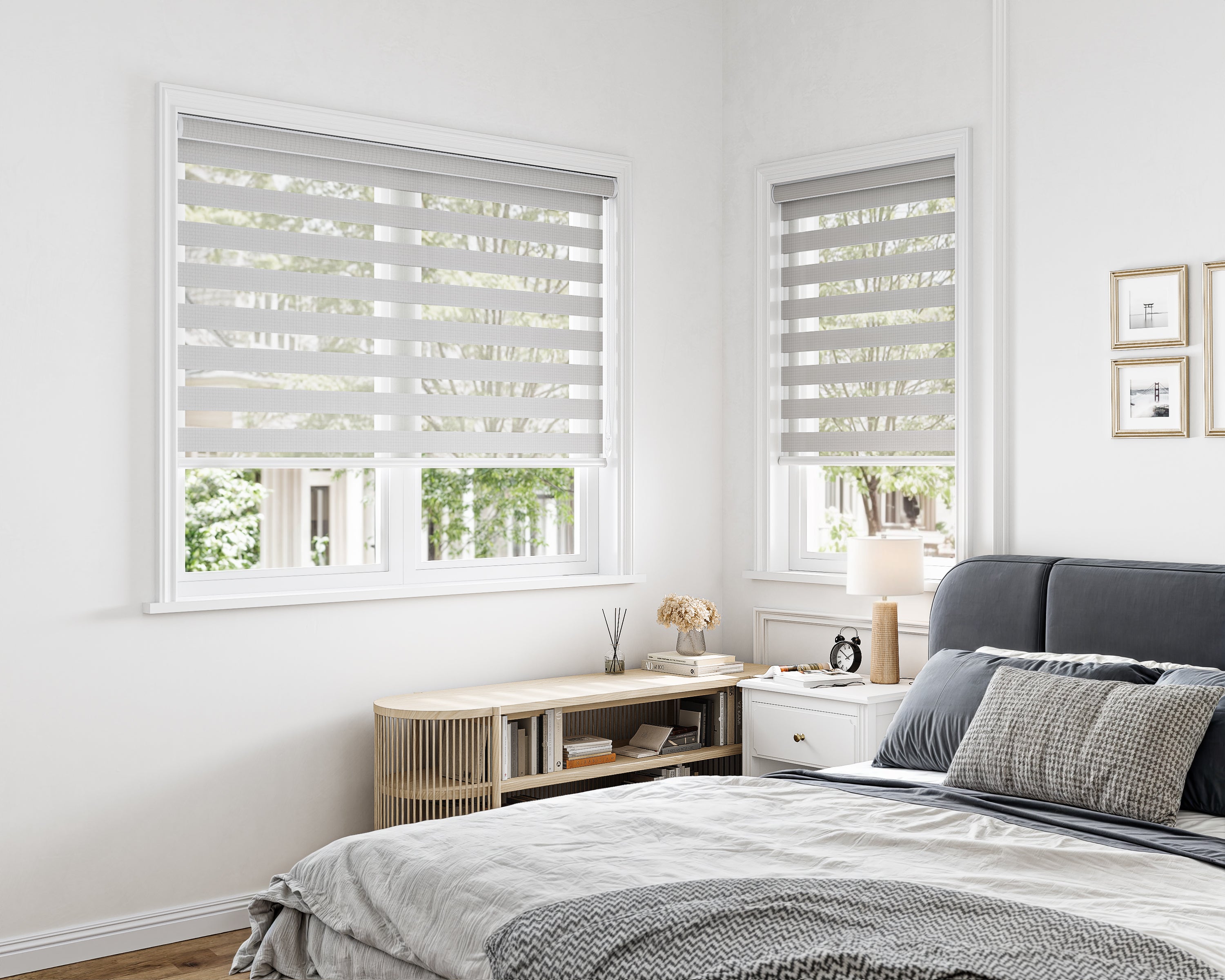
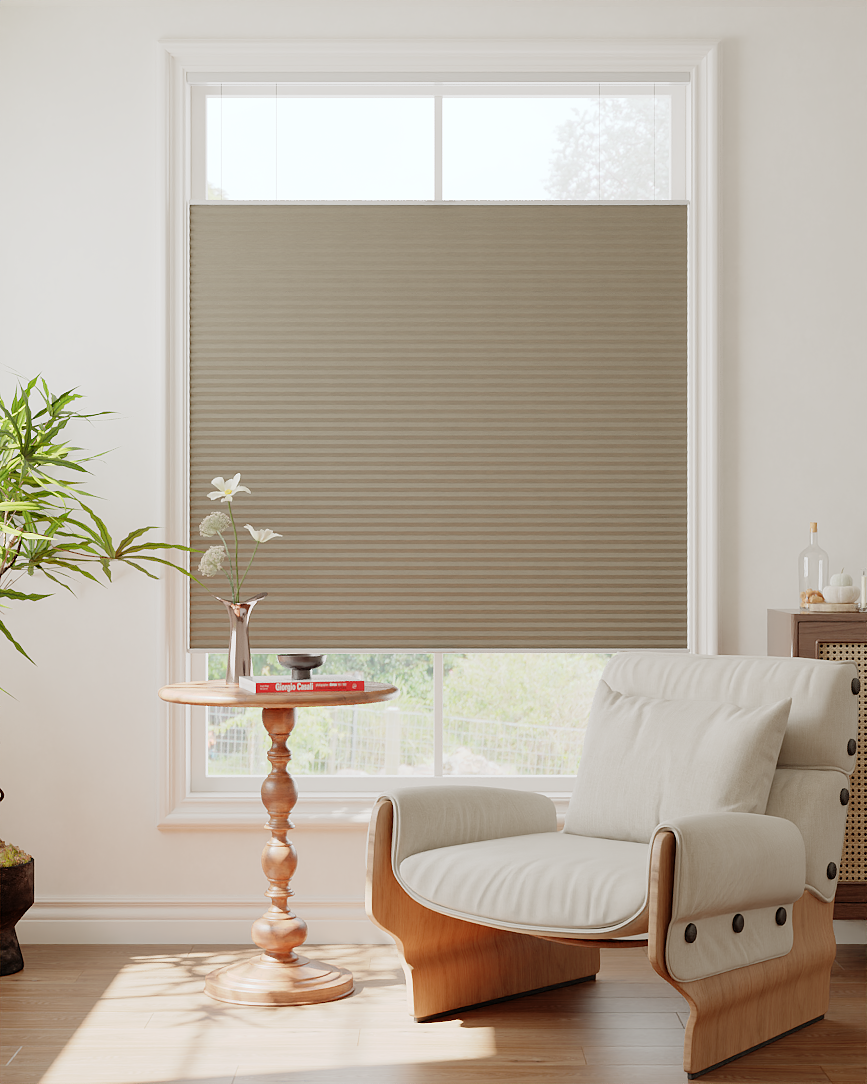
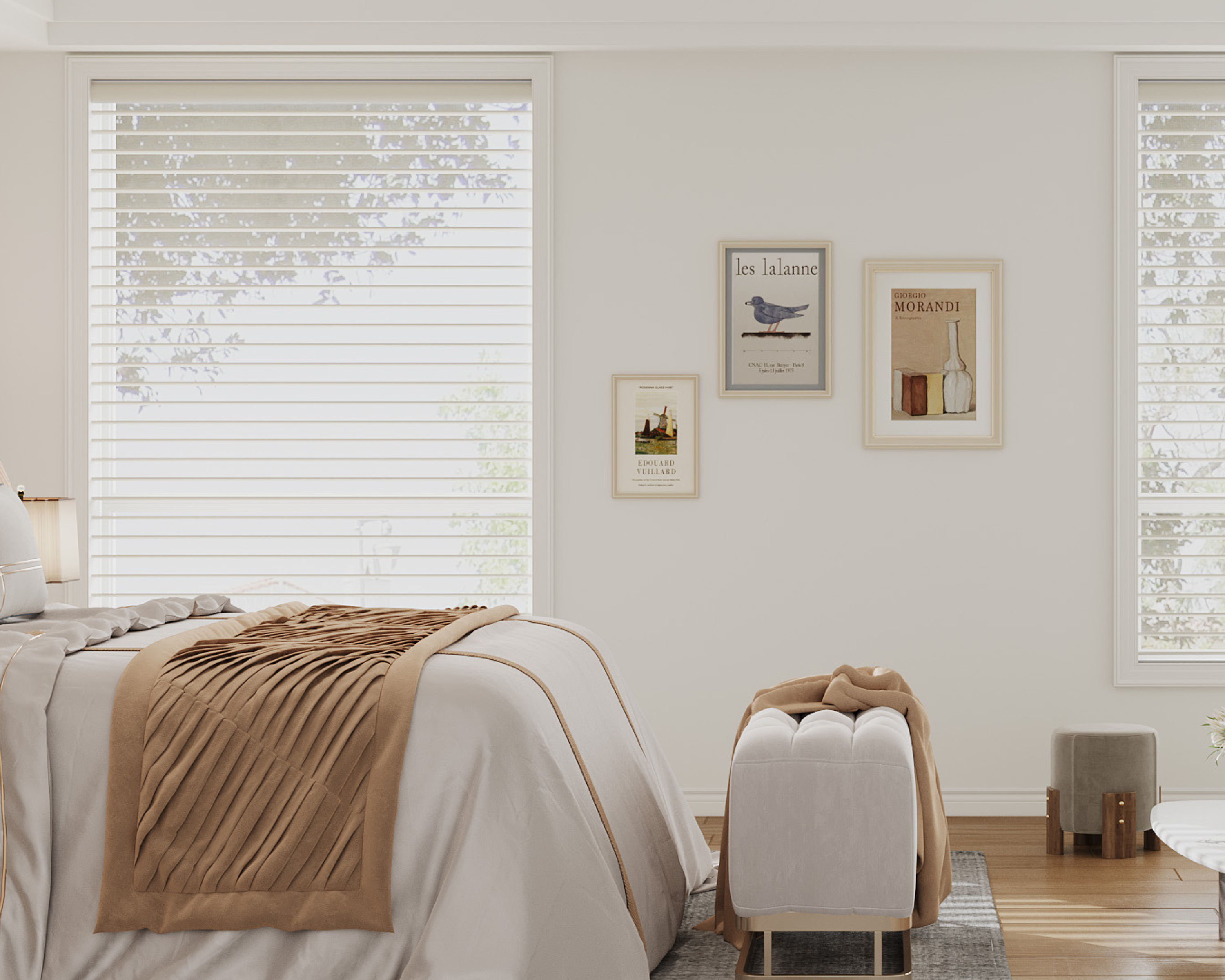
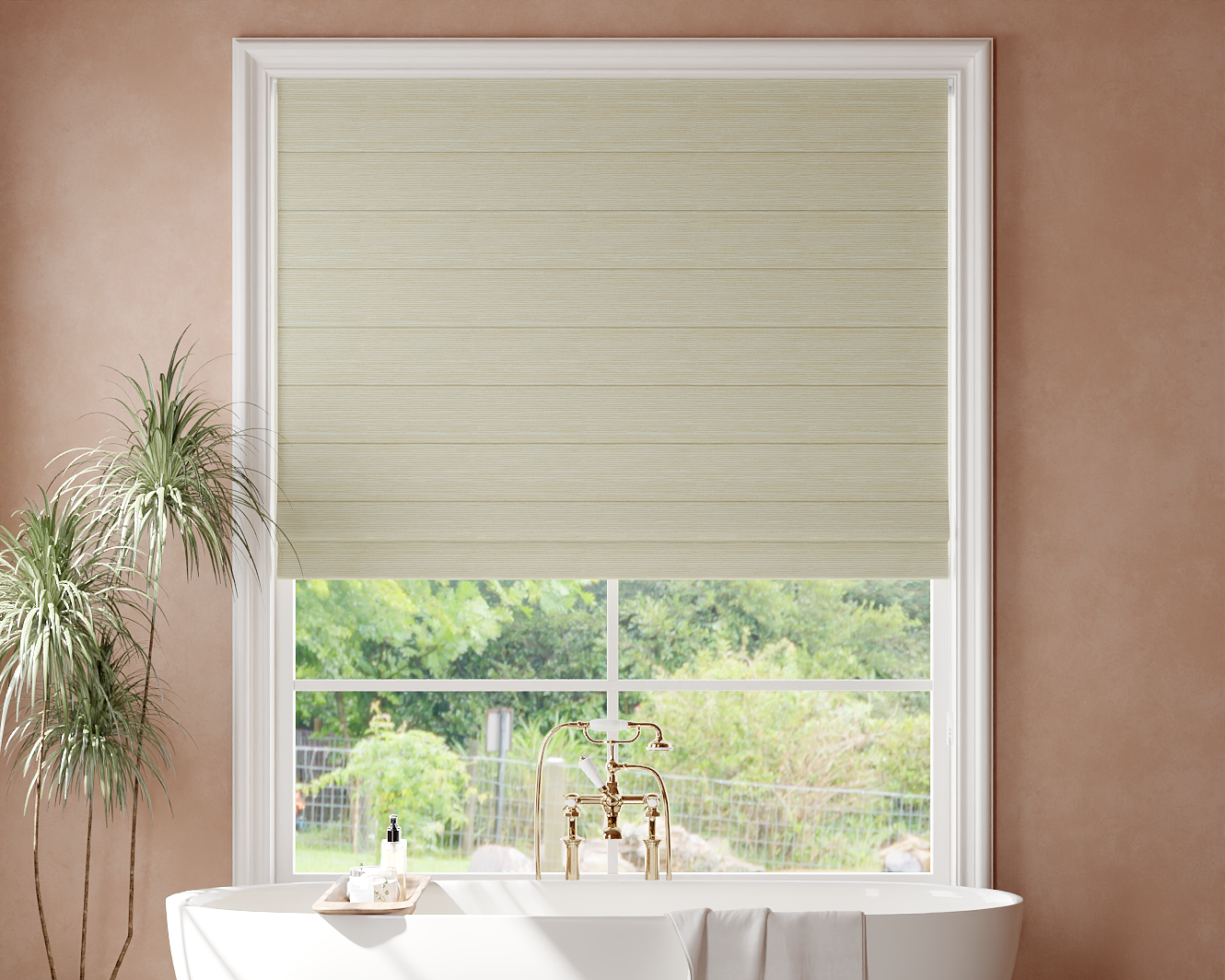
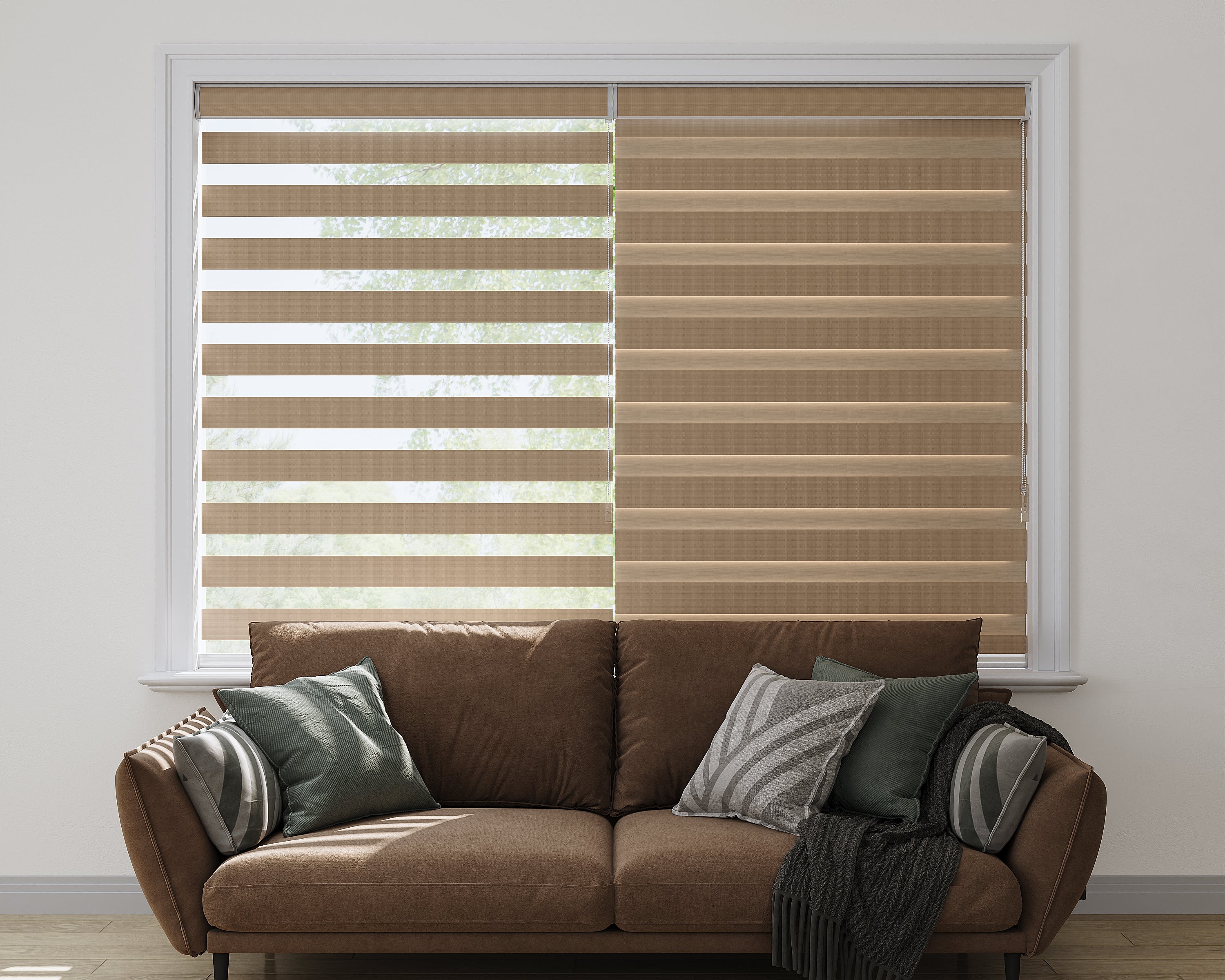
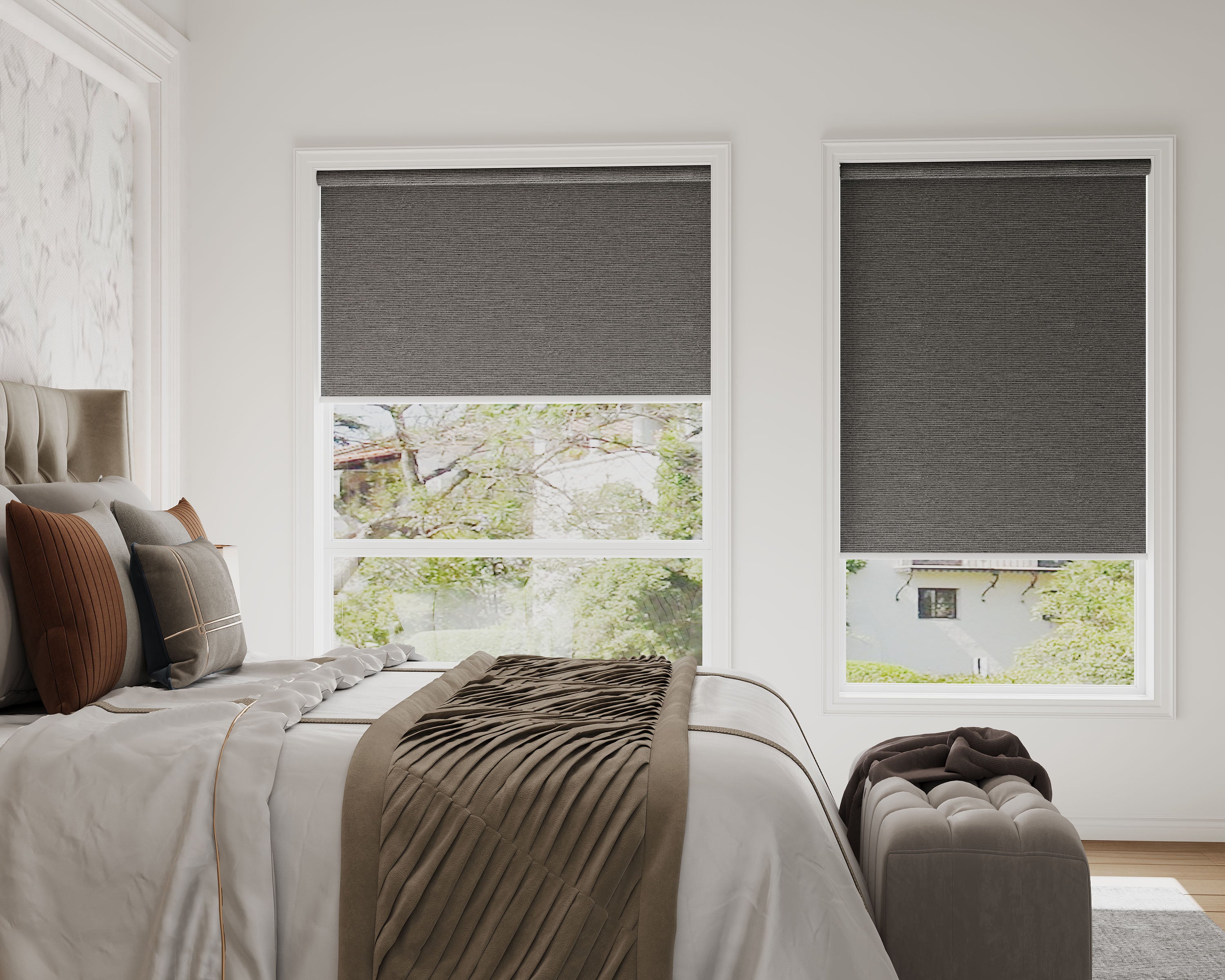
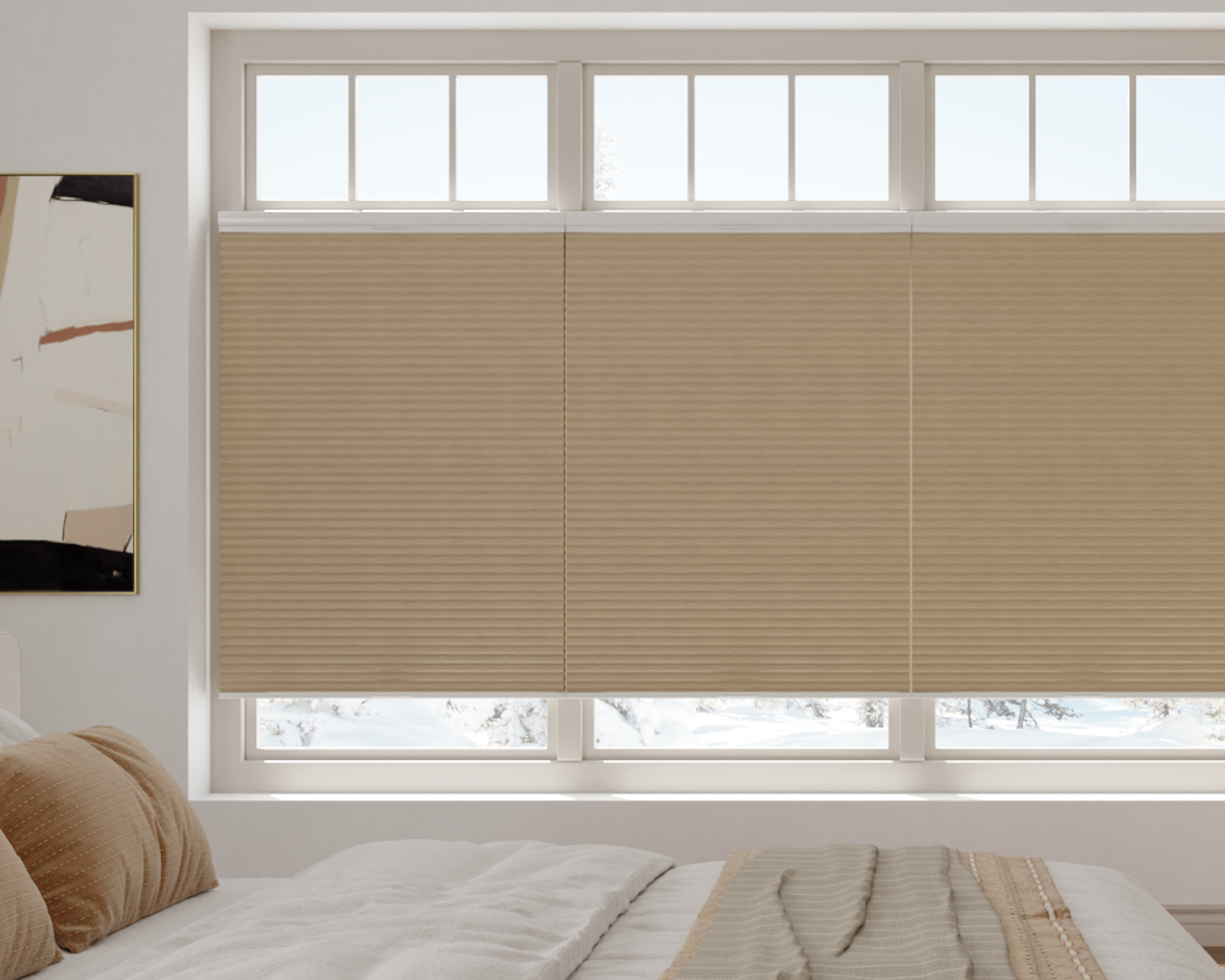
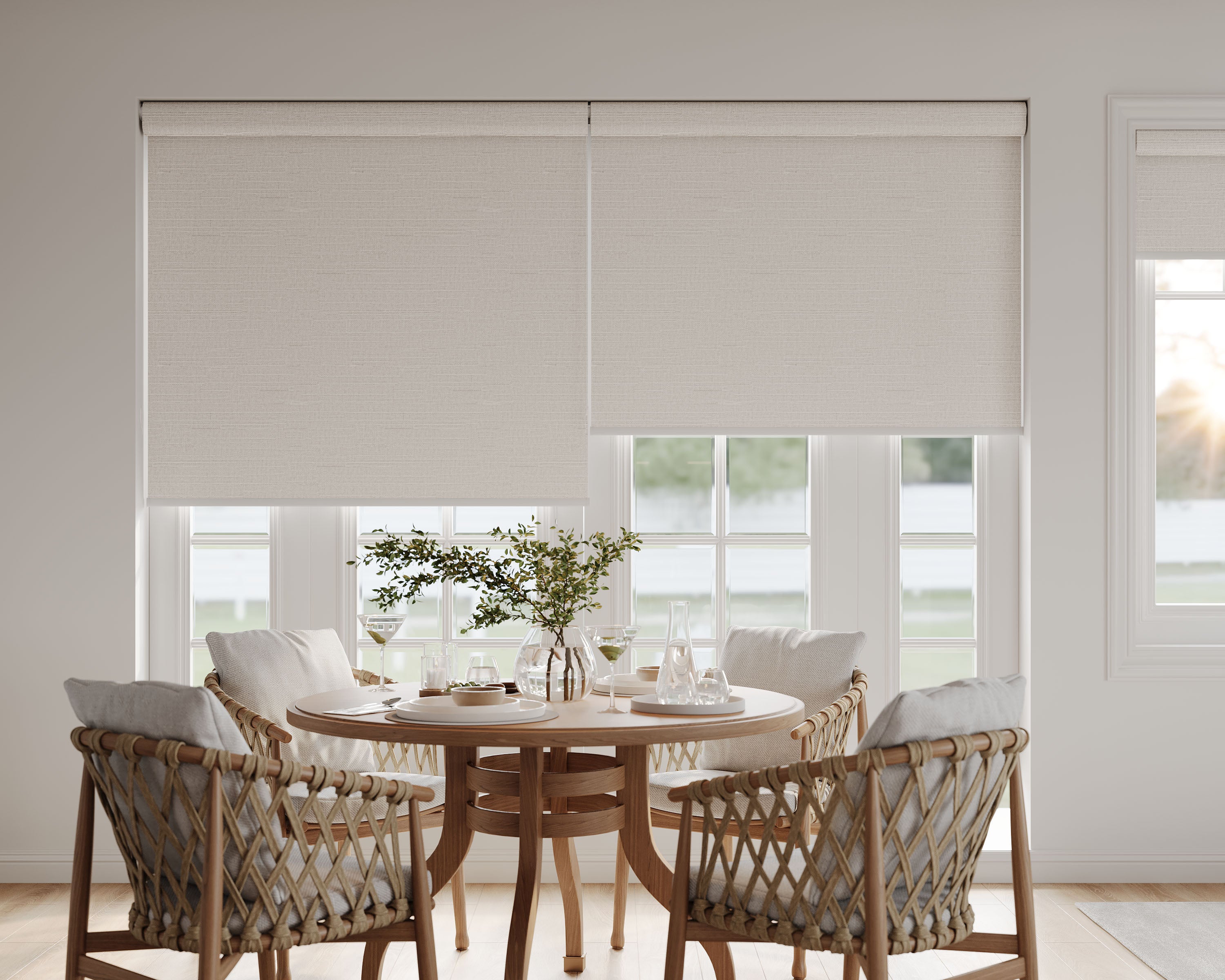


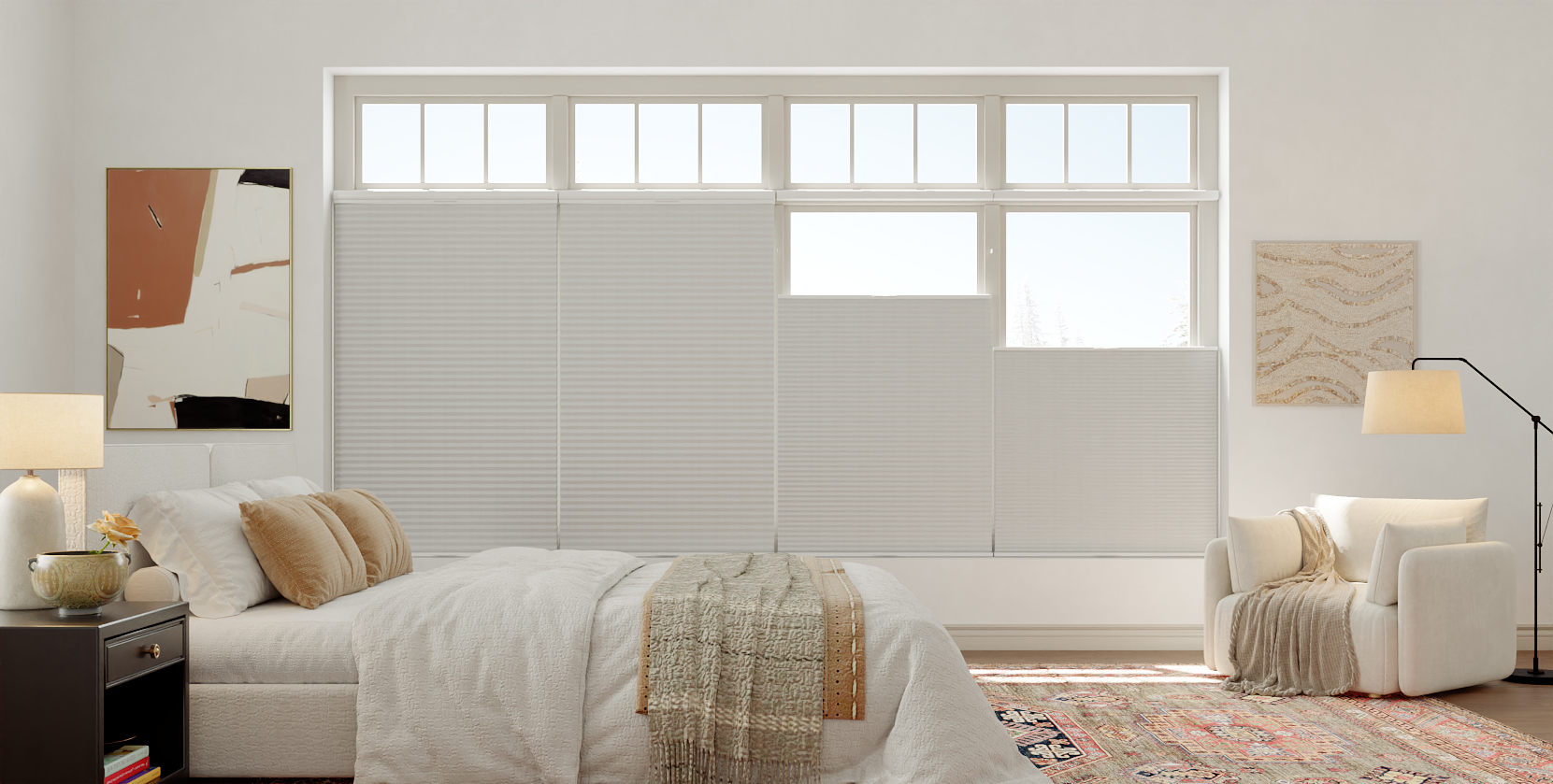


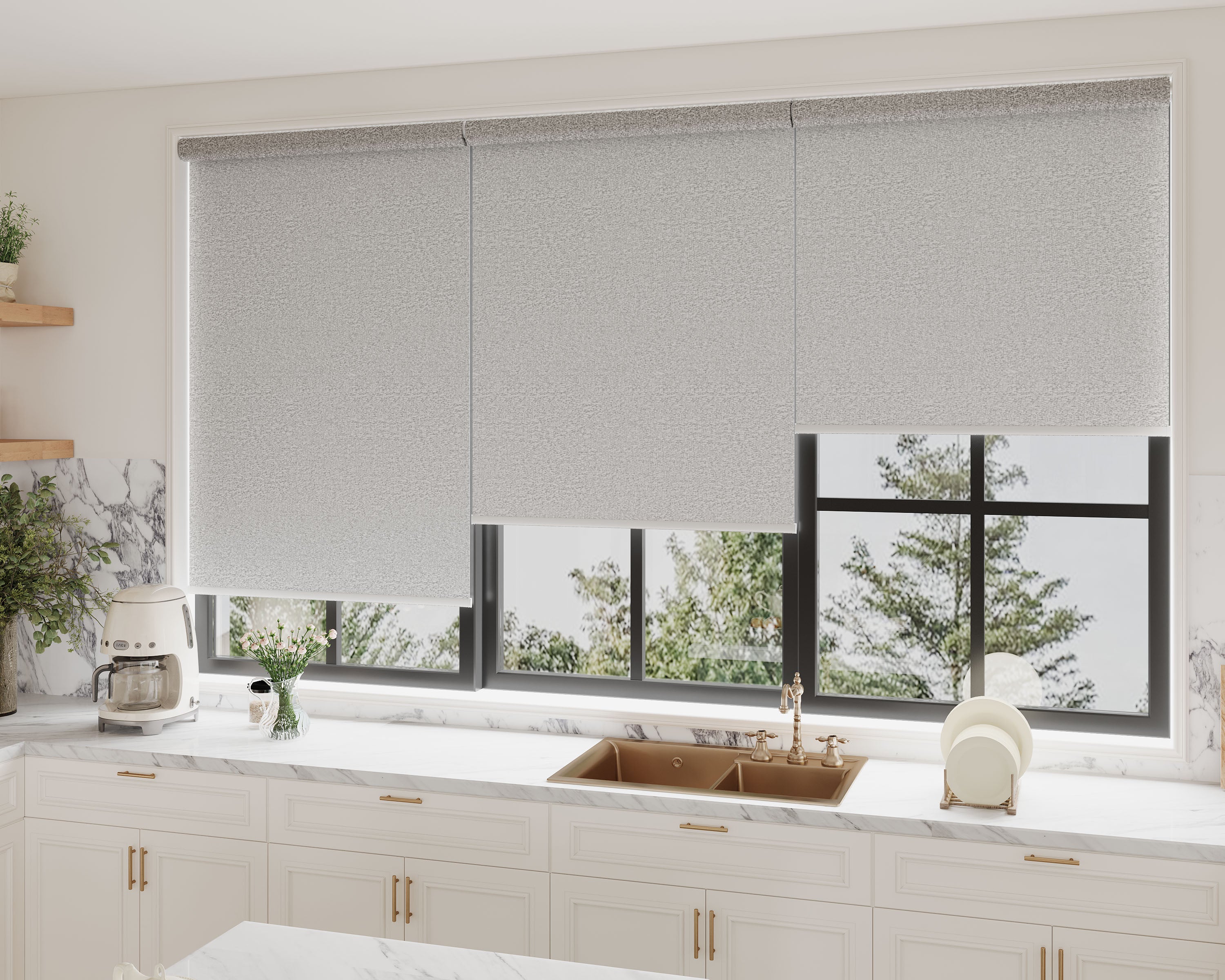

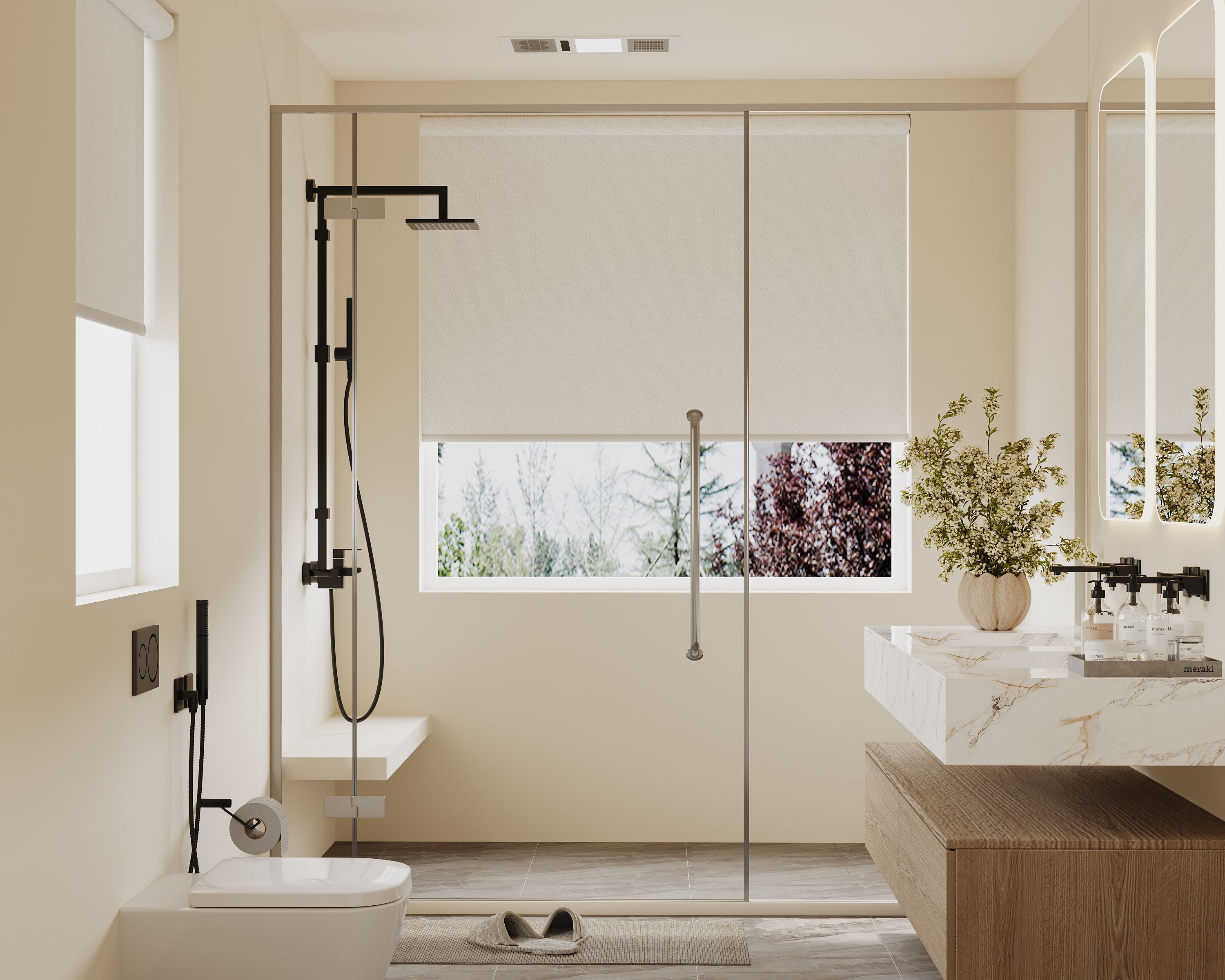


Your home office requires a unique balance: it needs to be a professional, productive space while also being a comfortable part of your home. Roman shades are an excellent choice to achieve this balance, offering precise light control for screens, a tailored aesthetic for video calls, and the ability to personalize your workspace. This guide will help you select Roman shades that reduce eye strain, enhance concentration, and create a boundary between work and home life.
Here’s what you’ll learn:
-
How to select the perfect fabric opacity to eliminate screen glare without creating a dark cave.
-
The importance of privacy for concentration and professional video call backgrounds.
-
How Roman shade style and color influence the professionalism and mood of your office.
-
Practical features like motorization that enhance daily functionality.
-
How to address specific window orientations and external distractions.
To find the perfect blend of function and style for your workspace, explore our collection of tailored Roman shades for focused environments.
Core Considerations for a Productive Workspace
A home office has specific functional demands that differ from other rooms. Your window treatments should actively support productivity and comfort.
Managing Glare and Natural Light
The single most important factor is controlling light to prevent glare on computer monitors, which causes eye strain and fatigue. The goal is not total darkness, but diffused, indirect natural light. Harsh direct sun must be softened or redirected. As noted in guides on home office lighting, managing glare is paramount for comfort and focus, and the right window treatment is your primary tool.
Maintaining Privacy and Professionalism
Privacy is crucial for concentration and for presenting a professional backdrop on video calls. Your shades should provide a visual barrier from the outside world, turning your office into a defined, private zone. The treatment itself also forms part of your video call background, contributing to your professional image.
Supporting a Focused Ambiance
Colors, textures, and styles should promote calm focus rather than distraction or overly casual vibes. The window treatment should feel intentional and integrated into a purposeful workspace.
Selecting the Right Roman Shade for Office Function
The Best Fabrics and Linings for Screen Work
Your fabric choice is directly tied to managing light quality.
-
Light-Filtering Shades: The top recommendation. They diffuse harsh sunlight into a soft, ambient glow that illuminates the room evenly without creating hot spots or glaring reflections on screens. This maintains a connection to the outdoors and a positive mood without the productivity cost of glare.
-
Solar Shades: A superb high-performance option, especially for south or west-facing windows. They are designed to reduce glare and cut solar heat gain while preserving some degree of outward view. Their synthetic fabrics are highly effective at filtering the sun's harshest rays.
-
Lining is Key: A light-filtering or room-darkening lining is typically sufficient. A full blackout lining is usually overkill for an office and can make the space feel too isolated, potentially harming productivity and mood. The choice of lining significantly impacts light quality, as detailed in our guide to selecting the best lining for your needs.
Style and Color for a Professional Atmosphere
-
Shade Style: Flat fold Roman shades offer a crisp, minimalist, and professional appearance. Their clean lines are undistracting and modern. Relaxed Roman shades can add a touch of softer, creative comfort but should be in a structured fabric to avoid looking too casual.
-
Color Palette: Opt for neutrals and mid-tones that are easy on the eyes and provide a consistent background. Shades of gray, navy, warm taupe, olive green, or deep blue are excellent for promoting focus. Avoid overly bright or pure white shades that can cause screen contrast issues.
Practical Features for a Modern Home Office
Motorization: The Ultimate Productivity Upgrade
Motorized Roman shades are a significant quality-of-life improvement for a home office.
-
Precision & Convenience: Adjust light exactly where you need it throughout the day without leaving your desk, using a remote, app, or voice command.
-
Smart Scheduling: Program shades to lower automatically during peak glare hours (e.g., midday on a west-facing window) and raise later in the afternoon.
-
Professional Presentation: Smooth, quiet motorized adjustment during a video call looks polished and allows you to quickly optimize your lighting. The benefits are expanded upon in our analysis of motorized versus manual systems.
Addressing Specific Window Challenges
-
Large or Multiple Windows: For walls of windows, ensure shades are sized and operated in a way that manages light uniformly. Consider multiple shades on one controller. Our guide on solutions for large windows covers support and scale.
-
Distracting Views: If your window looks directly onto a busy street, a top-down/bottom-up Roman shade allows you to lower just the top portion to block the distraction while still allowing light in from the upper part of the window.
-
Ergonomics & Placement: Your desk orientation matters. If possible, position your desk so the window is to the side of your monitors, not directly in front or behind them, to minimize glare. The shade then helps fine-tune the ambient light.
Design and Layout Recommendations
Creating a Cohesive Workspace
Your Roman shade should be part of a holistic design. Pair it with:
-
Adequate Task Lighting: Overhead and desk lamps to complement natural light when shades are partially closed.
-
Cable Management & Organization: A clean space supports a focused mind; let your tidy, well-chosen window treatment set the tone.
-
Acoustic Considerations: While Roman shades don't provide major soundproofing, heavier fabrics with lining can help slightly dampen exterior noise, contributing to a quieter focus environment.
Installation for Optimal Performance
For the best light control, an outside mount that allows the shade to fully cover the window glass is often most effective at minimizing side glare. However, a precise inside mount can look very clean and built-in if your priority is a minimalist aesthetic. The choice depends on your primary goal, as explained in our inside vs. outside mount comparison.
Conclusion and Key Recommendations
Your home office Roman shades should be selected as a tool for better work.
Prioritize Glare-Free Light: Choose light-filtering or solar fabrics to create soft, even illumination that protects your eyes and screen visibility.
Uphold a Professional Tone: Select tailored styles and focused colors that define your workspace as an area for serious work.
Embrace Smart Control: Strongly consider motorization for effortless, precise light adjustment that supports your workflow throughout the day.
Don't Sacrifice All Natural Light: The goal is to manage light, not eliminate it. Maintain a connection to the outdoors to support well-being and prevent a closed-in feeling.
Key Highlights:
-
Glare is the Enemy: The primary function of a home office shade is to create diffused, indirect light that eliminates screen glare.
-
Your Background Matters: The shade is part of your professional video presence. Choose a style and color that looks intentional.
-
Automation Enhances Focus: Motorization removes the friction of adjusting your environment, letting you stay in a state of flow.
-
Balance is Crucial: A successful home office shade provides privacy and light control while avoiding a dark, isolating environment.
Shop Roman Shades by Light Control


Frequently Asked Questions (FAQ)
What is the difference between light-filtering and solar shades for an office?
Both reduce glare, but in different ways. Light-filtering shades (often made of fabrics like linen or cotton) diffuse bright light into a soft glow and provide more privacy. Solar shades are made of a synthetic, screen-like material that cuts glare and heat while allowing a more transparent outward view, though offering less privacy. For intense sun exposure, solar shades are more technically performant.
Should I get blackout Roman shades for my home office?
Generally, no. Total blackout is typically counterproductive in a home office, leading to a reliance on artificial light and potentially lowering energy and mood. A room-darkening or light-filtering shade is preferable. The only exception might be for a dedicated media editing suite where color-accurate, controlled lighting is required.
What if my home office is in a multi-purpose room (e.g., a guest bedroom)?
This is common. Choose a Roman shade that serves both functions. A light-filtering shade in a versatile neutral color works well. It provides a professional look for work hours and a pleasant ambiance for guests. A simple, clean style like a flat fold will suit both purposes. For more on choosing versatile styles, see our guide on Roman shade aesthetics.
How do I measure for a Roman shade in a home office with multiple monitors?
The measuring principle doesn't change with your desk setup. Follow standard measuring guidelines for your window. The key is to then position your furniture based on the window's light. If your monitors cause glare with the shade in a typical position, the shade allows you to adjust the light level until the glare is gone, or you may need to reposition your desk.
Are cordless Roman shades safe and practical for an office with a rolling chair?
Yes, cordless shades are ideal as they eliminate dangling cords that can get tangled with office chairs or pose a safety hazard. They offer a clean look and safe operation. For very large windows, ensure the cordless mechanism is rated for the shade's weight, or opt for a motorized system for effortless control.
