
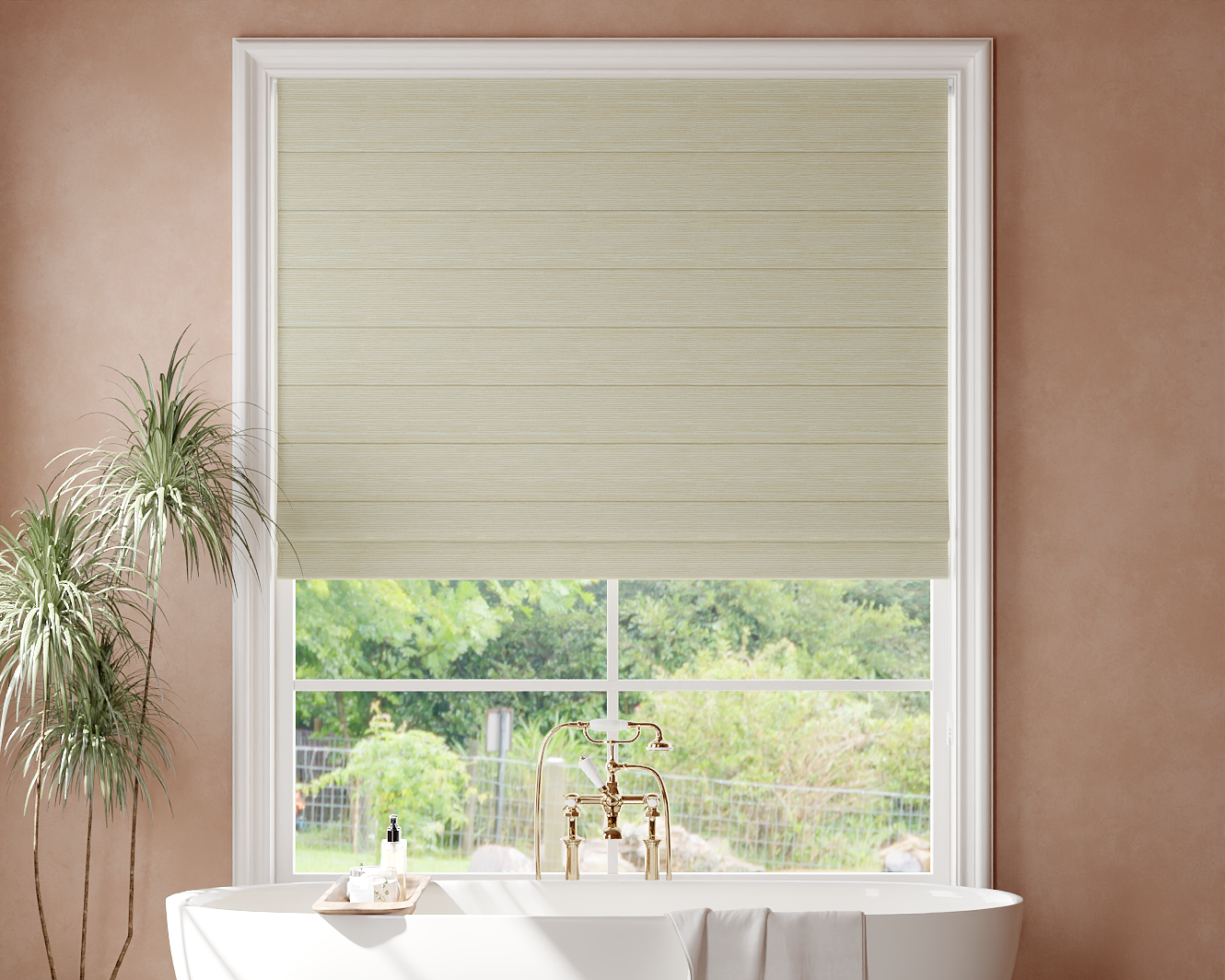
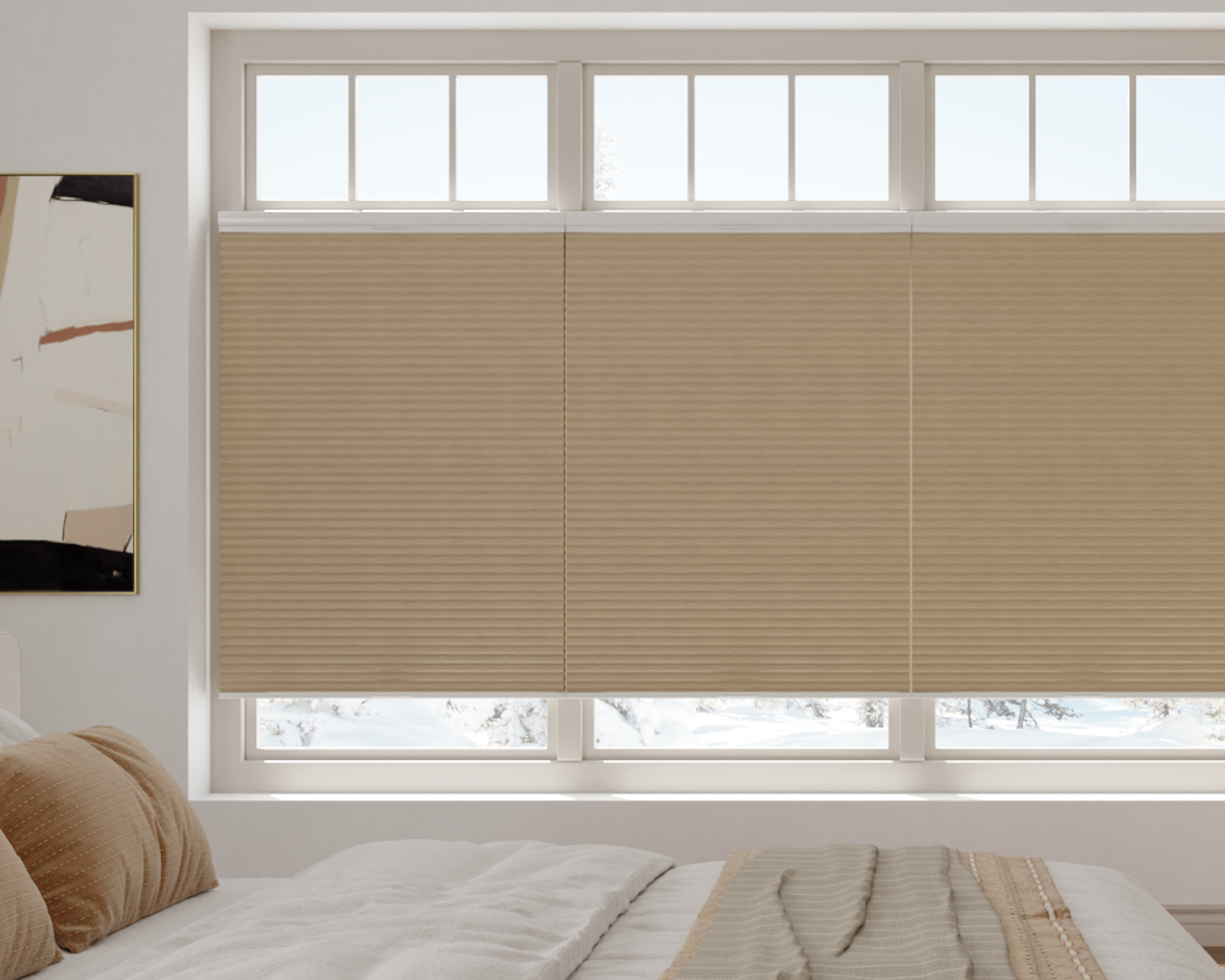







Getting measurements wrong is the most common and costly mistake when ordering custom window treatments. An error of even a quarter-inch can result in shades that don't fit, operate poorly, or ruin the clean look you desire. This guide provides the precise, step-by-step methodology to measure your windows correctly for Roman shades, ensuring a perfect, professional-grade fit.
Here’s what you’ll learn:
-
The critical differences between measuring for an inside mount versus an outside mount.
-
A detailed, step-by-step process with tool recommendations to ensure accuracy.
-
How to handle common window challenges like uneven walls or obstructions.
-
A simple checklist and worksheet to record your measurements before you order.
Beginning with an understanding of the full range of custom Roman shades can help you visualize the finished product and understand why precision is so important.
Before You Start: Tools & Key Decisions
Essential Tools for Accuracy
Gather these items before you begin:
-
A Steel Tape Measure: A rigid, metal tape measure is far more accurate than a cloth or flexible tape.
-
A Notepad and Pencil: To record every measurement clearly. Do not rely on memory.
-
A Level (Optional but Helpful): To check if your window frame or ceiling is perfectly level.
The First Critical Choice: Inside Mount vs. Outside Mount
Your measuring method is entirely determined by this decision. Here’s how to choose:
| Mount Type | Ideal For... | Measurement Focus | Key Requirement |
|---|---|---|---|
| Inside Mount | A clean, built-in look that showcases your window trim. | The inside recess of the window frame (the "depth" is crucial). | Sufficient frame depth to fit the headrail and allow the shade to clear the glass. |
| Outside Mount | Maximizing light coverage, making windows appear larger, or covering problematic frames. | The area on the wall or trim where the shade will be installed. | Enough flat surface around the window to mount the brackets. |
For a comprehensive breakdown of this decision, see our guide on the critical choice between an inside or outside mount.
Phase 1: How to Measure for an Inside Mount
An inside mount places the shade within the window recess. Precision is paramount, as there is zero room for error.
Step 1: Measure the Width
-
Measure the width of the window opening at the top, middle, and bottom.
-
Use the smallest of the three measurements. This ensures the shade will not bind on any part of the frame.
-
Record this exact number as your "inside width." Do not deduct anything—the manufacturer will make the necessary adjustments (typically a ¼" deduction) for a perfect operating fit.
Step 2: Measure the Height
-
Measure the height from the top of the inside recess to the sill (or bottom of the recess) on the left, center, and right.
-
Use the longest of the three measurements. This ensures the shade will be long enough to cover the opening.
-
Record this exact number as your "inside height."
Step 3: Check the Frame DEPTH (The Most Important Step)
-
Measure from the front of the window frame (where the shade will be mounted) to the glass.
-
Compare this depth to the "minimum inside mount depth" required by your chosen Roman shade product. This information is listed in the product specifications.
-
If your frame depth is less than the minimum requirement, you must choose an outside mount.
Phase 2: How to Measure for an Outside Mount
An outside mount provides more flexibility and is often recommended for a flawless look, as it can cover minor imperfections in the window frame.
Step 1: Determine the Desired Coverage
Decide how much of the wall or trim you want the shade to cover. A common recommendation is to extend the width 2 to 3 inches on each side of the window opening to minimize light gaps and make the window appear larger.
Step 2: Measure the Width
-
Measure the exact area you want the shade fabric to cover horizontally.
-
This is your "outside width." Provide this exact measurement; the shade will be made to this dimension.
Step 3: Measure the Height
-
Decide where the top of the headrail will be (typically 1.5-3 inches above the window frame to fully clear it) and where the bottom hem should fall (usually just below the sill or to the floor).
-
Measure from the planned top position to the planned bottom position.
-
This is your "outside height." Provide this exact measurement.
Measurement Worksheet & Pro Tips
Use this table to record your measurements clearly:
| Measurement Type | Width (Record in inches) | Height (Record in inches) | Depth (Inside Mount Only) |
|---|---|---|---|
| Inside Mount |
Top: ____, Middle: , Bottom: ____ Use NARROWEST: **"** |
Left: ____, Center: , Right: ____ Use TALLEST: **"** |
____" |
| Outside Mount | Desired Fabric Coverage: ____" | Top to Bottom: ____" | N/A |
Professional Tips for Success:
-
Measure in Inches: Use inches and measure to the nearest 1/8th of an inch (e.g., 35 3/8").
-
Double and Triple-Check: Verify every number. A second pair of eyes is helpful.
-
Note Obstructions: Mark down the location of window cranks, locks, or molding that could interfere with the shade's path.
-
For Multiple Windows: Measure each window individually, even if they look identical. Older homes often have variations.
-
When in Doubt, Consult a Pro: For bay windows, arched tops, or very large expanses, strongly consider professional measurement. The cost is minimal compared to the risk of expensive custom shades that don't fit.
For more foundational measuring techniques applicable to all shades, review our guide on foolproof measuring with a tape measure.
Next Steps: From Measurements to Ordering
Once you have your confirmed measurements:
-
Select Your Style & Fabric: Your measurements are the first step. Next, choose the Roman shade fold style and fabric that suits your room.
-
Review with Your Provider: When ordering, clearly state whether your measurements are for an inside or outside mount and submit your worksheet numbers.
-
Confirm All Details: Ensure the manufacturer has all the information about obstructions and understands your desired final look.
Conclusion: Precision is the Foundation of Perfection
Measuring for Roman shades is a systematic process where accuracy is non-negotiable. Taking the time to measure correctly protects your investment and guarantees the elegant, functional result you expect.
Here are the key highlights to ensure success:
-
The Mount Dictates the Method: Clearly decide on an inside or outside mount first, as the measuring process is completely different for each.
-
Inside Mount Requires Three-Way Checks: Always measure width in three places (using the smallest number) and height in three places (using the largest number), and always verify the frame depth meets the minimum requirement.
-
Outside Mount Offers Design Control: You decide the exact final size of the shade for optimal light blockage and aesthetic appeal.
-
Tools and Technique Matter: Use a metal tape measure, record measurements to 1/8th of an inch, and note all potential obstructions like locks or handles.
-
Professional Help is a Wise Investment: For complex or expensive projects, leveraging a professional measuring service eliminates risk and provides peace of mind.
By following this guide, you move from guesswork to confidence, ensuring your custom Roman shades will be a perfect fit from the moment they are installed.
Frequently Asked Questions (FAQ)
What if my window isn't square and the measurements are different?
This is very common, especially in older homes. That's why taking multiple measurements is crucial. For an inside mount, use the smallest width and the largest height from your three measurements. The manufacturer will build a shade that fits the unique shape of your opening. For an outside mount, you can create the illusion of a square window by mounting the shade perfectly level.
Should I measure the window myself or use a professional?
For standard, rectangular windows in easily accessible locations, DIY measuring with this guide is absolutely achievable. However, hire a professional for: very tall windows requiring ladders, bay/angled/arched windows, whole-home projects where consistency is key, or if you simply want the absolute guarantee and liability falls to the installer.
The product specs ask for a "finished width." Is that what I measure?
It depends on the mount. For an outside mount, your measured "desired coverage width" is the finished width. For an inside mount, the "finished width" will be slightly smaller (typically ¼" to ½") than your measured inside width to ensure operation. Provide your raw inside measurement; the manufacturer calculates the final product size.
How much space do I need above my window for an outside mount?
You need enough flat, sturdy surface (wall or trim) to securely install the brackets. Generally, 1.5 to 3 inches above the window frame is sufficient. This ensures the headrail and rolled-up shade fabric clear the top of the window casing for a clean look.
Can I install Roman shades inside a window frame with a deep sill or a window crank?
You must account for these obstructions. For a deep sill, ensure your inside mount height measurement goes to the point where you want the shade to stop. For a crank, you will likely need an outside mount that places the shade in front of the obstruction, or a specialty bracket that offsets the shade away from the wall to clear it. Always note the location and size of any obstructions when ordering.
