


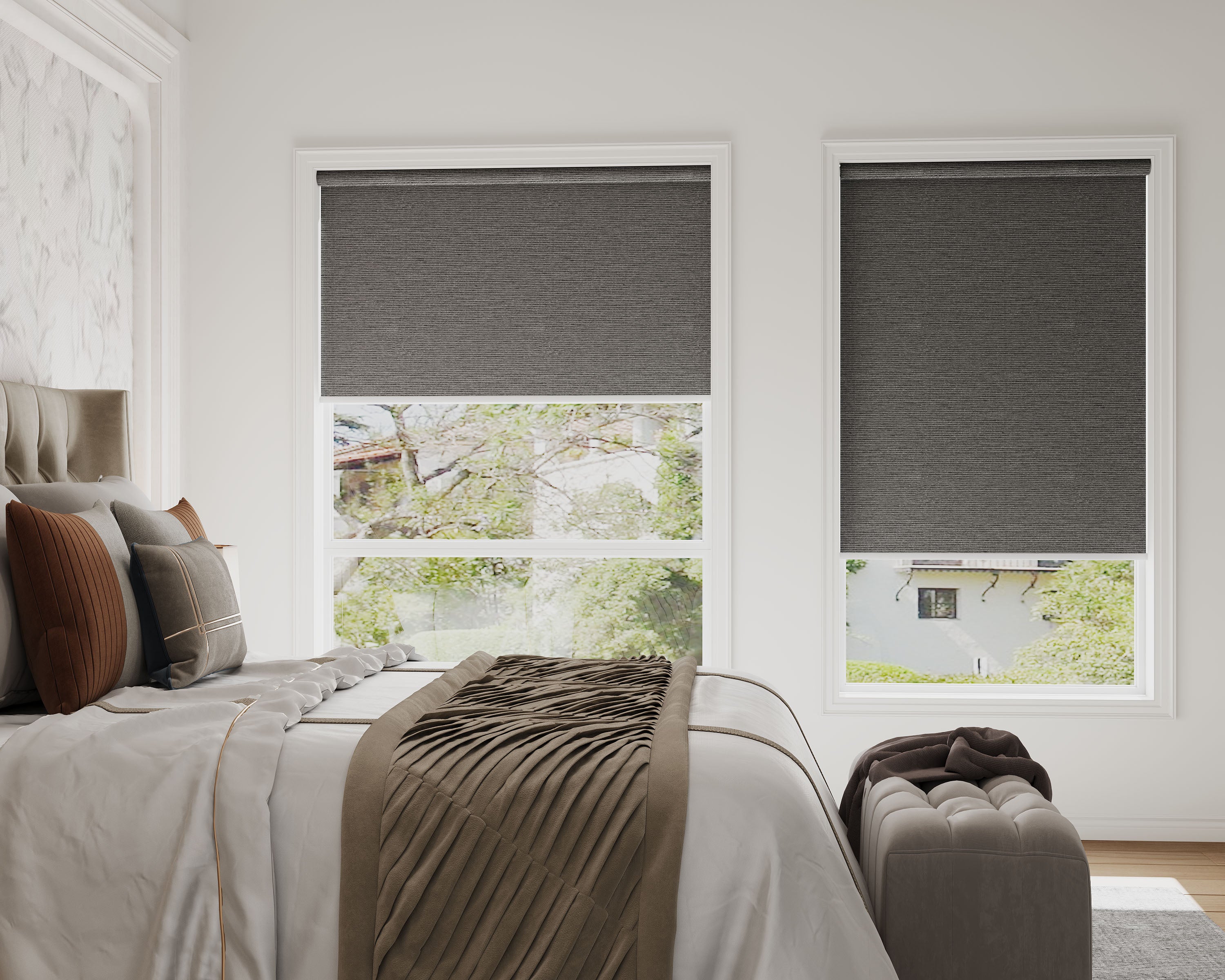
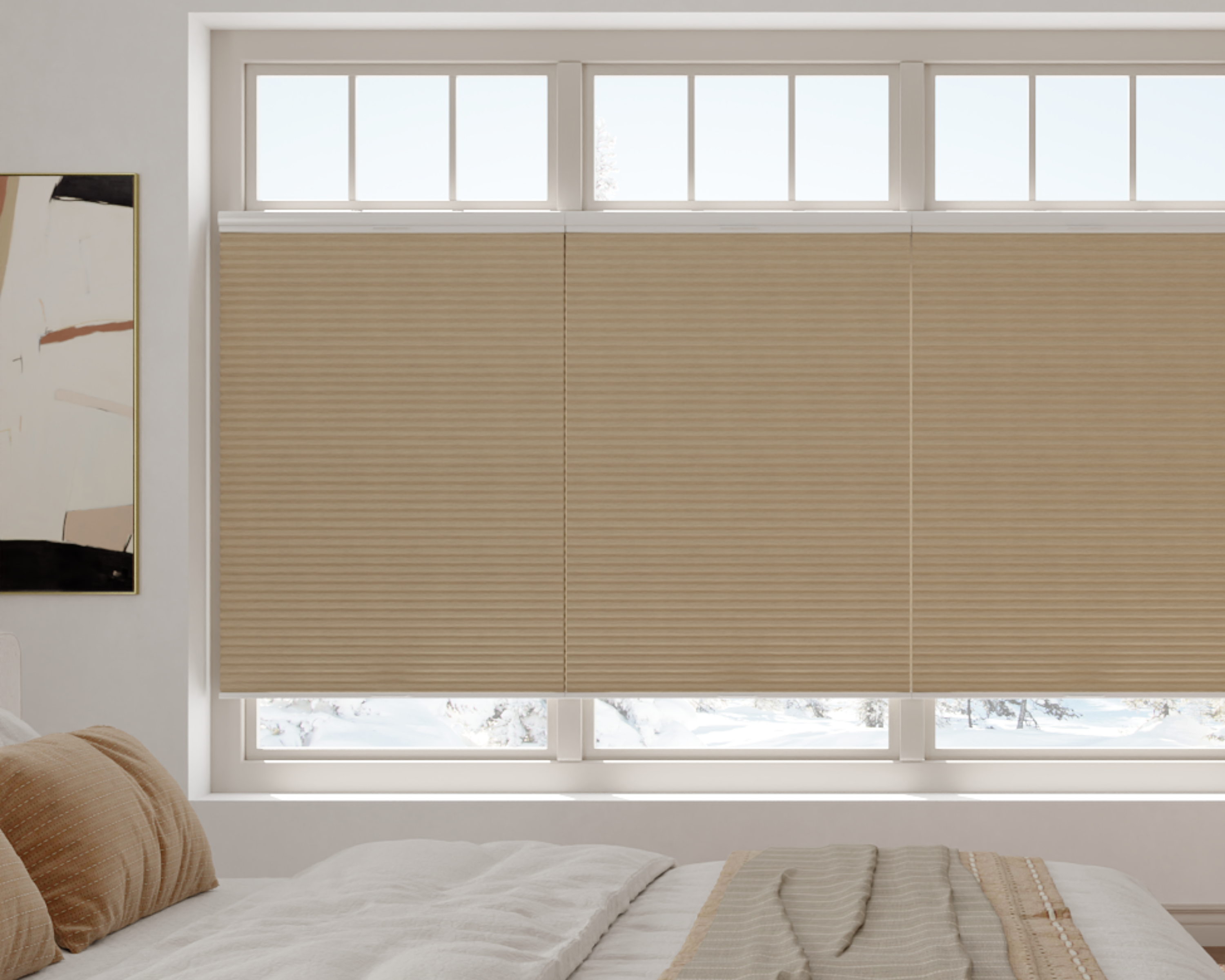
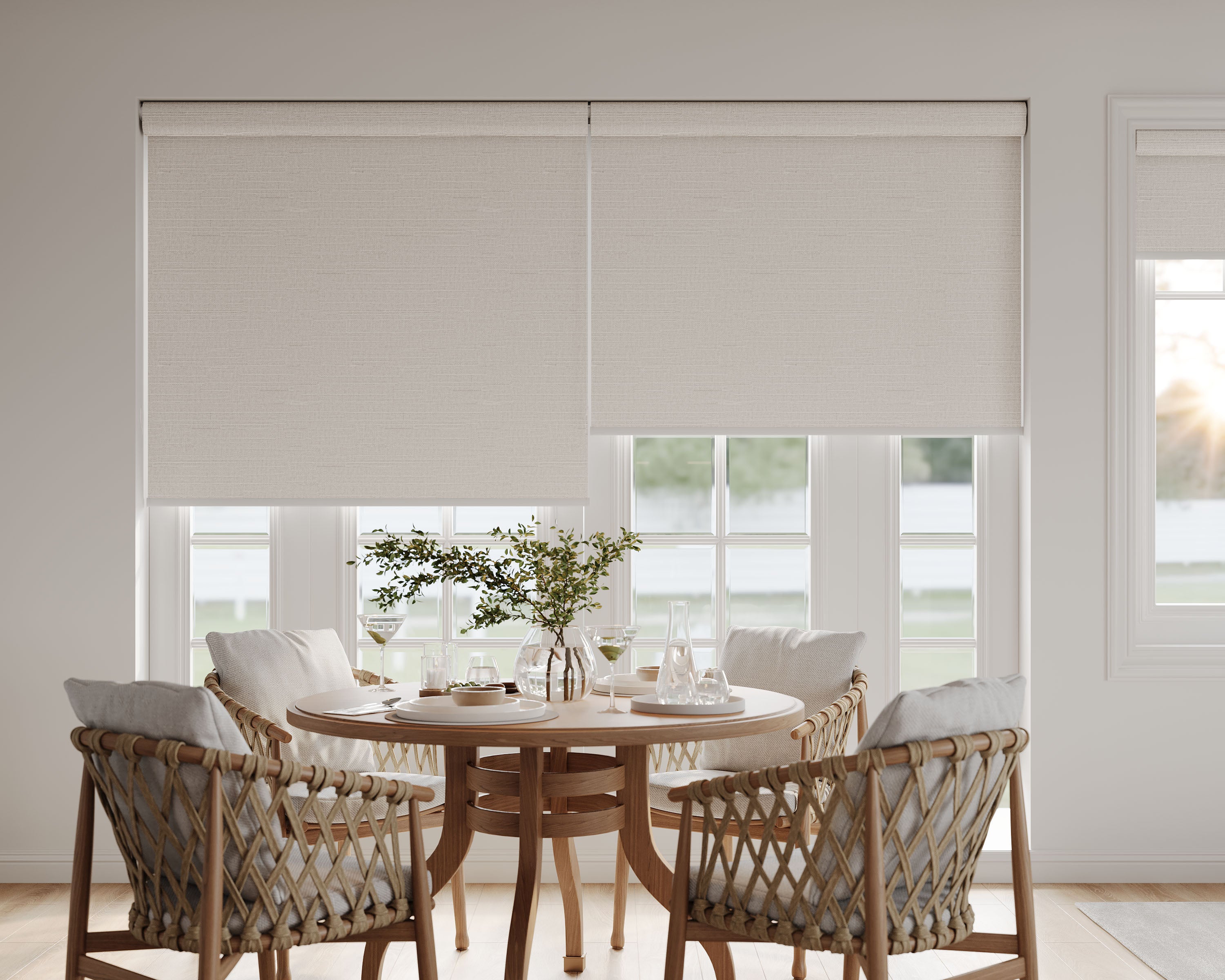


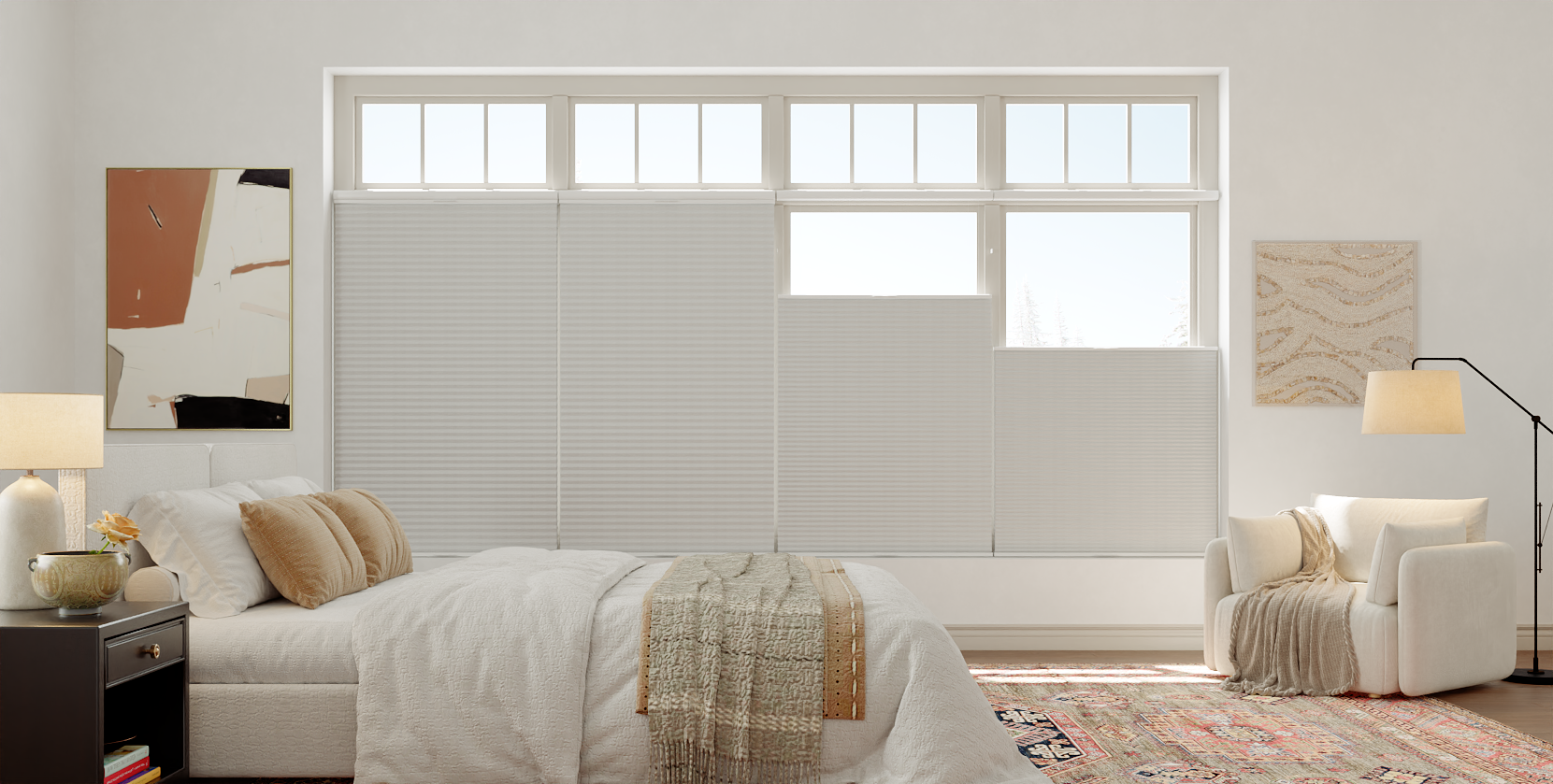


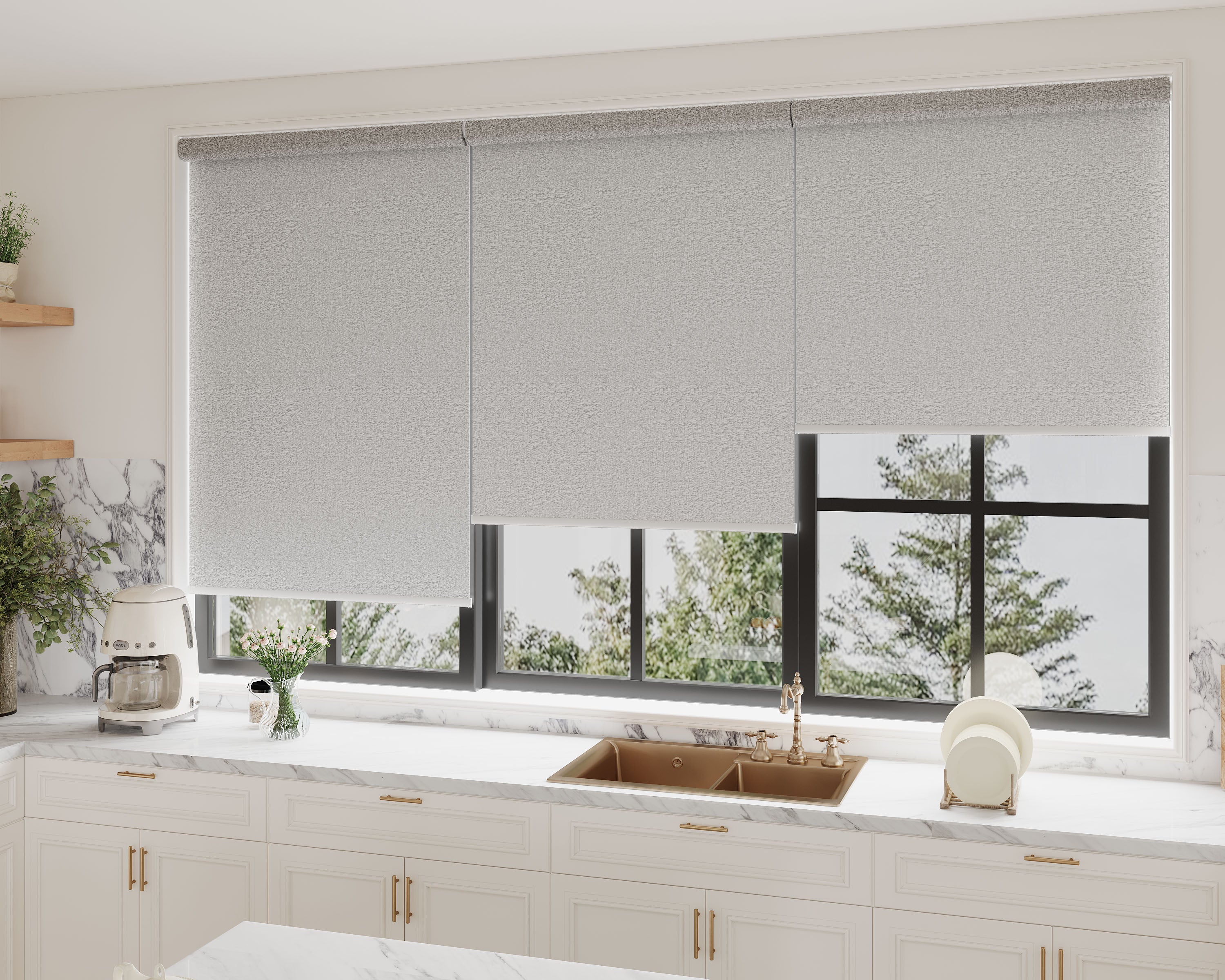

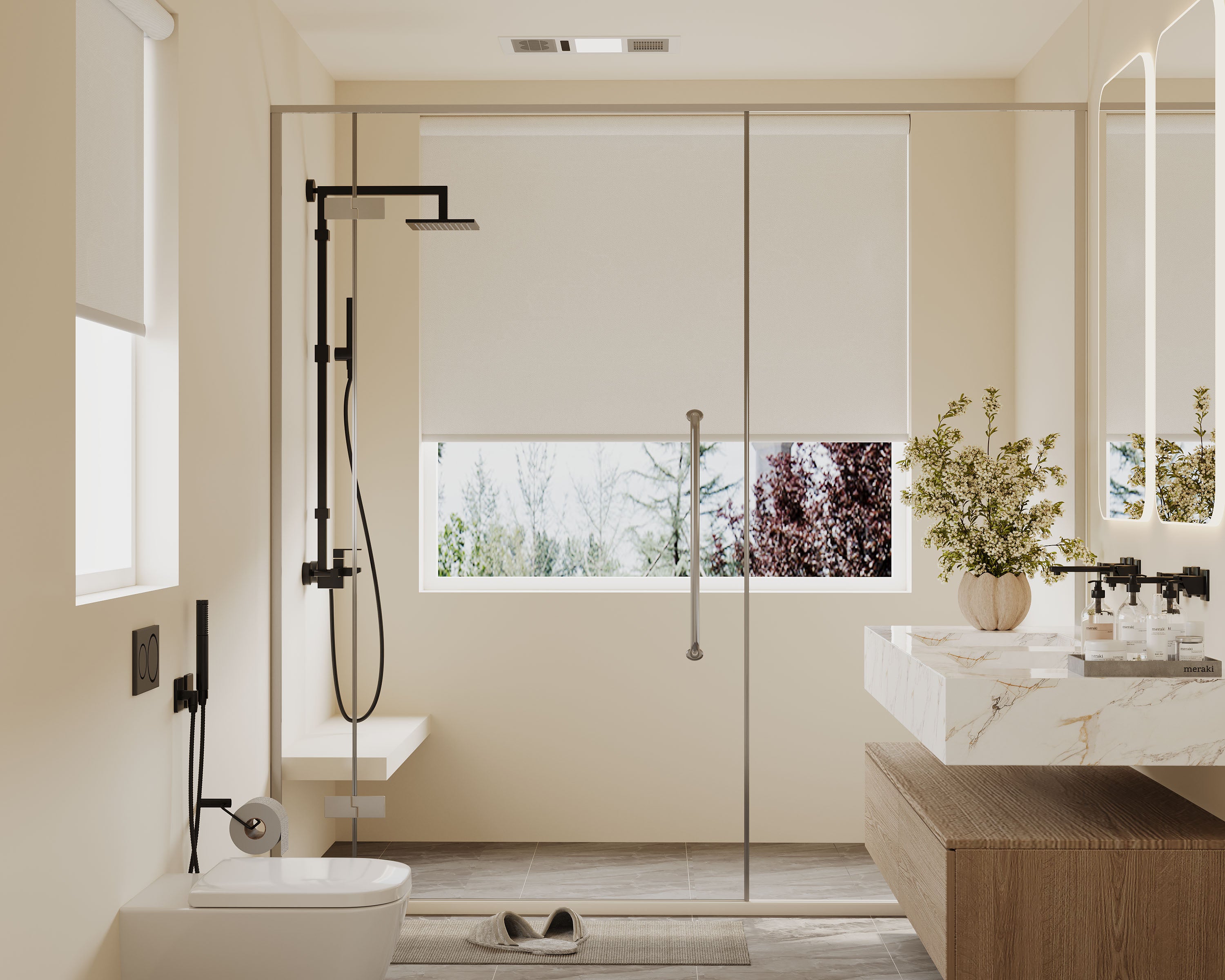


Choose linen, cotton or polyester roller shades by the finished fabric's composition, appearance, light control and care instructions. Fiber name alone does not prove fade resistance, washability, waterproofing or the best value.
Start with custom roller shade fabrics and compare samples in the room. A linen-look polyester and a linen-containing fabric may share a texture while having different compositions, backings and cleaning requirements.
Compare composition and appearance separately
Linen is derived from flax, cotton is a plant fiber and polyester is synthetic. These describe fiber composition. A shade fabric may also be blended, coated, backed, printed or woven to create a particular texture.
A slubbed appearance does not necessarily mean a fabric contains linen. A cotton-look finish does not establish cotton content. If natural fiber content is important to you, read the composition rather than choosing solely by the style name.
| Fabric description | Why you might investigate it | What to confirm in the finished shade |
|---|---|---|
| Linen-containing | Natural fiber content and a texture you like | Actual blend, backing, opacity and care |
| Cotton-containing | A particular hand, weave or appearance | Composition, dimensional stability and care |
| Polyester | A wide range of engineered finishes and textures | Actual construction and supported performance |
| A blend | A combination of fibers or design properties | Percentages and what the finished product is designed to do |
| Linen-look or cotton-look | The appearance may suit the room | Whether the name describes texture rather than composition |
None of these is a universal quality grade. Compare the product you will receive rather than assuming every natural fabric is premium or every synthetic is easy to clean.
Look at the sample as a window covering
Compare color against the wall, trim and furniture in daylight and under your evening lighting. View the sample with light behind it as well as from the room side. A close-up fabric photograph can hide the effect of transmission and backing.
A roller shade hangs as a relatively flat panel and rolls around a tube. Its suitability for that system depends on the finished fabric and construction. A fabric's appealing drape in curtains does not establish that it will roll evenly as a shade.
Texture, pattern scale and visible variation are design choices. Choose the effect you enjoy without relying on unsupported claims that one fiber delivers a fixed percentage of another's appearance or double its durability.
Choose light control independently of fiber
A linen-containing fabric can have an opaque backing, and a polyester fabric can be sheer or light filtering. The word natural or synthetic does not tell you whether people outside can see through it after dark.
Our roller shade opacity guide explains those choices. Compare the selected sample and the intended installed coverage for daytime light, nighttime privacy and darkness.
For product examples, investigate blackout roller shades and light-filtering roller shades. Their light-control roles do not establish a common fiber composition or identical care requirements.
Ask for evidence relevant to strong sunlight
Fading depends on the finished textile, dyes, coatings and exposure. Polyester is not automatically solution-dyed or fade-proof, and linen or cotton products should not all receive the same unsupported fade ranking.
If a sunny window makes color retention a priority, request the available colorfastness information and warranty terms for the actual fabric. Test results need their method and conditions; they are not a guaranteed number of years at your window.
UV transmission is a separate property from visible-light transmission and fabric colorfastness. Do not infer health, low-emissions or chemical-safety assurances from fiber origin alone.
Let the exact care instructions decide cleaning
A roller fabric includes more than its face fiber. Backing, coatings, seams and the mechanism can limit cleaning even when a household textile made from the same fiber is washable.
Do not machine-wash, soak, steam, spray a protective finish or apply detergent just because the label says cotton or polyester. Use the permitted method for the finished shade. Spot cleaning also needs approval; it is not automatically safe for every linen blend or coated textile.
Keep the roller shade cleaning guide with the product's instructions. For a kitchen or bathroom, ask about the actual exposure and selected material. A waterproof blackout roller fabric is a separate product choice; waterproof material does not establish that every complete assembly belongs in direct spray.
Compare value using equivalent quotes
Order size, fabric tier, backing, lift and installation can all affect the configured price. Do not assume linen always costs more than every polyester option or that a blend occupies a fixed middle tier.
Use our fabric price and value guide to identify what to compare. Decide which property earns its cost for your room: an appearance you prefer, suitable opacity, permitted care or a documented performance need.
For a broader shortlist, read the roller material guide and linen, vinyl and bamboo material comparison. Then select the roller fabric and configuration using actual samples and the full quote.
