
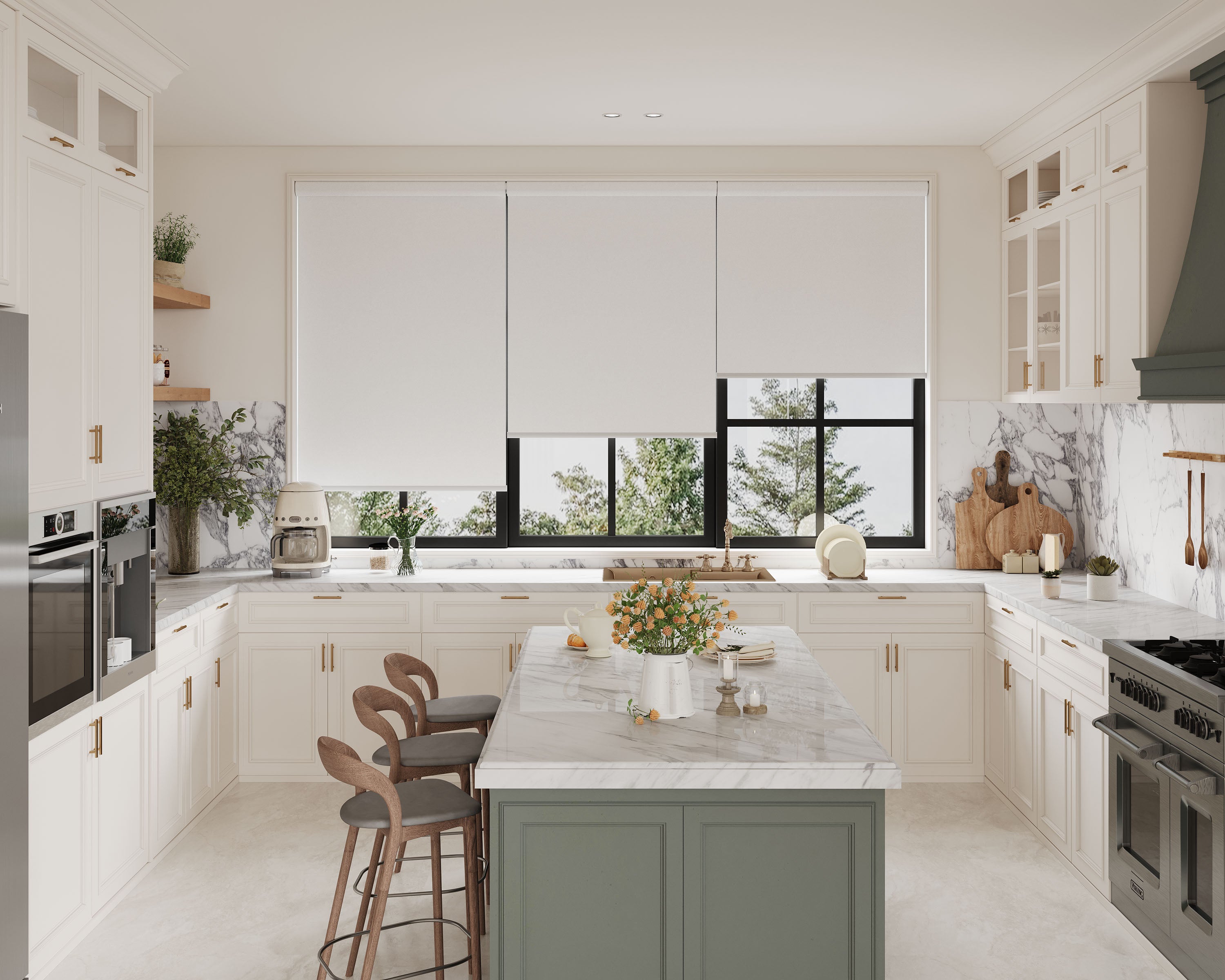
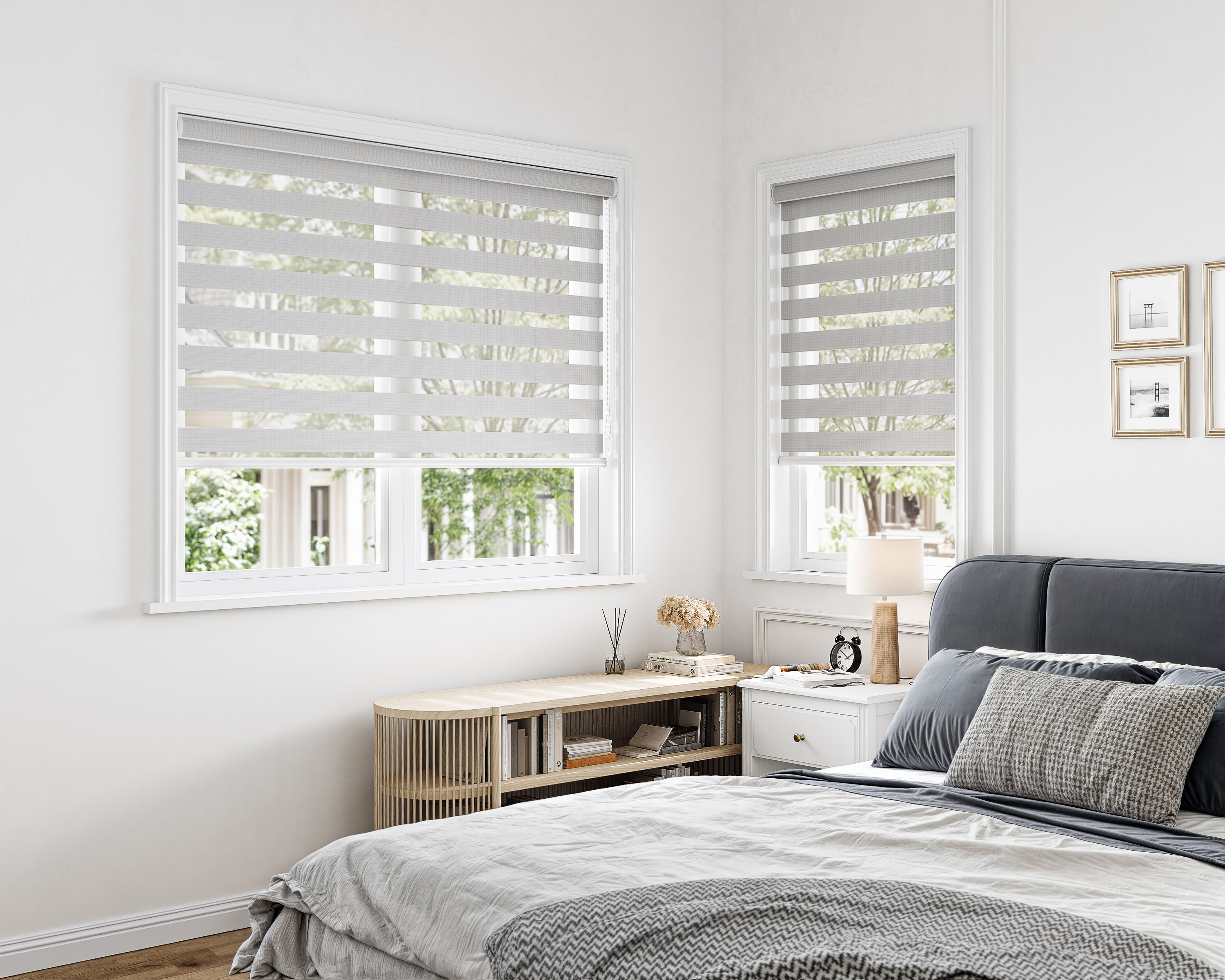
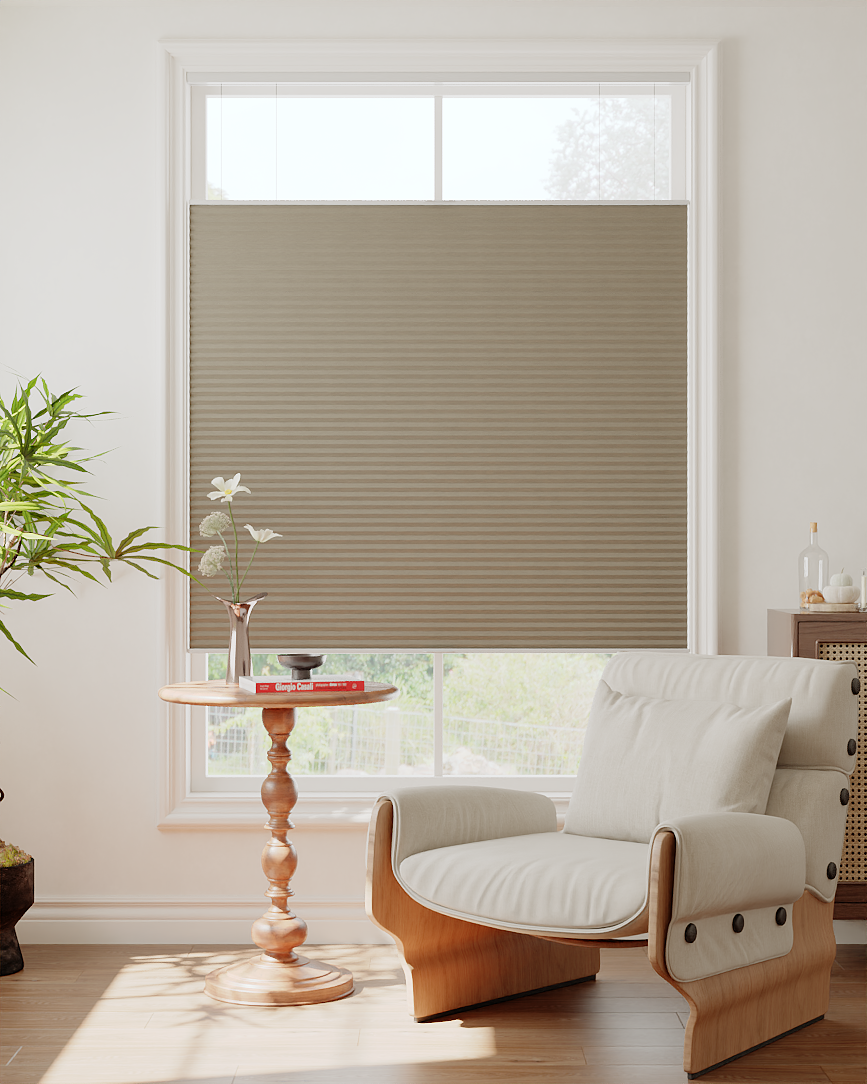
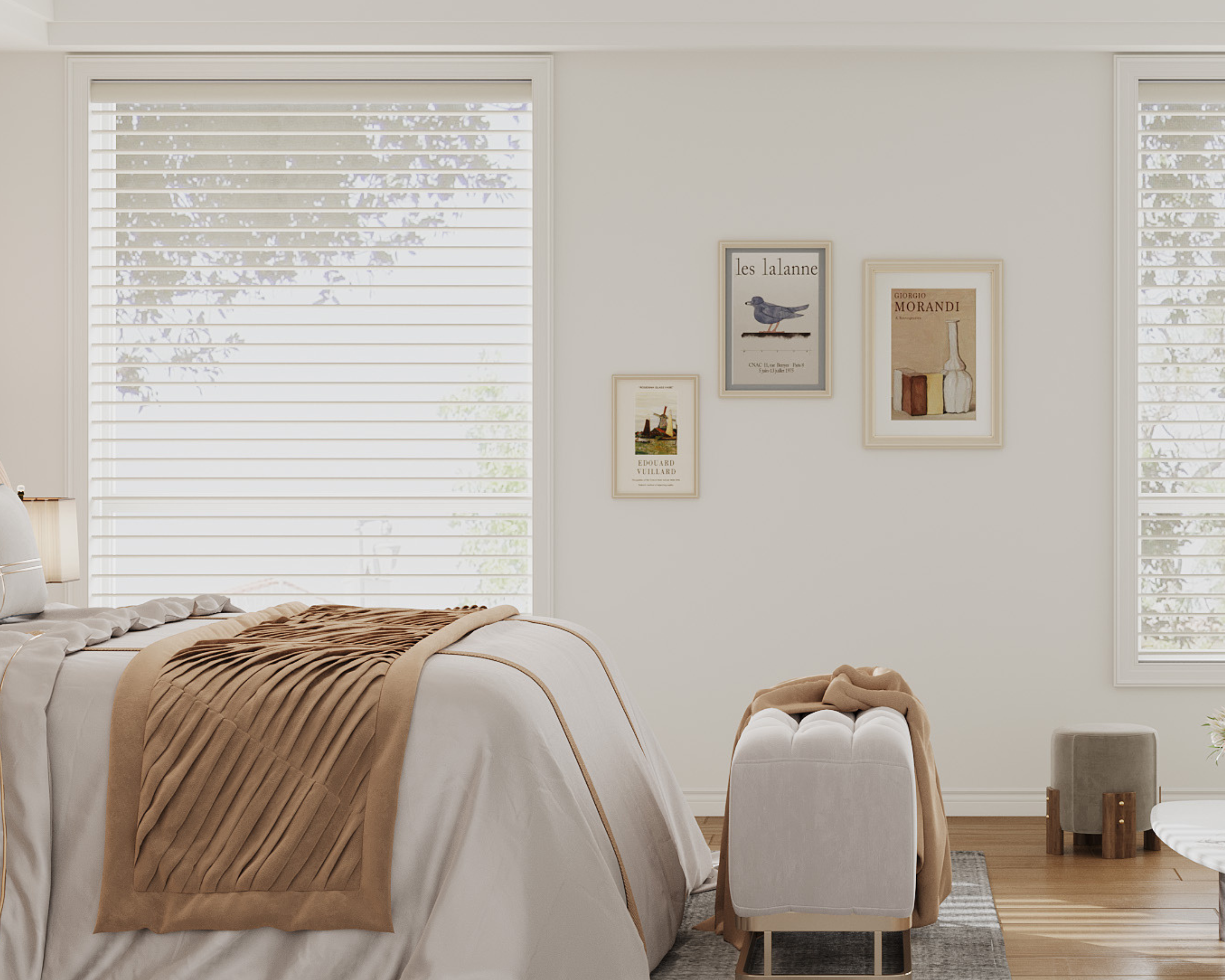
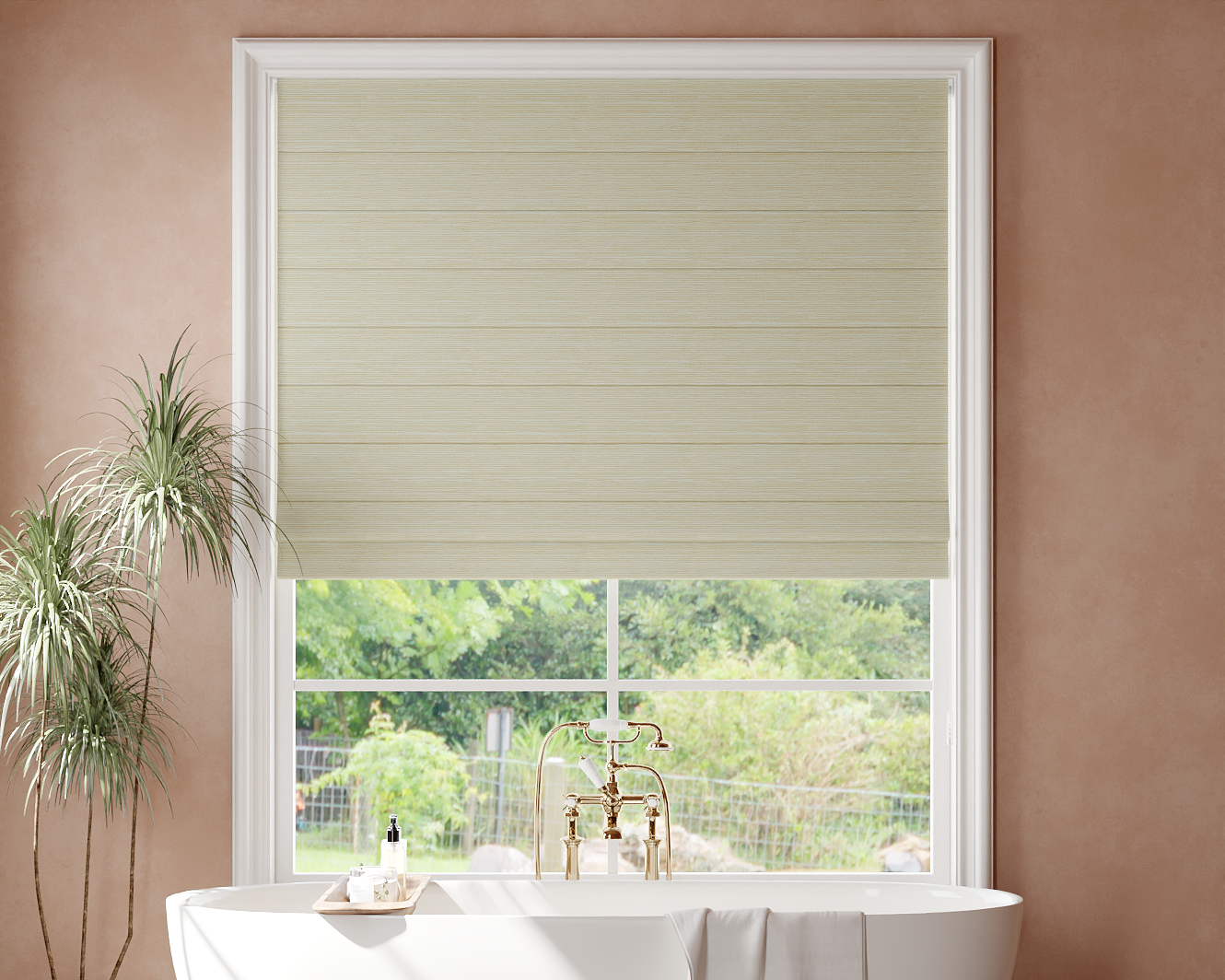

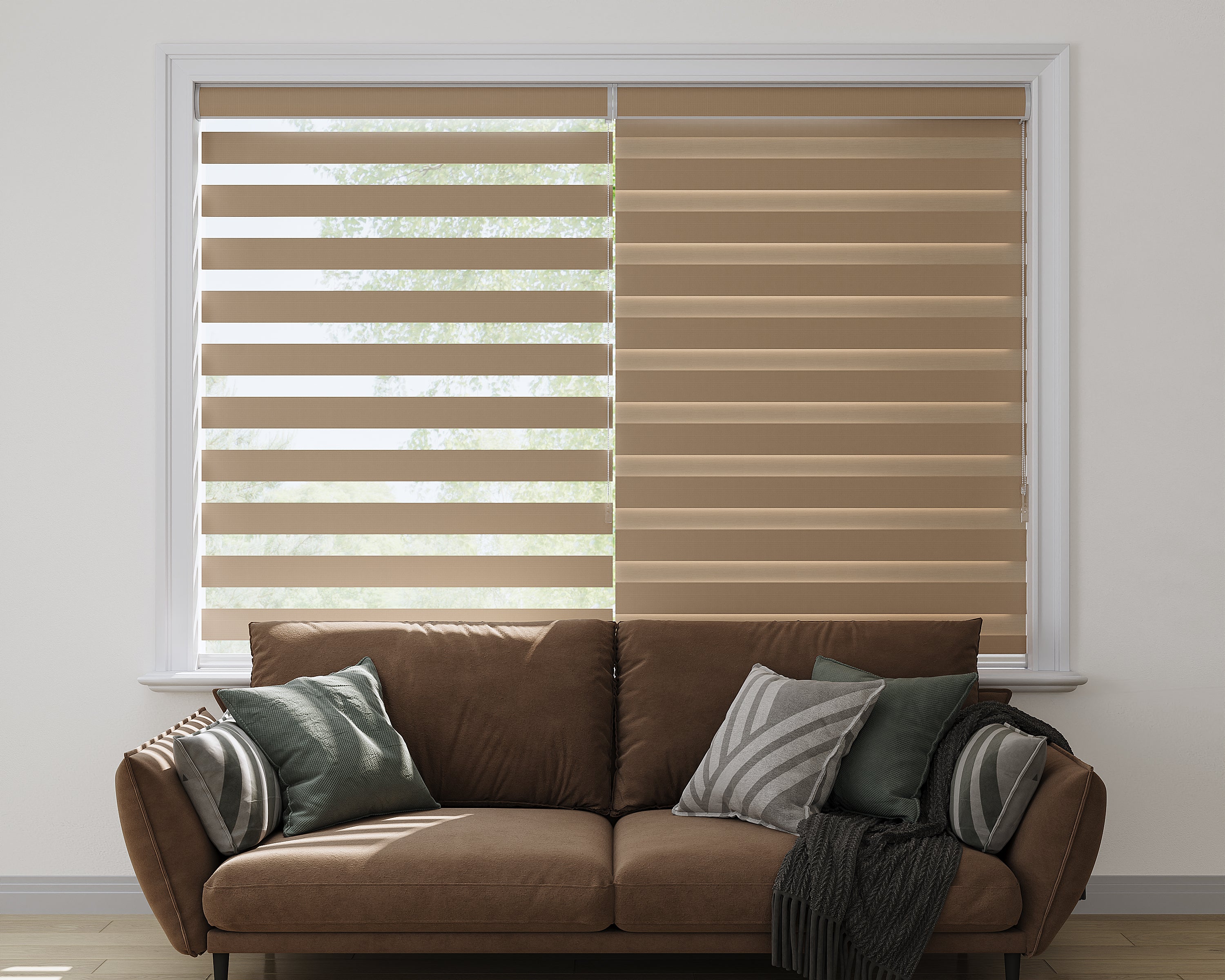
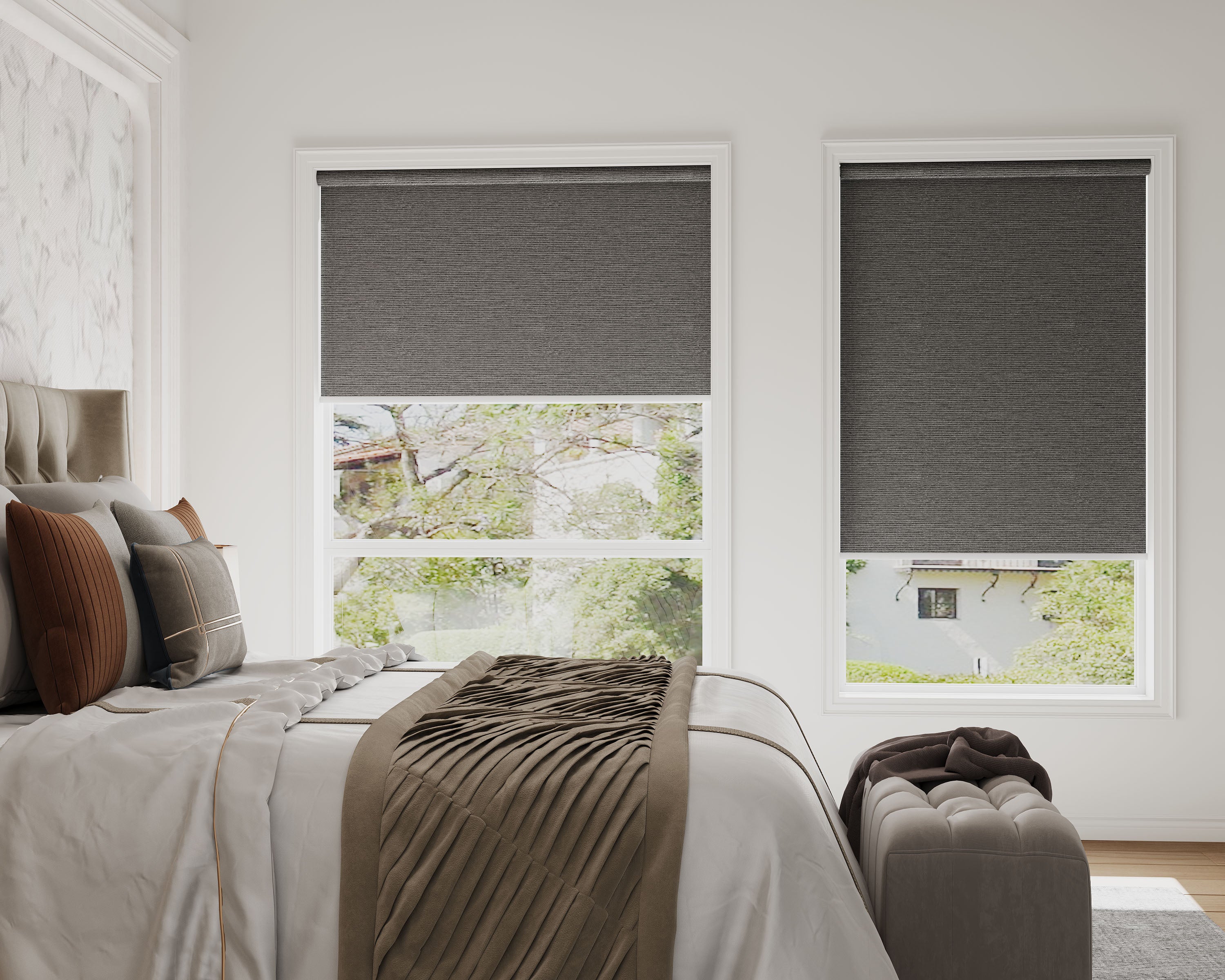
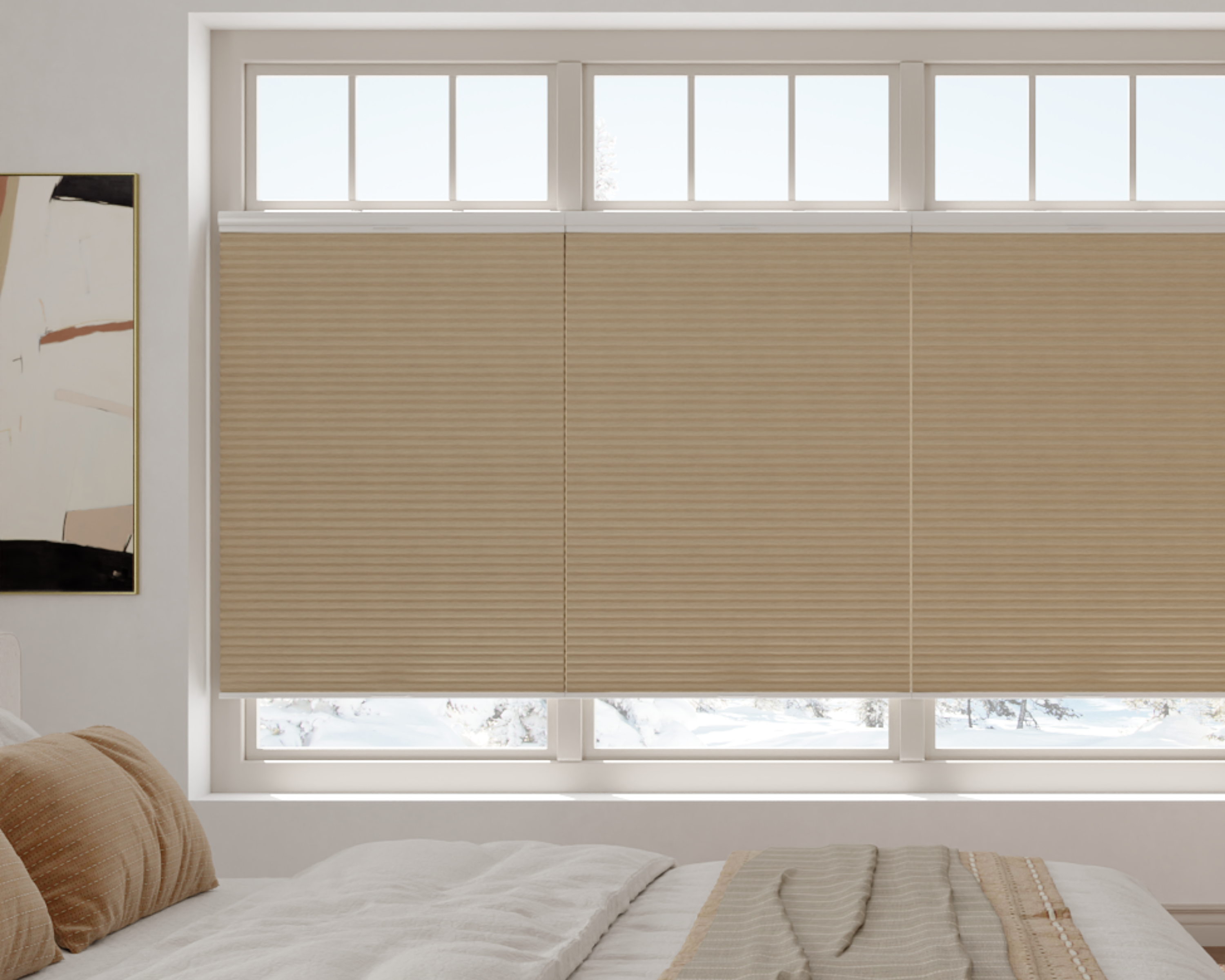







For the current SenseBlinds sheer-shade models, lower the shade completely before opening the fabric vanes. The vanes stay closed while the covering is partly raised. Once fully lowered, they open downward toward the floor; this design does not tilt the vanes upward.
That normal operating sequence is different from a jam or a failed control. Understanding the available positions can prevent you from pulling the fabric by hand or resetting a working motor to obtain a setting the mechanism does not offer.
Know what “open” means
Two different actions may be called opening a shade. Raising the covering exposes glass beneath it. Opening the vanes changes the view through a fully lowered sheer panel. The physical results are not the same.
In the first case, part or all of the window becomes uncovered. In the second, the sheer layers remain across the window while gaps between the fabric vanes allow a more open, filtered view.
The current light-filtering sheer page and room-darkening sheer page describe the lower-first sequence for both their continuous cord-loop and motorized configurations. Use the instructions for your exact order and control, especially if you own an older model or another brand.
Compare the three useful physical states
| Physical state | What the window looks like | What to expect from the current described mechanism |
|---|---|---|
| Covering partly raised | Some clear glass is exposed below | Vanes are not available in their open position |
| Covering fully lowered, vanes closed | Layered fabric covers the opening | Greater coverage; result depends on the selected fabric |
| Covering fully lowered, vanes open | A filtered view appears through the sheer areas | Vanes have opened downward after full lowering |
The table describes available states, not remote-button names. A controller may label or present commands differently. Learn how its actions correspond to these physical positions instead of assuming every “open” command means vane tilt.
Start with the covering's normal lower action
Keep the fabric path clear of objects and follow the supplied operating instructions. Use the designated chain action or motor control to lower the shade normally. Do not pull a vane, separate the mesh layers or push the bottom rail beyond its permitted movement.
Allow the covering to reach its proper fully lowered position before using the instructed vane-opening action. For the described current model, stopping halfway down does not create an independently adjustable blind above the uncovered glass.
If the covering reaches an obstacle or begins rubbing, stop rather than forcing it to finish. The lower-first rule assumes a correctly fitted, functioning assembly. It is not permission to run damaged or caught fabric against the sill.
Then use the instructed vane-opening action
At the fully lowered position, operate the vanes through the selected control as directed for that model. The current pages describe downward opening. Do not try to rotate the fabric upward to copy the action of a hard-slat blind.
Observe how the view changes, not just the button label. You should be comparing a more open sheer view with the model's more covered fabric position. Opening the vanes does not remove the sheer layers from the glass or turn the fabric into a clear opening.
To return to a covered or raised position, use the documented close or raise action for the selected control. Do not manually flatten the vanes or roll fabric by hand as an operating shortcut. The mechanism's normal sequence should be demonstrated with the actual configuration.
Why a partial-height privacy setting works differently
Suppose you want clear glass below the shade but also want the vanes open in the remaining upper panel. The current described model cannot combine those two settings: its vanes open only after full lowering.
You can compare a partly raised position with closed vanes, or a fully lowered position with open vanes. Which is useful depends on the view, sun and privacy required at that time.
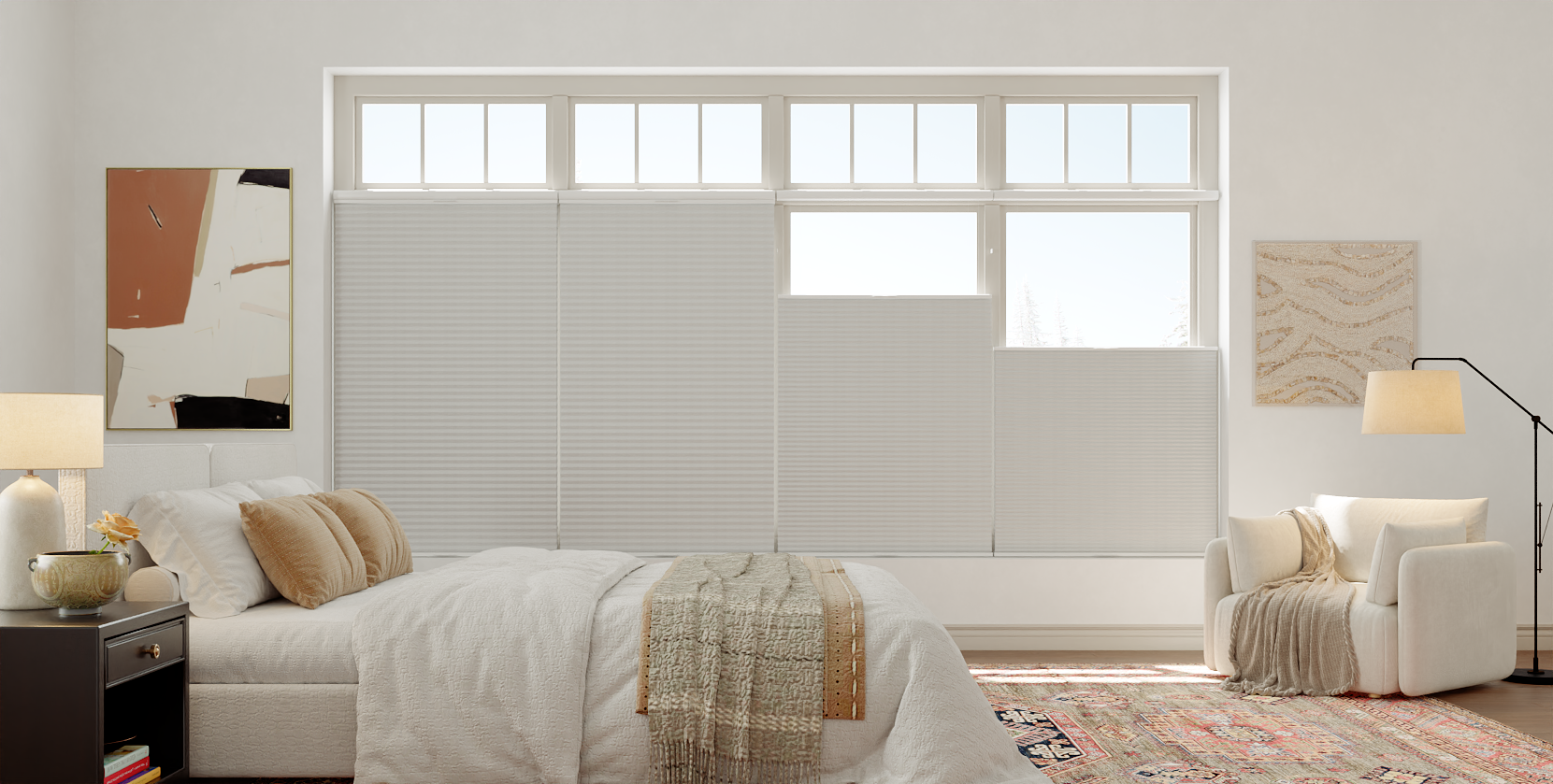
Top-down-bottom-up is a different movement arrangement offered by particular products. A sheer-vane design does not gain that movement because an app offers percentages or because the fabric looks light and layered. Our top-down-bottom-up explanation helps separate those options.
App percentages do not establish independent tilt
Do not assume an app's 50% setting describes a vane angle, half the visible glass or a physical height matching another shade. The percentage convention and supported commands depend on the motor and controller.
A compatible smart system may provide routines and grouped control, but its general features do not change the fabric mechanism. Confirm the demonstrated physical result for the actual command you plan to use.
The manual-versus-motorized sheer guide covers the broader control and power choice. Keep that separate from assuming every motor supports independent lift and vane adjustment at every height.
Distinguish a normal restriction from a problem
Vanes remaining closed while the shade is partly raised are consistent with the current lower-first design. An unfamiliar state is not automatically a reason to recalibrate a motor.
A covering that cannot fully lower through a clear path, slips unexpectedly, catches fabric or produces a new mechanical problem needs a different assessment. Stop using unstable or damaged hardware and consult the exact model's instructions. The sheer mechanism guide explains how to identify the system before any repair is attempted.
For a continuous loop, retain and install the supplied safety components as instructed. Where young children live or visit, follow CPSC's cordless-covering guidance when selecting the complete configuration. An operating demonstration is not a substitute for that household decision.
Choose the state for light and privacy
An open-vane daytime view is not proof of nighttime privacy. Assess the exact closed fabric and edge coverage with indoor lights on after dark. Room-darkening and light-filtering materials can have different effects even though the lower-first mechanism is the same.
Use the sheer-shade construction guide and current sheer collection to compare those fabrics. Seeing the real lower, vane-open, vane-closed and raised actions together makes the daily routine much clearer than the word “open” alone.
