












When water collects behind a bathroom shade, identify where and when it appears before changing the covering. A waterproof fabric does not dry the window, repair a leak or remove moisture from the room. The glass, sill, fabric and headrail need separate checks.
A short observation record can help you explain the problem to the right person. It can also prevent an expensive shade replacement that leaves the underlying moisture unchanged. This is a way to organize what you can see, rather than diagnose a window or ventilation system from appearance alone.
First identify the wet surface
Inspect from a stable, dry position. Look at accessible surfaces without taking the shade apart or reaching over a wet tub. Note whether the droplets sit on the room-facing glass, run down the frame, wet the fabric or collect near the operating components.
Do not assume moisture inside a sealed glazing unit is the same problem as water you can wipe off the room-facing pane. If its location is uncertain, take a clear photograph and ask the window supplier to assess it. The shade supplier can advise on the covering; the glazing or building may need a different specialist.
Describe the location precisely. “The lower room-facing pane is wet after showers” is more useful than “the blinds make the bathroom damp.” Keep any conclusion separate from the observation.
Keep a simple record over normal bathroom use
You do not need to create extra steam or spray the shade as a test. Observe ordinary use and write down what happens before bathing, afterward and when you next check the room.
| Record field | Example of a useful observation |
|---|---|
| Time and activity | Droplets visible after the evening shower; pane was dry beforehand. |
| Exact surface | Lower glass and sill wet; fabric front appears dry. |
| Shade position | Fully lowered while bathing; normal clearance from the handle. |
| Ventilation in use | Exhaust fan running; note whether it continues afterward. |
| Other conditions | Water also appears on a day without bathing, or follows rain. |
| Change over time | Surface dried later, stayed wet, or developed repeated staining. |
These examples are prompts, not diagnoses. Water linked to rain, persistent damp patches or damage around the frame needs appropriate assessment rather than an assumption about indoor humidity.
Address moisture management before fabric shopping
The EPA's moisture guidance advises drying wet surfaces promptly, reducing the moisture source and using bathroom ventilation. A shade is a furnishing, so it should fit into that room-management plan rather than replace it.
Use your installed exhaust system according to its instructions and arrange assessment if it is not removing moisture effectively. Opening a window is not always practical, sufficient or secure. Do not prescribe a universal fan runtime or make electrical changes from a window-covering article.
If damage, persistent dampness or recurring visible growth is present, resolve the appropriate building and moisture questions. A new material or an antimicrobial label does not establish that the cause has gone away.
Check whether the window can be reached and dried
When the room is dry and privacy is no longer needed, consider how you normally access the glass and sill. Can the shade move to an approved position that leaves those surfaces accessible? Does the bottom rail catch on the handle? Is the back of the covering difficult to inspect?
Follow the shade's own operating and drying instructions. Do not force a rail past its limit, remove parts or roll visibly wet fabric into the tube as a shortcut. If the fabric is wet, ask for the exact model's permitted drying position and return-to-use guidance.
An outside mount may change the space around a recess, but it is not automatically a condensation solution. Projection, fabric travel, brackets and window movement all matter. Ask the supplier to review the real geometry before changing the mount or adding spacers.
Separate condensation from direct shower spray
Your record may show two different exposure routes at the same window. Warm-room moisture can collect on glass while the shower also directly wets the fabric. Choosing a covering requires both facts.
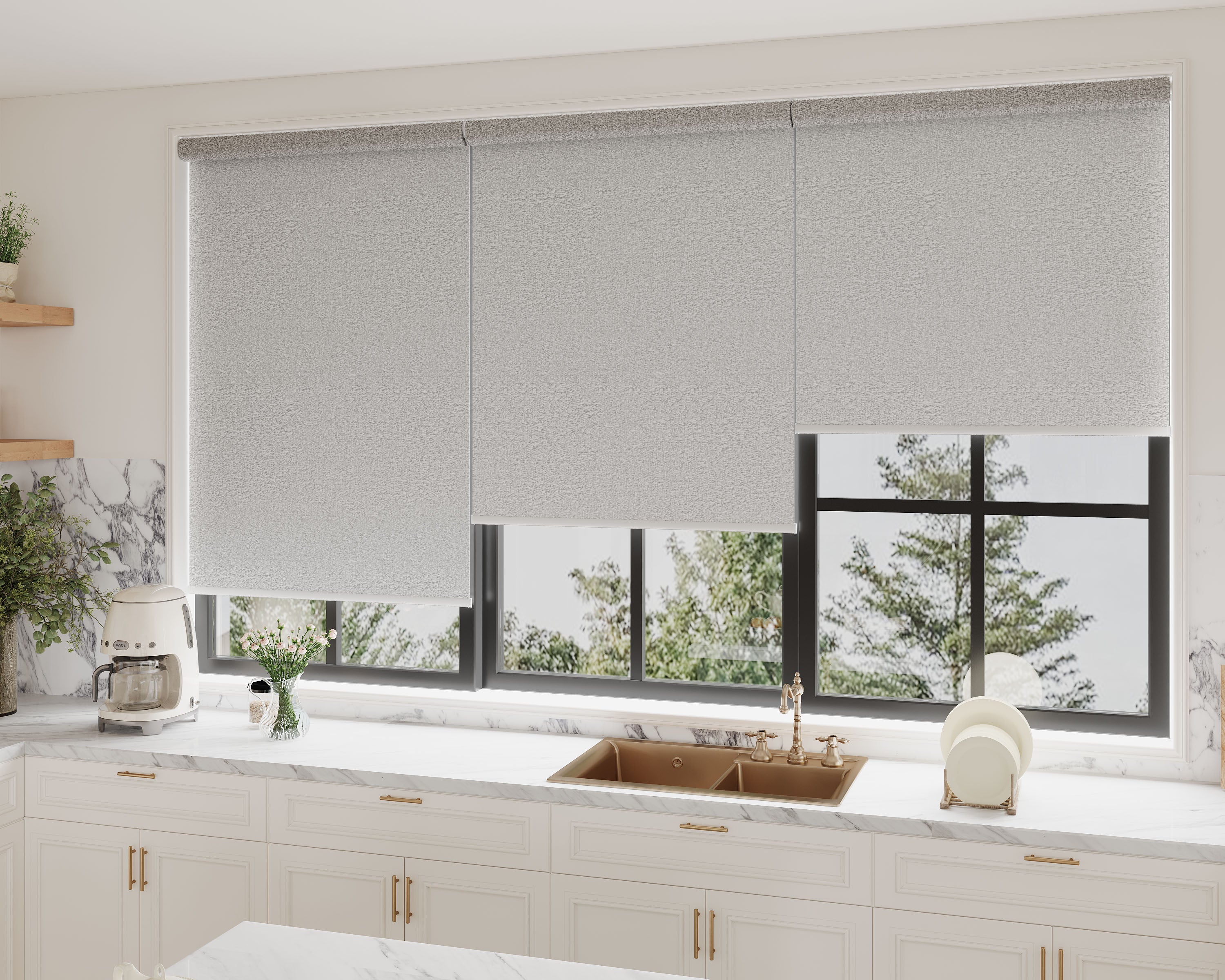
For windows outside repeated shower spray, compare the actual material and care requirements in the waterproof window-treatment collection. The standard waterproof blackout roller is one available fabric choice for a suitable bathroom location.
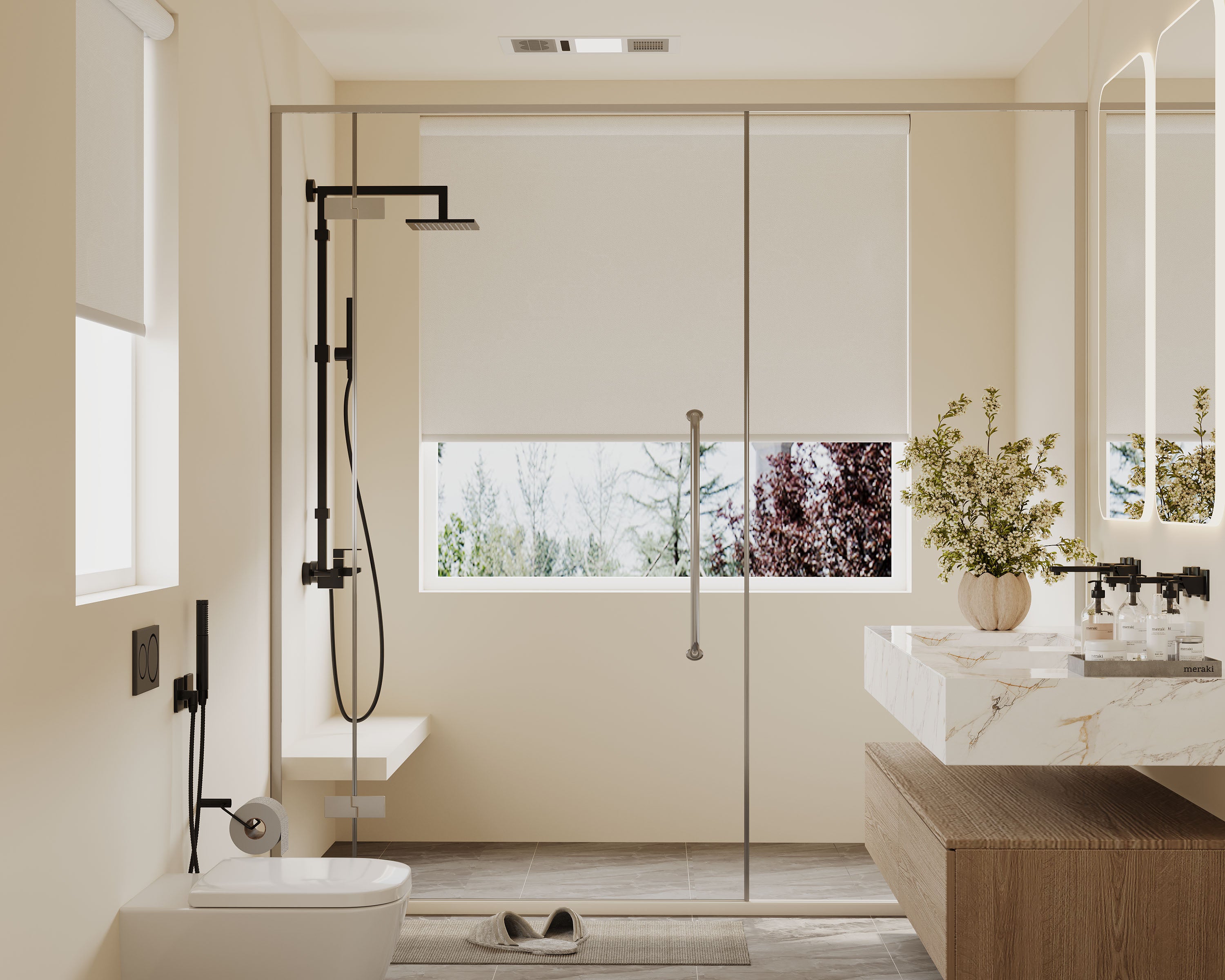
For direct wet-zone use, review the separate premium shower-window roller. Confirm the complete selected assembly and lift for that position. Neither option makes a persistent wet sill acceptable or establishes that electrical components may be sprayed.
Our cellular-shade bathroom guide explains the different role of water-repellent honeycomb fabric. Its softer construction is not a substitute for a product specifically selected for repeated direct shower exposure.
Clean the shade according to its own instructions
Window cleaning and shade cleaning are different jobs. Protect the covering from glass-cleaning products and follow the SenseBlinds care guide, along with any more specific instructions for your fabric.
For a persistent mark, send the supplier a photo, model name and a list of anything already applied. Do not transfer a tile-cleaning bleach, vinegar or descaler recipe to the fabric. A hidden-area test does not establish that an otherwise unapproved chemical is suitable.
Keep liquids away from the mechanism, motor and charging parts. If those components become wet or damaged, stop using them and obtain model-specific advice. A waterproof surface is not permission to wash the complete assembly.
Build a practical follow-up request
Put your observations, photographs and order details into one message. Explain the usual shade position, whether direct spray reaches the window, and how accessible the glass is for drying and cleaning. Ask the shade supplier to confirm permitted exposure, clearance and care for the exact configuration.
Send building or glazing concerns to the appropriate professional, including any moisture that follows rain or appears between panes. Keep those findings with the shade record so future changes use the same facts.
The bathroom roller-shade guide helps compare a replacement once exposure is understood. Choose it around the corrected conditions and required privacy; replacing fabric alone is not evidence that the moisture problem has been solved.
