








Yes, zebra shades can use a motorized configuration where the selected model, fabric and dimensions support it. The motor operates the banded assembly, while the exact controls determine the available positions, grouping and routines. Motorized does not automatically mean app-connected or capable of every smart-home integration.
Compare custom zebra shades and the offered lift for your size. Ask about both shade height and band alignment; a general raise/lower description may not answer the light-setting question you care about.
Specify the band position you want
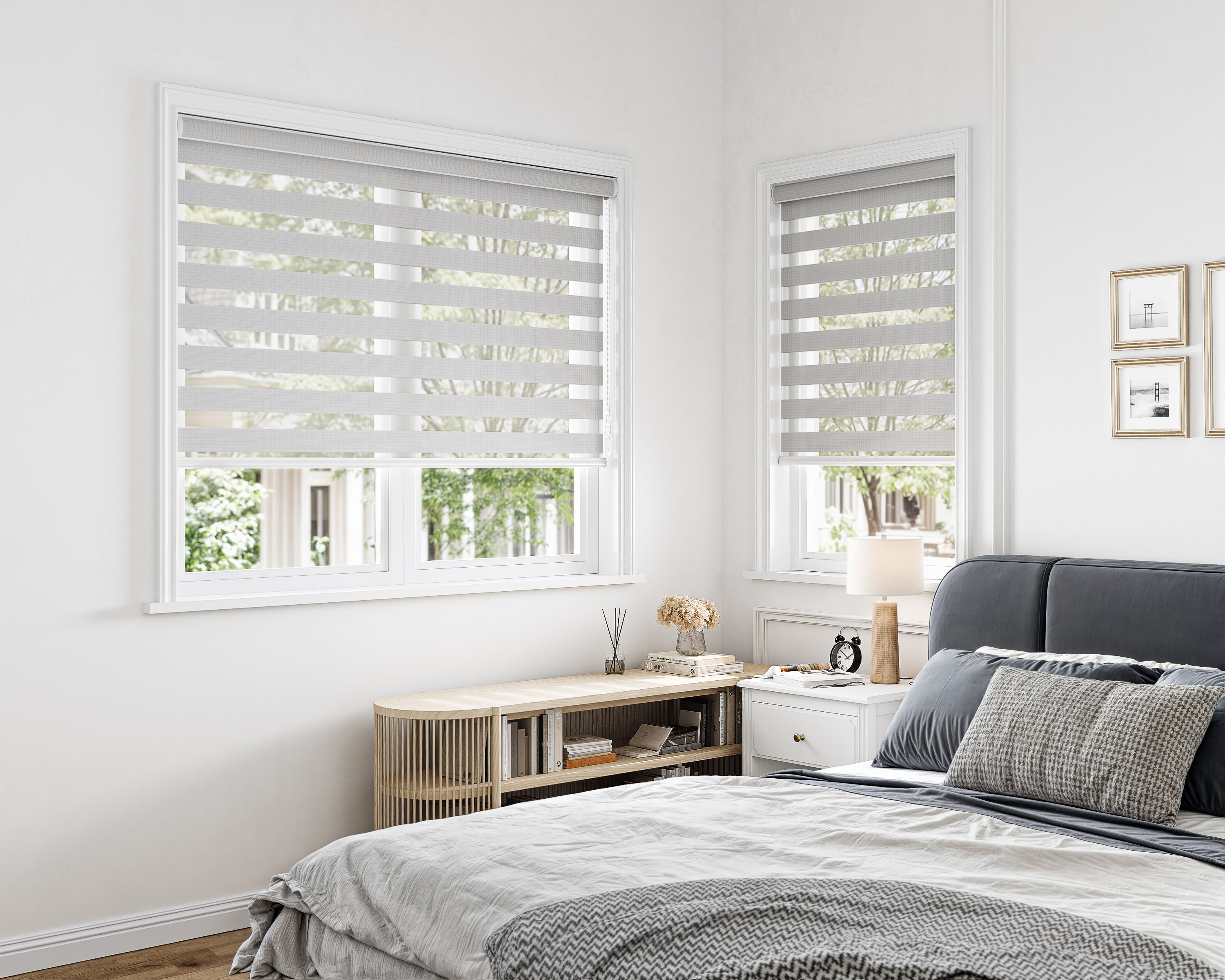
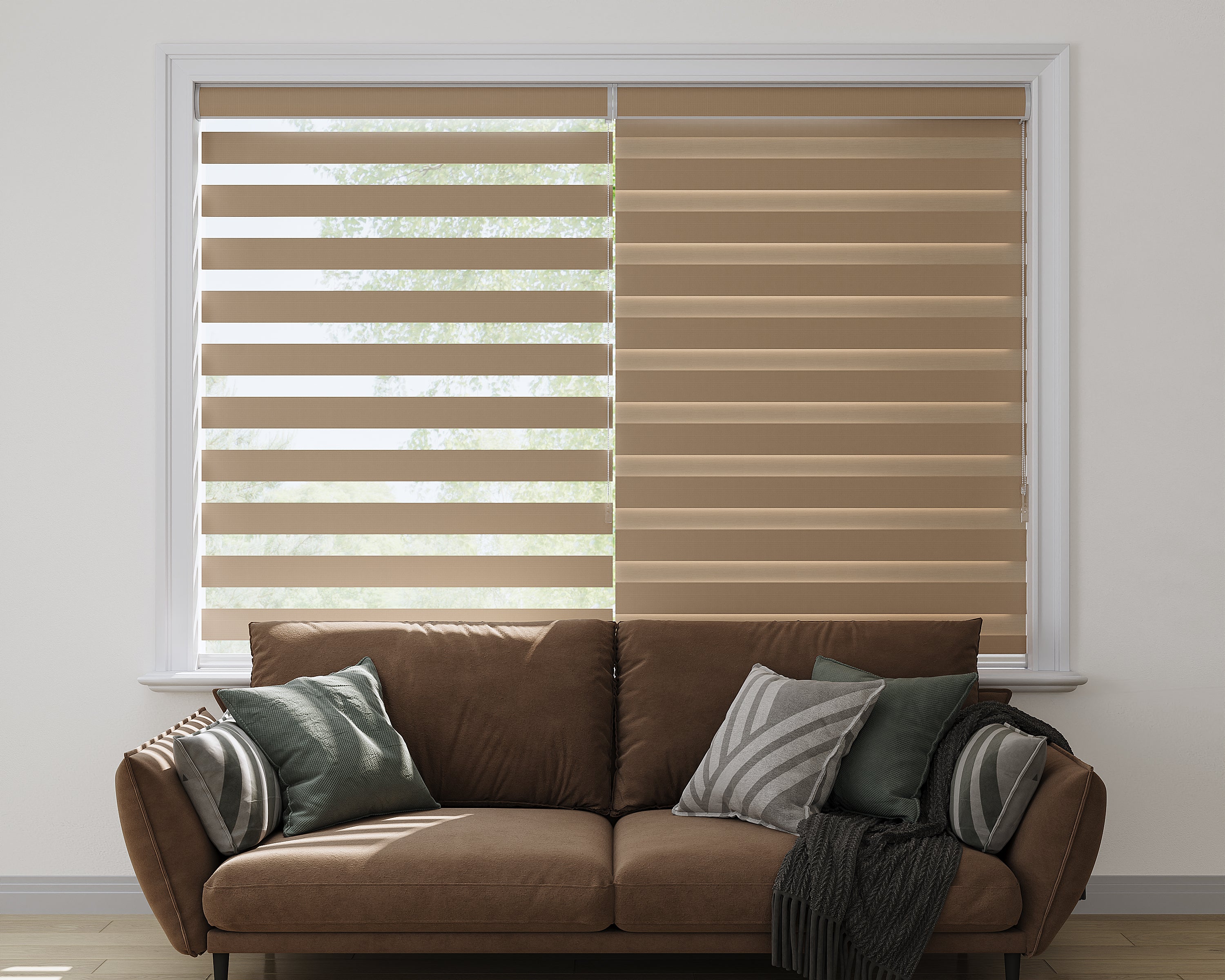
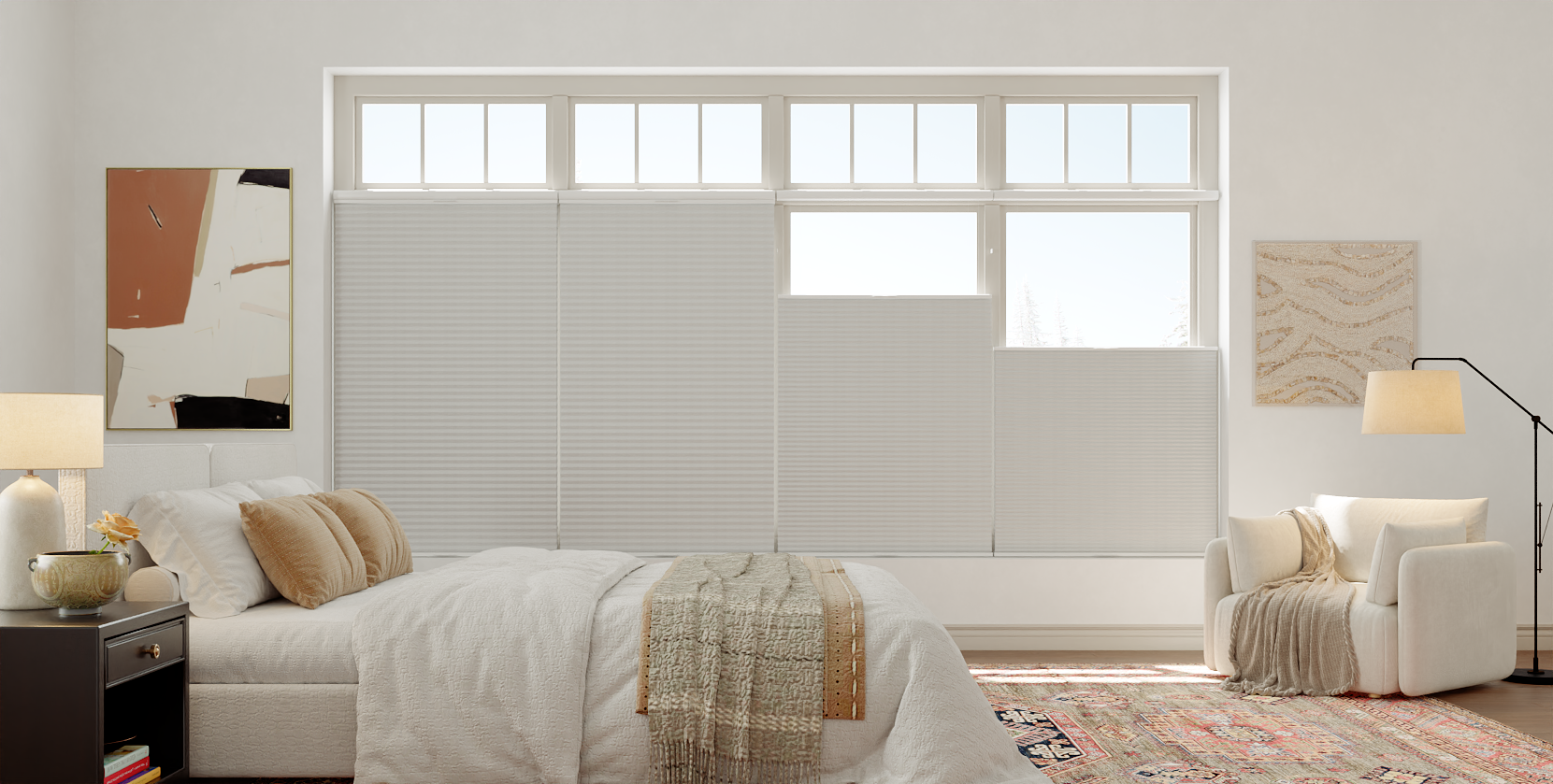
Zebra fabrics use alternating sheer and more solid bands in two layers. Their changing overlap alters the view-through. A motorized system needs to operate that particular arrangement; it should not be described as two layers permanently fixed together that always produce identical privacy.
Ask how the selected system reaches a preferred band position, whether it can store or repeat it, and how the user adjusts it. Position commands and presets vary by motor/controller, so do not assume every system supports an exact light-filtering scene.
| Desired action | What to confirm |
|---|---|
| Raise/lower one shade | Included control and normal operating procedure. |
| Set band alignment | Supported adjustment and how the selected controller expresses it. |
| Repeat a preferred setting | Whether a stored position or equivalent feature is actually supported. |
| Move several shades together | Group capability and individual adjustment. |
| Use a schedule or voice command | Exact compatible motor, controller and required accessories. |
Compare manual and motorized operation fairly
A supported manual cordless lift can be practical at an easily reached window. Motorization may help at high glass, behind furniture or where several coverings need regular adjustment. The useful choice depends on reach and daily use, not an automatic luxury-versus-basic ranking.
A motor does not correct rubbing, unsupported dimensions or inadequate fabric privacy. Confirm that the complete width, drop and material are approved with the chosen lift. Ask for installed projection and raised dimensions as part of the fit plan.
For a broad span, compare one supported shade with a divided layout. If adjacent bands matter visually, ask how they will appear and operate at the intended positions.
Choose the simplest controls that meet the task
A handheld remote may supply the daily convenience you need. App access, away-from-home control, groups, schedules and voice platforms are separate requirements. Include any necessary bridge or controller in the quote.
Write down your existing platform and hardware identifiers. Ask for explicit support for the intended actions instead of assuming that every system with the same protocol name works together. A motorized product title is not a compatibility list.
The smart scheduling guide helps plan useful positions. A schedule can support a routine, but it does not make a light-filtering fabric opaque or guarantee energy savings.
Plan power and loss of normal control
Identify the supported power arrangement and included charger or supply. At a high window, make the charging and service connection accessible without assuming a particular charging interval or battery life.
Ask what happens if the motor lacks power, the app is unavailable or the network/controller is offline. A dedicated remote, locally stored schedule or manual backup should be assumed only where the actual system documents it.
Do not pull the fabric or disengage a mechanism from a generic outage procedure. Use the selected instructions. A motor's own battery and a network controller's power are different parts of the operating plan.
Fabric and privacy still come first
Compare room-darkening zebra and light-filtering zebra materials for the room's needs. Closed light-filtering bands can still reveal silhouettes after dark; check the intended position with indoor lights on.
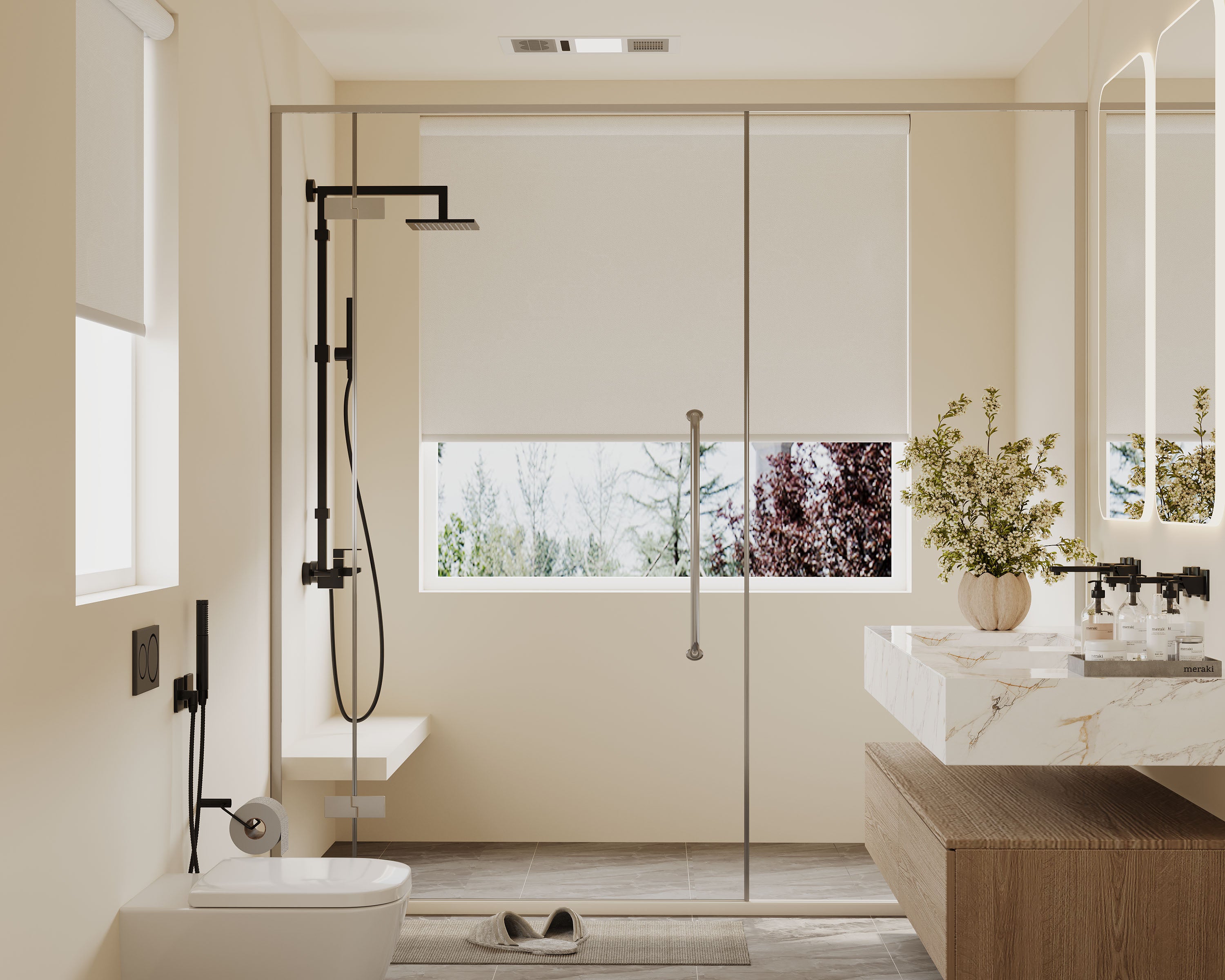
The waterproof light-filtering zebra model is a specific exposure-related fabric choice. Confirm the permitted location of the complete assembly, including motor and charging parts, rather than treating the fabric description as direct-shower approval.
For homes where young children live or visit, follow CPSC cordless guidance and plan mounting, furniture and power leads. Motorization changes operation; it is not a guarantee that every hazard or pet-access issue disappears.
An existing manual shade needs its own assessment
Find the manufacturer, model, dimensions and current mechanism. Ask whether supported motor conversion or service exists for that exact unit. Do not assume all zebra shades are convertible, or that none ever can be.
Compare complete conversion and replacement quotes, including controls, power, labor and any retained components. Do not open the tube, replace a clutch or rethread the assembly from a general tutorial.
Frequently asked questions
Will the motor always return to the same private setting?
Confirm the positioning feature and assess the actual fabric's privacy. A repeatable position is not proof of concealment under every lighting condition.
Are motorized zebra shades quiet?
Request information or a demonstration of the chosen motor and installation. No specific sound level follows from the category name.
How long do motors last?
Compare actual warranty and service information. A universal years-of-life or cycle claim is not a specification for every unit.
What should the quote identify?
The complete shade, size, fabric, motor, controller, power components and installation scope. That is the useful basis for the purchase.
