
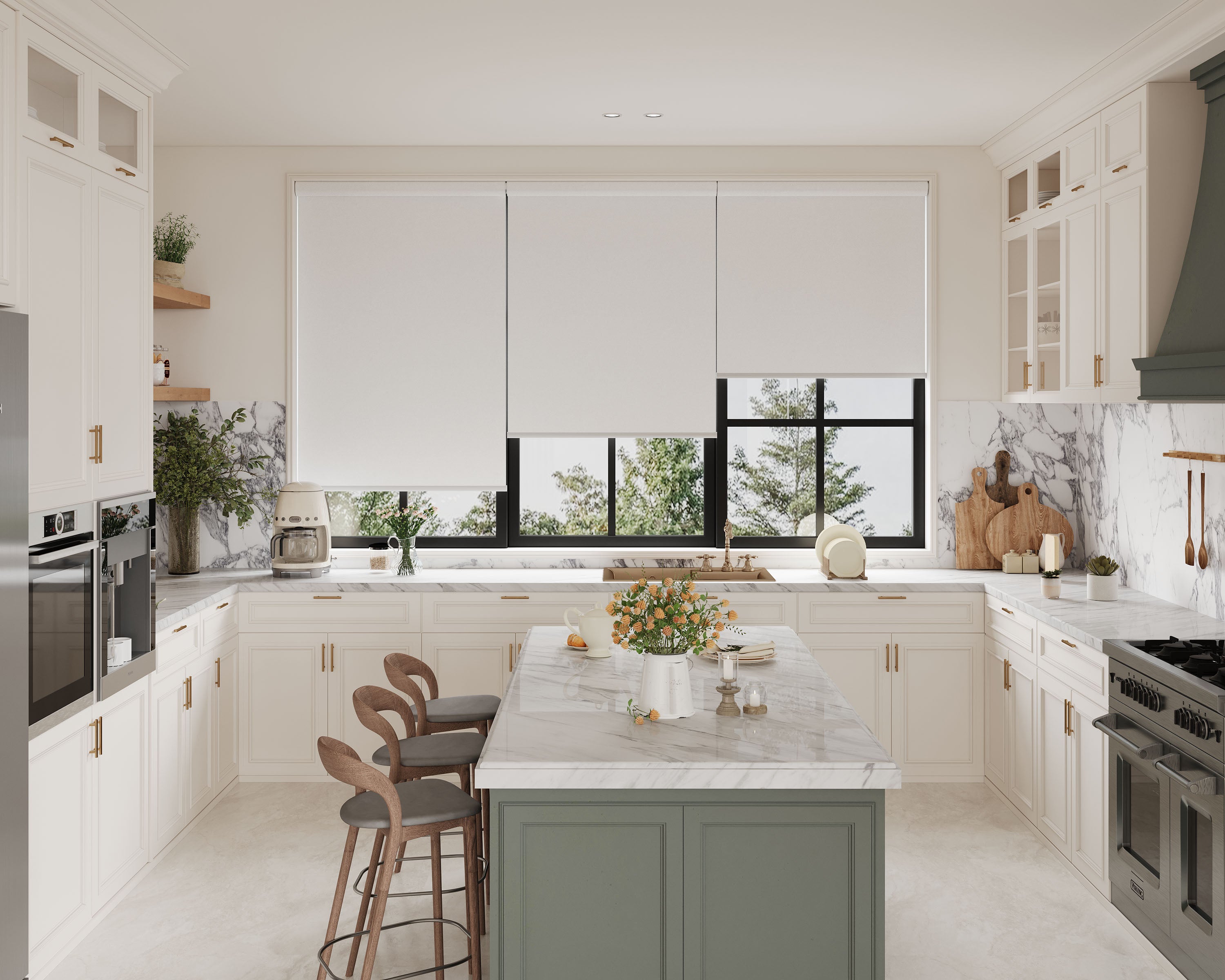
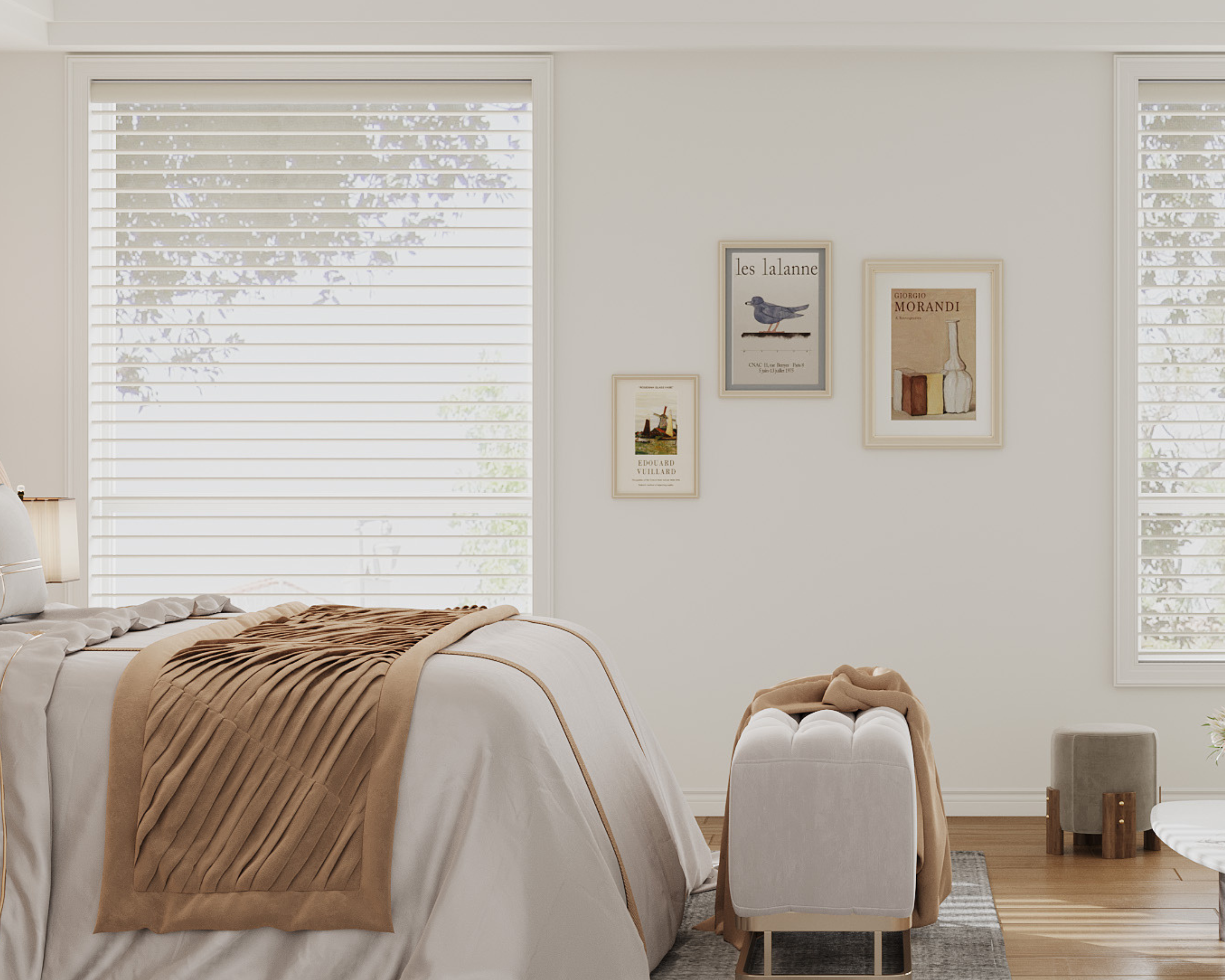
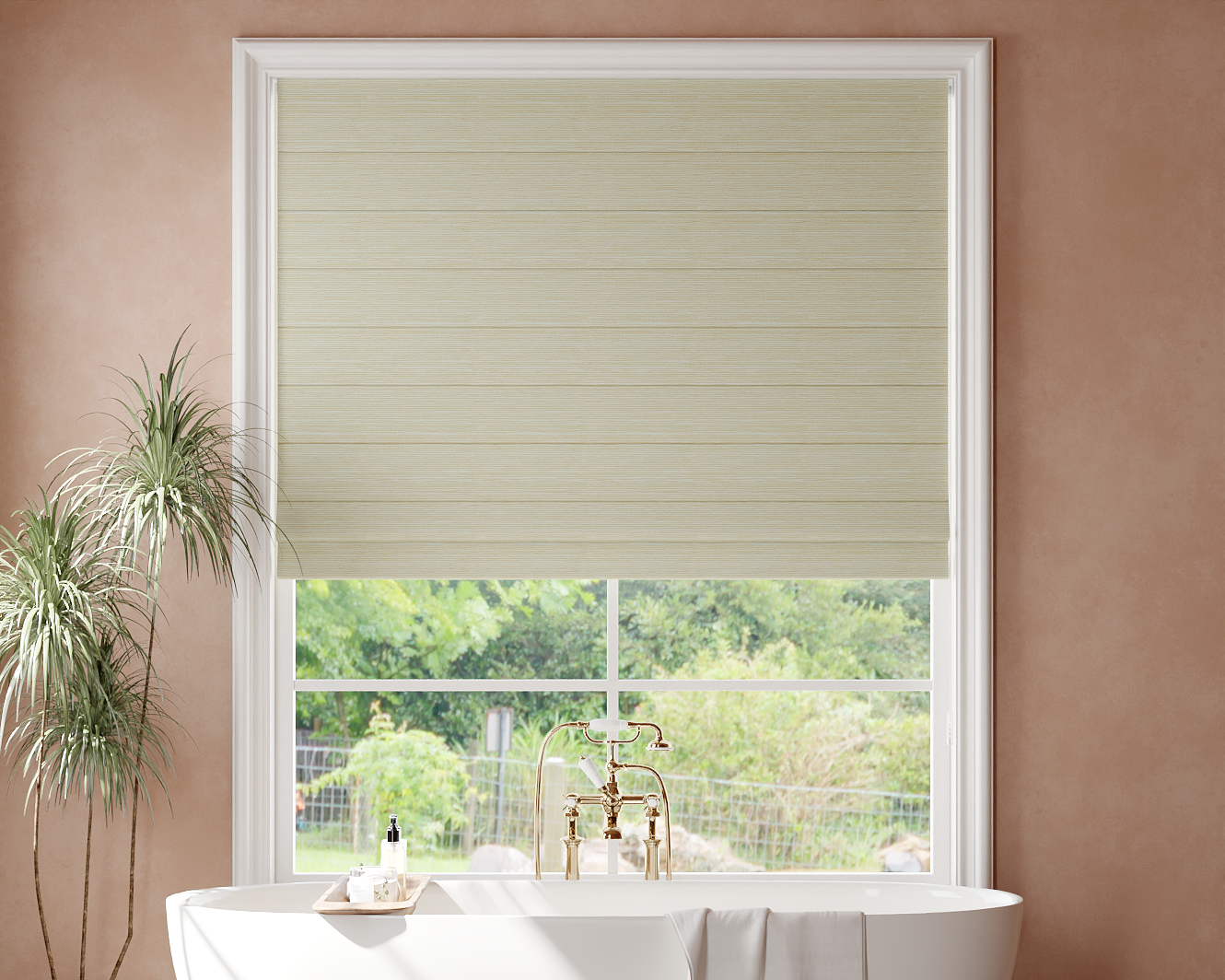





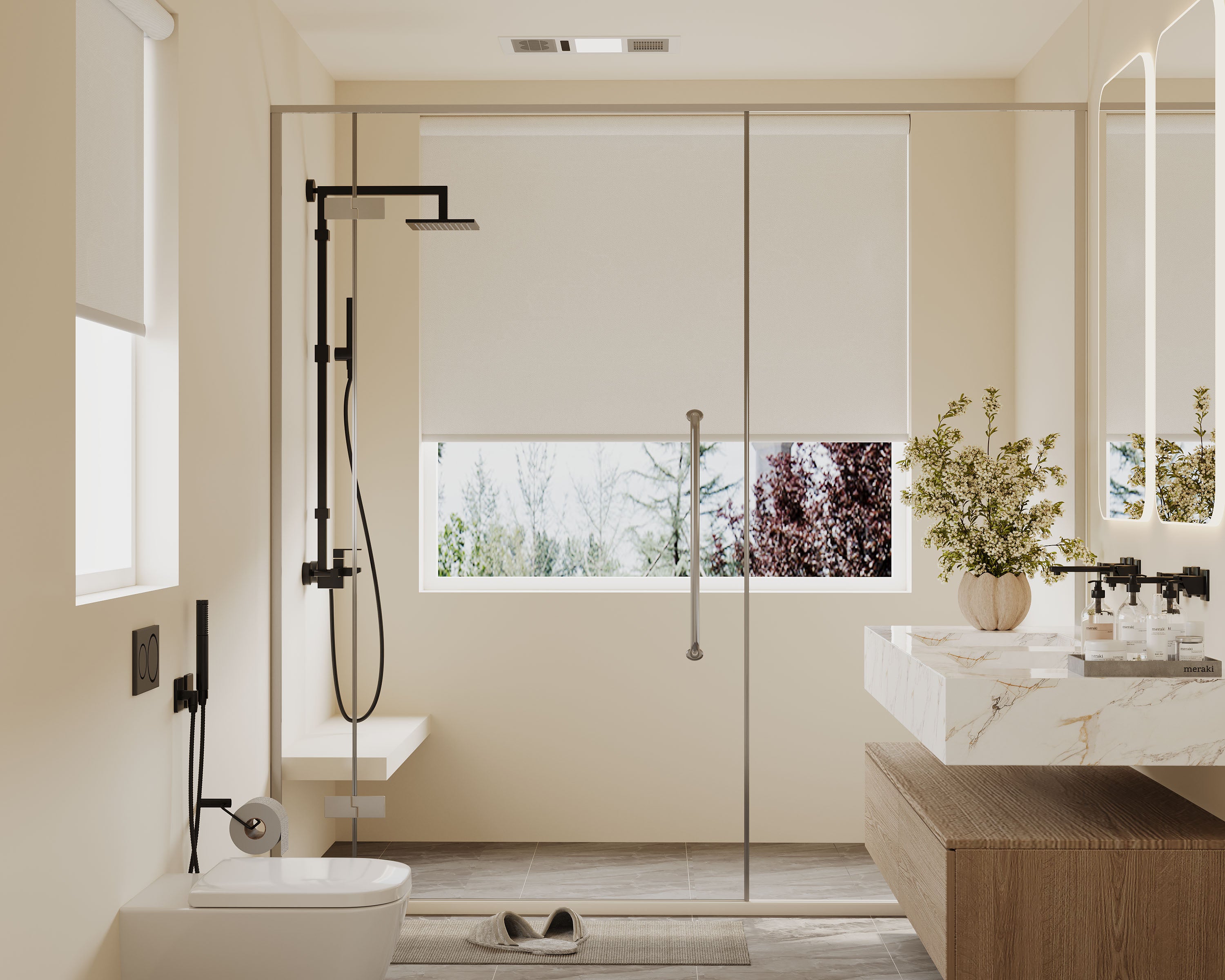


Check bathroom shade privacy after dark, with the room lights on and the shade in the position you expect to use. Assess the fabric and the edges separately. A sample can help you shortlist a material, but it cannot prove the coverage of a finished installation.
The aim is a clear decision about your own window. You do not need specialist equipment or photographs of private activity. You need the right lighting, the relevant viewing angles and a record of anything the proposed covering leaves uncertain.
Define what privacy means for this bathroom
Write down the result you need before comparing colors. Do you want to prevent identifiable detail, avoid visible body-shaped shadows, or block all views through the opening? Different households have different expectations, especially at street-facing or closely overlooked windows.
Also note when coverage is needed. A powder room used after sunset, a bathroom beside an illuminated walkway and a high window overlooked by a neighboring room may require different checks. Do not assume a high sill removes every possible view.
Use ordinary room positions: the basin, the doorway and the area where you bathe or change. Mirrors may extend a view, so include what can be seen through a reflection as well as a direct line across the room.
Use fabric samples to narrow the shortlist
Label each sample with its exact product, fabric code and color. Compare it at the intended window in daylight and under the evening lights. Keep the information supplied with the sample so a later order refers to the same material.
A small swatch is useful for color, texture and an initial look at light passing through the material. It leaves much of the glass uncovered and does not reproduce a full roller assembly, joined fabric, zebra-band alignment or the gaps around brackets.
If the swatch result is uncertain, ask about a larger demonstration or a more opaque option. Do not describe a small sample check as proof that an entire bathroom will be private. It also does not establish wet-zone suitability; that comes from the exact product specification and complete installation guidance.
Plan a respectful outside check
Choose an accessible viewpoint on your property, or another location where you have permission to stand. Do not climb, trespass or look into neighboring rooms. If the relevant view cannot be checked safely, tell the supplier that the sightline remains unresolved.
Keep everyone fully clothed. One adult can stand at the normal room positions while another observes from outside. Agree what will be checked beforehand and use observations rather than photographs unless all involved want a record.
Turn on the bathroom's normal ceiling and mirror lights. Repeat any distinctly different lighting arrangement you regularly use. A daylight-only view cannot establish the evening result, and a single phone picture is not a substitute for examining the window directly.
Test each intended operating position
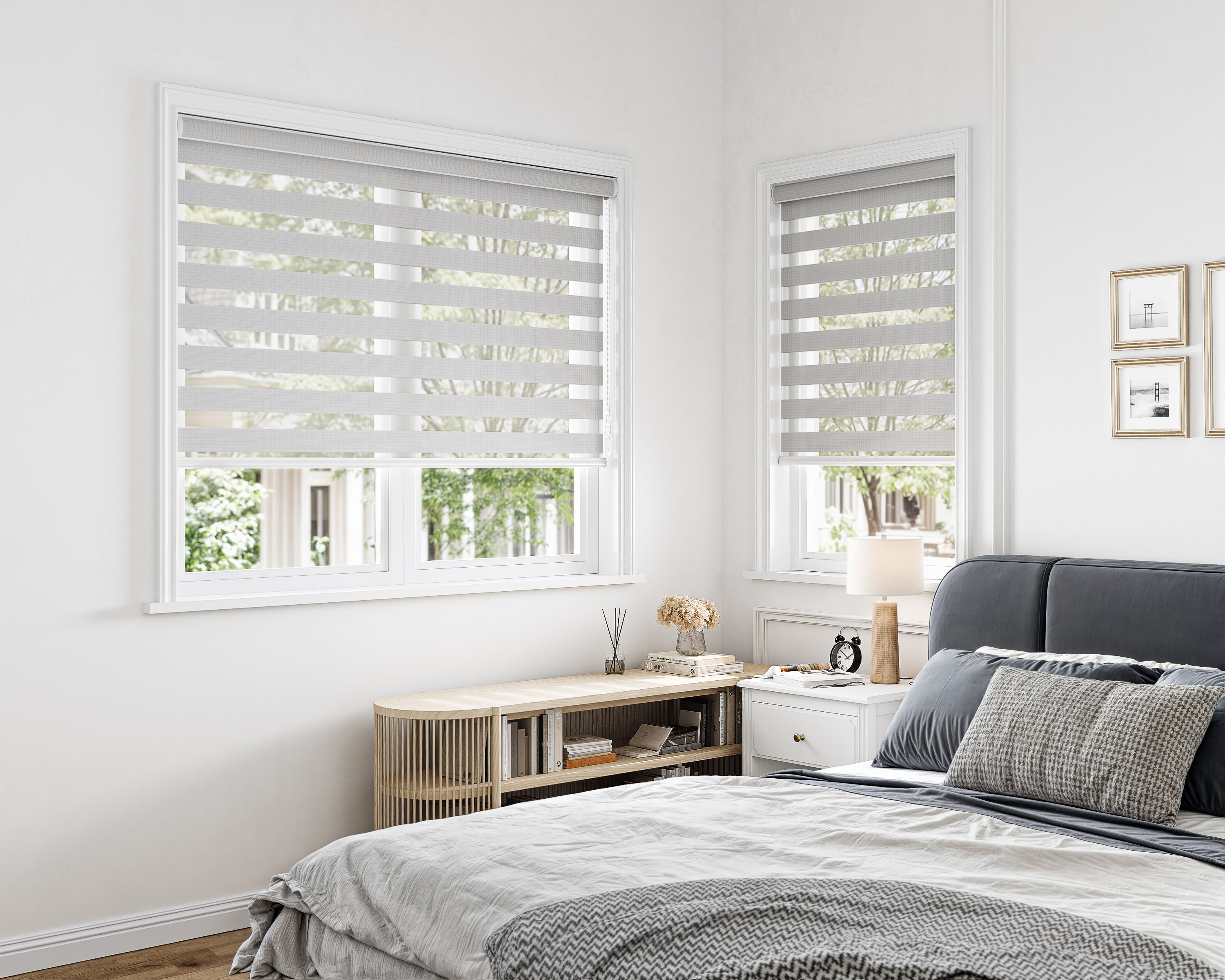
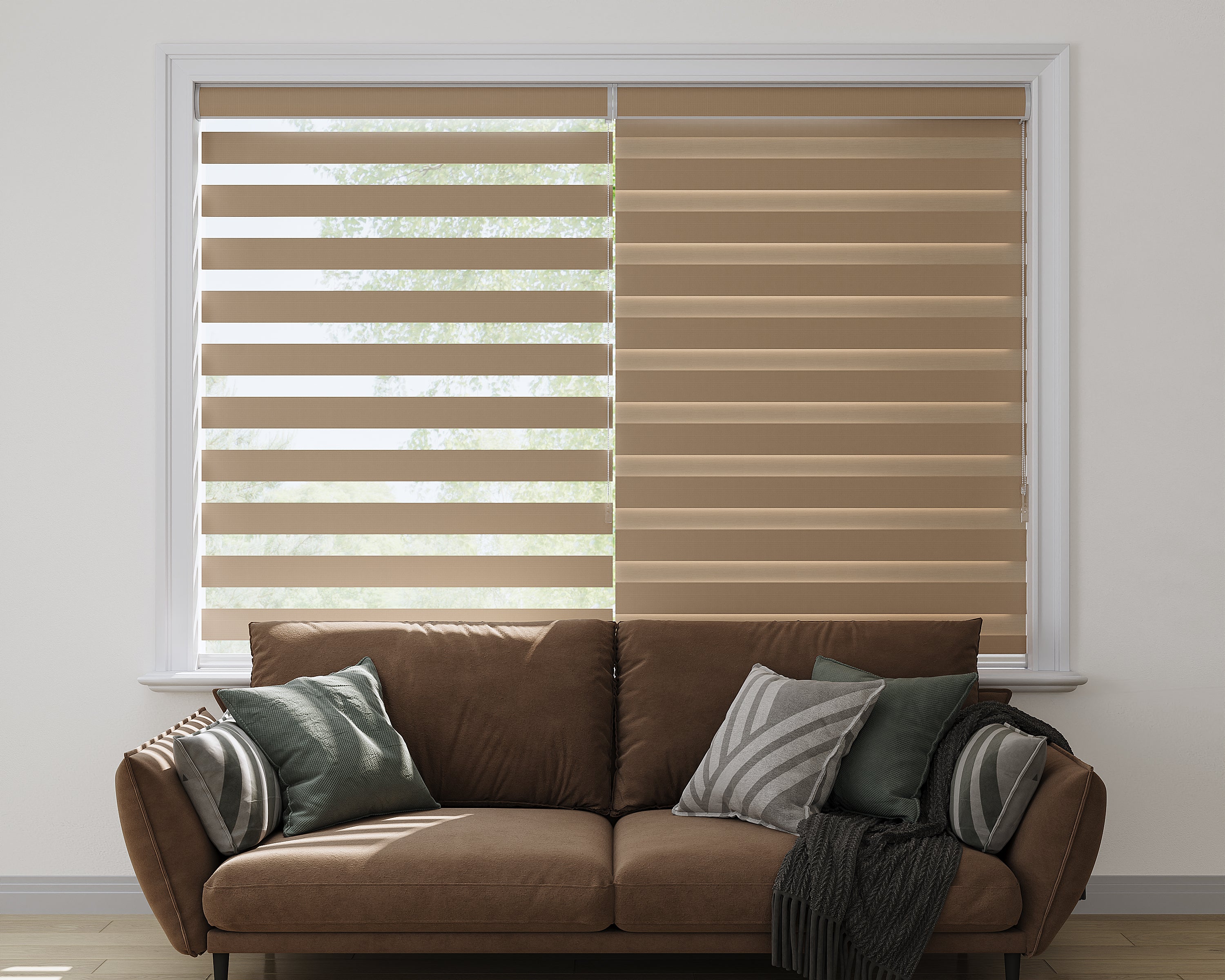
For an existing installed shade, lower it normally without forcing travel. Check each setting you intend to rely on for privacy. For zebra shades, assess the closed-band setting separately from the open sheer sections; open bands should not be treated as a nighttime privacy barrier.
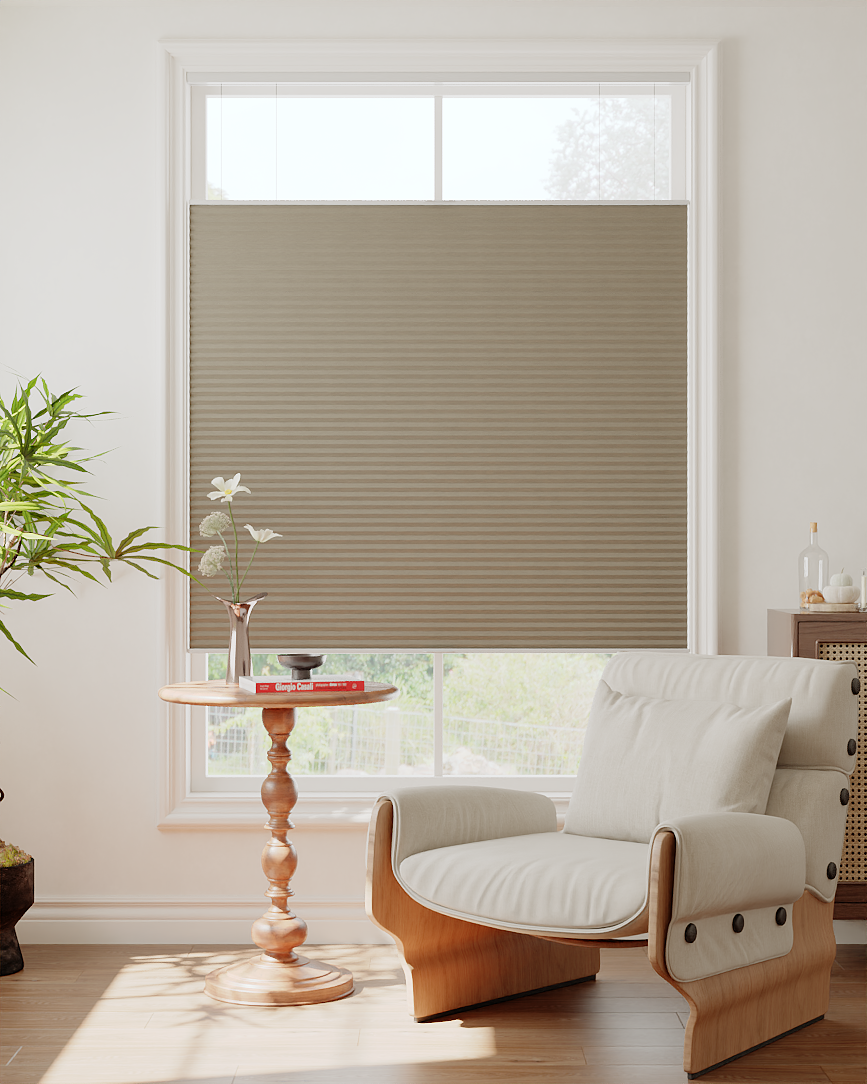
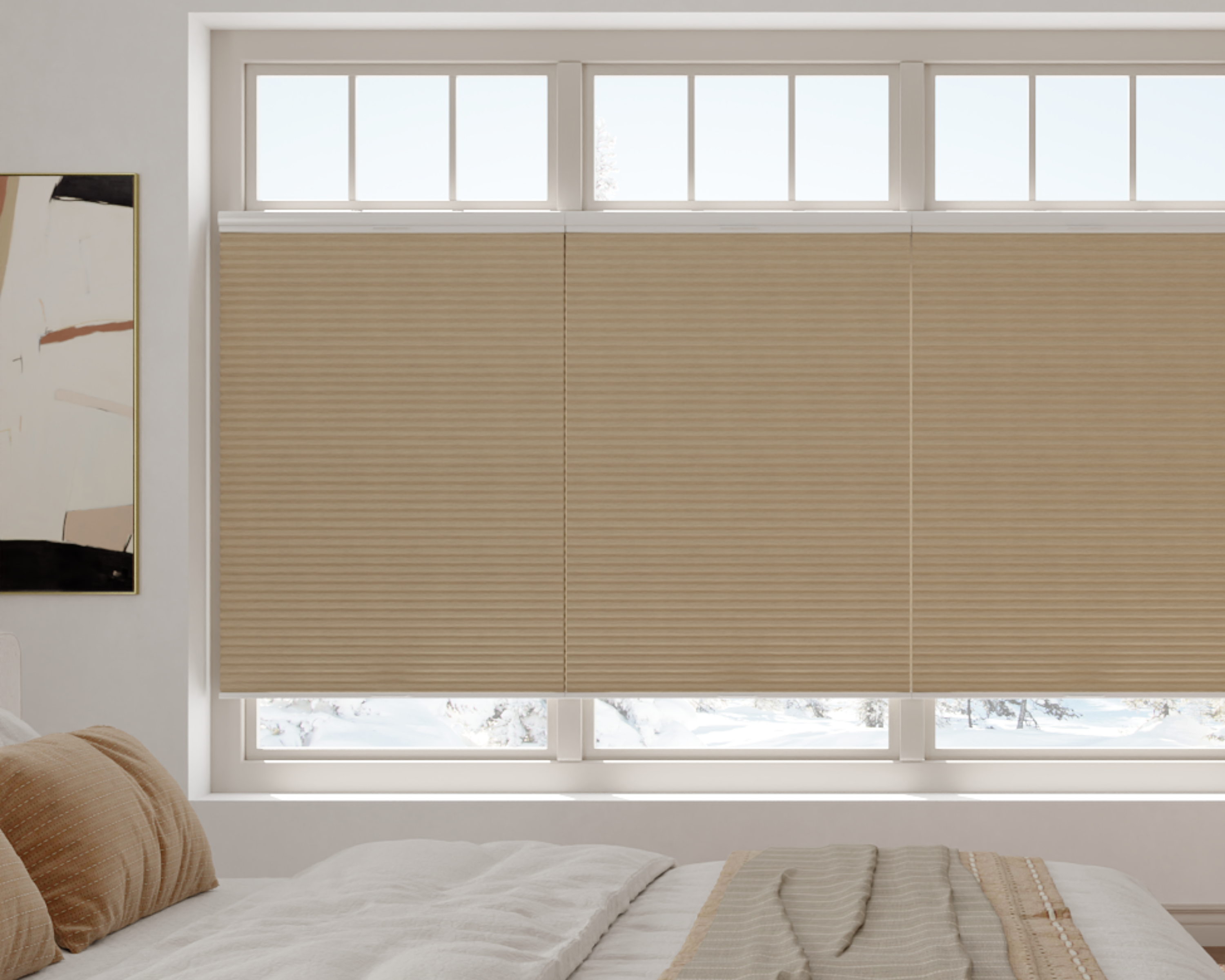
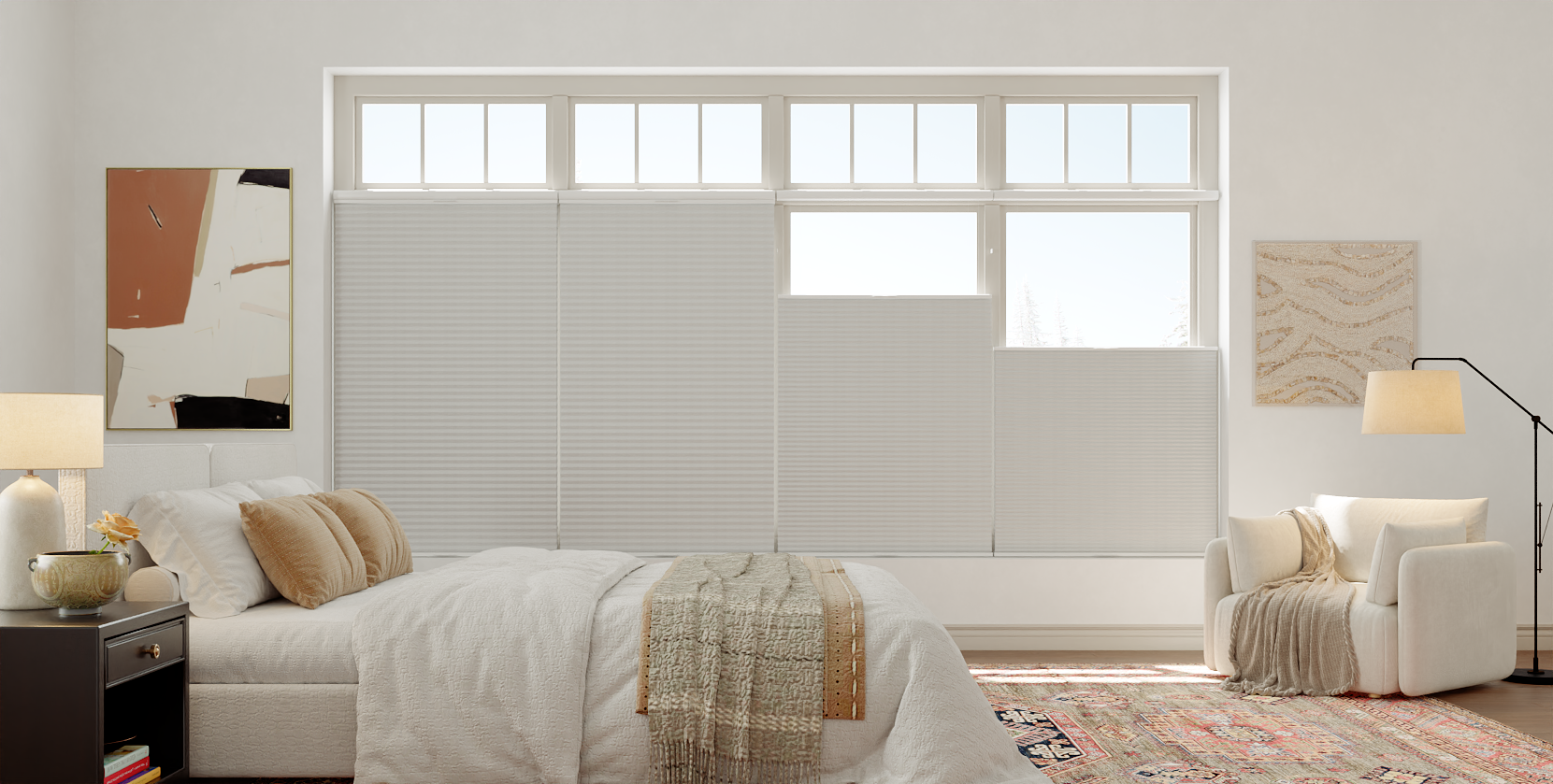
For top-down-bottom-up operation, examine the uncovered upper area as well as the covered lower area. Views from an upper neighboring window can differ from those at ground level. A flexible mechanism changes coverage, but it cannot make exposed glass opaque.
Use the bathroom zebra-shade guide and the light-filtering roller privacy guide to understand those product distinctions before relying on a setting.
Separate fabric transmission from edge sightlines
Ask the observer to describe what is visible rather than simply saying “it looks private.” Can detail be seen through the material? Are there outlines or movement? Is the view actually around one side, beneath the bottom rail or through exposed upper glass?
| Observation | What to review next |
|---|---|
| Detail or unwanted outlines through fabric | Opacity of the exact material and the setting being used. |
| A clear view beside the fabric | Fabric width, mount position and the relevant angled sightline. |
| Exposure below the rail | Intended drop, bottom coverage and permitted operating position. |
| Exposure above a lowered top rail | Whether that opening is acceptable for the outside viewing height. |
| Result cannot be checked safely | Record uncertainty and obtain supplier or installer guidance. |
Blackout fabric can provide an opaque panel while installation gaps remain. Conversely, a light streak does not by itself describe exactly what a person can see through the opening. Evaluate the actual sightline. The light-gap guide explains why fabric coverage and overall shade width differ.
Turn the observations into a decision
Mark each viewpoint and setting as acceptable, uncertain or needs a change. Keep a short reason beside the label. For example: “Garden path, closed setting: opaque center panel, but an angled view remains at the left edge.”
An acceptable result applies to the conditions you checked. New lighting, a changed room layout or a different shade position can justify another look. An uncertain result should remain uncertain rather than becoming a privacy promise in the order notes.
If a change is needed, identify the smallest useful correction. That might be a different material, a reviewed mounting arrangement or a different daily position. Do not order an extra-wide shade without checking the bracket space, window movement and the supplier's actual sizing convention.
Choose moisture suitability independently
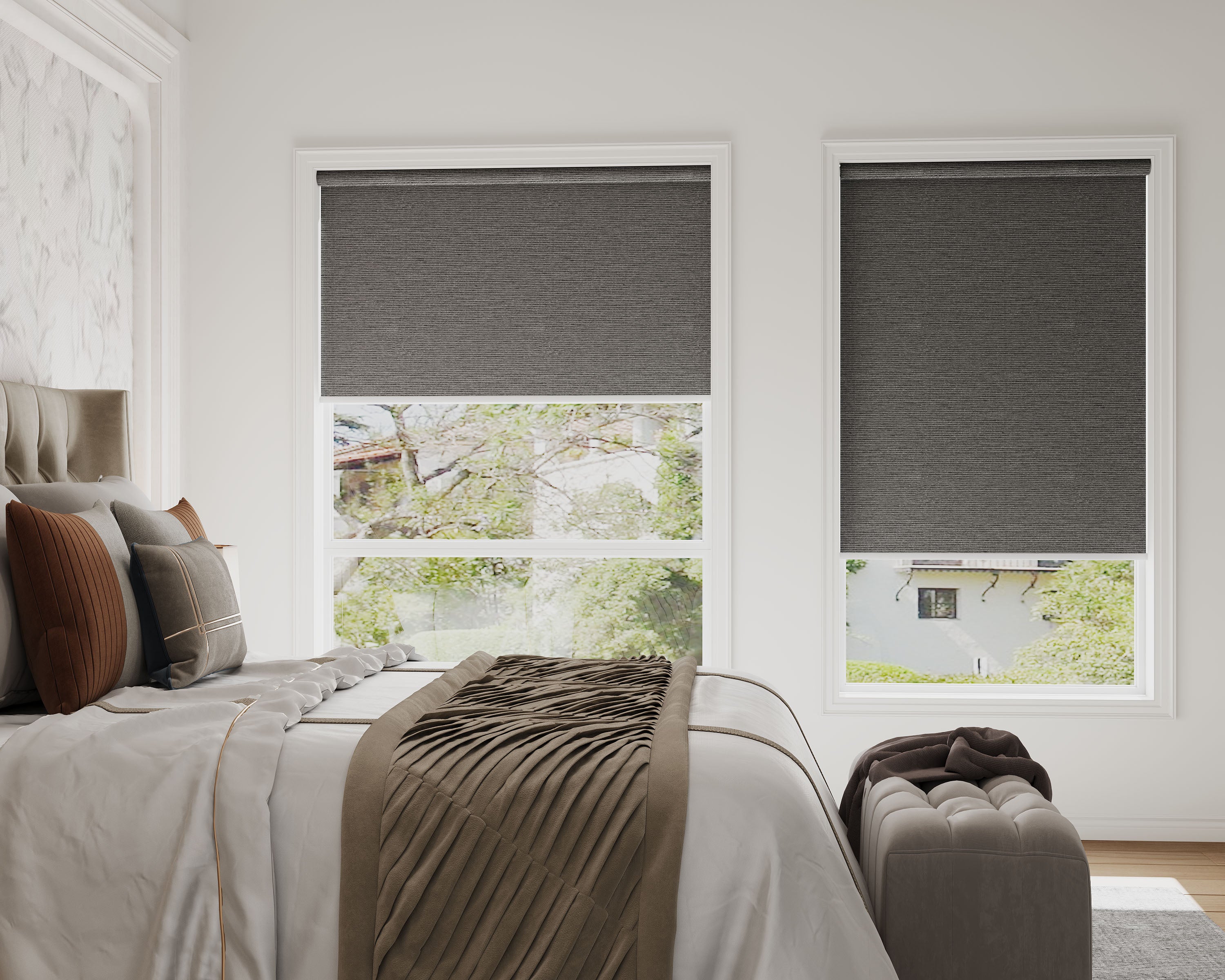
Once the privacy requirement is clear, compare appropriate materials in the waterproof window-treatment collection. Standard waterproof blackout roller shades offer an opaque fabric choice for a suitable bathroom location outside direct shower exposure.
A selected water-repellent cellular model offers light-filtering or blackout choices and supported operating options. Confirm the exact fabric and exposure limits rather than assuming the cellular style alone establishes suitability.
For a shower-zone window, obtain guidance for the complete wet-zone assembly. Passing an evening privacy check does not make fabric, hardware, a motor or charging parts appropriate for direct water.
Keep the result with the order
Send the supplier the product shortlist, raw window measurements, intended mount and your observation record. State which sightlines need coverage and whether the window must open while privacy is maintained.
After installation, repeat the check with the finished shade. A preliminary sample assessment informs the purchase; the final review checks the real coverage. Our bathroom roller-shade buying guide connects those findings to material, lift and mounting choices.
