
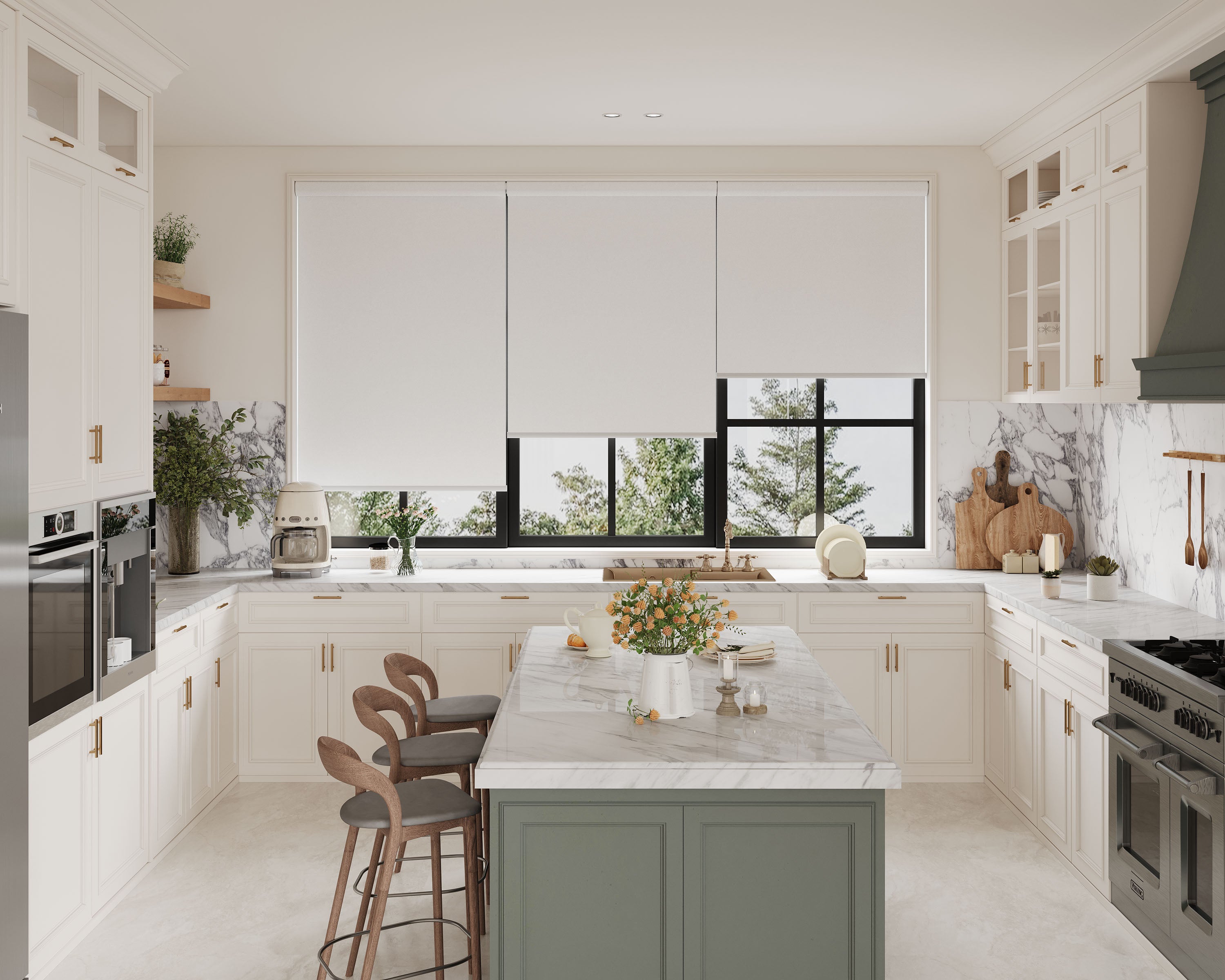
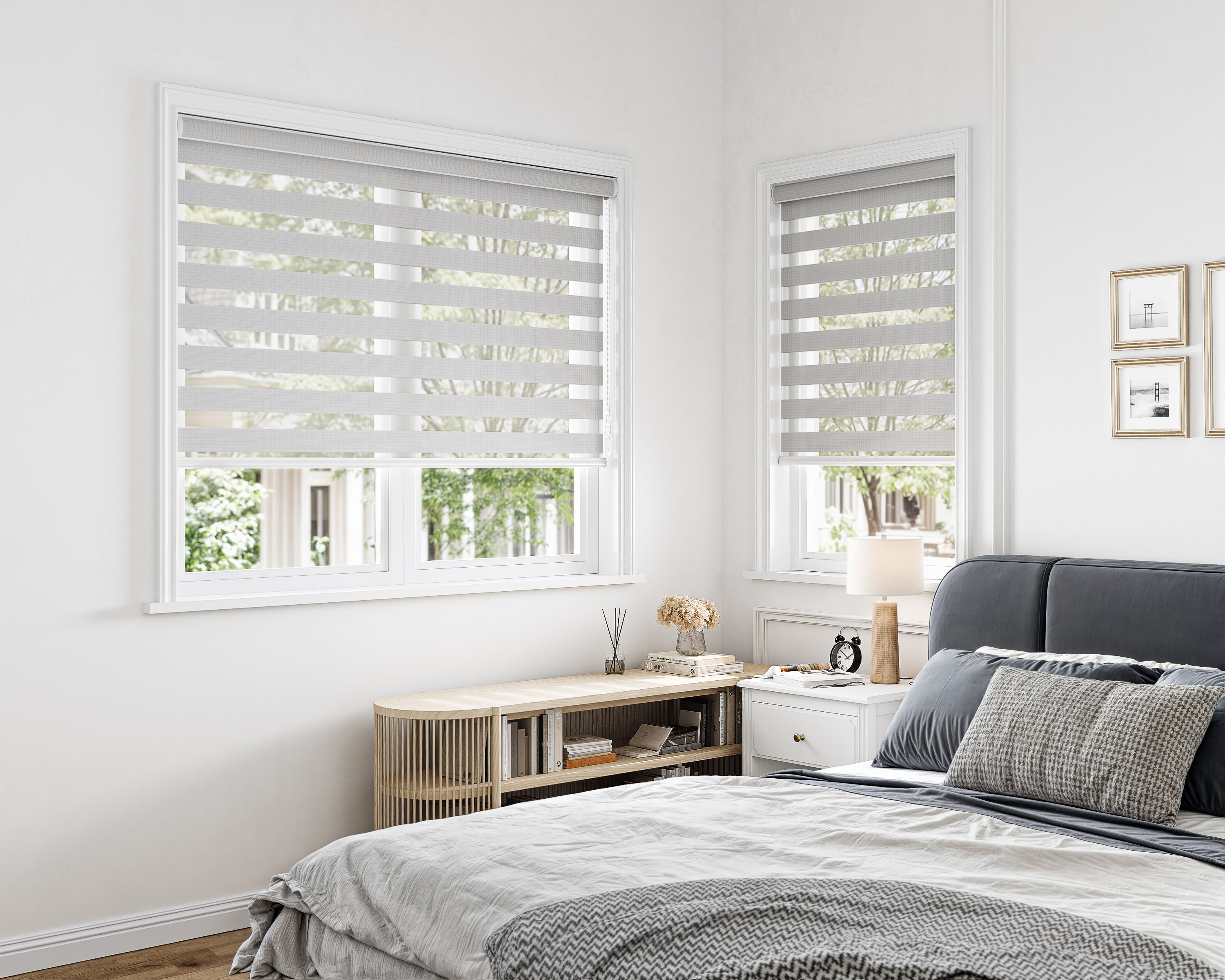
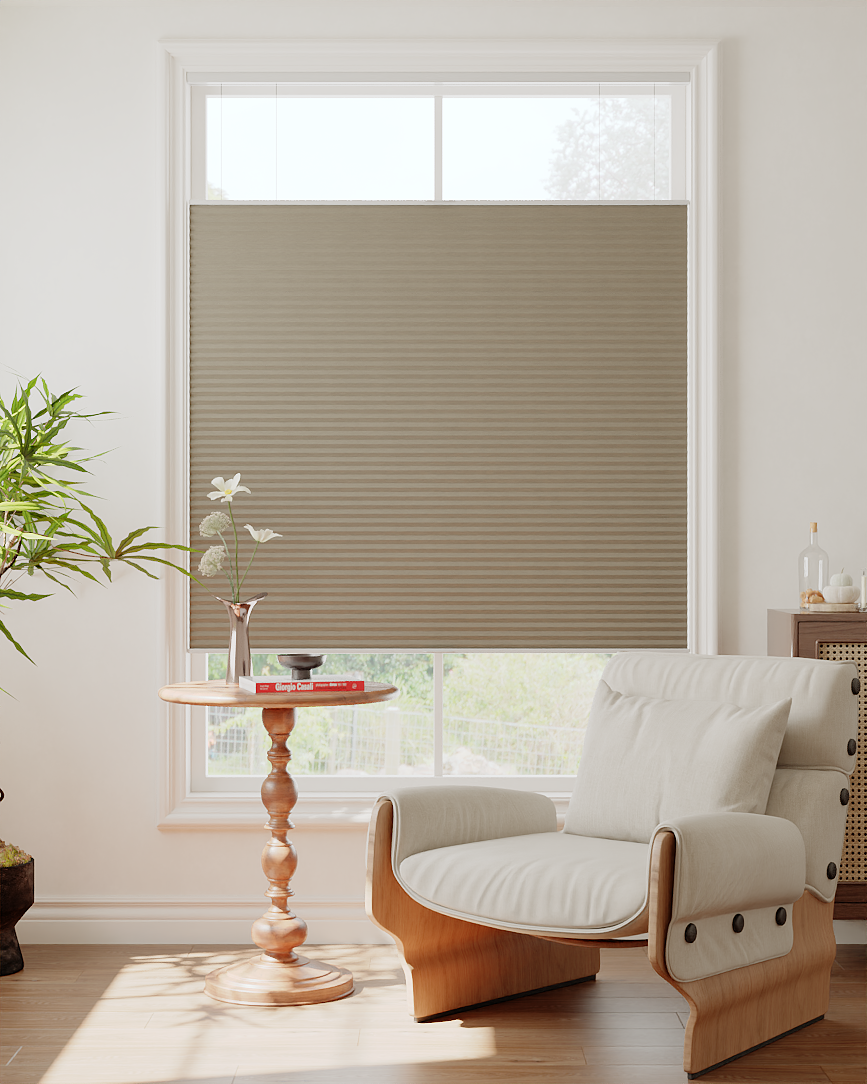
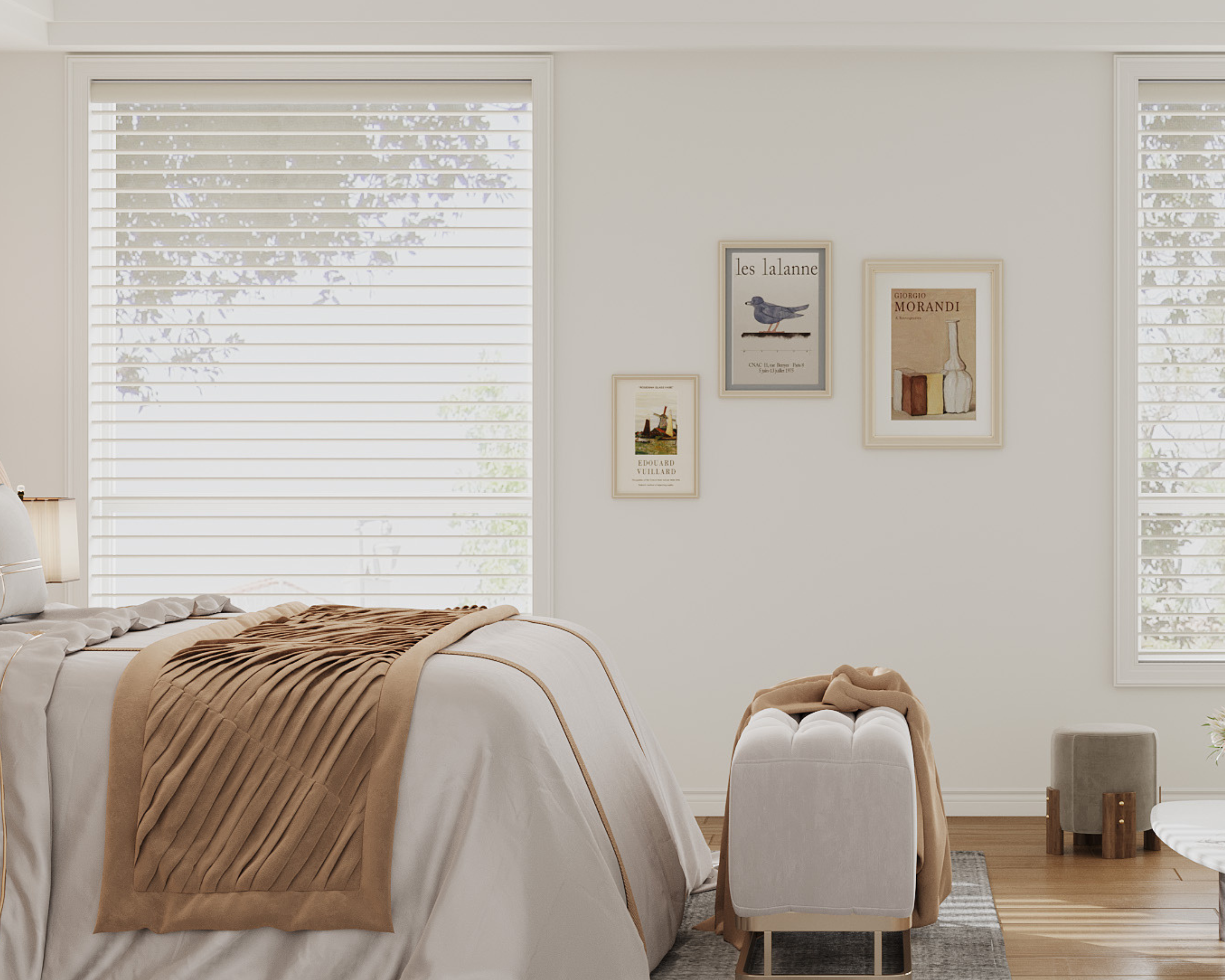
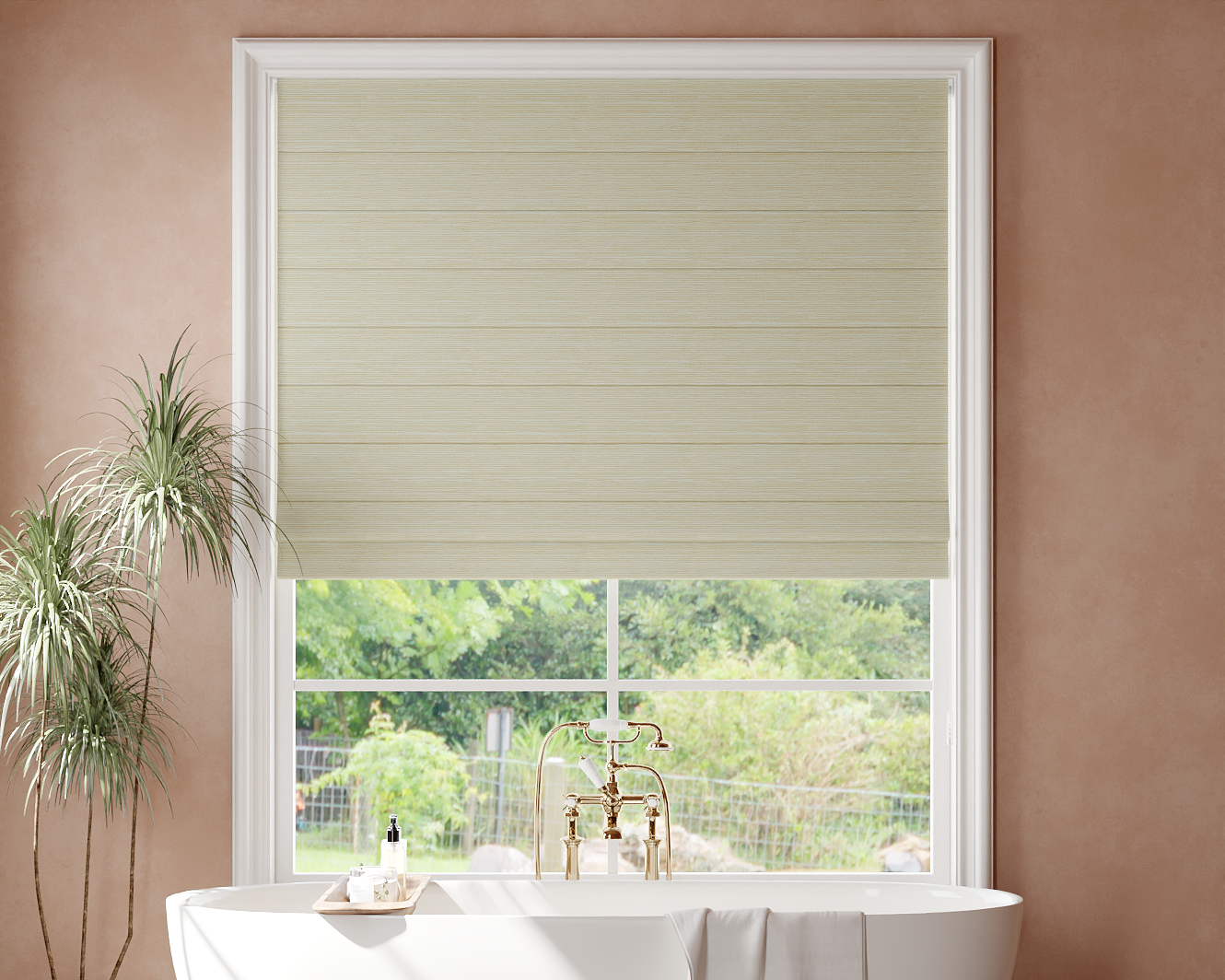
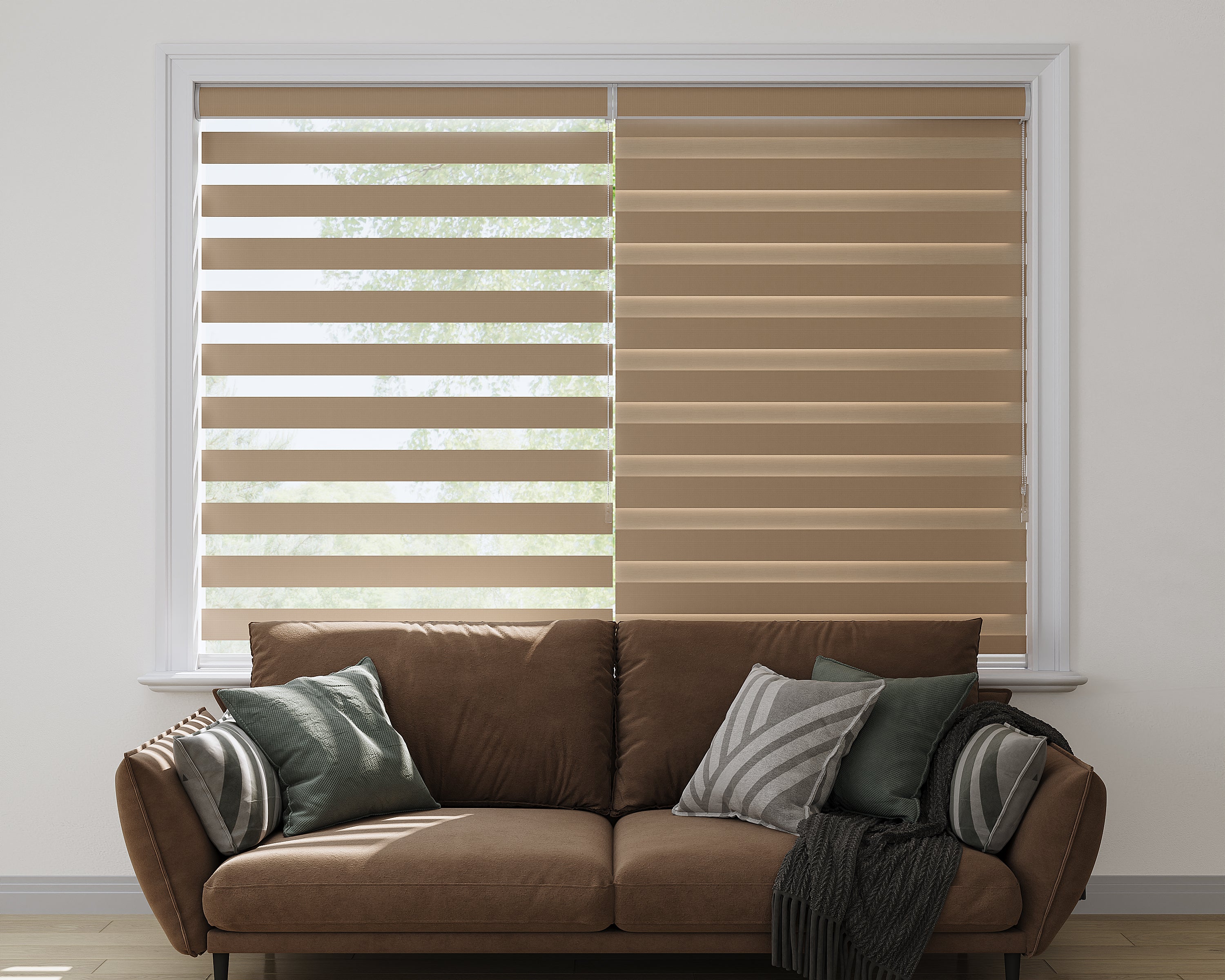
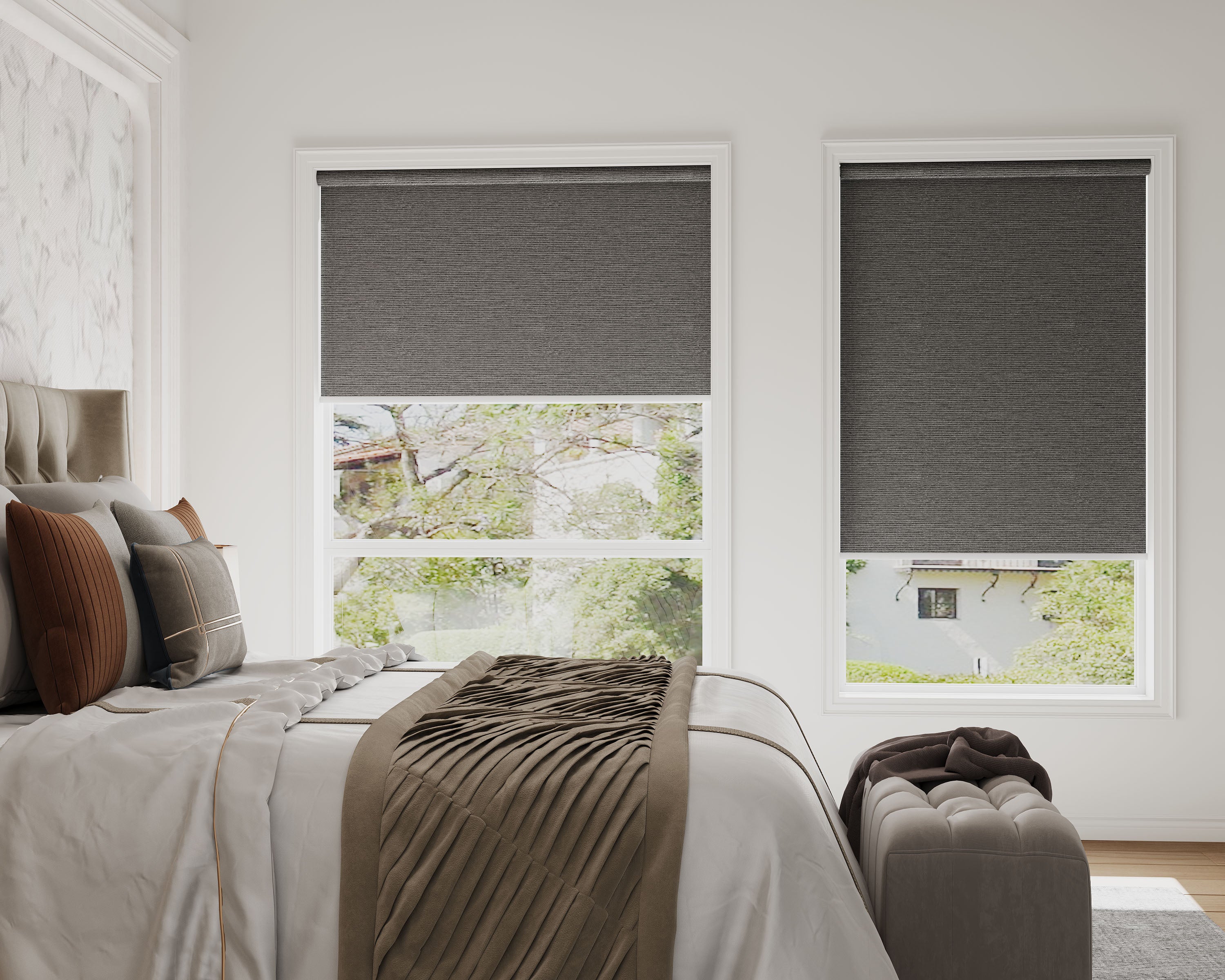
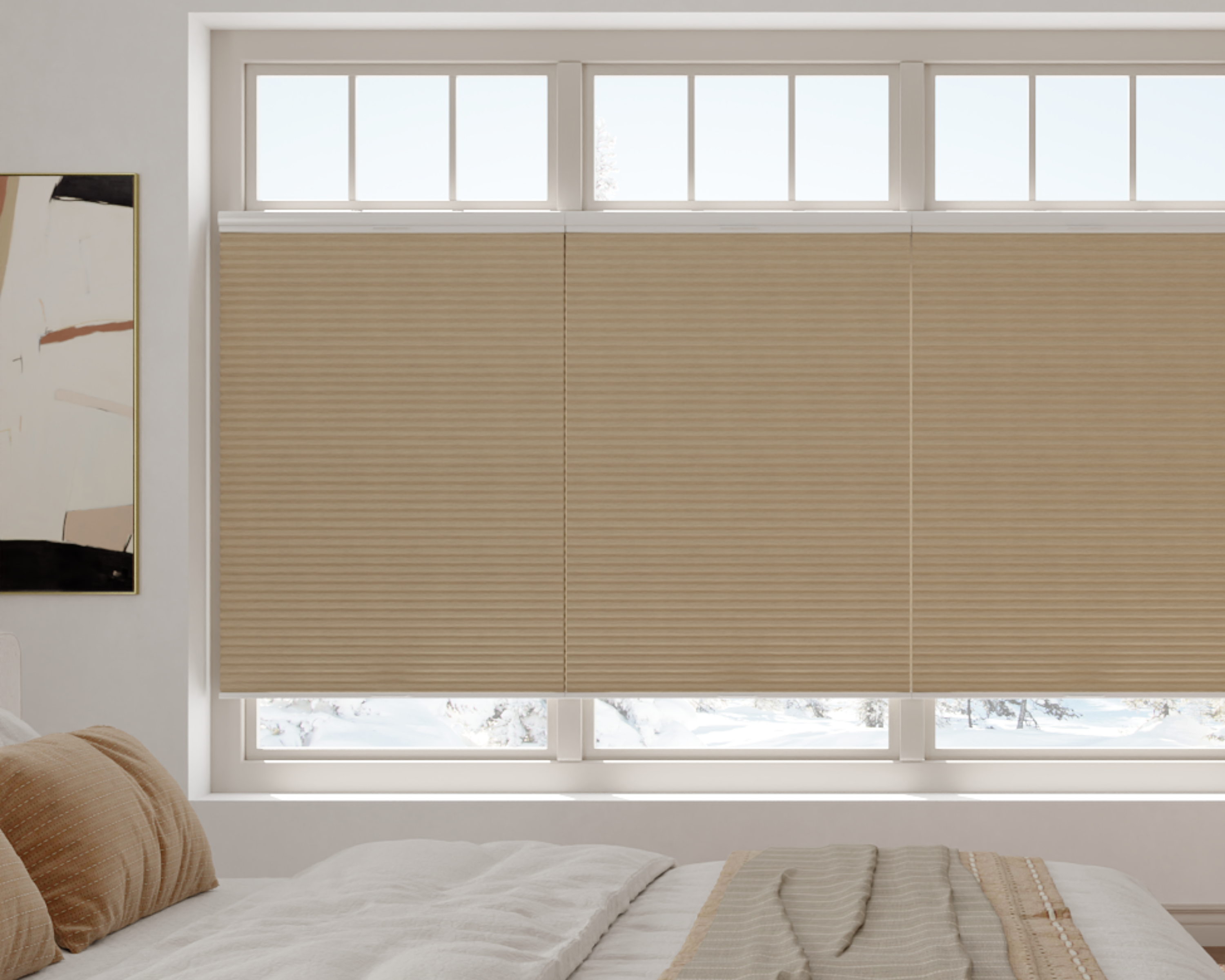
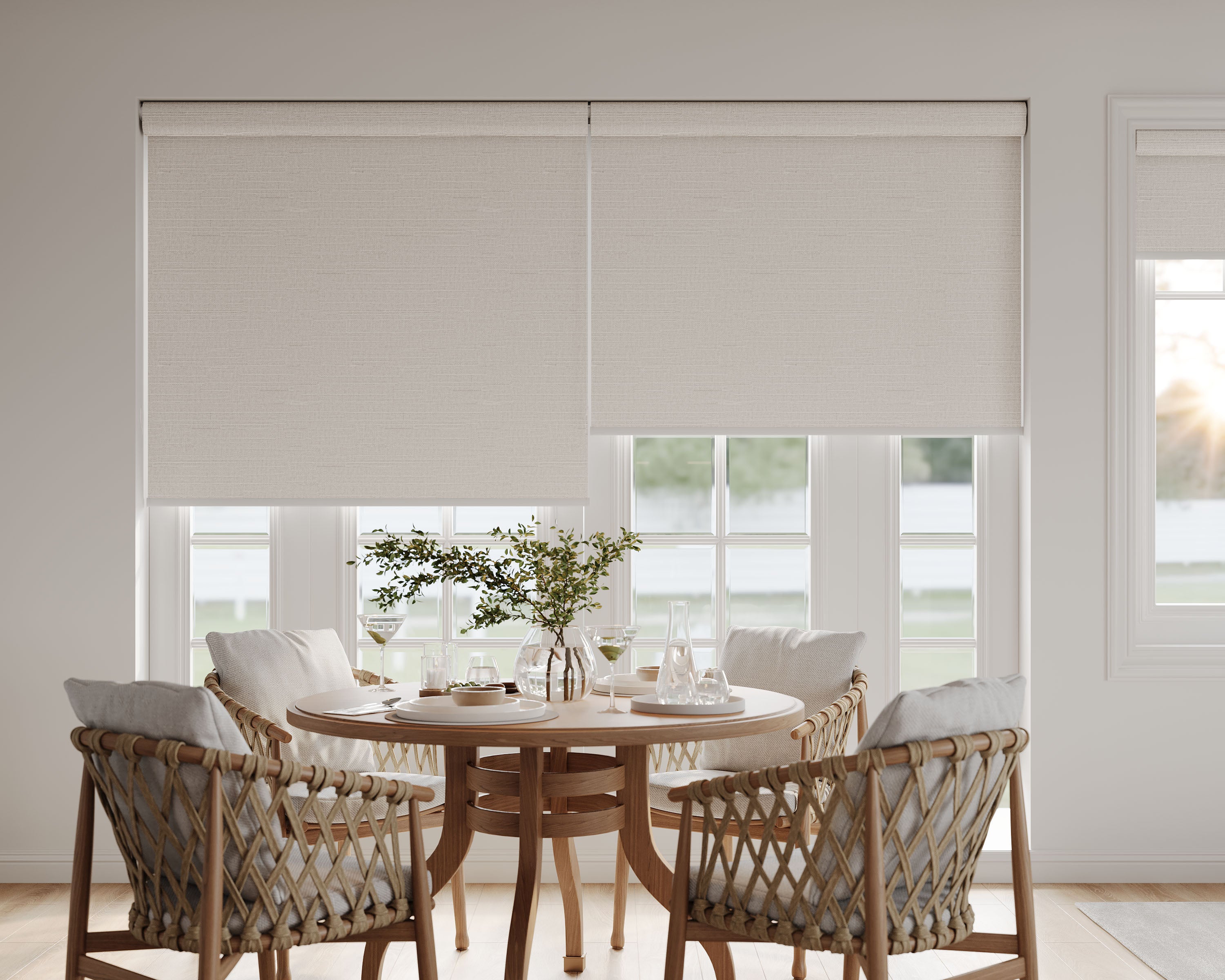


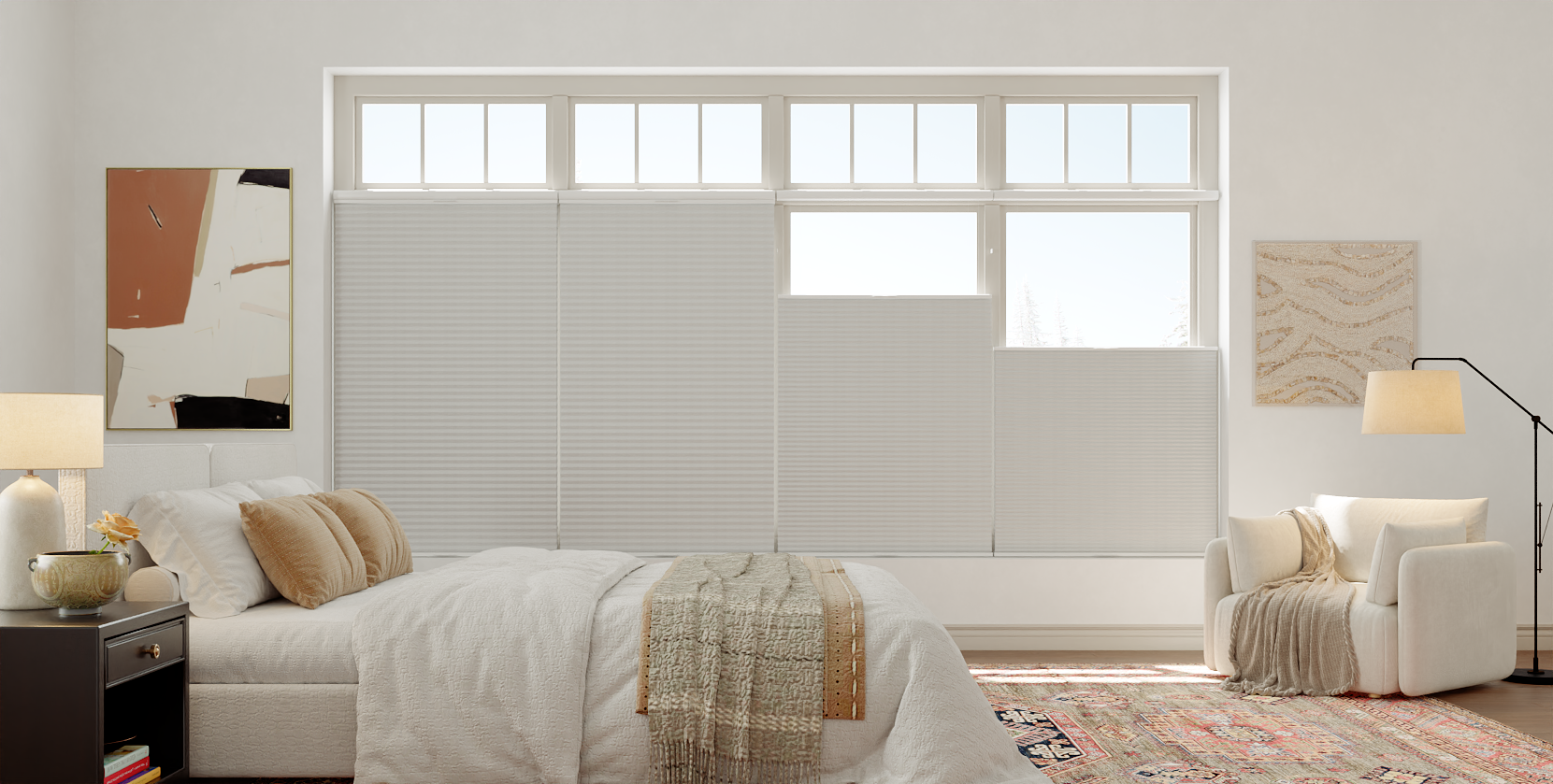


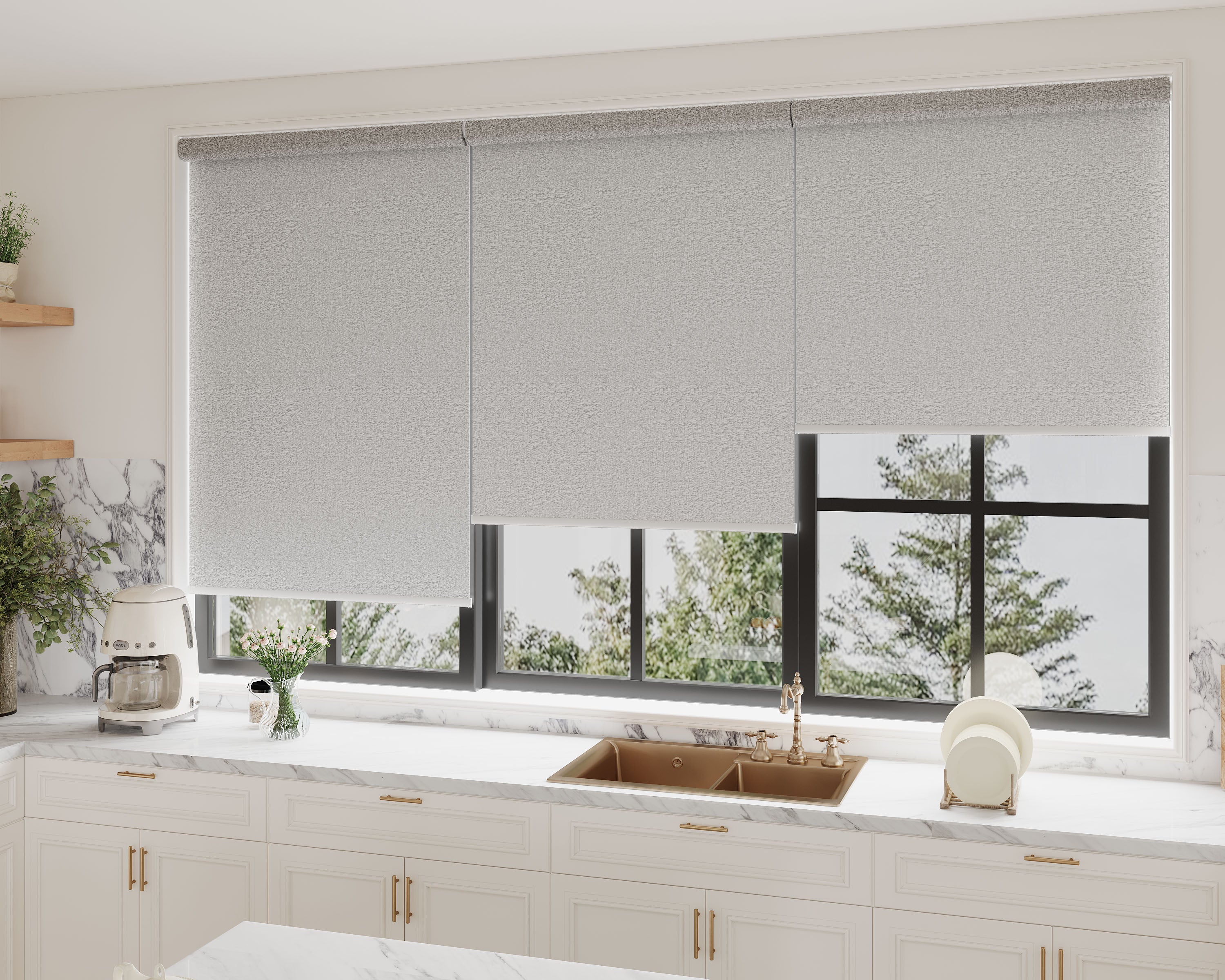

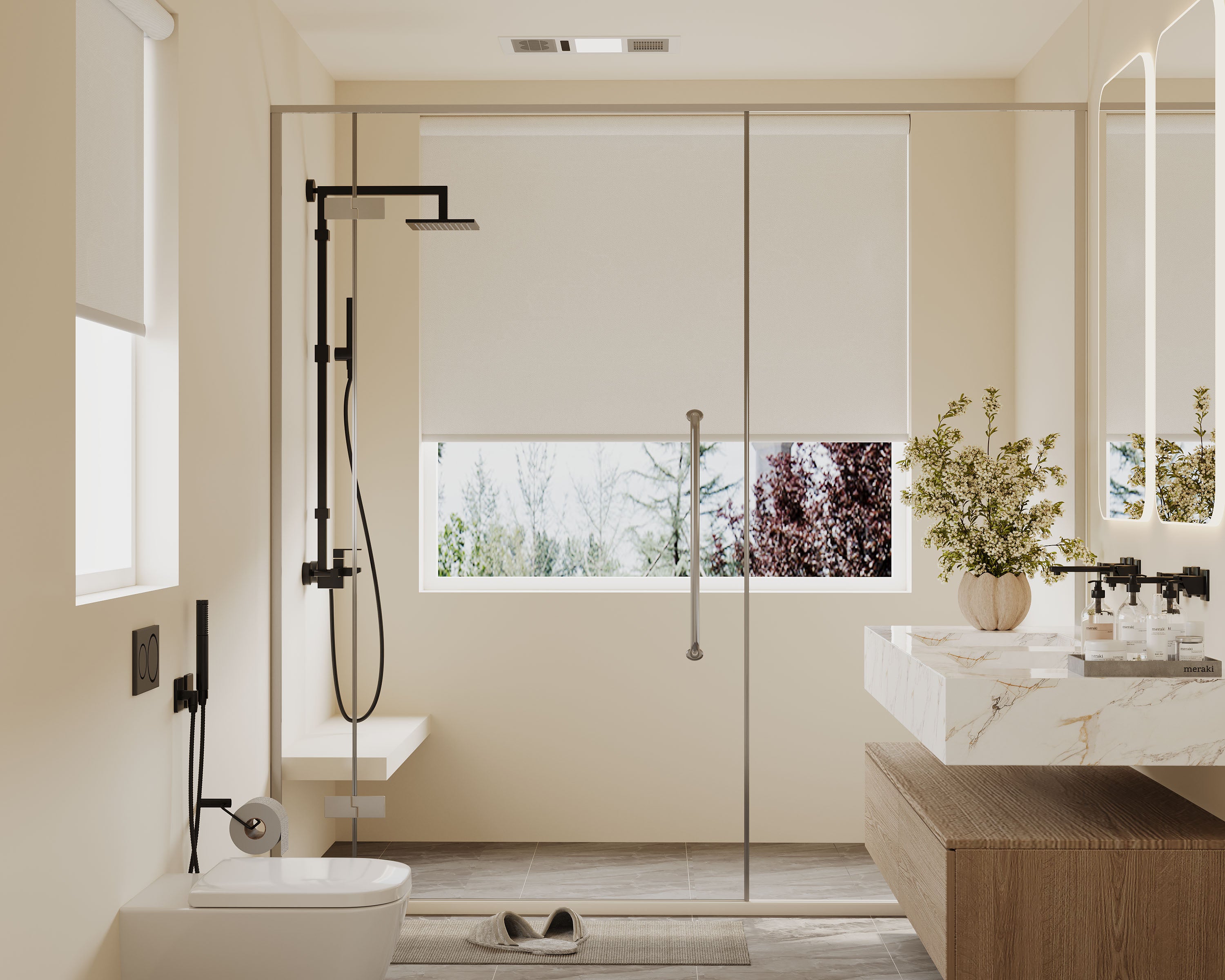


A Roman shade has more than one visible horizontal line. Fold count describes how many folds form its design; fold spacing describes their layout; the raised stack describes the fabric package left near the top when the shade is open. These are different from the height of the headrail or bottom edge.
Understanding those parts makes it easier to choose a Roman shade from a finished example. It also explains why two windows can have matching fabrics and level headrails without showing identical fold patterns.
Identify the three parts of the fold layout
Look at a Roman shade fully lowered, partly raised and fully raised. Use the same viewing direction for each position so you can tell which lines belong to the fabric and which belong to the hardware.
| Term | What it describes | What it does not establish |
|---|---|---|
| Fold count | The number of folds in the specified fabric design | The number of cellular pockets or motor presets |
| Fold spacing or pitch | The repeating layout of fold positions | The complete depth of the headrail |
| Raised package or stack | The fabric and assembly remaining near the top when open | A completely uncovered window |
A seam, a support detail and a visible fold edge are not automatically the same thing. A photograph of an unfamiliar model may not reveal exactly how it is constructed. Use a finished example and the model description together rather than counting every shadow as another fold.
Different Roman designs display folds differently
A flatter design can show more of its fabric face when lowered. A hobbled style retains visible fullness, while a relaxed style has a softer lower shape. Those distinctions affect where highlights and shadows appear; they do not supply a universal formula for the finished fold layout.
Our flat, hobbled and relaxed Roman comparison covers the style decision. Once you have chosen an actual offered model, examine its own lowered and raised form. Two products both described as Roman shades can leave different fabric shapes visible when open.
A patterned fabric adds another layer of visual information. A horizontal stripe may emphasize a fold line, while a larger motif can disappear partly into a gathered section. That does not establish a fabrication error. Pattern placement needs to be assessed for the complete design, not inferred from a small swatch.
What the current SenseBlinds textured Roman model says
The current textured Roman product listing describes an odd number of horizontal folds, with each fold typically approximately 8–12 inches high. It also says the total shade height determines the final layout, so different shade heights may use different numbers of folds.
Those are statements about that current product. They are not a rule for every Roman shade, and the approximate range is not a set of dimensions to use as an ordering deduction. Other Roman constructions may use different layouts.
The listing also describes one fabric fold remaining visible at the top when fully raised. In practical terms, “raised” does not mean every part of the fabric vanishes into a narrow roller tube. Include that remaining fold in your view of the open window.
Do not divide the drop to invent an order specification
It can be tempting to take a window height, divide it by a preferred number and call the result a fold size. That arithmetic does not account for the model's fabrication, overlap, visible fabric shape, headrail or lower details.
Instead, distinguish the finished shade drop from the fold layout used to make it. A fabric may contain material that gathers or overlaps; the area you see from the room is not necessarily a flat sheet divided into equal exposed rectangles.
The same caution applies to a small fabric sample. It can show texture and color, but it cannot demonstrate the final fold count or the fabric package at your ordered height. Compare the sample for appearance and the actual model information for construction.
Why adjacent windows may show different fold lines
Imagine two neighboring windows with different opening heights. Their headrails can share a level mounting reference while the complete shade drops differ. If the chosen Roman model uses different fold counts for those drops, the horizontal fabric lines may not match at every level.
There are three separate design decisions:
- Whether the headrails should form a common top line.
- Whether the fabric folds should follow coordinated spacing.
- Where the bottom edges should stop in the usual operating position.
Changing one does not automatically change the others. Motor groups or equal percentage commands concern movement; they do not alter a fabricated fold pattern. A supplier may be able to coordinate a particular arrangement, but it must be resolved before manufacture rather than adjusted by pulling the fabric afterward.
For this current SenseBlinds Roman model, the product guidance asks customers to place neighboring shades in the same order and state a fold-alignment request. Specific fold-height or spacing requirements should be discussed before ordering. Keep that confirmation with the individual window dimensions.
Check the raised package against the glass and handles
The lowered pattern is only half the appearance. Look at how much fabric remains visible above the window when the shade is raised and whether it clears nearby handles, opening sashes and a second curtain layer.
An outside mount may provide space for some of that package above the glass where suitable support exists. An inside mount leaves the package within or near the recess. Neither layout has a universal remaining-stack dimension; compare the actual assembly for the fabric and drop.
For a broad window, use the large-window Roman guide to decide whether one panel or several supported units suit the opening. Several panels introduce more fold edges and potential differences to compare.
Keep fold appearance separate from light control
The fold arrangement does not establish whether the fabric is light filtering or blackout. Nor does a fuller fold guarantee better privacy or insulation. Compare the actual fabric and backing with light behind them, then assess perimeter coverage in the intended mount.
Use the Roman fabric guide for those material questions and the Roman collection for currently offered configurations. A clear view of the lowered folds and the raised package helps you choose a design you enjoy in both positions.
