







Zebra shades can be worthwhile when you will use their banded light adjustment and prefer their appearance. Their value is less clear when the room only needs simple opaque coverage or the chosen fabric does not meet privacy requirements. Evaluate the actual task before paying for an upgrade.
Compare custom zebra shades by fabric, dimensions and operating system. A universal lifespan, energy return or resale-value claim is not a reliable way to decide what they are worth to your home.
What the mechanism adds
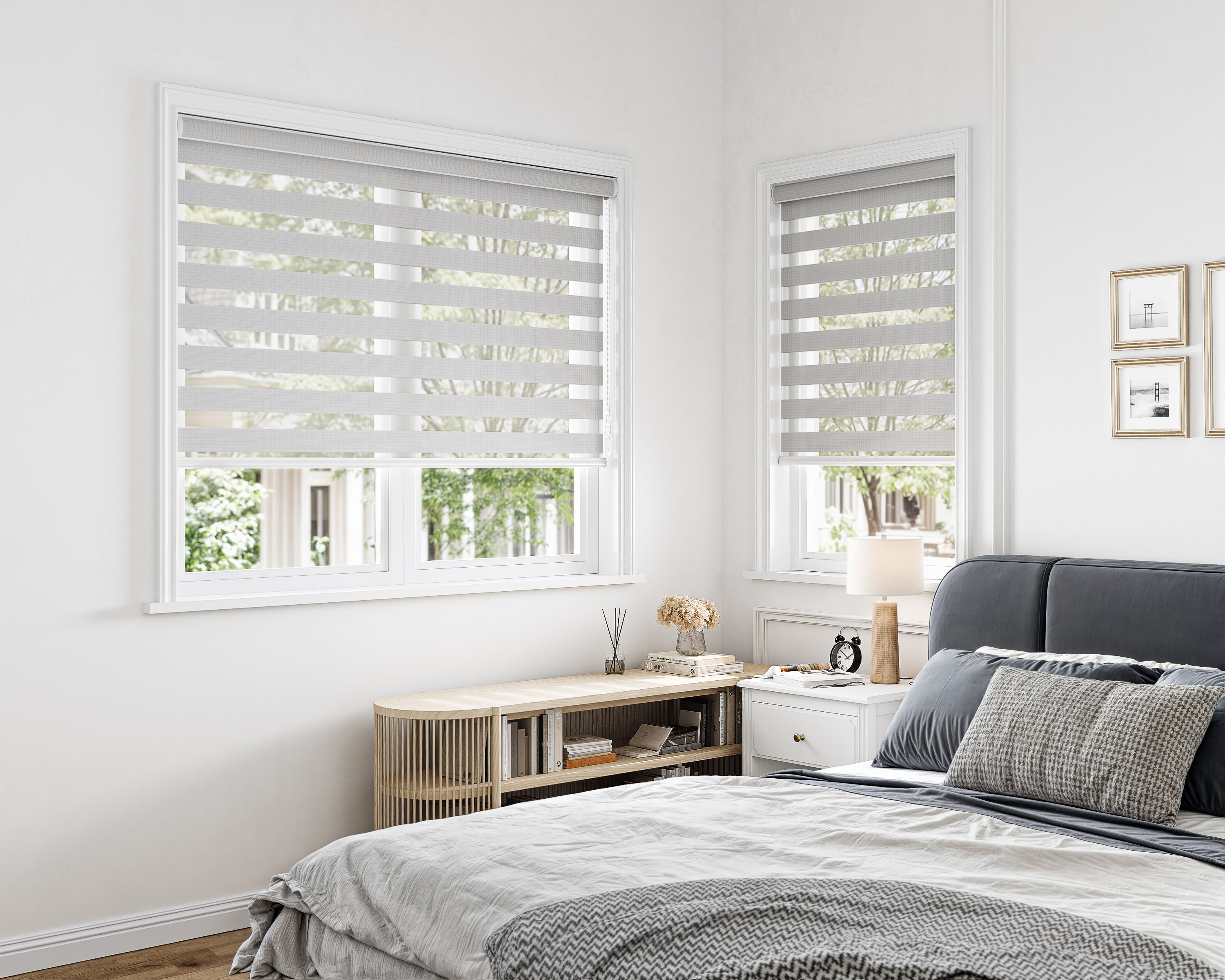
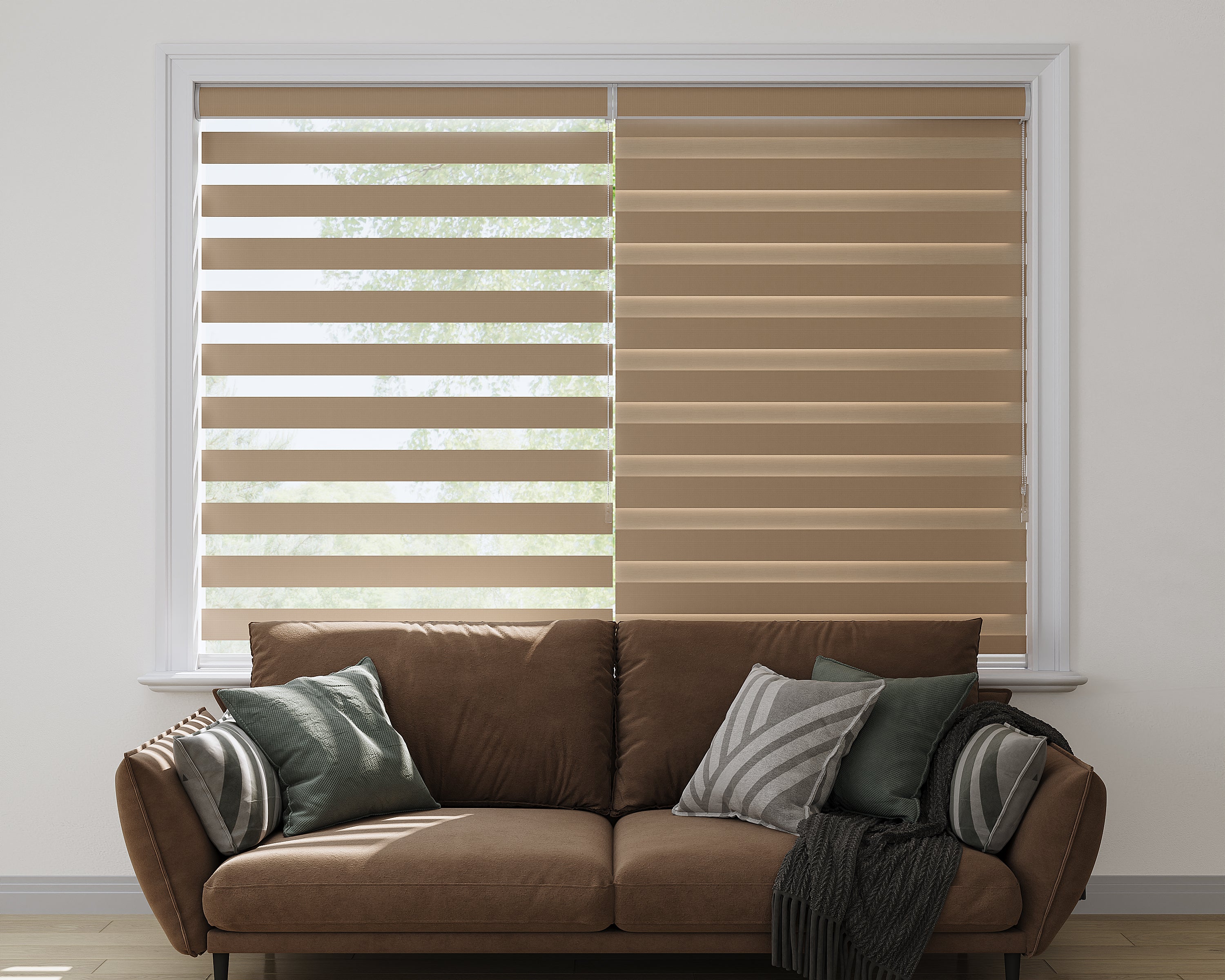
Alternating sheer and solid fabric bands allow changes in view-through and coverage. This gives a different everyday experience from a continuous roller fabric or tilting blind slats. Whether it feels more convenient depends on how often you adjust the covering and the positions you want.
The day-night band explanation describes that construction. It is different from a cellular day-night product combining separate fabric sections.
Use a practical decision matrix
| Your need | When zebra shades are worth investigating | When another option may fit better |
|---|---|---|
| Adjustable daylight | You want to change band alignment during the day. | You mostly want the fabric fully up or fully lowered. |
| Nighttime privacy | The selected closed-band fabric and coverage pass the actual sightline check. | You need a more opaque screen than that fabric provides. |
| Strong darkness | You accept the fabric and installed light limits. | A dedicated blackout arrangement better meets the task. |
| Appearance | The graphic bands suit the room and samples. | You prefer continuous fabric, folds or tilting slats. |
| High or awkward window | A supported motorized configuration solves reach. | The necessary control/power setup adds complexity you will not use. |
Do not assume open sheer bands provide nighttime privacy. Check with indoor lights on, from the relevant outside positions. Closed alignment increases coverage but does not automatically create an opaque or gap-free barrier.
Compare the alternatives fairly
Roller shades offer a continuous panel and a choice of fabric opacity. Cellular shades offer air-cell construction and particular movement options. Roman shades create folds and a different raised stack.
Compare the actual dimensions, fabric function, lift and included services in each quote. A ready-made manual blind and a custom motorized zebra shade have different scopes. Category labels alone do not establish a fixed cost or performance ranking.
Fit and access can decide value
Check recess depth, handles, bracket projection and the raised position before ordering. A custom width and drop do not guarantee perfect coverage of an arch, circle or every extra-wide opening. Confirm an offered system for the actual shape and dimensions.
At a busy door, consider how often the fabric must be raised. Independent panels may help access but introduce additional meeting gaps. The light-gap guide helps distinguish fabric opacity from installed coverage.
Decide whether motorization earns its cost
A motor may help with reach, several windows operated together or a supported routine. Confirm power/charging access and the exact motor/controller. A remote-only option does not automatically include an app or voice integration.
Do not justify the upgrade with an assumed utility-bill return. Fabric, window, climate, fit and use influence energy performance. Compare actual project costs and convenience separately from any unverified savings estimate. The five-year motorized/manual comparison is a related framework to inspect with your own stated assumptions.
Care and suitable locations
Follow the chosen fabric's care instructions rather than assuming every zebra shade can be wiped with detergent. Ask about actual service parts and current warranty terms; a generic seven-to-ten-year lifespan is not a promise for your selected product.
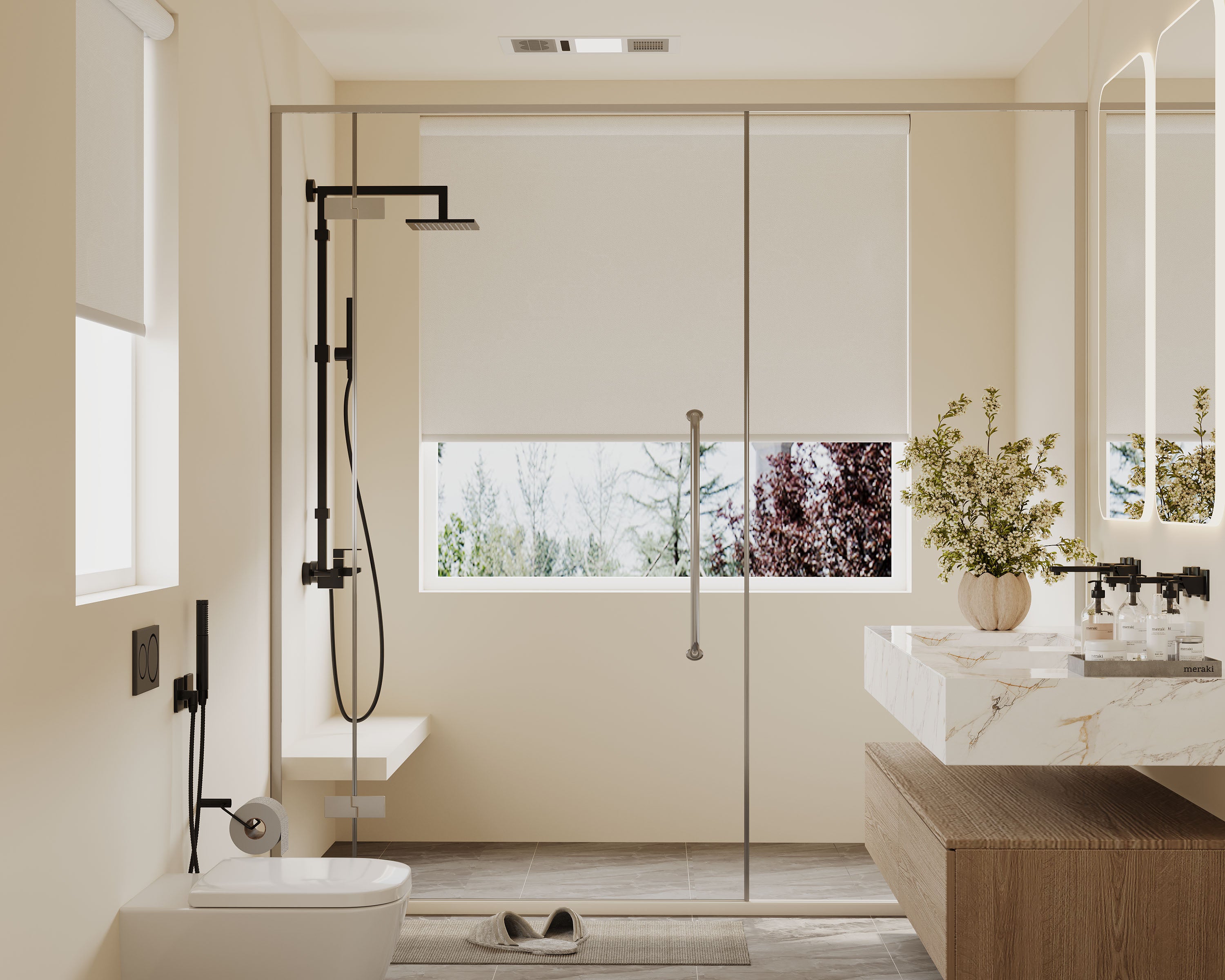
In a humid room, compare the specific waterproof model below within its exposure limits. Do not rule out every zebra shade because of room humidity, or transfer a waterproof claim to ordinary decorative fabric.
For homes with young children, use CPSC's cordless guidance and the installed system's instructions. Zebra is a fabric construction, not proof that every version is cordless or free of hazards.
Put the value decision in writing
List the room's required privacy, daylight, appearance, reach and care needs. Mark which features of the selected zebra configuration satisfy them, then compare the complete quote with a suitable alternative. Choose the upgrades that solve a repeated problem.
Use zebra fabrics and lift options once those priorities are clear. A useful daily feature and an appearance you like are valid reasons to buy without inventing a guaranteed financial return.
Explore Custom Zebra Shades


Light Filtering Zebra Shades
Alternating sheer and fabric bands create soft daylight with adjustable privacy.

Waterproof Zebra Shades
Moisture-resistant zebra fabrics designed for bathrooms and humid environments.
Frequently asked questions
Will zebra shades increase my home's resale value?
Do not assume a measurable price increase or faster sale. Choose them for the function and appearance you want, not an unsupported property-return forecast.
Are they automatically more durable than blinds?
No. Compare the actual materials, mechanism, exposure, care and support. Neither a higher price nor a modern style establishes a fixed service life.
When might they be a poor-value choice?
When their banded adjustment is not useful, privacy is insufficient, the layout interferes with access or a simpler configuration meets the same room requirements at a more suitable total cost.
