
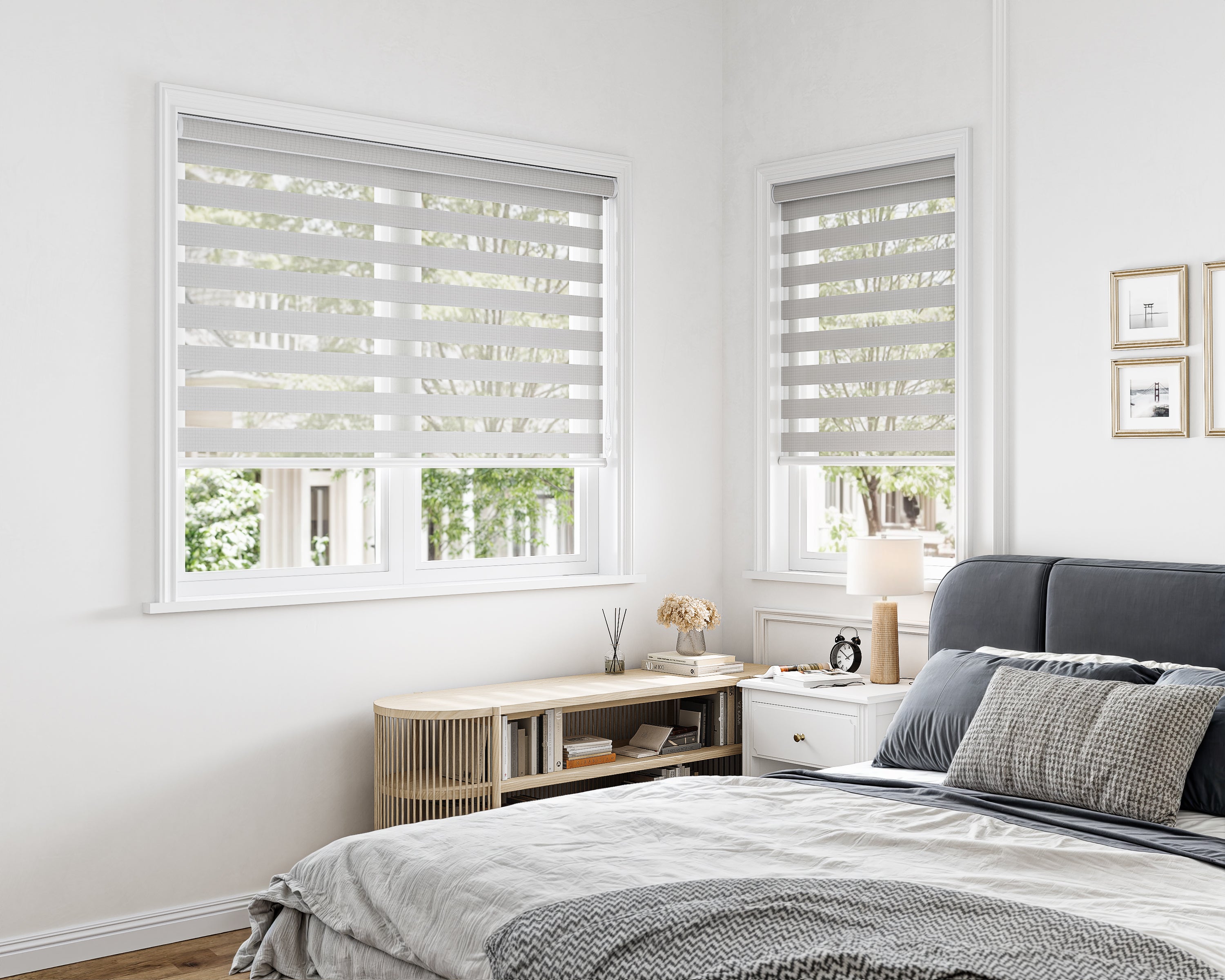







Choosing between zebra shades and vertical blinds for a sliding glass door is a decision that impacts daily convenience, safety, and the feel of your living space. The core distinction is modern, integrated light control versus traditional, modular coverage. Zebra shades offer a unified fabric panel with adjustable light, while vertical blinds provide individual louvers that pivot and stack. This guide provides a detailed, practical comparison focused specifically on the unique demands of large sliding door openings, helping you select the solution that best fits your lifestyle, safety needs, and design preferences.
Here’s what you’ll learn:
-
A direct comparison of functionality, safety, and durability specifically for sliding door applications.
-
A detailed analysis of space usage, operation, and how each treatment interacts with door access.
-
Scenario-based recommendations for different household types (families, pet owners, design-focused owners).
-
Key considerations for installation, motorization, and long-term maintenance on a large scale.
-
How to evaluate light control and aesthetic impact for wide glass expanses.
Evaluating options for a large opening begins with understanding the sophisticated light-filtering technology and design of modern zebra shades.
Core Comparison: Functionality for a Sliding Door
Sliding doors demand treatments that complement their operation. The following table breaks down the critical performance differences.
| Feature | Vertical Blinds | Zebra Shades |
|---|---|---|
| Door Access & Operation | Louvers are pulled to one side and stack. Can obstruct a portion of the door when open, requiring you to navigate around the stack. The track can collect debris. | The shade raises in a uniform roll to the top of the header, clearing the entire door opening. Provides completely unobstructed access. |
| Space Usage (Stacking) | Significant. When open, the louvers stack into a wide panel (12"+) at one side of the door, covering wall space and potentially blocking adjacent furniture or switches. | Minimal. The fabric rolls into a compact 3-4 inch diameter roll at the very top of the header, preserving all wall and floor space around the door. |
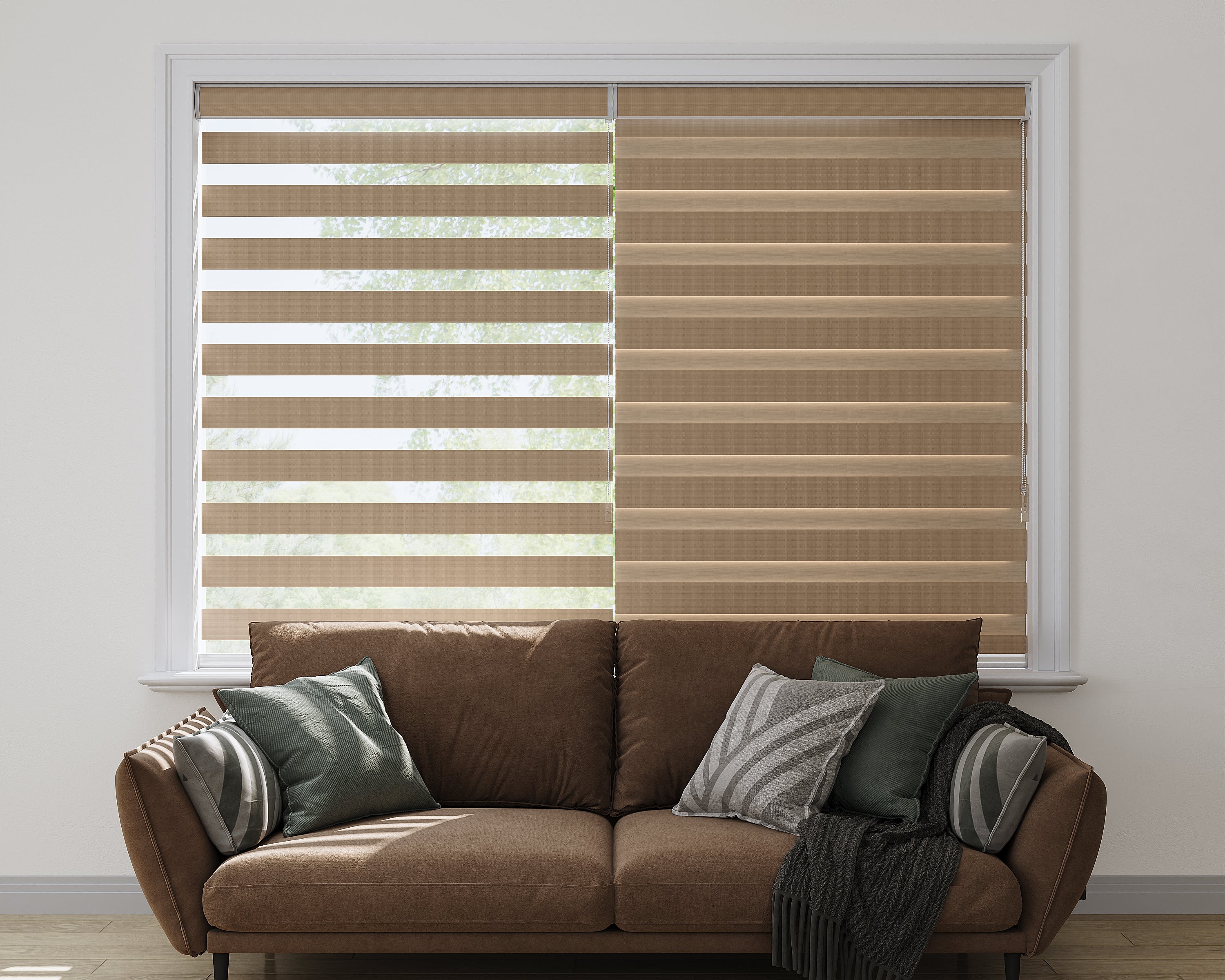
| Light Control & View | Louvers pivot 180° for precise light direction. Can be pulled completely aside for a full, clear view. View is slatted when louvers are angled. | Offers adjustable sheer-to-solid transitions. Provides a softened, diffused view when "open," not a perfectly clear one. Cannot be completely retracted from the glass. |
| Durability & High-Traffic Use | Individual vinyl/PVC louvers are very durable but can bend, crack, or detach if impacted. Fabric tapes can fray. Easy to replace single louvers. | A single, sturdy fabric panel is less prone to damage from casual impact but can be difficult to spot-clean large stains. The mechanism is robust. |
| Child & Pet Safety | Higher risk. Long, accessible cords are common strangulation hazards. Louvers can have sharp edges if broken. Requires careful cord management. | Inherently safer. Modern designs are cordless by default, operated via a wand or motor. No loops or accessible cords, and a smooth, fabric surface. |
| Aesthetic Profile | Functional, utilitarian look. Associated with offices or rentals. Can appear dated. | Clean, contemporary, residential look. Appears as a intentional design element rather than a purely functional cover. |
The Sliding Door Specifics: Installation, Access, and Space
The practicalities of living with the treatment every day are paramount for a main entry or living area door.
Accessing Your Door
This is the most crucial daily consideration.
-
Vertical Blinds: To open the door, you must first gather and stack the blinds to one side. This stack permanently covers a section of the glass and wall when the door is in use, which can be frustrating if you frequently move between indoor and outdoor spaces.
-
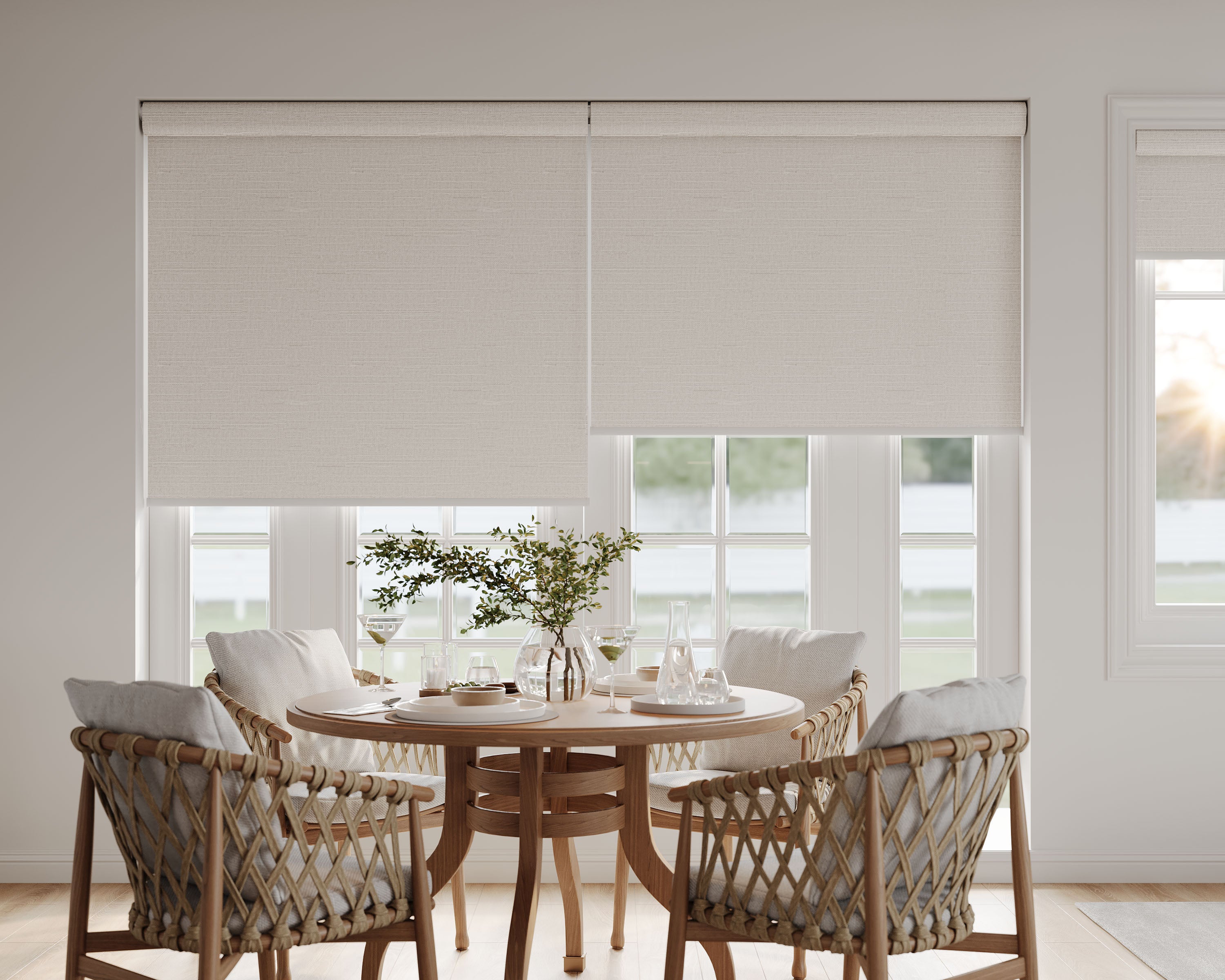
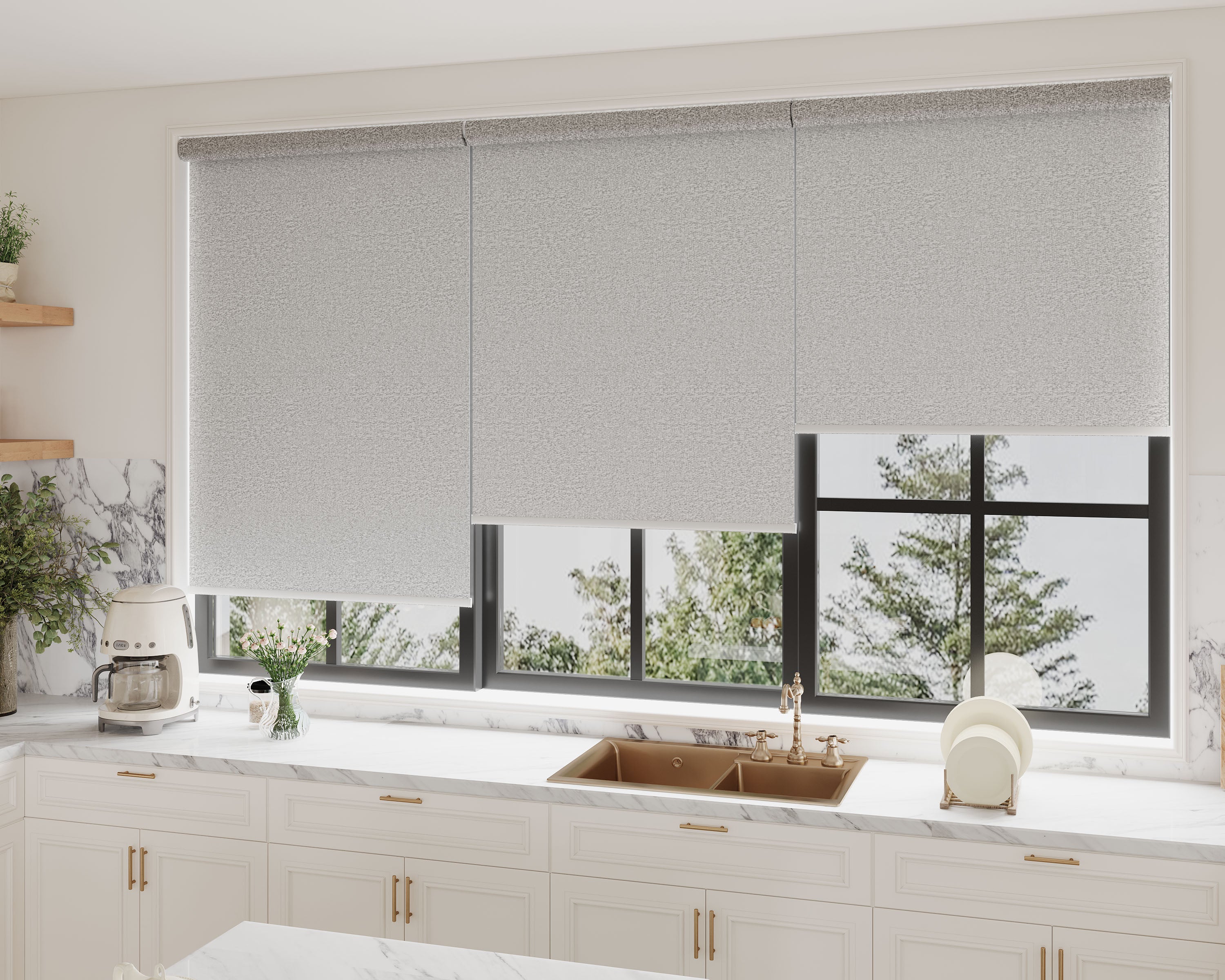
Zebra Shades: The shade raises completely out of the way, clearing the entire door width and height. This offers seamless, unimpeded access, making them ideal for active households or doors leading to patios and decks.
Space and Clearance
Consider the "footprint" of the treatment when not in use.
-
Vertical Blind Stack: A 8-foot wide door with vertical blinds can create a stack over 12 inches wide, protruding from the wall. This can interfere with furniture placement, light switches, or the door handle itself.
-
Zebra Shade Roll: The rolled shade sits discreetly within or just below the header, adding minimal visual bulk and zero functional obstruction. For doors with tight clearance, our guide on custom sizing treatments for French doors covers essential measurement principles that also apply to sliding doors.
Installation and Hardware
The weight and width of a sliding door treatment demand robust hardware.
-
Both require secure mounting into studs or robust anchors due to their size and weight.
-
Vertical Blinds use a head track that must be perfectly level for smooth operation.
-
Zebra Shades for wide doors often use a heavier-duty roller tube and may require an center support bracket to prevent sagging in the middle. Professional installation is frequently recommended for both on large doors.
Safety, Cleaning, and Long-Term Use
For families, safety and maintenance are deciding factors.
Safety Considerations
-
Vertical Blinds: Traditional corded designs pose a significant safety hazard. Cordless or motorized vertical blinds are essential for homes with children or pets. Even then, long slats can be a hazard if a child pulls on them. The importance of up-to-date cord safety standards cannot be overstated for this product category.
-
Zebra Shades: Their cordless design inherently aligns with modern safety standards. There are no loops or long cords to secure, offering greater peace of mind. For homes with existing corded blinds, the need for retrofitting safety devices for window cords highlights the advantage of a cordless product.
Cleaning and Maintenance
-
Vertical Blinds: Individual louvers can be wiped clean with a damp cloth, which is straightforward. However, dusting dozens of individual slats and cleaning the fabric tapes or chains is time-consuming.
-
Zebra Shades: The large fabric panel is cleaned by vacuuming with a brush attachment or spot-cleaning. While easier for dust, removing a large or set-in stain on the fabric can be more challenging than wiping a vinyl slat.
Decision Scenarios: Which is Right for Your Home?
Your household composition and how you use the door should guide your choice.
Choose Vertical Blinds If...
-
Your Absolute Priority is Lowest Cost for covering a very wide door.
-
You Need Precise, Directional Light Control to angle sun away from a specific spot in the room.
-
You Want the Ability to Pull the Treatment Completely Aside for a totally unobstructed, clear-glass view (though this sacrifices privacy).
-
You Are Comfortable Committing to a Cordless or Motorized System and understand the safety management required for traditional models.
Choose Zebra Shades If...
-
Unobstructed Door Access is a Daily Priority for an active indoor/outdoor lifestyle.
-
Safety for Children and Pets is a Primary Concern, and you prefer a cordless, safer-by-design product.
-
You Value a Modern, Residential Aesthetic and want the treatment to blend seamlessly with your interior design.
-
You Prefer Adjustable, Soft Light Filtering over slatted, directional light.
-
Maximizing Usable Wall and Floor Space next to the door is important.
For other modern shade options suited to doors, our overview of the best roller shade solutions for sliding glass doors provides additional context for your decision.
Conclusion: Aligning Form and Function for Your Door
The choice between vertical blinds and zebra shades for a sliding door ultimately reflects your priorities for daily convenience versus traditional utility.
Vertical blinds are a functional, often budget-conscious solution that offers maximum light manipulation but comes with significant trade-offs in space, safety, and modern appeal. They solve the coverage problem but can introduce daily friction.
Zebra shades are a contemporary, user-friendly solution that prioritizes safe, unobstructed access and a clean aesthetic, offering a more integrated and pleasant daily experience. They treat the sliding door as a centerpiece of the living space rather than just an opening to cover.
For most modern homes, especially those with children, pets, or a desire for seamless indoor-outdoor living, the safety, space-saving, and aesthetic advantages of zebra shades make them a superior long-term investment for sliding doors. Vertical blinds remain a viable option where budget is the overriding constraint and specific light-directing functionality is required.
Key Highlights:
-
Zebra shades provide unimpeded door access; vertical blinds create a permanent stack that obstructs a portion of the opening.
-
Zebra shades are inherently safer with cordless operation; vertical blinds require careful cord management or upgrades.
-
Vertical blinds offer more precise, directional light control; zebra shades provide adjustable, diffused light.
-
Space usage favors zebra shades, which roll compactly out of the way, while vertical blinds stack widely to one side.
-
The aesthetic gap is significant, with zebra shades offering a contemporary look and vertical blinds a more utilitarian one.
By weighing these factors against your specific sliding door usage, you can select the covering that will deliver functionality, safety, and style for years to come.
Explore Custom Zebra Shades


Frequently Asked Questions (FAQ)
Can zebra shades be made wide enough for a large sliding door?
Yes, custom zebra shades can be manufactured to cover very wide sliding doors. However, on extremely wide spans (over 100 inches), the fabric may be made in multiple panels that align side-by-side on a continuous headrail to ensure proper operation and prevent excessive weight on a single mechanism. Professional measurement is critical, as covered in sizing guides for door applications.
Are vertical blinds or zebra shades better for insulation on a cold sliding door?
Neither are top-tier insulators, but vertical blinds offer slightly better potential for reducing drafts. When closed, the overlapping louvers can create a more consistent barrier against air infiltration at the edges. Zebra shades, as a single fabric panel, can have slight side gaps. For significant insulation on a sliding door, a layered approach with an insulating cellular shade or heavy drapes over either option is more effective.
Which option is easier to motorize for a sliding door?
Both can be motorized, but motorization is often more seamlessly integrated and more commonly offered with zebra shades. A single roller shade motor can operate a wide zebra shade. Motorizing vertical blinds requires a motor to both pivot the louvers and traverse them side-to-side, which can be a more complex and expensive system. For wide doors, motorization is a highly recommended convenience for either choice.
