
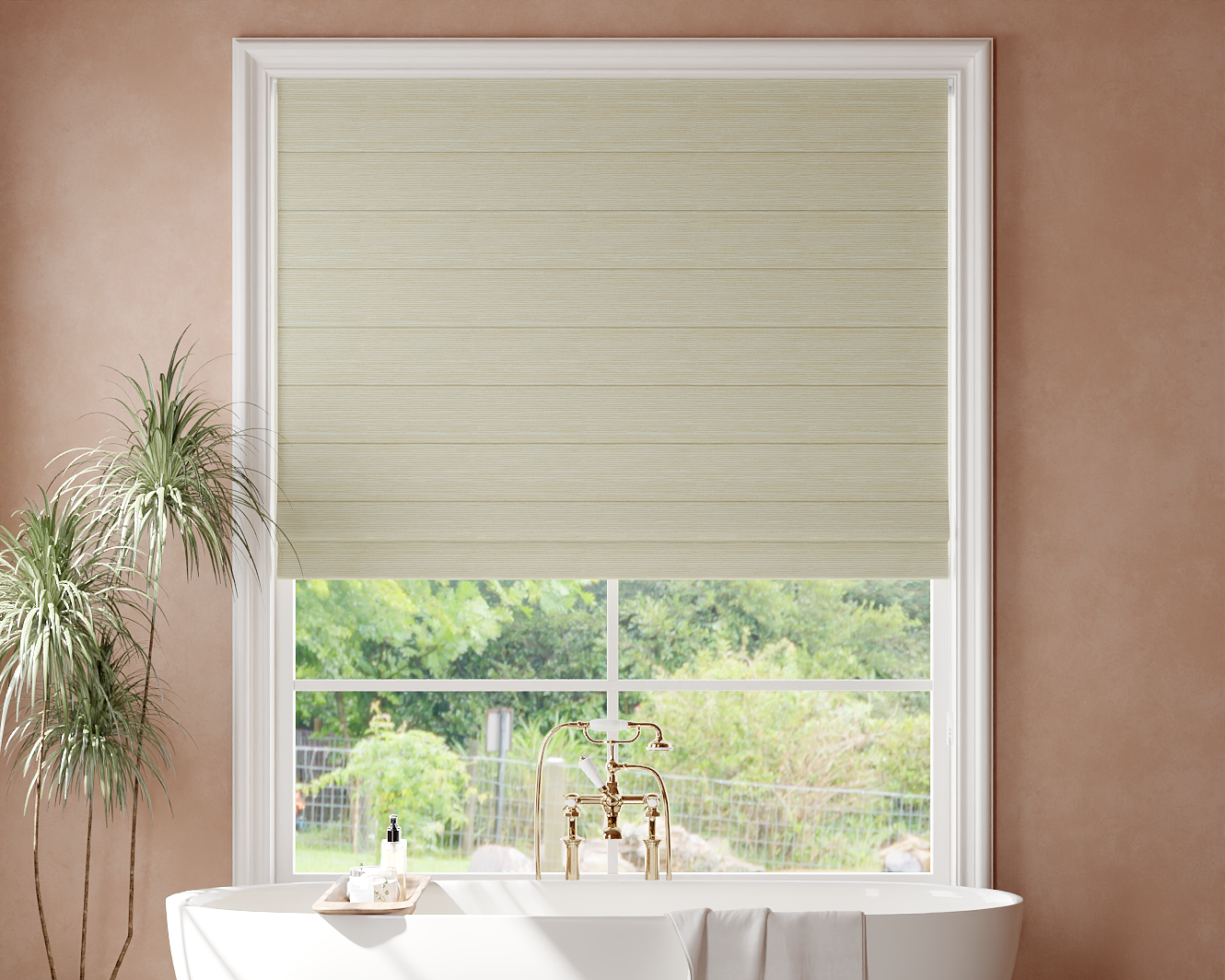
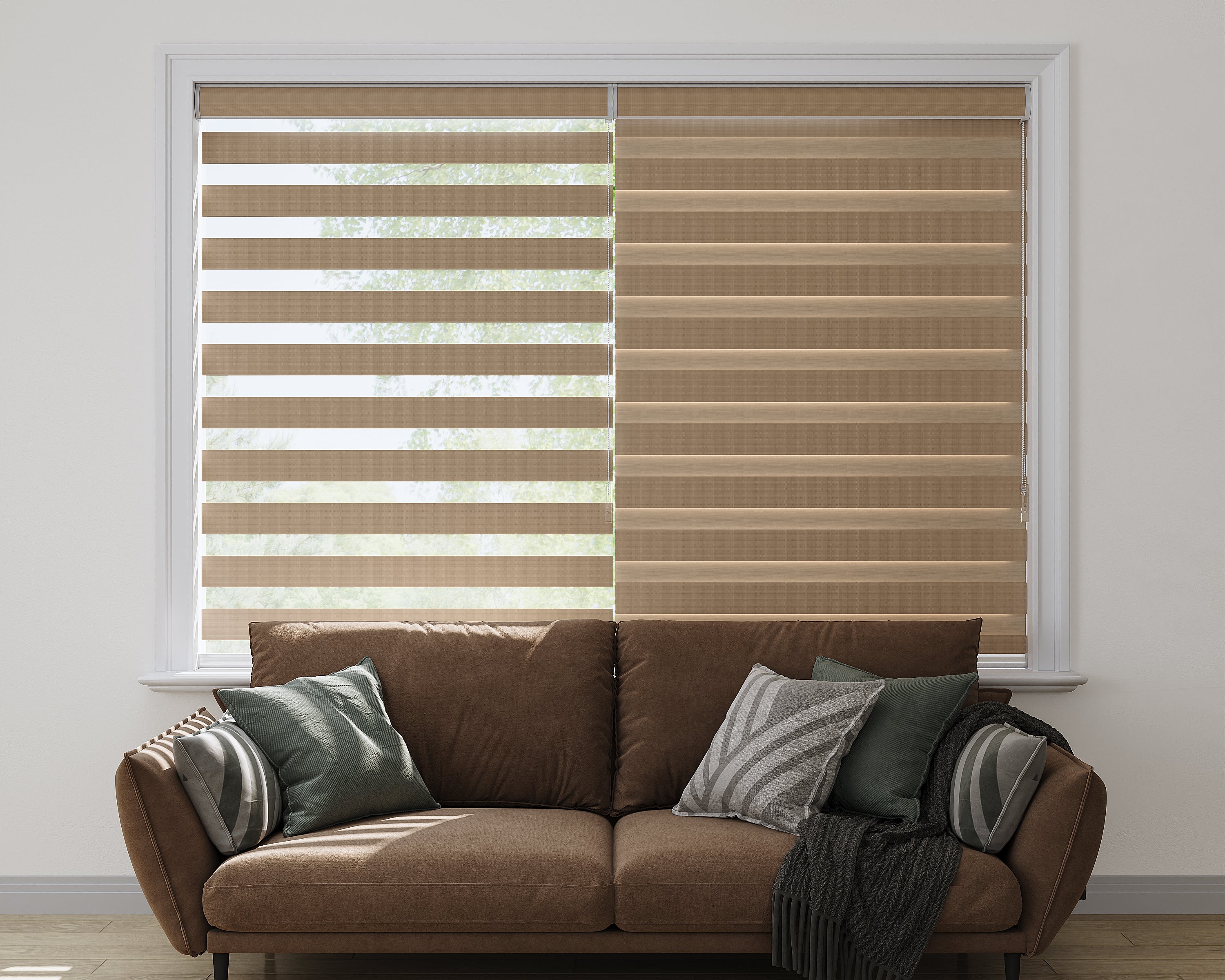
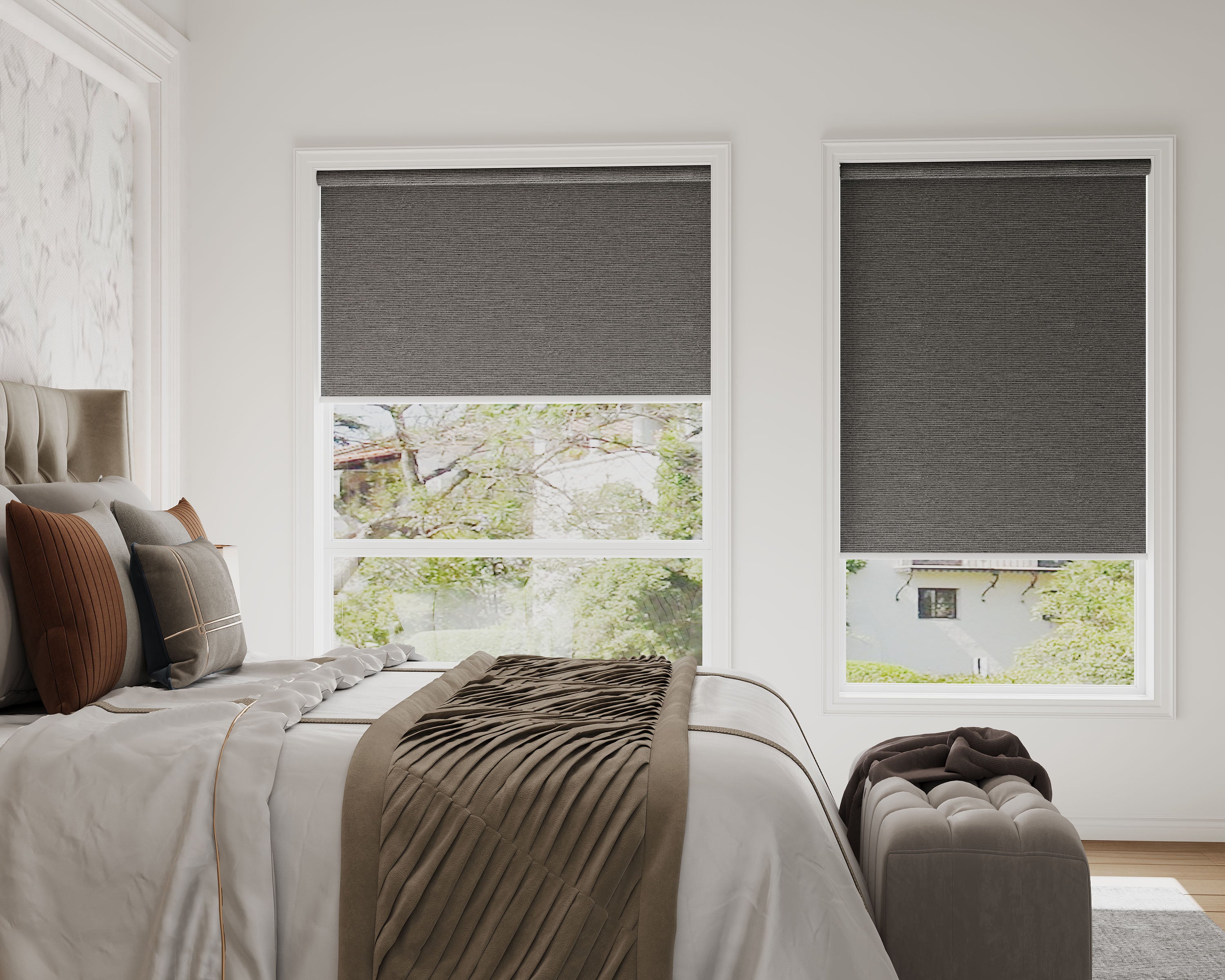
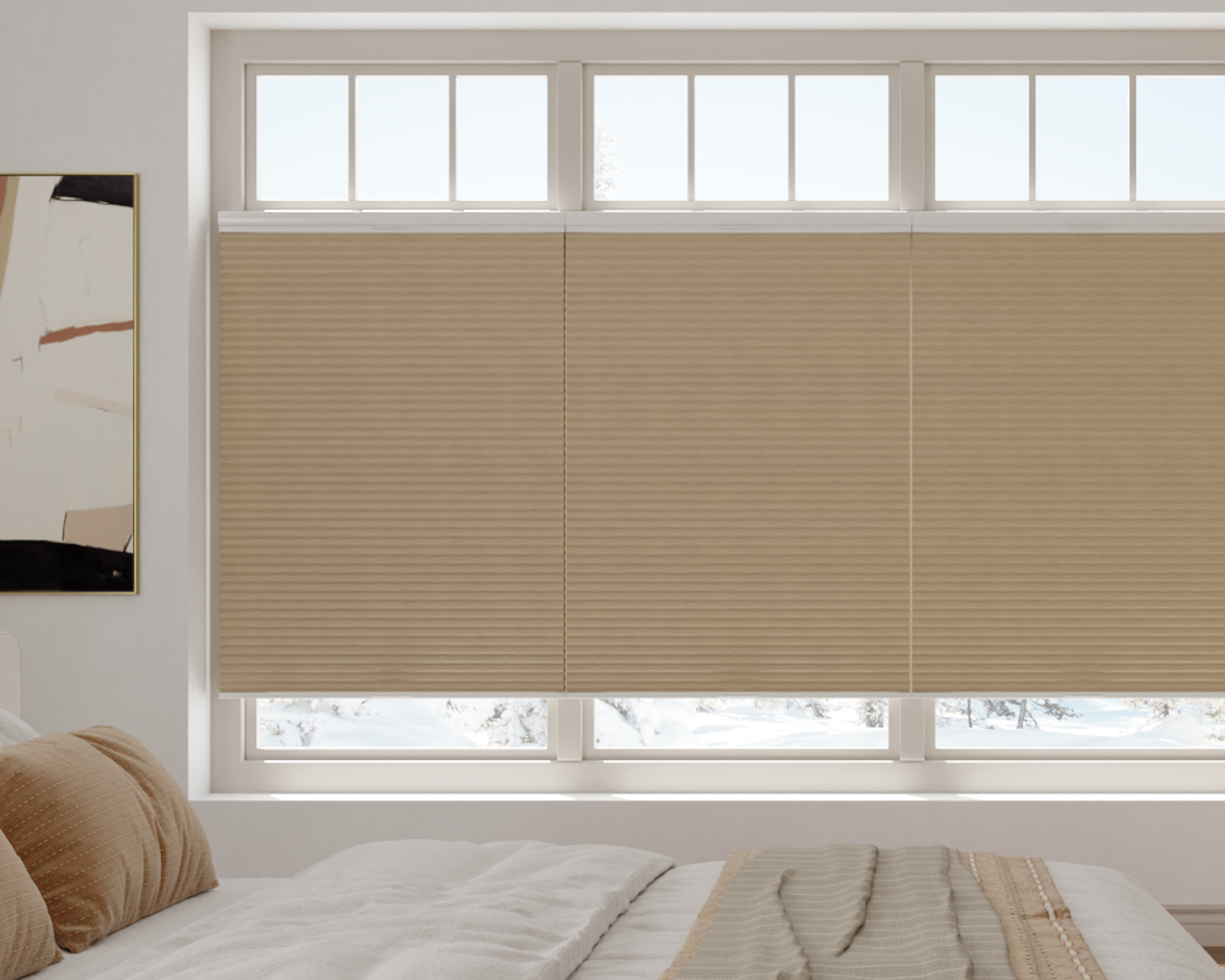







When comparing zebra shades and roller shades for light control, the critical distinction is adjustability versus selection. Roller shades offer a choice of static opacity levels you select at purchase. Zebra shades provide dynamic, adjustable opacity you control minute-by-minute. This guide will help you understand not just how they differ, but how those differences translate into daily living, room functionality, and achieving your specific aesthetic and practical goals for light.
Here’s what you’ll learn:
-
The fundamental mechanical difference that defines each shade's approach to light.
-
A detailed comparison of how they handle common light control scenarios like glare reduction, view preservation, and privacy.
-
How to match each shade type to specific rooms and activities based on your light control needs.
-
The role of fabric choice in maximizing the performance of each system.
-
How installation and operation affect the overall light control experience.
Choosing the right tool for managing sunlight begins with understanding the advanced functionality of modern adjustable dual-layer window shades.
The Core Difference: Static Opacity vs. Dynamic Adjustment
The experience of light control is dictated by the basic mechanics of each product.
How Roller Shades Manage Light
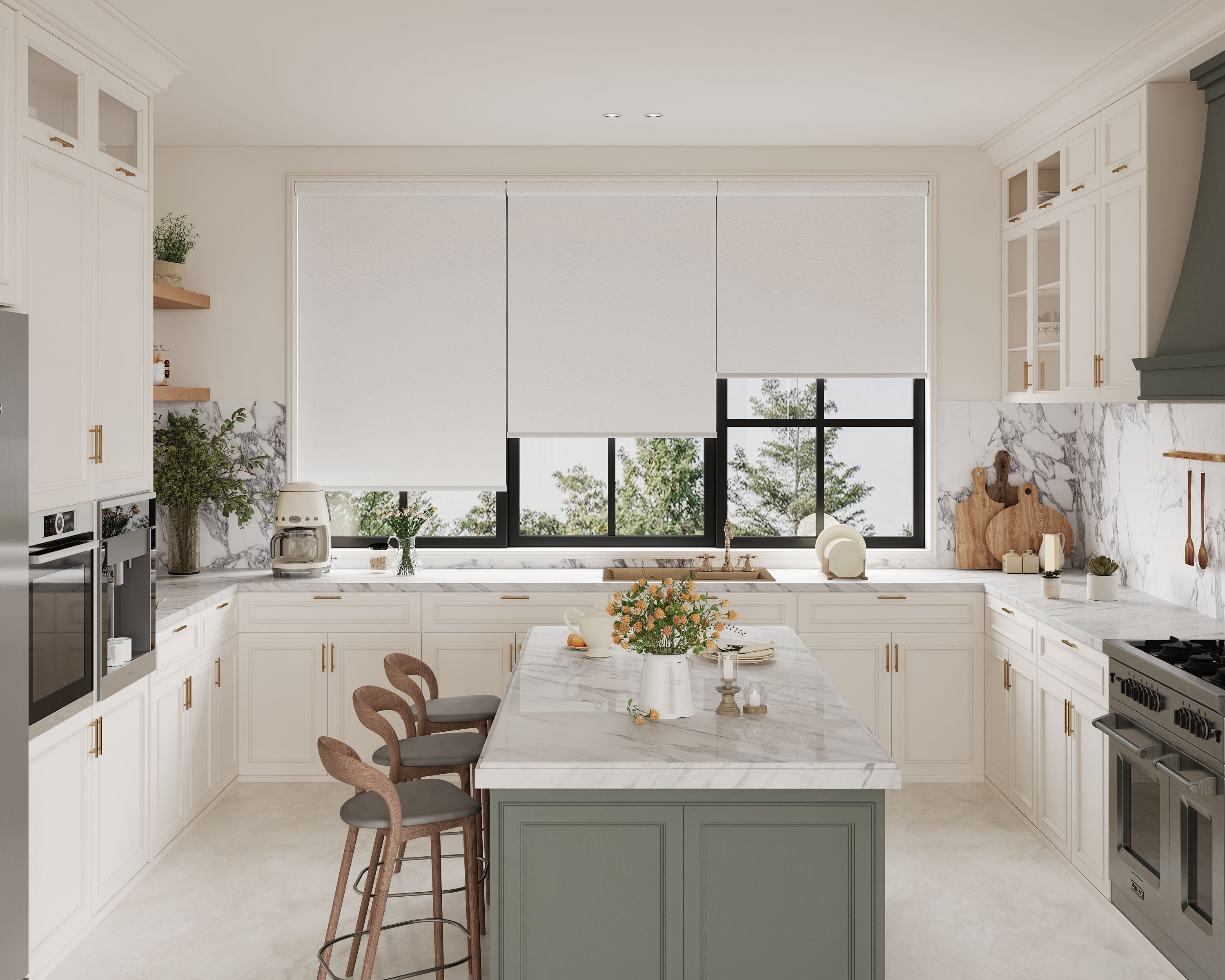
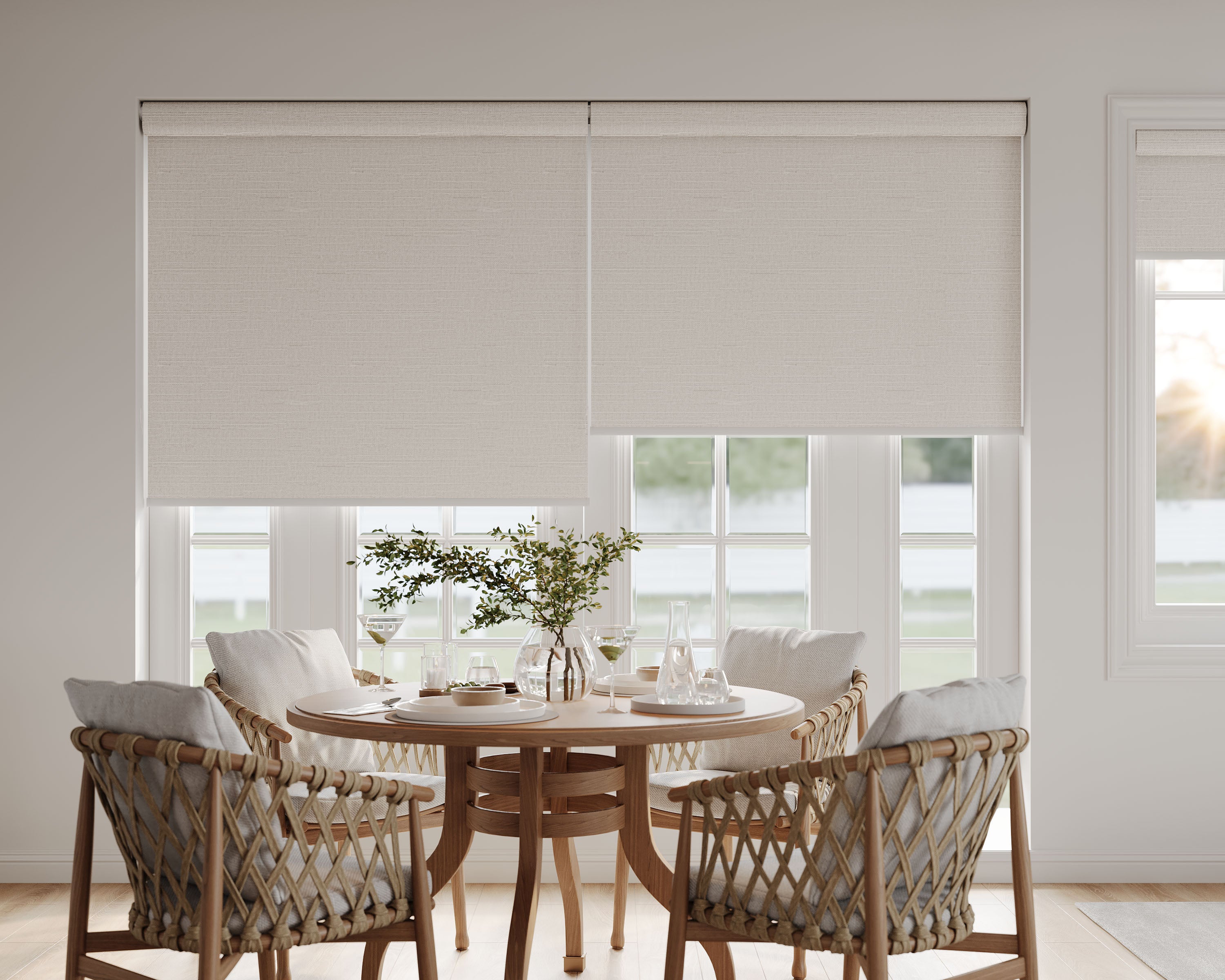
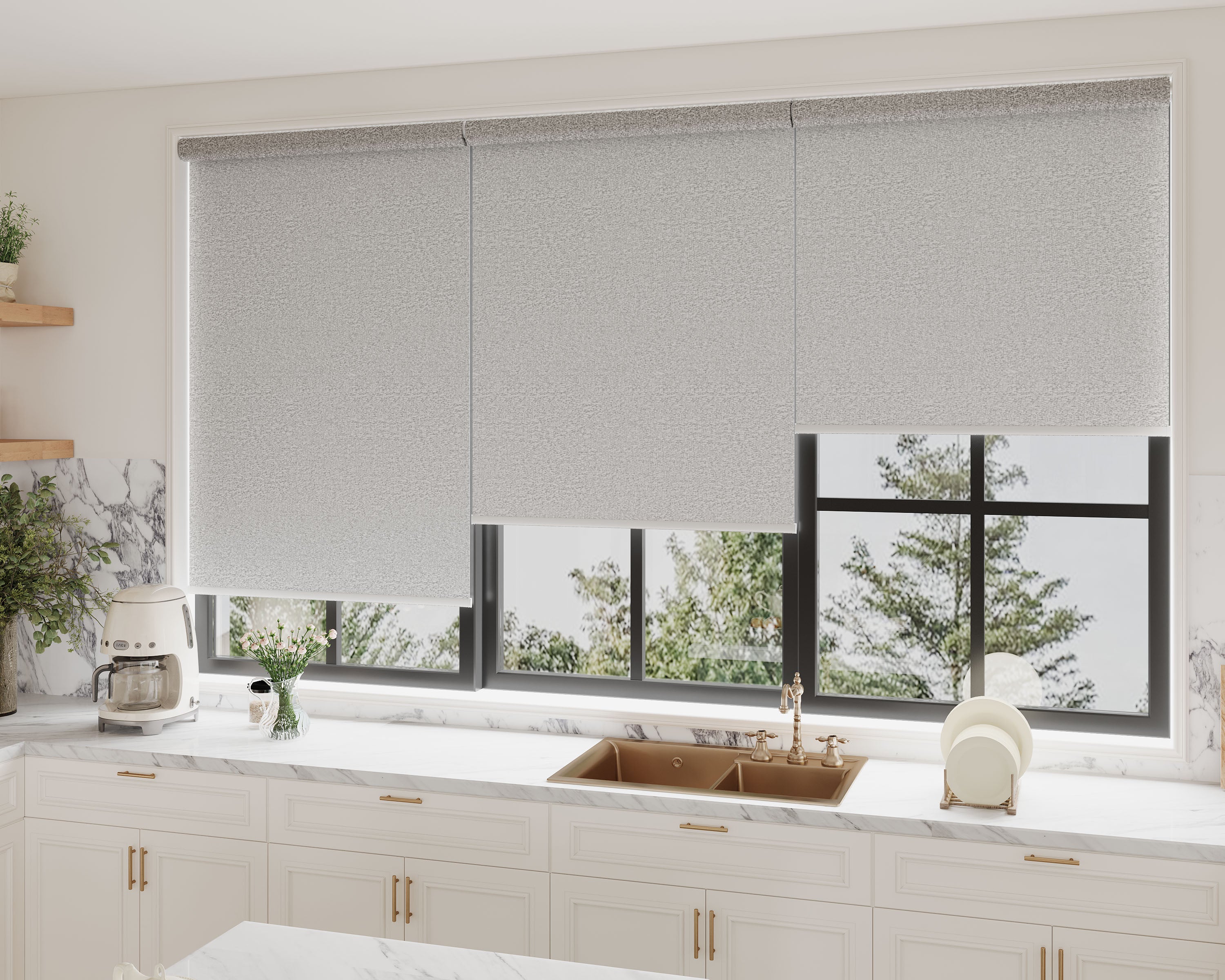
A roller shade is a single, continuous panel of fabric that rolls up and down on a tube. You choose its light control capability at the point of purchase by selecting a fabric with a specific Openness Factor or opacity:
-
Sheer/Solar: Allows diffused light and softened views while reducing glare and UV rays.
-
Light Filtering: Glows brightly when lit from behind, provides privacy, but details are obscured.
-
Room Darkening: Blocks most light for privacy but may not be pitch black.
-
Blackout: Engineered to block virtually all light for total darkness.
Once installed, you have two core actions: raise the shade (full light/view) or lower it to a chosen height (diffused or blocked light based on your pre-selected fabric). The in-between state offers light, but no clear view. For a full breakdown, see our guide to understanding roller shade opacity levels.
How Zebra Shades Manage Light
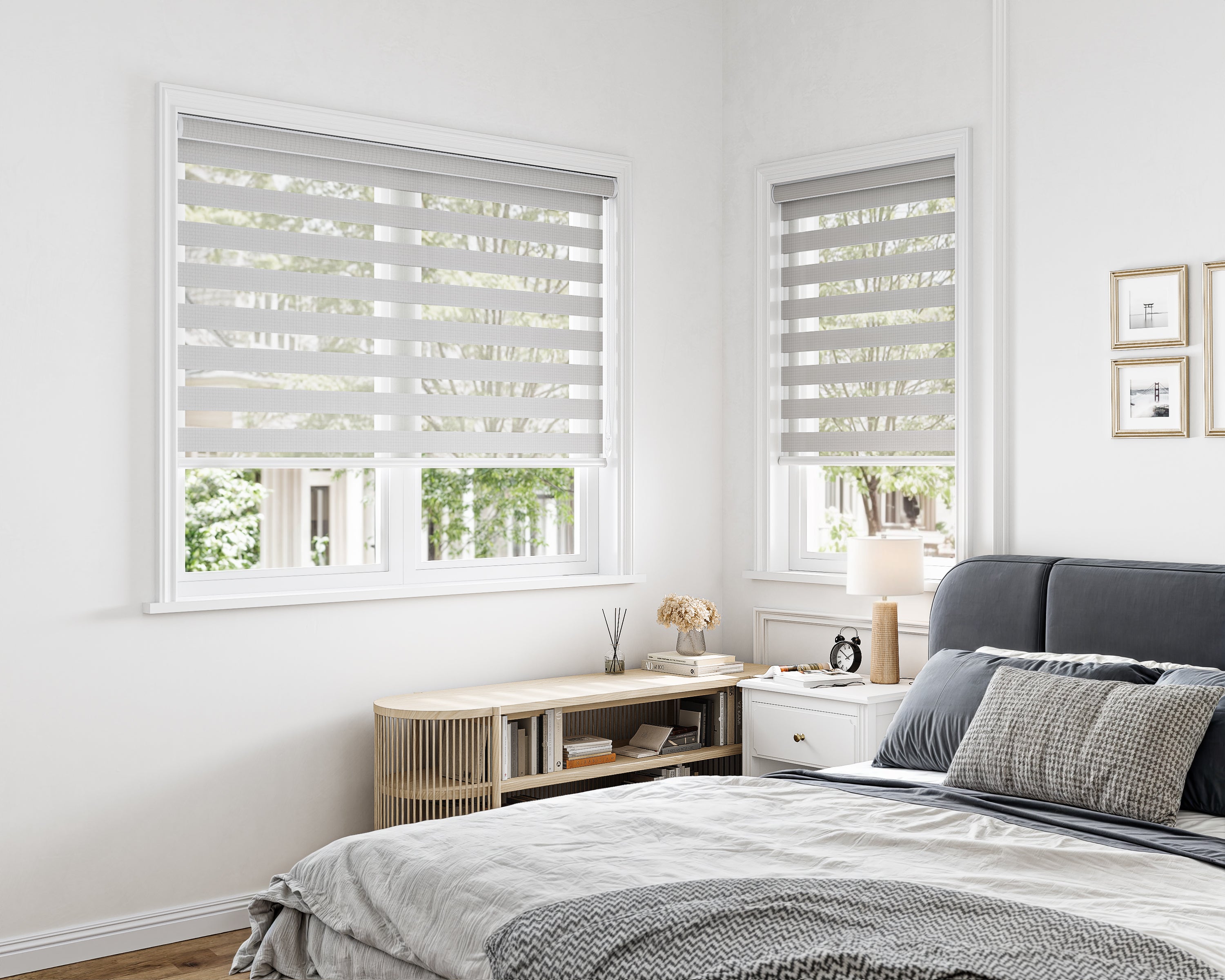
A zebra shade contains two layers of fabric in one panel—one sheer, one solid—that can be shifted horizontally relative to each other. This creates three primary states:
-
Open: Sheer layers align, allowing a clear, unobstructed view with soft light filtration.
-
Closed: Solid layers align, providing maximum privacy and light blockage.
-
Adjustable: The layers are partially offset, creating a variable "transition" zone for precise control over brightness and visibility.
This allows you to fine-tune light levels without changing the shade's height, a core principle explained in our article demystifying zebra shade day-night layers.
Scenario-Based Comparison: Light Control in Daily Life
The best way to compare is to see how each handles common homeowner goals. The following table outlines their performance across key light control scenarios.
| Light Control Goal | Roller Shade Performance | Zebra Shade Performance | Winner for This Scenario |
|---|---|---|---|
| Achieving Total Darkness | Excellent with a true blackout fabric. When down, it creates a sealed, dark environment ideal for sleep or media rooms. | Fair. Even when "closed," tiny pinholes of light may filter through the fabric weave seams. Not a true blackout. | Roller Shade |
| Reducing Glare on Screens | Good, but limiting. A solar or light-filtering fabric will diffuse glare but will also darken the entire room uniformly. | Excellent. Can be adjusted to block only the direct sunbeam hitting the screen while allowing ambient light to fill the rest of the room. | Zebra Shade |
| Maintaining an Outside View | Must be fully raised, removing all privacy and light filtration. | Can be left down in the "Open" position, providing a clear view with soft solar filtration and daytime privacy. | Zebra Shade |
| Daytime Privacy | Good. A light-filtering or room-darkening fabric provides privacy but significantly reduces incoming light. | Excellent. The "Closed" position provides privacy, while the "Adjustable" position can obscure views inward while still allowing soft light to enter. | Zebra Shade |
| Ease of Fine-Tuning | Limited. Adjustment means raising/lowering the entire shade, changing both light level and your connection to the view. | Superior. Infinite adjustment via the layered fabric system without altering the shade's height in the window. | Zebra Shade |
For managing intense glare, our comparison of solar and sheer shades for view preservation offers additional insights relevant to both product types.
Choosing by Room: Matching Light Control Philosophy to Function
Your room's primary activities should guide your choice, as each shade supports different behaviors.
Choose Roller Shades For Rooms Where:
-
Darkness is the Priority: Bedrooms (especially for shift workers or children), dedicated media/theater rooms, and rooms where you want to completely block an undesirable view. The definitive choice between room darkening and true blackout fabrics is critical here.
-
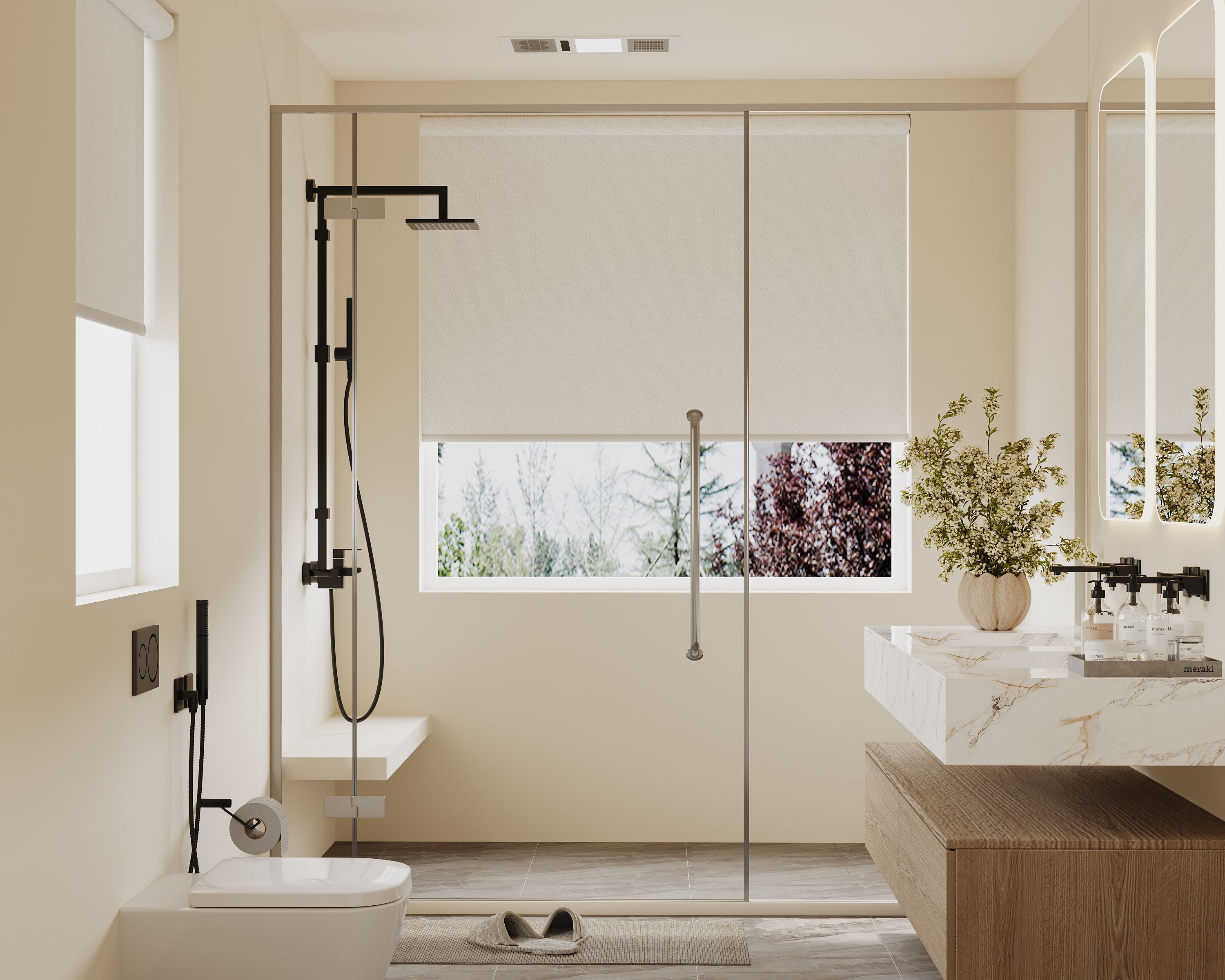
Light Control is Simple: Laundry rooms, hallways, or bathrooms where you typically want either "light on" (shade up) or "light off/privacy on" (shade down).
-
A Uniform, Minimalist Look is Key: Where you want a seamless, unbroken expanse of fabric as a design element.
Choose Zebra Shades For Rooms Where:
-
Connection to the Outdoors is Key: Living rooms, dining rooms, kitchens, and sunrooms where maintaining a view and a bright, airy feeling is important throughout the day.
-
Multipurpose Activities Occur: Home offices where you need to manage screen glare during Zoom calls but also want natural light, or living rooms used for both daytime reading and evening TV watching.
-
Dynamic Light Management is Valued: Any space where the sun's angle changes throughout the day and you want to passively optimize comfort without constantly raising and lowering the shade.
Critical Considerations Beyond the Mechanism
The core technology is just one part of the light control equation.
The Impact of Fabric and Color
-
Roller Shades: Fabric choice is everything. A white or light-colored backing on a solar shade improves glare reduction. A blackout fabric with a vinyl backing or side channels is essential for true darkness.
-
Zebra Shades: Fabric opacity affects the quality of the view in the "Open" state and the level of privacy in the "Closed" state. A tighter weave offers better privacy.
Installation: The Enemy of Light Control is Light Gaps
No matter which shade you choose, a poor fit compromises its designed function. Gaps on the sides, top, or bottom allow light leaks that ruin blackout performance or create distracting streaks. Proper inside mounting is crucial, and the universal challenge of preventing unwanted light gaps in window treatments must be addressed during installation for optimal performance.
Conclusion: Defining Your Light Control Needs
The choice between zebra shades and roller shades for light control is not about which is universally better, but about which system aligns with your philosophy of light.
Choose roller shades if your priority is achieving specific, static light states—especially total darkness. You are selecting a fixed solution (your chosen opacity) for a fixed problem (a room that needs to be dark). It is a selection-based approach.
Choose zebra shades if your priority is maintaining a view and having continuous, dynamic control over light levels throughout the day. You are investing in a versatile tool that adapts to changing conditions. It is an adjustment-based approach.
For many homes, the most strategic approach is to use roller shades in rooms dedicated to rest or media (leveraging blackout), and zebra shades in active living spaces (leveraging adjustability and view), creating a home environment perfectly tailored to the light needs of each space.
Key Highlights:
-
Roller shades excel at creating predetermined light states, with blackout fabrics offering the highest level of light blockage.
-
Zebra shades excel at providing dynamic, adjustable light and preserving an outside view without being raised.
-
The need for total darkness is the strongest argument for a blackout roller shade.
-
The desire for a view with adjustable privacy is the strongest argument for a zebra shade.
-
Proper installation to minimize light gaps is critical to realizing the full potential of either shade type.
By understanding these fundamental operational differences, you can confidently select the window treatment that will deliver the daily light experience you value most.
Explore Custom Zebra Shades


Frequently Asked Questions (FAQ)
Can you see through zebra shades at night?
Yes, in most cases, you can see shadows or silhouettes through zebra shades from the outside at night if the indoor lights are on. When the solid fabric layers are aligned ("Closed"), they provide excellent daytime privacy. However, at night, the internal lighting illuminates the fabric from behind, making it somewhat translucent. For true night-time privacy, a zebra shade would need to be paired with a separate blackout lining or layer.
Which shade is better for a home office to reduce computer glare?
Zebra shades are generally superior for a home office. They allow you to adjust the shade to block the specific section of window causing glare on your monitor, while still allowing natural, diffused light to enter from other parts of the window. This maintains a brighter, more pleasant ambient room light than a roller shade, which would darken the entire window uniformly to combat the glare.
Are roller shades or zebra shades better for bedroom windows?
It depends on the sleeper's needs. For light-sensitive sleepers who need pitch darkness, a blackout roller shade is the definitive choice. For those who prefer to wake with natural light or enjoy a view during the day but want privacy at night, a room-darkening zebra shade offers a good compromise, though it will not achieve total blackout. Many opt for a layered approach: a zebra shade for daytime and a separate blackout curtain for night.
