






News

Log HVAC and Shade Use: A Practical Savings Assessment
A useful HVAC-and-shade log records what changed, when it changed and the conditions around it. It can reveal a missed shade schedule or a recurring afternoon comfort problem. It does...
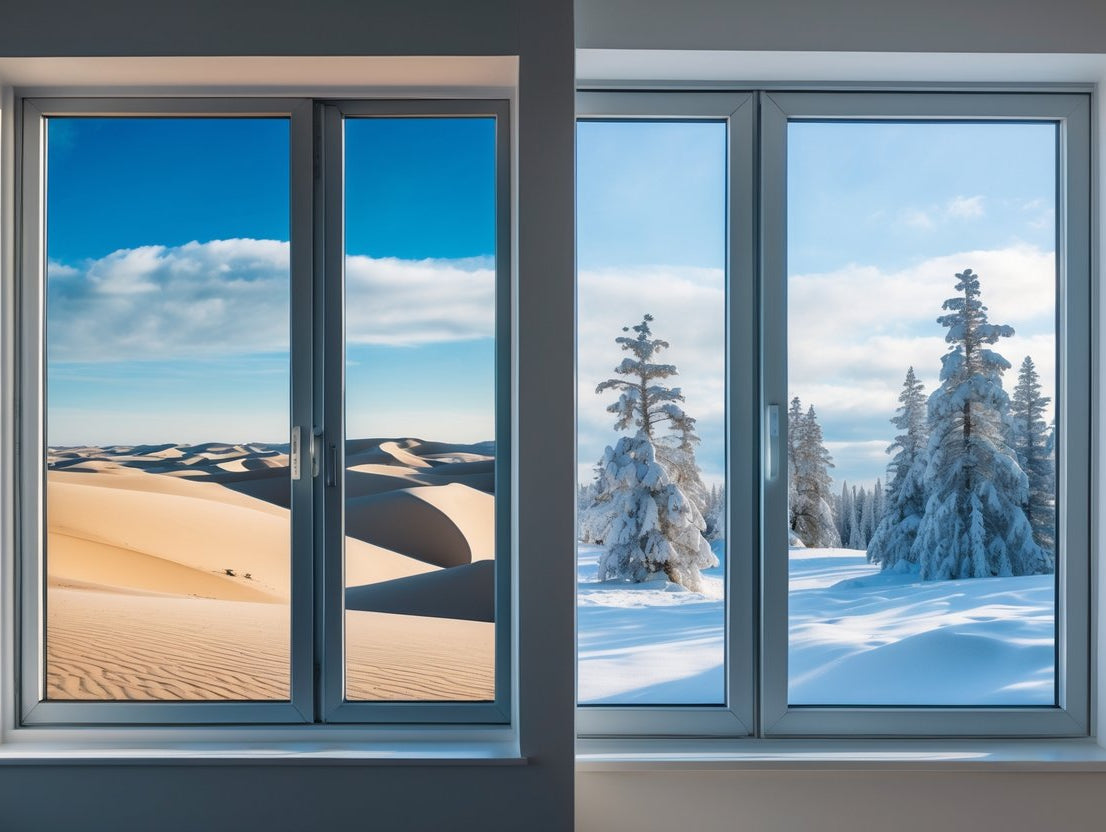
Window Solutions for Desert Heat and Winter Cold: A System Plan
Strong sun and severe cold call for a window-system plan, not one universal frame material or shade package. Identify whether the problem is incoming sunlight, heat transfer, air leakage or...

Summer Passive Cooling: Coordinate Shades and Cross-Ventilation
Shading and cross-ventilation do different jobs. A shade manages sunlight at the window; ventilation exchanges indoor and outdoor air. They can complement each other when outdoor conditions are favorable, but...

Light or Dark Shade Fabric? Color, Glare and Solar Heat
Fabric color can affect how a shade reflects and absorbs sunlight, but color alone cannot tell you how much heat enters the room. A pale sheer, a white-backed blackout fabric...
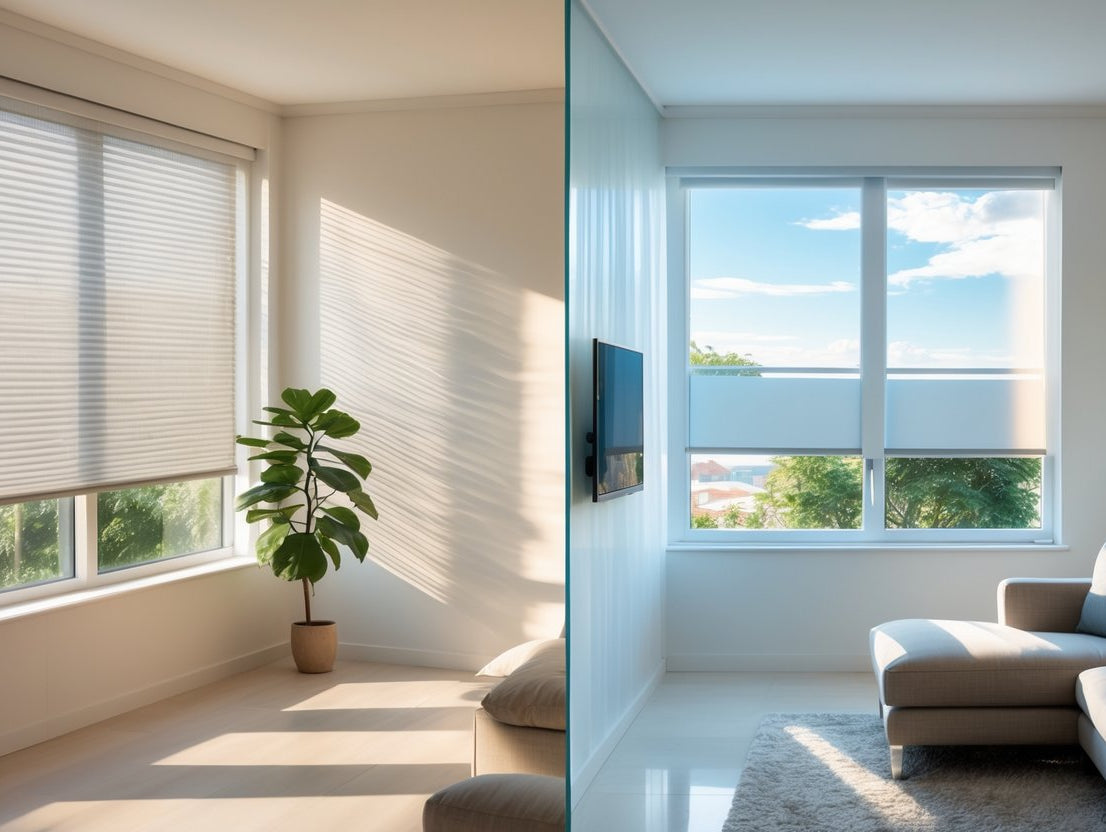
Closing Shades at Dusk: A Practical Winter Comfort Routine
Closing a suitable insulating shade during cold evening hours can help manage heat loss at the window. Dusk is a useful household reminder, rather than a universal best time or...
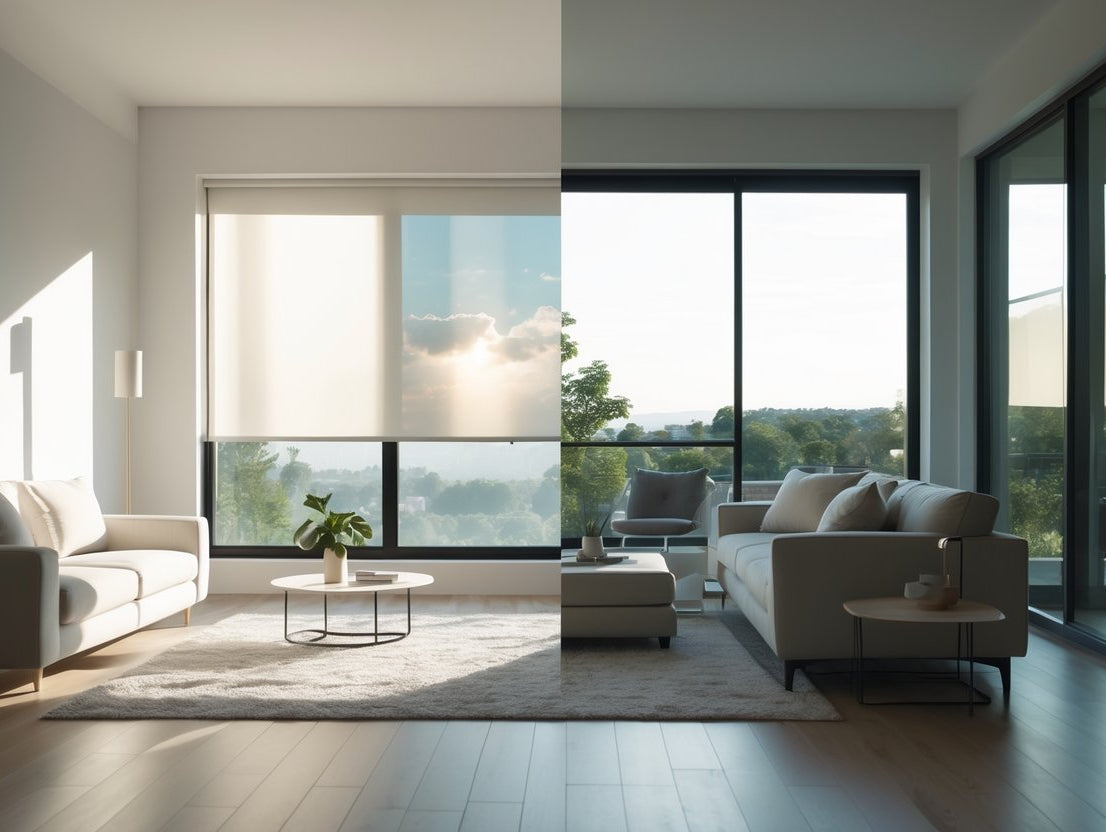
Window Shades vs. Window Film: Compare Heat, Light and Privacy
Window film changes how a particular glazing assembly handles light or heat continuously. An operable shade lets you change coverage during the day. The better choice depends on whether the...

Single-Cell vs. Double-Cell Shades: The Thermal Comparison
A double-cell shade adds another row of air pockets, but the cell count alone does not give you an R-value or a utility-bill saving. Compare the actual shade construction, its...

Wrinkles After Shipping: Heat, Steam and Shade Fabric Care
A packing crease in a new shade is different from an intentional Roman fold, a crushed cellular pleat or damaged blackout backing. Before reaching for an iron or steamer, identify...

Insulating Bay Windows: Shade Fit, Angles and Building Repairs
A warmer bay window starts with identifying the problem: air leakage, heat transfer through glass, or a poorly insulated seat, base or roof. Custom shades can help manage comfort at...

Day-Night Shade Programs: An Illustrative HVAC Evaluation Plan
This illustrative evaluation plan shows how to compare a day-night shade routine using your own records. It does not report a measured household experiment or supply an expected savings percentage....

Layering Shades and Curtains for Thermal Comfort
Layering a shade and curtains can combine different light-control and coverage functions, and the installed arrangement may contribute to thermal comfort. More layers do not guarantee a fixed energy saving;...

Summer Heat Control: Reflective Fabrics and Solar Shade Openness
Solar shade openness and solar reflectance describe different fabric properties. Openness describes the share of open area in the weave. Solar reflectance describes the share of incident solar energy reflected....
