
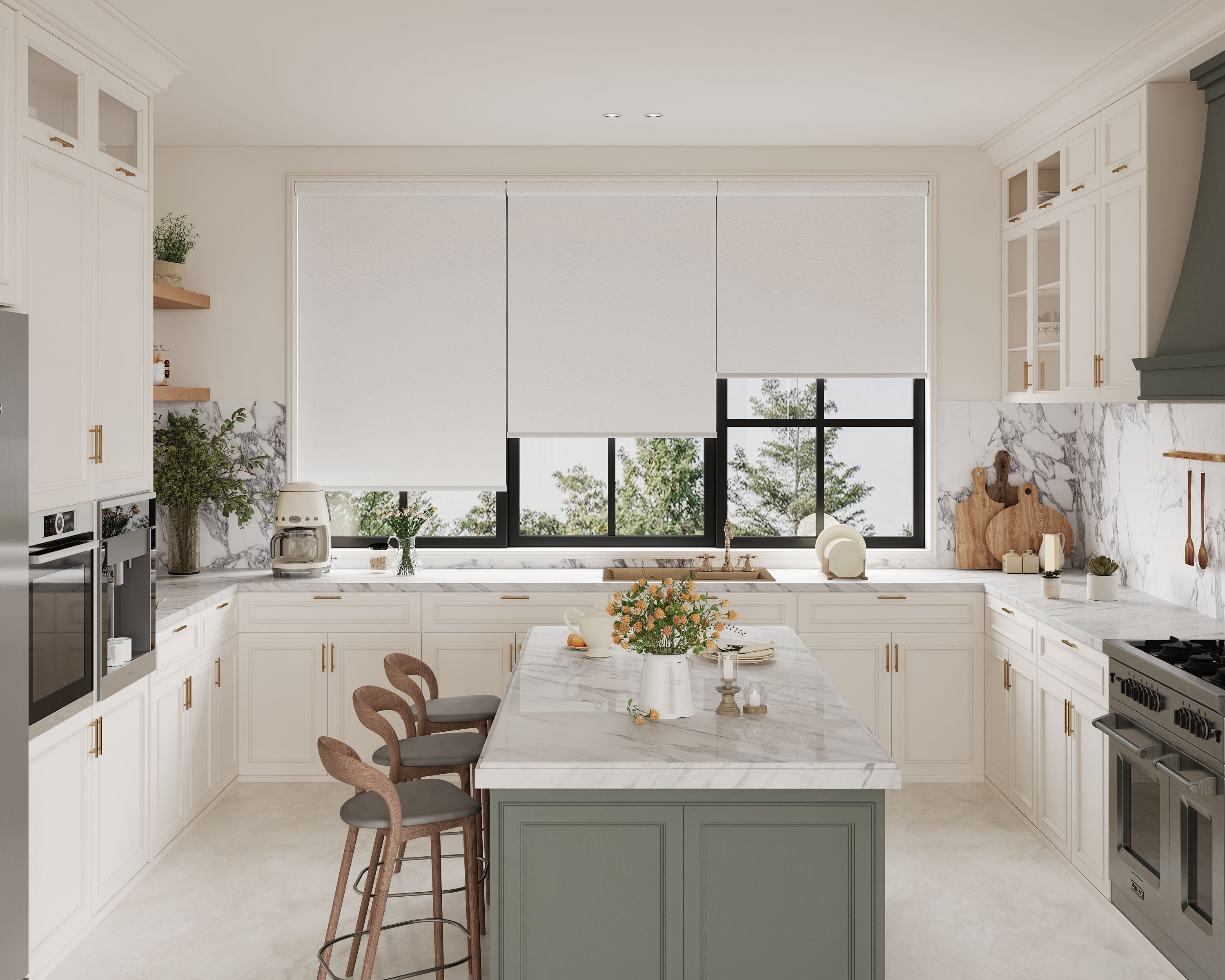
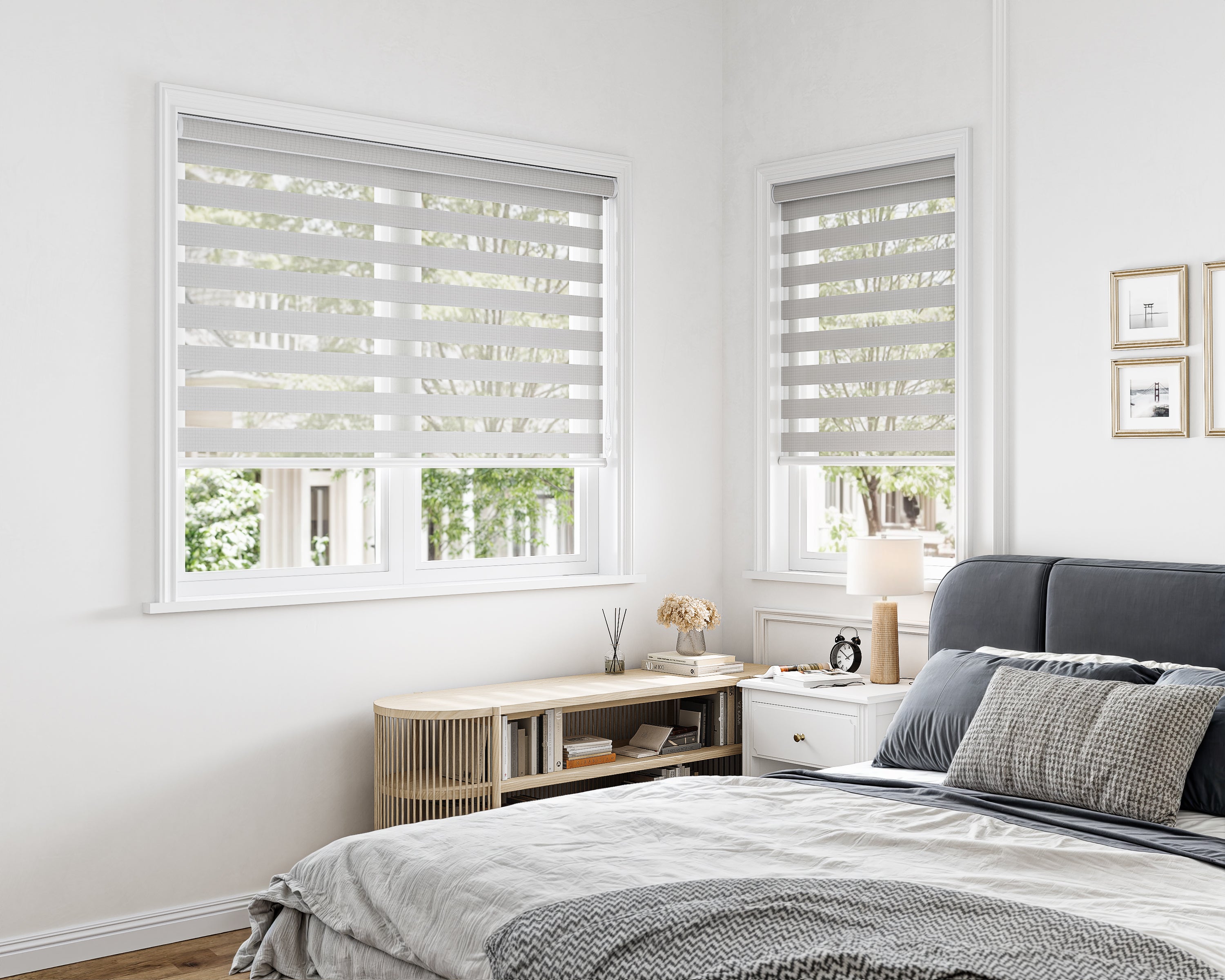
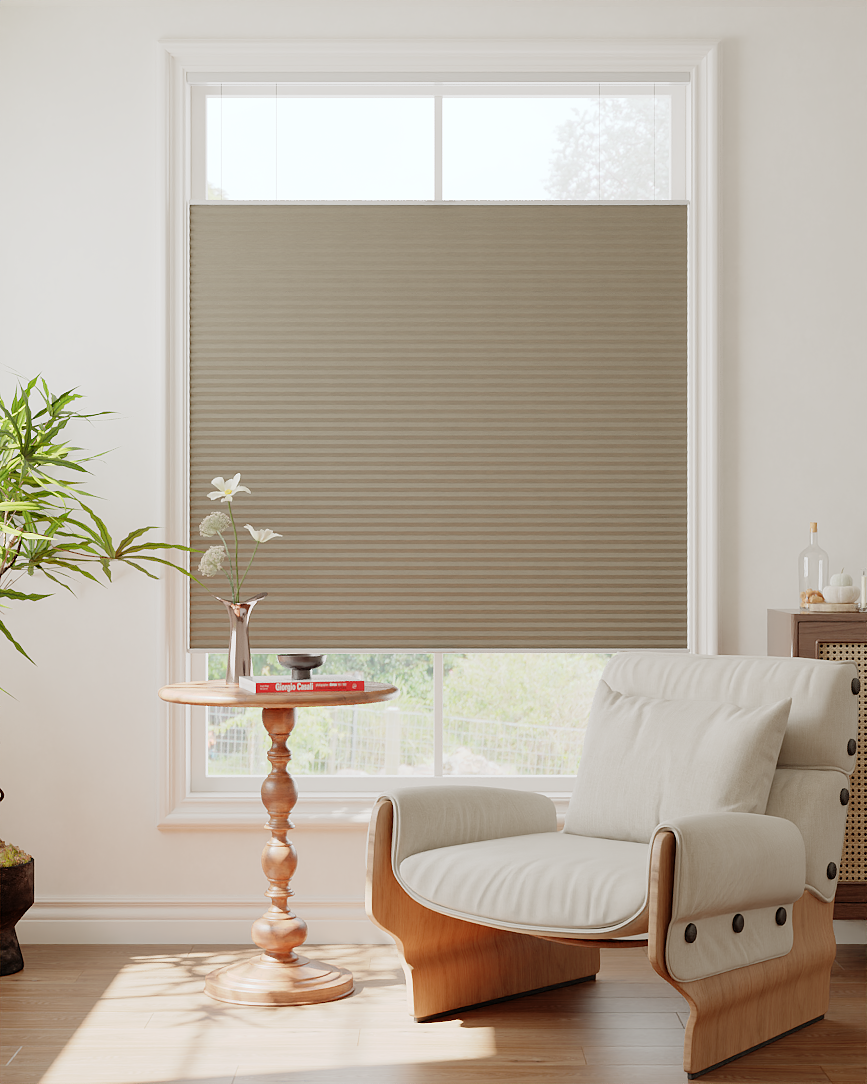
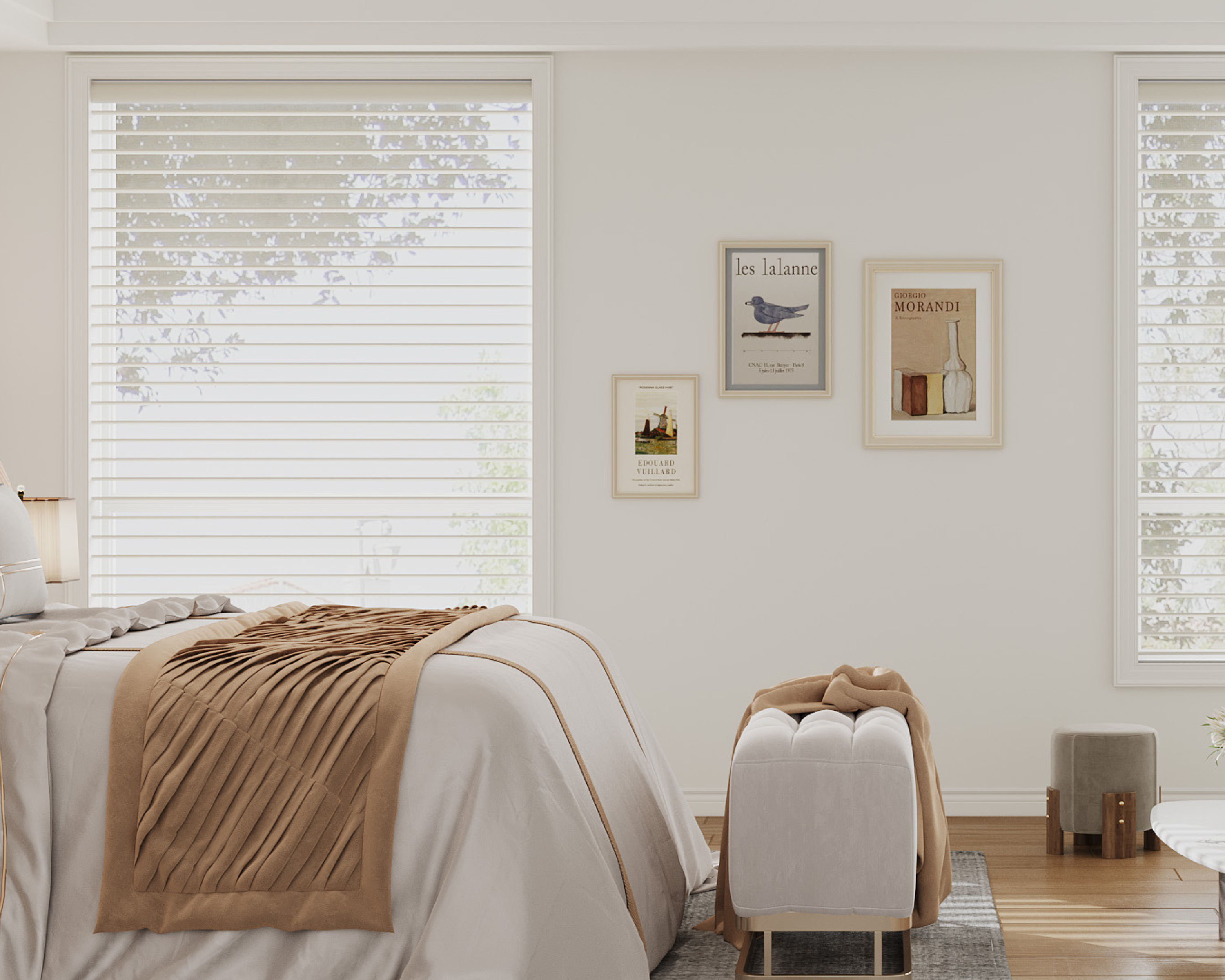







Bay windows, with their graceful projections and multiple panes, add architectural interest but present a unique puzzle for window treatments. Roman shades, with their tailored fabric folds, can be an elegant and functional solution, but they require specific planning to address angles, coordination, and operation. This guide provides a comprehensive strategy for successfully dressing your bay window with Roman shades, covering design approaches, precise measurement, and specialized installation.
Here’s what you’ll learn:
-
The two primary design approaches: individual shades versus a continuous treatment.
-
Step-by-step strategies for measuring each angled section of a bay window accurately.
-
Specialized installation techniques for mounting shades on angled projection walls.
-
How to choose styles and operation methods that enhance both beauty and functionality.
-
Why motorization is often the key to convenience in a multi-shade bay window.
To begin visualizing custom solutions for your unique architecture, explore our collection of bespoke Roman shades designed for complex window shapes.
Understanding the Bay Window Challenge
A bay window typically consists of a central picture window flanked by two angled side windows (often called "cheeks"). This creates three key challenges:
-
Angled Mounting Surfaces: The side shades must mount on walls that are not parallel to the room.
-
Coordinated Movement: Operating three or more shades individually can be cumbersome.
-
Unified Aesthetics: The treatment should feel like a cohesive design element, not a collection of separate parts.
Addressing these from the start is crucial for a polished result.
Design Approach: Individual Shades vs. Continuous Treatment
Your first major decision is between treating each window pane separately or attempting a connected treatment. The choice significantly impacts aesthetics, function, and cost.
Individual Roman Shades for Each Pane
This is the most common and versatile approach, installing a separate shade on the flat face of each window section (center, left, right).
-
Pros: Allows for independent light control on each section, accommodates different angles perfectly, and is generally easier to install and service. Offers flexibility in styling—you can use the same fabric for unity or different ones for contrast.
-
Cons: Visible gaps between shades when viewed from an angle, requiring more individual operations unless motorized.
Continuous Headrail with Multiple Shades
A less common but sleek approach involves a single, custom-bent headrail that follows the bay's contour, with separate shade panels hanging from it.
-
Pros: Creates a ultra-modern, streamlined look with a clean top line. The shades align perfectly at the top.
-
Cons: Significantly more expensive and complex to manufacture and install. All shades must be raised and lowered together, offering no independent section control. The logistics are detailed in resources discussing single versus multiple headrail decisions for wide windows.
| Feature | Individual Shades | Continuous Headrail |
|---|---|---|
| Aesthetic | Traditional, flexible. Can highlight each arch. | Modern, streamlined, unified top line. |
| Light Control | Independent. Adjust each pane separately. | Unified. All panels operate together. |
| Installation | More straightforward; standard brackets on each angle. | Complex; requires custom bent rail & professional install. |
| Cost | Standard cost multiplied by number of shades. | Premium cost due to custom fabrication. |
| Best For | Most homeowners, traditional or transitional decor, desired light control flexibility. | Contemporary homes where a seamless aesthetic is the top priority. |
Critical Steps: Measuring and Installation
Precision is non-negotiable for bay windows. A slight error in measuring an angle can lead to operational problems and visual gaps.
How to Measure a Bay Window for Roman Shades
You must measure each of the three (or more) window sections independently, treating each as its own entity.
-
For Inside Mount (Ideal for Individual Shades): Measure the width (left to right) and height (top to bottom) inside the frame of each individual window pane. For the angled side windows, ensure your tape measure is held parallel to the window itself, not the room's wall. Record the narrowest width and shortest height for each pane.
-
For Outside Mount (Often Necessary): Determine how much of the wall and trim you wish to cover. Measure the width of the flat wall space for each shade and the desired height from above the window to the sill or below. The shades for the angled sections will be trapezoidal, not rectangular.
Due to the complexity, following a specialized guide for measuring complex and angled window formations is highly recommended, and professional measurement is often worth the investment.
Installation Techniques for Angled Projections
Installing shades on the angled "cheek" walls requires careful planning.
-
Bracket Mounting: Standard brackets can be used, but the shade will sit parallel to the angled wall, not the room. This is visually correct for the individual shade approach.
-
Using Shims: If the wall surface is uneven—common in older plaster—using shims behind the brackets is essential to ensure they are mounted level and plumb, allowing the shade to operate smoothly. This technique is explained in our guide on leveling shades on uneven surfaces.
-
Professional Role: Given the angles, potential for uneven walls, and the need for perfect alignment, professional installation is strongly advised for bay windows to ensure a flawless, trouble-free result.
Style, Fabric, and Operation Recommendations
Choosing the Right Roman Shade Style
-
Flat Fold Shades: Their clean lines work well in modern bays and minimize visual bulk. They are also the best choice if you plan to use a blackout lining for enhanced light control in a bedroom bay.
-
Hobbled or Relaxed Shades: Add softness and traditional elegance. Ensure the fabric is not too bulky, as multiple draped shades can make the bay feel crowded.
The Case for Motorization
Operating three or more shades by hand, especially if they are cordless or have cords on different sides, is inconvenient. Motorizing your bay window shades provides seamless, synchronized control.
-
Unified Control: A single remote or voice command can raise/lower all shades together for a dramatic, uniform effect.
-
Independent Control: With a advanced system, you can still control shades individually or in groups from the same remote or app.
-
Solving Accessibility: Makes hard-to-reach shades on deep bay projections easy to use. The convenience and integration benefits are covered in our guide to motorized Roman shade systems.
Conclusion and Key Takeaways
Successfully dressing a bay window with Roman shades is an exercise in careful planning and embracing its architecture.
Choose Individual Shades for flexibility, easier installation, and independent light control. This is the most practical and popular choice.
Consider a Continuous Headrail only if a flawless, modern top line is your absolute priority and you don't need to control each window separately.
Never Skip Professional Measurement & Installation: The angles and alignment demands of a bay window make expert involvement one of the best investments for a perfect outcome.
Strongly Consider Motorization: It transforms the experience of using a multi-shade bay window from a chore into a effortless feature of your home.
Key Highlights:
-
Plan for Angles: Every step—measuring, mounting, fabricating—must account for the bay's non-standard geometry.
-
Motorization is a Game-Changer: For multi-shade bays, it's less a luxury and more a tool for daily convenience and unified design impact.
-
Professional Expertise Pays: The cost of professional help for measuring and installing bay window treatments is justified by avoiding costly errors and achieving a precision fit.
-
Design Cohesively: Select one fabric and style for all shades in the bay to create a unified architectural element, even if using individual shades.
Shop Roman Shades by Light Control


Frequently Asked Questions (FAQ)
Can you install inside-mount Roman shades on the angled sections of a bay window?
It is possible but challenging. The inside of the angled window frame must have sufficient depth (typically 3 inches or more) and a flat surface to mount the bracket. Often, the frames in these side units are not deep enough, making an outside mount on the angled wall the more feasible and common solution.
How do I handle the gap between individual shades in a bay window?
Some gap is inevitable with individual shades and is part of the traditional look. To minimize it, you can order shades with a slightly wider outside mount that allows the side edges to get closer to the adjacent shade. A professional can plan the mounting positions to optimize this. A valance or cornice installed across the entire top of the bay can also help visually bridge the separate units.
Are Roman shades a good insulating option for drafty bay windows?
Roman shades provide a layer of insulation, especially when paired with a thermal lining. They create a still air barrier at the window. For significantly drafty bays, addressing the window seals themselves is the first step. Then, a well-fitted, thermally lined Roman shade can improve comfort and reduce energy loss.
What's the best fabric choice for a sunny bay window?
For sun exposure, choose fade-resistant fabrics. Synthetic blends, solution-dyed acrylics, or treated natural fibers offer better UV resistance. A light-filtering or room-darkening lining is also crucial to protect the face fabric from fading and to manage heat and glare, which is especially important for controlling sun in south-facing installations.
Is it worth the extra cost to customize Roman shades for a bay window?
Absolutely. Standard, off-the-shelf shades will not account for your bay's unique angles and dimensions, leading to poor fit, light leaks, and operational issues. Custom shades are fabricated to your precise measurements, ensuring they hang correctly, operate smoothly, and look like they were made for the space—because they were.
