
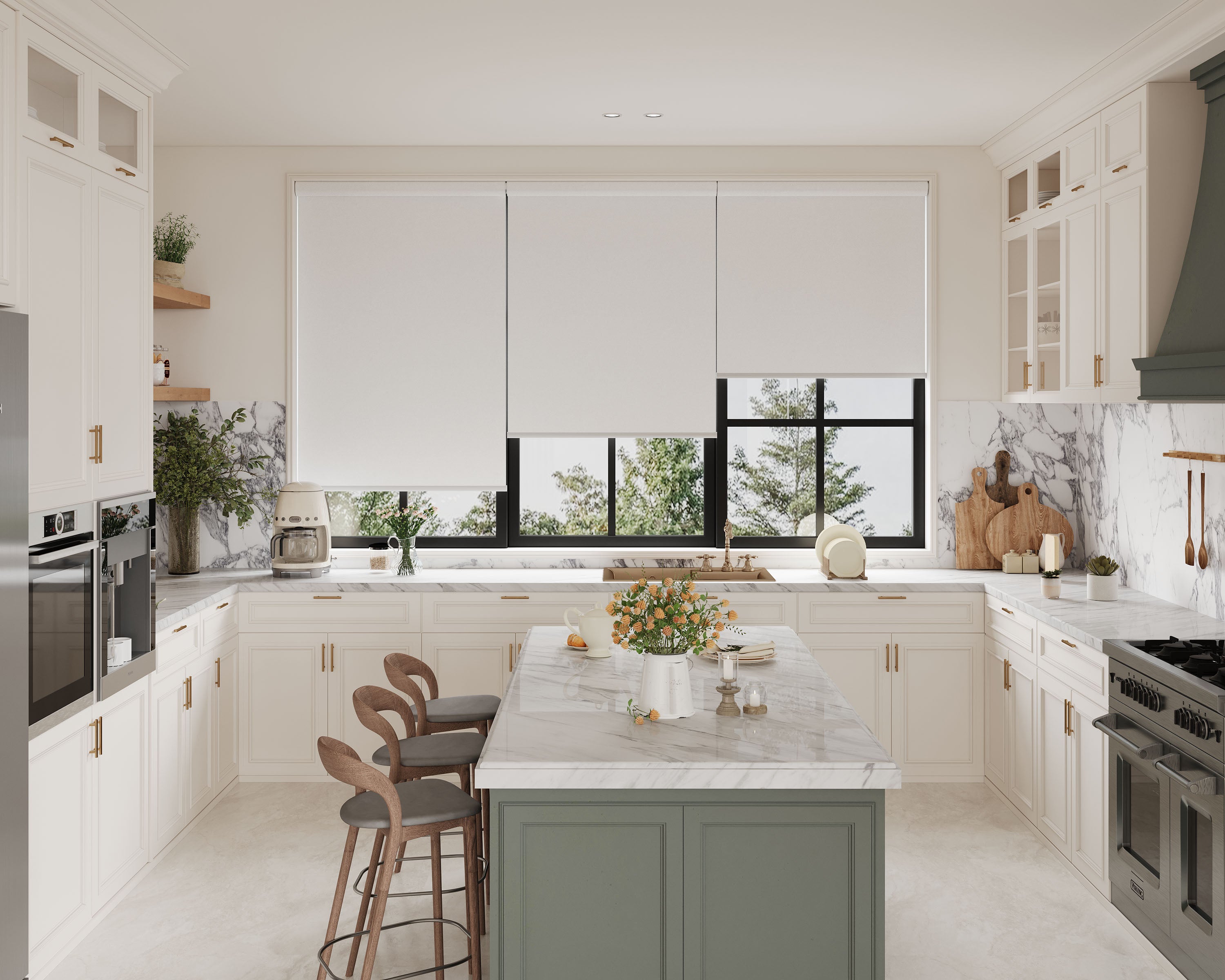
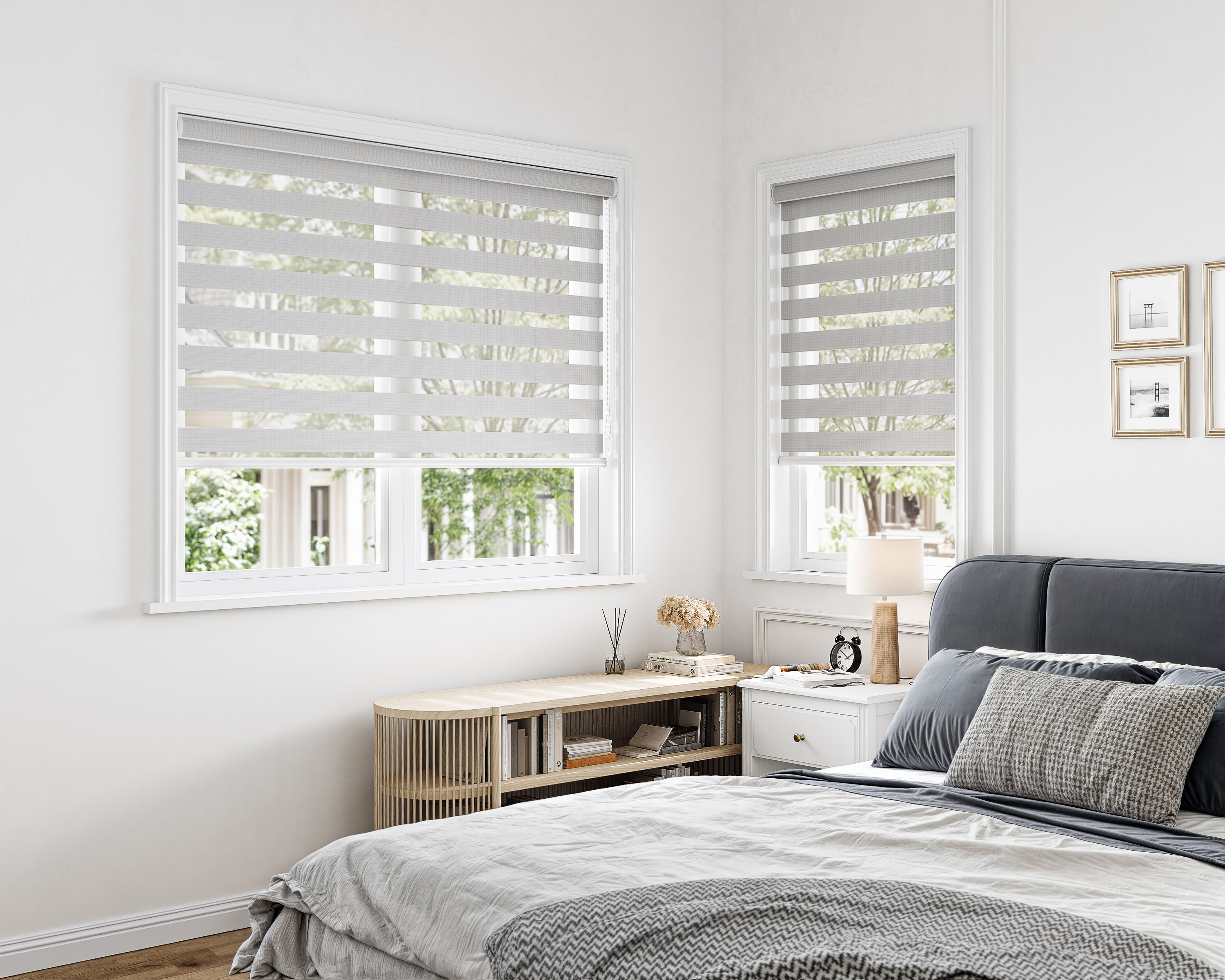
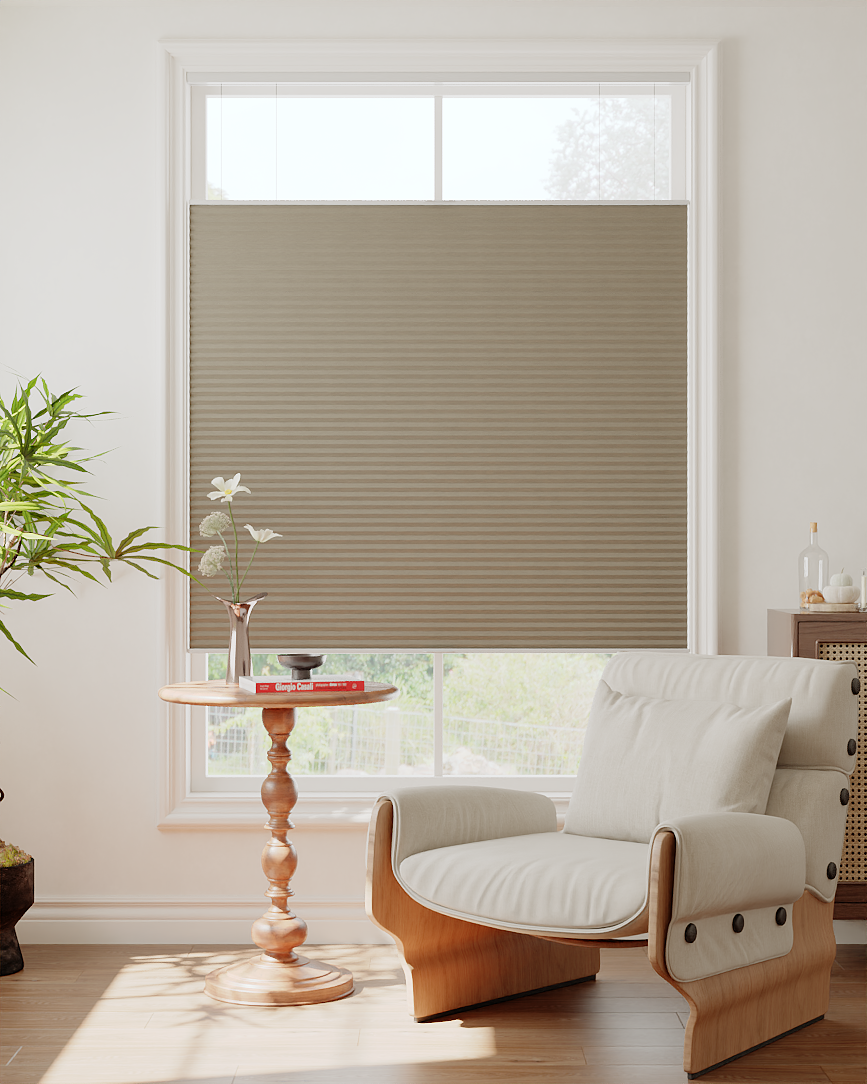
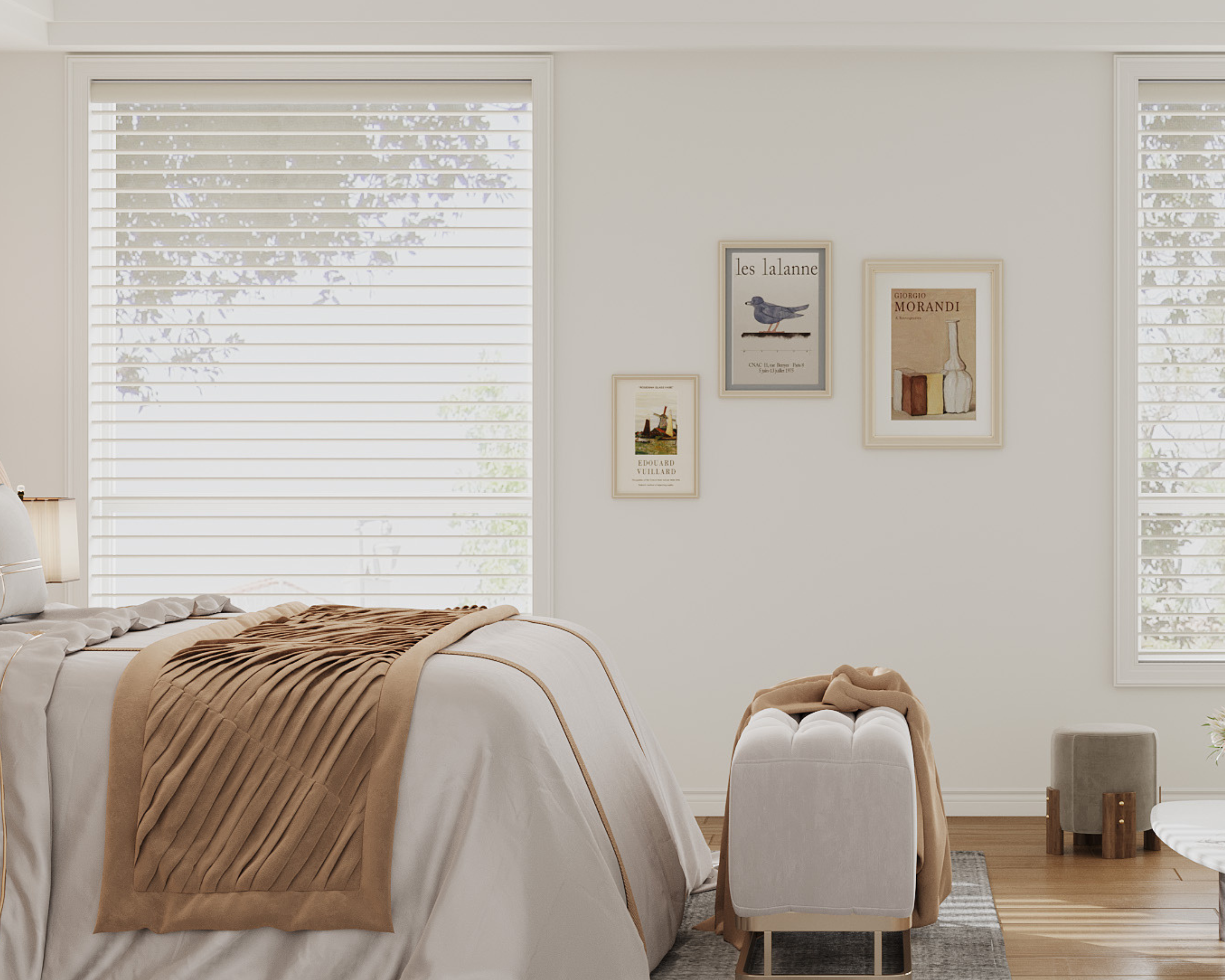
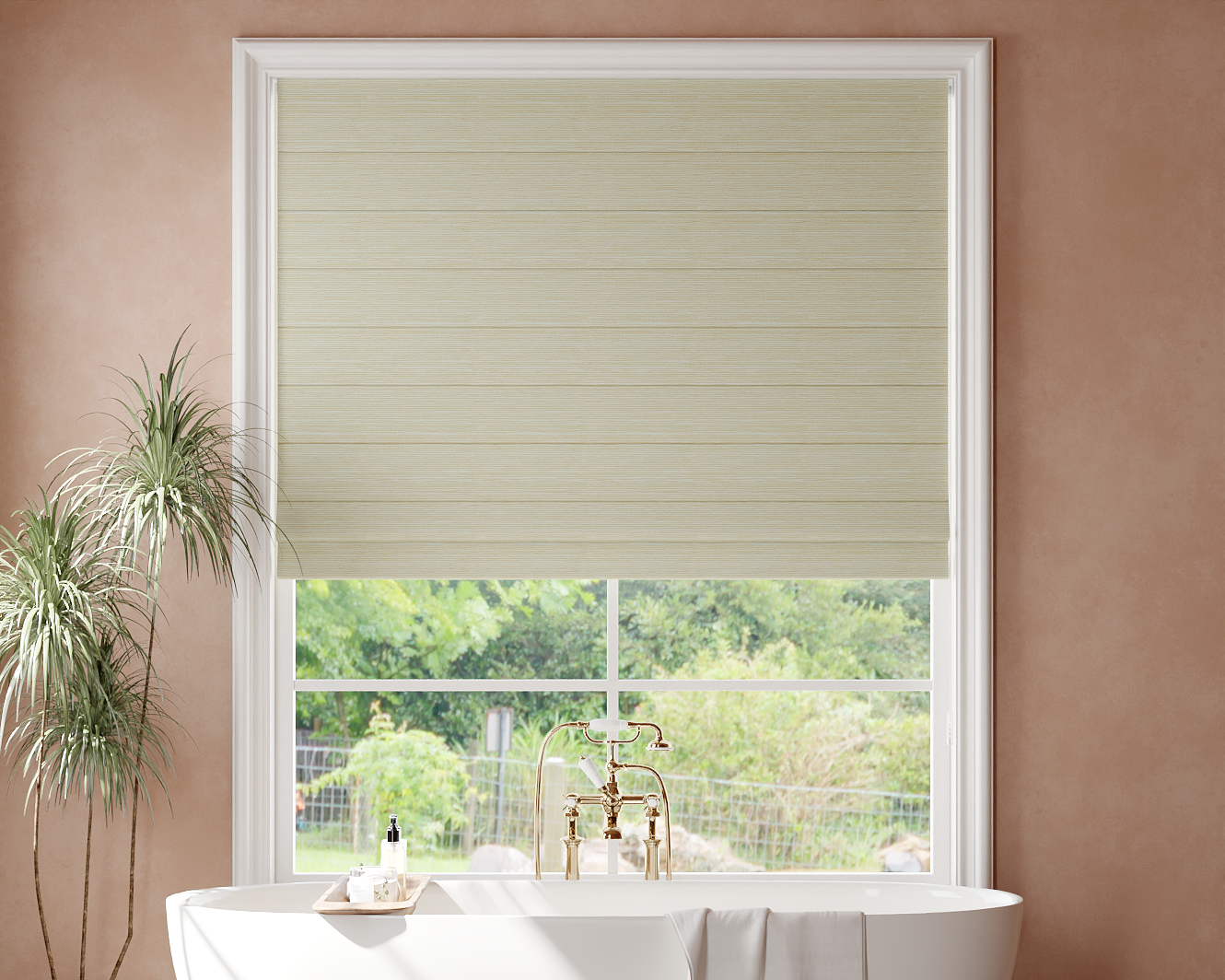
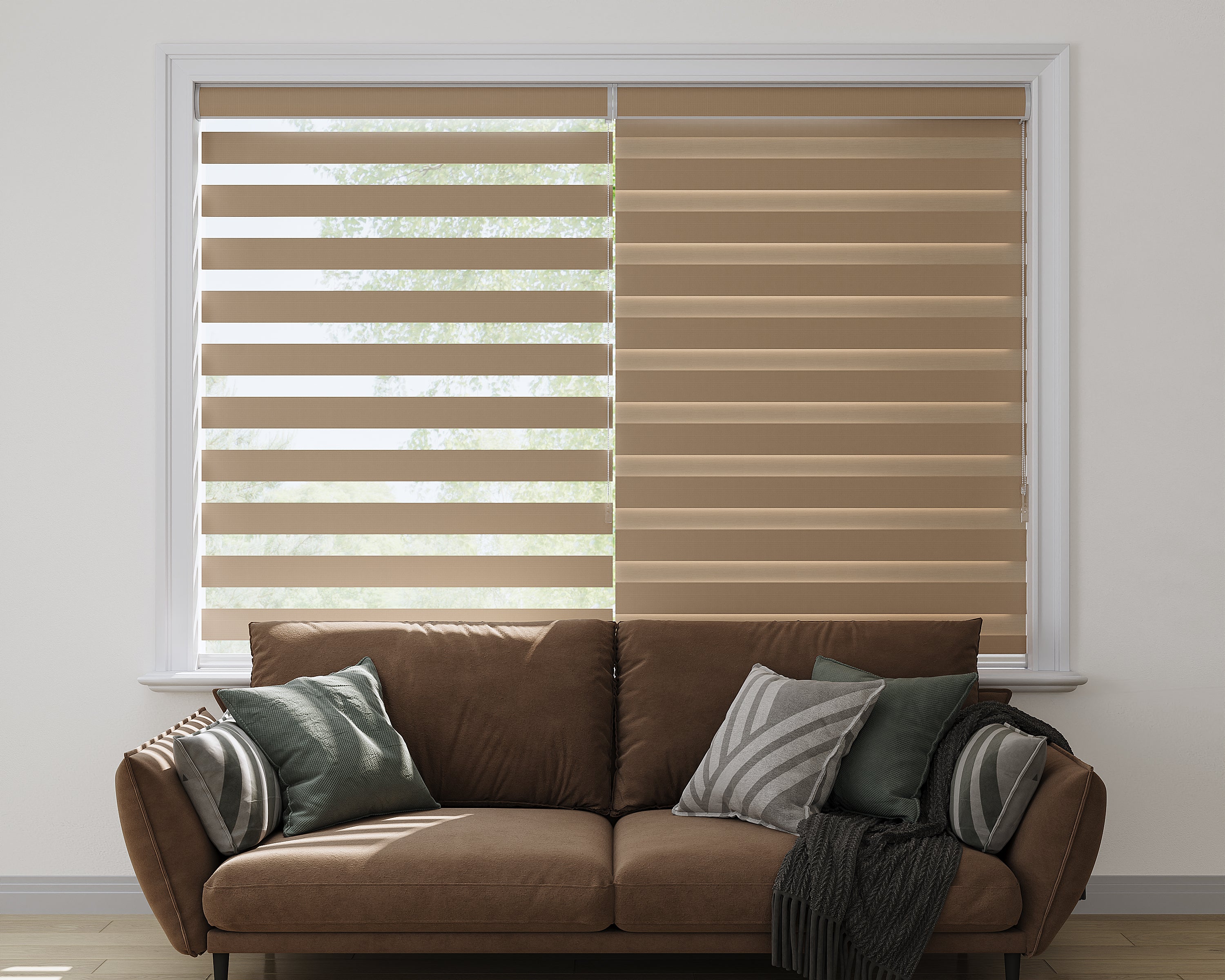
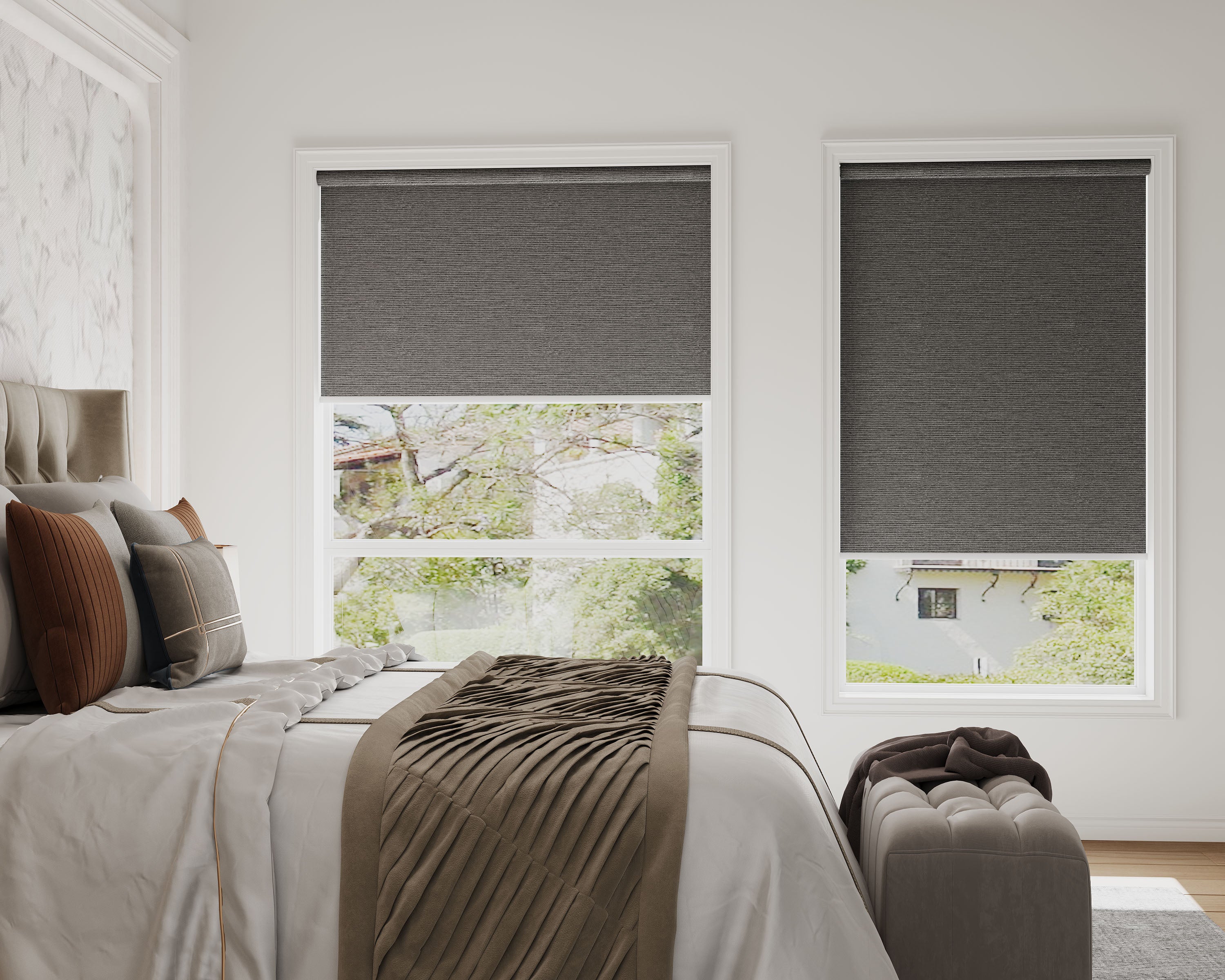
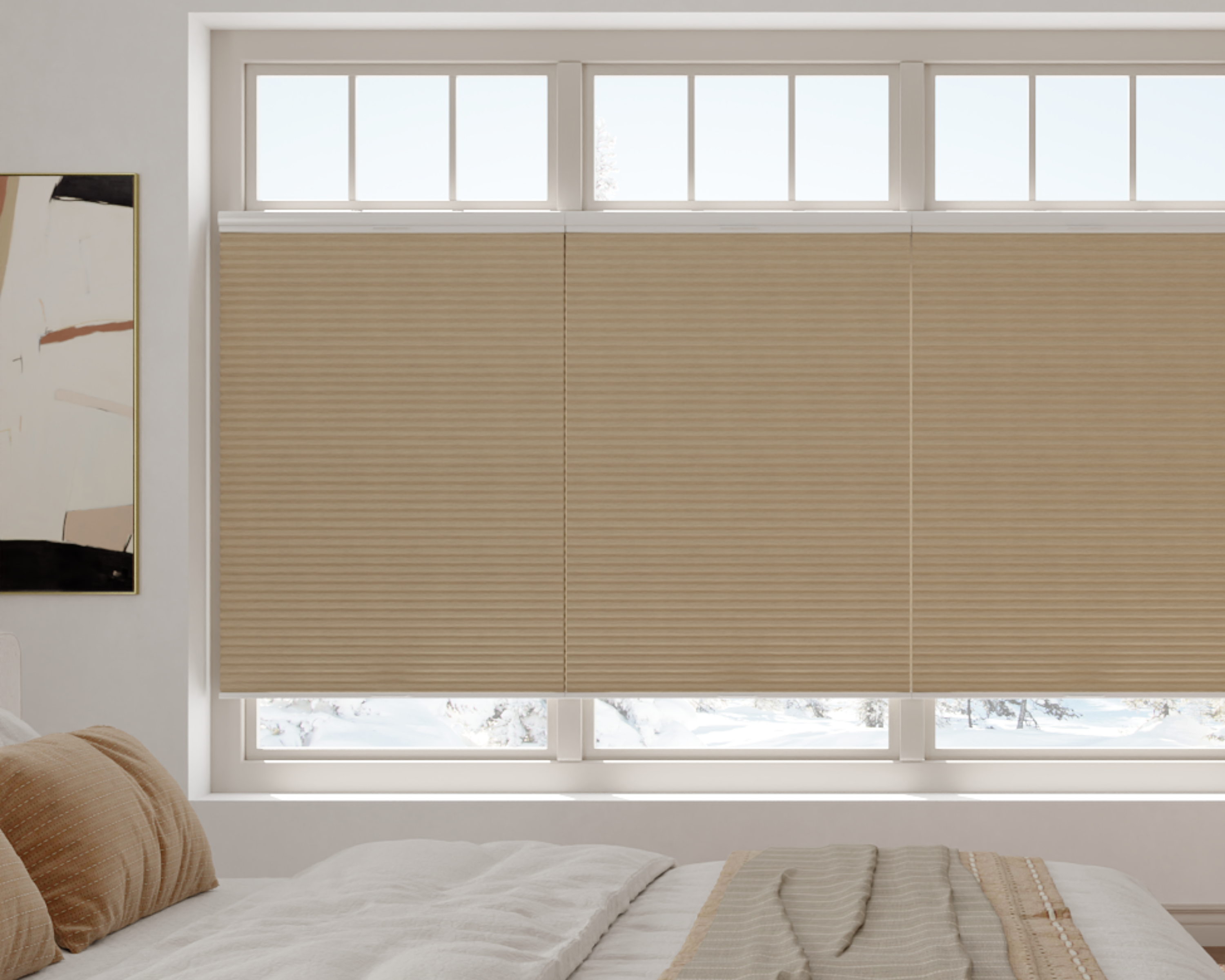
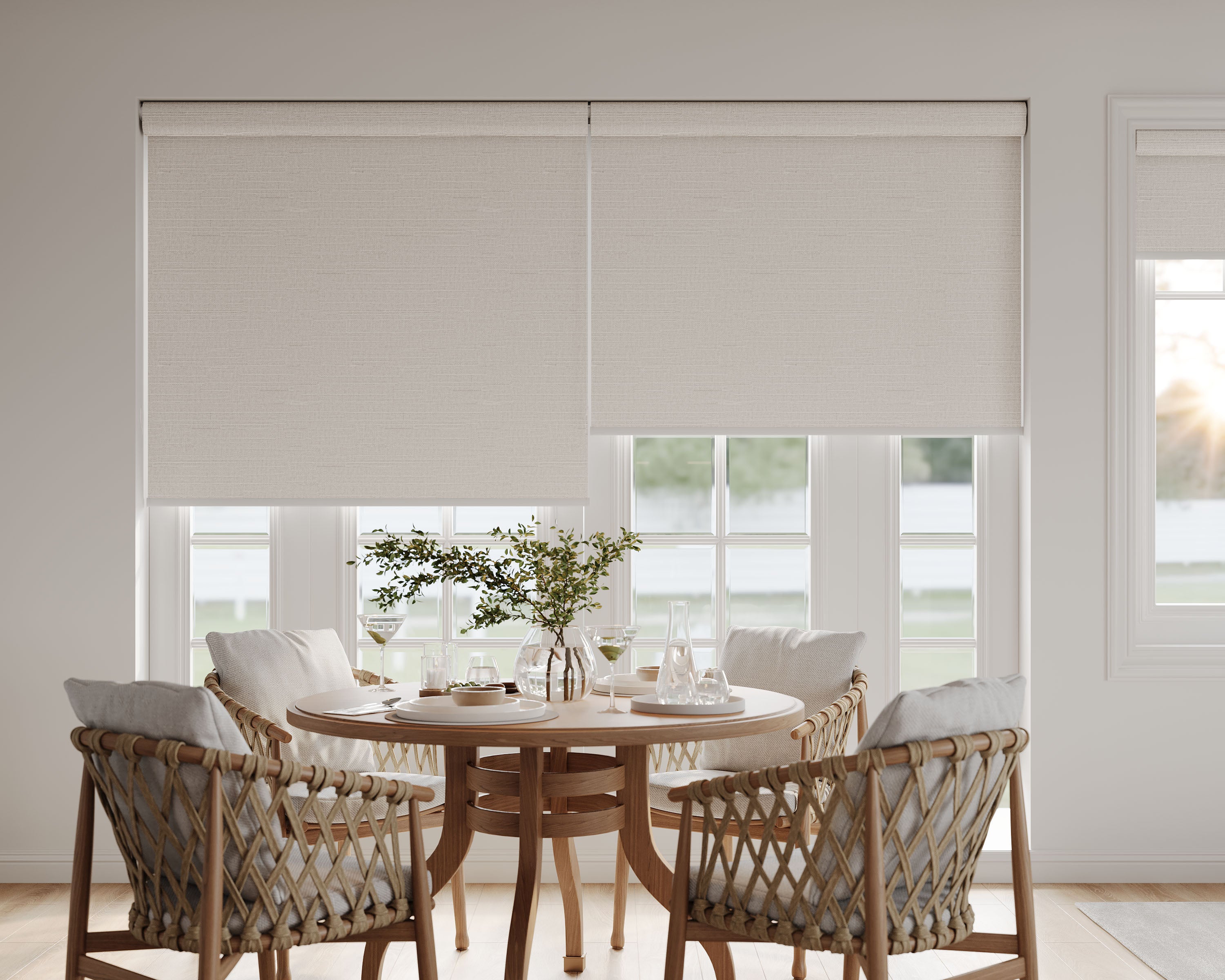


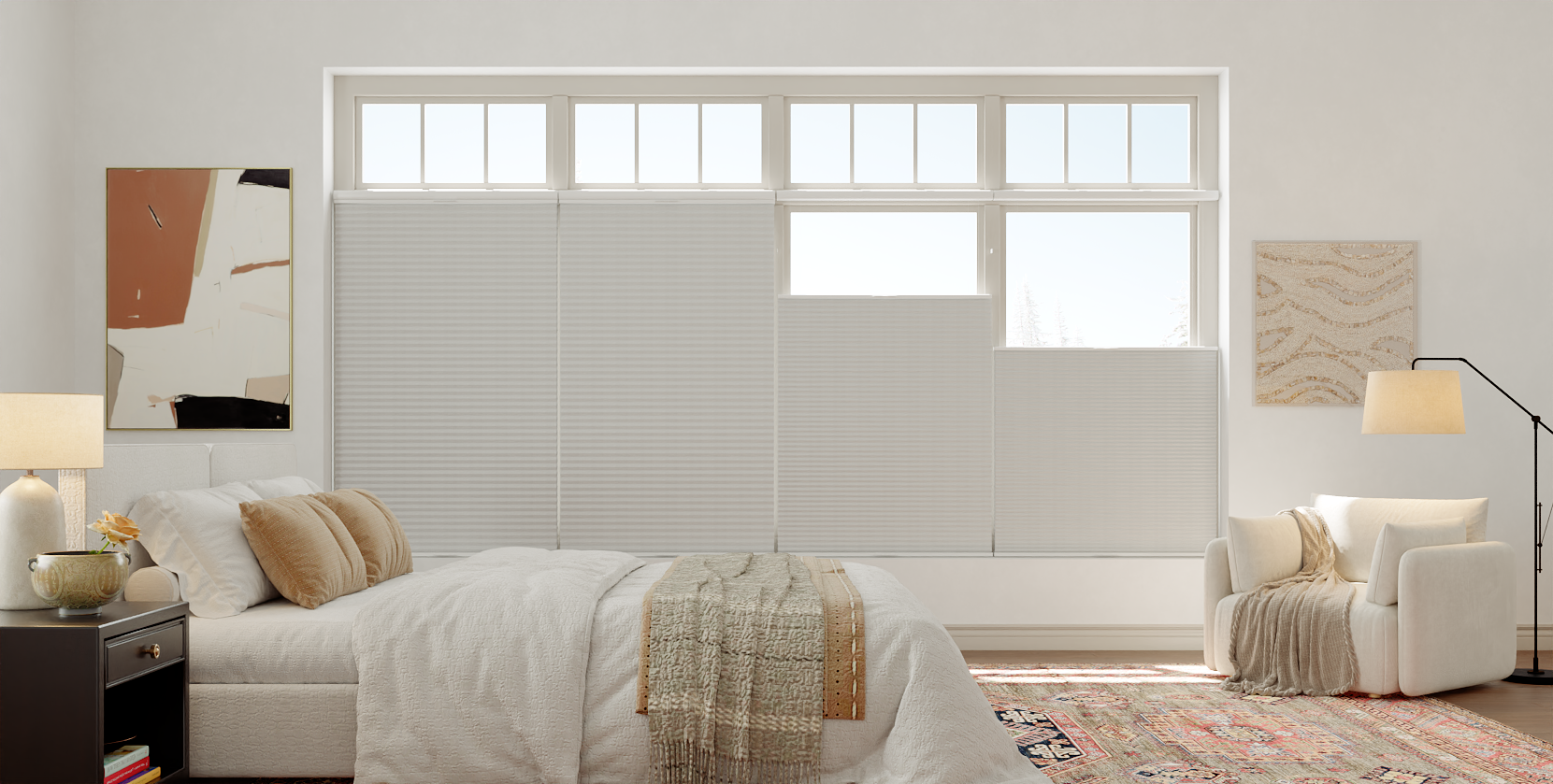


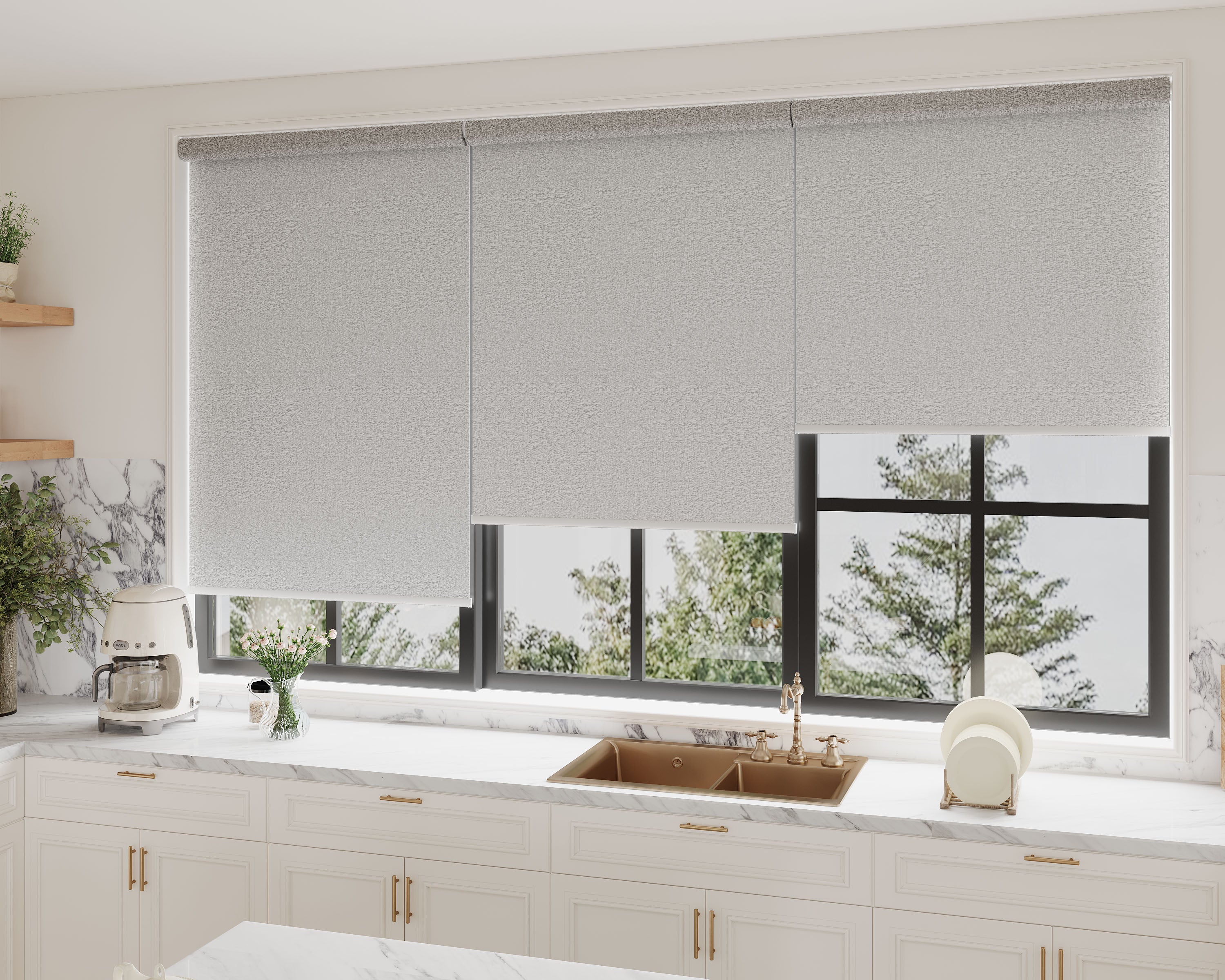

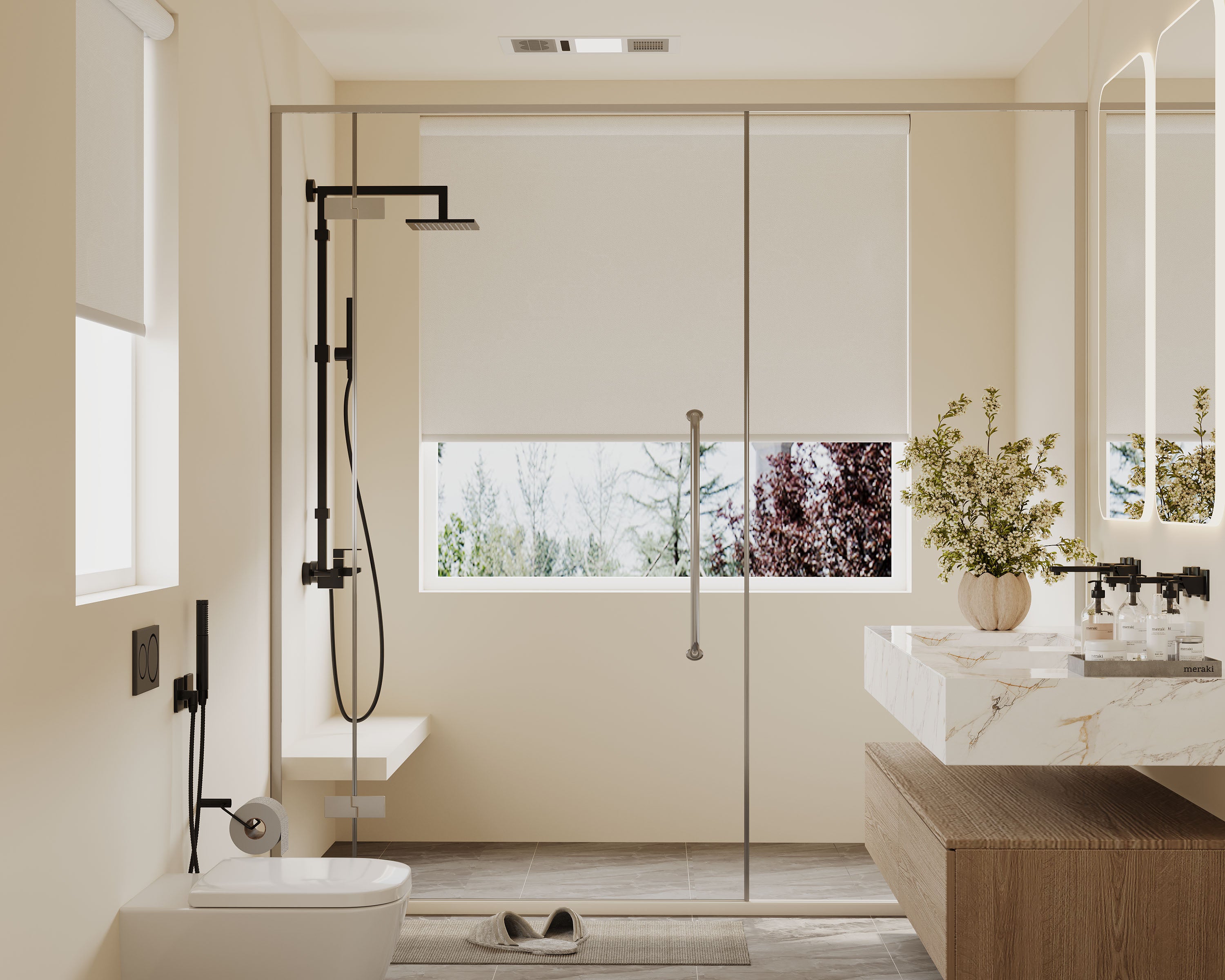


Choose Roman shades by working from the window's job to the finished specification. The fabric's appearance matters, but the mount, opacity, fold and lift must work together at the actual opening.
Use the Roman collection to see the available starting points. Follow the selection in stages, so an attractive sample does not commit you to an unsuitable size, care requirement or operating system.
1. Write a short room brief
Identify the room, the privacy sightlines and the light you want to manage. A bedroom needing stronger light reduction differs from a living room where softened daylight matters. For an office, record where glare affects the desk rather than assuming one opacity suits every screen.
Note humidity, splashes or cooking residue where relevant, and who will reach the controls. Ask whether the actual fabric suits that exposure. Roman is a construction family, not a universal water-resistance or care rating.
Compare the blackout/light-filtering Roman guide to establish the light-control direction before choosing color.
2. Check the opening and possible mount
Record width, height, usable depth, trim, handles and opening-window movement. Keep each window labeled and measured independently. The Roman measuring guide helps organize those readings.
Then apply the selected product's ordering convention and deductions. Do not use a universal shortest-height rule or assume fabric width and headrail width are identical.
The Roman inside/outside comparison helps assess projection and coverage. Custom sizing does not guarantee every arch, angle or unusual opening can be supplied in the preferred mechanism.
3. Compare fold style with the actual fabric
Flat, hobbled and relaxed styles create different appearances when lowered and raised. Use the fold-style comparison to identify the look, then confirm availability for the selected system.
Ask how much glass the raised stack will cover and whether it clears handles or opening sashes. Pattern placement and visible texture should be viewed at the scale of the whole shade, not only on a small swatch.
A particular fold does not automatically give better blackout performance. Opacity and installation coverage still need their own assessment.
4. Confirm fabric, lining and care together
Room-darkening Roman shades offer a room-darkening fabric option; compare the actual sample with light behind it. Blackout Roman shades provide another opacity route. Inspect the actual fabric/lining combination with light behind it.
Use the lining guide to compare the offered construction. A blackout material does not remove every edge gap; a thermal description does not establish a universal energy saving.
Read the written care directions before ordering. Do not assume natural fibers are always harder to care for or that a synthetic face permits damp cleaning of the assembled shade.
5. Select operation around daily reach
Compare the supported manual, cordless and motorized options for the exact size and fabric. A manual option should be manageable at its installed height; a motor needs suitable power, controls and service access.
The manual/motorized Roman comparison helps separate convenience from automatic app or voice compatibility. Confirm the actual controller and any hub required for the desired feature.
Where young children live or visit, prioritize a suitable design without accessible hazardous cords. Motorization alone is not proof that every cord hazard is removed.
6. Review the complete order
| Final detail | What to save in writing |
|---|---|
| Room and opening | Window label and approved measurements |
| Product | Fabric code, color, fold, lining and size convention |
| Operation | Lift, power, controller and control placement |
| Mount | Hardware, projection and fitting responsibilities |
| Commercial terms | Complete price, current estimate, changes and support |
Use the Roman price guide to compare quote factors. Establish the current lead time rather than relying on a standard delivery range.
The DIY/professional installation guide helps define useful help for access, support and setup. Choose the Roman shade once its appearance and complete specification fit the room.
