
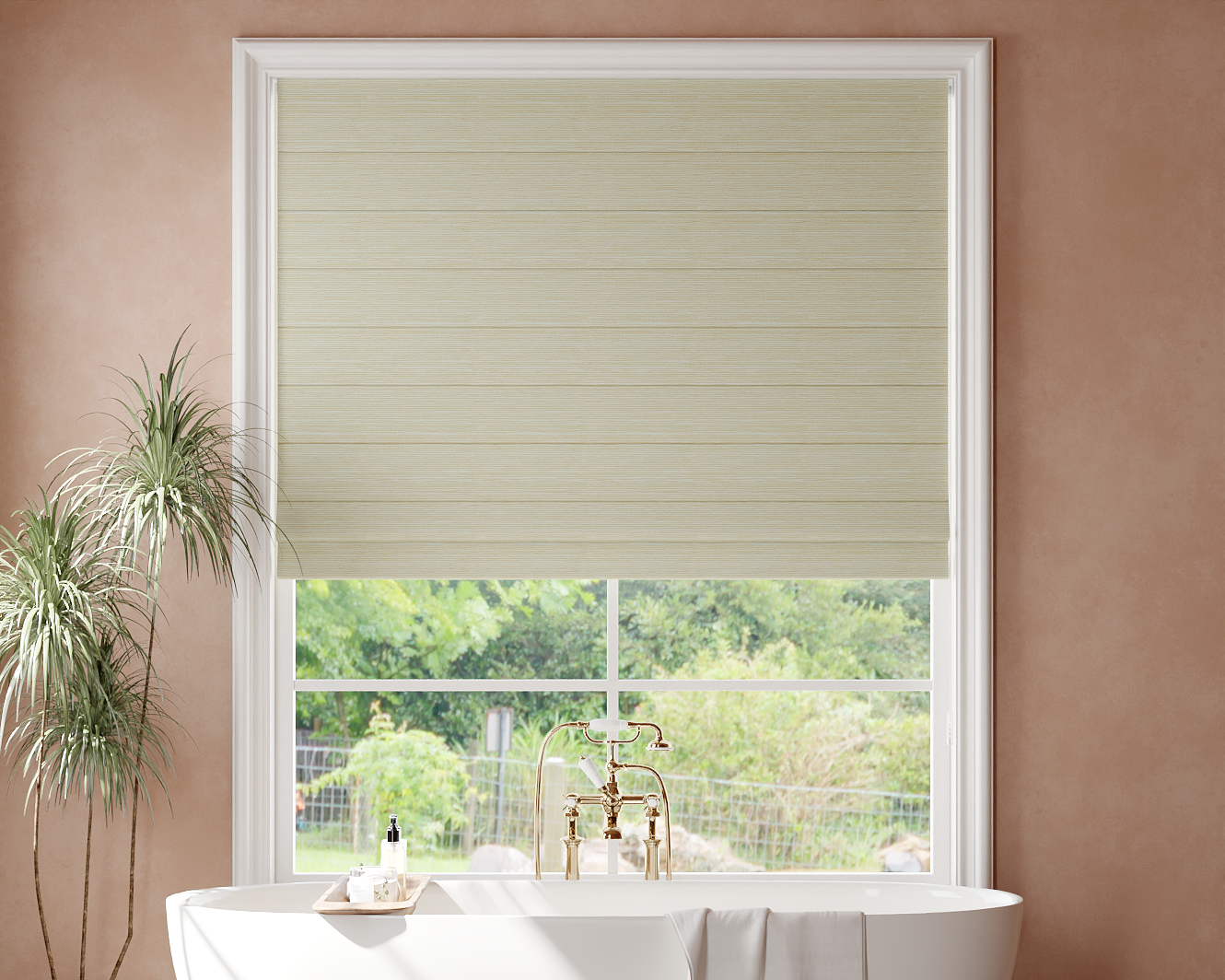
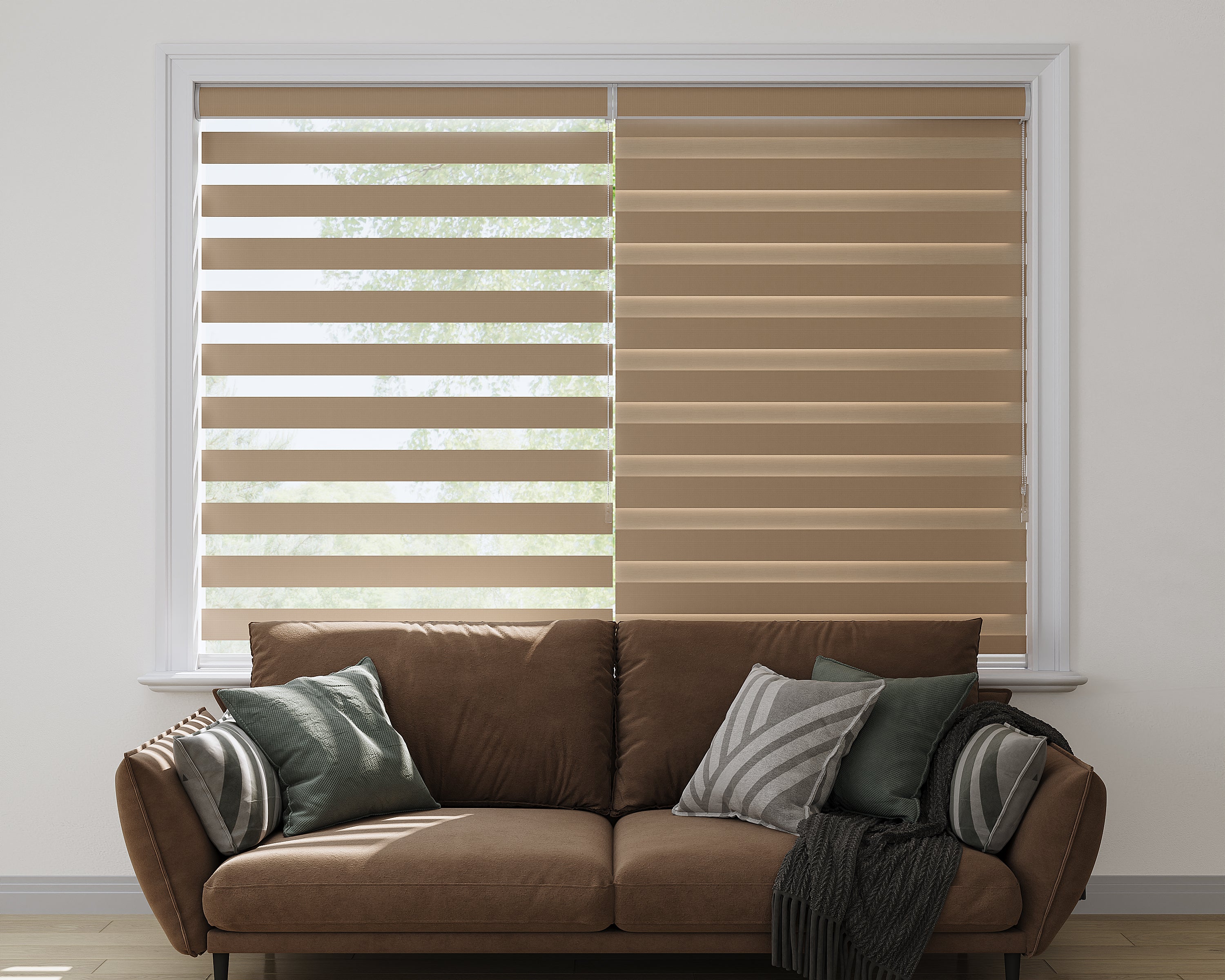
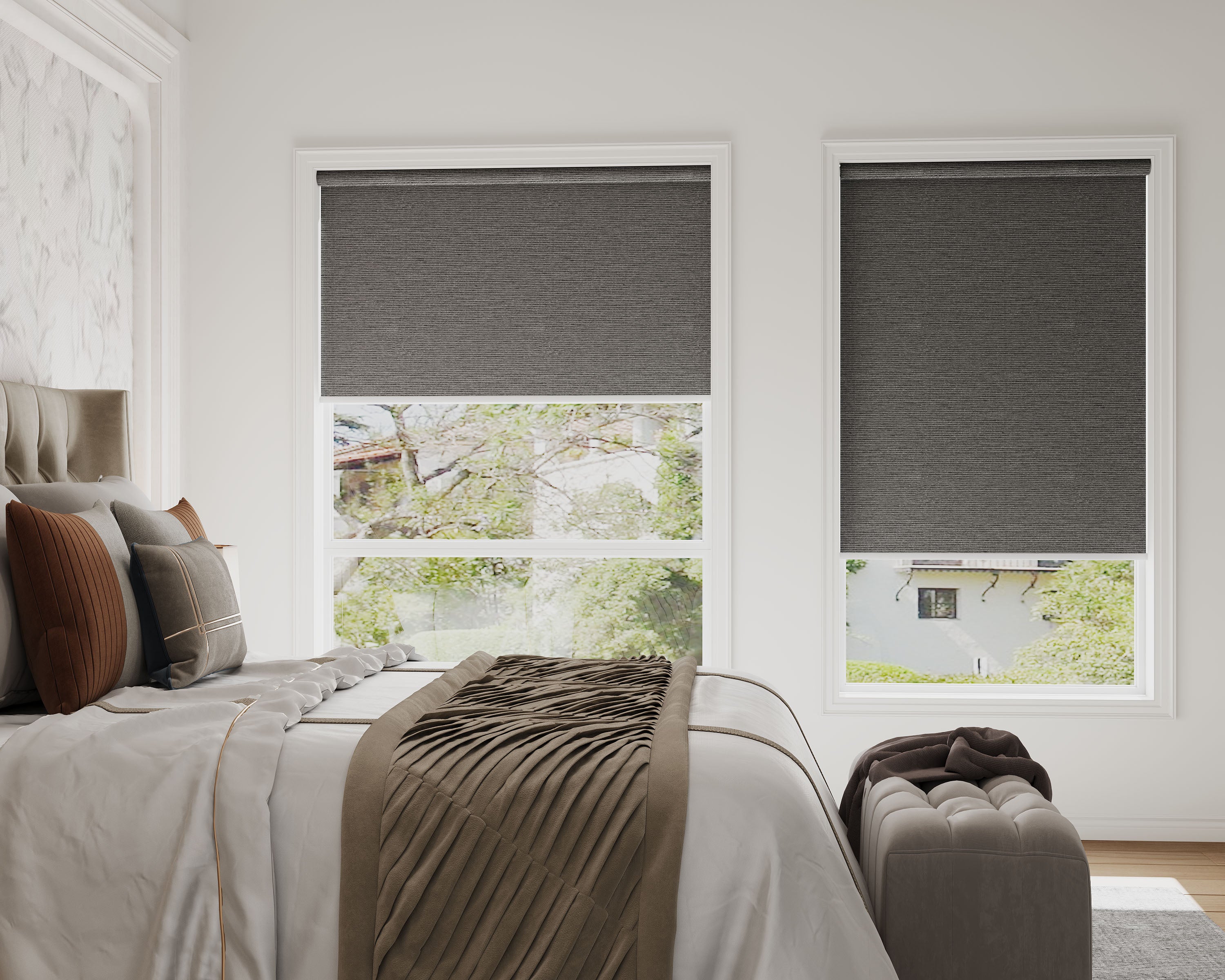
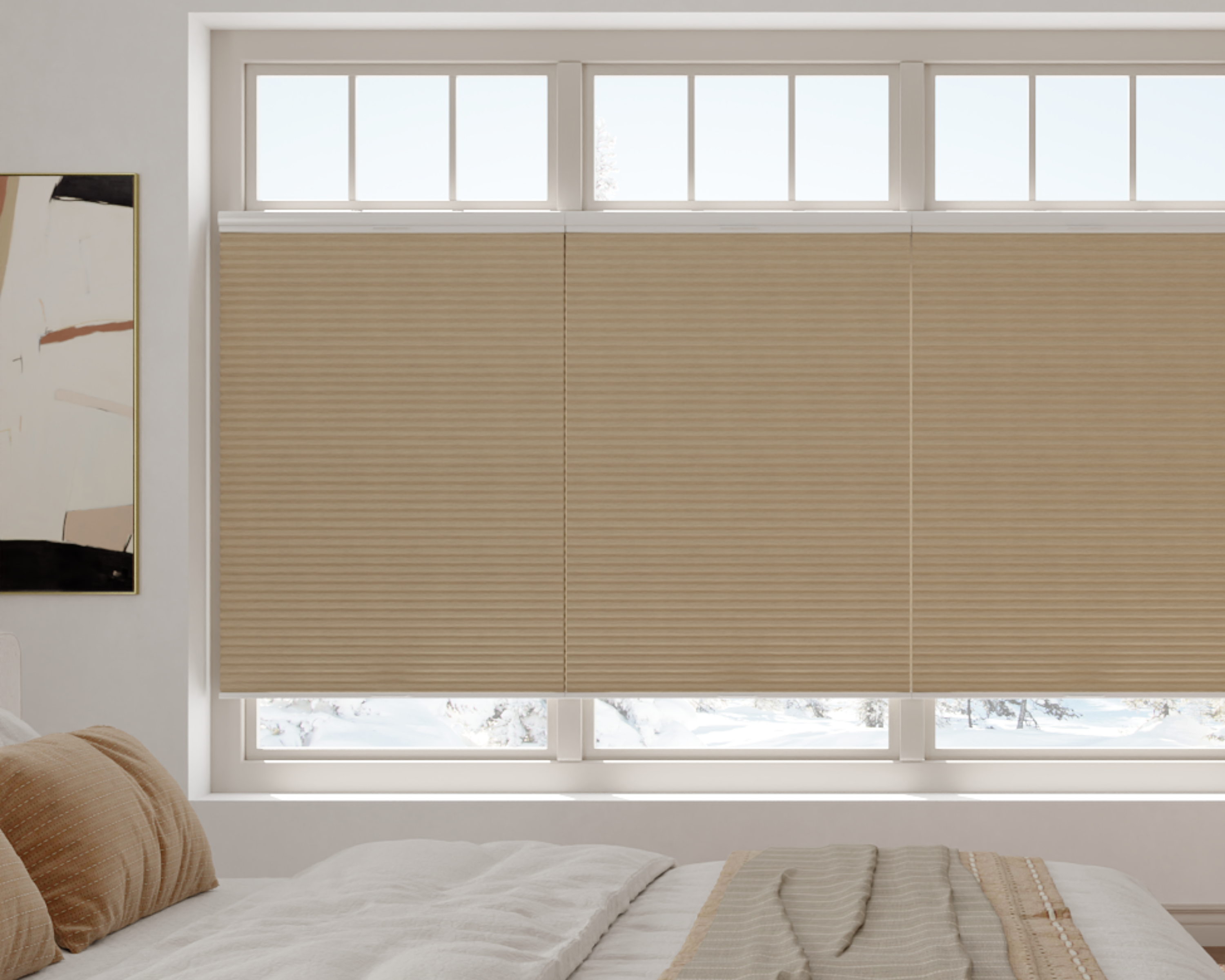
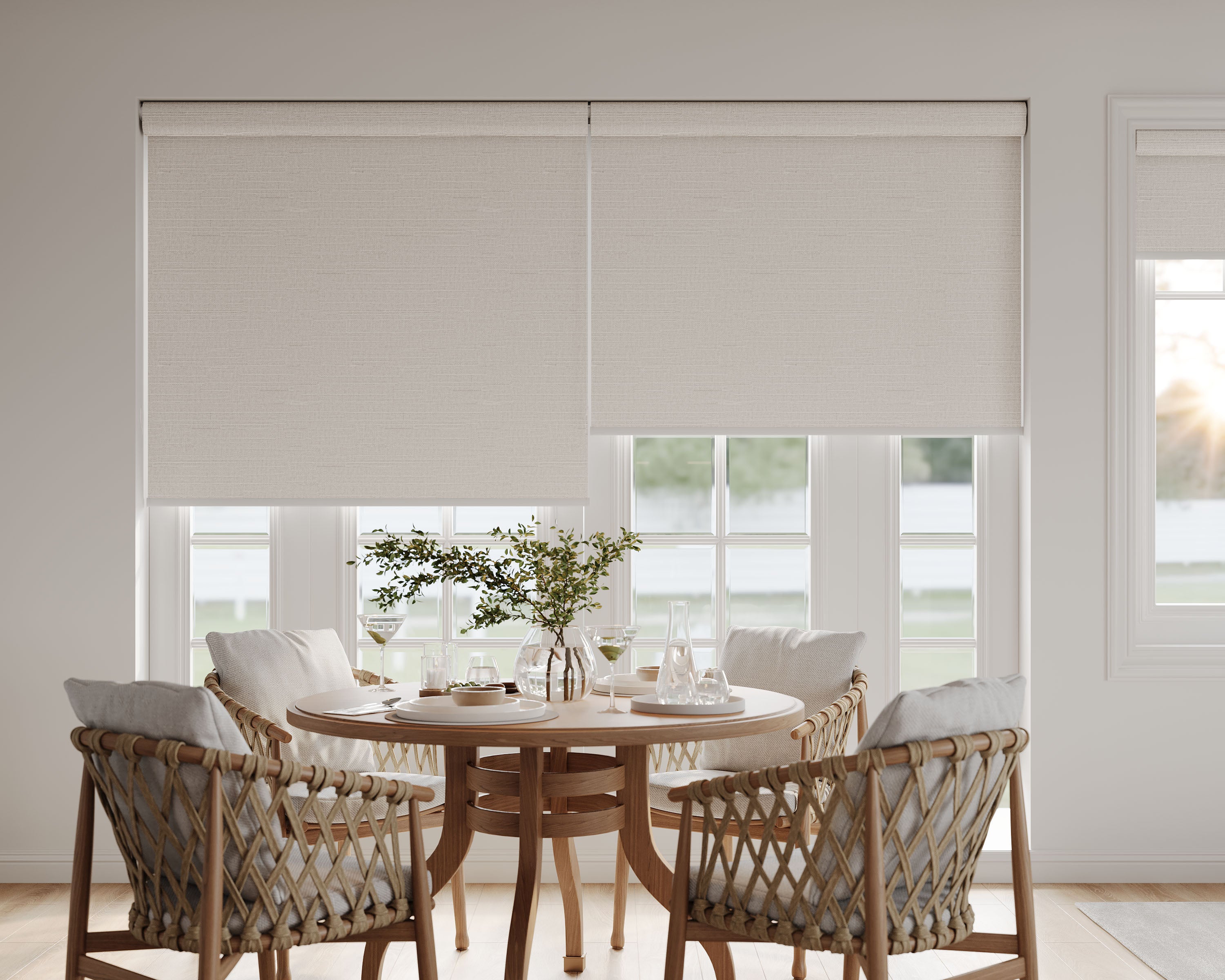


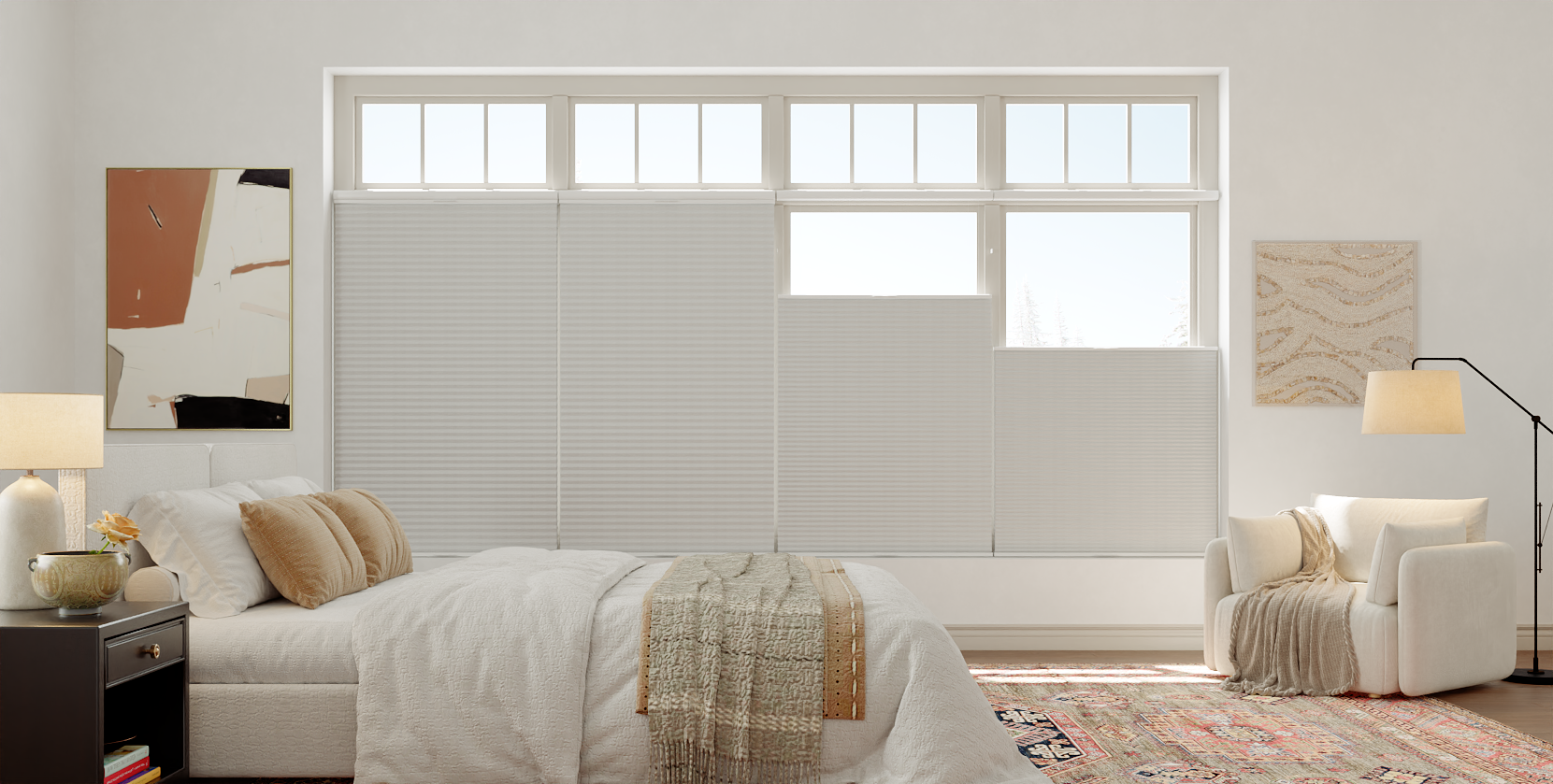


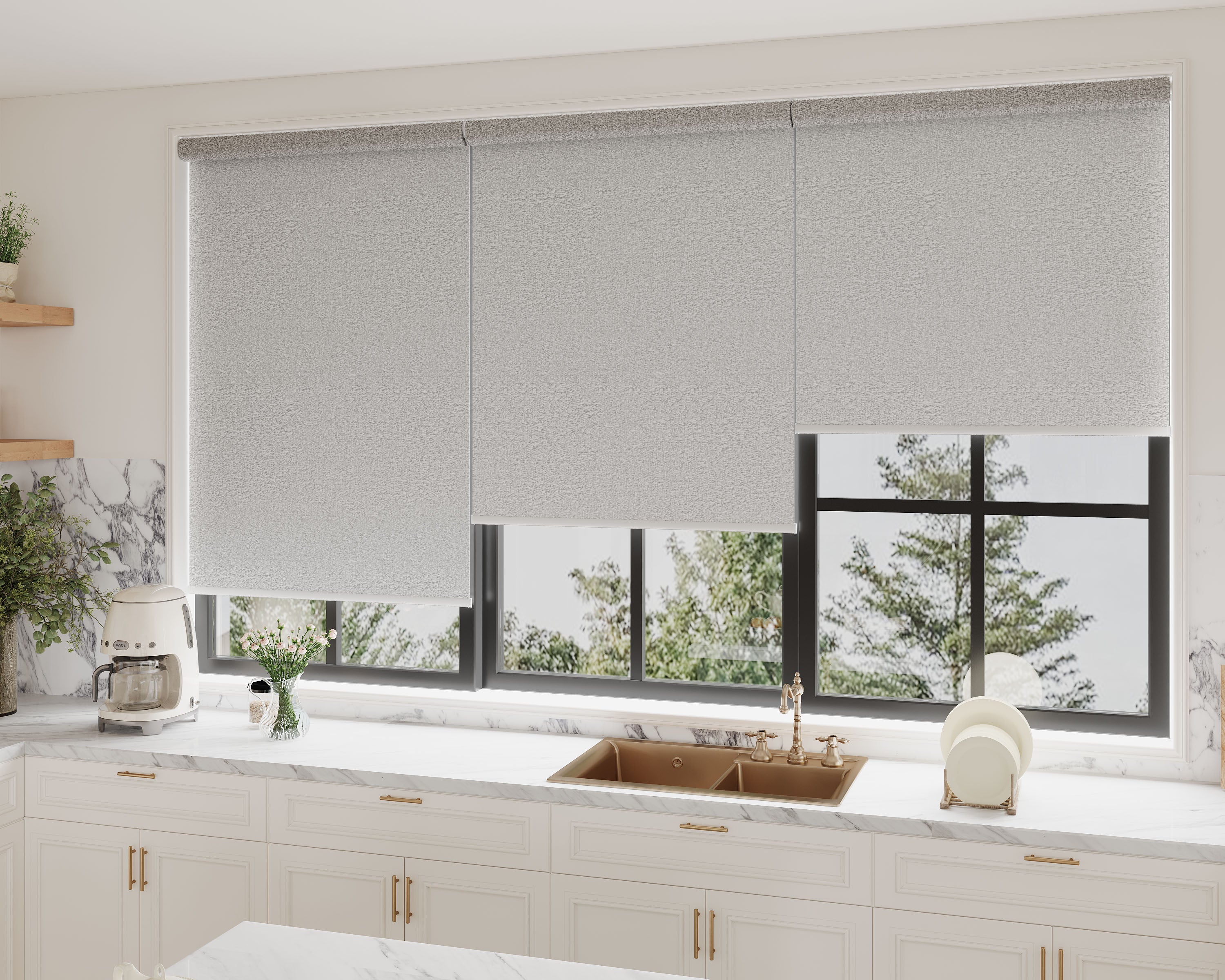

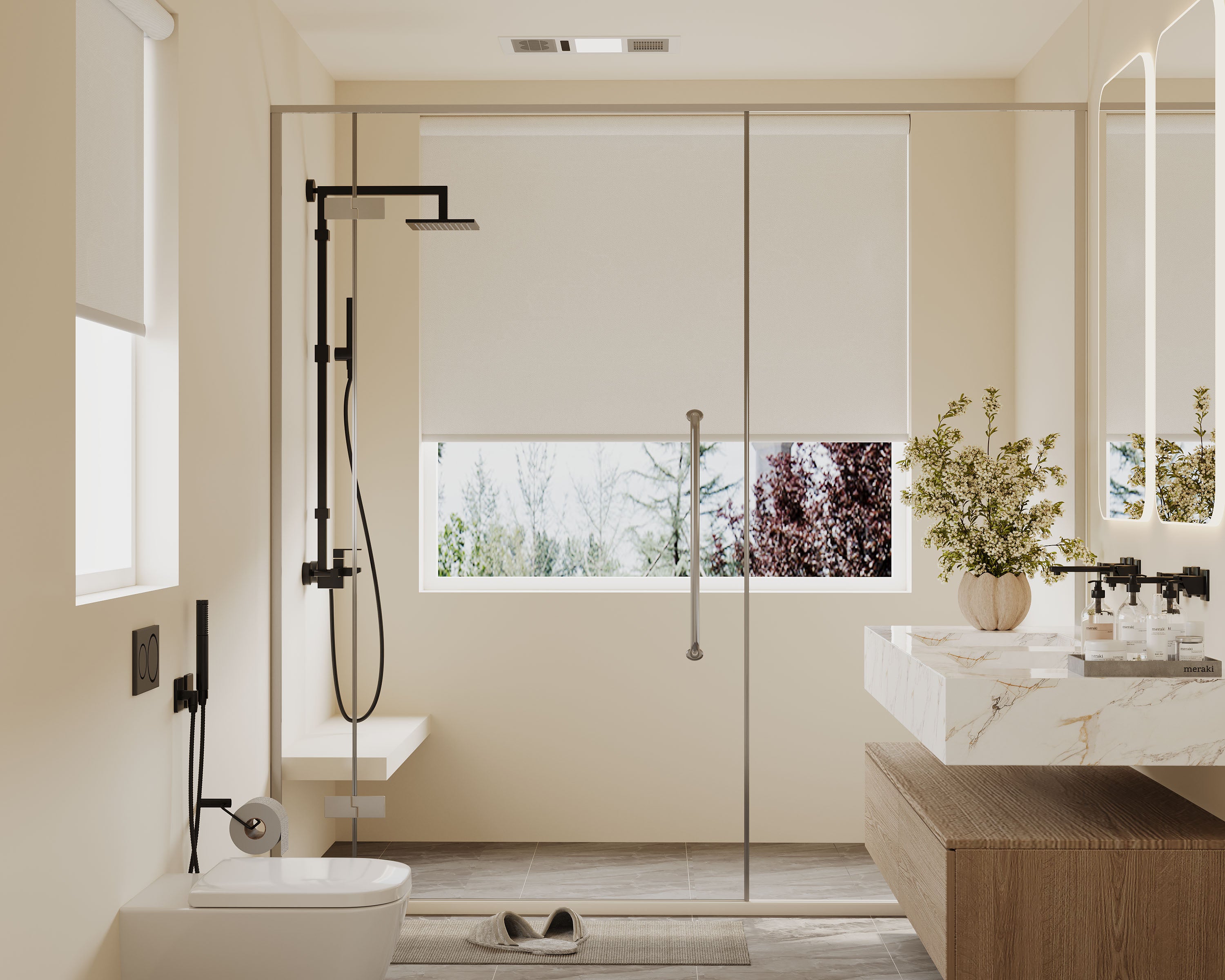


Choose the shade's light-control construction first, then choose its motor and controls. A smart-home integration cannot make a light-filtering fabric blackout, change zebra bands into a cellular structure or make a manual cordless shade remotely operated.
Use motorized shades to compare available configurations. This guide helps choose among the main families; the compatibility checklist addresses the specific motor/controller purchase, while the whole-home planning guide addresses rollout across rooms.
Compare what the fabric does
| Family | Why it may suit the room | Decide before adding controls |
|---|---|---|
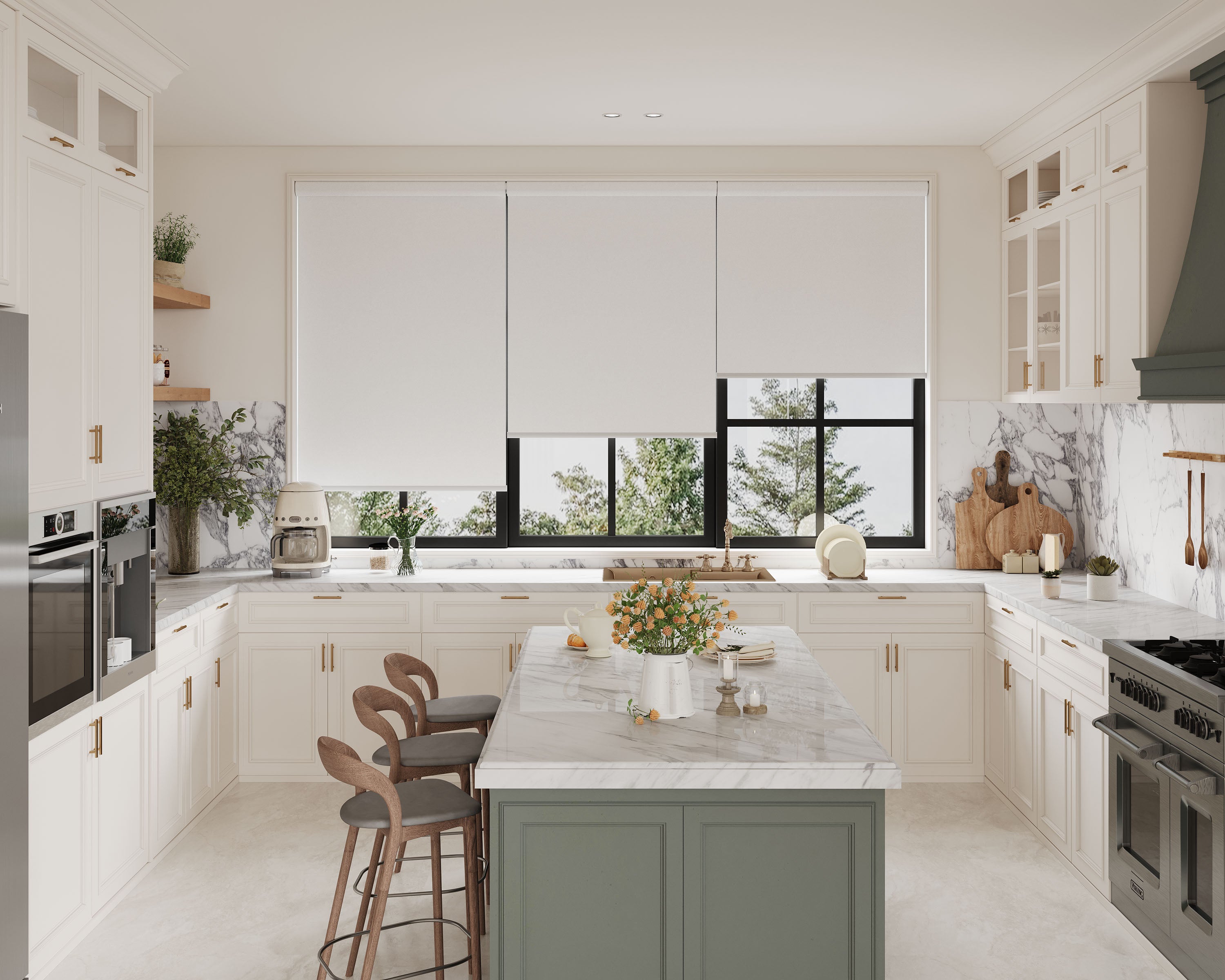
| Roller | A continuous fabric panel and a choice of opacity | Daylight, view, privacy, edge coverage and clearance. |
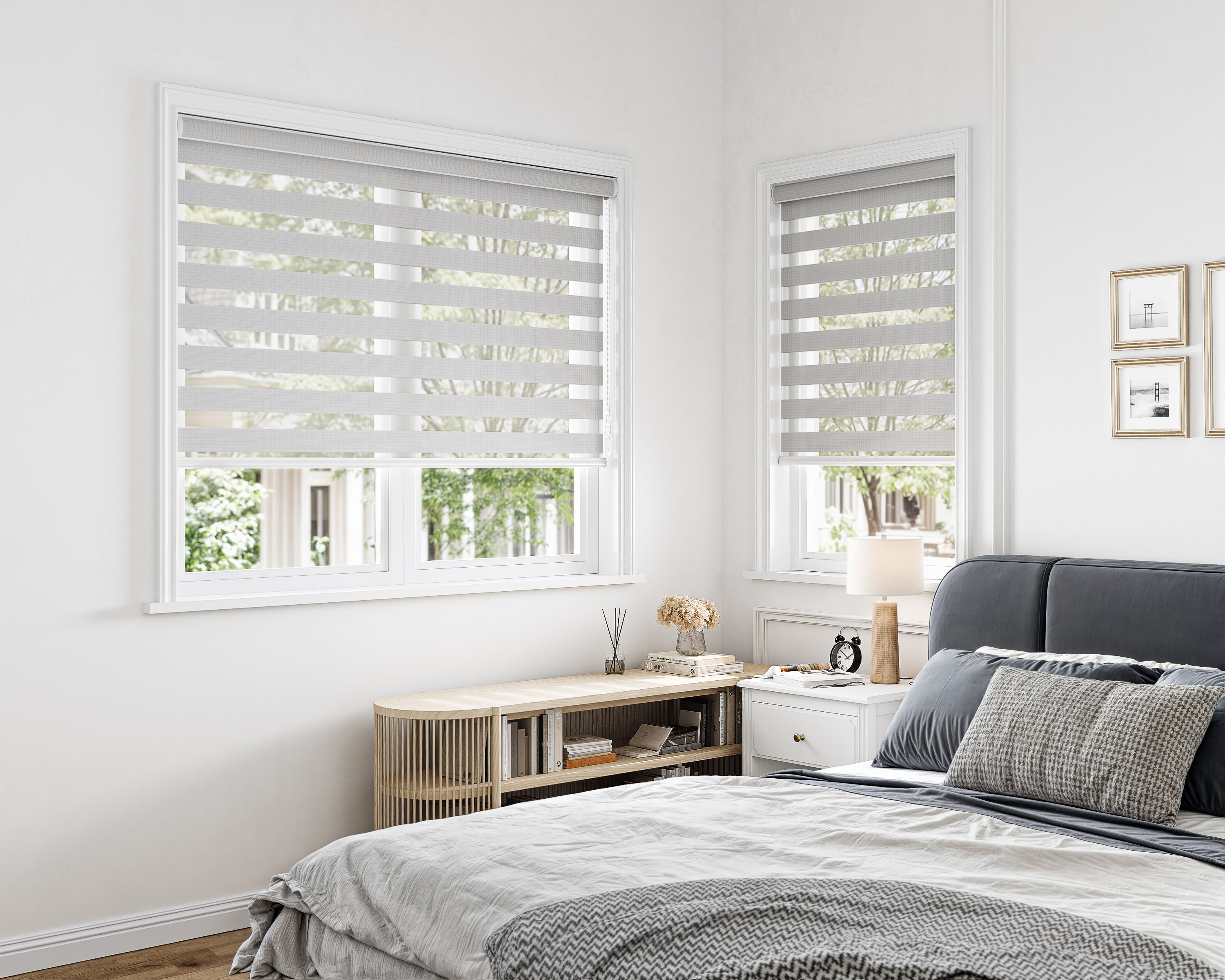
| Zebra | Adjustable solid/sheer band alignment | Nighttime privacy, band appearance and required shade position. |
| Cellular | Air-cell fabric and available opacity choices | Fit, opacity, cell construction and desired movement. |
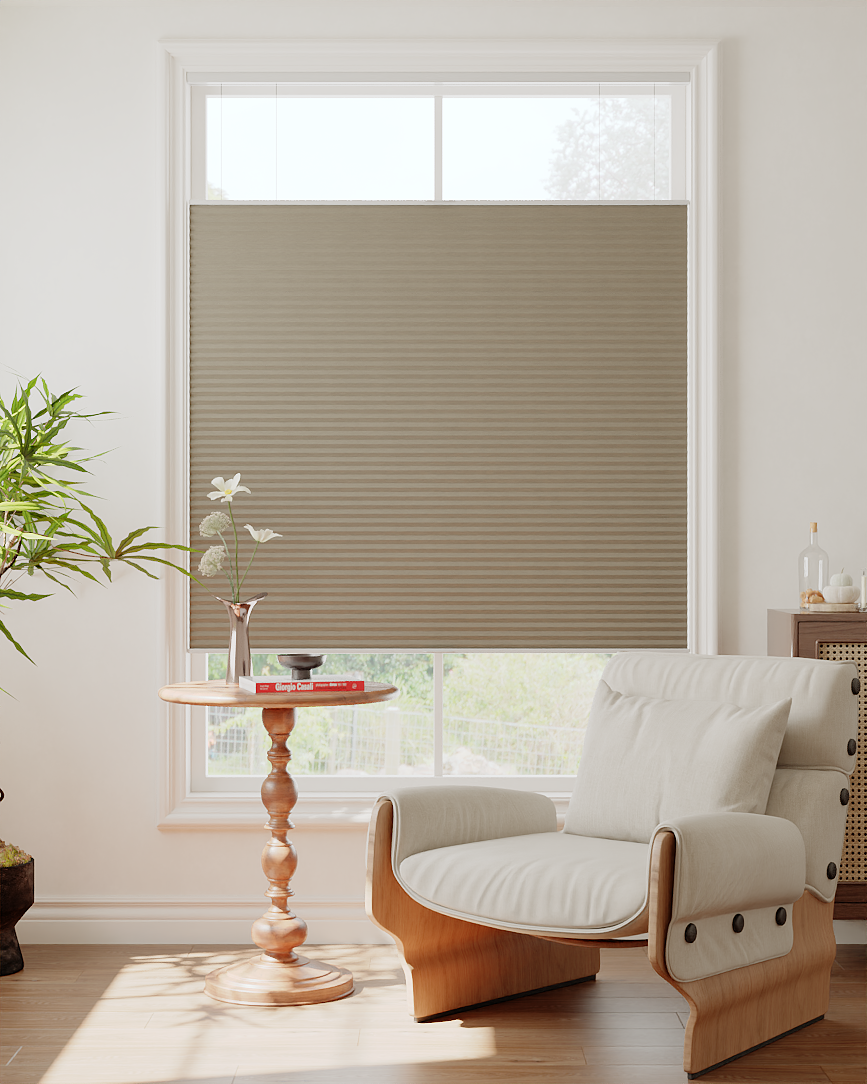
| Top-down-bottom-up cellular | Adjustable upper/lower coverage where supported | Exposed-glass sightlines and which rail movements are required. |
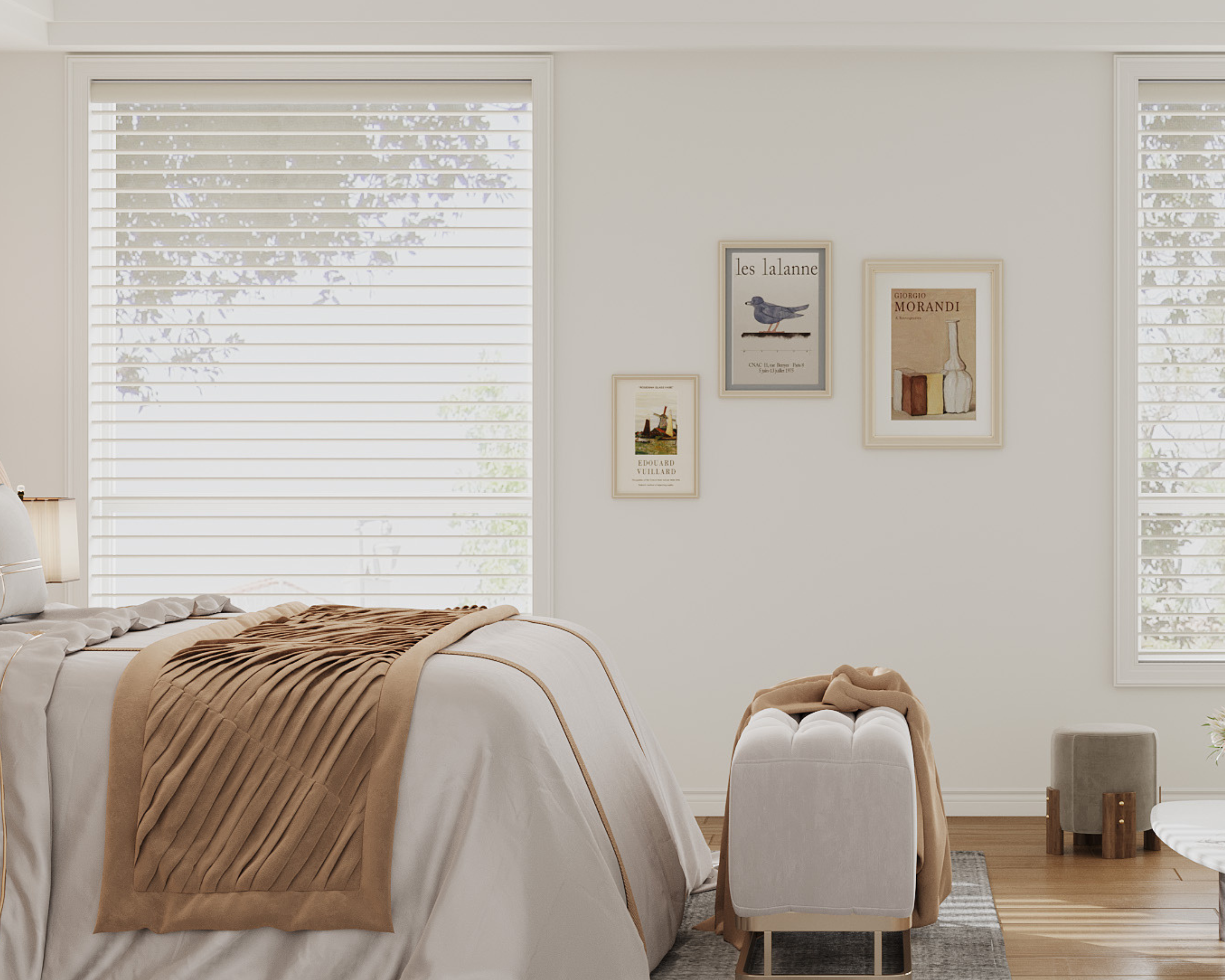
| Day-night cellular | Different fabric sections in one covering | Actual fabric combination and supported movements. |
These constructions have different purposes. A product listing with a manual cordless name does not establish that the same unit is smart-ready. Confirm a supported motorized configuration for the selected size and fabric.
Roller choices for simple fabric coverage
Compare light-filtering rollers when soft daylight is useful and blackout rollers when stronger blocking through the material is needed. Blackout fabric still leaves installation edges to consider.
For a humid room, the standard waterproof blackout roller is a separate material choice within its permitted exposure. It is not proof that a motor, charging point or complete assembly can receive shower water. Establish location suitability alongside the control decision.
Zebra choices for banded light adjustment
Light-filtering zebra and room-darkening zebra listings provide different fabric starting points. Examine the desired band positions and privacy with indoor lights on after dark.
If a favorite-position feature matters, verify whether the chosen motor/controller can return to the band alignment and drop you want. “Motorized” alone does not establish that exact preset behavior.
Cellular choices for opacity and movement
Compare light-filtering cellular and blackout cellular configurations for their actual fabric and supported lifts. Air cells can influence heat transfer, but any thermal or acoustic claim needs evidence for the selected assembly.
Light-filtering top-down-bottom-up and blackout top-down-bottom-up add movement choices where offered. Confirm independent-rail control if that is part of your routine. Opening upper glass does not make it private from elevated sightlines.
Day-night honeycomb and premier day-night honeycomb offer fabric-section choices to investigate. Two opacities and top-down-bottom-up operation are different specifications; do not assume either implies the other.
Match controls after the construction
Write the actions you need: handheld control, grouped shades, app access, voice commands or schedules. Confirm the exact motor, controller and any required bridge for those actions. A shared protocol name does not establish every platform feature.
Also plan power and reach. Charging access at a tall window can matter more than a rarely used app feature. Wired systems need appropriate electrical planning; a manually operated shade is not automatically convertible later.
For homes with young children, use CPSC's cordless guidance and the selected system's instructions. Assess the actual lift instead of treating a family name or automation feature as a universal safety assurance.
Make the quote specific
Record one row per window: dimensions, family, fabric/opacity, movement, lift, controls and power plan. Confirm the available combination and included accessories. Compare the configured total rather than the old entry price of a differently sized manual product.
A small trial installation can help confirm operation and appearance before expanding, where that fits the project. It does not replace checking each remaining opening's dimensions and configuration.
Frequently asked questions
Is one family best for every smart home?
No. Start with each room's light and privacy task. A common controller may coordinate different supported constructions without making their fabrics equivalent.
Does a cordless product automatically connect to an app?
No. Manual cordless and motorized are different lift configurations. Verify the exact offered motor and control components.
Will automation guarantee energy savings?
No fixed saving follows from the motor alone. Fabric, window, climate, fit and operation affect the outcome.
Compare motorized configurations once the family and controls are defined. The useful system is the one that performs the daily actions you need at each window.
