
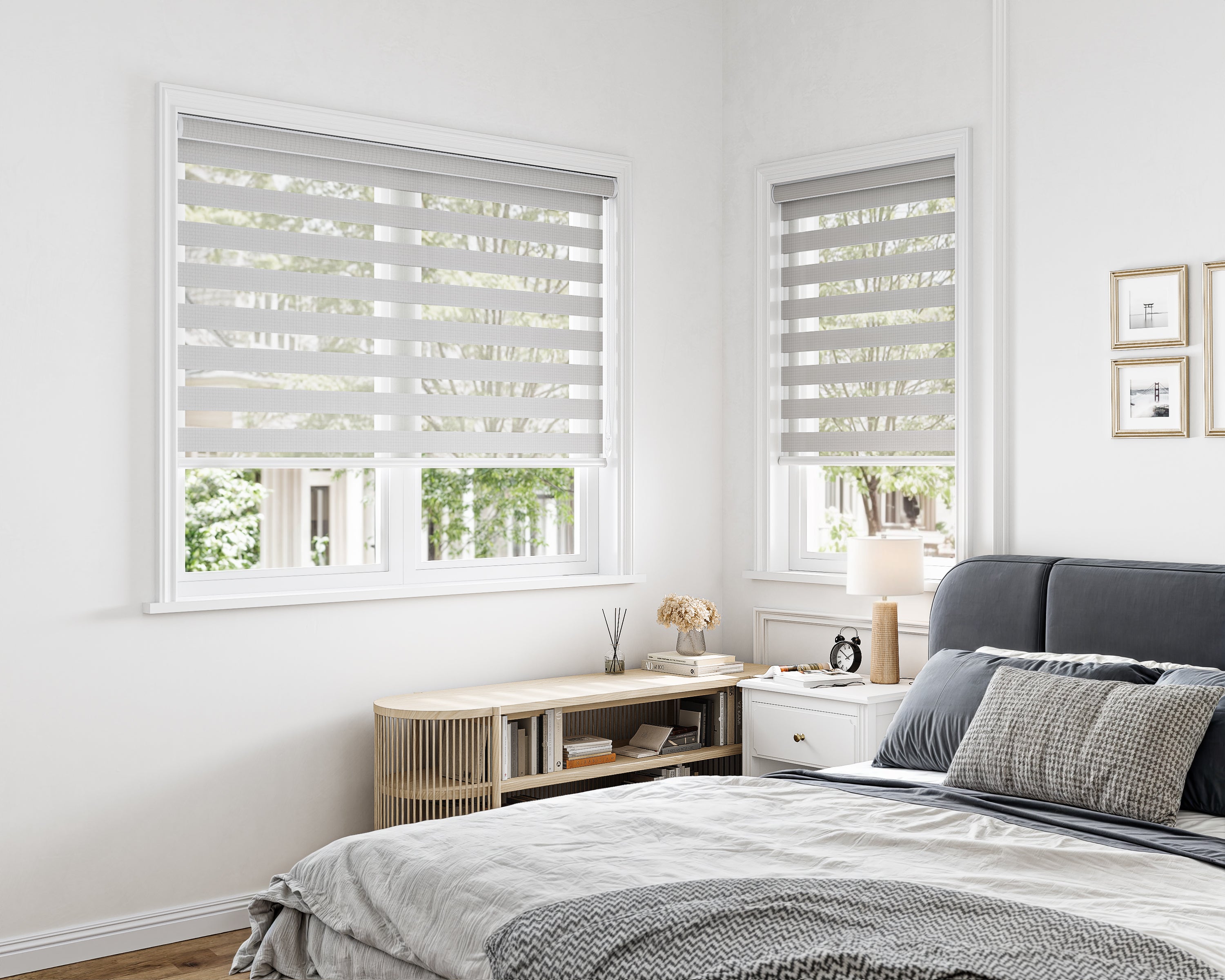
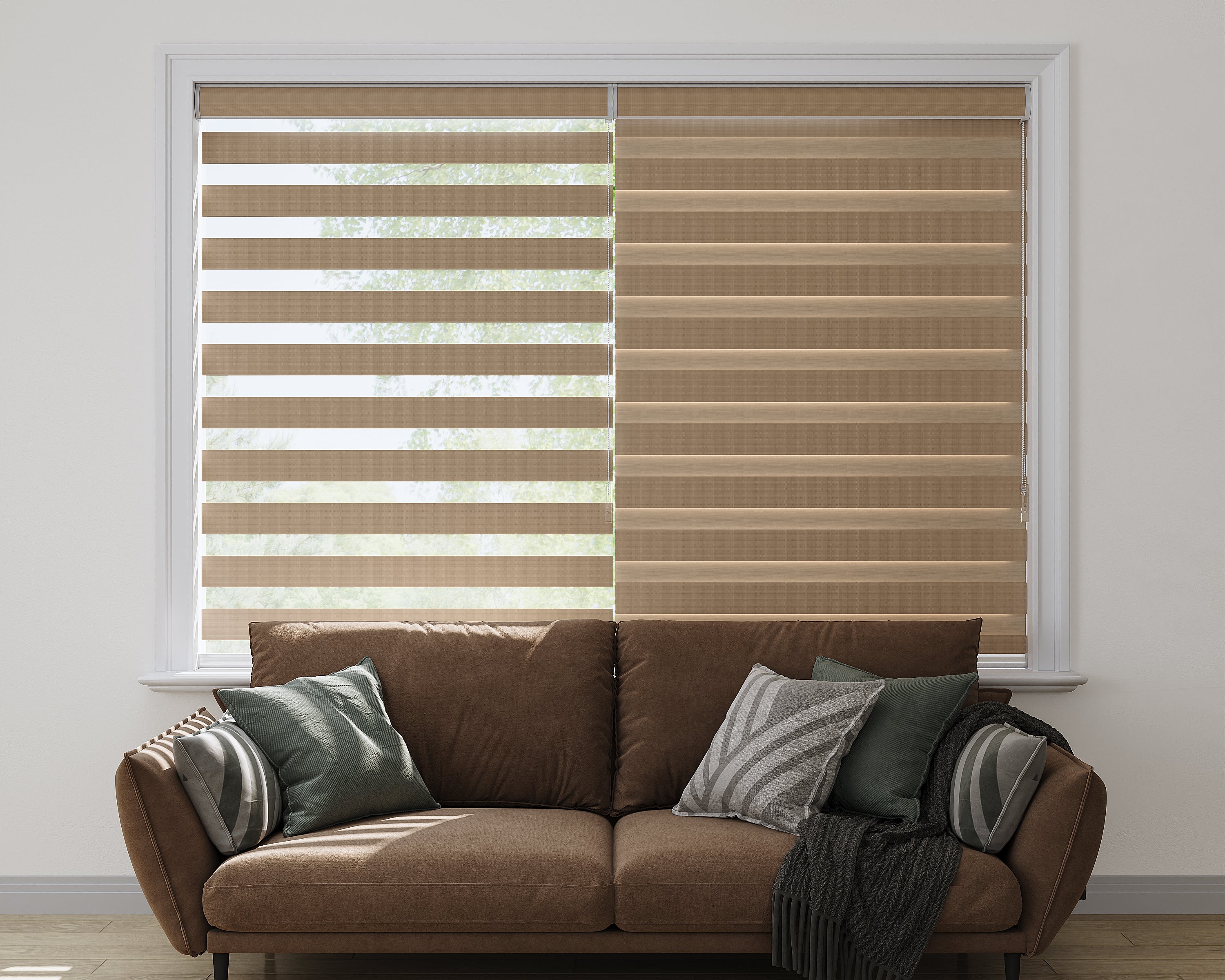







Yes, zebra shades are an excellent choice for nurseries and kids' rooms, provided you prioritize certified cordless safety and select the correct opacity to support sleep routines. Their adjustable light control, streamlined design, and ease of cleaning meet the unique demands of children's spaces. However, their suitability hinges on avoiding common pitfalls: never use corded versions, and understand that standard "room darkening" may not be dark enough for light-sensitive sleepers. For the safest foundations, begin with our collection of child-safe, cordless zebra blinds and shades.
This definitive 2026 guide provides exhaustive detail for parents and caregivers. Here is everything you will learn to create a perfect environment:
-
A thorough analysis of safety standards and certifications you must verify, going beyond "cordless" to ensure full compliance with the latest child safety regulations.
-
A detailed breakdown of light control needs for naps and nighttime, explaining the measurable difference between "room darkening" and true "blackout," and how to achieve darkness with zebra shades.
-
Durability and practicality testing for kid-specific hazards: fabric resistance to sticky fingers, crayons, and frequent cleaning; mechanism strength; and options for motorization to prevent climbing.
-
Design strategies that grow with your child, from soothing nursery neutrals to playful, pattern-friendly options for big kid rooms, all while maintaining a calm sleep environment.
-
Installation and maintenance protocols that ensure long-term safety and performance, including mounting security, ongoing operation checks, and easy-cleaning techniques for common messes.
By the end, you will be able to confidently select and specify zebra shades that are not just beautiful, but are engineered to be safe, durable, and functionally perfect for your child's room.
The Non-Negotiable Priority: Safety Engineering and Standards
In a children's space, safety is not a feature; it is the foundational requirement. Window coverings are a recognized hazard, making your specification choices critical.
Understanding Cordless Safety: It's More Than Just No Cords
A "cordless" label is the bare minimum. True safety involves understanding the mechanism and verifying certifications.
-
Cordless Lift Mechanisms: Modern zebra shades use a spring-assisted clutch system inside the headrail. The shade is operated by gently pushing the bottom rail up or pulling it down. There are no accessible loops, beads, or chains that pose a strangulation risk.
-
Essential Safety Certifications: Look for products tested and certified to the latest standards. In the U.S., this means compliance with the updated ASTM F1004 and CPSC guidelines. Many reputable manufacturers also adhere to the Best for Kids™ certification program, which often includes stricter criteria like force testing on the bottom rail to ensure it doesn't detach. Always confirm the specific standard the product meets.
The Critical Role of Motorization in Child Safety
While cordless manual shades are safe, motorization provides the next level of security and convenience.
-
Eliminates Physical Interaction: A motorized shade is operated by remote, app, or voice command. The child never needs to touch the shade, removing any risk of pulling it down or manipulating the mechanism.
-
Prevents Climbing Temptation: A remote control eliminates the incentive for a curious toddler to climb furniture to reach the shade.
-
Enables Safe Scheduling: You can program naps and bedtimes without entering the room and risk disturbing a sleeping child. This integration with smart routines is a key benefit, as explored in our guide to practical IFTTT automations for self-adjusting shades.
Optimizing Light Control for Sleep and Routines
Children's sleep is profoundly affected by light. Zebra shades offer a unique tool for managing the room's ambiance throughout the day.
The Nap-Time Darkness Challenge
This is the most common functional hurdle. The alternating sheer and opaque bands of a zebra shade mean that even when "closed," micro-seams exist where light can penetrate.
-
"Room Darkening" vs. "Blackout" Reality: A "room darkening" zebra shade may block 85-95% of light, creating a dim "twilight." For many children, this is insufficient for daytime naps when the sun is brightest. A true "blackout" fabric, in the context of zebra shades, typically refers to the material of the opaque band but cannot overcome the design's inherent seam leakage.
-
Achieving Sufficient Darkness: To make zebra shades work for a nursery, you often need a two-pronged approach:
-
Select the Darkest Available Fabric: Choose a zebra shade with a "room darkening" or "near blackout" fabric in a dark color (charcoal, navy, black). Darker pigments absorb more light.
-
Layer with a Dedicated Blackout Solution: For guaranteed nap darkness, pair the zebra shade with a separate blackout roller shade or pull-down blackout liner installed behind it, or use blackout curtains on a separate rod. The zebra shade provides daytime light filtering and privacy, while the blackout layer seals darkness for sleep. The performance gap is detailed in our analysis of lab-tested differences between room darkening and blackout shades.
-
Daylight Management and Routine Cues
Zebra shades excel at creating a soft, wake-up environment.
-
Gentle Morning Light: You can align the sheer bands to allow a soft, diffused glow to enter the room in the morning, providing a gentle, natural wake-up cue that is less jarring than a dark room suddenly flooded with light or an alarm.
-
Playtime & Privacy: During awake hours, you can adjust the bands to provide privacy while still allowing ample natural light for play, which is crucial for mood and development.
Durability, Cleanability, and Practical Performance
Kids' rooms demand products that can withstand real-life use. Zebra shades must be evaluated through this lens.
Fabric Resilience and Cleanability
-
Material Matters: 100% polyester is the only choice. It is inherently stain-resistant, moisture-resistant, and easy to clean compared to natural fibers. Look for fabrics with a soil-resistant treatment that causes spills and sticky fingerprints to bead up on the surface for easier wiping.
-
Cleaning Protocols: The best maintenance is regular dusting with a vacuum brush attachment. For spots, a damp cloth with mild soap is usually sufficient. The horizontal bands can trap more dust than a flat shade, making consistent light cleaning important. Always follow safe cleaning methods for delicate layered fabrics.
-
Color Choice for Hiding Wear: Lighter colors show dust more; mid-tone grays, beiges, or patterns can be more forgiving of everyday smudges between cleanings.
Mechanism Strength and Longevity
-
GSM and Build Quality: Select a fabric with a higher GSM (grams per square meter)—aim for 280 GSM or higher. This indicates a denser, more durable fabric that can withstand occasional poking or pulling from little hands without tearing or deforming.
-
Robust Hardware: Ensure the bottom rail is securely attached and the overall construction feels substantial. A flimsy shade will not survive childhood.
Key Specification Checklist for Kids' Room Zebra Shades
| Feature | Minimum Requirement | Ideal/Enhanced Specification |
|---|---|---|
| Safety Mechanism | Certified Cordless (ASTM/CPSC) | Motorized Operation |
| Fabric Opacity | Room Darkening (95%+) in a dark color. | Paired with a separate blackout solution for naps. |
| Fabric Material | 100% Polyester | 100% Polyester with soil-resistant & antimicrobial treatment. |
| Fabric Durability | 250+ GSM | 300+ GSM for high durability. |
| Ease of Cleaning | Wipeable surface. | Soil-resistant treatment; smooth texture. |
| Control | Manual cordless (push/pull). | Motorized with scheduling for routines. |
Design and Aesthetic Considerations for Growing Spaces
The decor should support a calm environment and have the flexibility to evolve.
-
Nursery (0-2 years): Prioritize calming, neutral colors (soft greys, warm whites, serene blues or greens). The focus is on creating a soothing womb-like environment. Avoid overstimulating patterns on large window surfaces. Simplicity is key.
-
Toddler & Big Kid Rooms (2+ years): You can introduce more personality. Zebra shades work well with themed rooms if the color is coordinated. Consider a bold color on an accent wall with a neutral shade on the window, or select a shade with a subtle, woven texture for interest. The shade itself should be a calming backdrop, not the main source of visual stimulation.
-
Transitional Flexibility: A classic neutral shade (like a warm gray or creamy white) will seamlessly transition from nursery to teen room, outlasting multiple decor changes. This makes it a more sustainable and cost-effective choice over time.
Conclusion: Building a Safe, Soothing Sanctuary
Zebra shades, when correctly specified, become a versatile and valuable component of a well-designed children's room. The decision matrix is clear: safety certifications are paramount, light control strategies must be proactive (often involving layering), and materials must be chosen for real-world durability and easy care.
By investing in a high-quality, cordless or motorized zebra shade and potentially pairing it with a blackout solution, you achieve a balanced environment: a bright, playful space for daytime activity and a dark, serene cave for restorative sleep. This thoughtful approach ensures your window treatment actively contributes to your child's comfort, routine, and safety for many years.
For rooms that also function as a space for parental work, such as a nursery with a desk, the benefits of adjustable light control are similarly valuable, as noted in our guide to zebra shades for home offices.
Key Highlights
-
Safety is absolute: Only use certified cordless or motorized zebra shades; corded versions are unacceptable in kids' rooms.
-
"Room darkening" may not suffice for naps: Pair with a separate blackout layer or choose the darkest fabric available and manage expectations.
-
Durability is pragmatic: Select high-GSM polyester with soil-resistant treatments to withstand messes and frequent cleaning.
-
Motorization enhances safety and convenience: It prevents climbing and allows for easy sleep schedule automation.
-
Neutral colors offer longevity: They create a calm backdrop that can adapt as your child's tastes and room themes evolve.
Explore Custom Zebra Shades


Frequently Asked Questions (FAQ)
Are motorized zebra shades safe for a nursery?
Yes, they are among the safest options. They eliminate all physical cords and prevent the child from interacting with the shade mechanism. Ensure the motor is from a reputable brand, installed securely, and that any remote controls are stored safely out of a toddler's reach. The low-voltage operation is perfectly safe for a child's room.
What if my child pulls or hangs on the bottom rail?
This is a critical consideration. High-quality, safety-certified shades are designed with this in mind. The bottom rail should be securely attached and the mechanism should be tested to withstand a sudden downward force without detaching. This is a key part of modern safety standards. Motorized shades completely avoid this scenario, as the rail is out of reach during operation.
Can I get zebra shades with fun patterns for a kids' room?
While solid colors are most common due to the dual-layer weaving process, some manufacturers offer zebra shades with subtle woven stripes, textures, or jacquard patterns. Loud, printed cartoon characters are rare on genuine dual-layer zebra shades, as the print would be cut off at each band. A better strategy is to choose a versatile solid-colored shade and add pattern and theme through bedding, wall decals, and accessories.
How do I childproof the windows themselves in conjunction with the shades?
Window coverings are one part of window safety. Window locks or guards are essential to prevent the window from being opened dangerously by a child. Ensure furniture is not placed near windows to discourage climbing. The shade should be installed securely into wall studs or with appropriate anchors to support not just its weight, but potential extra force.
