
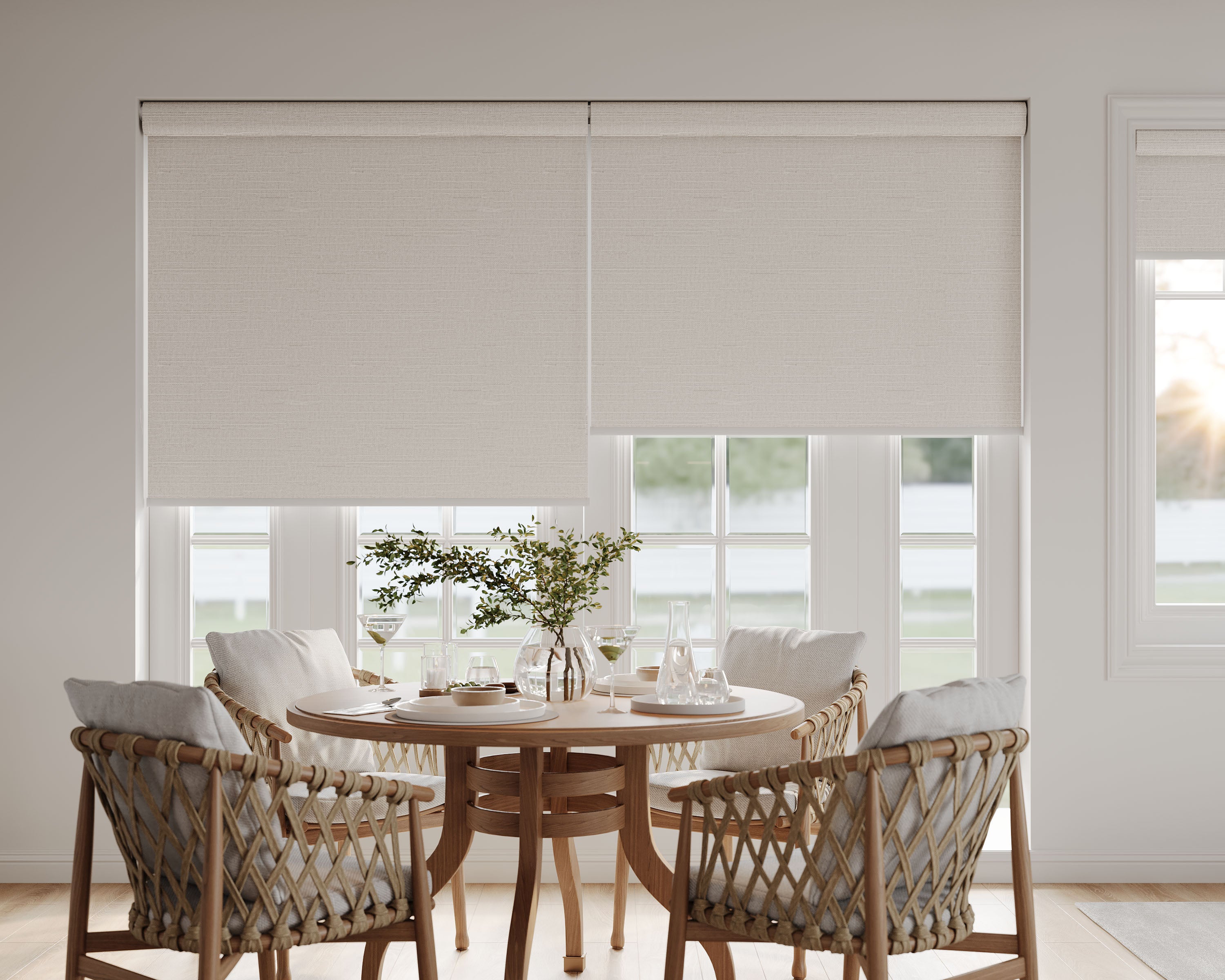


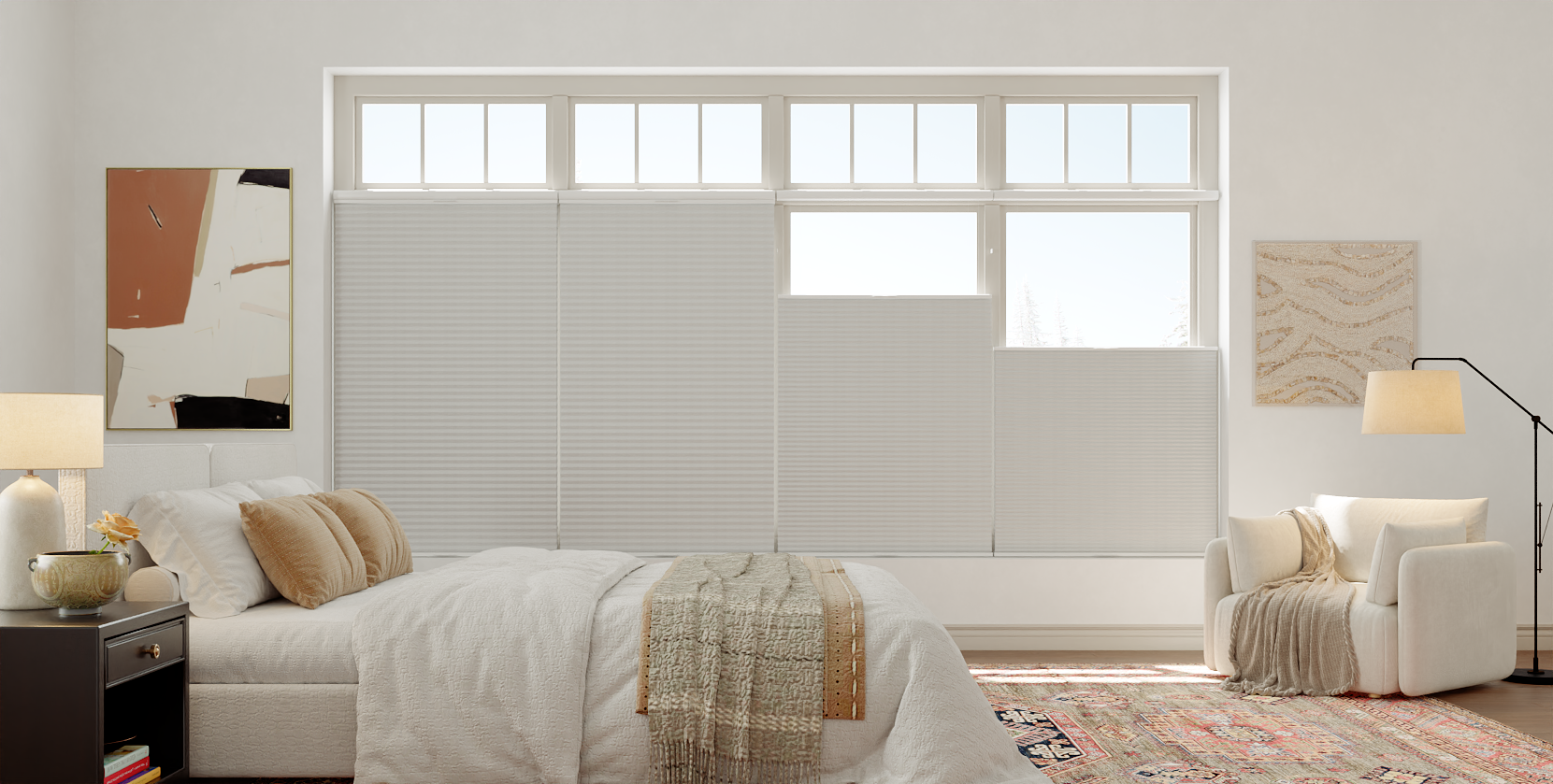


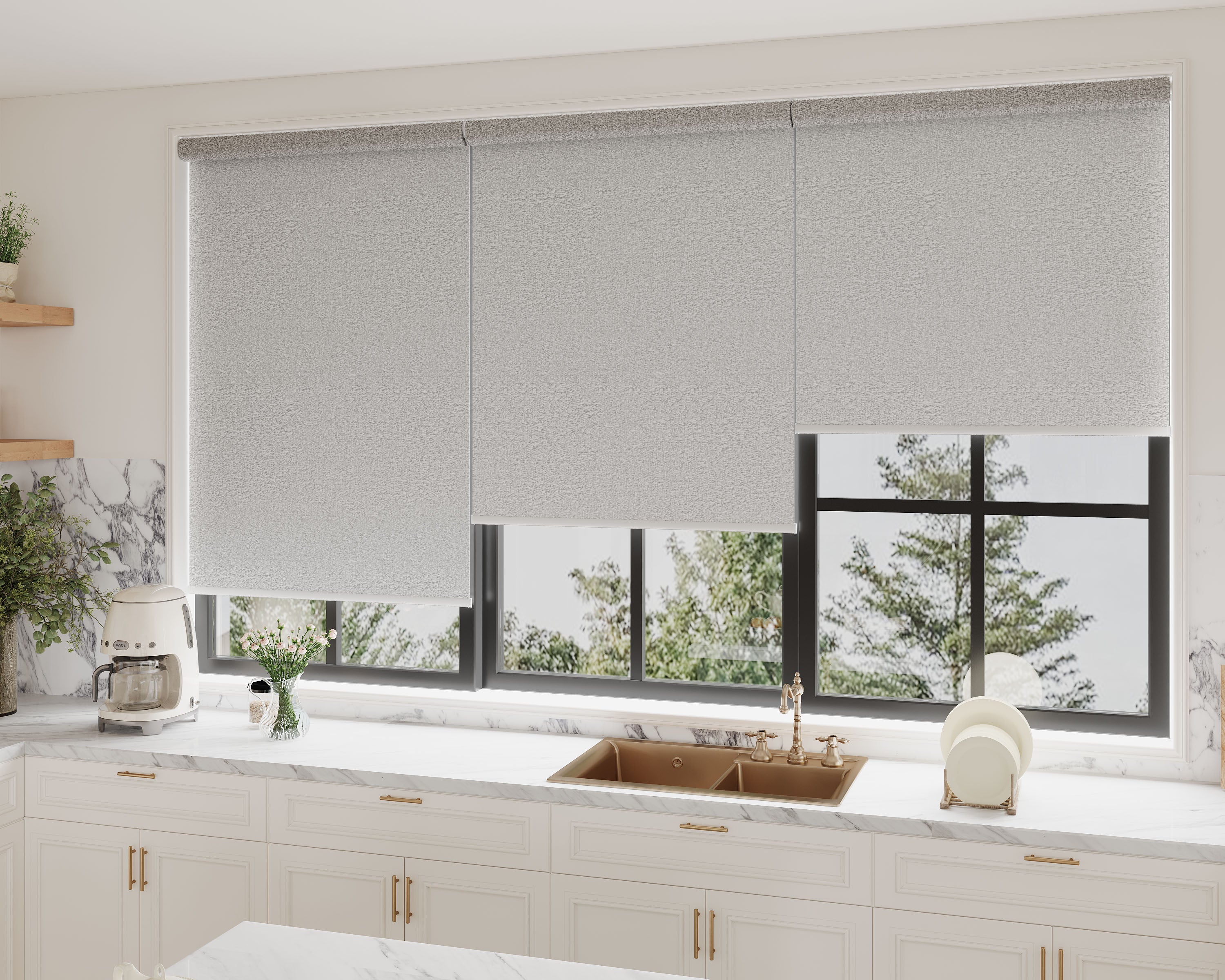



Zebra shade band width changes the visual rhythm across a window. Before choosing a fabric, compare the solid and sheer bands separately, then check texture, opacity and how multiple shades will look together. A larger stripe is not a substitute for selecting the right fabric for privacy.
The current SenseBlinds Room Darkening Zebra Shades page lists seven fabric series with four solid/sheer band combinations. The table below records those listed dimensions; confirm your exact series and color in the final quote.
Separate solid-band and sheer-band dimensions
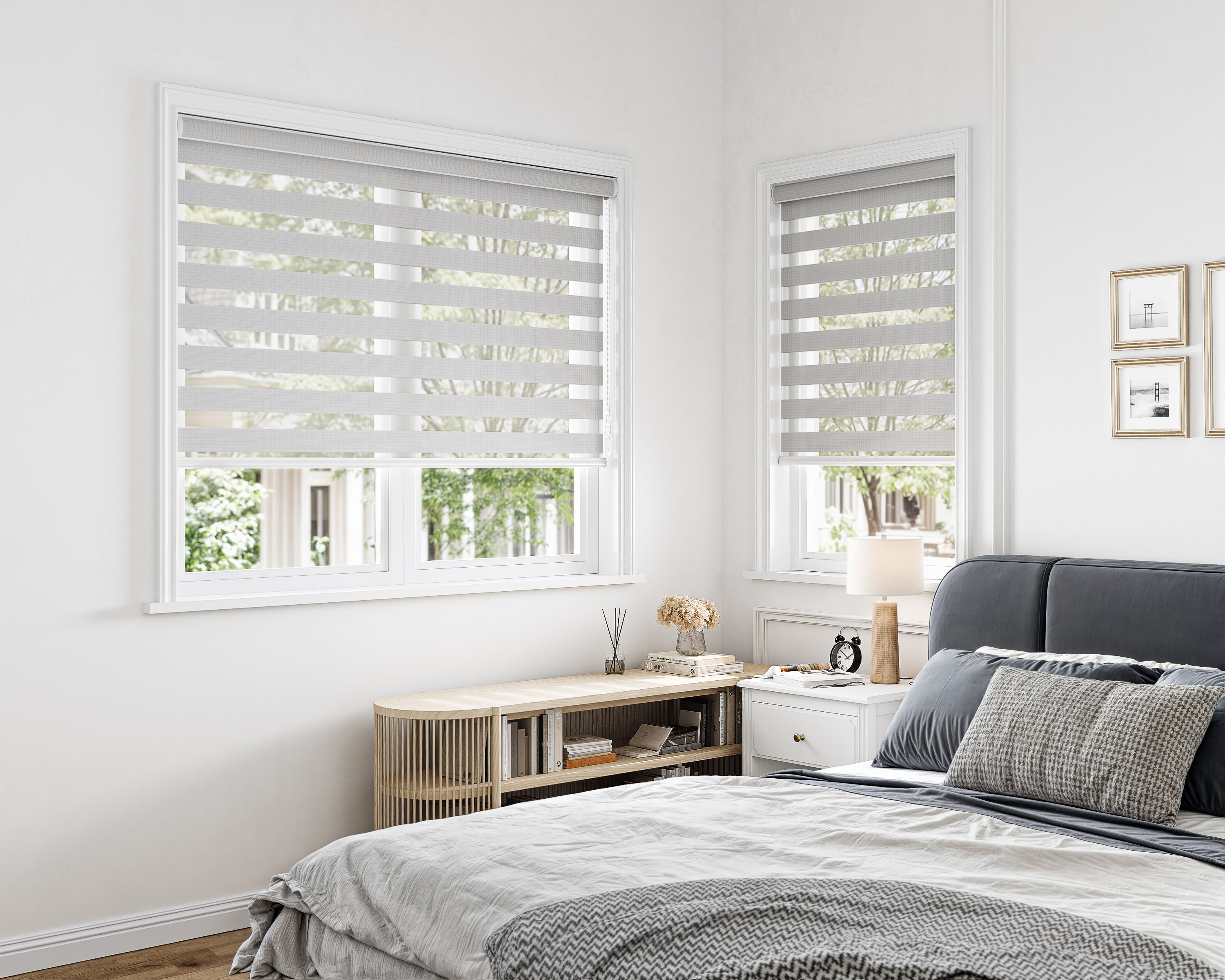
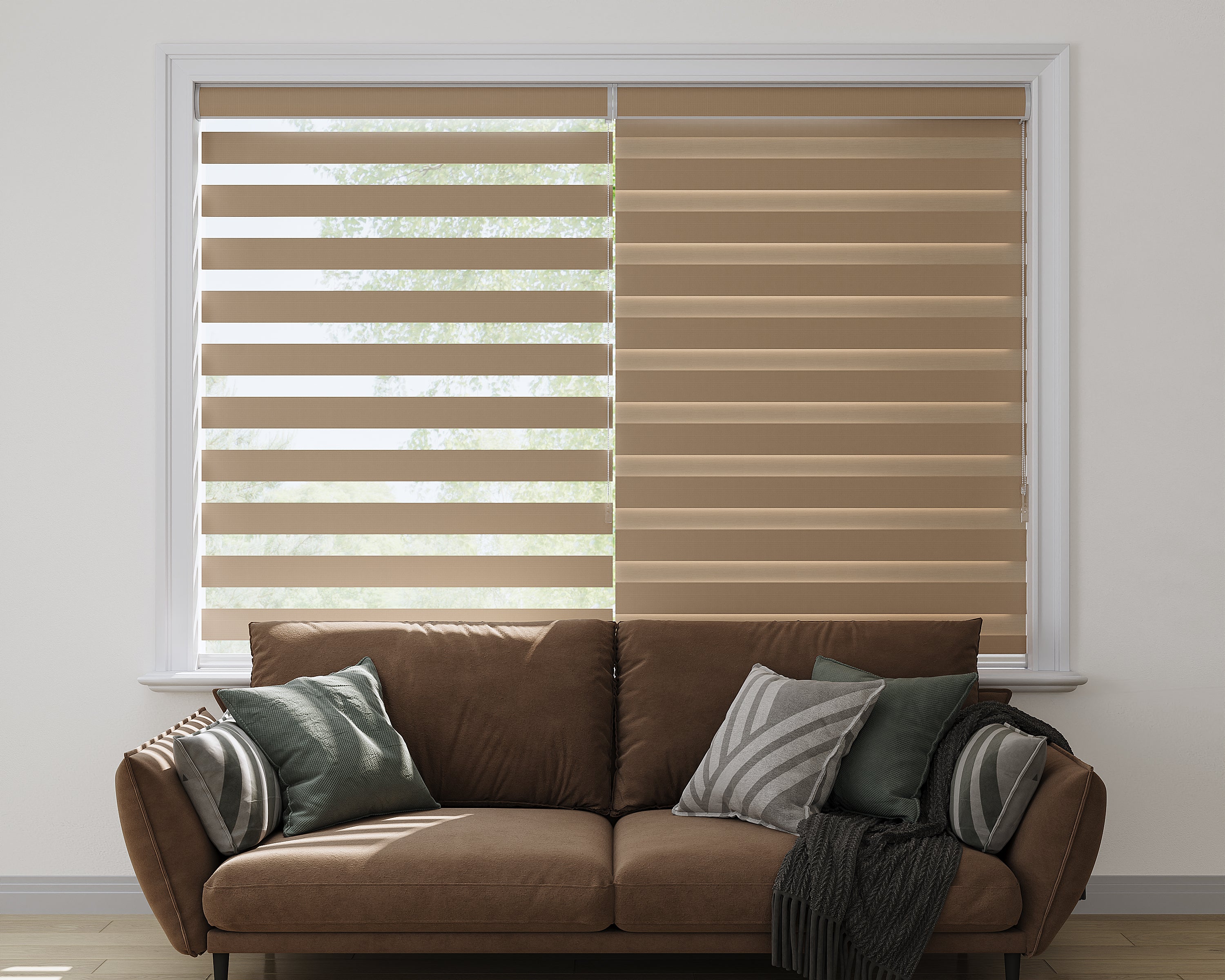
Zebra fabric alternates a solid band with a more open sheer band in two moving layers. Aligning sheer sections lets in filtered light and a view; overlapping solid sections increases coverage. The zebra adjustment guide explains operation after installation. Here, the task is choosing the pattern before ordering.
| Current room-darkening series | Listed solid band | Listed sheer band | Product texture description |
|---|---|---|---|
| BL8 | 3 inches | 2 inches | Fine diagonal weave with a soft sheen |
| BL20 | 3 inches | 2 inches | Heathered horizontal, silk-like appearance |
| BL50 | 3.5 inches | 2.5 inches | Plush, wool-inspired surface |
| BL58 | 3.5 inches | 2.5 inches | Smooth abstract woven texture |
| BL10 | 4 inches | 3 inches | Linen-inspired weave |
| BL46 | 4 inches | 3 inches | Refined weave; Bright White described as matte |
| BL9 | 5 inches | 4 inches | Smooth surface with a soft sheen |
“Three-inch zebra stripe” is an incomplete order description if it leaves out which band is being measured. Keep both dimensions and the exact series code together. Another seller's nominal stripe size does not establish the proportions of the SenseBlinds fabric.
These sizes describe the fabric bands, not the shade width, headrail depth or adjustment increment. Do not use them to calculate finished side gaps or assume a motor will stop only at those intervals.
Compare pattern scale and opacity independently
Smaller bands create a finer repeat across the opening. Larger bands produce broader horizontal blocks. Compare the sample with the surrounding trim, cabinet lines and other horizontal elements, then view it from the distance where you normally use the room.
For a narrow window, ask whether the selected pattern has the visual scale you want. For a broad group of windows, consider how strongly the horizontal rhythm will read across the wall. These are design choices, not measured performance rankings.
The current room-darkening page says most fabrics block approximately 80–90% of incoming light and selected options such as BL9 can exceed 90%. Those are product descriptions, not a guarantee of a dark room. The installed result also depends on color, band position and edge gaps. Wider bands alone do not prove stronger blackout performance.
Check a sample in daytime and with interior lights on after dark. Look at texture and color with the bands in the privacy position. A view through aligned sheer sections is a different operating state; it should not be treated as nighttime screening.
If complete darkness through the fabric is the main priority, compare a blackout roller shade as well. If you prefer adjustable horizontal bands and accept a room-darkening result, keep the zebra format in your shortlist.
Plan adjacent drops and ask about alignment limits
Separate shades do not automatically form one continuous stripe across a wall. Headrail elevations, opening heights, ordered drops, fabric starting positions and operating positions can affect what you see. Two shades ordered at the same height are not, by themselves, a documented pattern-matching service.
Photograph all adjacent openings in one view and label them left, center and right. Measure the top mounting line from a shared reference, then record each opening separately. If one window is shorter or sits higher, make that visible in the request.
Ask whether alignment can be supplied for the selected series and configuration, what the limits are and at which operating position it is intended to align. Do not assume matching is possible both fully lowered and partly raised, or across different drops, without written confirmation.
- Exact fabric series and color for every shade.
- Solid and sheer band dimensions from the selected listing.
- Opening labels, ordered drops and shared mounting-line information.
- Desired alignment state: privacy position, sheer-open position or another stated position.
- Lift, top treatment and control side for each shade.
- Supplier's written availability, tolerances and appearance limits.
Record fabric series and approved size in the order
Keep a per-window specification rather than one note saying “all same zebra.” It should include the window label, raw measurements, final ordered size, fabric/color code, band dimensions, lift, valance/cassette and any approved alignment request.
For example: “Office left and right: BL46 in the same color, 4-inch solid plus 3-inch sheer bands, common headrail elevation. Please confirm whether pattern alignment is available at the closed privacy position for these two drops.” This gives the supplier a specific question to answer.
Browse zebra shade options after deciding the room's light-control needs. Compare the actual series samples, confirm the finished sizes and keep any matching commitment with the order. That connects the pattern you selected with the installation you expect.
