
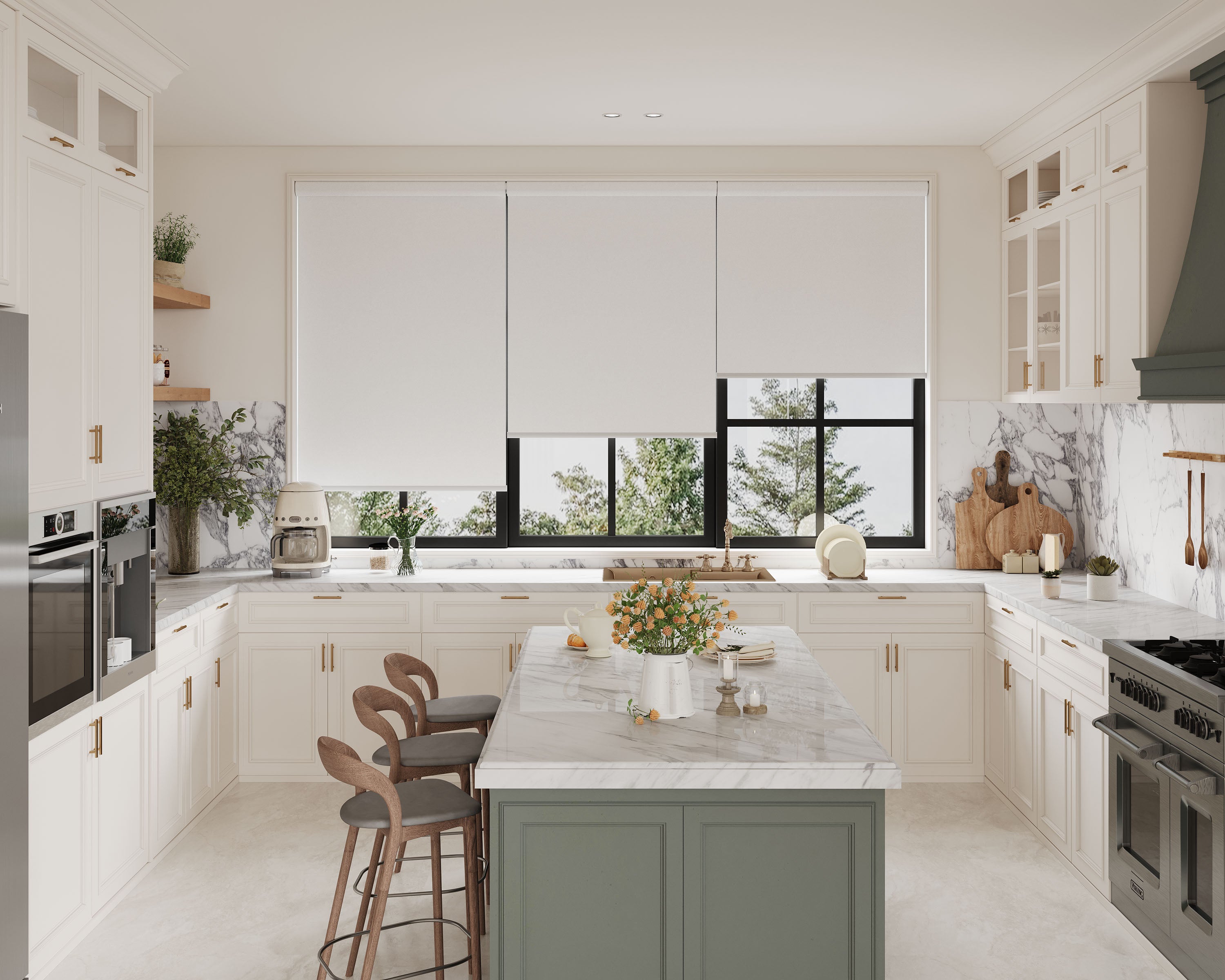
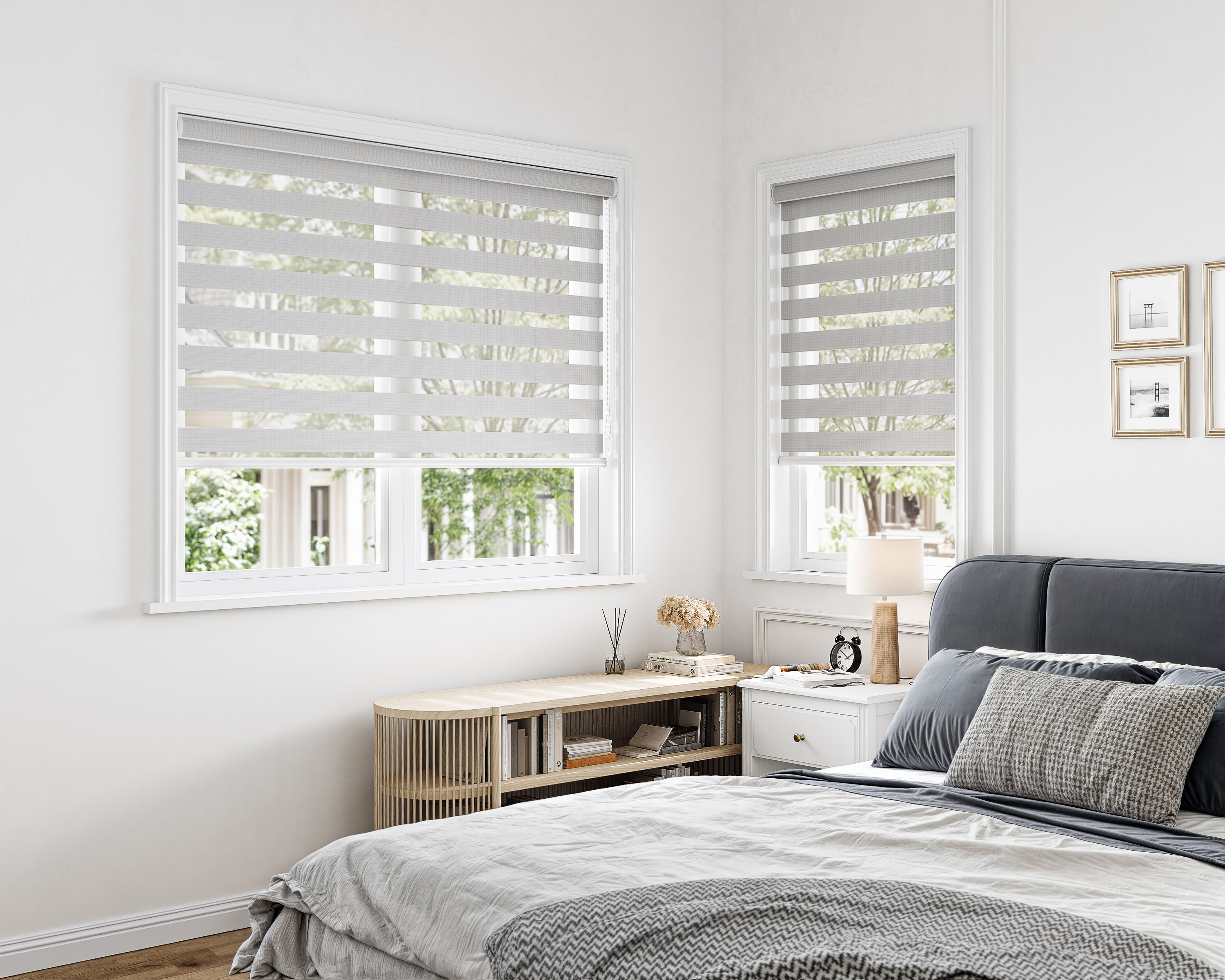
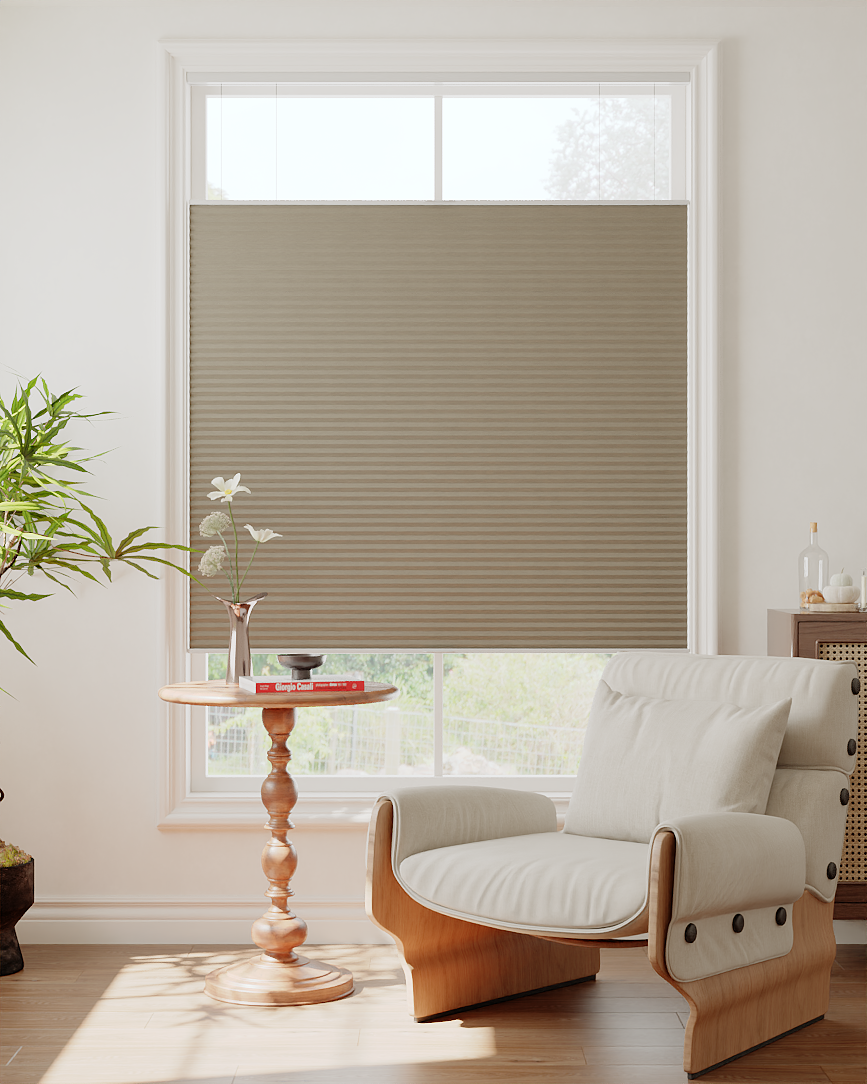
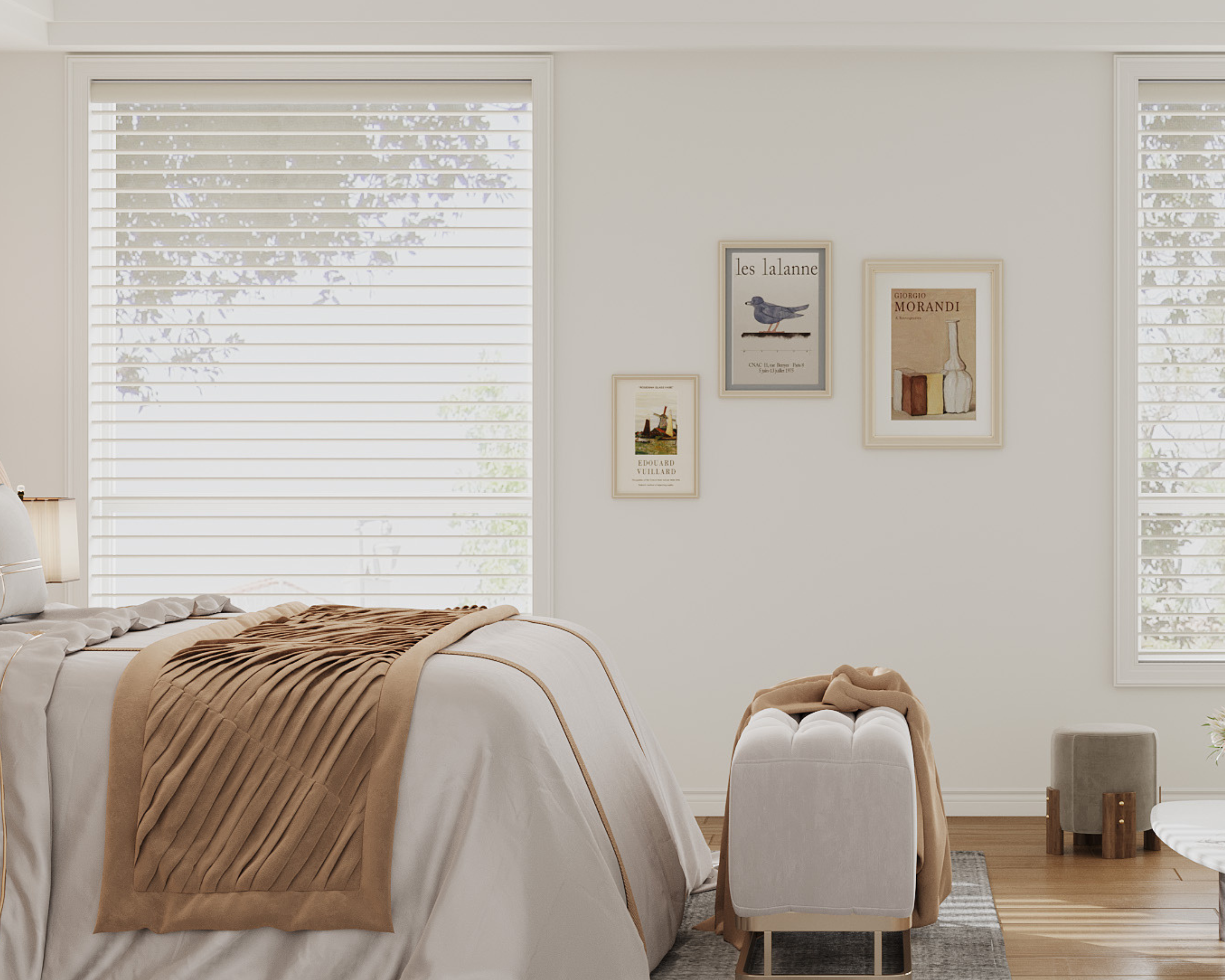
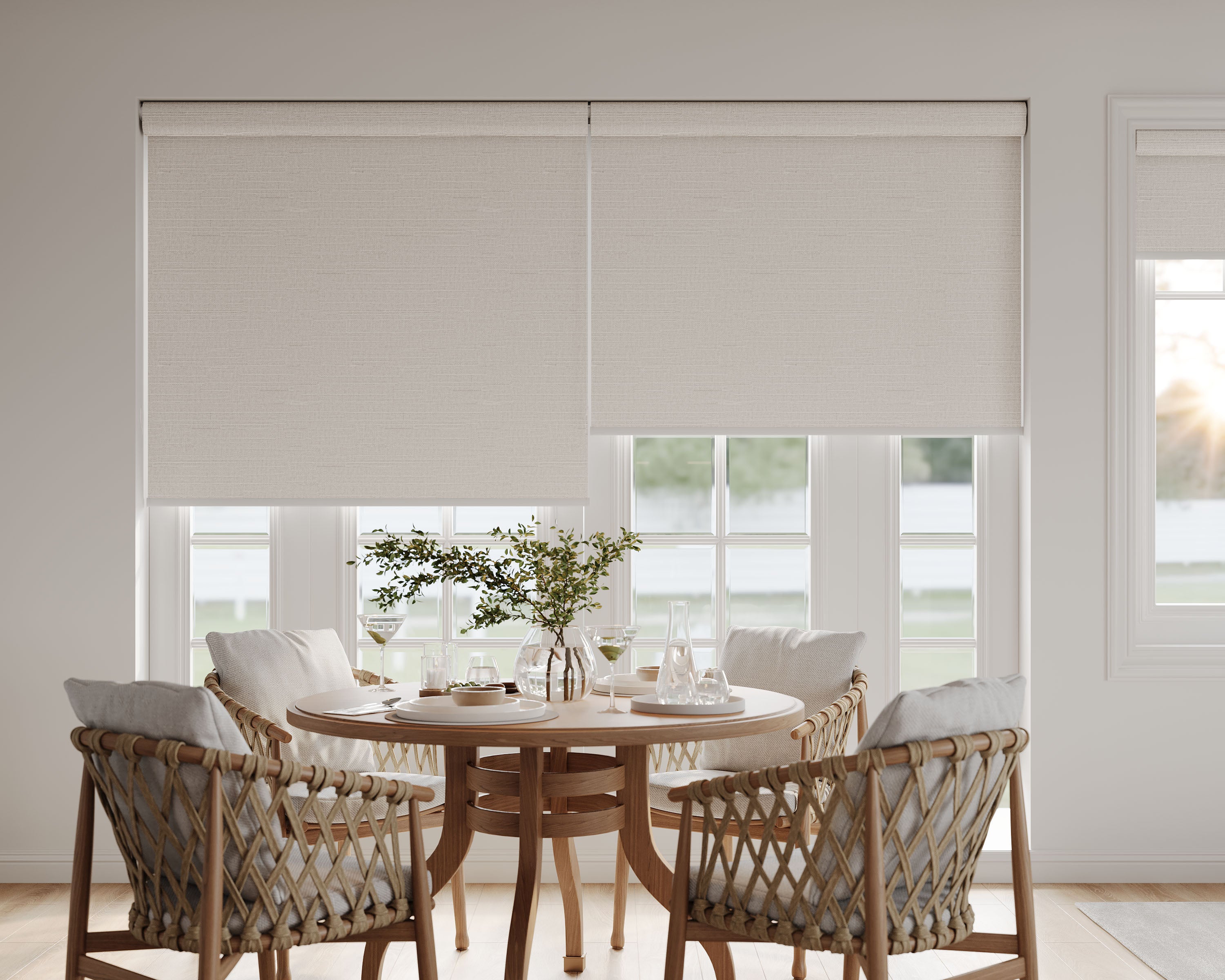


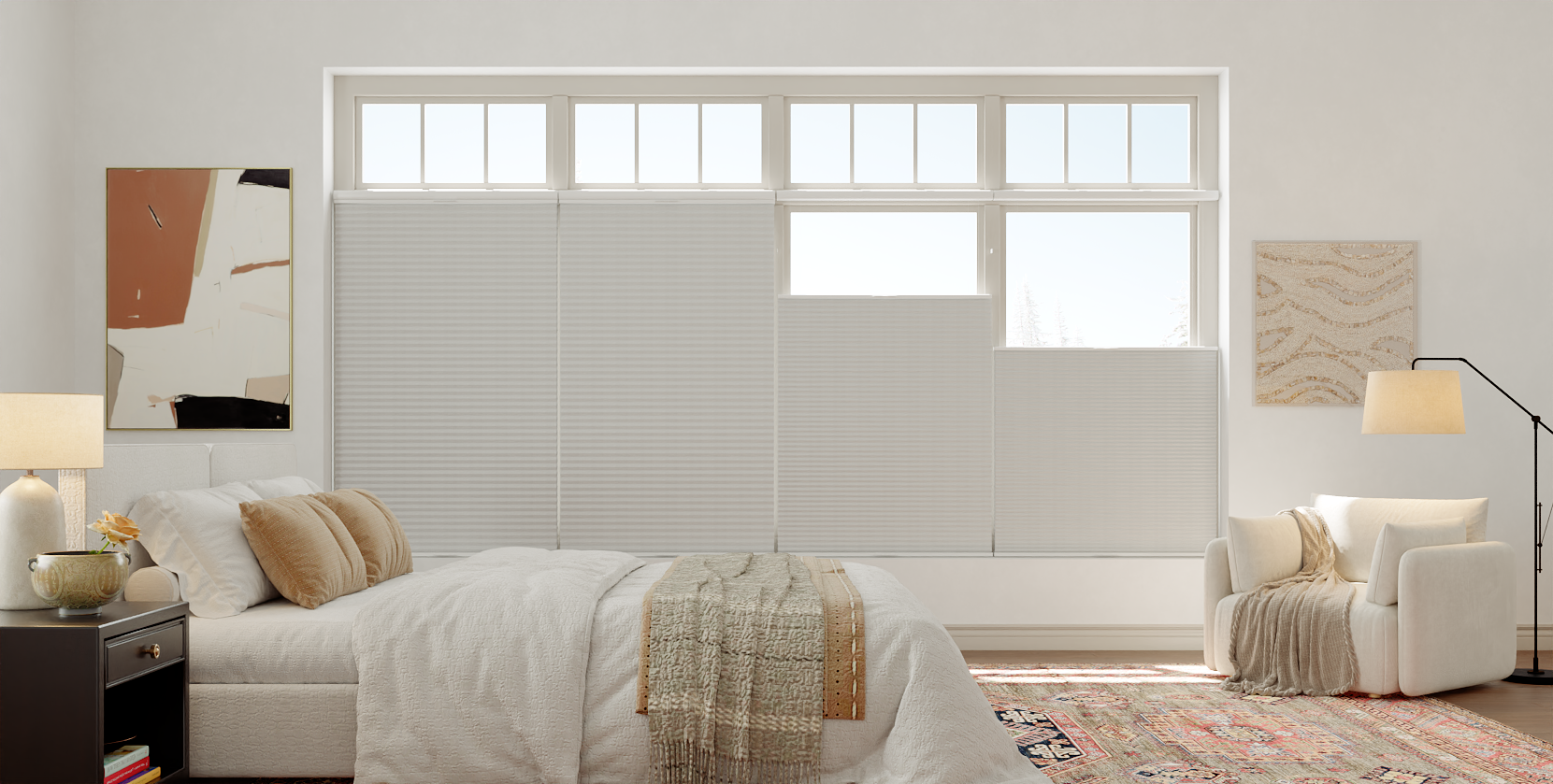


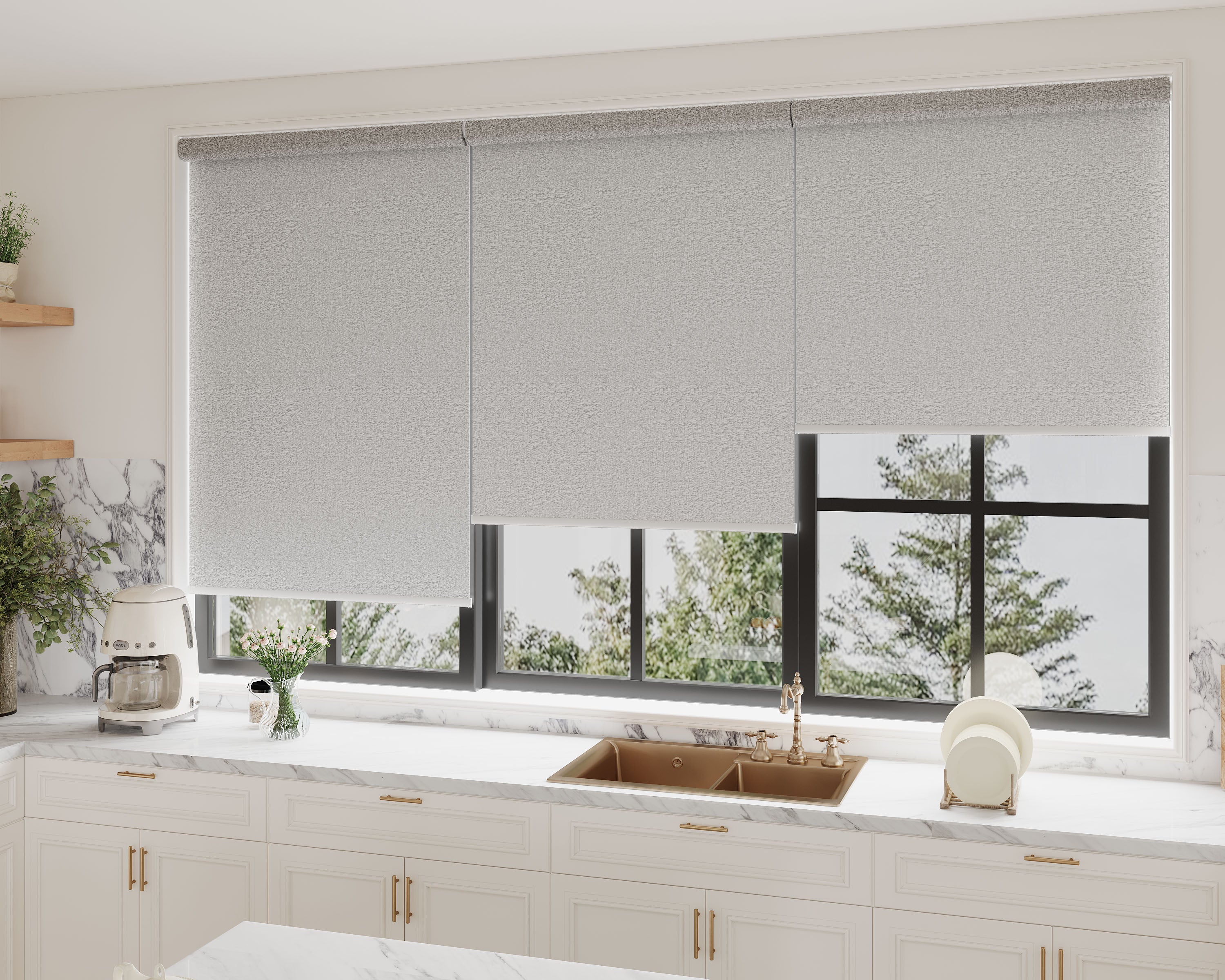

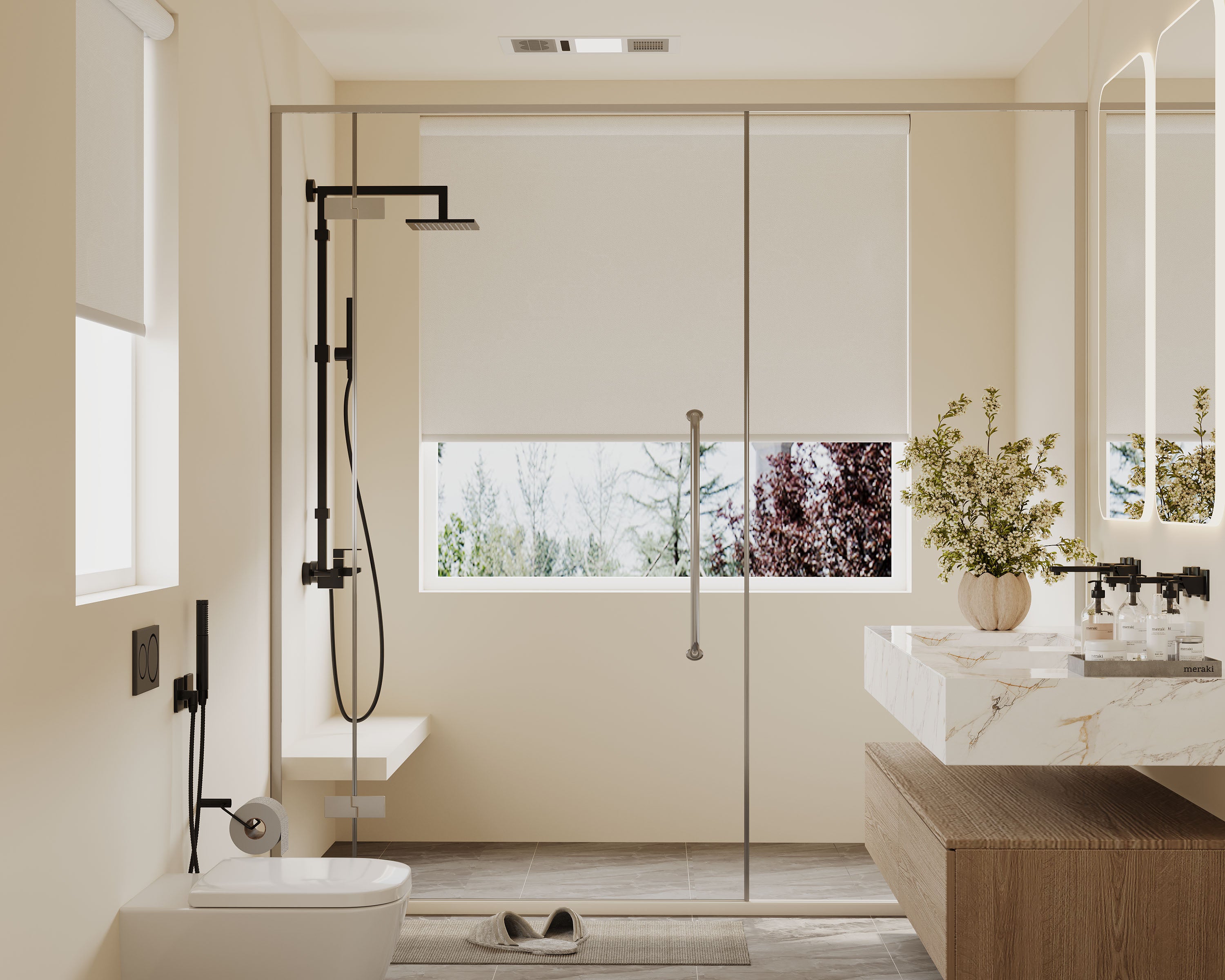


The choice between 2-inch and 2.5-inch sheer-shade vanes starts with the fabric series and the appearance you prefer. Vane width describes the scale of the horizontal fabric elements; it does not, by itself, establish better privacy, greater strength or improved insulation.
The current SenseBlinds light-filtering sheer-shade listing offers 2-inch and 2.5-inch vanes, with the available size depending on the selected fabric series. Treat the fabric code and vane measurement as a pair to confirm. Do not assume that every listed color can be ordered in either size.
Compare vane size and fabric series separately
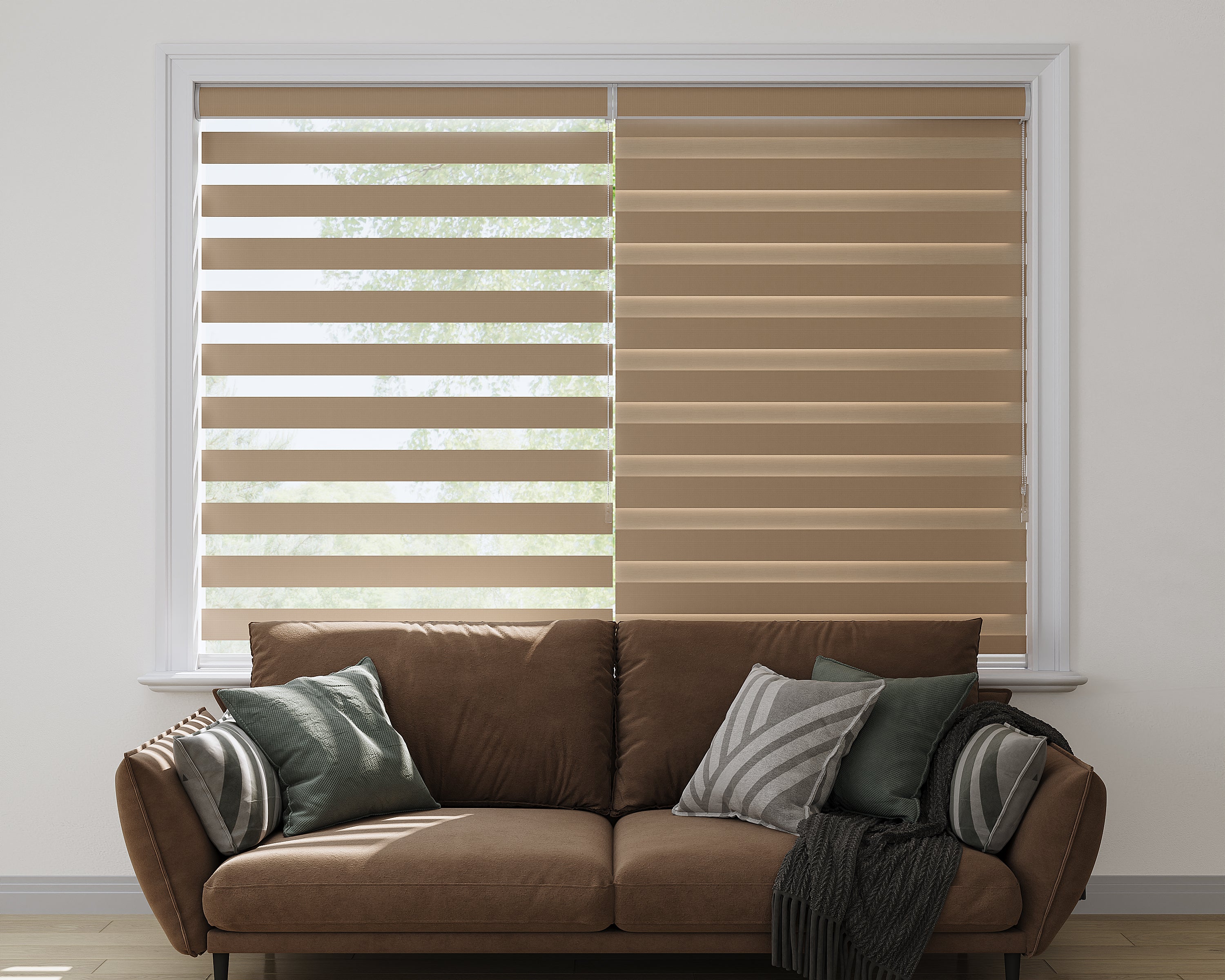
Sheer shades suspend horizontal fabric vanes between sheer layers. With the shade fully lowered, the vanes can open to provide a filtered view or close to screen the direct view. For a broader explanation of that construction, use our sheer-shade basics guide.
A half-inch difference is a change in the scale of each vane, not the finished shade width. A wider-looking horizontal rhythm may appeal on one window, while another room may favor a finer pattern. The useful comparison uses the same viewing position and lighting, with the actual candidate fabrics identified.
| Question | What to compare | What not to infer |
|---|---|---|
| Which scale looks right? | 2-inch and 2.5-inch vane appearance against the window and room | A universal best size for large or small windows |
| Which fabric do I prefer? | Actual series, color and texture | That changing vane width leaves every material property unchanged |
| How is the view when open? | The layered sheer appearance at your usual seated and standing positions | A measured improvement in visibility from the vane number alone |
| How is the room screened when closed? | Selected fabric under relevant indoor and outdoor lighting | Guaranteed nighttime privacy or blackout |
| Will it fit? | Headrail, brackets, moving fabric and clearance drawings | The required mounting depth from the vane dimension |
The product's size range does not provide a complete series-to-size map. Ask SenseBlinds to confirm the vane measurement for your exact fabric code in writing. That is more useful than choosing from a generic image labeled only “sheer shades.”
Assess the open view and closed appearance
Choose one window as the comparison point. Note its width and height, the distance from the main seat and whether people usually see it straight on or from an angle. Compare the horizontal pattern against nearby shelves, trim or other repeated lines without assuming it must match them.
If existing samples are available for the selected series, examine their color and sheer layers in the room. A loose sample is useful for texture and light, but it cannot demonstrate the complete mechanism, finished stack or full-window view. Ask for existing product imagery or configuration information when a physical sample does not show the moving vane arrangement.
Keep the shade's open setting separate from raising it. The current light-filtering listing says the shade must be fully lowered before its vanes open, and that the vanes tilt downward. It does not support a plan in which the shade is partly raised while the vanes remain open. Use the selected product's supplied operating instructions.
Check privacy without ranking it by vane width
Write down the room's privacy task before choosing the pattern. For a living area, screening a daytime view may be enough. A guest room used after dark may require a more opaque treatment or an additional suitable layer. Test the intended fabric and coverage under the lighting that matters.
Closing the vanes changes the view through the shade, but light-filtering fabric continues to admit light. Vane width alone does not tell you what an outside observer can see. Also check side gaps and sightlines above or below the covered area.
If reduced light is the priority, compare the actual room-darkening sheer-shade configurations. Keep fabric opacity and vane width as separate choices. Do not call a light-filtering 2.5-inch vane “more private” than a 2-inch alternative without evidence for those exact materials and conditions.
Confirm headrail and movement clearances
Record the usable opening depth, window handle projection and any trim that may meet the shade. Obtain the headrail and bracket dimensions for the selected fabric, lift and finish. Ask where the moving fabric sits when the vanes open; the vane measurement is not a substitute for that drawing.
For adjacent windows, record each opening separately. Matching fabric codes and vane sizes does not guarantee horizontal alignment between independently made shades. If matching the visual lines matters, ask what can be confirmed for the particular order and mount before purchase.
Finally, choose the lift by the configuration actually offered. The current product body describes chain-loop and motorized arrangements. The hardware title or a broad category label should not be used to promise an unconfirmed cordless configuration. A smart motor requires its own supported control path and any separately needed accessories.
Use a complete configuration record
Before ordering, record the product, series and color code, confirmed vane width, mount, headrail finish, lift, raw measurements and any privacy or clearance requirements. Ask the supplier to mark which details are confirmed and which still need a drawing or sample comparison.
Browse current sheer-shade options with that record. Choose the horizontal scale you like, then verify the exact fabric and mechanical fit. That gives the half-inch comparison a practical purpose without attaching unsupported performance claims to the wider vane.
