
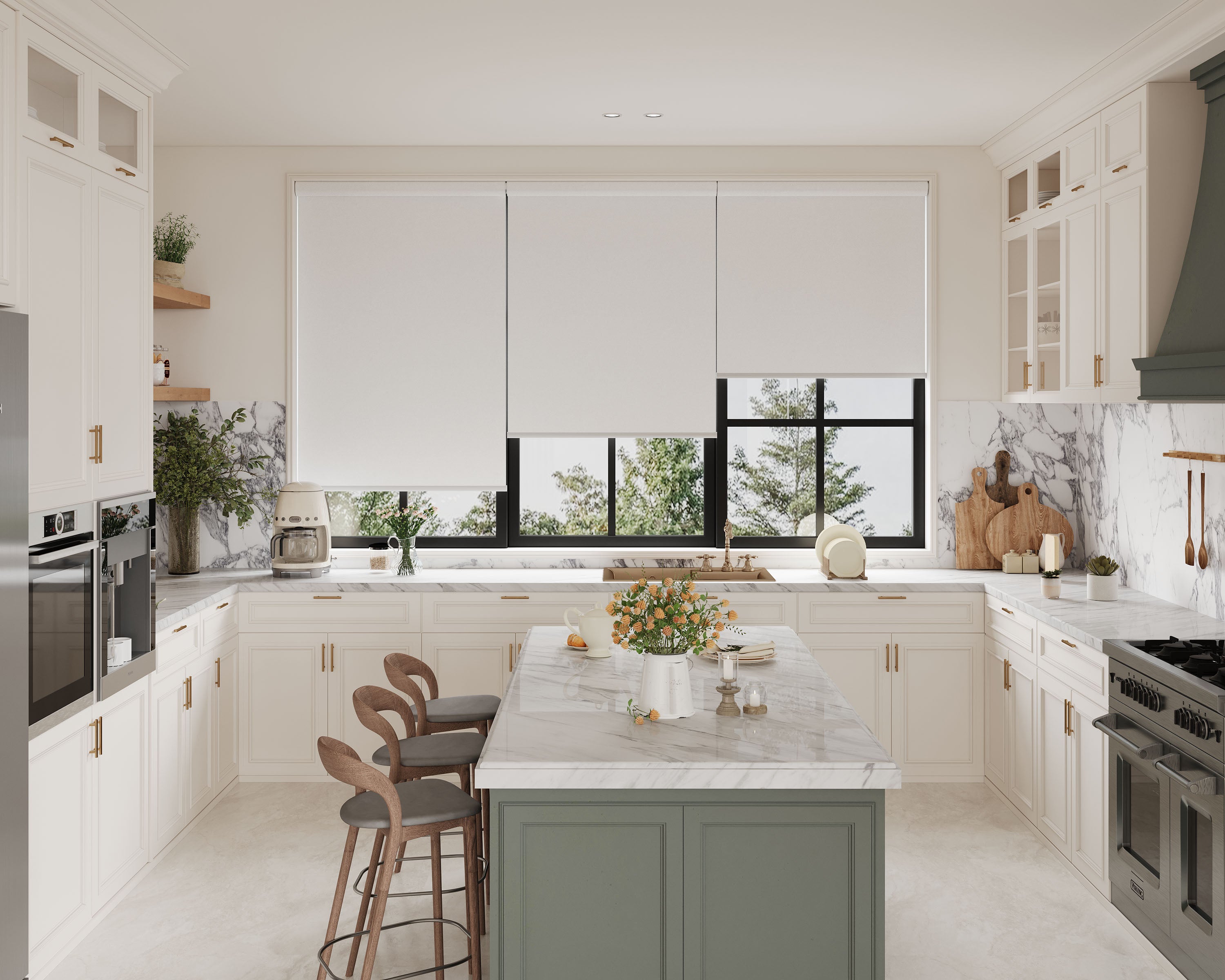
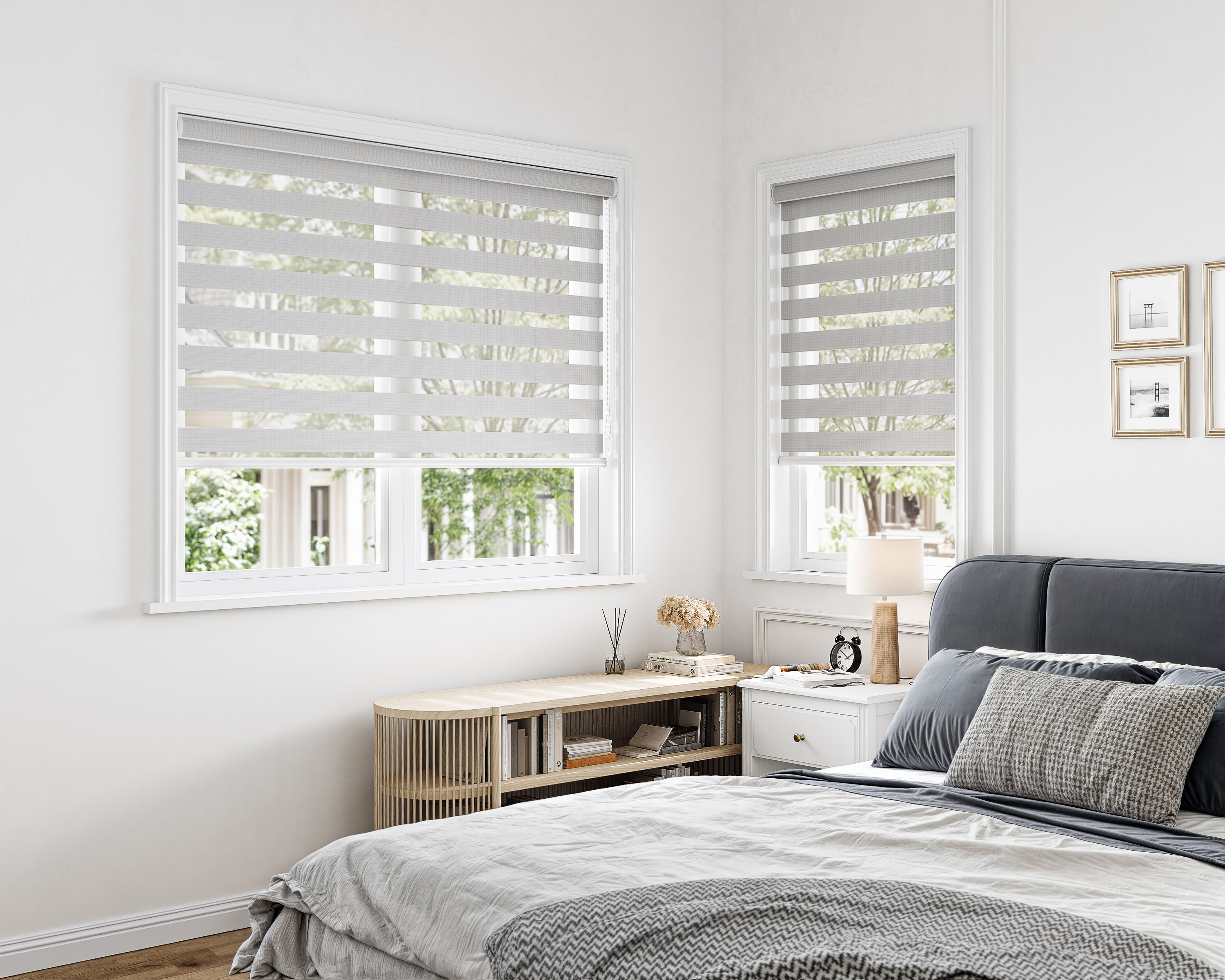
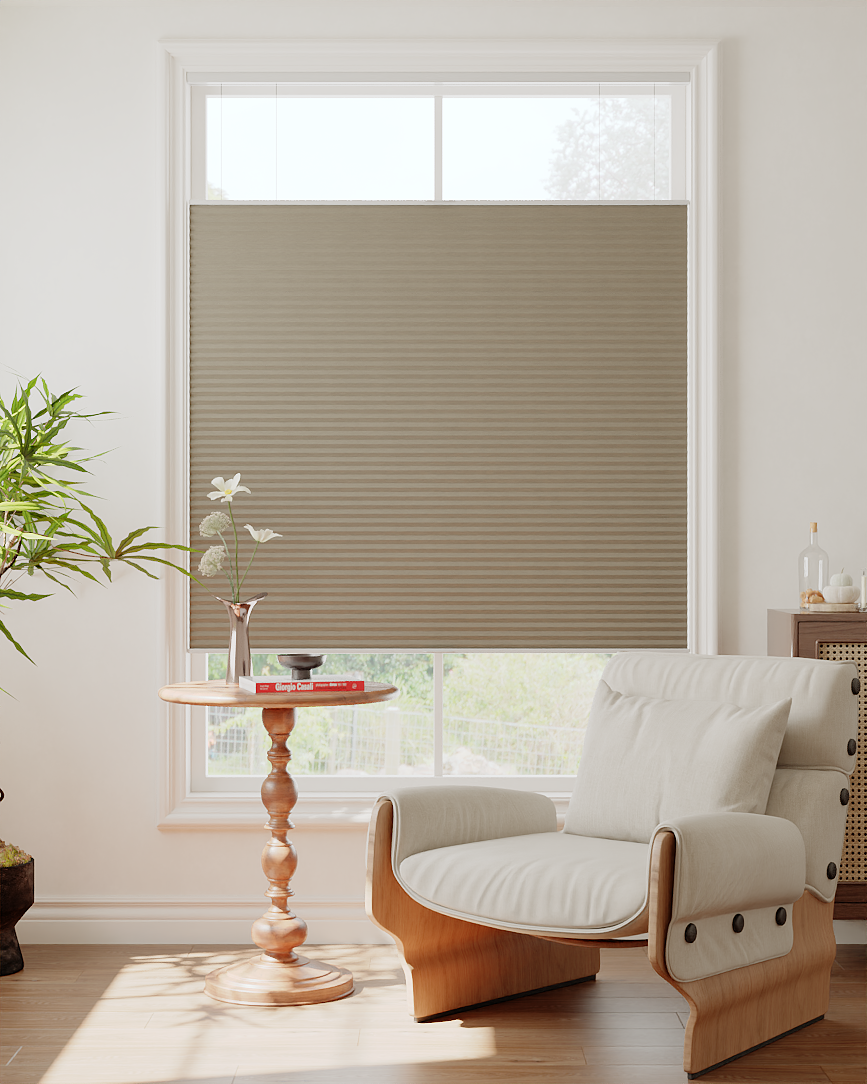
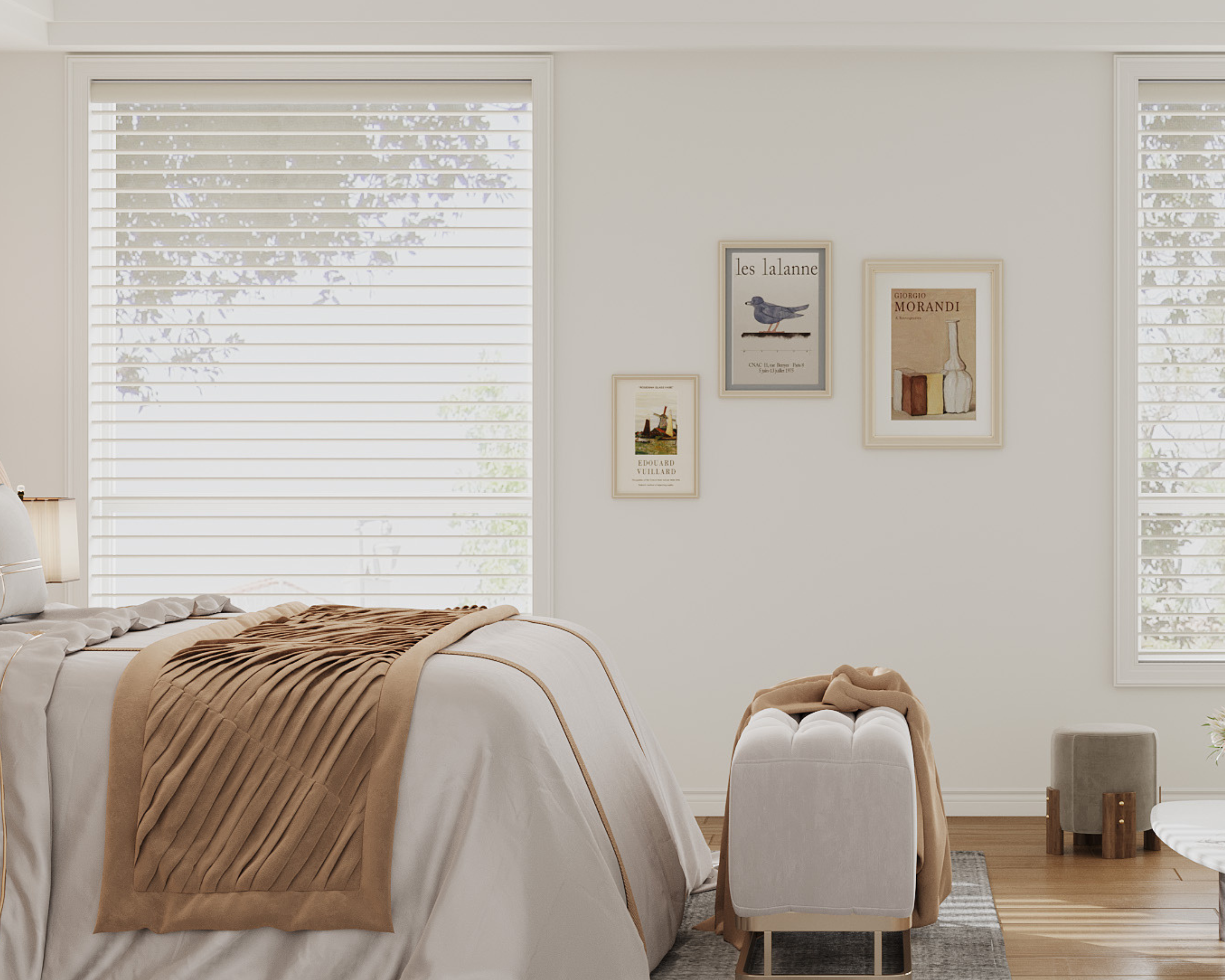

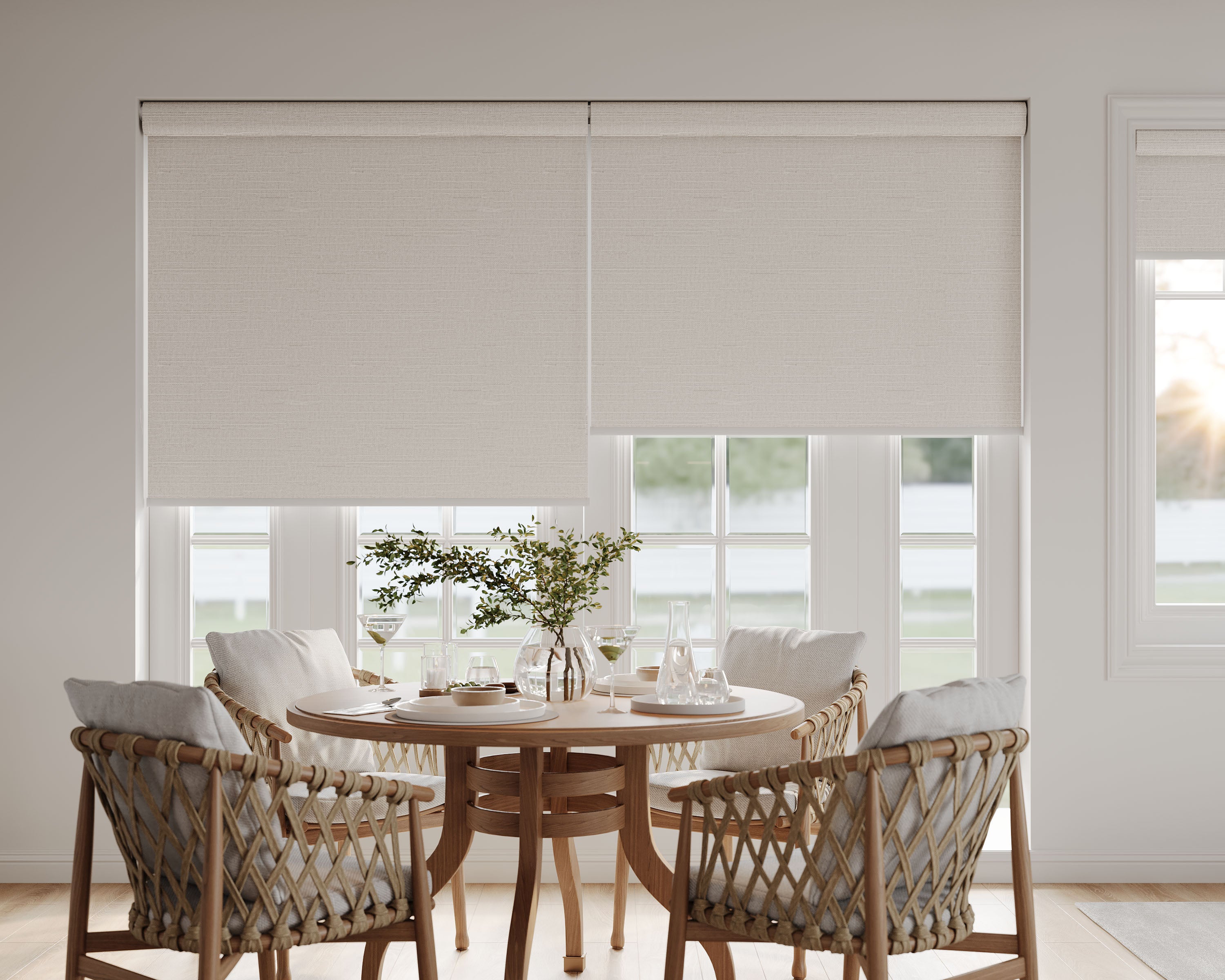


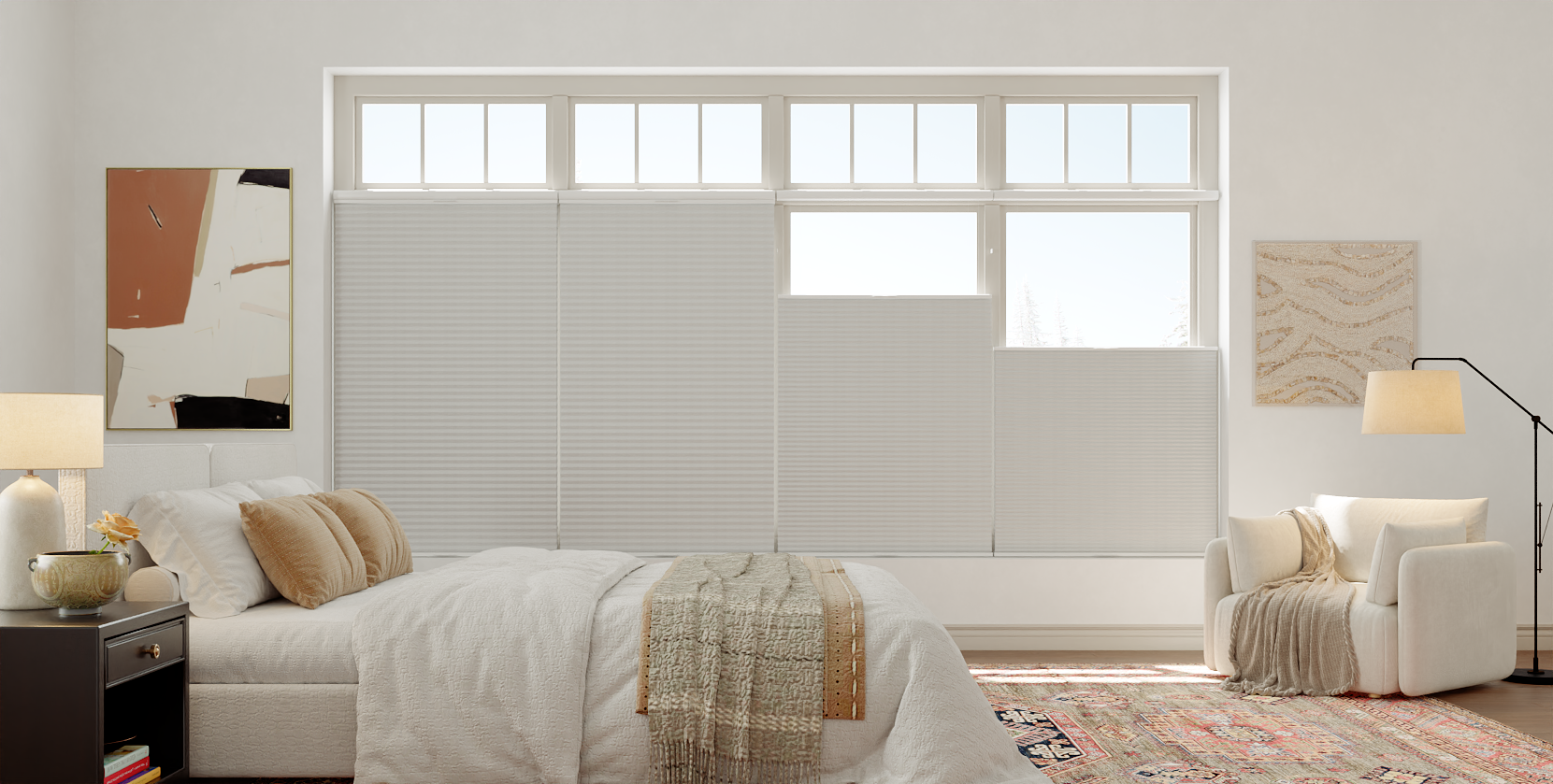


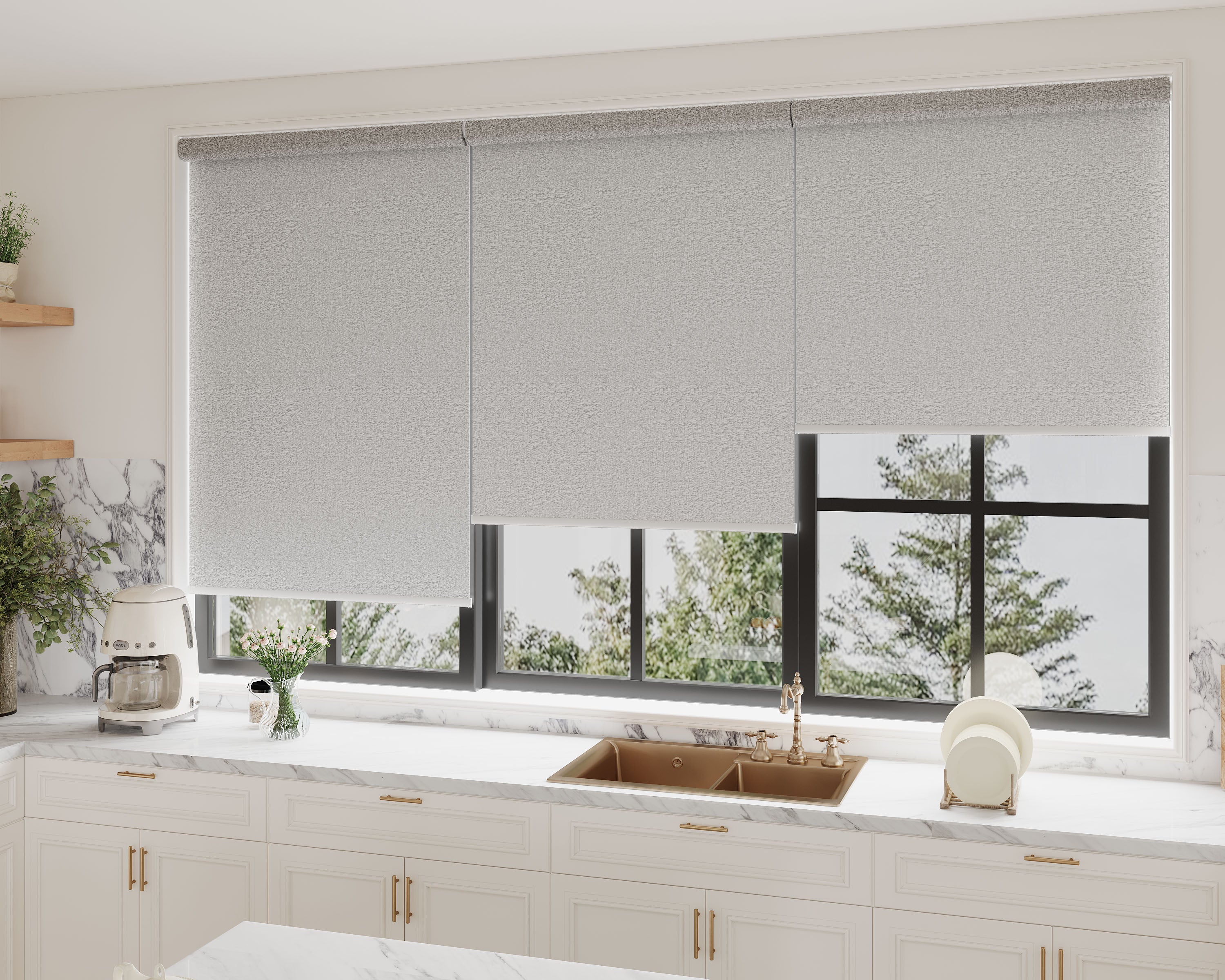

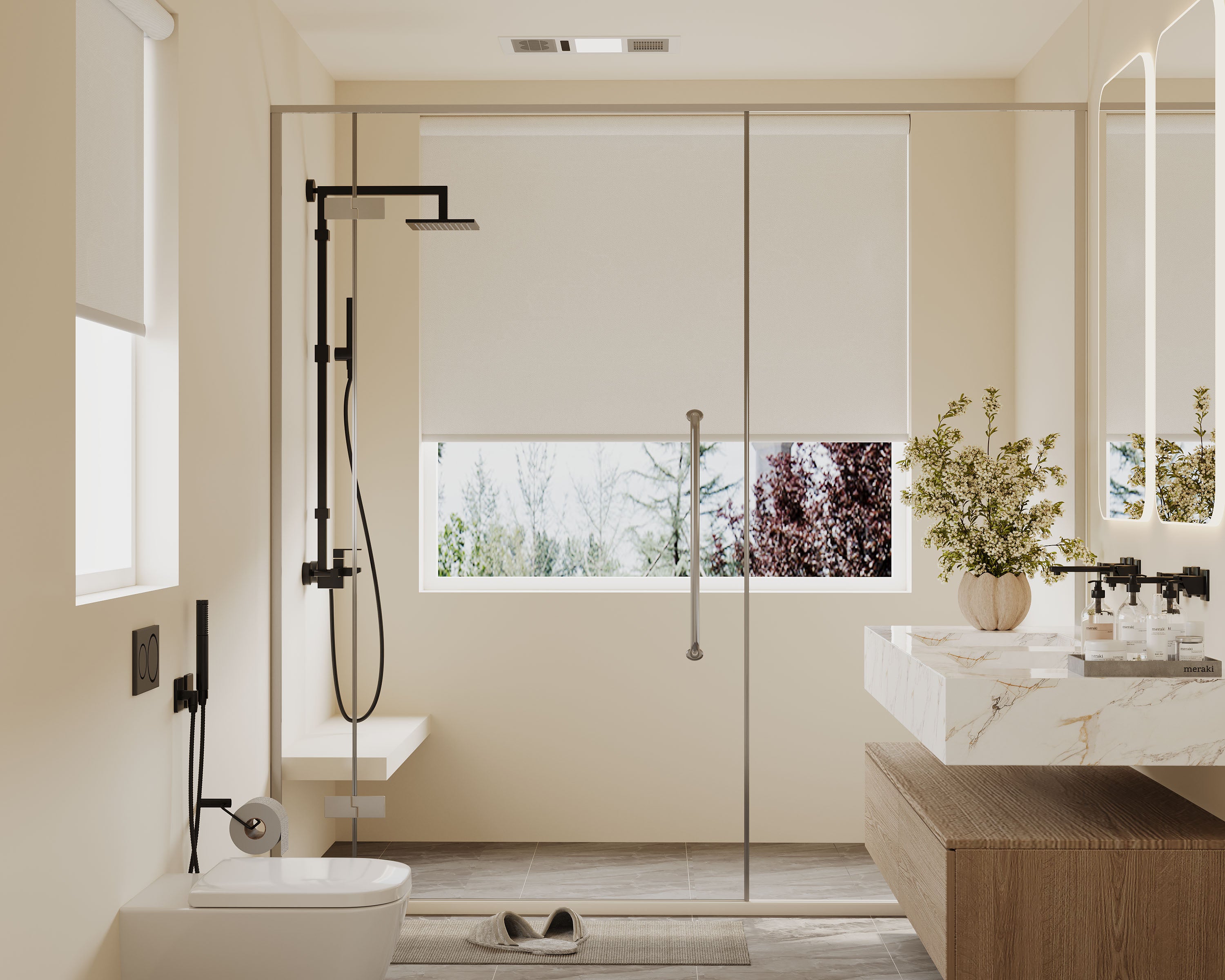


An indoor solar shade hangs on the room side of the glass. An exterior screen sits outside it. That location changes where sunlight is intercepted, what the equipment must withstand and how the installation is operated and maintained.
Both can belong in a solar-control plan. They are not interchangeable versions of the same product, and neither should be chosen from a universal promise about energy savings. Define the window problem, then compare the complete installed systems.
Location is the first difference
Exterior screening intercepts some sunlight before it reaches the glazing. An indoor solar shade acts behind the glass. The NSW government's external-shading guidance explains that distinction; it does not provide a performance rating for a particular indoor product.
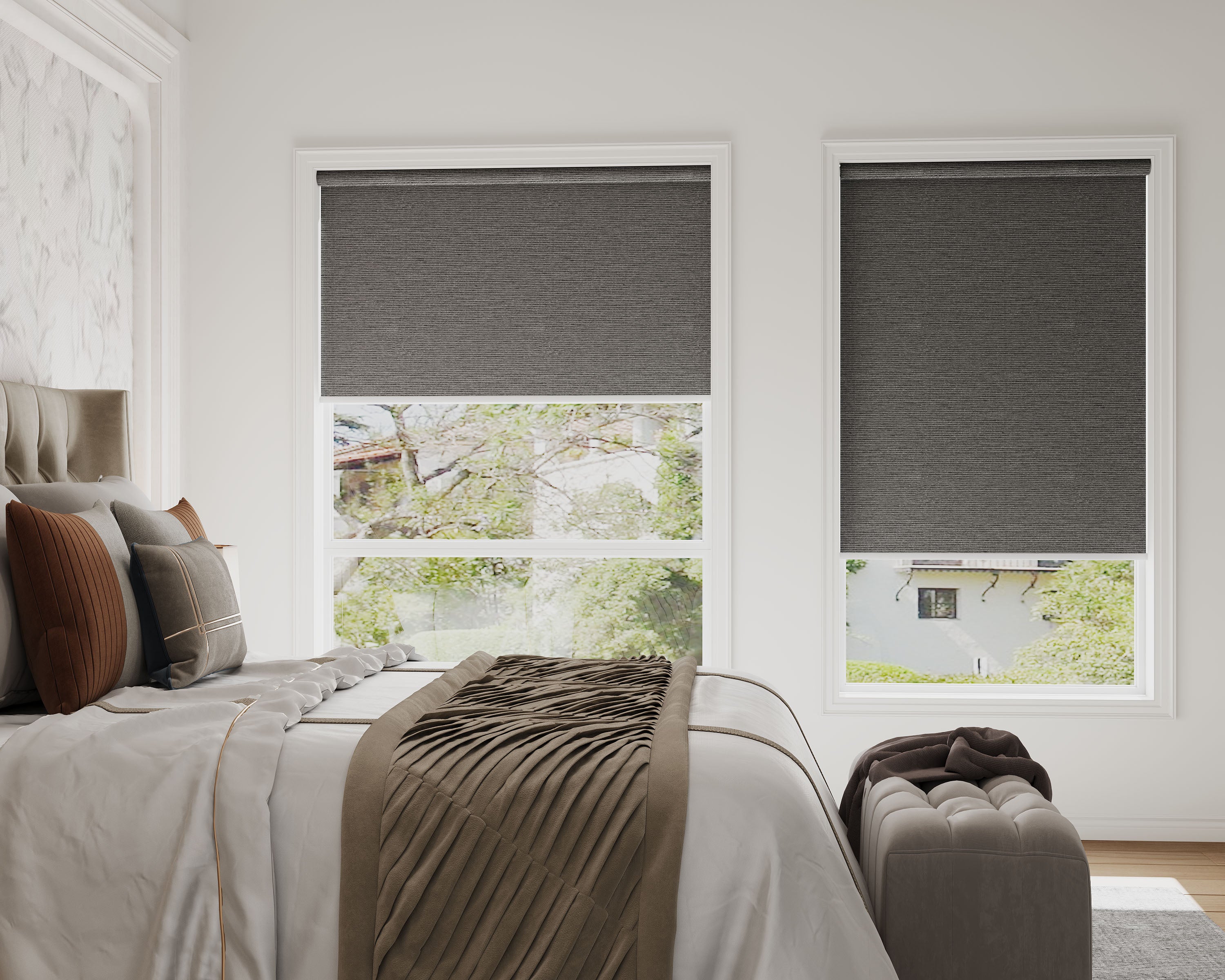
Inside the room, mesh can reduce troublesome brightness while retaining a screened outward view. Its solar effect depends on the fabric, coverage, glass and operating position. A heat-reduction number for another window assembly cannot establish the result at yours.
PNNL's window-attachment guide treats glare, solar heat, winter heat loss, daylight and views as separate selection goals. Use the appropriate product evidence for the goal you care about.
Compare the whole project
| Decision | Indoor solar shade | Exterior screen system |
|---|---|---|
| Position | Behind the glazing | Outside the glazing |
| Exposure to assess | Indoor environment and product limits | Weather, wind and the specified outdoor environment |
| Daily adjustment | Selected indoor lift and controls | Fixed or operable design, depending on the system |
| Access | Room-side fitting and service | Exterior installation and future maintenance route |
| Appearance | Fabric and hardware visible inside | Screen, frame or guide details visible outside |
| Performance evidence | Actual shade/window configuration | Actual exterior screen/window configuration |
The exterior column describes questions for an outdoor system, not capabilities supplied by an ordinary indoor roller shade.
Decide whether adjustment is important
A fixed exterior solar screen may screen the glass continuously while installed. A retractable exterior design creates different operating and maintenance questions. Establish what is actually being quoted rather than assuming every exterior screen rolls up.
An indoor roller can expose more glass when raised, within its supported operation. That flexibility may be useful when sun is welcome at one time and screen glare appears at another. Its raised assembly still occupies space, and its fabric needs room to travel past handles and trim.
Consider a hypothetical room used for afternoon work and morning breakfast. The owner may want to admit morning light and cover a particular window later. Compare how easily each proposed system supplies that routine. If an exterior product is fixed, decide whether its continuous effect is acceptable through the seasons.
Judge the view through an actual sample
Mesh appearance changes with weave, color and lighting. An outdoor view photographed through one screen does not establish the view through a different indoor fabric.
The current Sarasota solar shade offers 1%, 3% and 5% openness options. Openness describes open area in the weave, not a percentage of cooling or nighttime privacy. Compare the selected material in the window where it will be used.
Assess visibility inward after dark separately. Neither the word solar nor a good daytime view makes a screen an opaque privacy barrier. Plan suitable additional coverage where the room requires it. Our solar nighttime-privacy guide explains that limitation.
Exterior suitability belongs to the assembly
A fabric described as waterproof or fade-resistant is not automatically suitable for installation outside. An exterior system needs its own mounting, hardware and environmental specifications. Wind exposure, fixing surfaces and access affect the project beyond the fabric itself.
The outdoor-fabric guide separates material claims from complete-system suitability. Do not attach an indoor roller outside because its mesh resembles an outdoor screen or because it sits under an overhang.
For an exterior proposal, establish any required property permissions, the window's drainage and maintenance access, and the installer's defined scope. Use the actual system's instructions rather than adding improvised guides or fixings.
Keep cooling and winter insulation separate
Reducing unwanted summer sun is a different task from retaining room heat on a cold night. An open screen weave should not be treated as an insulation rating. Compare suitable thermal evidence when winter comfort drives the purchase.
Seasonal operation also matters. A covering left closed when useful winter sun reaches the window creates a different routine from one adjusted as conditions change. The solar heat-control guide develops the fabric and operating questions without assigning a universal savings result.
Choose indoor, exterior or a complementary plan
Keep an indoor solar shade in the shortlist when room-side adjustment, a continuous screened view and an interior installation suit the task. Investigate a purpose-designed exterior system when external interception is a project priority and its installation and maintenance can be supported.
Some windows may benefit from complementary measures, but each part should have a defined job. Avoid paying twice for an effect you do not need, and do not count an unverified energy estimate as a guaranteed return.
For the indoor route, explore solar shades with your actual glare, view and privacy requirements. Compare the finished configuration and current project cost with the exterior proposal, including service access. That is a more useful comparison than choosing by location alone.
