
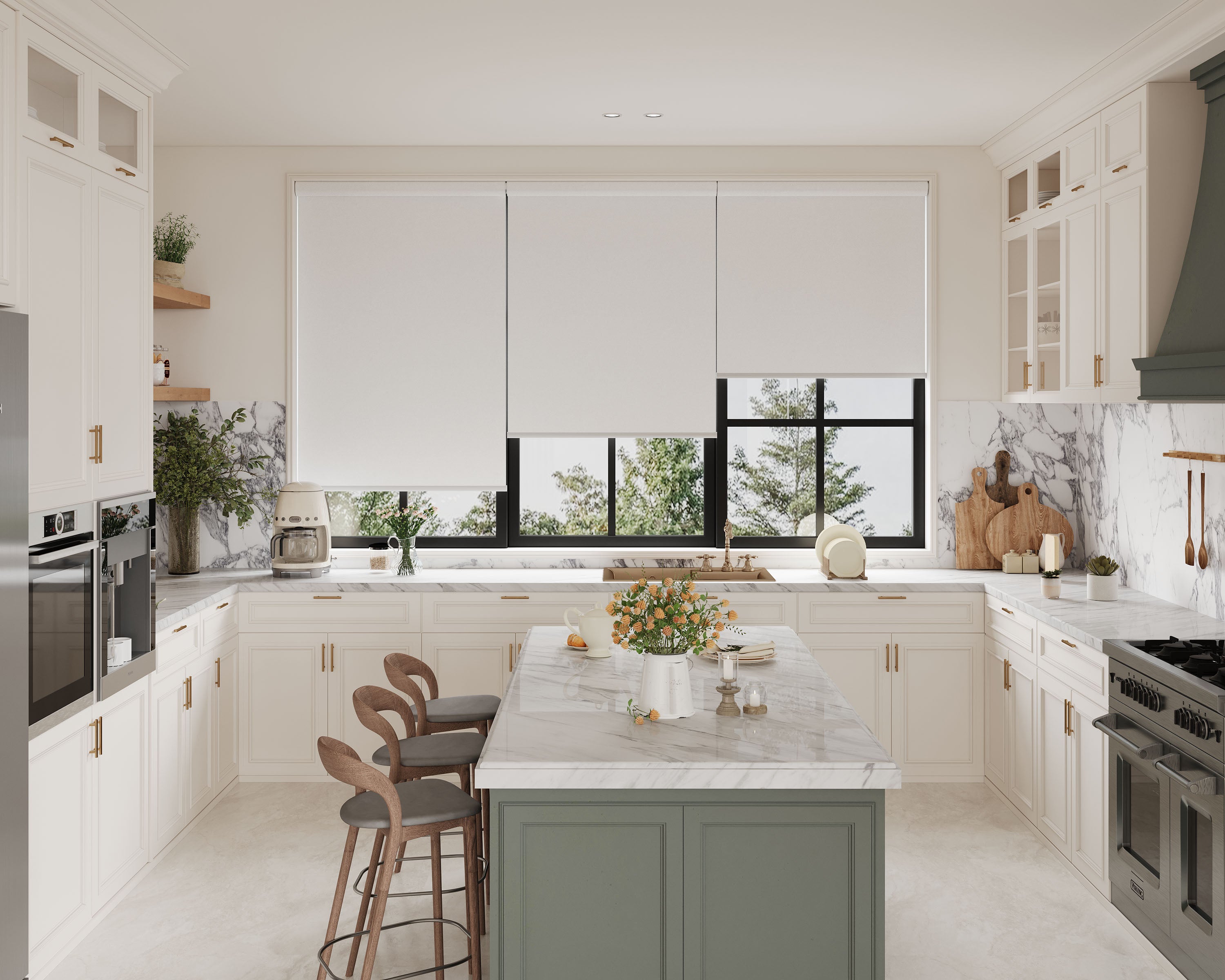

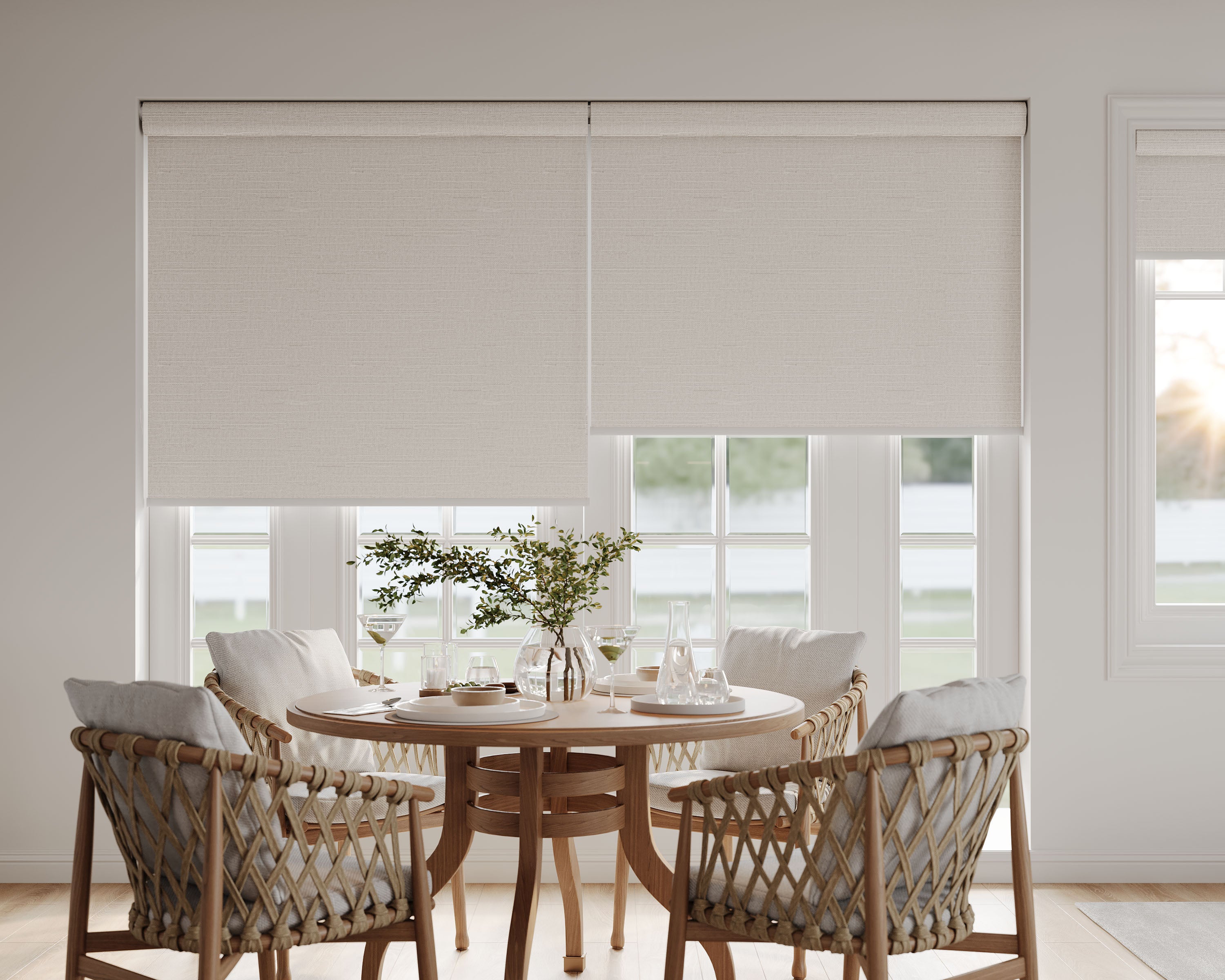


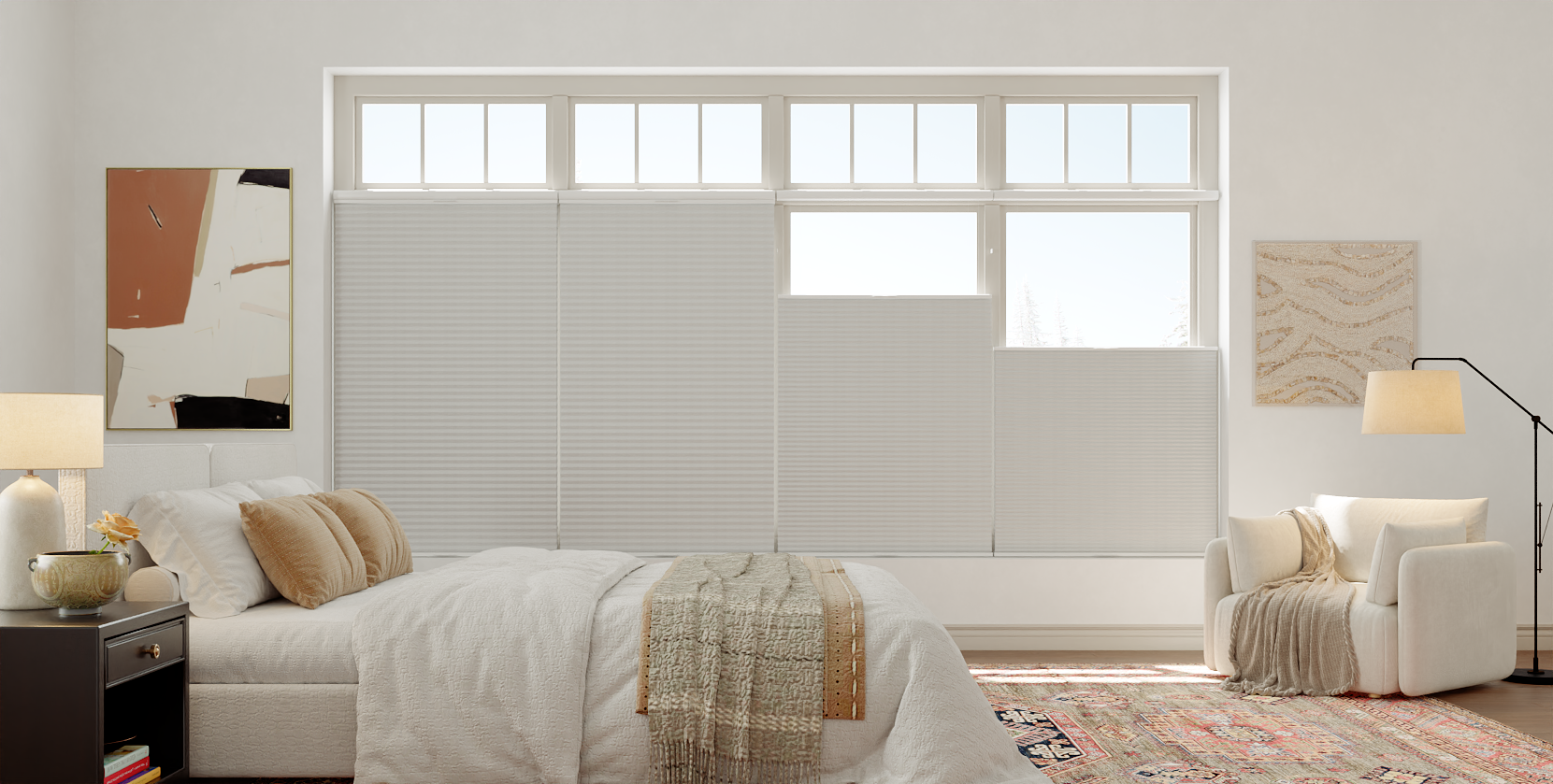


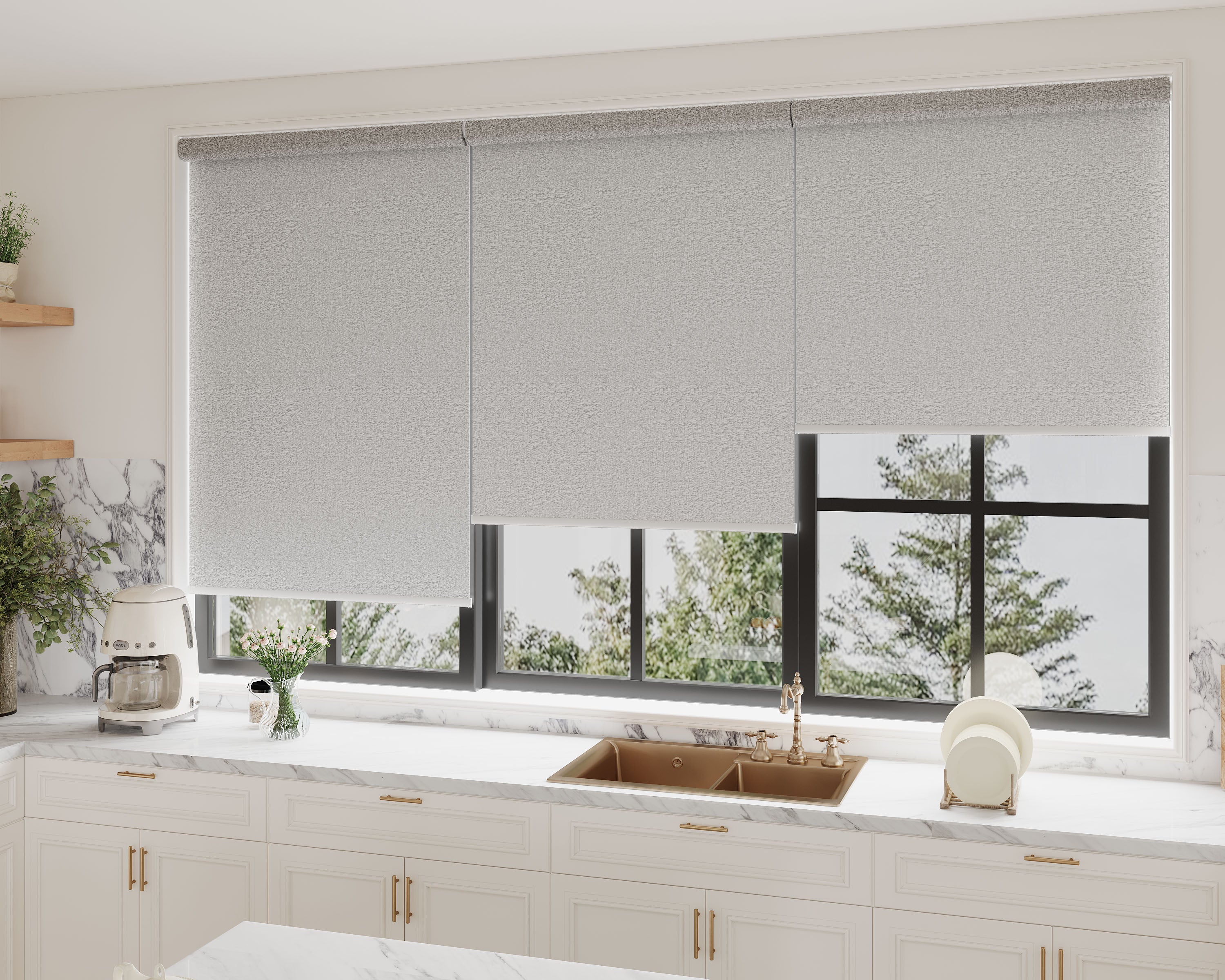

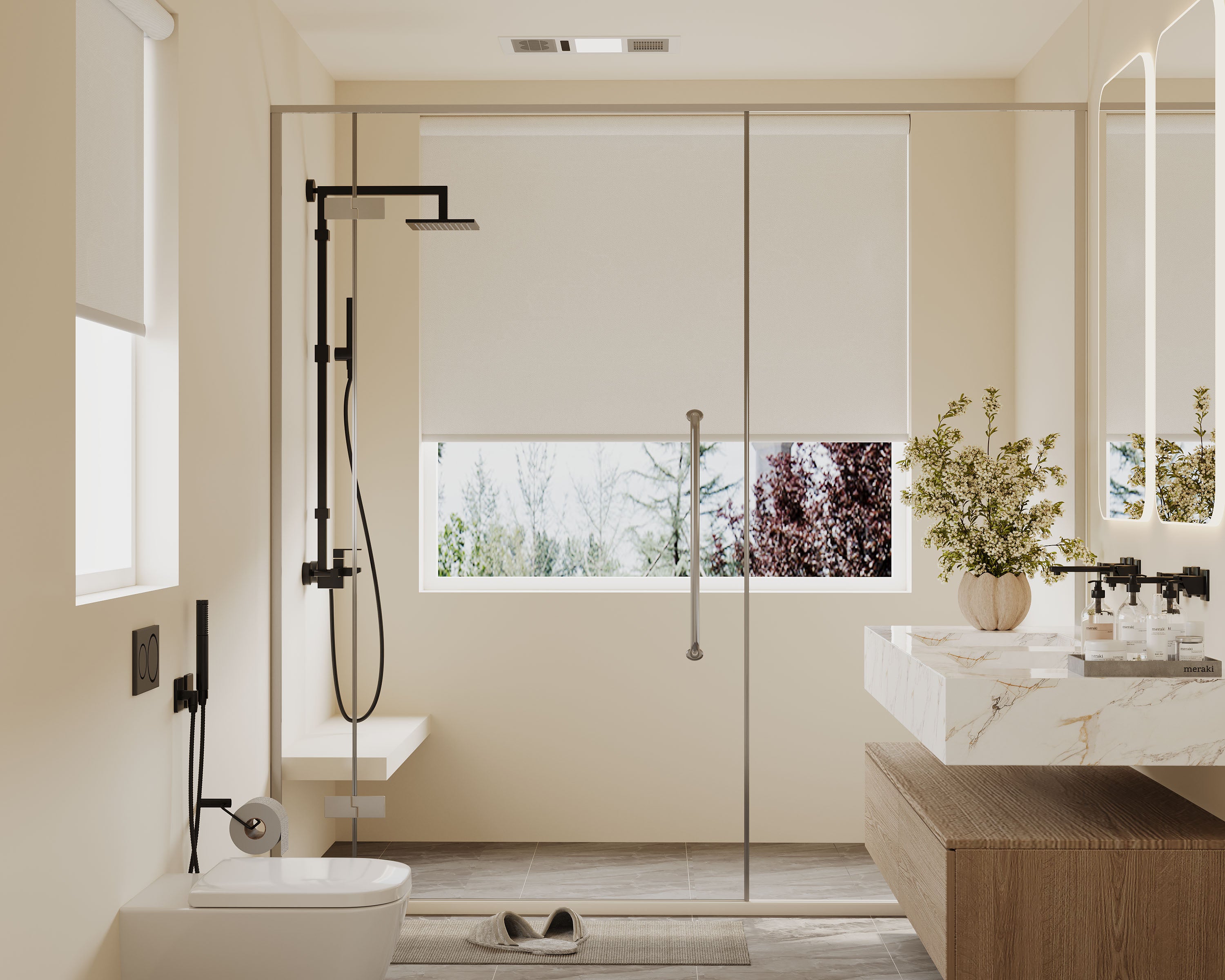


A roller shade can fit inside a casement window recess and still catch the crank when lowered. The important measurement is the space available for the complete shade and for every part you use on the window. Check the crank, lock and screen before deciding where the fabric should hang.
Start with the roller shade measuring guide for opening measurements. Then add the operating checks below. They answer a separate question: will the window remain usable after the shade is installed?
Make a record of the window in use
Label the opening and identify the window model if possible. Photograph it closed, with the crank unfolded, and with the sash open. Include the screen and lock. A photo taken straight ahead helps explain the layout; a side view shows how far hardware projects toward the room.
Operate the window normally before placing anything in the recess. Notice where your hand goes as well as where the handle moves. A shade that misses the metal crank may still leave too little space to grip it comfortably.
| Part to check | What to record | Why it matters |
|---|---|---|
| Crank in its stored position | Farthest projection toward the room | The lowered fabric and bottom rail must clear it |
| Crank while turning | Full sweep and hand space | Opening the sash may require raising the shade |
| Lock lever | Travel and access | Fabric should not obstruct locking the window |
| Insect screen | Removal direction and latch access | A permanently blocked screen becomes difficult to maintain |
| Sash and hinges | Movement relative to the shade | An opening panel must not strike the covering |
Keep these observations separate from the final order dimensions. A clearance sketch explains the obstacle; the selected shade's instructions determine how to measure and order it.
Check the whole fabric path
The top bracket location is only one part of the layout. Follow the proposed fabric plane from the roller to the fully lowered rail. At what height would it meet the crank? Does a projecting lock sit behind the fabric or in its path? Would the bottom rail need to pass an obstacle each time you lower it?
Ask for the selected shade's bracket, cassette and roll dimensions at your ordered drop. A fabric roll changes size as fabric winds onto it. A small empty-tube drawing does not describe the entire raised shade.
Lutron's measuring guidance identifies roll direction as one way its systems can address projecting handles. It also documents configuration limits. Those details illustrate why the actual shade drawing matters; they are not mounting specifications for a different brand.
Compare three possible layouts
An inside mount can preserve the visible casing where the recess provides suitable support and enough unobstructed space. It works only if the assembled shade and its travel fit. Recess depth measured above the glass can overstate the space available at the crank.
An outside mount may place the fabric farther into the room and provide broader coverage. Check the actual bracket projection and fixing surface. Merely ordering a wider shade will not move its fabric past an obstruction.
A supported reverse-roll configuration can move the fabric plane toward the room. It may change the visible backing, edge light paths and appearance of neighboring shades. Review the standard-versus-reverse-roll guide and confirm that the exact product offers the arrangement. Do not turn brackets around or rewrap fabric as a substitute for an approved configuration.
Separate handle replacement from shade selection
Some window manufacturers offer lower-profile or folding hardware for particular windows. For example, Andersen lists folding handles for specified 400 Series casement and awning windows, including their use where additional window-treatment clearance is wanted.
That does not mean any folding handle fits your window. Identify the window series and ask its manufacturer about compatible parts before buying hardware. Keep the window's ordinary operation and locking intact. If a different shade mount solves the problem more simply, compare that option too.
Walk through an everyday example
Imagine a kitchen casement whose crank folds away behind the proposed fabric line. That looks promising while the window is closed. Unfolding the crank, however, would push it through the fabric plane.
One workable routine might be to raise the shade fully before opening the window, provided the raised rail, screen and sash all remain clear. Another might use a permitted mounting configuration that leaves room to turn the crank with the shade lowered. Decide which routine is acceptable before ordering. A technically possible fit is less useful if it requires awkward daily handling.
Send a complete fit question before ordering
Provide your labeled opening measurements, clearance sketch, photographs and preferred fabric/lift configuration. Ask the supplier to confirm the mounting arrangement, finished fabric position, raised dimensions and any limits on window operation. Resolve an uncertain screen-removal route at the same time.
Once the layout is confirmed, compare light-filtering roller shades with the room's privacy needs and inspect the current roller shade range. The useful result is a covering you can operate alongside the window, with dimensions established for the selected system.
Common questions
Can I lower a roller shade in front of the crank?
Only if the specified fabric path and bottom rail clear the hardware. Check the stored handle position and the routine for opening or locking the window.
Does outside mounting always solve crank clearance?
No. The fabric's actual projection, mounting support and window movement decide the fit. Compare the drawing with the obstacle record before choosing the order size.
