
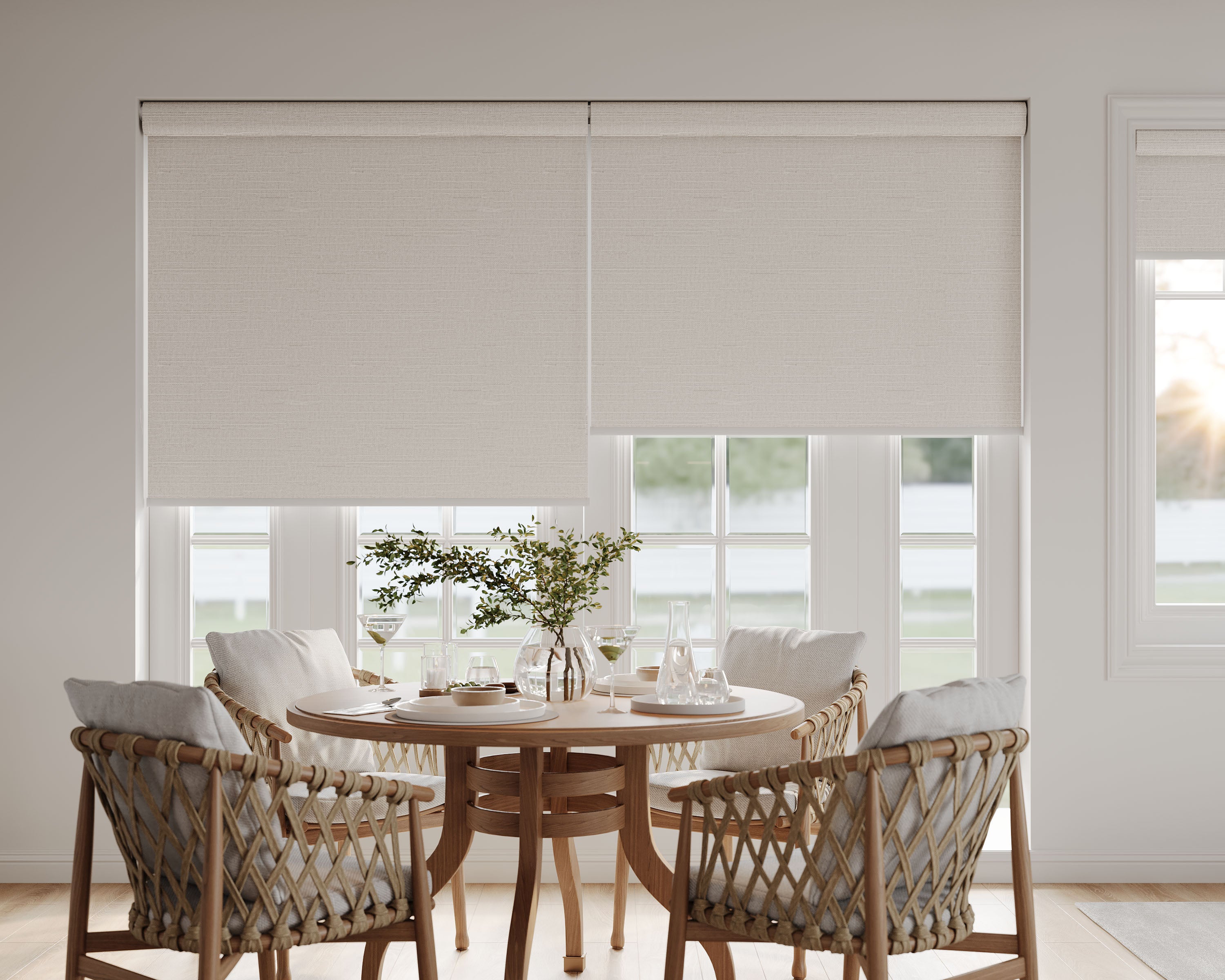


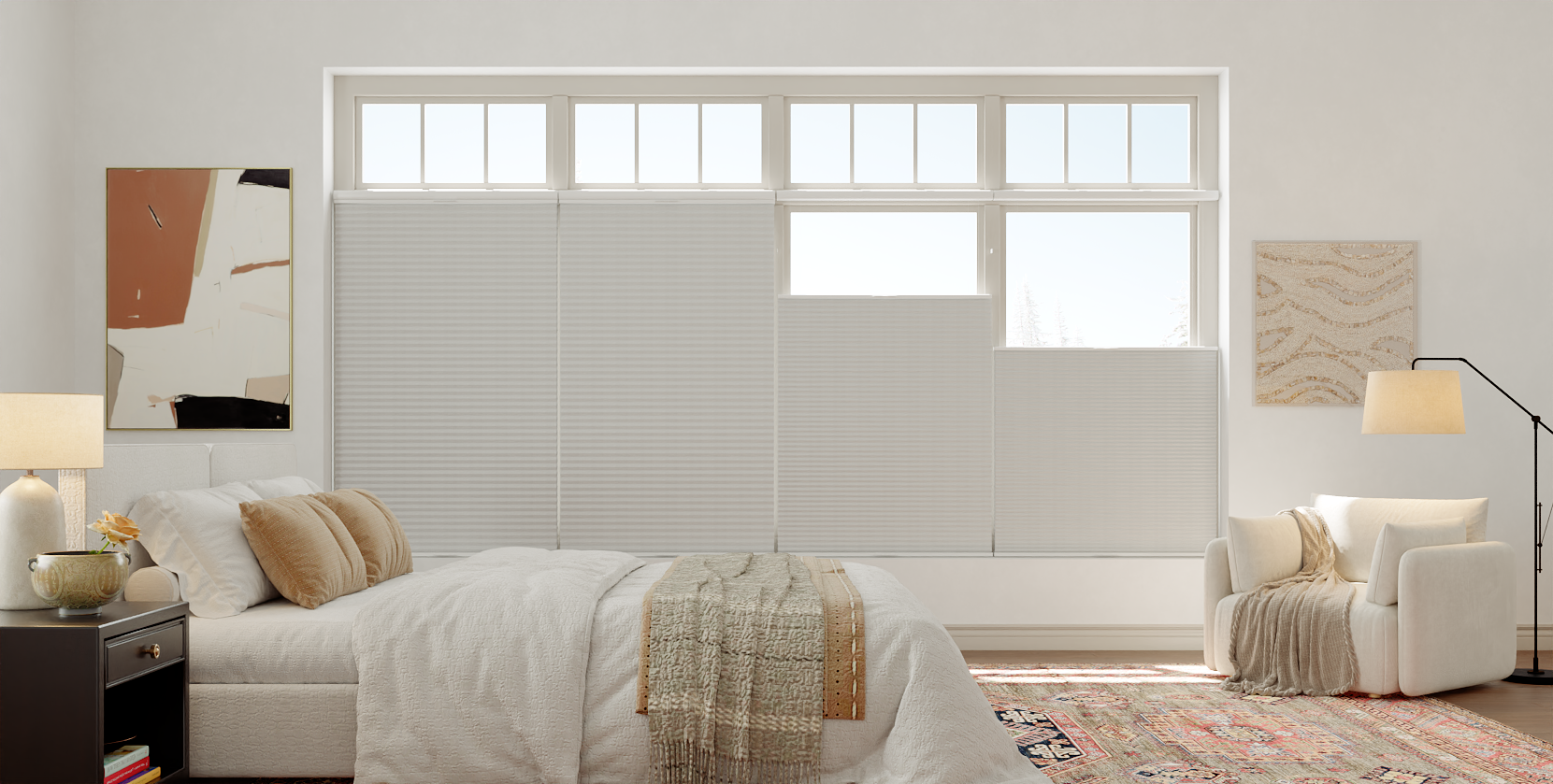





Stack height is the complete vertical package of a cellular shade when it is fully raised. It is not the cell size and may include more than the fabric alone. To estimate how much glass remains visible, compare that package with the mounting position above the glass.
This matters most at short windows, doors and openings where the raised shade must clear a handle or moving sash. A small-looking pleat does not tell you whether the complete raised assembly fits above the area you want exposed.
Establish what the stack measurement includes
Ask where the manufacturer's stack dimension begins and ends. One drawing may measure from the top of the complete assembly to the bottom rail; another may show fabric compression separately. Those values answer different questions.
Lutron's honeycomb section drawing illustrates the complete raised-stack dimension and makes clear that fabric and shade height affect the result. Its dimensions and allowances belong to the listed Lutron systems. Do not copy them into an order for a different product.
For the selected shade, you need the estimated complete stack, its reference points and any stated variation. A tiny cell-size sample is not a substitute for that assembly information.
Distinguish the dimensions before calculating
| Dimension | What it describes |
|---|---|
| Cell or pleat size | The fabric's offered profile |
| Headrail height | The top hardware's own vertical dimension |
| Complete raised stack | The assembly left when the shade is fully raised |
| Mounting space above the glass | Where part of that stack may sit outside the glazed area |
| Remaining glass overlap | The portion of the raised package still in front of the glass |
An inside mount and an outside mount can put the same-sized package in different positions relative to the glass. A deep recess does not automatically mean the entire raised stack sits above the glazed area. Depth and vertical overlap are separate directions.
Our cellular frame-depth guide addresses the recess question. Keep that information alongside the vertical stack calculation rather than substituting one measurement for the other.
Use a simple overlap calculation
For a preliminary geometric comparison, measure everything from one clearly defined vertical reference. If the top of the complete raised package is above the top of the glass, the space above the glass can contain part of that package.
Glass overlap = complete raised stack minus the portion positioned above the glass, with zero overlap as the minimum. This is a layout calculation, not a way to manufacture or resize the shade.
Consider a hypothetical assembly with a supplier-confirmed 5-inch complete raised stack:
- With its top at the top of the glass, the package overlaps 5 inches of glass.
- With its top 3 inches above the glass, it overlaps 2 inches of glass.
- With enough permitted space for the full package above the glass, it need not overlap the glass vertically.
These figures illustrate arithmetic only. Five inches is not a stated SenseBlinds stack height, and moving a mount higher still requires suitable support, the correct shade drop and clearance for the actual assembly.
Translate overlap into visible glass
If the glazed height is 48 inches and the hypothetical overlap is 5 inches, the exposed vertical glass height is 43 inches. Reducing that overlap to 2 inches would expose 46 inches. That is a 3-inch change in visible height under the simplified layout.
Do not turn those numbers into an equal percentage increase in room daylight. Glazing, sky view, room geometry, shade projection and other factors affect light reaching the interior. The calculation describes covered glass, not measured illuminance or energy performance.
For a short upper window, losing several inches may noticeably change its appearance. For a much taller opening, the same package can occupy a smaller share of the visible glass. Compare your real proportions rather than choosing from a large showroom window.
Keep obstacle clearance separate
An opening door or inward-moving sash needs a clear movement path, not only visible glass. Compare the bottom of the raised stack with the highest part of that obstacle and the complete motion it makes.
A raised bottom rail may project into the room. A cassette or headrail can also interfere even when its lower edge sits above the glass. Use the model's assembly drawing and the window's real movement rather than treating a vertical gap as a complete clearance test.
Do not shorten the shade's closed coverage simply to create a smaller apparent stack, or move a limit beyond the supported travel. The selected width, drop, fabric and lift must remain a permitted configuration.
Understand why two cellular shades can stack differently
Different fabrics and shade drops can produce different compressed packages. Hardware and lift configurations can also change what belongs in the raised assembly. A published cell size alone cannot predict all of those details.
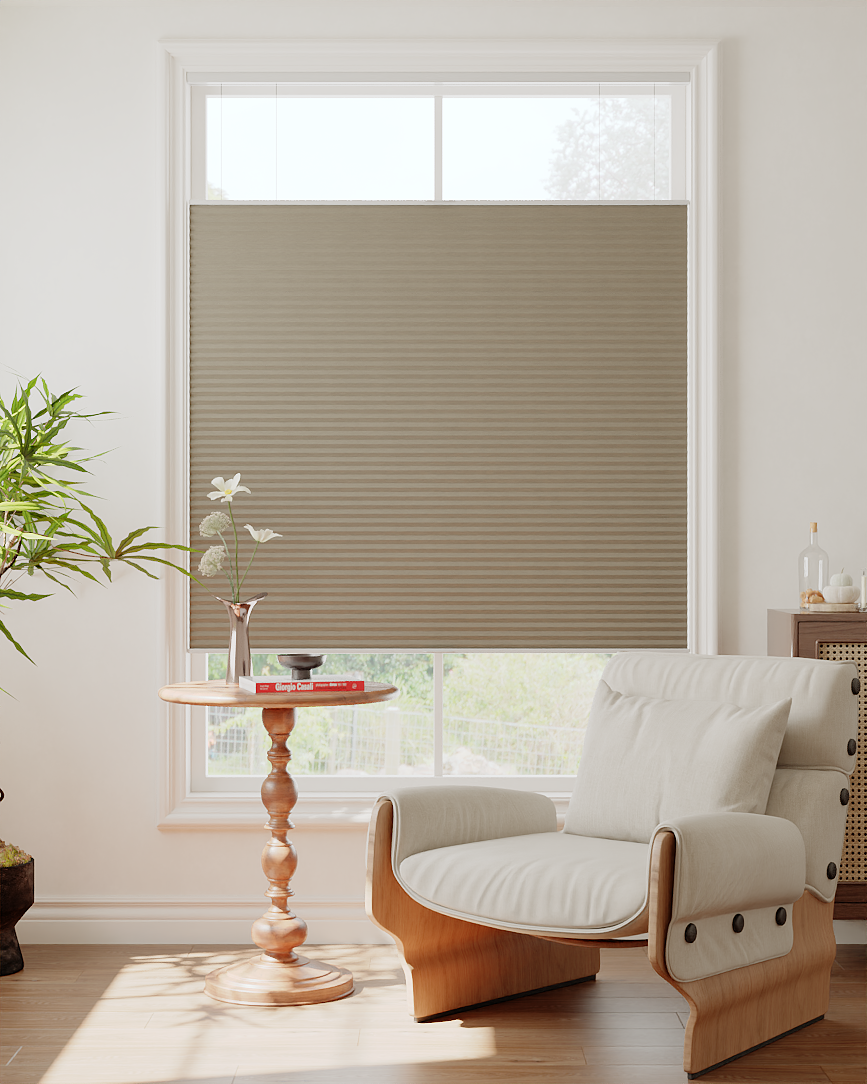
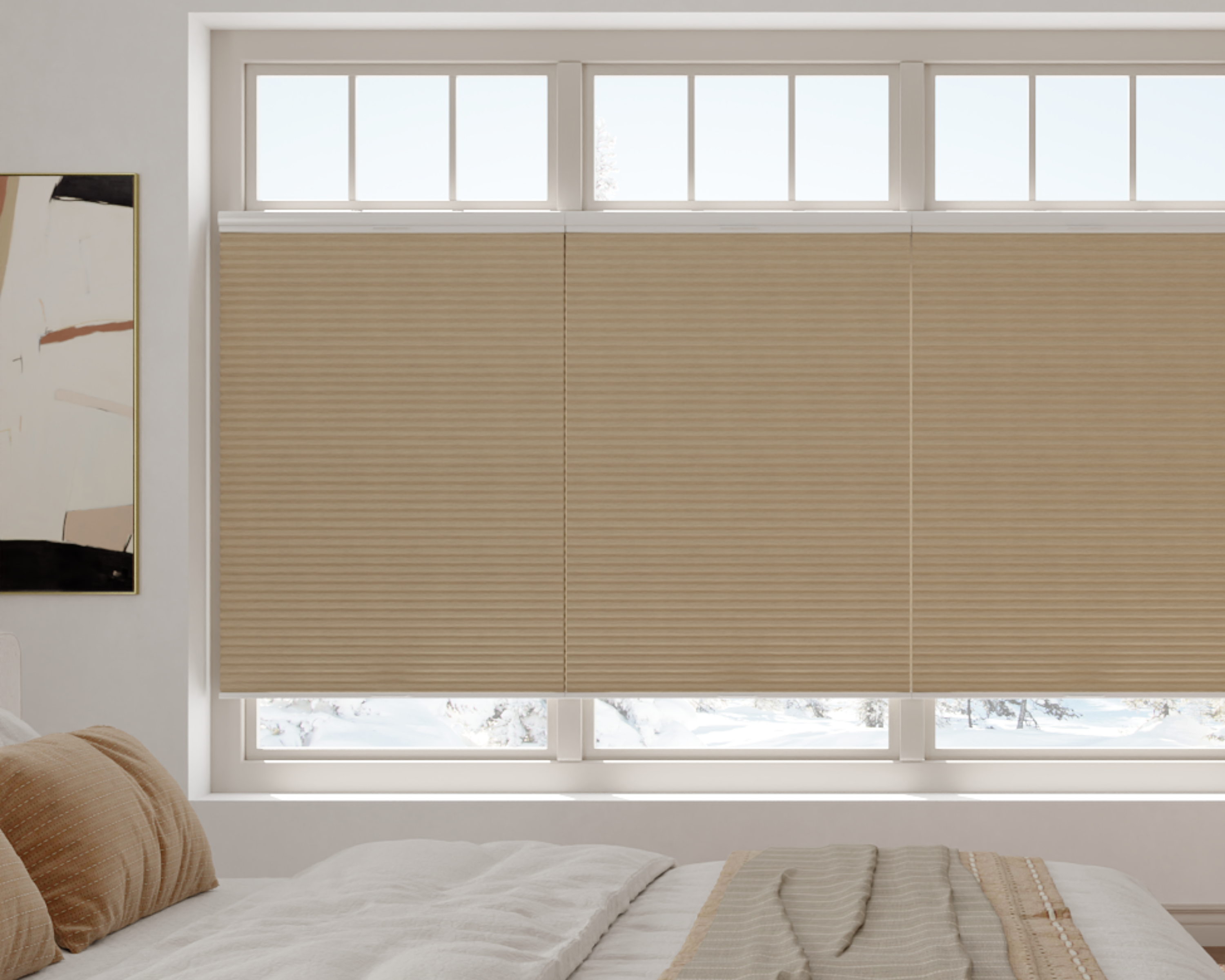
Likewise, a standard cellular shade, a top-down-bottom-up assembly and a dual-fabric day-night design need not have identical rail arrangements. Compare the actual option rather than assuming that all cellular products gather into the same outline.
For the wider construction choice, the cell-size guide explains what 3/8-inch and 5/8-inch labels do describe. The large-picture-window guide helps when panel divisions and lifting a broad shade are separate concerns.
Make the open position part of the purchase
Compare the closed coverage and the fully raised package before finalizing the mount. Both positions matter: the shade must cover the intended area when lowered and leave the access or view you need when open.
Use the current cellular collection and the light-filtering cordless model to choose the fabric and lift. Once the complete stack information is available, the geometry above lets you assess the open window without confusing a small pleat with a small assembled shade.
