
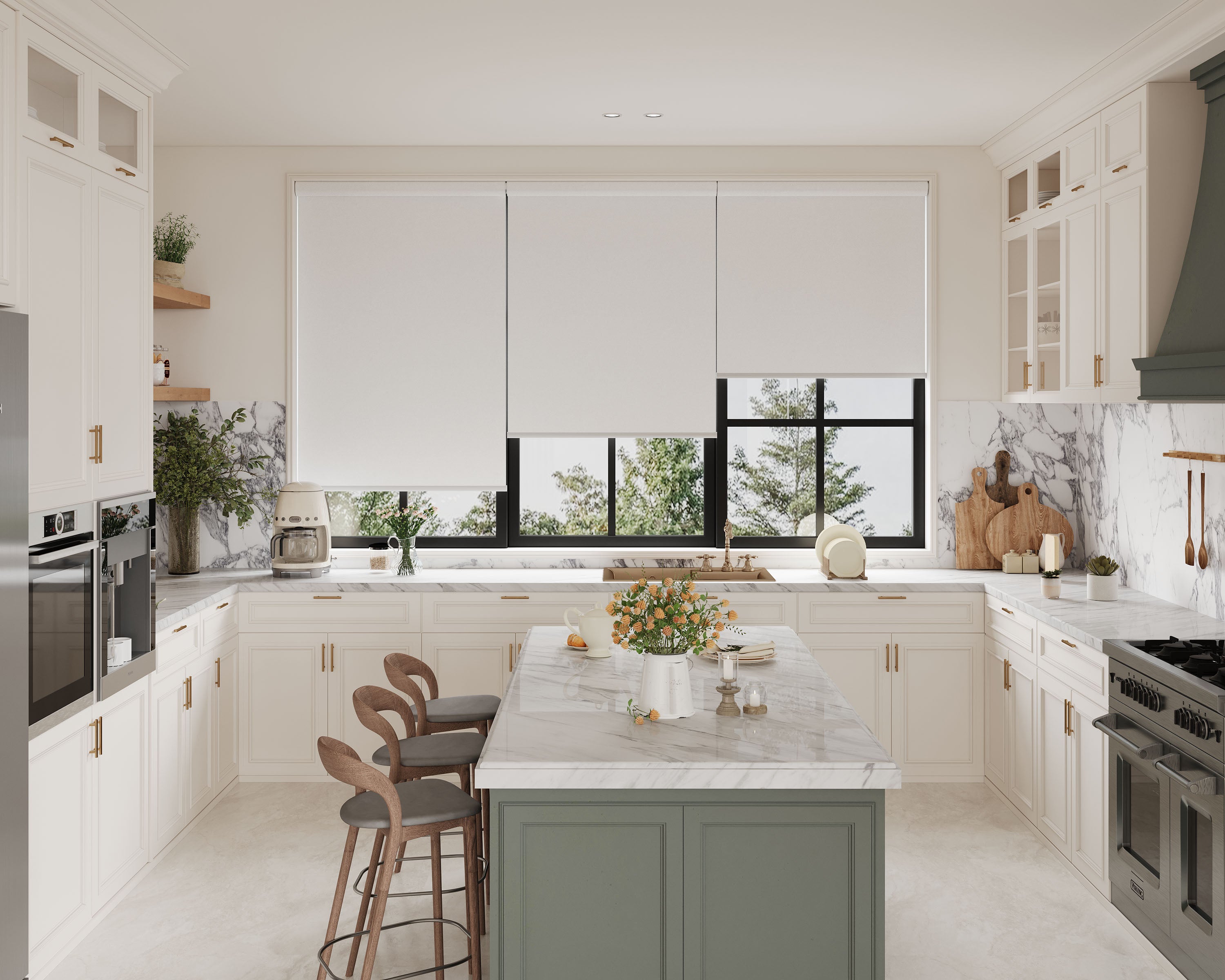
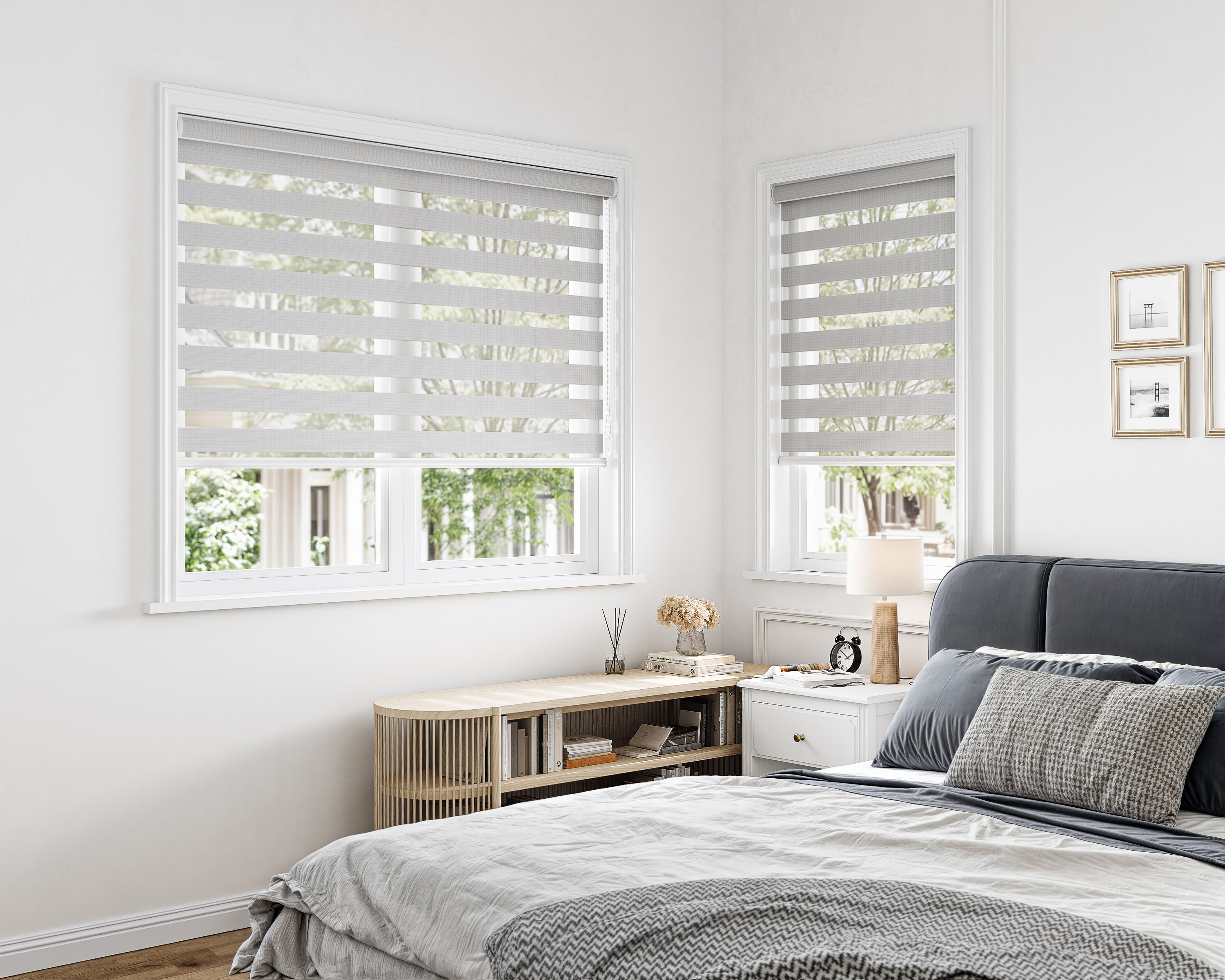
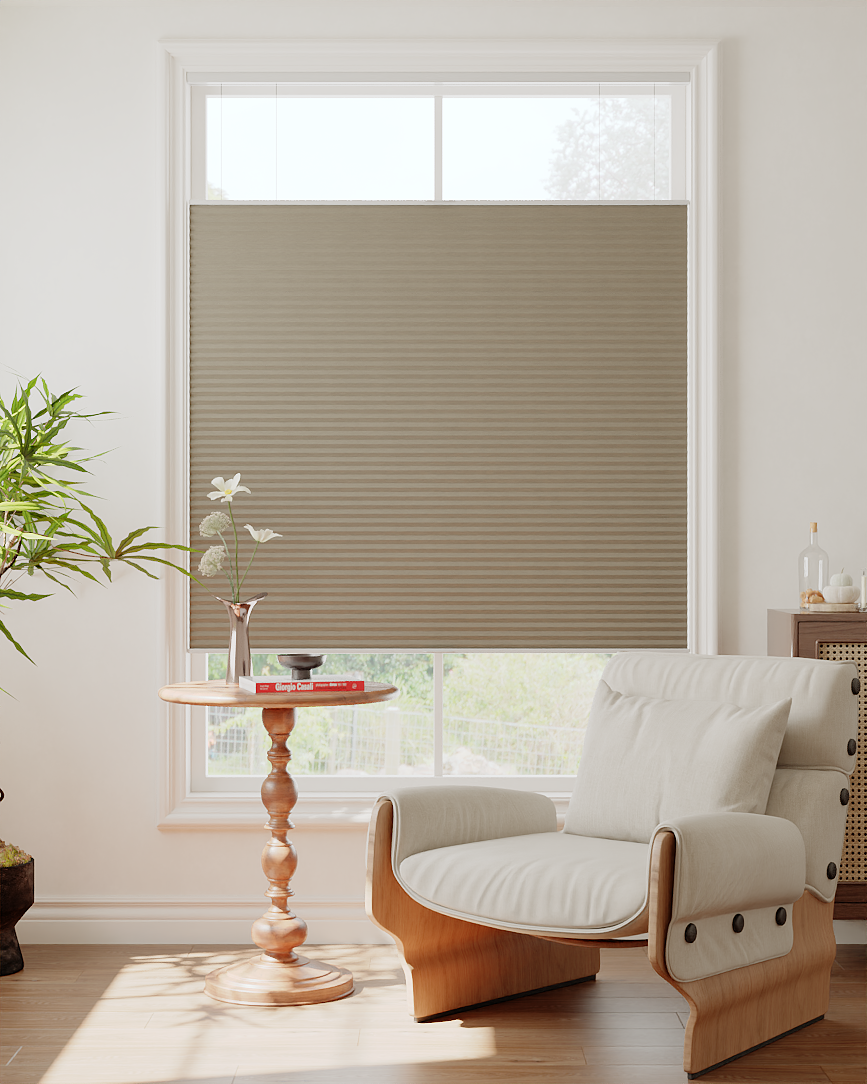
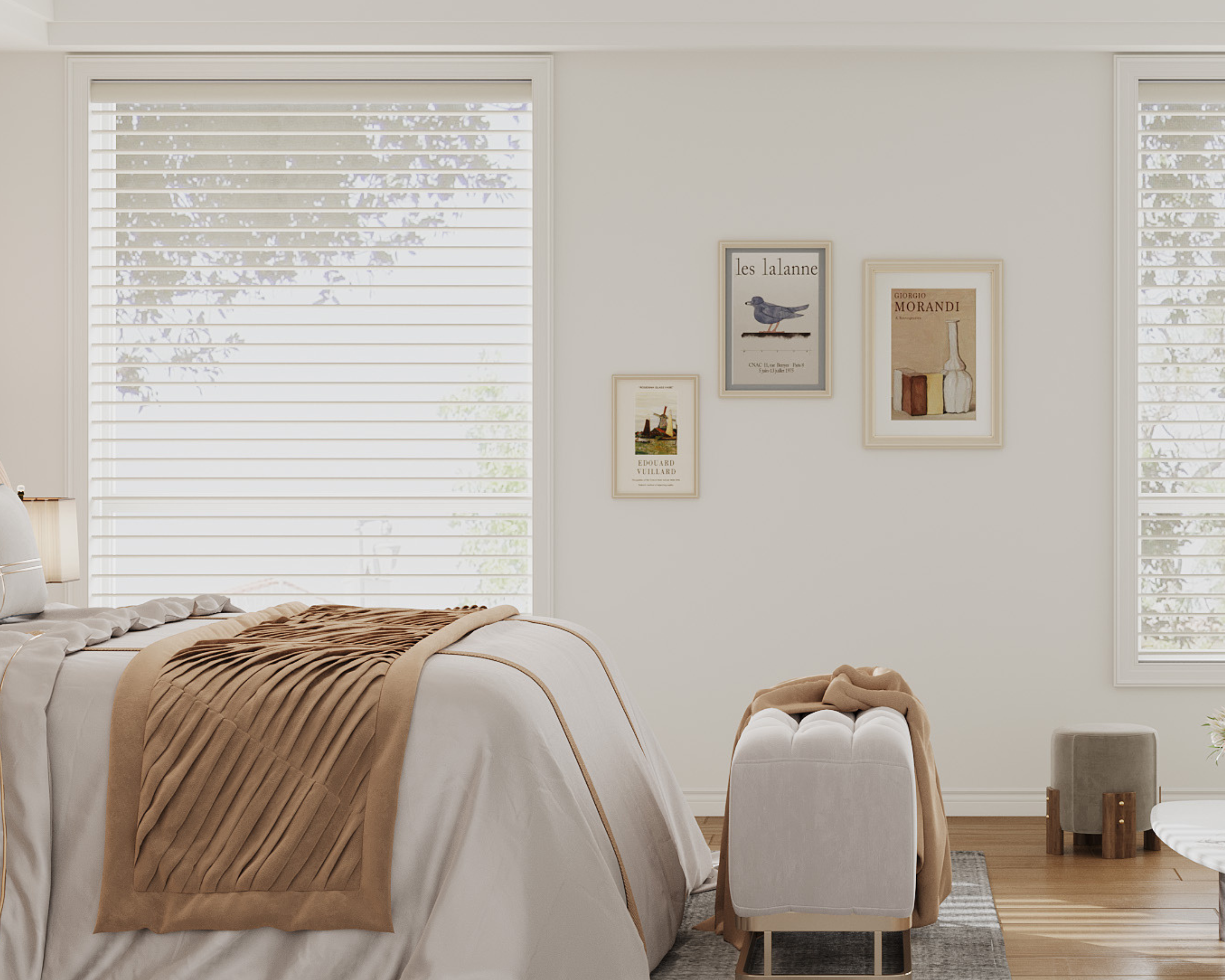
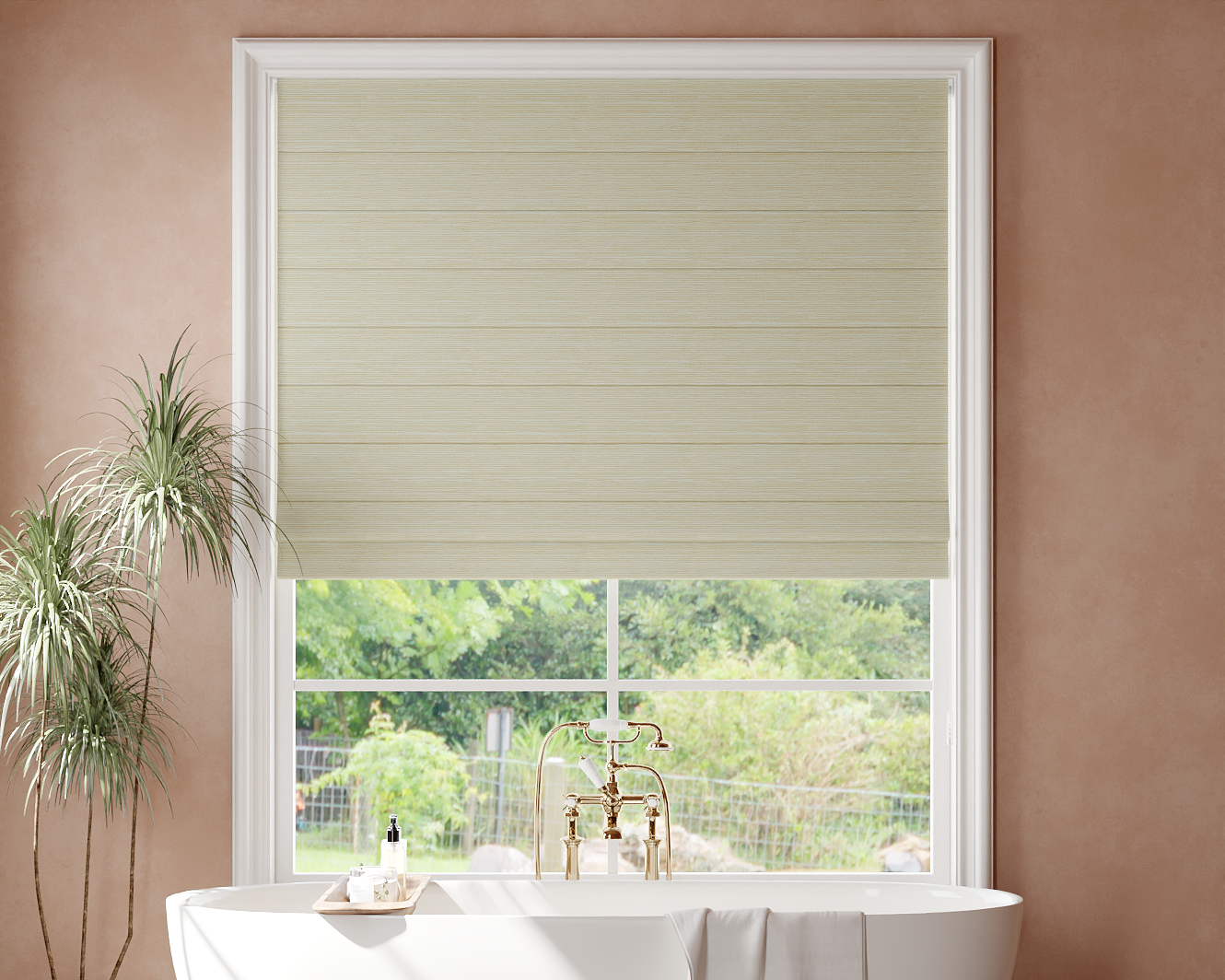
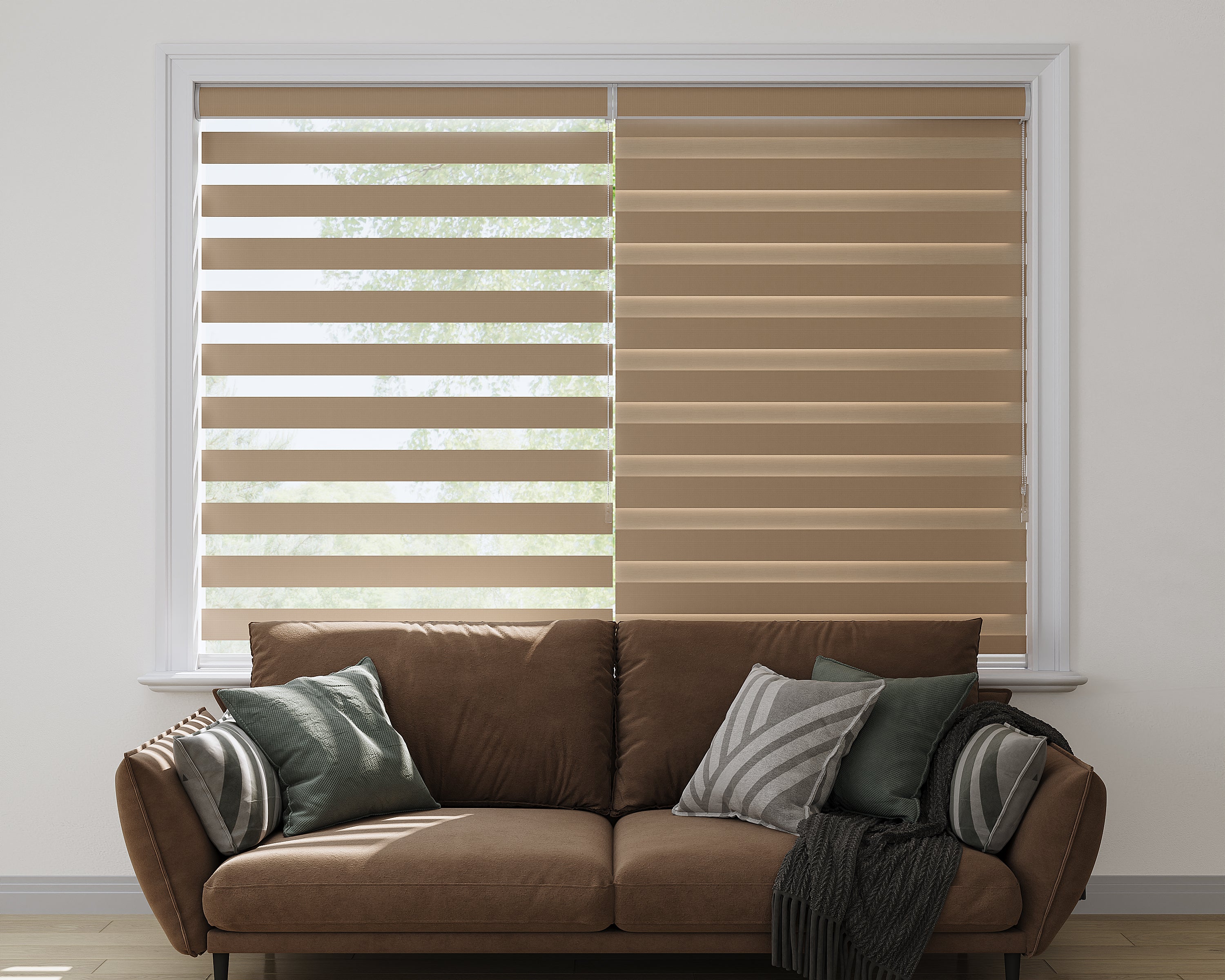
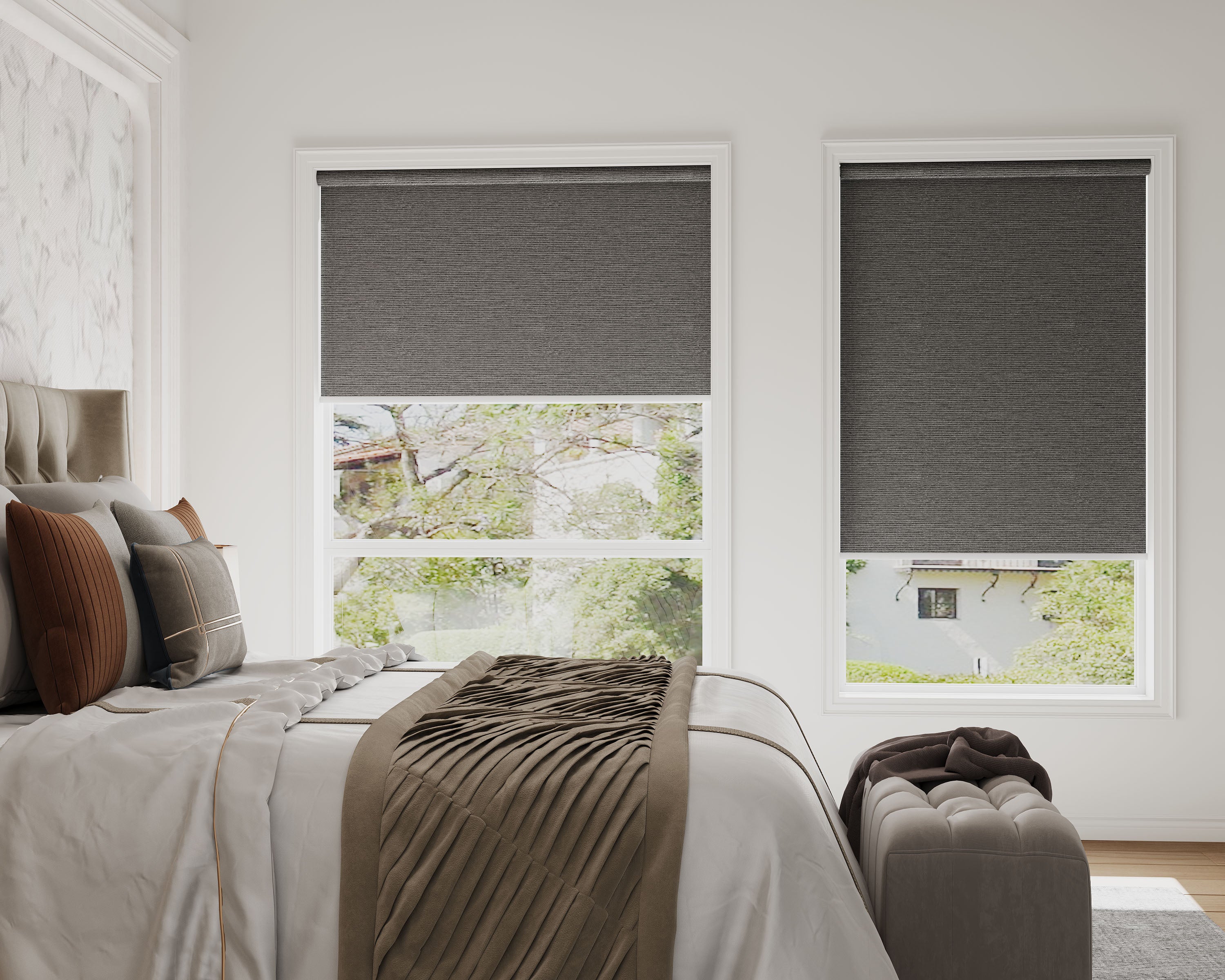
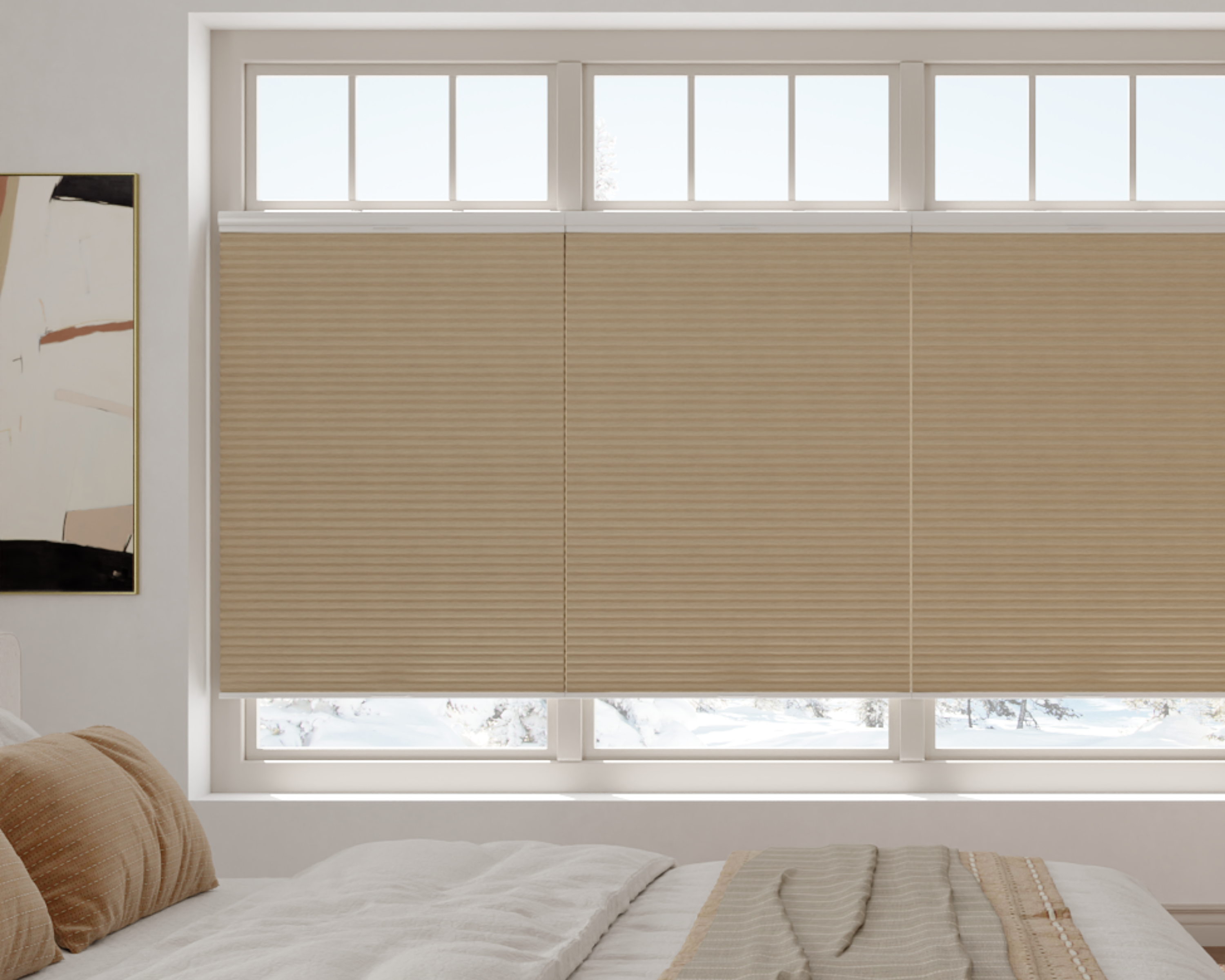
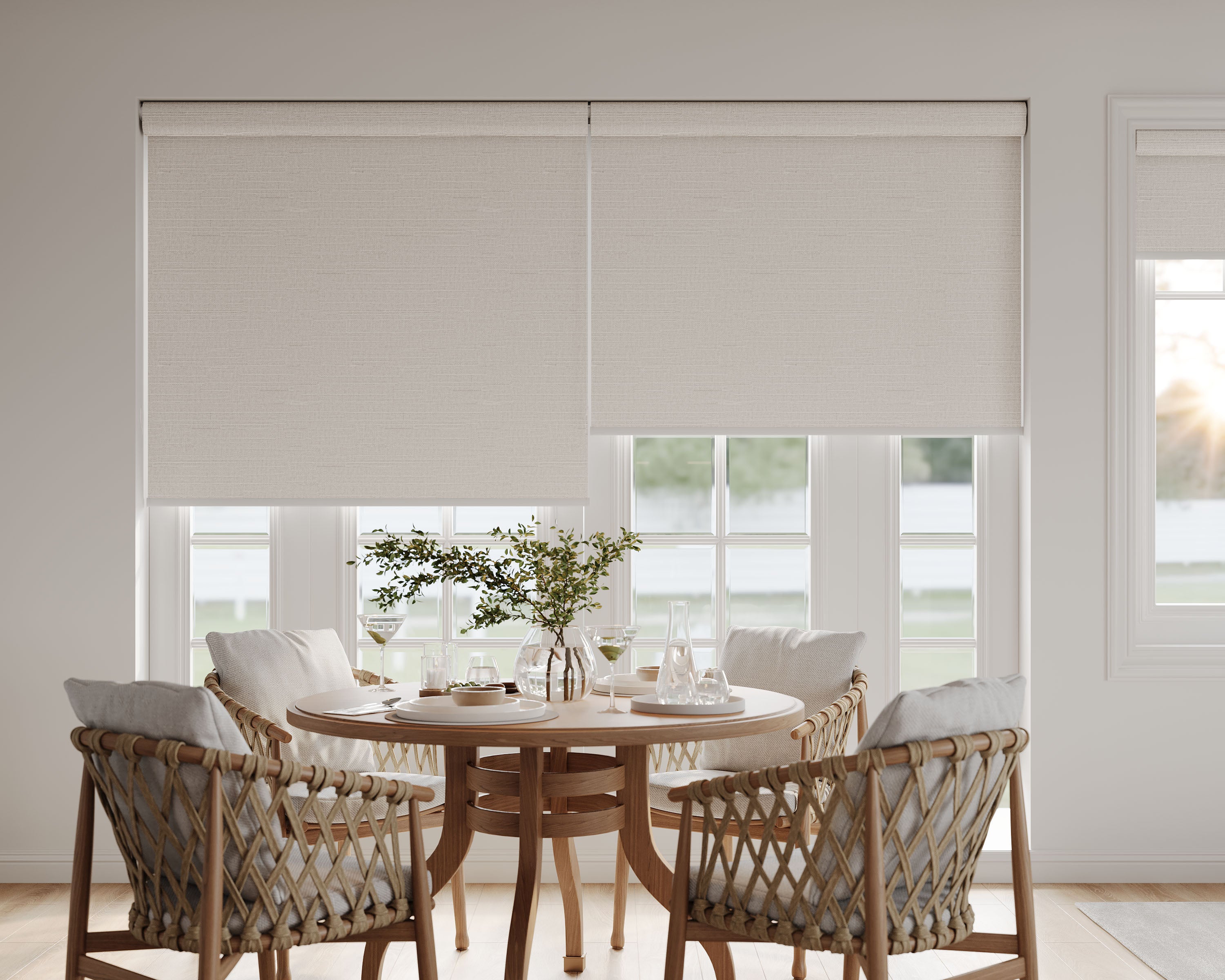


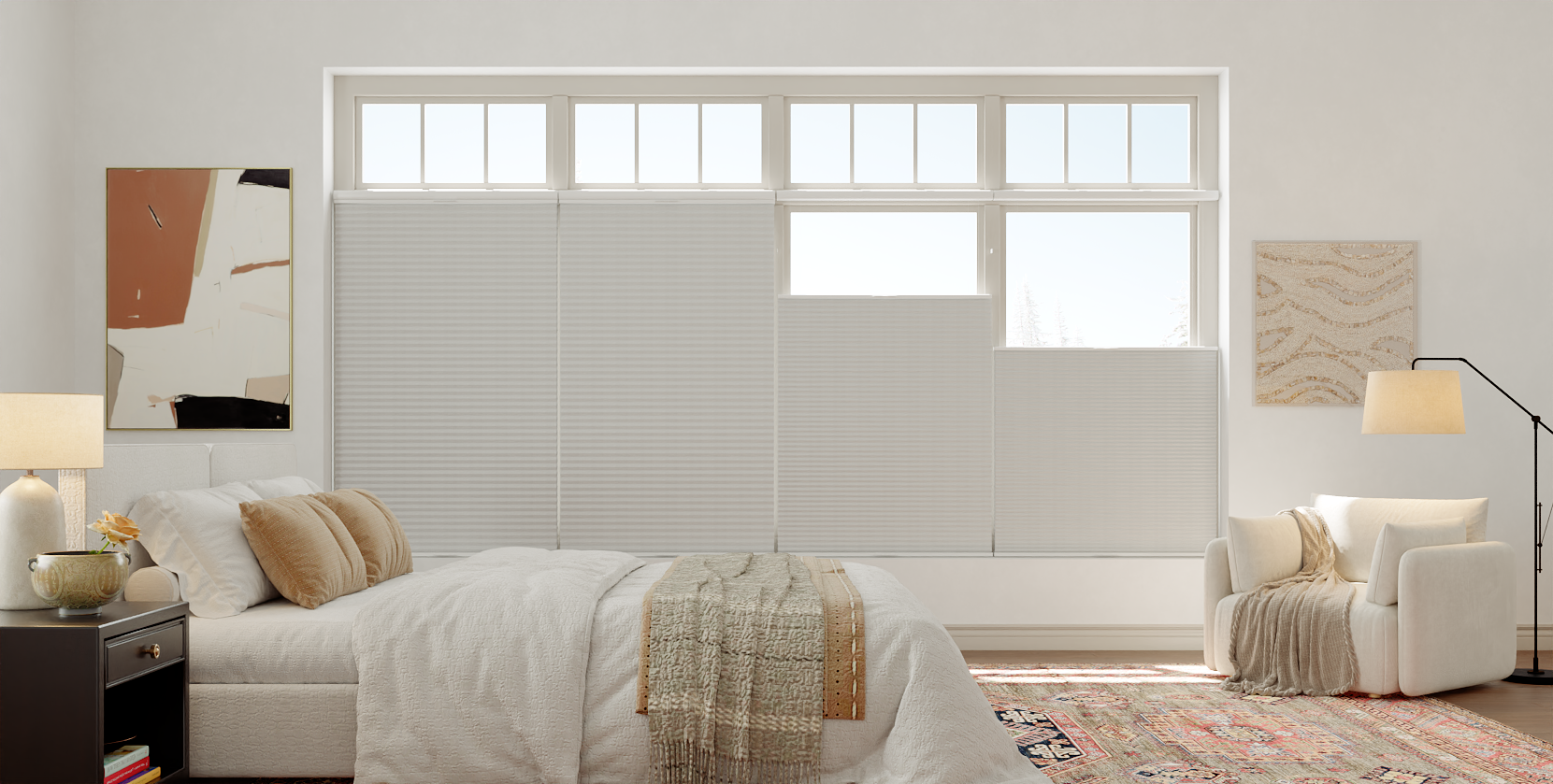


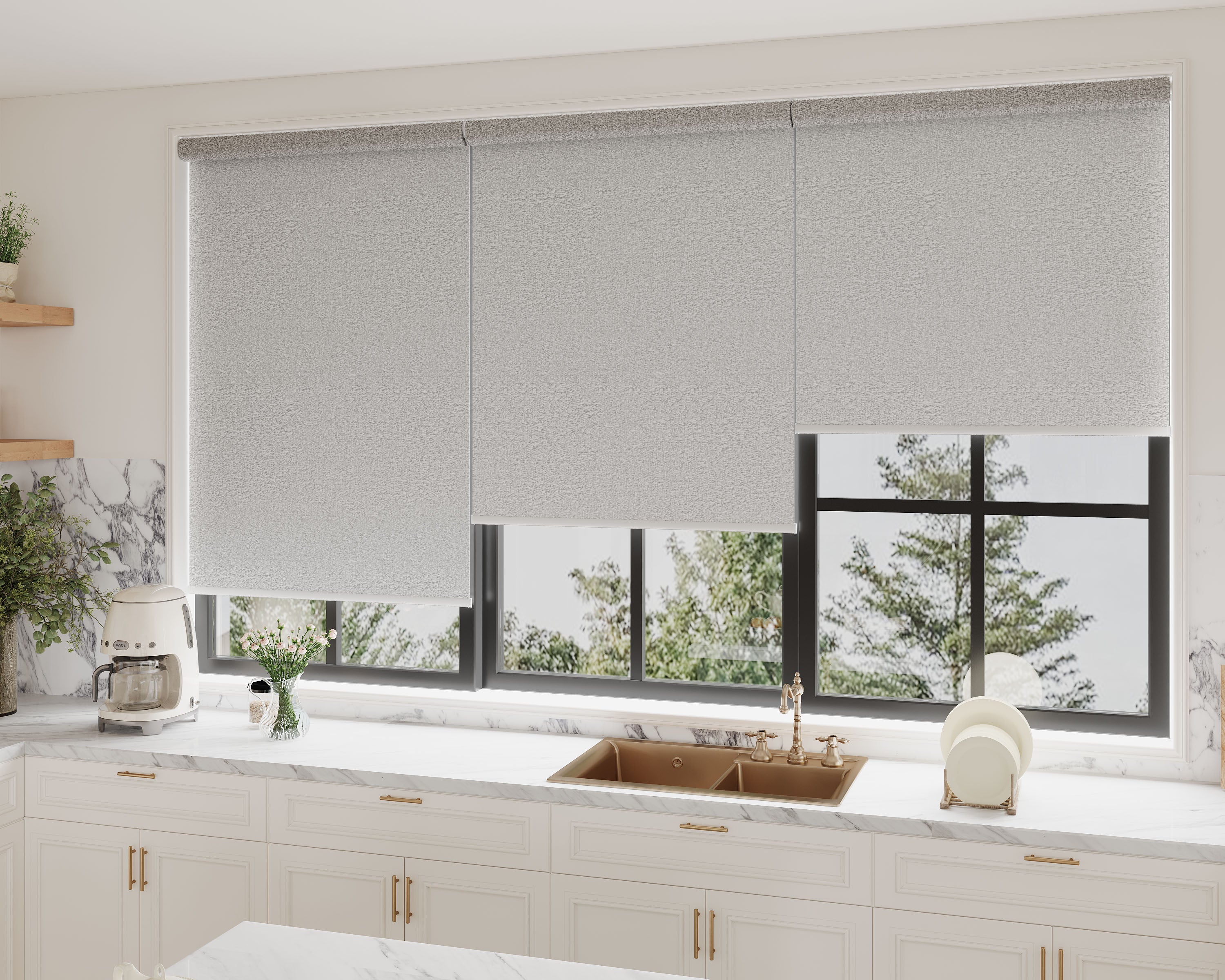

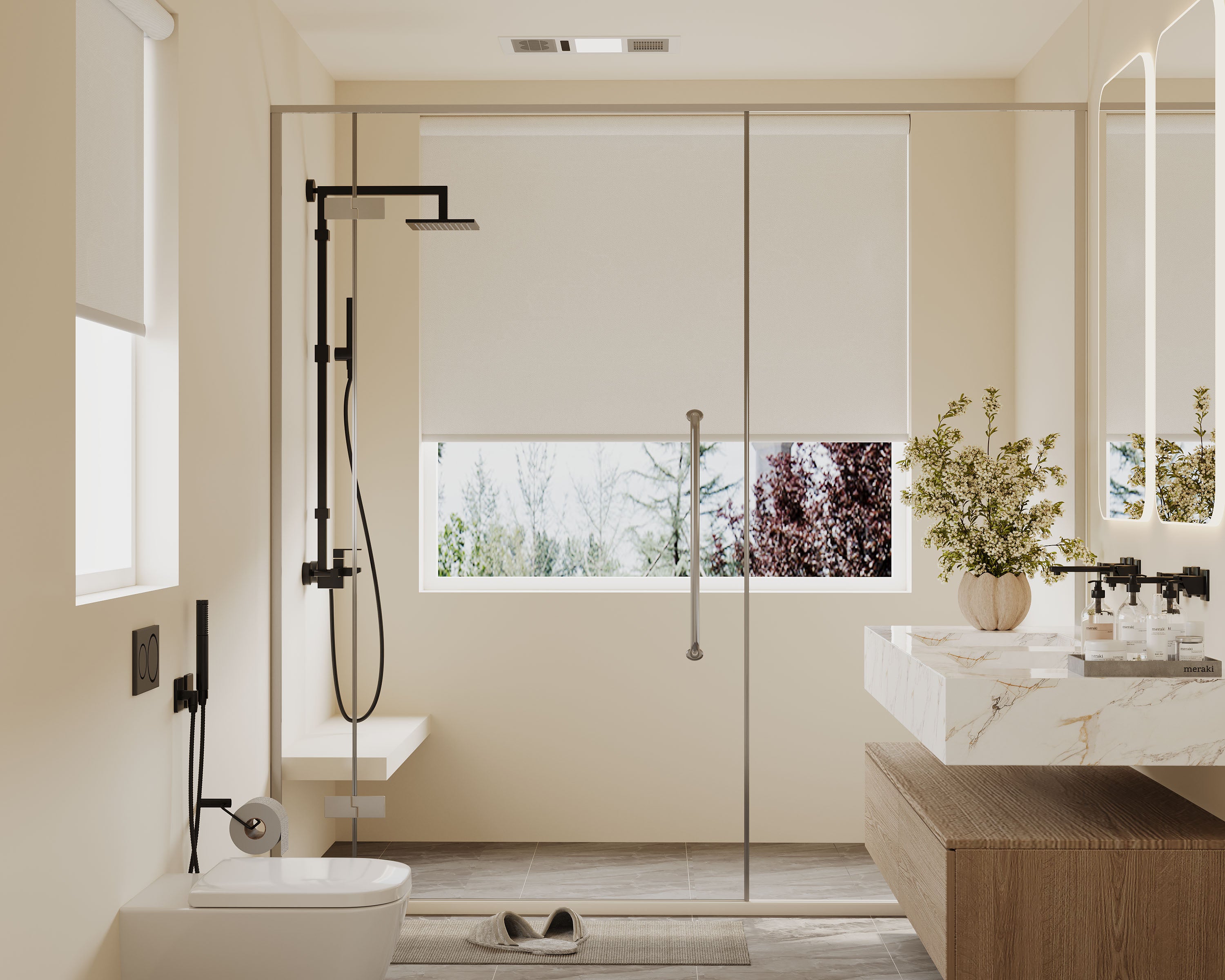


Choosing 3/8 vs 5/8 cellular shades is mainly a choice between two pleat scales within the products that offer them. Both can be single-cell shades. The fraction does not tell you whether the shade has one, two or three layers of cells, and it cannot establish which complete product will insulate your window better.
The current SenseBlinds Cordless Light Filtering Cellular Shades offer 3/8-inch and 5/8-inch single-cell profiles. Start with the appearance you prefer, then check the actual headrail, gathered stack and lift for your opening. The smaller fraction alone is not a mounting drawing.
Separate cell size from single or double cell construction
Cell size describes the scale of the honeycomb profile. Cell count describes the construction through the shade's depth. A 5/8-inch single cell is still one cell deep; it does not become double cell because it is larger than 3/8 inch.
This gives you two different comparison questions. For visual scale, compare 3/8 inch with 5/8 inch in the same type of fabric and lift. For single versus double or triple construction, compare the complete models and their documented specifications. Do not combine fractions from one product with performance claims from another.
| Term | What it tells you | What it does not tell you |
|---|---|---|
| 3/8-inch single cell | A smaller offered cellular profile, one cell deep | The complete headrail depth or a guaranteed insulation value |
| 5/8-inch single cell | A larger offered cellular profile, one cell deep | A universal stack height or superior room acoustics |
| Light filtering | The selected fabric is intended to soften transmitted daylight | That its nighttime appearance matches blackout fabric |
| Blackout | The fabric is selected for stronger light blocking | That mounting gaps disappear around the installed shade |
| Lift option | How you operate the selected model | That every lift uses identical hardware |
The single, double and triple cell guide handles the construction comparison. Keep this guide for the narrower size decision between actual offered 3/8-inch and 5/8-inch options.
Compare visual scale at small and large windows
The current product describes 3/8-inch pleats as slimmer and more compact, and 5/8-inch pleats as fuller and more dimensional. Neither appearance is universally better. Fine pleats may look quiet beside small panes or detailed trim; a larger profile may give the texture more presence across a broad opening.
Compare samples from your normal viewing distance as well as close up. A texture you notice while holding a swatch can look subtle from a sofa. Place the chosen color beside the trim and wall finish, then look again in the light the room normally receives.
For adjacent rooms, decide what needs to coordinate: color, fabric opacity, pleat scale or the headrail finish. It may be more useful to keep one visible color consistent than to force the same opacity into a bedroom and a living room with different needs.
At a tall window, also consider the raised appearance. Ask how much glass the fully raised shade will cover at your ordered drop. The cell-size label does not provide enough information to calculate that stack or promise a percentage of clear glass.
Check actual stack, headrail and lift dimensions
A recess can look deep enough for the fabric but still be too shallow for the chosen hardware. Measure usable support depth at the proposed mounting position, noting handles, stops, screens and inward-opening sashes. Keep the measurements raw until you have the selected model's instructions.
Ask for the minimum mounting depth and the depth needed for the finished headrail to sit fully within the recess. Those are different decisions. A product may be mountable while projecting beyond the trim; whether that is acceptable depends on your room and required window movement.
Then confirm the chosen lift and its dimensions. Standard cordless, a continuous cord loop, motorized operation and Top Down Bottom Up versions may use different assemblies. A dimension from a photo of another lift is not reliable evidence for yours.
- Headrail: overall dimensions and required support area for the exact configuration.
- Raised stack: expected space occupied at your ordered shade height.
- Operating path: clearance for handles, bottom rail and moving fabric.
- Access: comfortable reach for manual adjustment or the approved charging position.
- Order dimensions: the supplier's stated measuring convention and any applied deductions.
Choose the offered fabric and size on known evidence
For softened daylight, compare the light-filtering product in the available profiles. For bedrooms or screens where greater darkness matters, consider the blackout cellular product and confirm the relevant size/lift choices on its page. Do not assume every specialty fabric is offered in both sizes.
The treated cellular bathroom model, for example, is described as 3/8-inch cellular fabric. Its moisture-related specification is a separate feature. Choosing it for a suitable humid location should follow that fabric's evidence and intended use, rather than a general preference for a larger pleat.
No comparative thermal or acoustic test for these two profiles has been established here. If an insulation target drives the project, request results for the complete fabric/construction and installation being quoted. Avoid choosing a supposed performance winner from cell size alone.
A short record for the quote
Record the room, exact product, color, opacity, 3/8-inch or 5/8-inch choice, lift, raw opening measurements and required clearances. Add your visual priority and whether the fully raised stack must clear part of the glass. Ask the supplier to return the matching hardware dimensions and final order convention.
For example: “Living room west, light filtering, 5/8-inch single cell preferred for a fuller texture; inside mount subject to drawing review; handle must remain usable.” That makes the intended result much clearer than “large cells.” Browse cellular shade options, then finalize size, fabric and fit together.
