
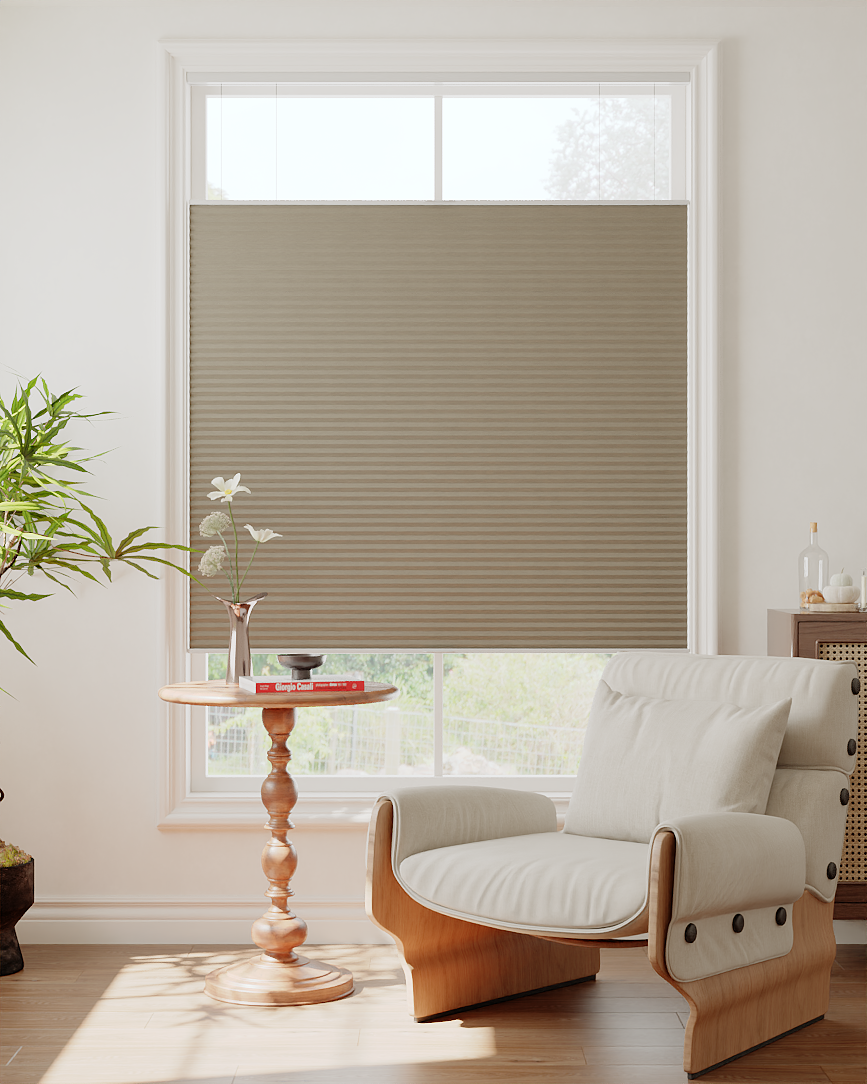
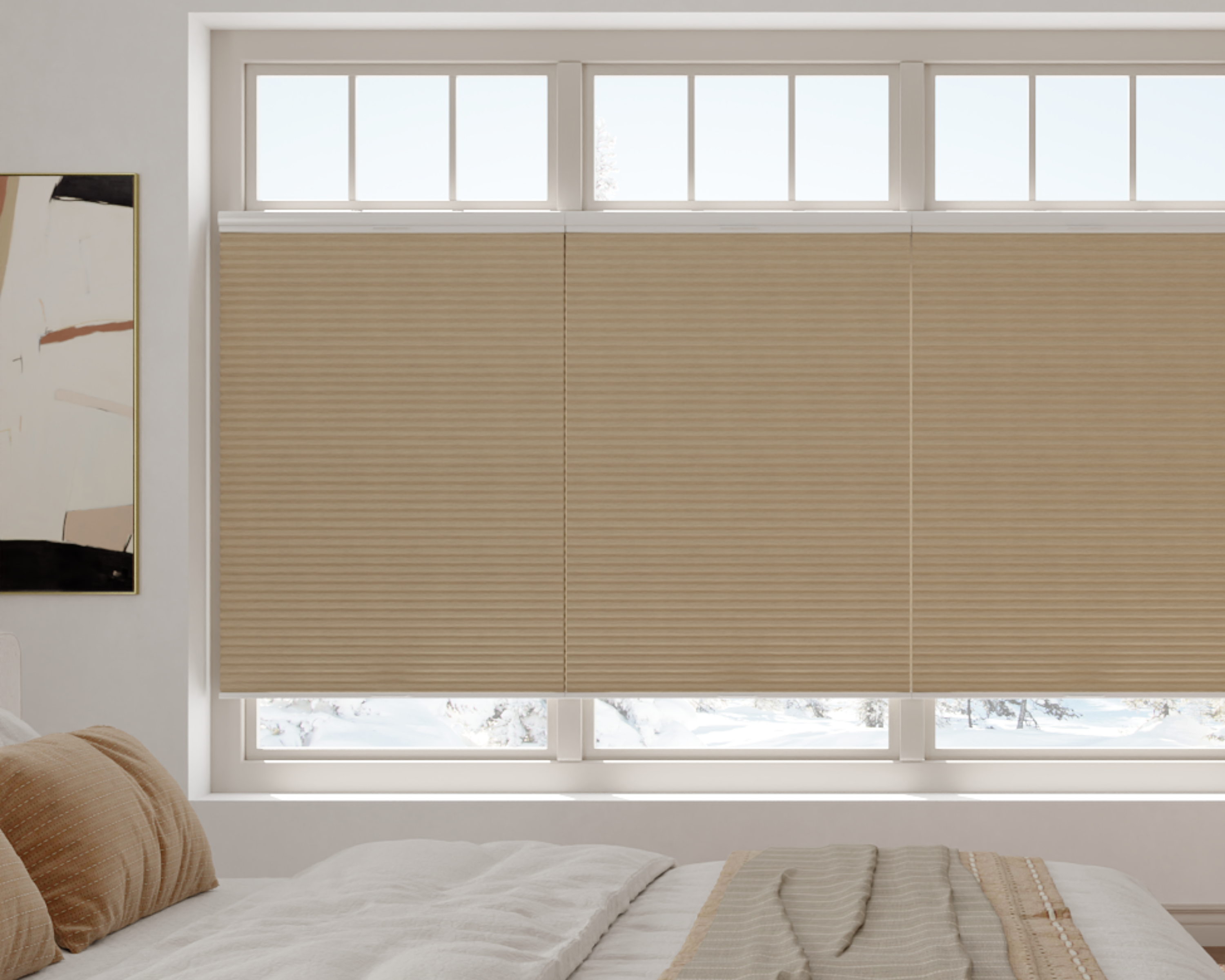







Cellular shades are designed to carry their own specified assembly, not hanging plants, decorations or additional loads. Their supported dimensions depend on the exact fabric, headrail, lift and installation. There is no universal weight allowance for every cellular shade.
Compare cellular shade configurations using the complete opening width and drop. Ask which combinations are offered before deciding on one broad unit or separate panels.
Weight, span and lifting are different questions
The mounting system supports the installed shade. The headrail and components need to work across the intended span, while the lift moves the fabric and rails. A more powerful motor does not automatically strengthen a headrail, fixing or wall.
Width, drop, fabric construction and added components all matter. Cell count alone does not supply the finished weight or a universal operating limit, and width alone does not describe the load.
| Question | Information to obtain |
|---|---|
| Is this size offered? | Exact width/drop limits for the fabric and lift combination |
| How is it mounted? | Specified bracket positions, quantities and mounting surface requirements |
| Which lift works? | Supported manual or motorized configuration for that size |
| What space is needed? | Headrail depth, projection, raised stack and travel |
| What if the opening is too broad? | A supported divided layout and its meeting gaps |
Use the specified mounting arrangement
Follow the selected model's bracket locations and fixing requirements for the actual substrate. An installer may need to assess framing, trim, masonry or another support surface. Do not assume supplied screws suit every wall or that a generic heavy-duty anchor completes the design.
Where an intermediate headrail bracket is specified, use the correct component and position. It does not authorize exceeding the product's maximum size. Do not add a bracket that interferes with moving parts or treat every opening above one generic width as requiring the same hardware.
The width, height and depth measuring guide helps organize the opening details. The exact model's ordering and installation instructions govern deductions and support.
Choose the lift for the supported configuration
Manual cordless operation may suit a reachable window where the selected system supports its dimensions. Motorization may make an awkward or frequently adjusted covering easier to use. Neither is a universal strength ranking across unrelated models.
For a motorized unit, confirm power and charging access, controls and the permitted size. An app or grouped control is a separate capability from a motor being installed.
For homes with young children, follow CPSC's cordless guidance. Our parent cord-safety guide addresses related selection questions; secure mounting and furniture placement remain part of the room plan. A correctly installed shade should still never be used as a grab handle or climbing support.
Respond to sag or difficult movement appropriately
Stop forcing a covering that moves unevenly, rubs, slips or shows loose mounting. Record the model, size and symptom, and provide photographs to the supplier or installer.
Sag does not prove that a universal center-bracket retrofit will repair it. Possible issues need assessment against the actual system; do not tighten, drill or add support indiscriminately while an assembly is loaded or damaged.
A motor should not be used to overcome a jam. Do not open a spring, clutch or headrail from a general article. Use the model's supported service procedure.
Plan large windows and doors as complete layouts
A broad picture window may use one offered shade or multiple units. A door also needs handle, opening and passage clearance. Confirm the actual supported configuration rather than assuming any cellular product fits a sliding door.
Use the cellular construction guide for the air-pocket principle. Thermal potential does not remove the size and support requirements.
Compare actual starting configurations
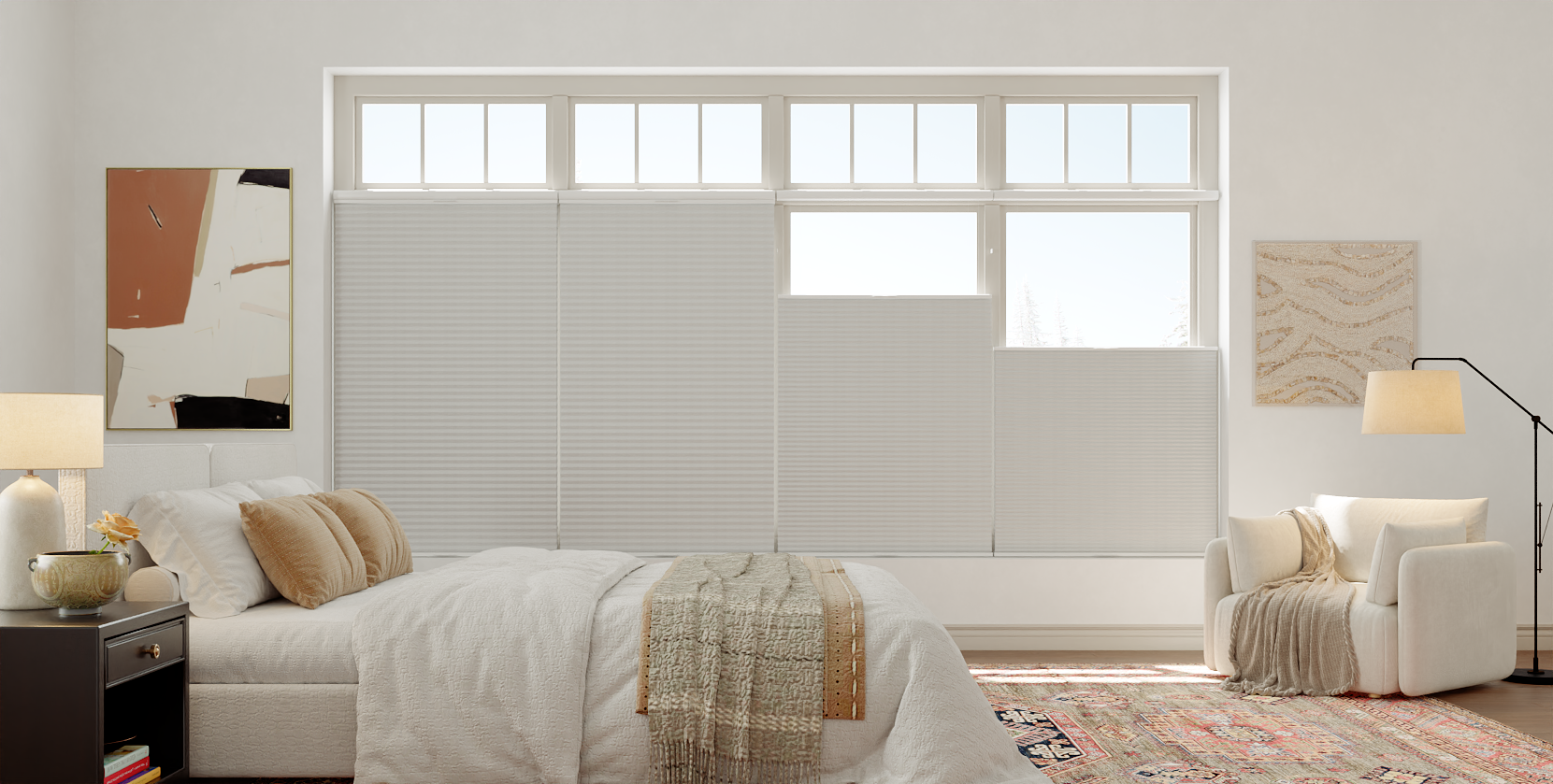
Investigate cordless blackout cellular shades, motorized light-filtering cellular shades and light-filtering top-down/bottom-up shades. Each has its own offered sizes, opacity and movement.
Ask the supplier to identify the complete shade, lift and mounting plan in the quote. That is more useful than a guessed weight capacity or a promise that one operating system prevents every kind of sag.
