
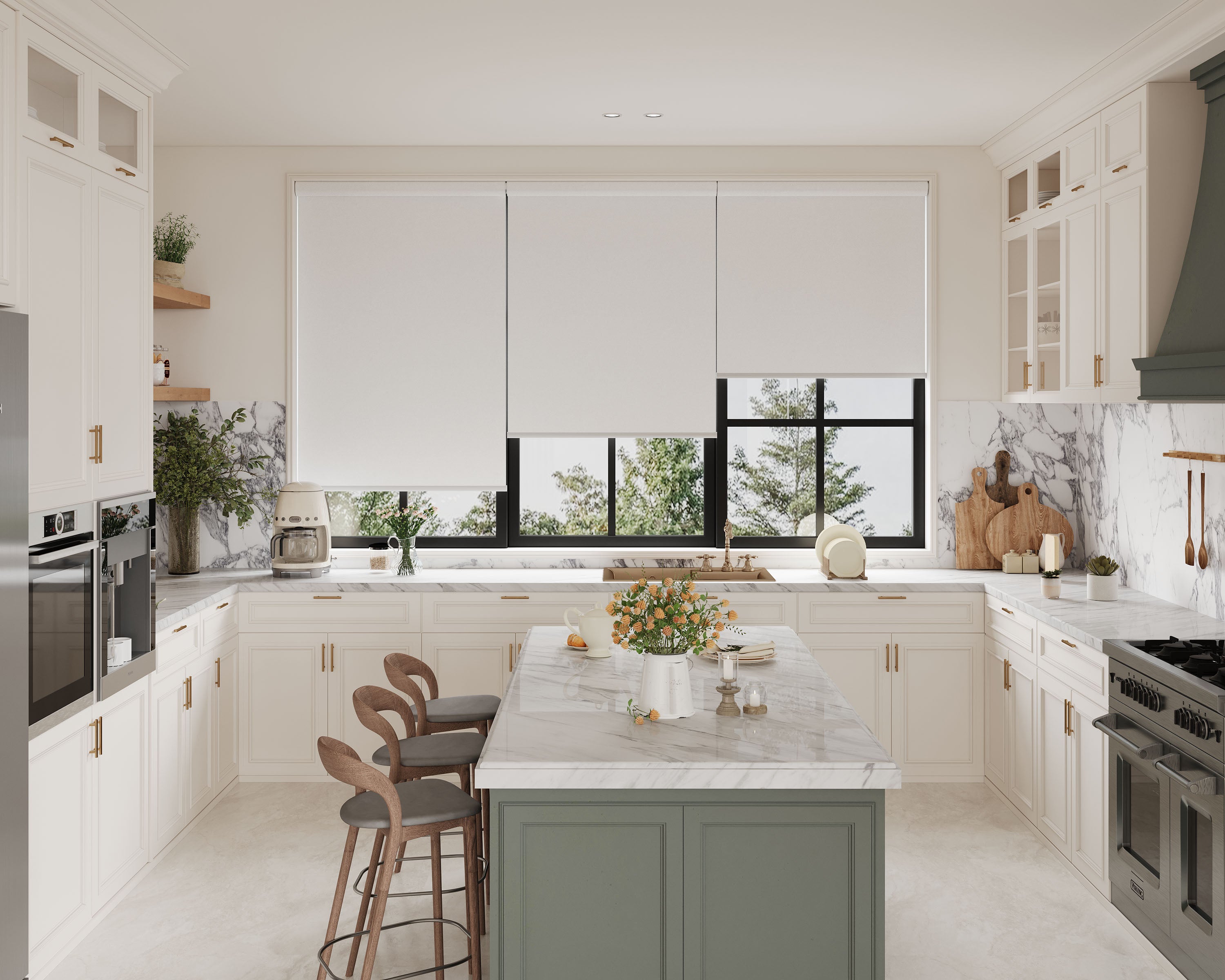
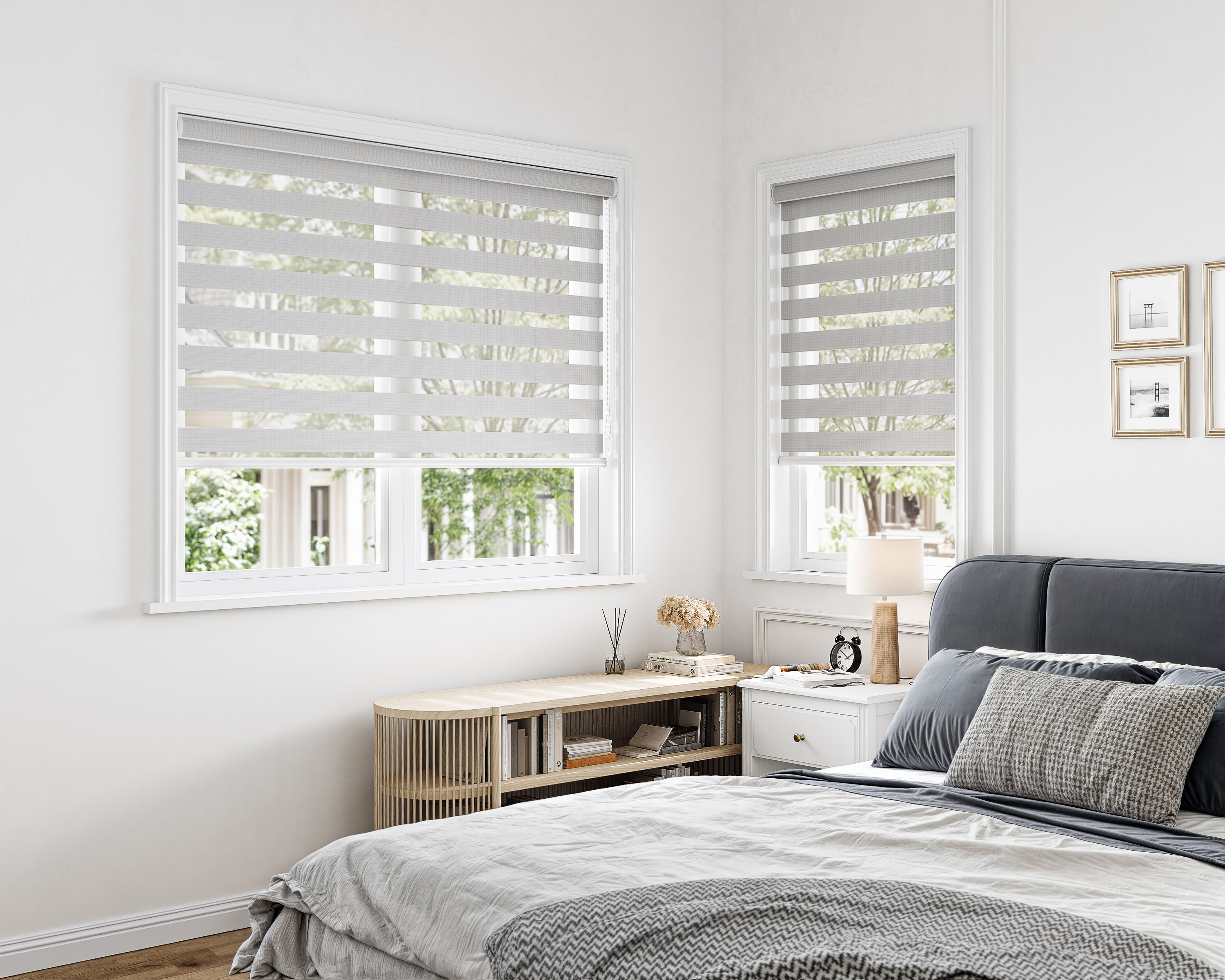
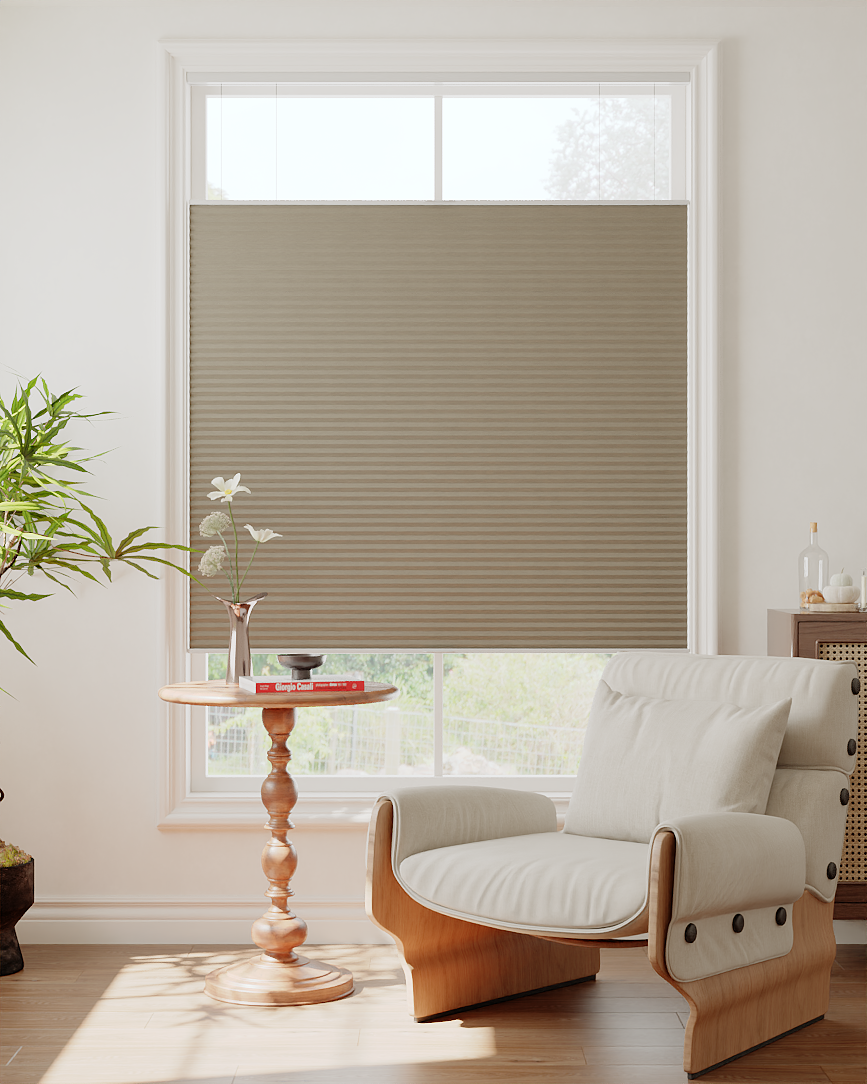
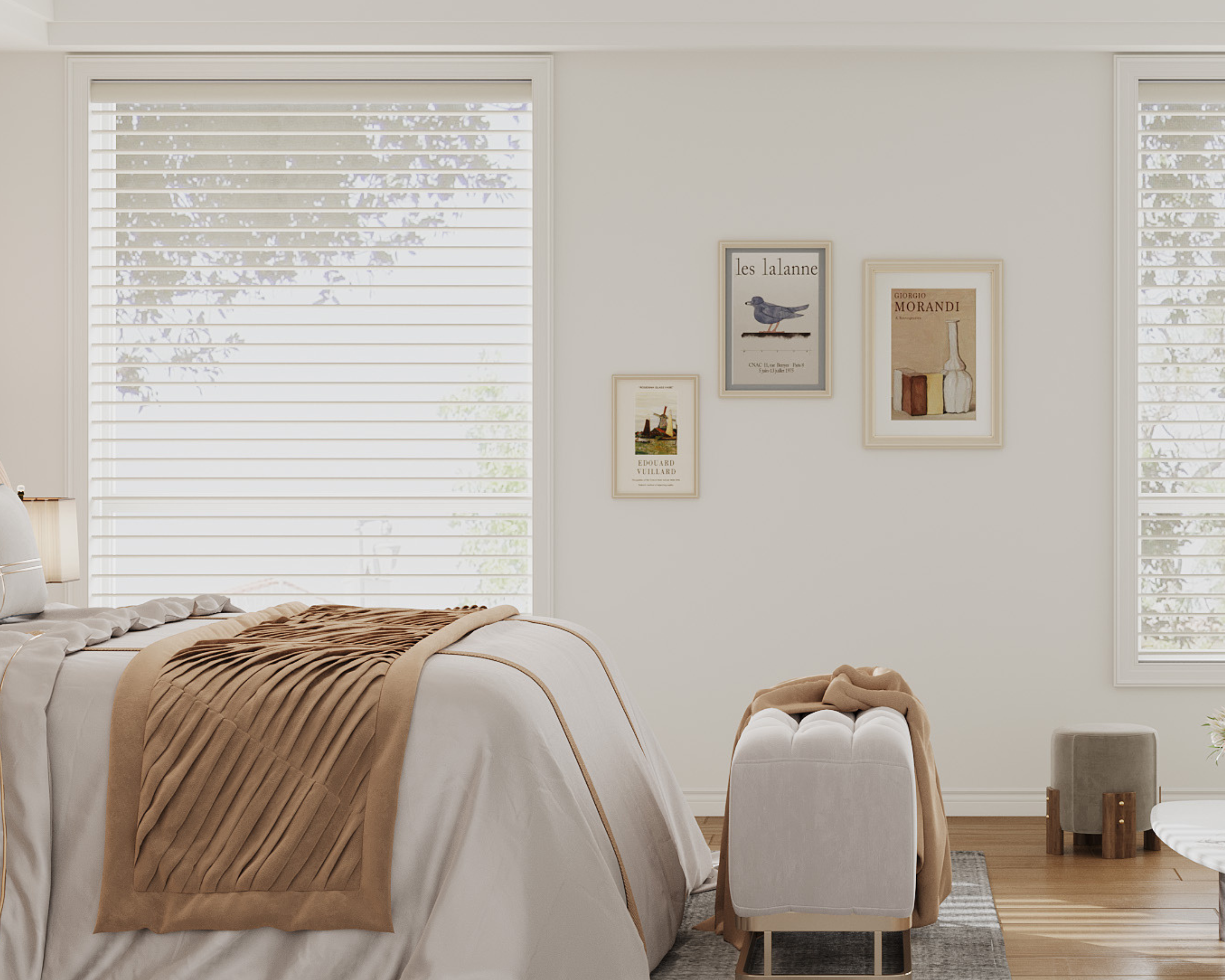

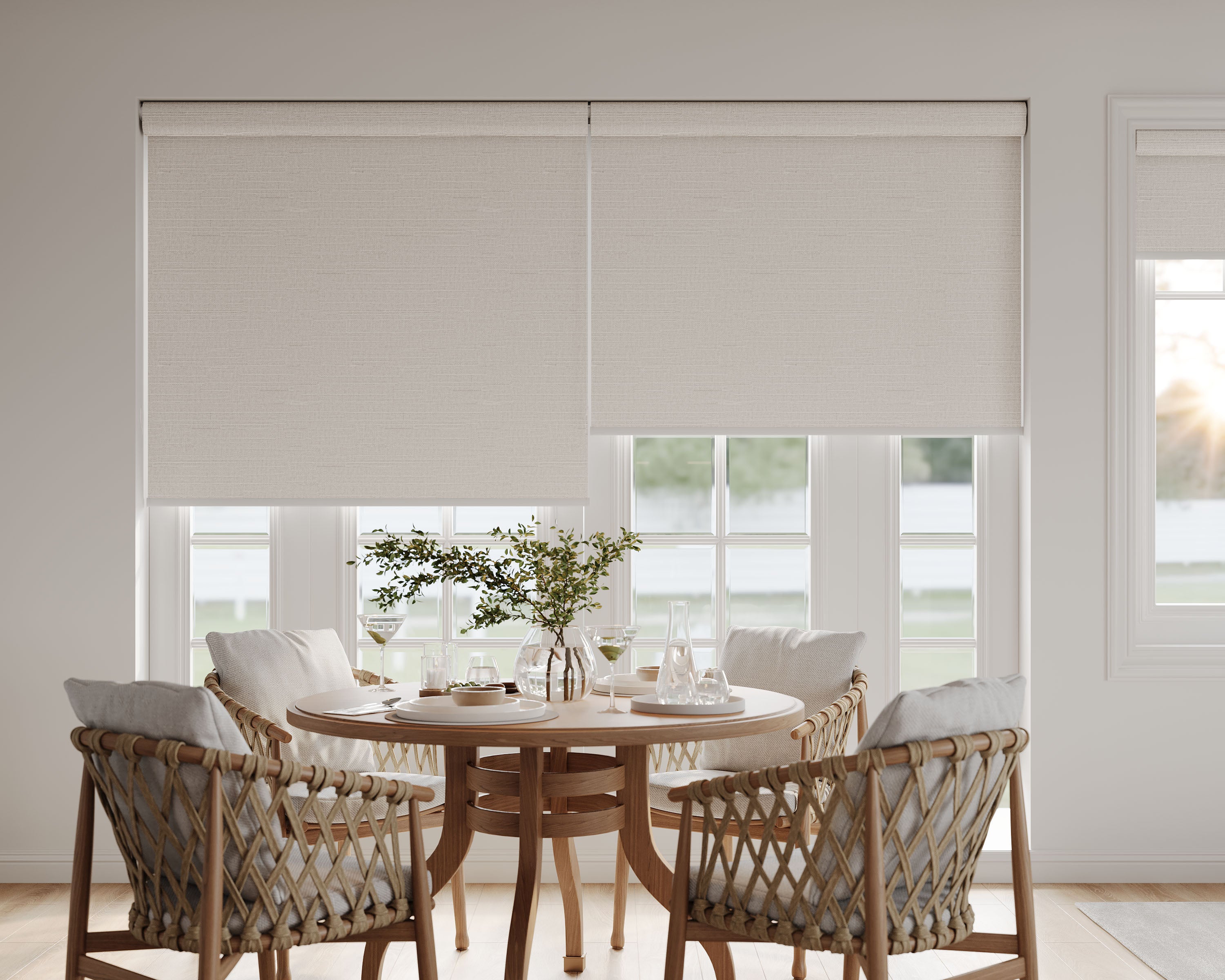




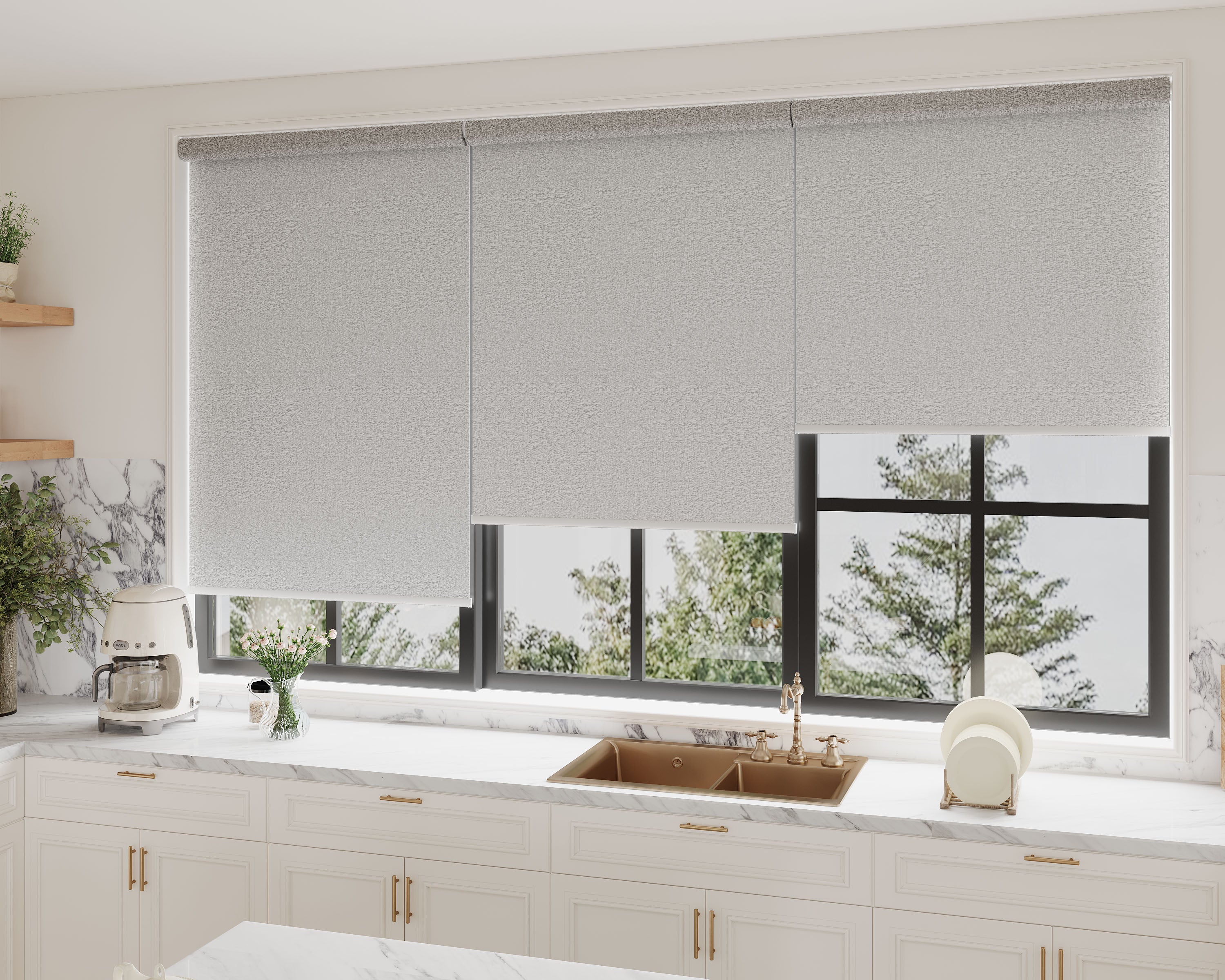



A solar fabric's openness factor describes the proportion of open space in its weave. A lower number generally means a tighter screen; a higher number generally means more view-through when comparing similar fabrics. The number is not a direct measurement of visible-light transmission, UV protection, heat reduction or nighttime privacy.
Use openness to narrow the solar shade options, then compare the actual fabric's color, optical data and sample. The 1%, 3%, 5% and 10% examples below explain the decision; they do not imply every percentage is available in every product.
What 1%, 3%, 5% and 10% tell you
For comparable screen fabrics, these numbers are useful starting points rather than room-by-room rules.
| Openness | What to compare | Main question |
|---|---|---|
| 1% | A relatively tight screen | Does it control the glare you experience while retaining enough daylight/view? |
| 3% | A tighter-screen alternative with a different view/daylight balance | How does the sample compare with 1% in your room? |
| 5% | A more open candidate where view-through matters | Is the remaining glare acceptable at your screen or seating position? |
| 10% | A relatively open screen | Is view the priority, and what separate privacy provision is needed? |
A 1% openness fabric is not automatically 99% light-blocking or 99% UV-blocking. Light can interact with the yarn as well as the openings. Similarly, 10% does not mean twice the daylight of 5%. Use the selected material's measured data for those comparisons.
Lower openness for glare-sensitive tasks
If a computer screen, television or reading position receives difficult sunlight, compare tighter screens first. That is a shortlist strategy, not a guarantee that a particular number will solve the problem. Sun angle, window size, fabric color and where you sit all affect what you experience.
Look through a sample from the actual working position rather than only holding it against a white wall. Compare how much detail you can see outdoors and whether the fabric itself appears bright. For a direct office decision, read our guide to shades for reducing home-office glare.
Higher openness when the view matters
More open screens may suit a room where preserving the connection to a garden or skyline is a priority. Compare them with tighter alternatives under the same lighting. A view you like at one time of day may come with unacceptable glare at another.
Do not choose an openness factor based only on a room label such as kitchen or sunroom. Record the difficult hours, orientation and task first. North-, south-, east- and west-facing windows do not share one universal pattern of soft or harsh light across climates and seasons.
Nighttime privacy needs its own answer
Solar screens have openings. Even a tight 1% fabric should not be sold as a guaranteed opaque privacy barrier, particularly with indoor lights on after dark. Distance, viewing angle, color and the light difference between indoors and outdoors affect visibility.
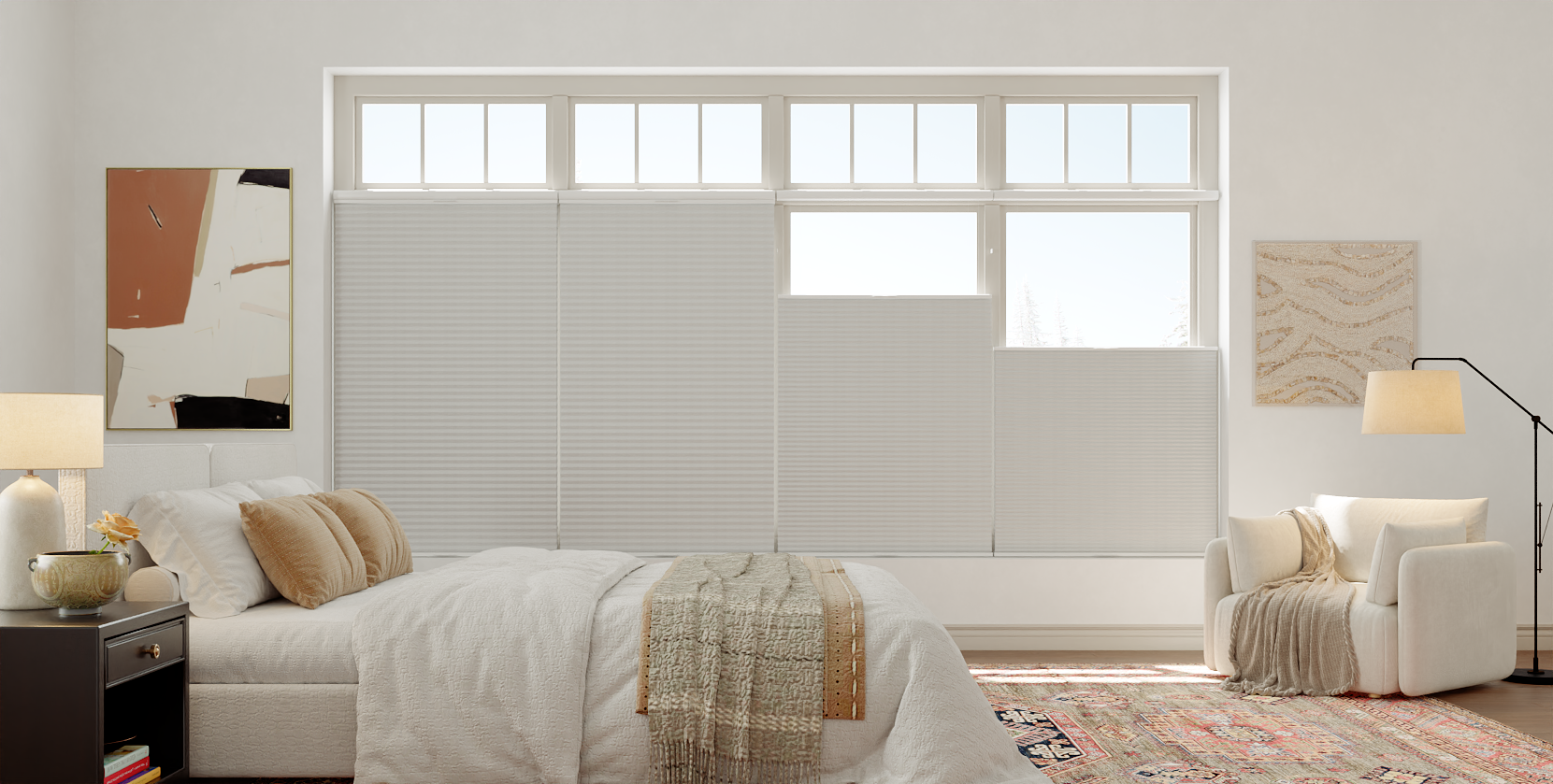
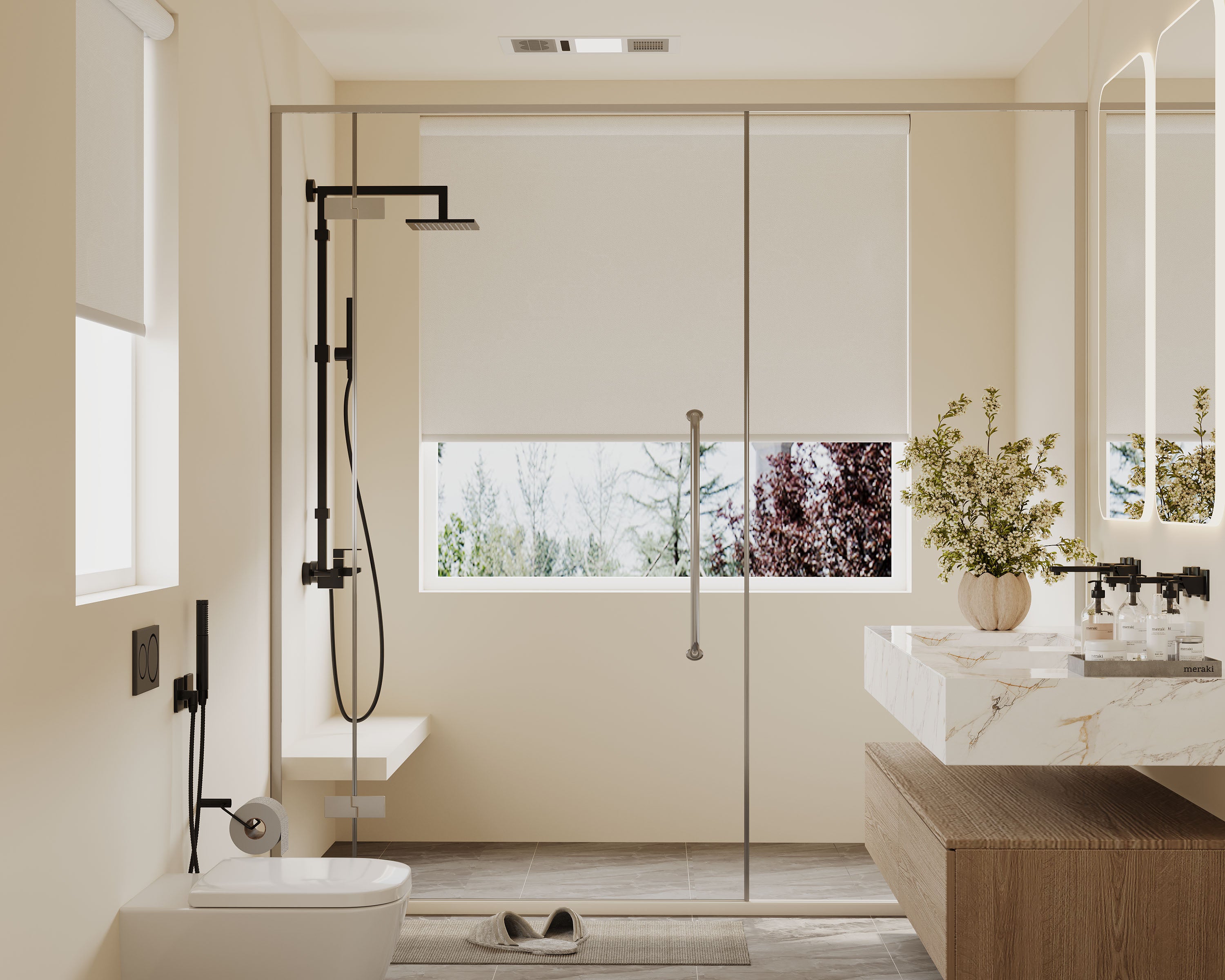
For a bedroom or bathroom needing dependable visual privacy, compare an appropriate opaque covering or a compatible separate privacy layer. A dual arrangement may be an option where a verified system supports it; do not assume every roller assembly accepts a second fabric or top-down/bottom-up operation.
Test the selected sample under relevant evening lighting and plan the installed edge coverage. A sample shows the textile, not every gap around the final shade.
Color and fabric data change the comparison
Two fabrics with the same openness can look different. Color, yarn and finish affect view-through and optical performance. Avoid a universal table that ranks all light fabrics as cooler or all dark fabrics as warmer without the actual product's data.
Ask for the measurements relevant to your goal: visible-light transmission for daylight, suitable solar-performance data for heat concerns and UV data when that is a priority. Compare the same metric and conditions across candidates. Openness alone is not enough to calculate a utility-bill saving or promise that furnishings cannot fade.
The PNNL guide to window attachments explains why glazing, attachment design and operation also influence solar control and energy performance. A fabric choice is one part of that system.
Openness is not a universal label for every shade
Solar-screen roller fabrics commonly use openness percentages. A light-filtering cellular shade, Roman textile or sheer fabric should not be assigned an invented percentage because it looks dense. Compare those products through their own material and opacity information.
If you want a softer fabric appearance rather than a screen view, compare light-filtering shades. If darkness is the task, compare an appropriate blackout material and its installed coverage instead of treating a low-openness screen as blackout.
Choose with a side-by-side sample check
- State the task: reduce glare, retain a view, manage daylight or create privacy.
- Compare candidate openness levels in the same fabric family where possible.
- Check samples from the actual seating/working position at the difficult time of day.
- Evaluate nighttime privacy separately from the daytime view.
- Verify optical data, permitted use, dimensions and lift options for the final fabric.
Then compare the available solar shade fabrics and openness options. Choose the measured tradeoff that fits the window, rather than assuming a percentage guarantees privacy or a particular amount of cooling.
Related choices and guides
For the next decision, read understanding the difference between light filtering and solar shades, measuring width, height and depth, how to choose the right sheer shade fabric linen polyester or woven, solar vs sheer shades managing glare without losing the view outside.
