
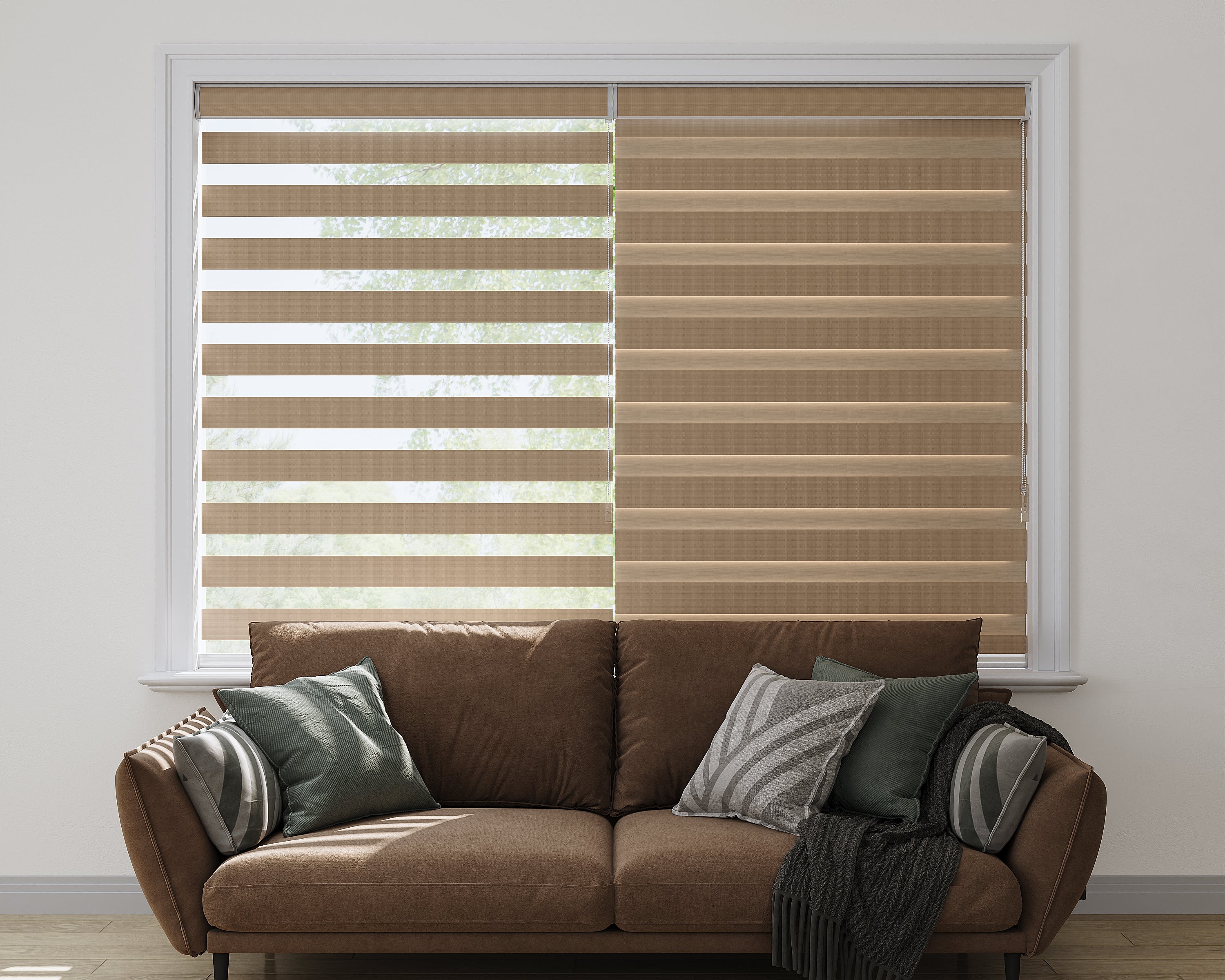







Choosing between installing zebra shades yourself or hiring a professional is a decision that balances cost, confidence, and the desire for a perfect result. For straightforward windows and capable hands, DIY installation is a feasible and cost-saving project. For complex windows, motorized systems, or a guaranteed flawless finish, professional installation is a worthwhile investment that saves time and prevents costly errors. This definitive guide provides the detailed comparison and actionable advice you need to make the right choice for your home and skill level.
Here’s what you’ll learn:
-
A complete, side-by-side breakdown of the pros, cons, costs, and outcomes of DIY versus professional installation.
-
A detailed, step-by-step walkthrough of the DIY process, including zebra-shade-specific pitfalls to avoid.
-
The comprehensive scope and concrete benefits of professional installation, from warranty protection to problem-solving.
-
A clear decision framework based on your window types, project scope, and personal aptitude.
-
Key considerations for motorized shades and specialty windows where professional expertise is crucial.
Your journey begins with the product itself; understanding the versatile functionality and modern design of zebra shades is key to appreciating why proper installation matters.
The Core Comparison: Weighing Your Options
The best path depends on how you value cost, time, quality, and risk. The following table provides a granular comparison across every major decision factor.
| Factor | DIY Installation | Professional Installation |
|---|---|---|
| Upfront Financial Cost | Lower. You avoid labor fees, saving approximately $30 to $100 per window. Total cost is the price of the shades plus any tools you don't already own. | Higher. The total project cost includes the price of the shades plus professional labor fees. |
| Time & Convenience Cost | High. A multi-window project can consume a full day or weekend. This includes time for learning, careful measuring, the installation itself, and potential troubleshooting. | Low to None. A professional team can typically measure and install shades for an entire home in a single, efficient visit, saving you dozens of hours. |
| Required Tools & Preparation | Your responsibility. You must supply a drill, high-quality level (a laser level is ideal), steel tape measure, screwdrivers, pencil, and possibly wall anchors. You are also responsible for site preparation and cleanup. | Fully handled. Certified installers arrive with all necessary professional-grade tools, appropriate hardware for your wall type, and take care of all cleanup. |
| Skill & Precision Required | Moderate to High. Demands meticulous measuring, absolute precision in leveling and marking, and confident drilling. Zebra shades require perfect alignment to ensure the alternating fabric layers operate smoothly without appearing crooked. | Guaranteed by expertise. Installers have the trained skill to ensure perfect leveling, secure mounting, and optimal operation on the first attempt, regardless of window quirks. |
| Risk & Accountability | You bear 100% of the risk. Errors in measuring can lead to expensive, ill-fitting shades. Mistakes in drilling can damage walls, windows, or wiring. There is no recourse for self-inflicted damage or improperly installed products. | Minimal to no risk. Reputable installers are insured and accountable for any errors or damages that occur during their work. You receive a guaranteed result. |
| Final Aesthetic & Function | Variable, based on your skill. The risk of light gaps, uneven hangs, or operational issues is real if execution isn't perfect. Achieving a truly professional look is challenging. | Consistently excellent. Results in a polished, seamless look with perfect operation, proper light sealing, and shades that look like a built-in part of your home. |
| Warranty & Long-Term Value | May void product warranties. Many manufacturers explicitly require professional installation to maintain the full product warranty on mechanisms and fabrics. | Protects your investment. Professional installation typically fulfills all manufacturer warranty requirements and is often backed by the installer's own workmanship guarantee for several years. |
The DIY Installation Path: A Detailed, Step-by-Step Guide
If you are methodical, handy, and undertaking a project on standard windows, DIY can be rewarding. Here is exactly what it involves, with specific notes for zebra shades.
Phase 1: Preparation, Tools, and Mindset
Gather these essential tools: a quality power drill, a steel tape measure, a high-quality 4-foot level (a laser level is highly recommended), a pencil, screwdrivers, and the hardware provided with your shades. For walls that aren't solid wood studs, you will need appropriate drywall anchors or toggle bolts. The correct mindset is just as crucial: patience and a commitment to measuring at least three times before any action. The unique striped design of zebra shades means even a slight tilt during installation will be visually obvious when the layers are adjusted.
Phase 2: The Critical Step of Precise Measurement
This is the single most important step and the most common source of DIY failure. Accuracy to within 1/8th of an inch is the goal.
-
For an Inside Mount (sleek, built-in look):
-
Measure the width of the window recess at the top, middle, and bottom. Use the smallest of these three measurements as your order width.
-
Measure the height from the top inside of the recess to the windowsill on the left, center, and right. Use the largest of these three measurements as your order height.
-
Measure the depth of the recess to ensure it can accommodate the headrail bracket (typically requires at least 2 inches).
-
-
For an Outside Mount (to cover trim or block more light):
-
Decide how far you want the shade to extend beyond the window frame on each side (typically 1.5 to 3 inches for optimal light blockage).
-
Measure the exact width you want the shade to cover on the wall or trim.
-
Measure the exact height from where the top of the headrail will be to where you want the bottom of the shade to fall.
-
For absolute confidence, following a dedicated guide for fool-proof window measurement with a tape is an indispensable step before you order.
Phase 3: Installation Execution & Zebra-Specific Tips
-
Mark Bracket Positions: Hold the bracket in place and use your level—extended across both bracket locations—to mark the drill holes. A laser level is invaluable here for creating a perfectly straight reference line. Even a one-degree tilt will be noticeable.
-
Drill and Mount Brackets: Pre-drill pilot holes using a bit slightly smaller than your screw. If not drilling into a wood stud, insert the appropriate wall anchor. Securely fasten the brackets, ensuring they do not wiggle.
-
Secure the Headrail & Test Function: Click or slide the zebra shade's headrail into the brackets. Before locking it in place or adding end caps, perform a full functional test. Raise and lower the shade several times, and cycle the adjustment mechanism that shifts the fabric layers. Ensure it operates smoothly without catching or appearing misaligned.
-
Finalize & Install Safety Devices: Once operation is confirmed, secure the headrail. If your shade has a cord, install a cord cleat high on the wall, out of reach of children and pets, to keep the cord taut and secure.
The Professional Installation Advantage: Beyond Just Hanging Blinds
Hiring a certified installer offers a suite of benefits that justify the cost for most homeowners, particularly for anything beyond basic windows.
The Comprehensive Professional Process
A professional service typically begins with an expert in-home consultation. The installer will:
-
Take responsibility for all measurements, using professional tools to account for window squareness, wall material, and obstructions.
-
Recommend the optimal mounting type (inside vs. outside) for your goals regarding light control, aesthetics, and insulation.
-
Identify potential challenges like plaster walls, metal studs, or tile backsplashes before installation day.
On installation day, they handle the entire process with efficiency, using tools like stud finders and impact drivers to ensure a rock-solid mount. They will test every function, provide a demonstration on how to use and clean your shades, and remove all packaging and debris, leaving your home spotless.
The Tangible, Long-Term Benefits
-
Warranty Security & Peace of Mind: As shown in the comparison table, professional installation is often required to keep the manufacturer's warranty valid. This protects your significant investment against defects. Additionally, the installer's own workmanship guarantee covers the installation itself.
-
Expert Problem-Solving: Professionals seamlessly handle challenges that could derail a DIYer: out-of-square windows, concrete walls, bay window angles, or integrating with existing smart home systems.
-
Time and Stress Savings: They complete the job in a fraction of the time, freeing you from a stressful weekend project and the frustration of diagnosing and fixing your own mistakes.
-
Guaranteed Safety and Compliance: Installers ensure all mounts are structurally secure for the shade's weight and that any corded systems are made safe according to the latest child safety standards.
For complex upgrades like motorization, professional expertise is particularly valuable to ensure proper power setup, programming, and integration, considerations explored in our comparison of battery-powered and hard-wired motor systems.
Decision Framework: Which Option Is Right For Your Situation?
Apply this scenario-based logic to your specific project to make a confident choice.
Confidently Choose DIY Installation If...
-
You are experienced with basic power tools and have successfully completed similar precision home projects (e.g., hanging cabinets, leveling shelves).
-
You are installing standard, manual zebra shades on regular, rectangular, and easily accessible windows.
-
The project is small in scale (e.g., 1 to 3 windows).
-
You are on a strict budget and the potential financial risk of a mistake is an acceptable trade-off for saving on labor costs.
-
You are in a rental property and are using a strictly temporary, no-drill tension rod solution (note: this limits shade options and stability).
Strongly Consider Professional Installation If...
-
You are dealing with complex or specialty windows: bay or bow windows, arched windows, skylights, floor-to-ceiling glass, or very large sliding doors.
-
You are installing motorized, smart-home integrated, or exceptionally large/heavy zebra shades.
-
The project is large in scale, covering many windows or an entire home.
-
The walls or frames are challenging (tile, plaster, brick, concrete, or metal studs).
-
You highly value your personal time and prefer a guaranteed, hassle-free result.
-
You want the absolute security of validated warranties for your investment in custom window treatments.
-
You lack confidence in your measuring, leveling, or drilling skills.
The complexity of large windows like sliding doors is a common reason to choose professional help, as the margin for error is small and the stakes are high, a point underscored in our comparison of zebra shades and vertical blinds for sliding door applications.
Conclusion: Investing in the Right Outcome for Your Home
The choice between DIY and professional installation is not just about cost—it's about what kind of cost you're willing to bear. DIY trades monetary cost for a significant investment of your time, labor, and assumption of risk. Professional installation trades a higher monetary cost for expertise, time savings, risk transfer, and a guaranteed quality outcome.
For simple projects where you possess the requisite skill, tools, and patience, DIY can be a satisfying and economical solution. However, for any project involving complexity, premium products, multiple windows, or a simple desire for perfection without personal hassle, professional installation is the clear and recommended choice. The labor fee is an investment in the long-term performance, appearance, and protected value of your window treatments.
Key Highlights:
-
DIY saves on labor costs but requires a major investment of time, skill, and tolerance for risk, with the homeowner fully accountable for any errors.
-
Professional installation has a higher upfront cost but delivers expertise, efficiency, warranty protection, and a guaranteed, polished result.
-
Precision measurement is the non-negotiable foundation of success for either method; even minor errors can lead to functional or aesthetic failures.
-
Motorized systems and complex windows (bay, arch, large doors) are strong indicators to choose professional installation to ensure reliable operation.
-
Protecting your product warranty is a critical financial consideration, often tipping the cost-benefit analysis in favor of professional installation.
By honestly assessing your windows, your skills, and your priorities against this detailed framework, you can choose an installation path that delivers satisfaction and flawless function for years to come.
Explore Custom Zebra Shades


Frequently Asked Questions (FAQ)
How much does professional zebra shade installation typically cost per window?
Professional installation fees typically range from $30 to $100 per window. The final cost varies based on your geographic location, the size and height of the window, the complexity of the installation (e.g., motorization, special shapes), and the wall material. A straightforward, standard-sized window will be at the lower end, while a large, motorized sliding door shade will be at the higher end.
Can I install motorized zebra shades myself?
While it is technically possible, it is not generally recommended for most homeowners. Motorized systems involve electrical components (batteries or wiring), programming limits, and often integration with smart home hubs. Incorrect setup can lead to malfunction, damage to the motor, or voided warranties. The precision required for setting the upper and lower limits is also greater. Professional installers are trained specifically for these systems.
What is the single most common DIY mistake, and how can I avoid it?
The most common and costly mistake is incorrect measurement. This leads to shades that are either too wide to fit or too narrow, leaving large light gaps. To avoid it: use a metal tape measure, not a cloth one; always take multiple measurements (top, middle, bottom) and use the smallest width/largest height for inside mounts; and double-check your math before ordering. Writing down measurements clearly as "Width x Height" is also essential.
Do installers typically charge extra to remove and dispose of old window treatments?
This varies by company. Many professional installation services include the removal and disposal of your old blinds or shades as a standard part of the job. However, some may charge a small additional fee, especially if there are a large number of old treatments or if they are particularly difficult to remove (e.g., glued-in mounts). Always confirm what's included in the quoted price when booking the service.
