
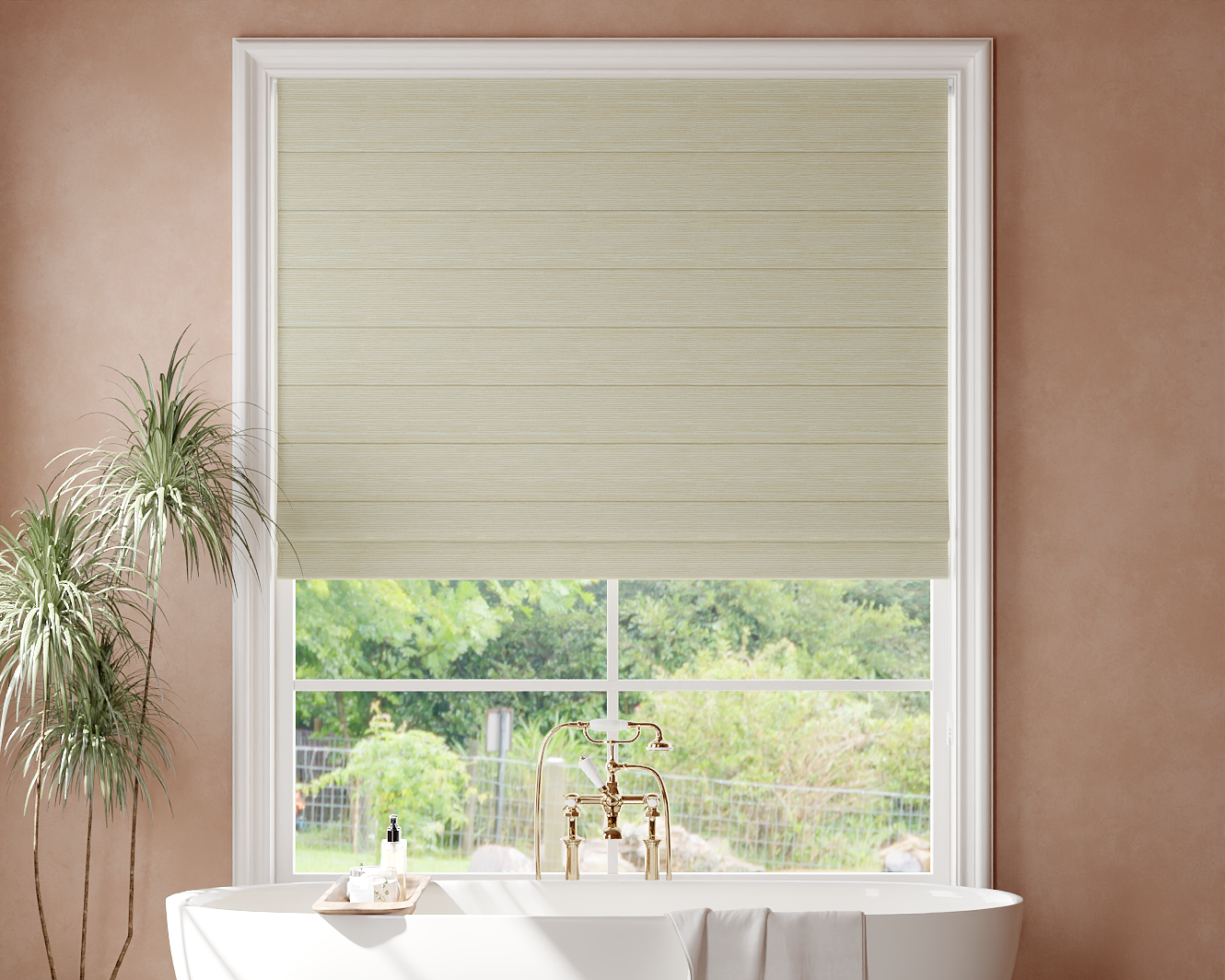
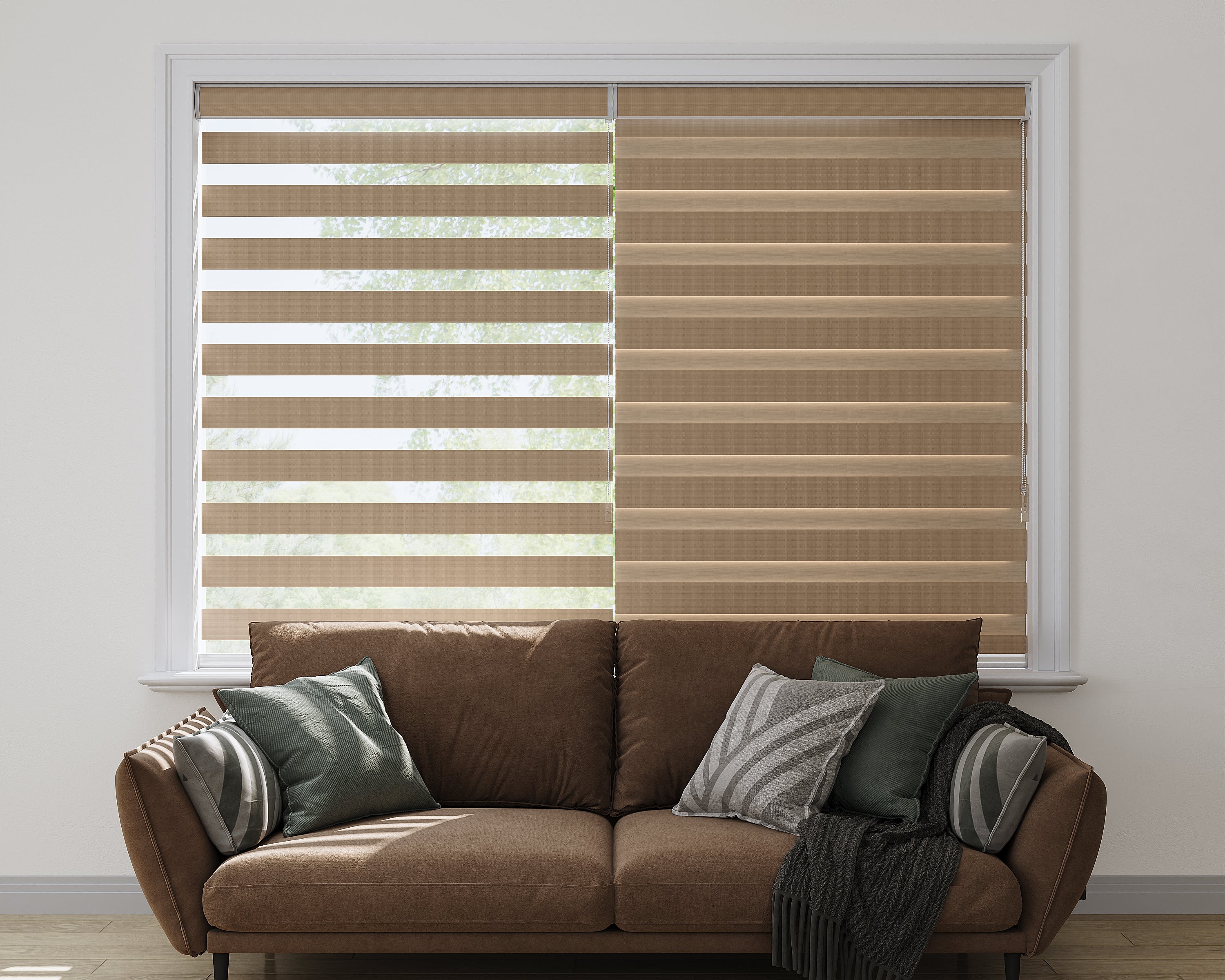
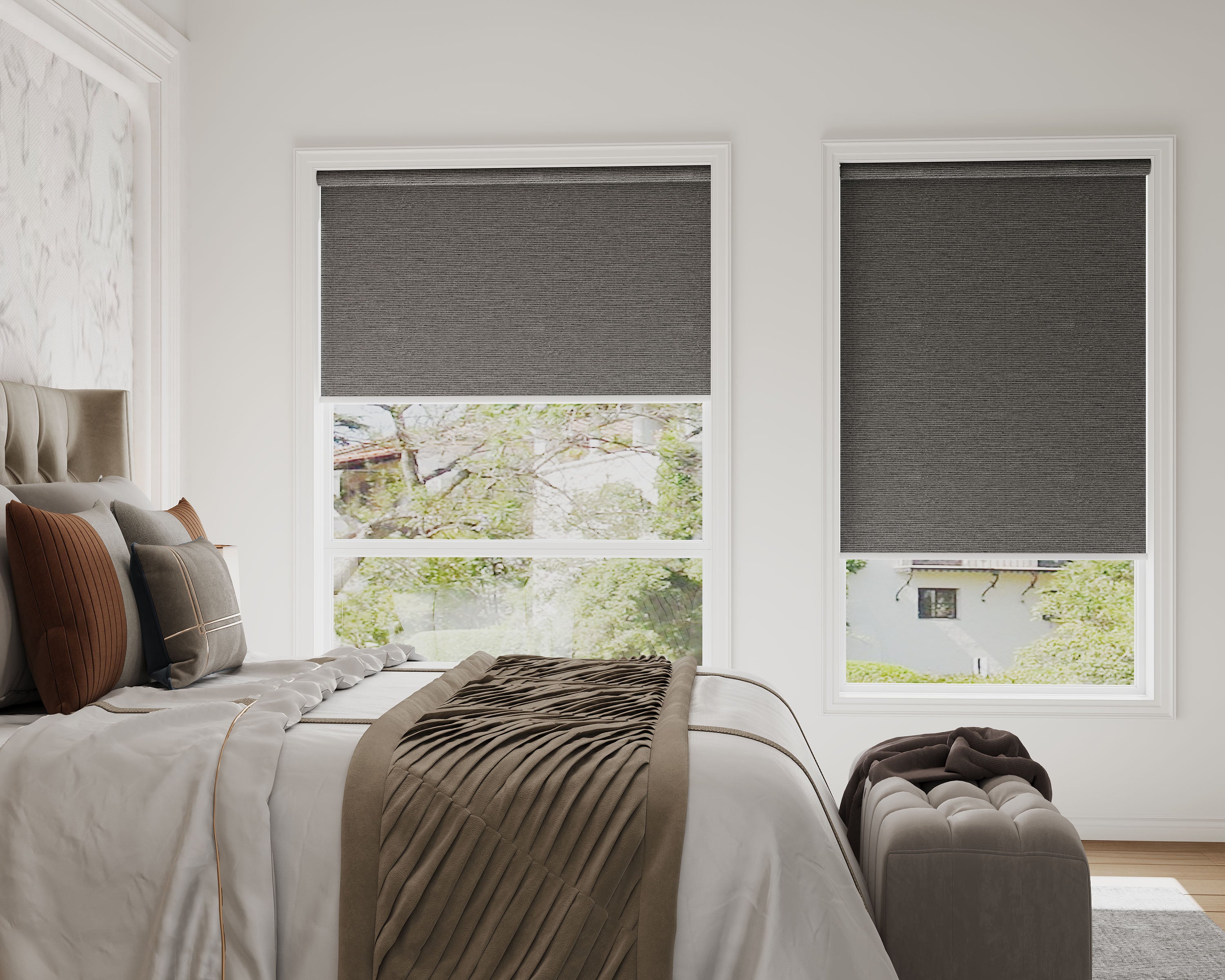
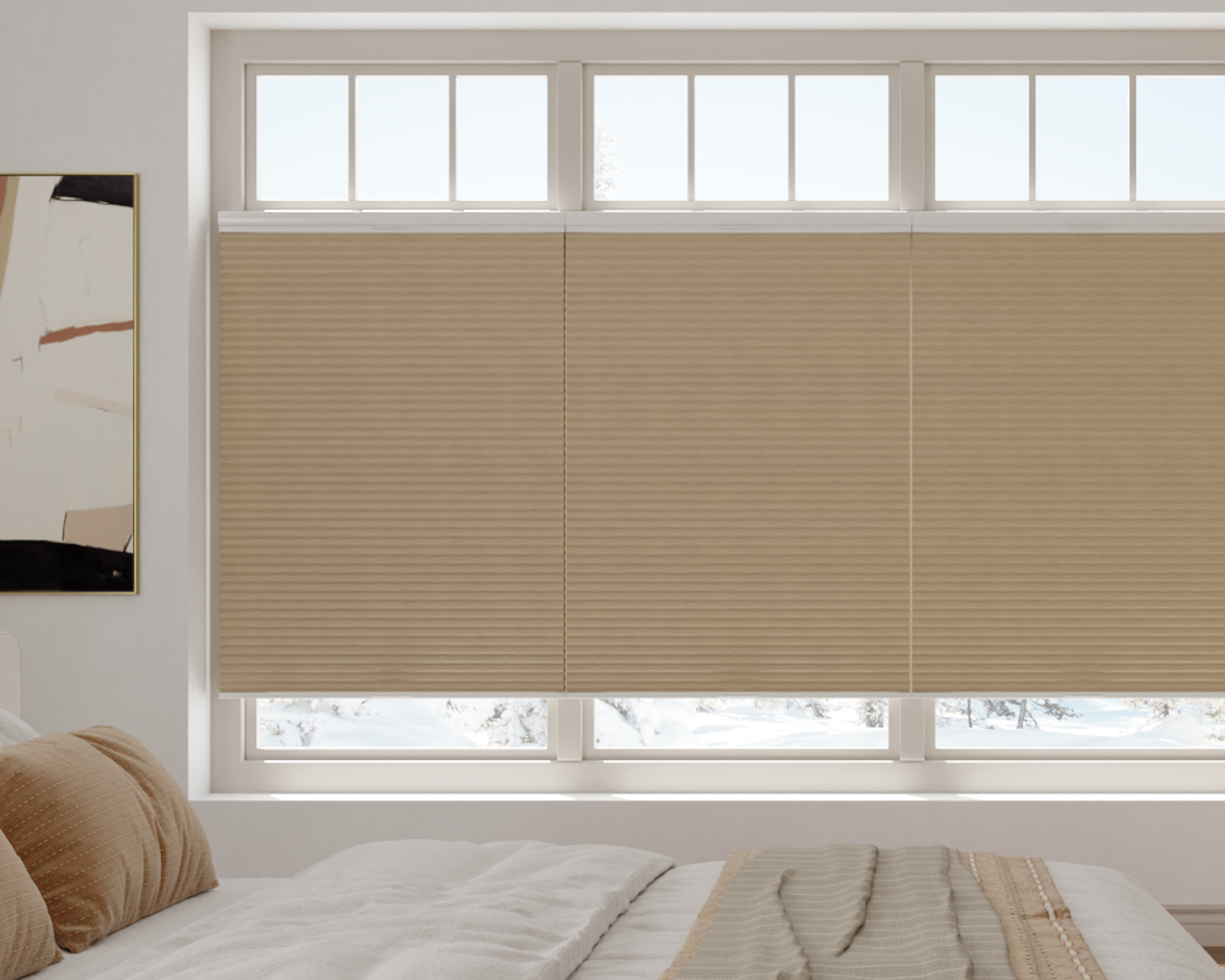
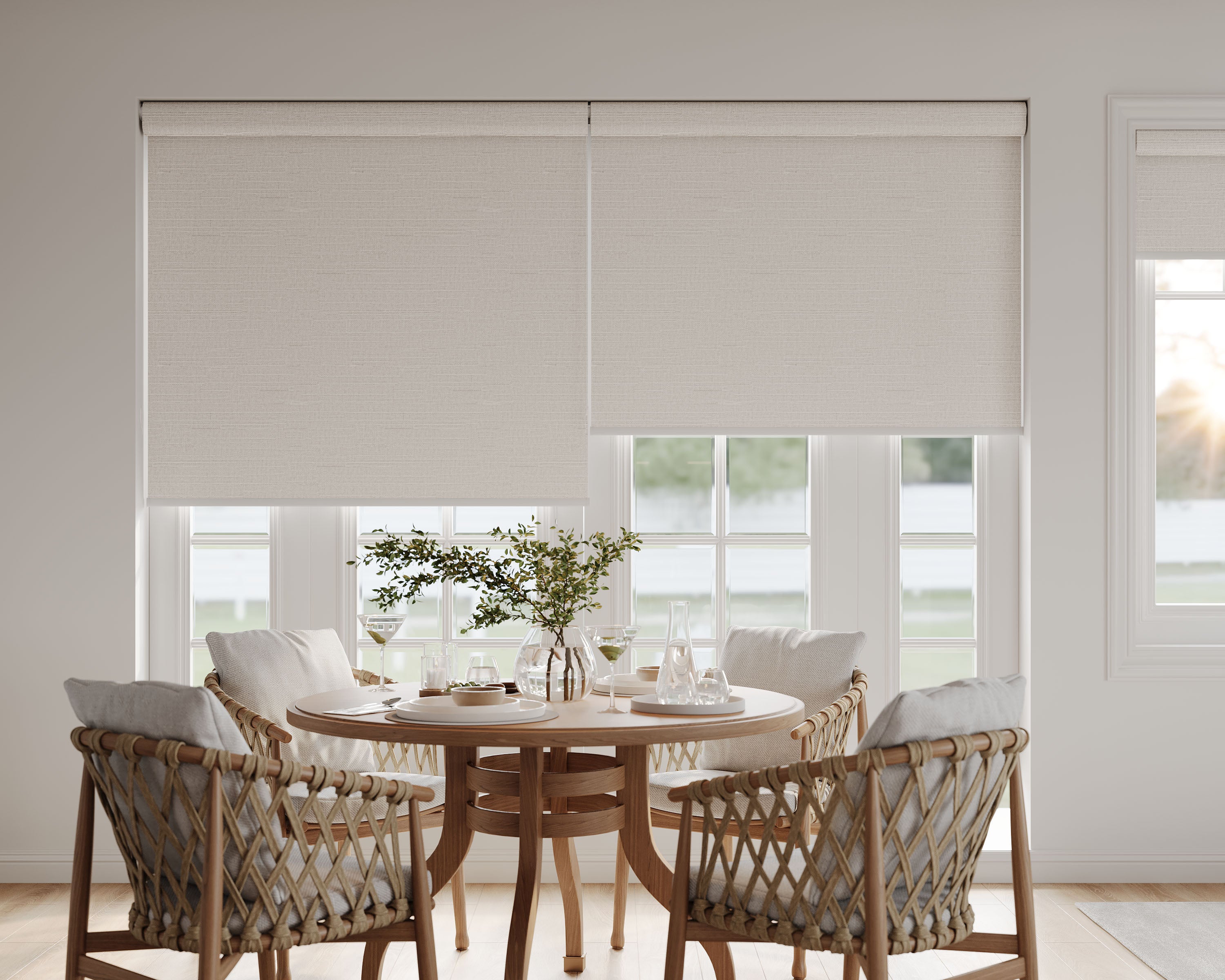
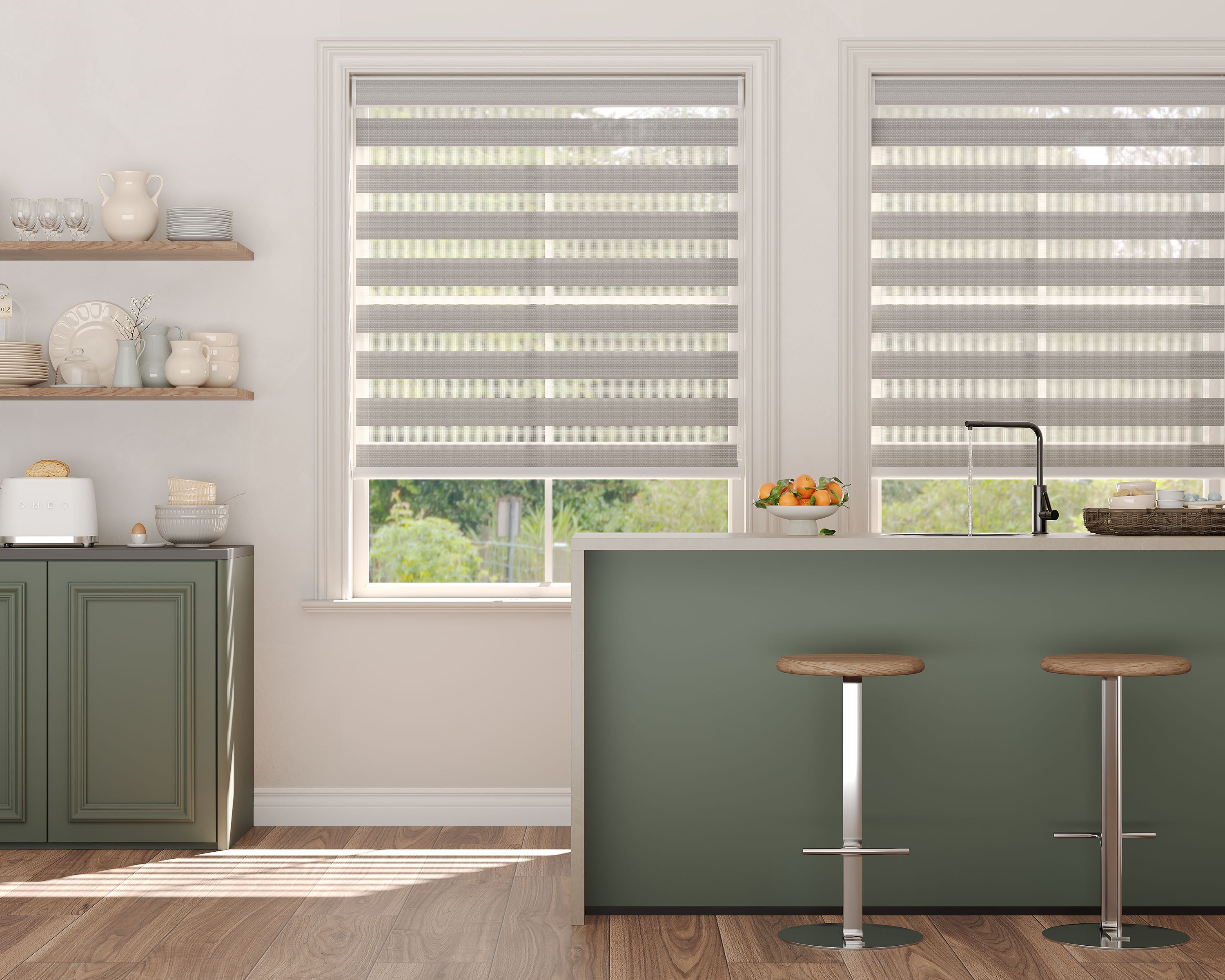
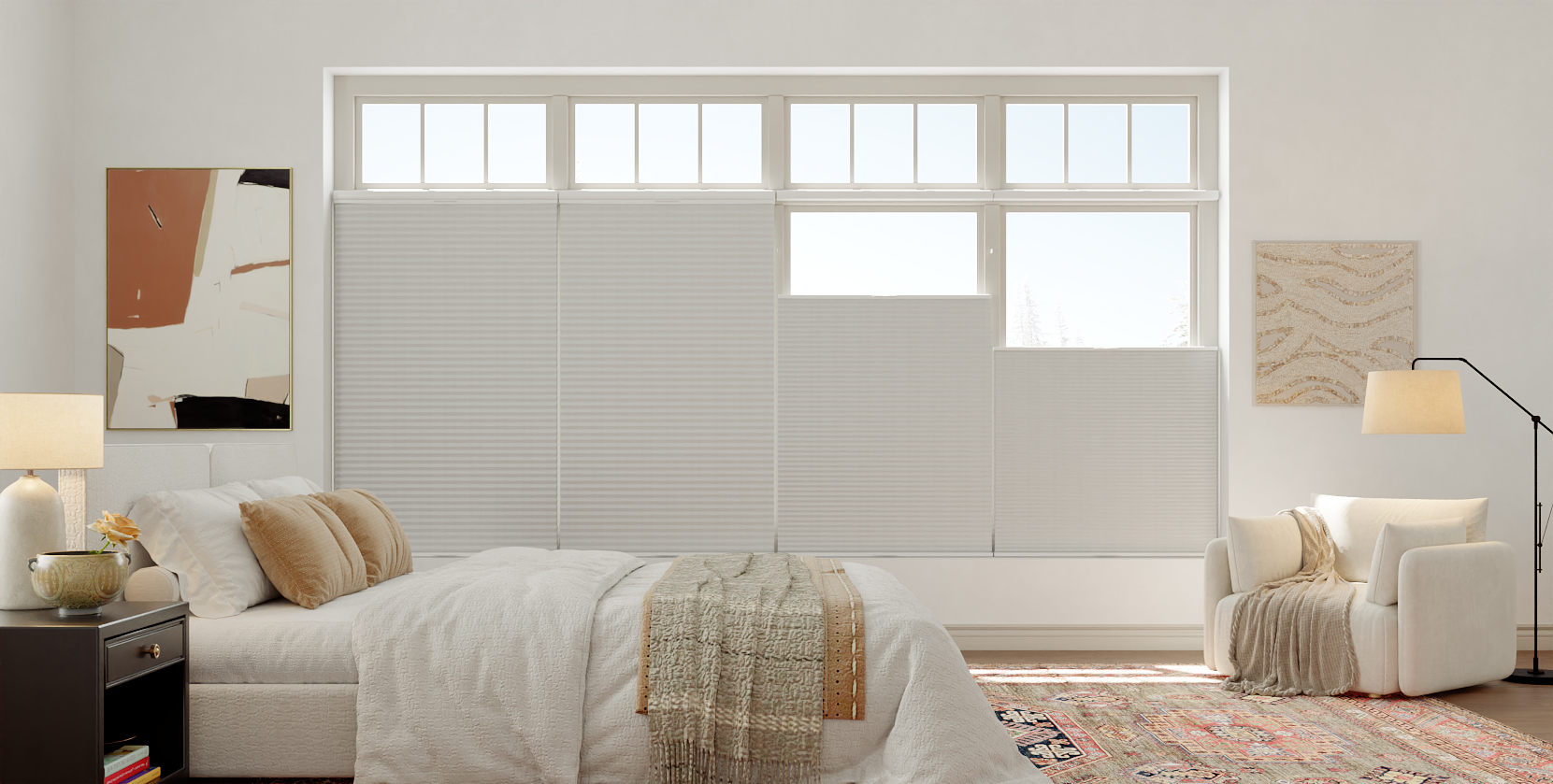
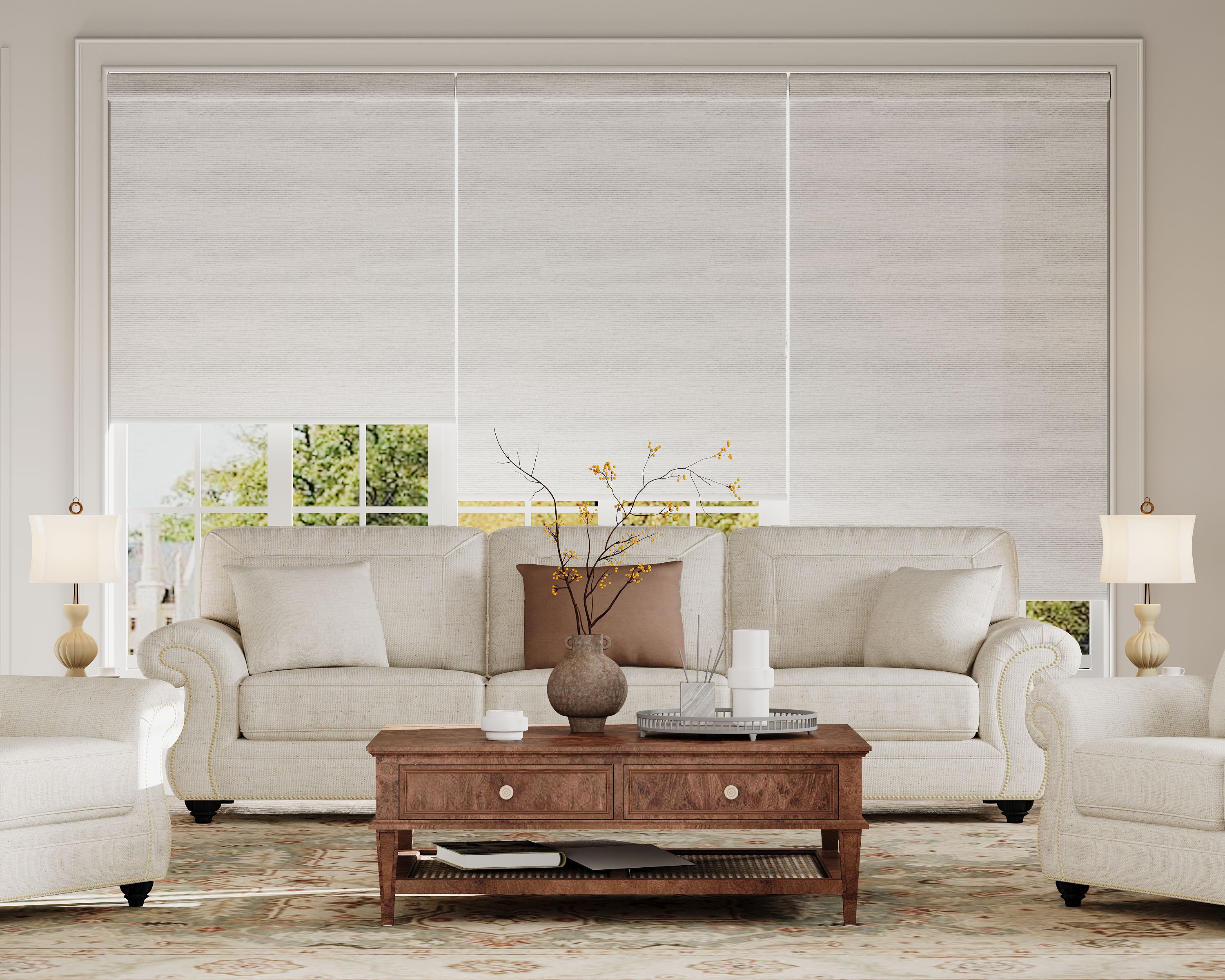

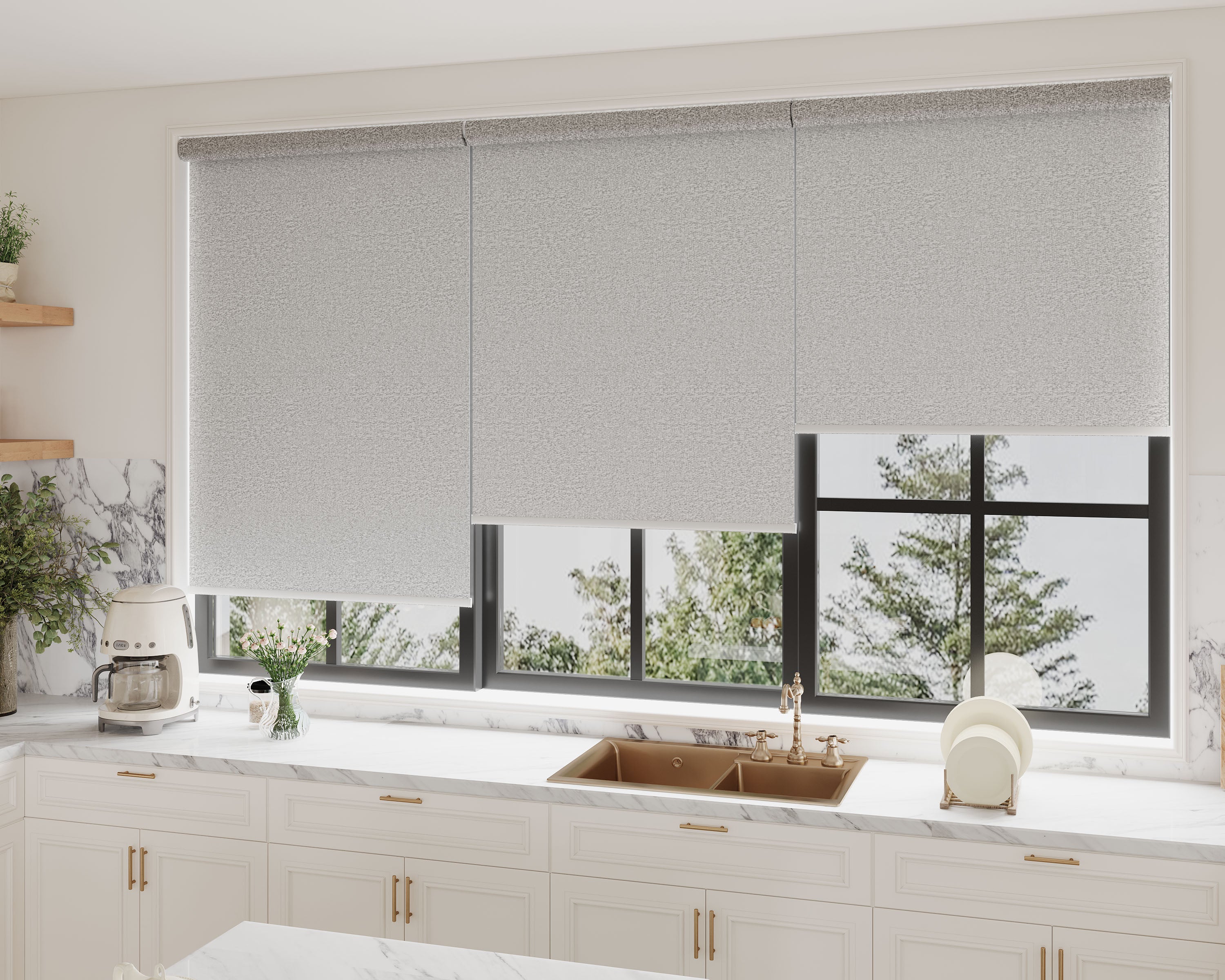
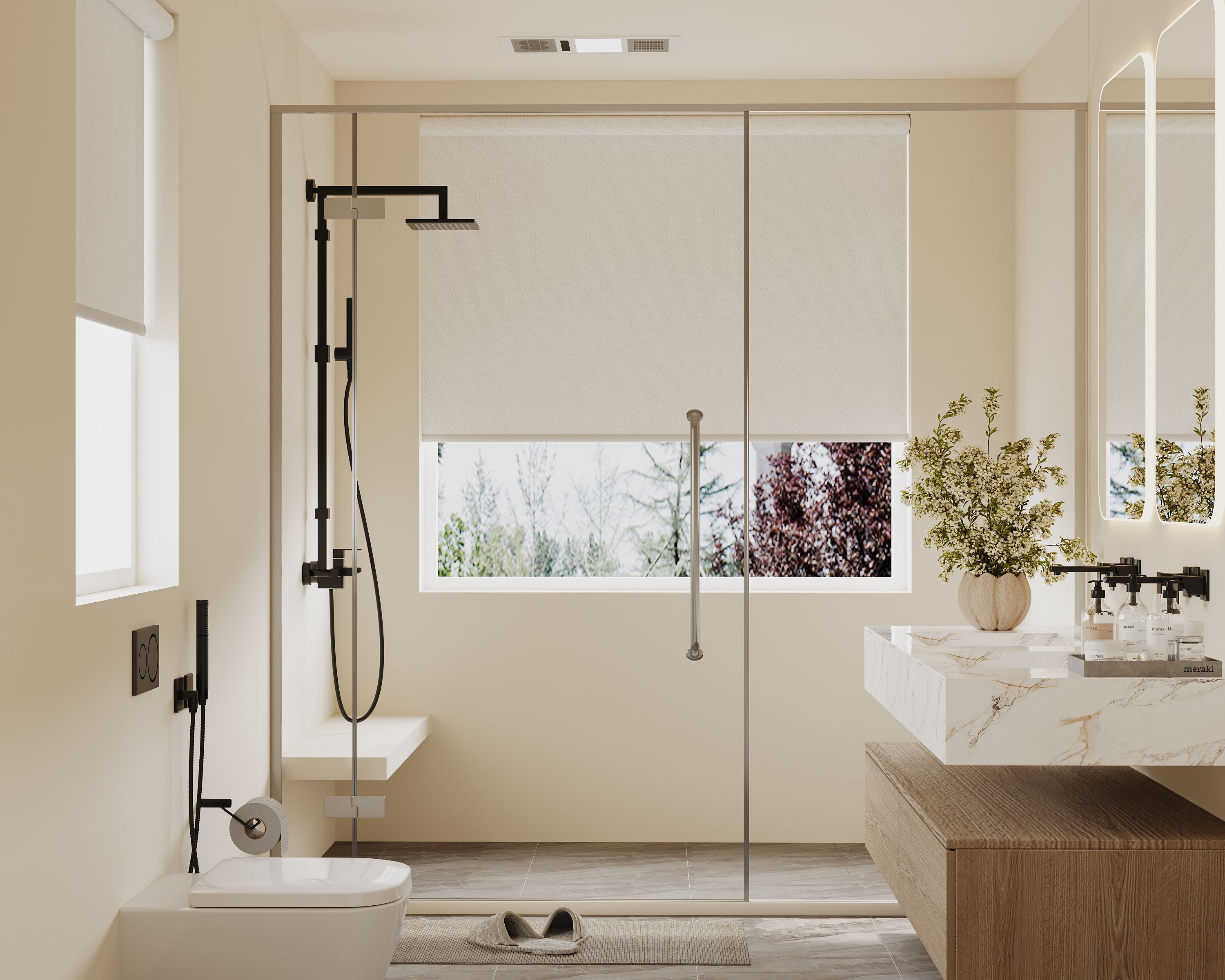
Texture Noir Blackout
Dimensional Weaves, Hidden Blackout Core
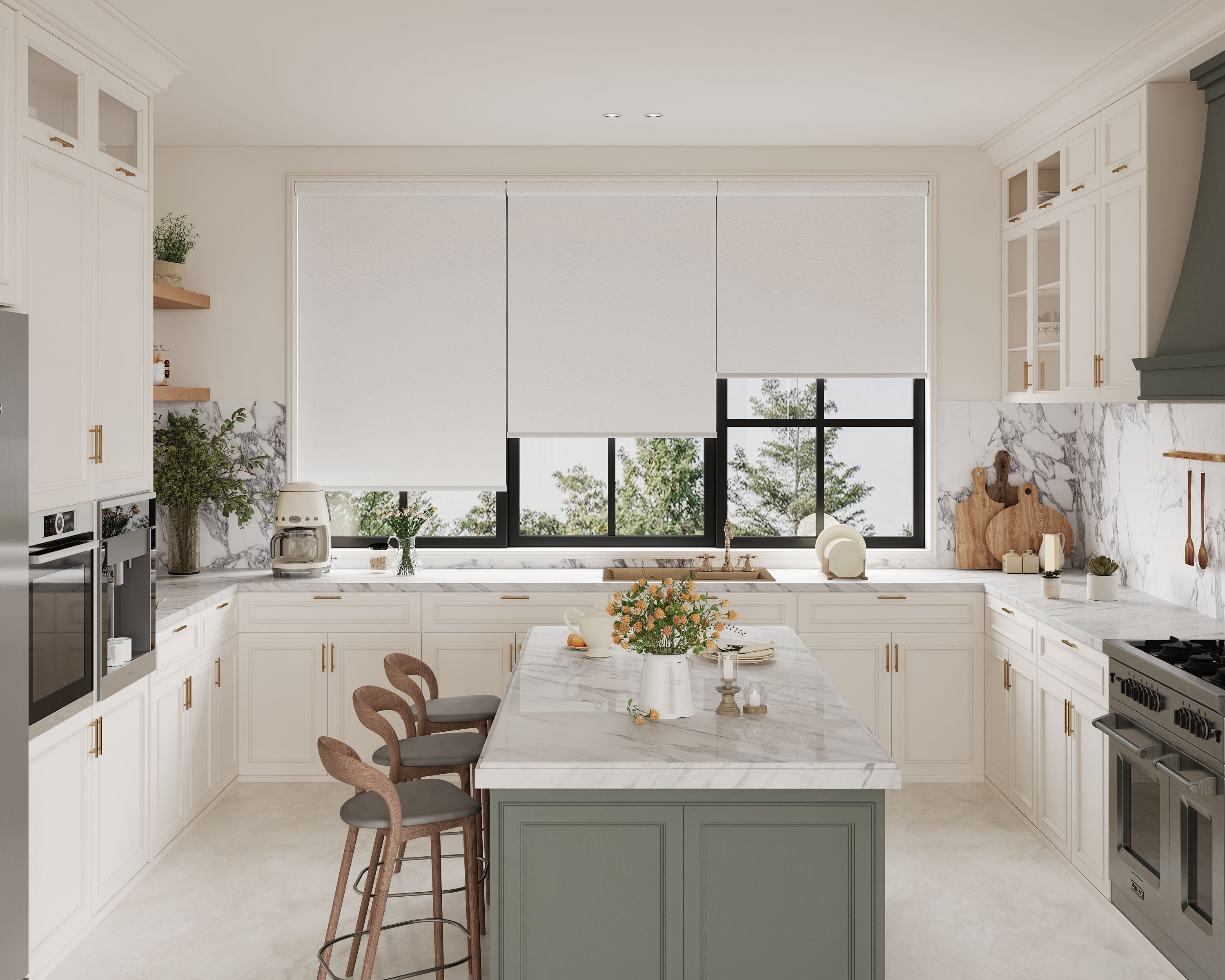
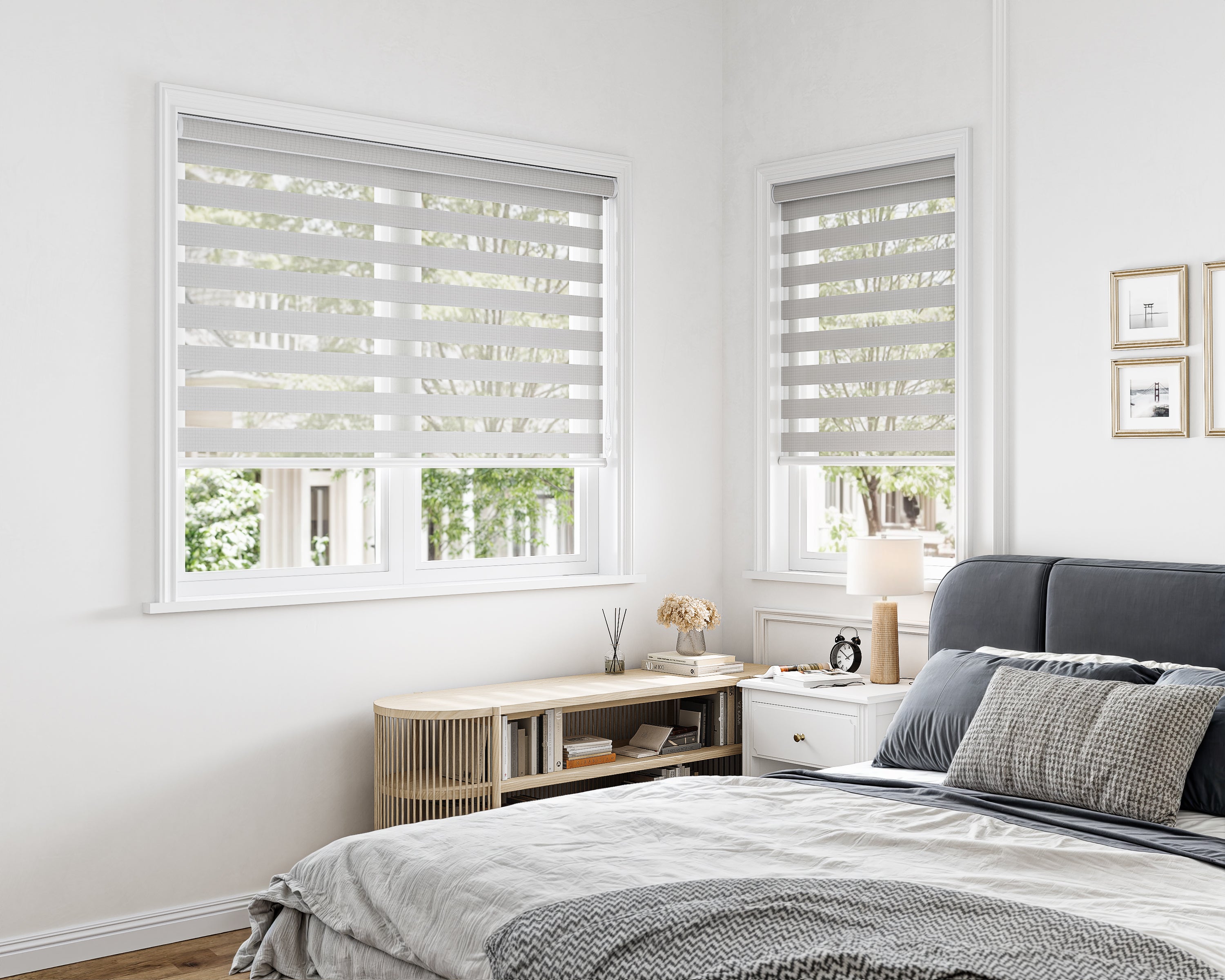
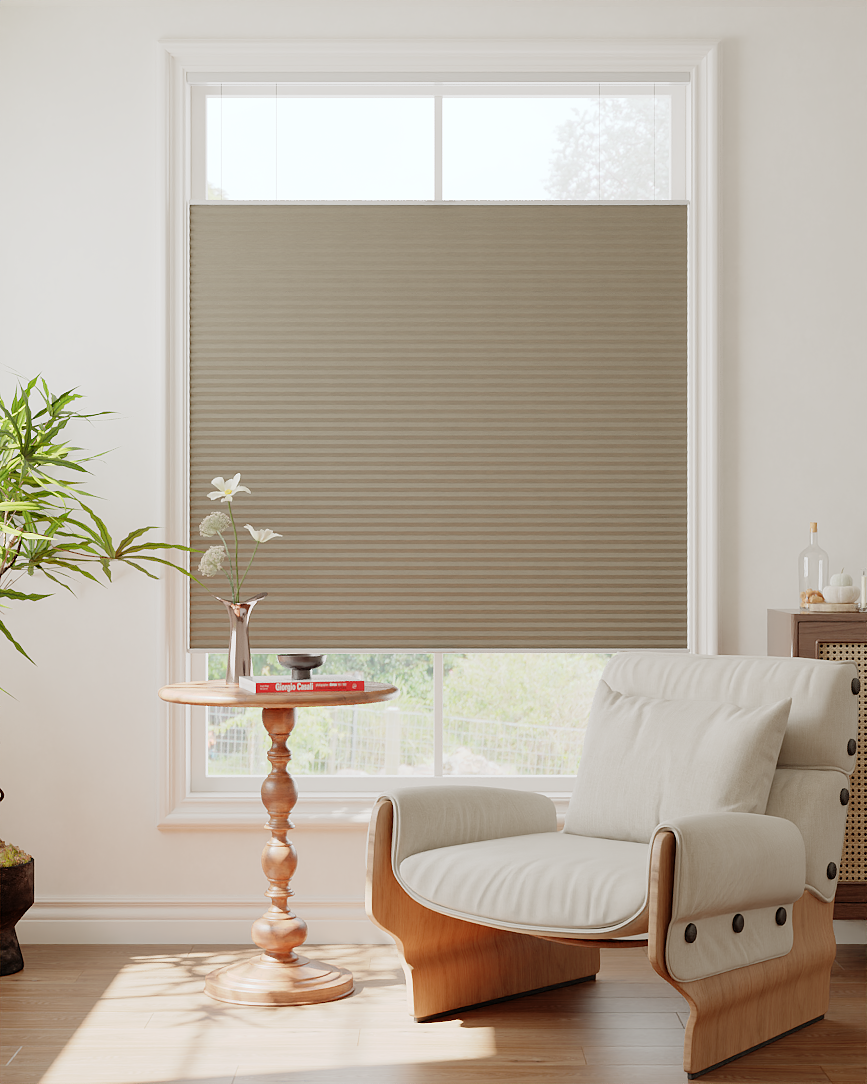
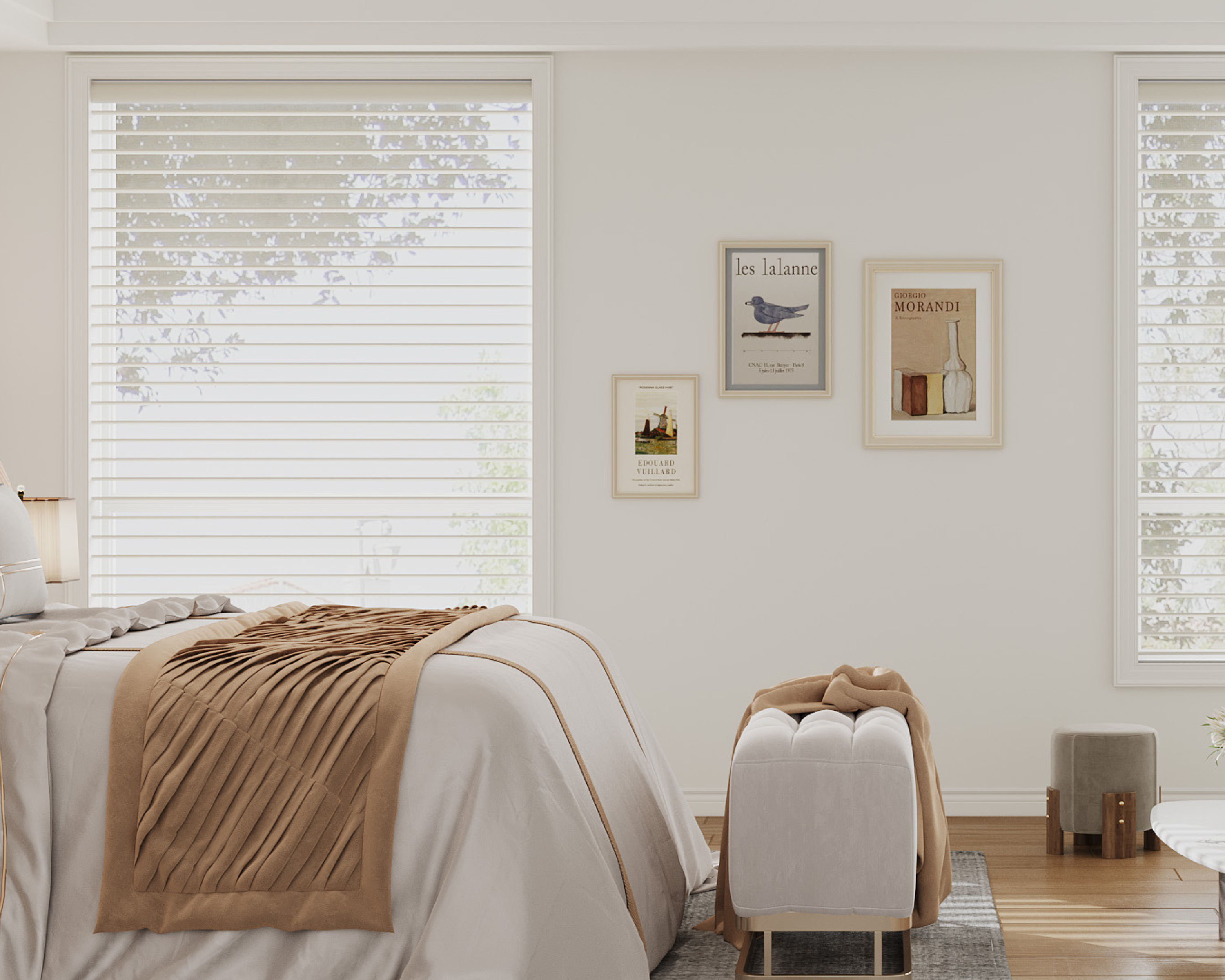
Creating a textured blackout fabric without compromising its decorative face is a genuine engineering challenge. Texture Noir solves it with a three‑pass construction: first, the face yarns are woven on a jacquard or dobby loom to build the dimensional texture; next, a black polyester film is laminated to the back to provide full opacity; finally, a white acrylic layer is added for heat reflection and stability. The result is a fabric that looks and feels like a true textile—no shine, no plasticky stiffness—while delivering complete blackout performance.
Heathered Color Blends
Flat, solid blackout fabrics can feel lifeless. Texture Noir uses heathered yarns, created by twisting multiple fiber colors together before weaving. This produces a surface with depth and movement that subtly shifts as light glances across it. The palette includes:
-
Pewter — silver + charcoal
-
Dune — sand + cream
-
Moss — olive + bronze
-
Indigo — navy + slate
These blends disguise dust and lint beautifully while adding understated sophistication.
Commercial Fire Ratings
Many textured blackout fabrics fail commercial fire‑safety requirements. Texture Noir meets Class A (ASTM E84) and complies with NFPA 701, making it suitable for hotels, restaurants, offices, and healthcare environments. The fire‑retardant properties are built into the fiber itself—not applied as a topical coating—so they won’t wash out or off‑gas over time.
Blackout + Acoustic Absorption
The dense construction required for blackout also enhances acoustic performance. Texture Noir fabrics achieve an NRC of 0.20–0.25, reducing echo and reverberation in media rooms, conference spaces, and open‑plan offices. The textured face scatters sound more effectively than smooth fabrics, making these shades a dual‑purpose upgrade for both light control and acoustic comfort.
Motorization Recommended
Textured blackout fabrics carry more mass—typically 15–20% heavier than smooth blackout materials. For widths over 60 inches, we strongly recommend motorized operation to ensure smooth, effortless lifting. Our high‑torque motors are calibrated specifically for these heavier textiles and feature soft‑start/soft‑stop technology to prevent jerking. Cordless spring systems are available for narrower shades, though they require more lift effort due to the added weight.
