








Choose a roller shade lift by the action you want to use every day. Manual cordless operation suits a comfortably reachable rail; a wand offers another manual control; a motor lets you operate the shade through a selected controller. A continuous chain loop has its own installation and cord-safety requirements.
SenseBlinds currently describes these four operation choices on its ordinary blackout roller shades and light-filtering roller shades. Availability depends on the selected size and top treatment. Use this guide to shortlist the lift, then confirm the combination on the actual product configuration.
Compare the four roller shade lift options
| Lift | Normal control idea | A reason to compare it | Resolve before ordering |
|---|---|---|---|
| Continuous cord loop / beaded chain | Operate the shade through the loop at the side | A side control rather than handling the lower rail | Loop position, required tension-device installation and household safety |
| Manual cordless | Move the designated rail or operating point by hand | Direct operation without a motor or exposed operating loop | Comfortable reach throughout travel and the supported top treatment |
| Wand | Use the model's wand-operated lifting action | Another manual approach without a chain loop or remote charging | Exact operating motion, control position and supported configuration |
| Motorized | Use the selected remote or supported smart controller | Operation where reaching the shade is awkward or repeated adjustments matter | Motor, controller, power, charging access and any separate smart-home equipment |
The wand column is labeled Smart Wand in the current specification tables. The product description presents it as a manual lift option; that name alone does not establish app or voice control. Confirm its operation before choosing it for a particular access need.
These four paths concern the ordinary fabric roller models linked above. Do not transfer every option to waterproof PVC rollers, premium wet-zone rollers or another shade family. Each product has its own configuration.

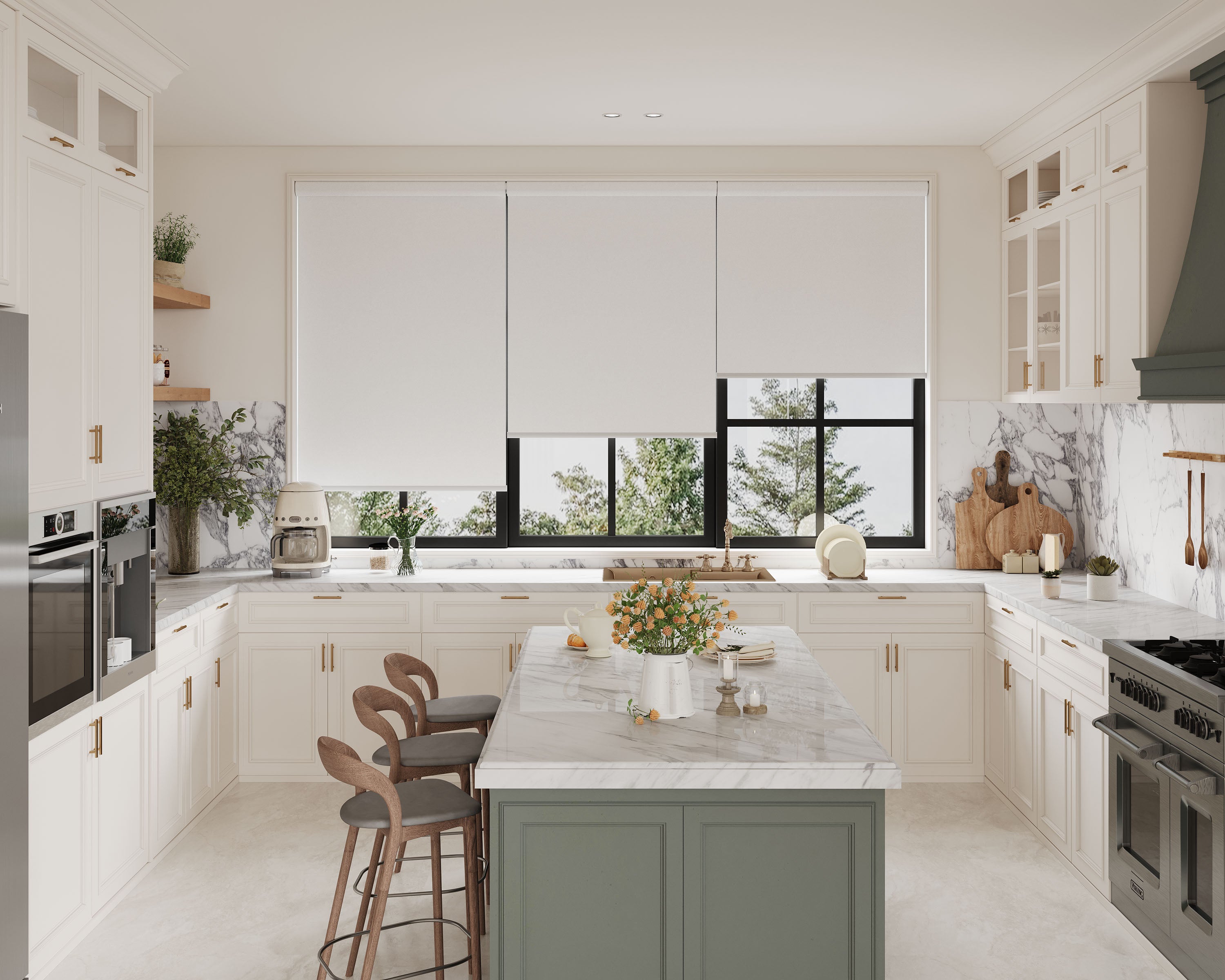
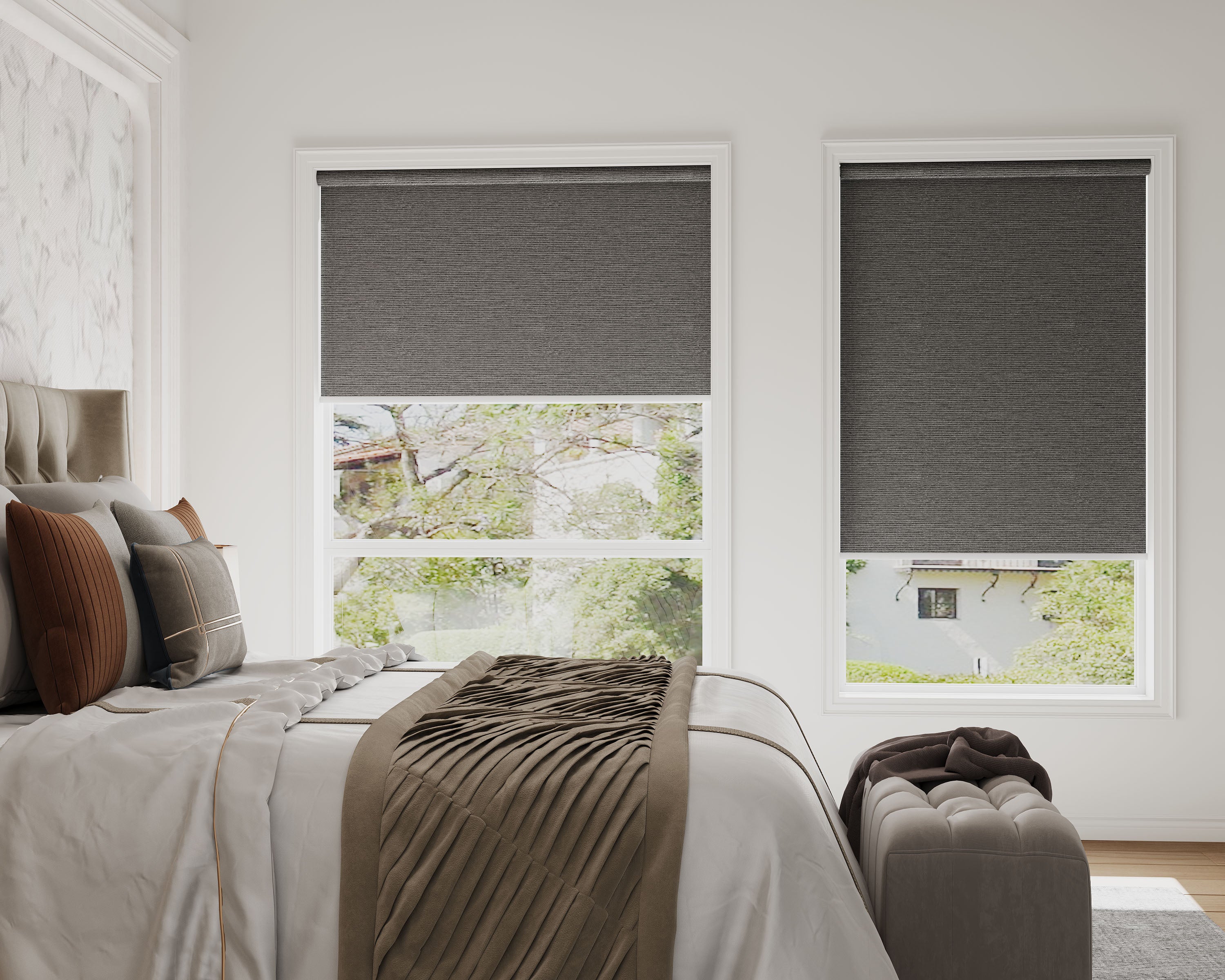
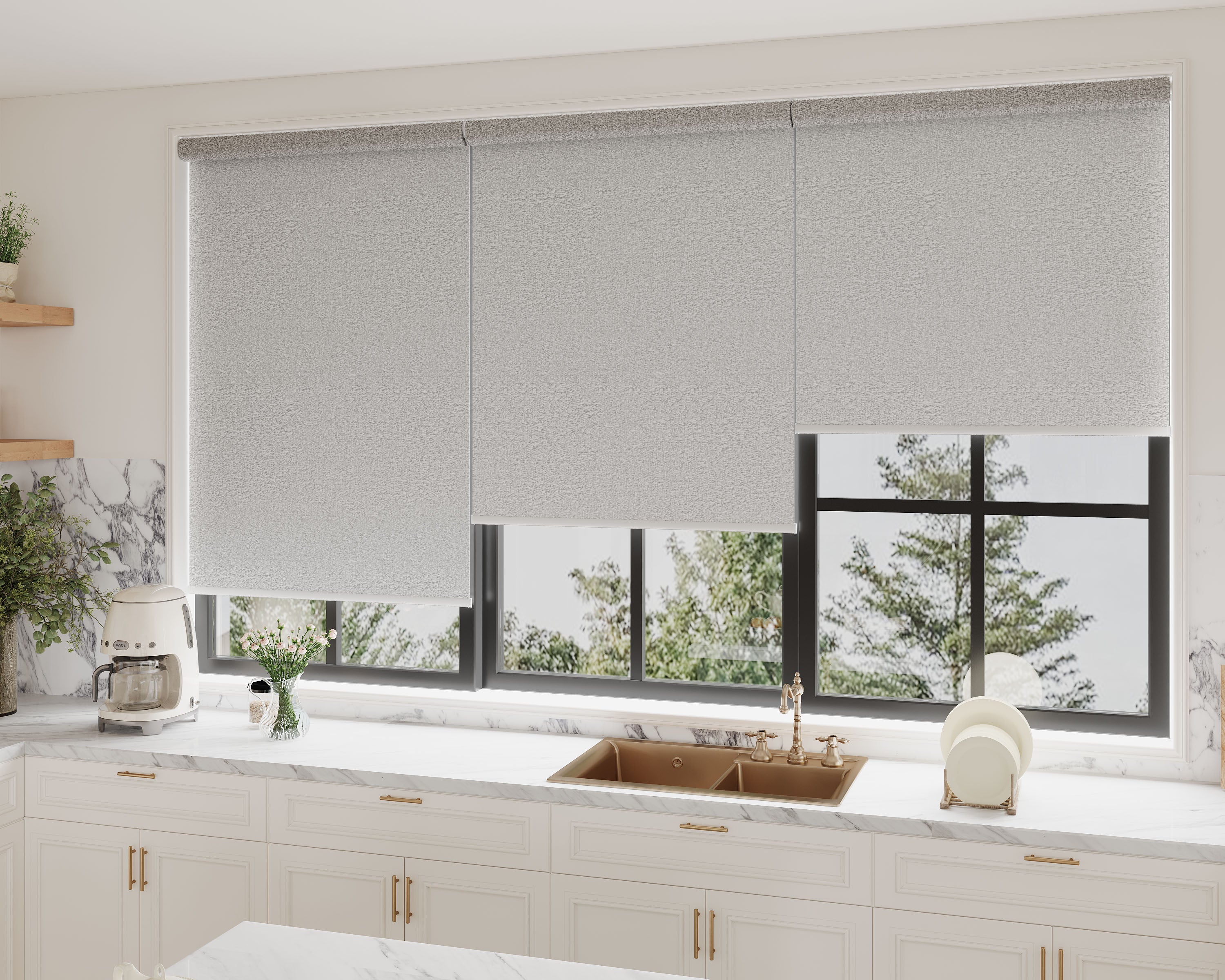
For a window above a desk or counter, compare the control's actual reach and position before choosing the lift. This room image illustrates the setting, rather than a particular control specification.
First check reach and the top treatment
Stand where you will normally operate the covering. Consider the window with the furniture in place, including a deep desk, sofa or counter. For a rail-operated cordless shade, think about the designated operating point when the shade is both lowered and raised. For a wand or chain, check where that side control would sit and whether it remains accessible.
A manual lift is useful only if its intended action is comfortable. If reaching the control requires awkward stretching or standing on furniture, compare a supported motorized configuration. A wand can offer a different interaction from touching the lower rail, but it does not automatically solve every high-window or limited-reach situation.
The top treatment also affects the shortlist. In the current ordinary roller specification tables, Exposed Roll does not list cordless or wand availability. The Aluminum Valance and Fabric Insert Cassette panels show those options subject to their listed size limits. Read the panel for the top treatment you actually select, rather than applying a limit from another configuration.
Our cordless roller buying guide explores that manual option in more detail. The cordless mechanism guide explains why an operating label does not identify one universal internal mechanism.
Choose a manual control you can use comfortably
Manual cordless is a practical starting point when the operating rail is within easy adult reach and you want to adjust the covering directly. It does not need a motor remote or charging for normal use. Ask for the model's designated touchpoint and motion; pulling the fabric or copying another brand's operating method is not a substitute.
Wand operation is worth comparing when you prefer a separate manual control over handling the lower rail. SenseBlinds describes its ordinary roller wand option as a cord-free and chain-free manual choice. Confirm how the selected version lowers, retracts and stops the fabric, and where its control will be located. A wand on a roller shade has a different role from a wand that only tilts slats on another covering.
Continuous cord loop uses the side loop to operate the roller. The current product notes state that a safety tension device is included and must be installed to secure the chain. Allow for that installation when considering the mounting location; a loose loop is not the intended finished arrangement.
For homes where young children live or visit, follow the CPSC's cordless window-covering guidance. A tension device does not turn a chain-operated product into a cordless one. Assess the complete installed covering and nearby furniture rather than selecting from a broad “child-safe” marketing label.
Choose the motor and controls as a separate decision
A motor can be useful above furniture, at a difficult-to-reach window or where you want a supported control routine across several shades. Write down the specific task first: operating one shade from your seat, adjusting a group together or using a compatible schedule. That makes the required controller easier to identify.
The current ordinary roller product notes distinguish three motor paths:
- Basic Motor: remote operation, without app or smart-home control.
- Zigbee Motor: a compatible Tuya Zigbee hub is required for its connected functions; the notes state that the hub is purchased separately.
- Matter Motor: Matter over Thread, requiring a compatible Matter controller and Thread border router for smart-home integration.
The notes state that compatible remotes are sold separately. Confirm the exact motor, remote, hub or controller in the quote, together with the power arrangement and access for charging or service. A listing that offers motorization does not mean every motor includes every connected feature.
For a closer look at the supported control choices, use the SenseBlinds motorized roller guide. Keep a smart motor as a choice within motorized operation, rather than treating it as a fifth manual lift.
Compare equivalent configurations before buying
Keep the fabric, color, dimensions, mount and top treatment the same when comparing lift quotes. If a lift requires a different configuration, identify that change rather than assigning the whole price difference to the control.
Include the required remote or controller, power arrangement and any installation or setup work. The five-year manual-versus-motorized cost guide provides a worksheet for that wider decision. There is no need to assume a fixed motor payback period or a universal service life to decide whether easier operation is useful to you.
You can also choose different lifts for different windows. A reachable guest-room shade and a frequently adjusted shade over a desk may call for different controls. For adjacent windows, compare the intended appearance and operation together, while confirming which combinations are actually offered.
Before configuring the order, answer these five questions:
- Can the intended user comfortably reach and operate the selected manual control?
- Does the product support that lift with the chosen top treatment and dimensions?
- Does the household need a cordless configuration under current safety guidance?
- For a motor, are the required controls, power and any smart-home equipment identified?
- Have the quotes kept fabric and coverage equivalent so the lift difference is clear?
Then return to the roller shade collection and configure the selected light-filtering or blackout model. Choose the fabric for the room's light-control needs and the lift for the way you will operate it.
