
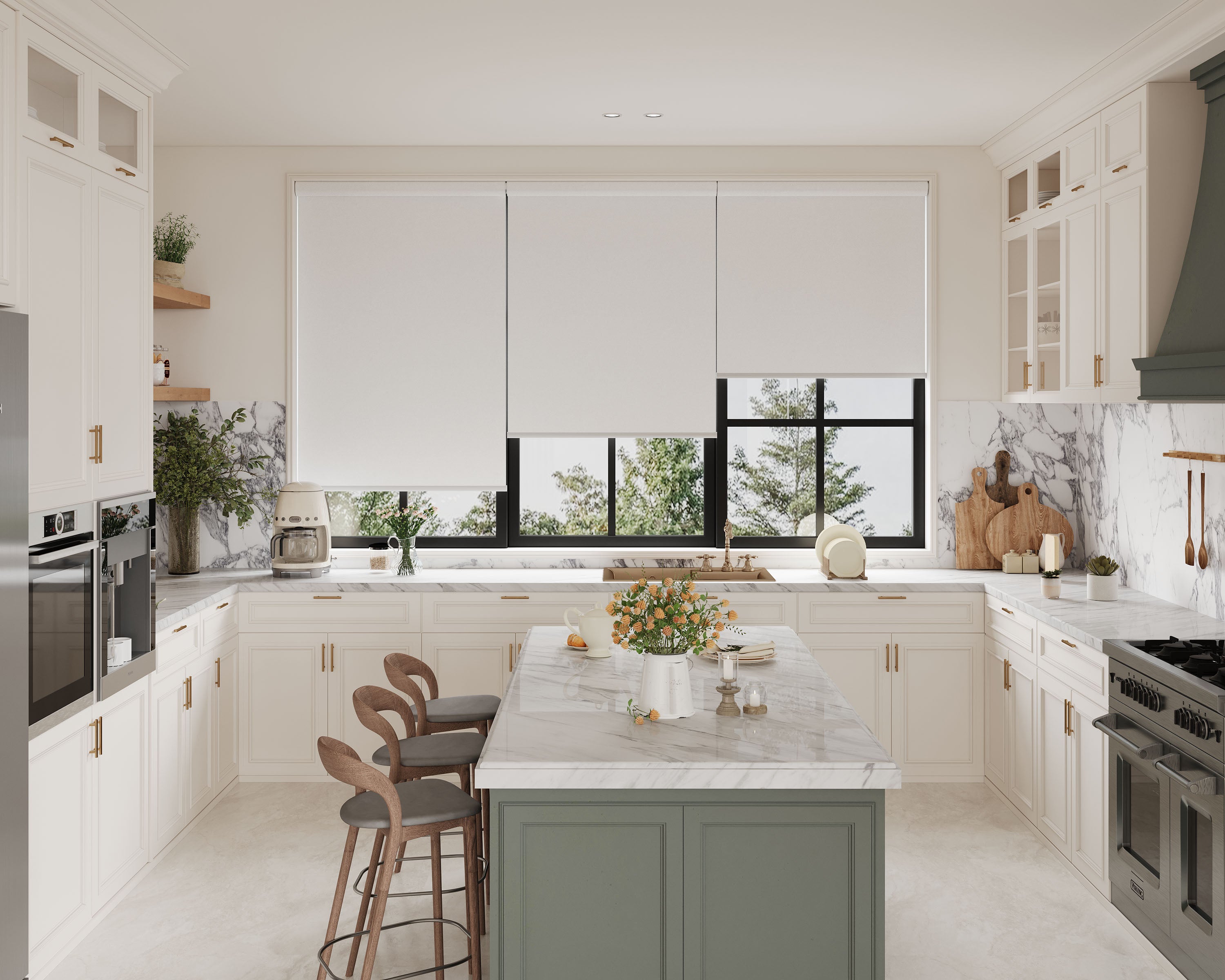
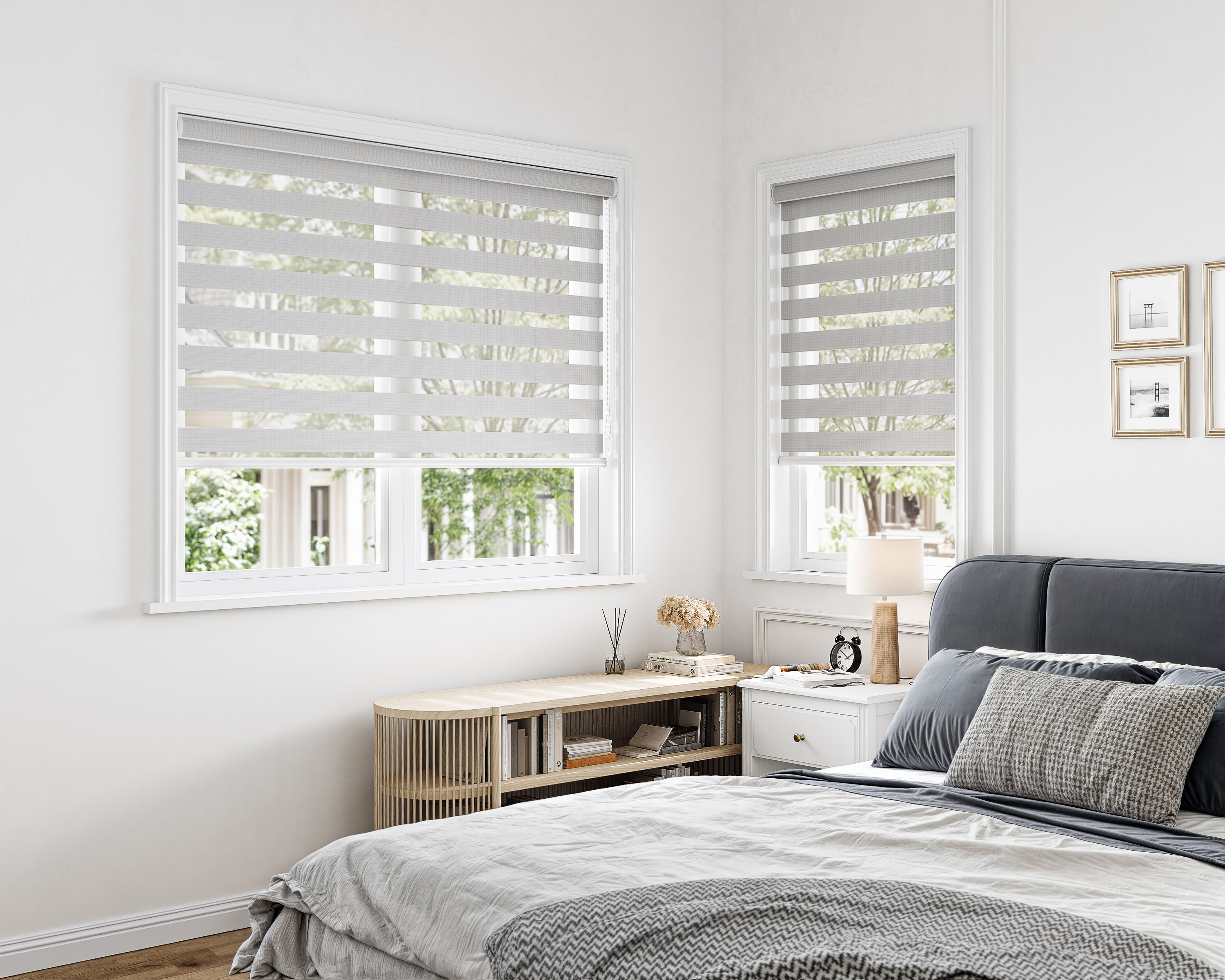
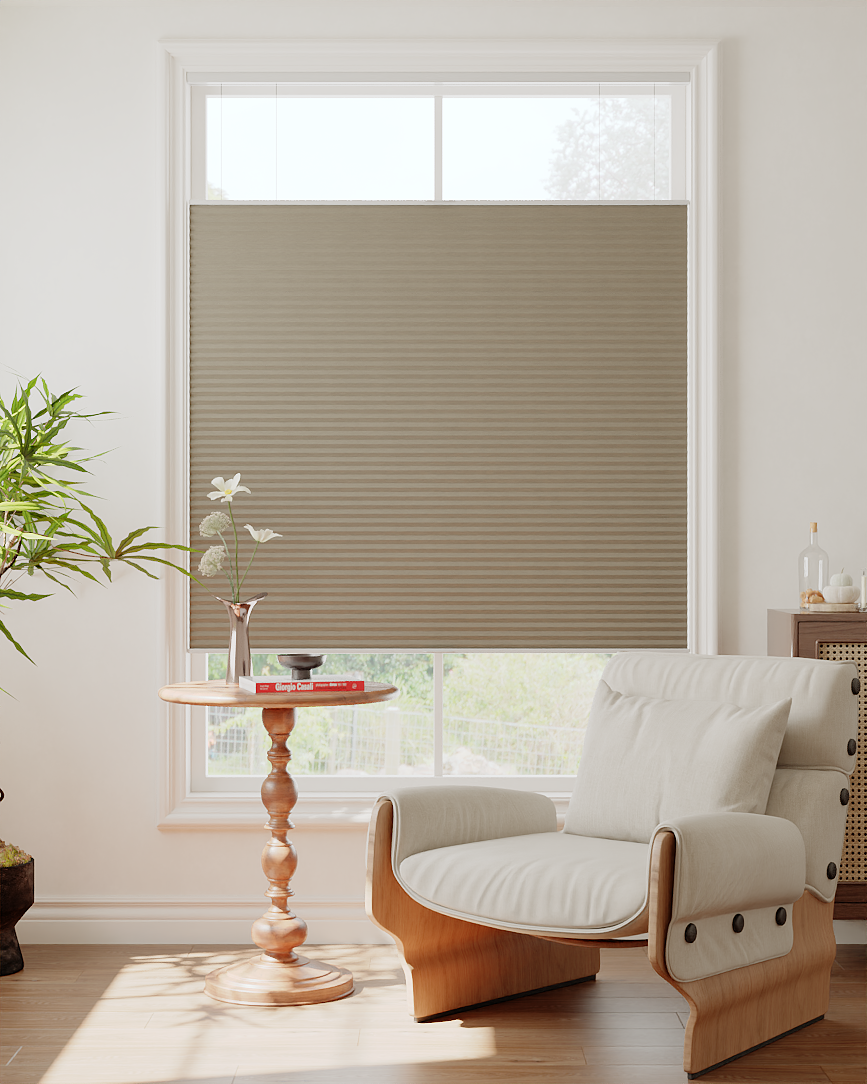
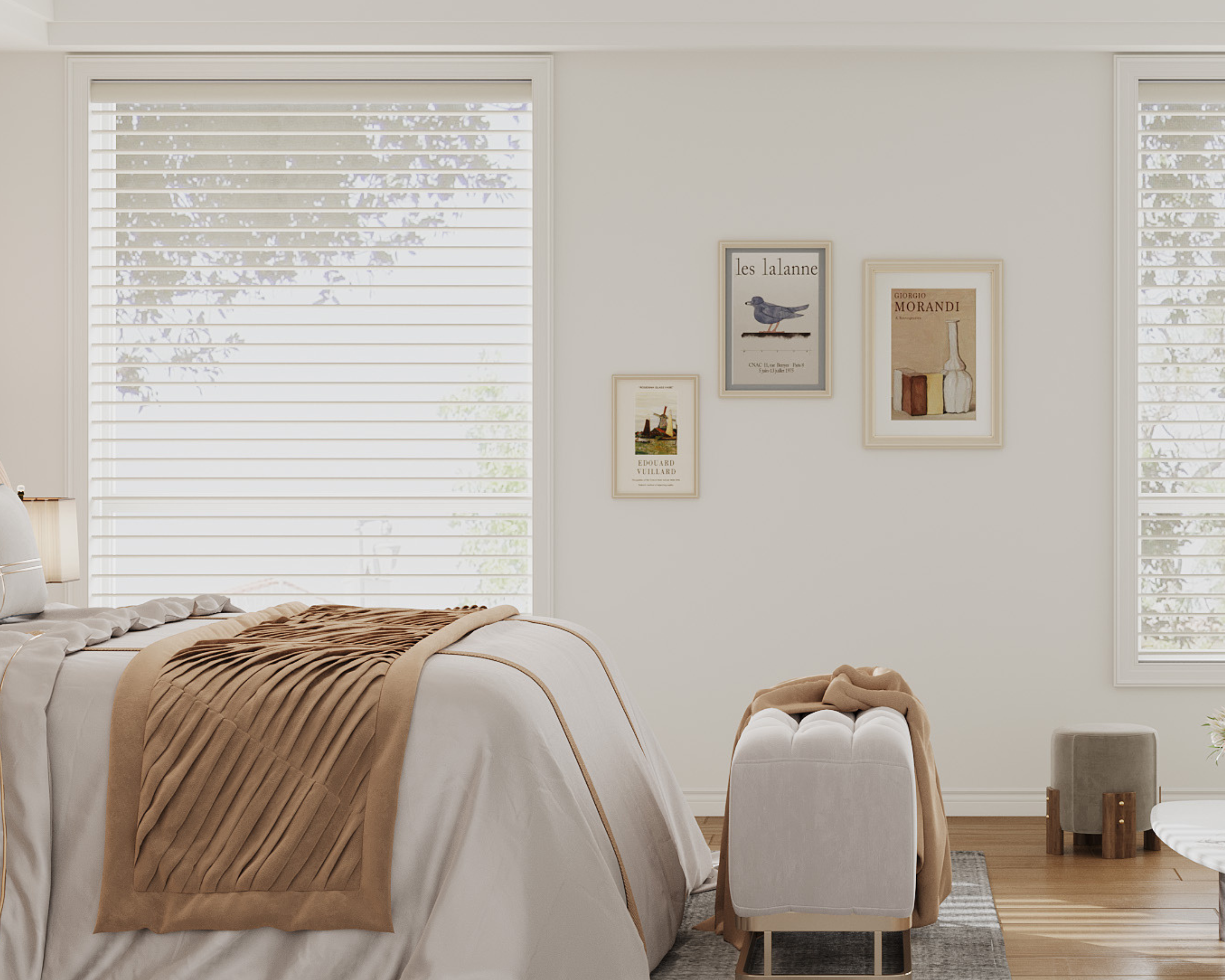

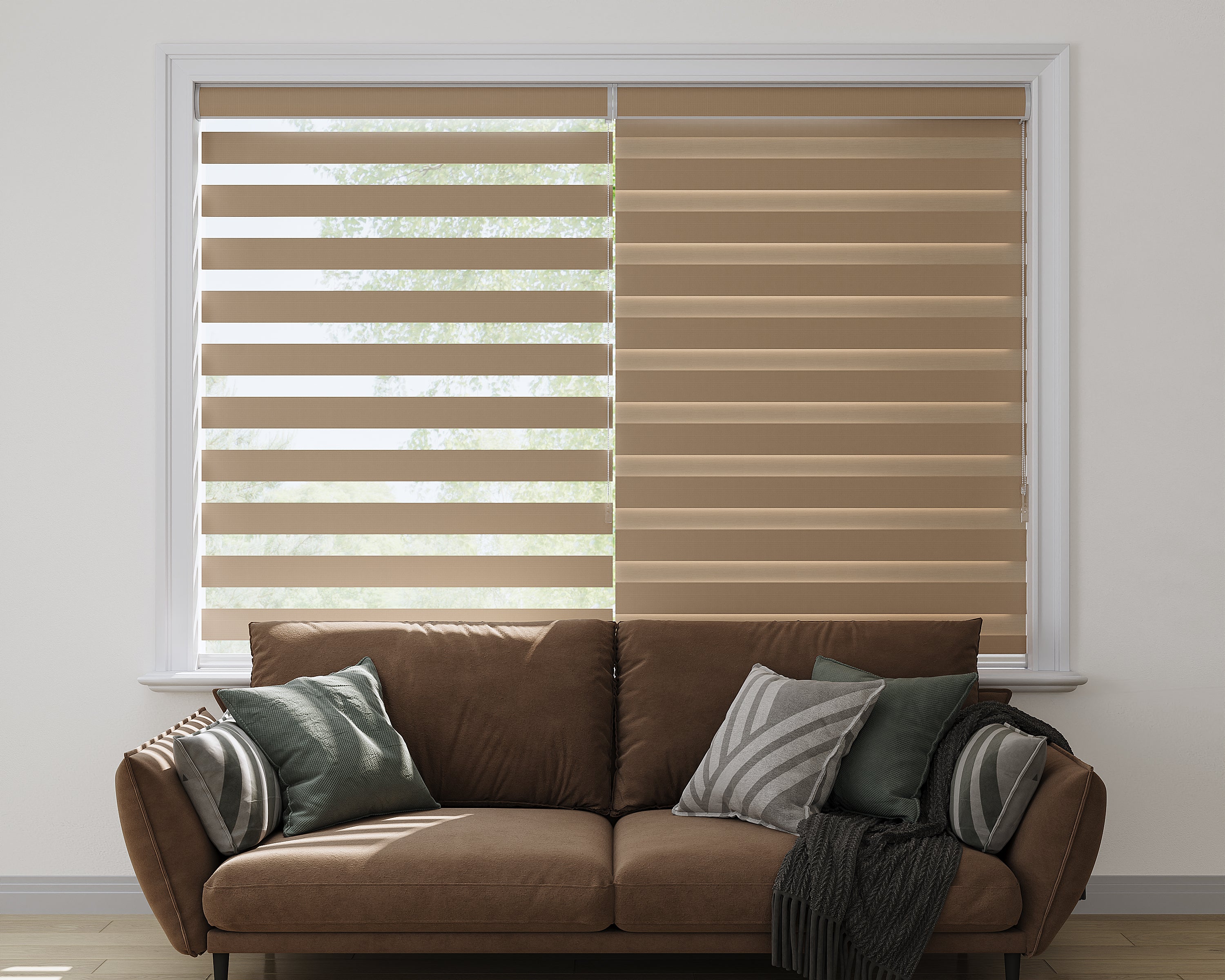
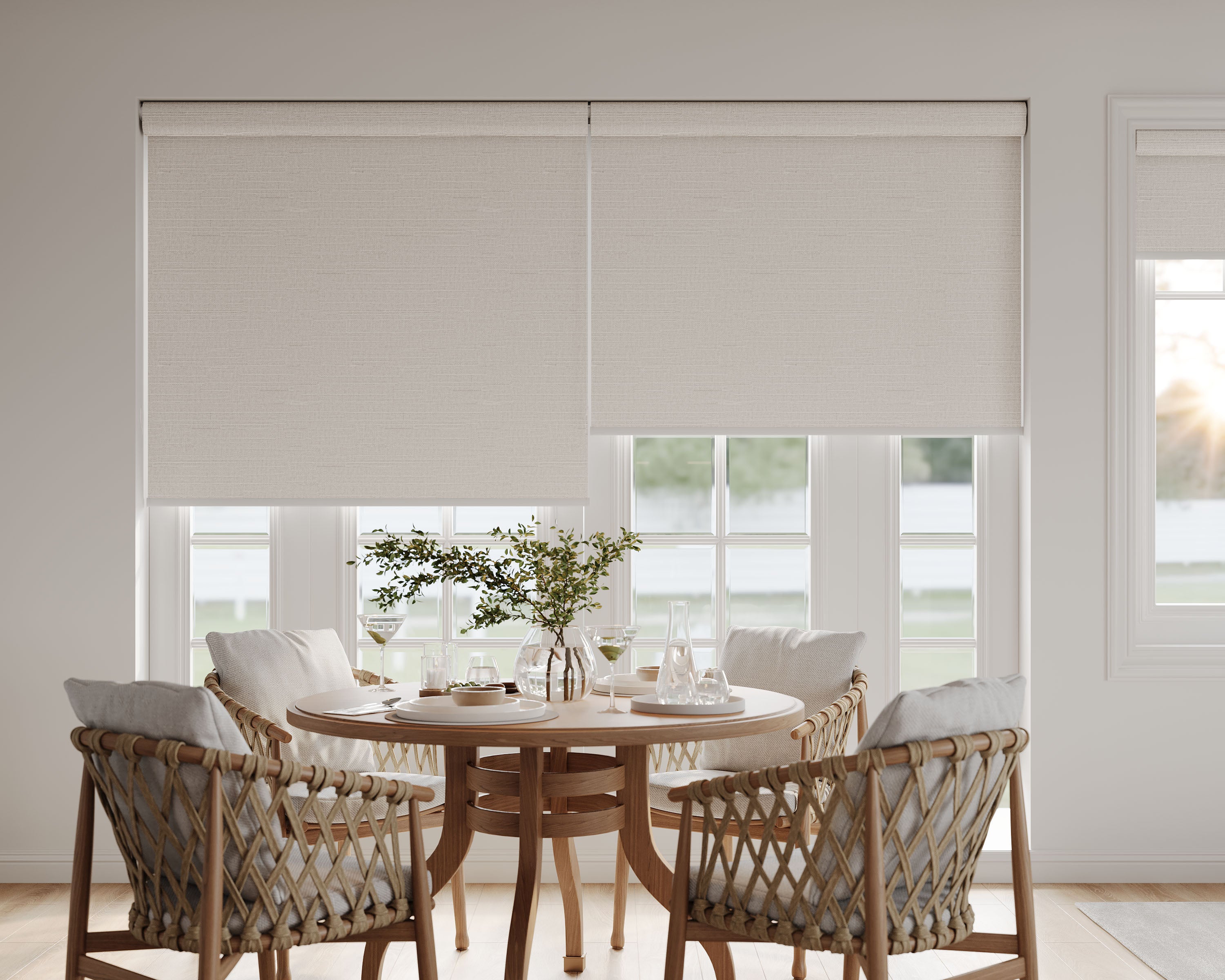


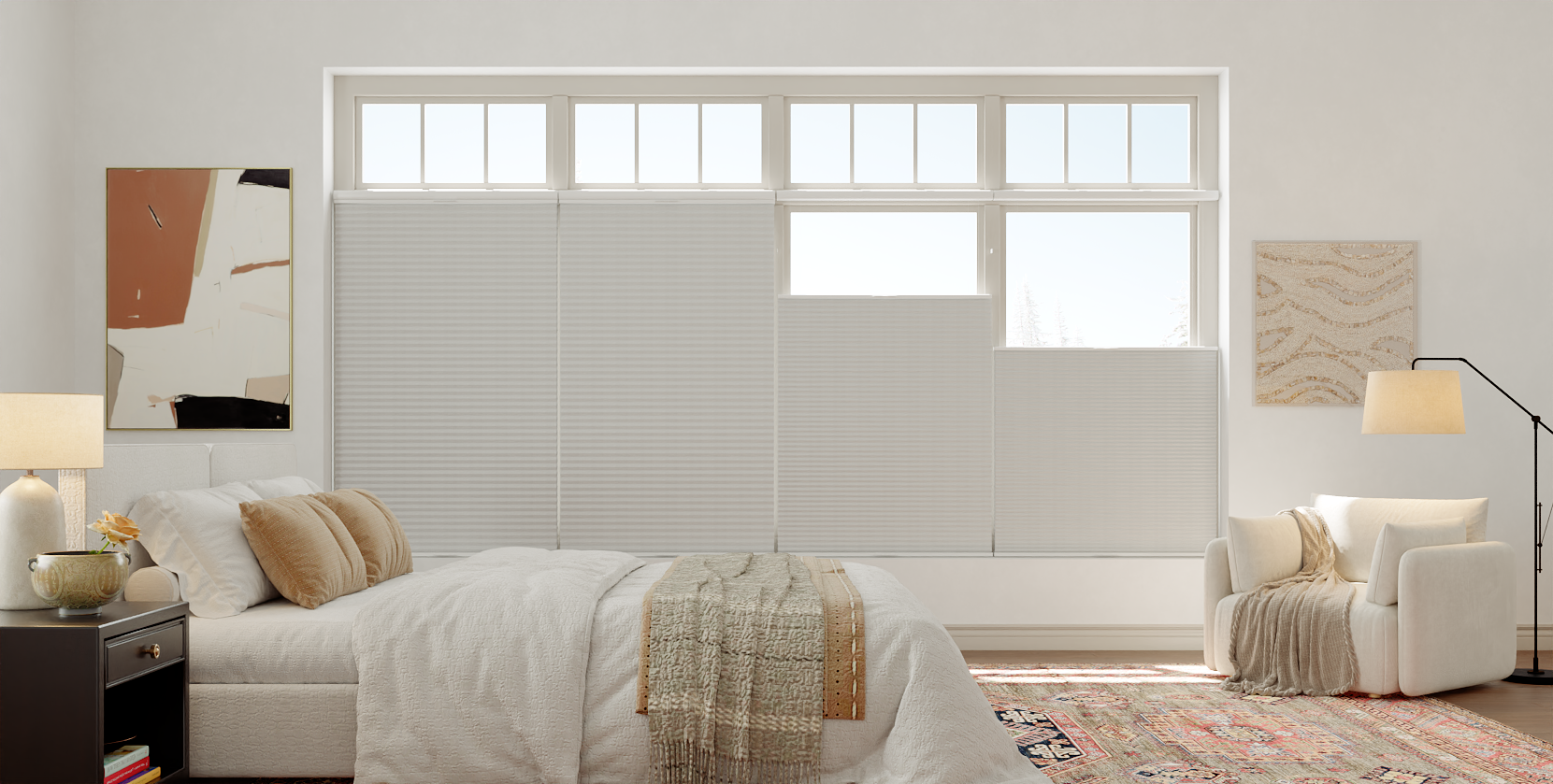


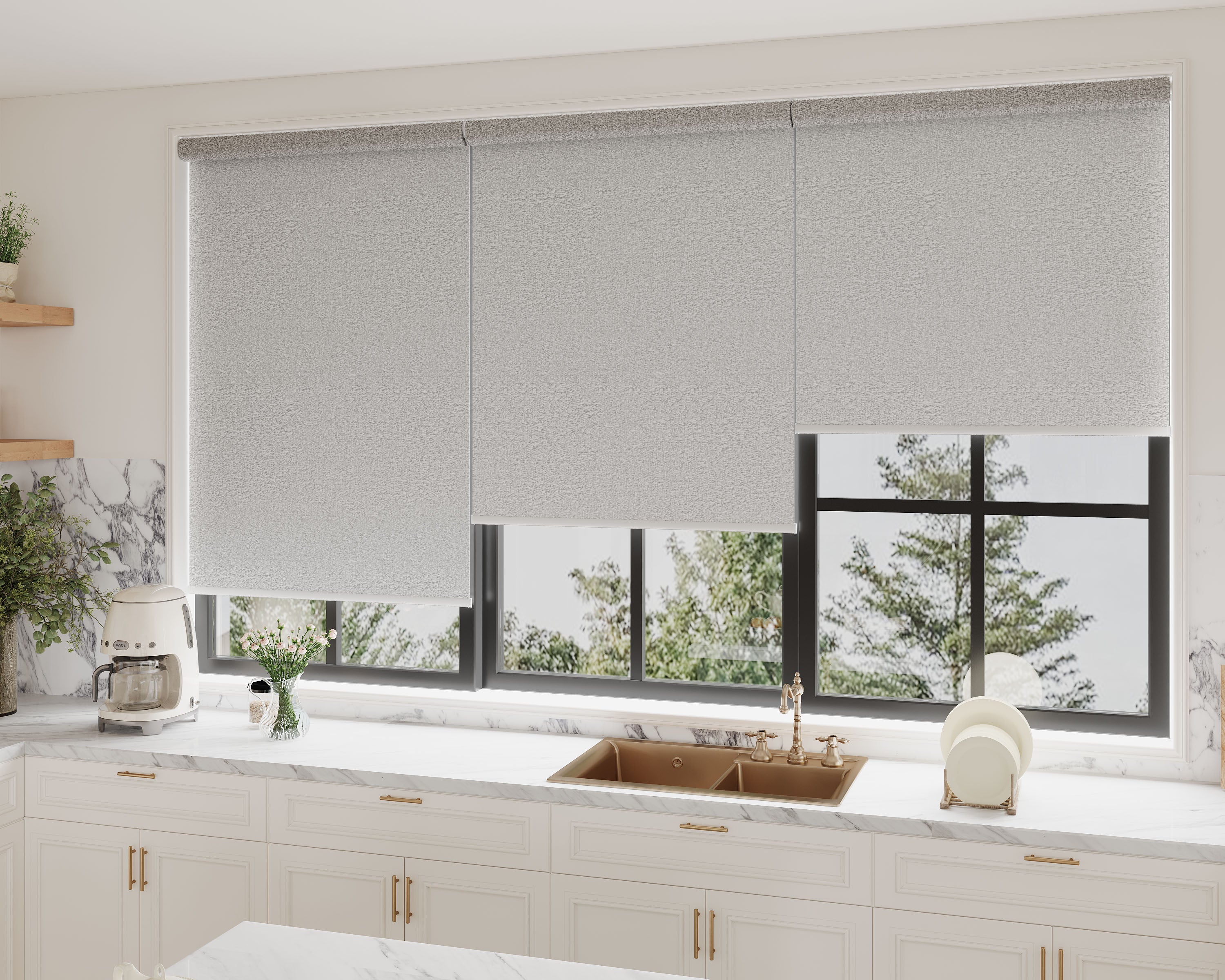

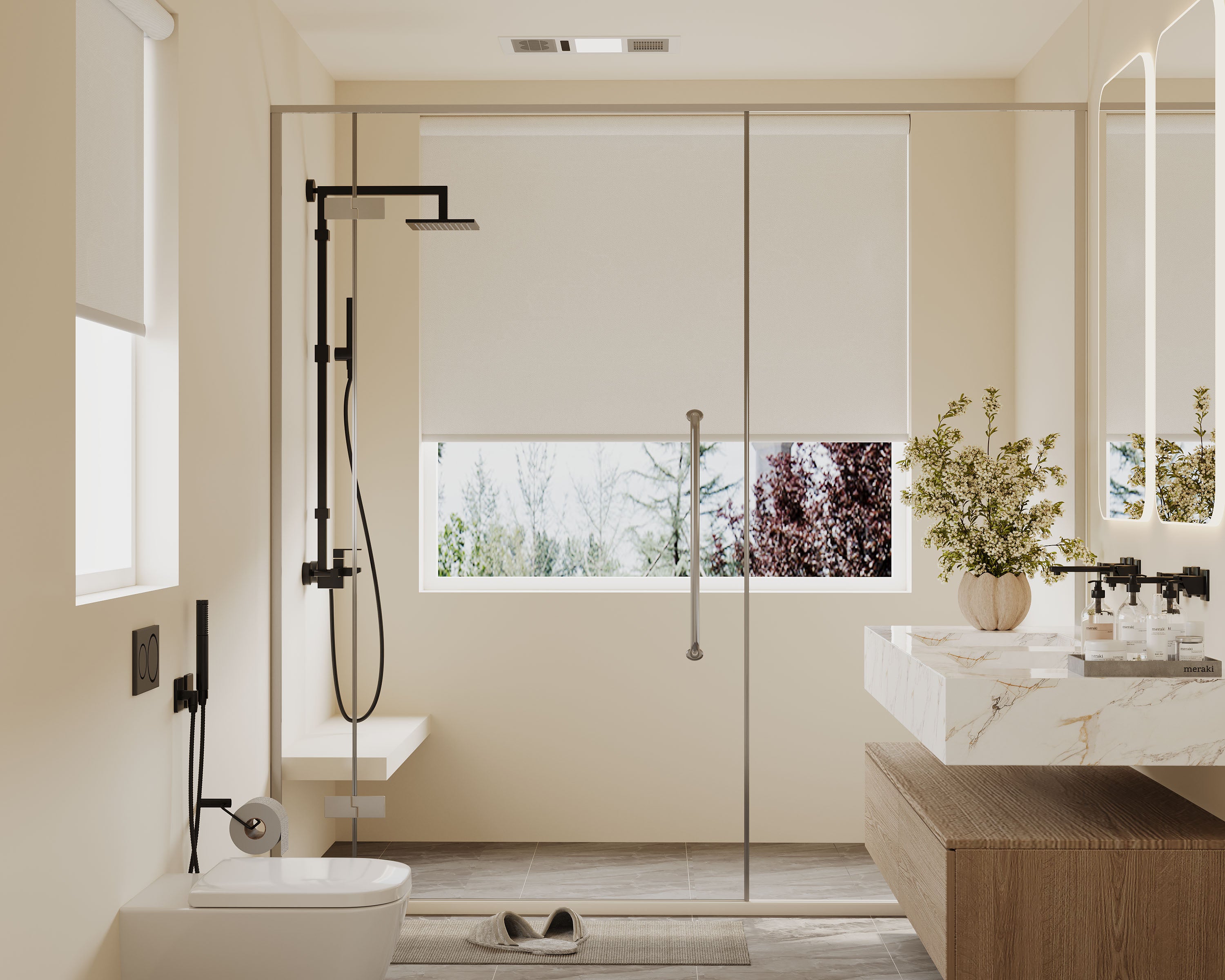


Blackout roller, cellular and Roman shades are useful alternatives to blackout curtains when you want less fabric beside the window. The right choice depends on the appearance you prefer, how you want to operate the covering and how much light can enter around the installed shade.
Start with the problem you want to solve. Perhaps curtain panels crowd a small room, overlap furniture or feel heavier than the rest of your decor. Or perhaps you like the curtains but need better light control behind them. Those situations call for different choices.
Use the blackout curtain alternatives collection to compare current shade models, then narrow the selection with the checks below.
Compare the main alternatives
| Option | Appearance at the window | Useful reason to consider it | Check before ordering |
|---|---|---|---|
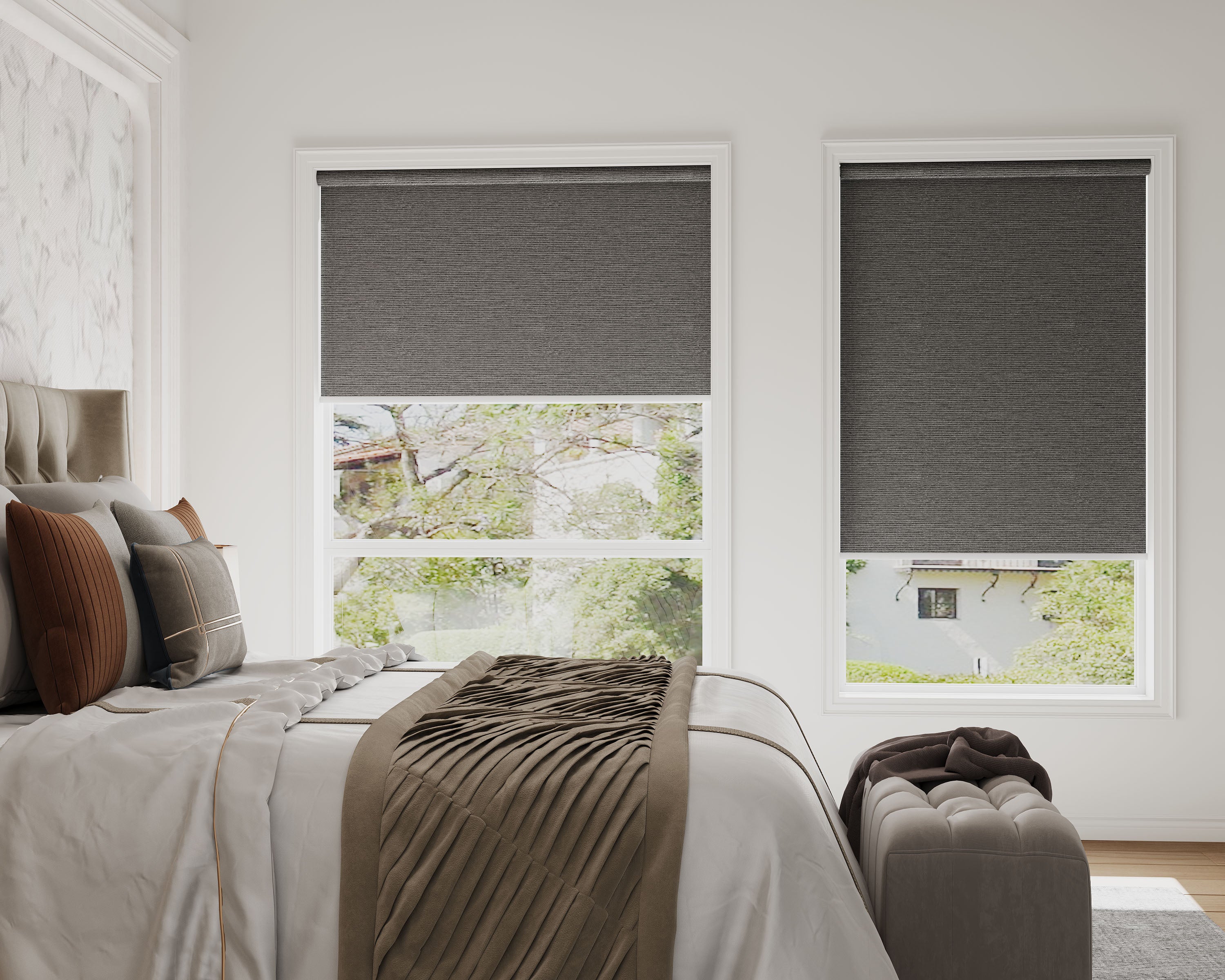
| Blackout roller shade | A flat panel that rolls upward | A simple fabric surface and minimal visual detail | Fabric width, edge coverage and top treatment |
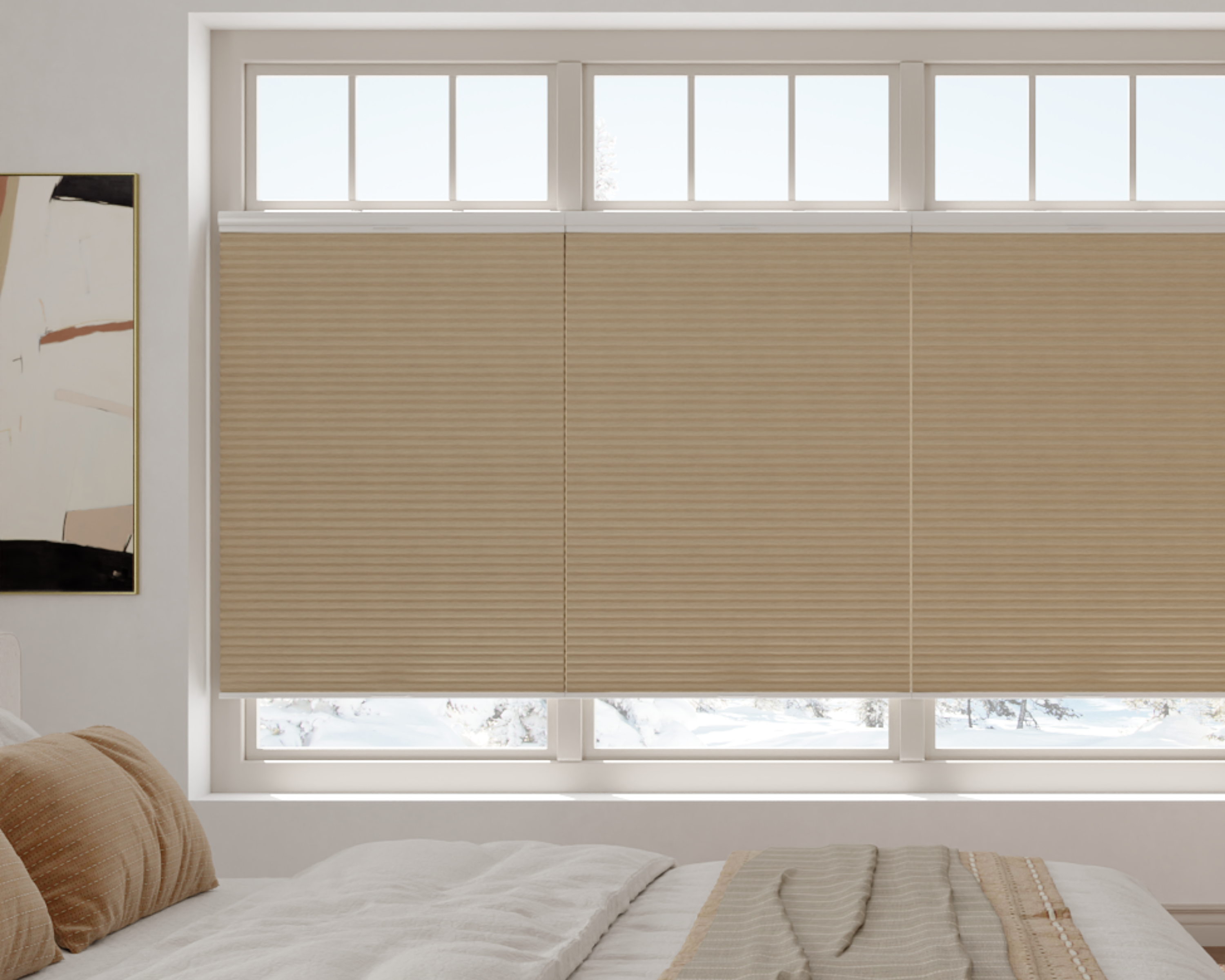
| Blackout cellular shade | Pleated honeycomb fabric | A structured pleated appearance with the chosen light-control fabric | Cell size, headrail depth and raised stack |
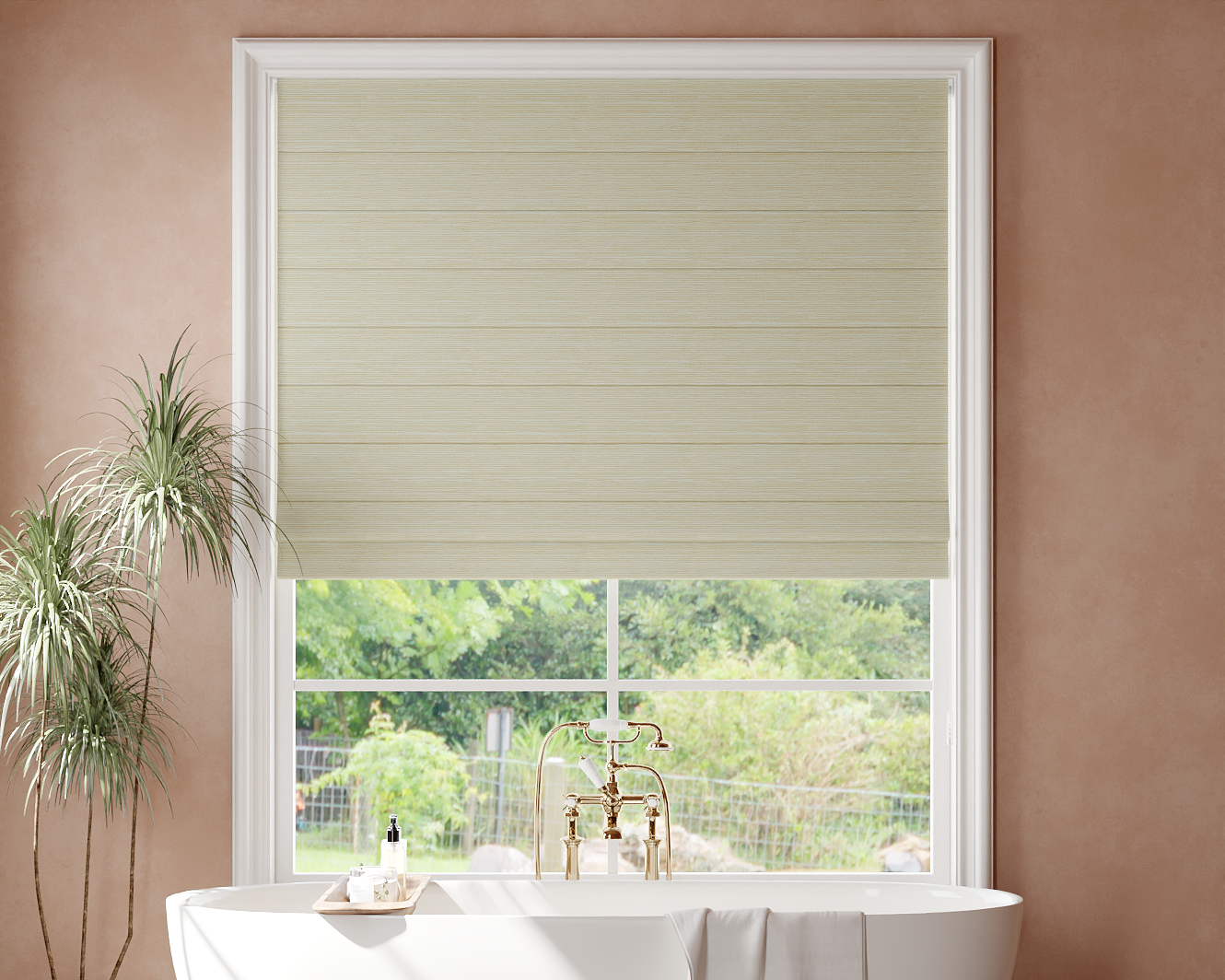
| Blackout Roman shade | Fabric arranged into folds | A softer textile appearance without full curtain panels | Raised folds, projection and window clearance |
| No-drill blackout cellular shade | Pleated fabric with an inside tension-fit headrail | An eligible window where drilling is unsuitable | Exact frame shape, usable depth and model limits |
| Removable blackout panel | A separate covering fitted as needed | A temporary room or travel arrangement | Attachment method, window compatibility and everyday access |
No one format is automatically best for every bedroom. Compare the complete installation rather than choosing from the fabric label alone.
Choose a roller shade for a simple fabric panel
A roller shade is worth considering when the curtain's bulk is the main concern. When lowered, it presents one fabric plane; when raised, the material rolls around the tube. A compatible cassette or valance can change how that upper assembly looks.
SenseBlinds' blackout roller shade combines a woven polyester face with a blackout coating on the reverse. The face gives you the room-side color and texture. The backing addresses light passing through the material.
That construction does not close every route around the window. Ask what finished fabric width results from the ordered width and which gaps remain with the proposed mount. The roller blackout guide explains this fabric-versus-fit distinction in more detail.
Choose operation after considering reach. A supported manual lift may suit an easily reached window; a selected motorized configuration can help where reaching the shade is inconvenient. Confirm the supplied controls and power arrangement rather than assuming a motor includes every smart-home function.
Choose cellular shades for a pleated appearance
Cellular shades use a honeycomb construction rather than a flat rolled panel. Consider them when you prefer the visible rhythm of pleats and want to compare cellular light-control options.
The current cordless blackout cellular shade has 3/8-inch and 5/8-inch single-cell choices. These are construction options, not universal measures of how dark the installed room will become. Compare their actual mounting depth, raised position and fabric coverage.
Manual cordless operation raises and lowers the shade by hand. Check that you can comfortably reach it at the window. If you need powered operation, compare the separate motorized model and its current specifications.
For a window where drilling is unsuitable, the no-drill cordless cellular model offers a different fitting approach. It is an inside-mount tension-fit system, currently requiring more than 2 inches of usable window depth. Verify the frame and complete fit requirements before choosing its blackout option.
Choose Roman shades when you want visible fabric folds
Roman shades can suit a room where curtains provide welcome softness but their side panels take too much space. The fabric folds upward, so the raised appearance differs from a roller or cellular shade.
The current blackout Roman shade uses structured folds. Its product information states that one fabric fold remains visible at the top when fully raised. Consider that remaining fabric when judging daylight, the outside view and clearance near an opening sash.
Compare a physical fabric sample with your wall and furniture, then check the complete raised and lowered dimensions. A pleasing texture cannot establish whether the hardware fits the window. For a deeper family comparison, use the existing Roman-versus-roller guidance linked from the product and collection pages.
Include temporary coverings in the decision
A removable blackout panel may be more appropriate than a custom shade for occasional travel or a room used temporarily. Compare the actual panel's dimensions, attachment instructions and compatibility with the window surface. Its storage and daily removal may matter as much as its light-blocking material.
A fixed opaque film is a different commitment from a shade you can raise for daylight. An ordinary privacy or solar-control film should not be assumed to provide blackout. If you are considering film, review the glazing and film manufacturer's requirements for the exact combination.
If you already like your curtains, a shade behind them is another possible layout. Confirm the space for both coverings to move independently. Adding a second layer without checking projection can create an awkward window even if both fabrics look right.
Plan the light paths before choosing the mount
Look at the room when unwanted light is strongest. Is it passing through the covering, around its sides, above the headrail or through another opening? The answer helps separate a fabric choice from a coverage problem.
An inside mount keeps the shade within the opening but leaves installation and operating clearances. An outside mount can provide additional coverage where there is suitable mounting space. Use the selected product's instructions to establish the required dimensions; avoid a single overlap allowance for every model.
The inside-versus-outside mount guide and light-gap guide help organize these checks. A cassette conceals the upper mechanism; it should not be assumed to create a sealed perimeter.
Build a short, useful order brief
Record the opening, preferred appearance, required darkness, mount and method of operation. Add any handle, door, furniture or charging-access constraints. Then compare two or three complete shade configurations using the same room brief.
For example, a compact bedroom might compare a blackout roller's flat appearance with a cellular shade's pleats. A room where folds are part of the decor might favor a Roman option. Each still needs its own coverage and fit assessment.
Browse the current blackout shade alternatives with that record in hand. The useful result is a covering you can operate comfortably, with a fabric and installation suited to the light you want to control.
