
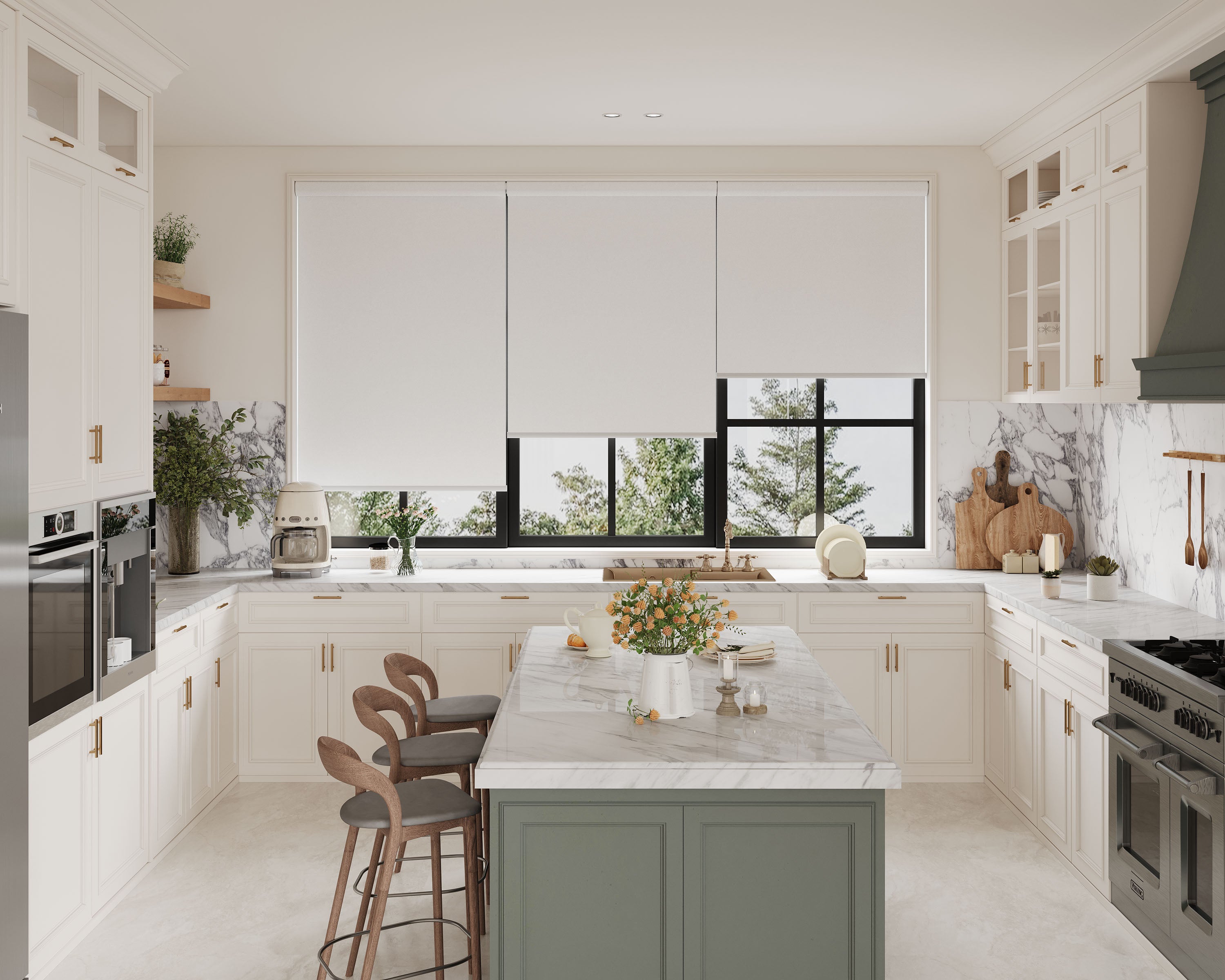
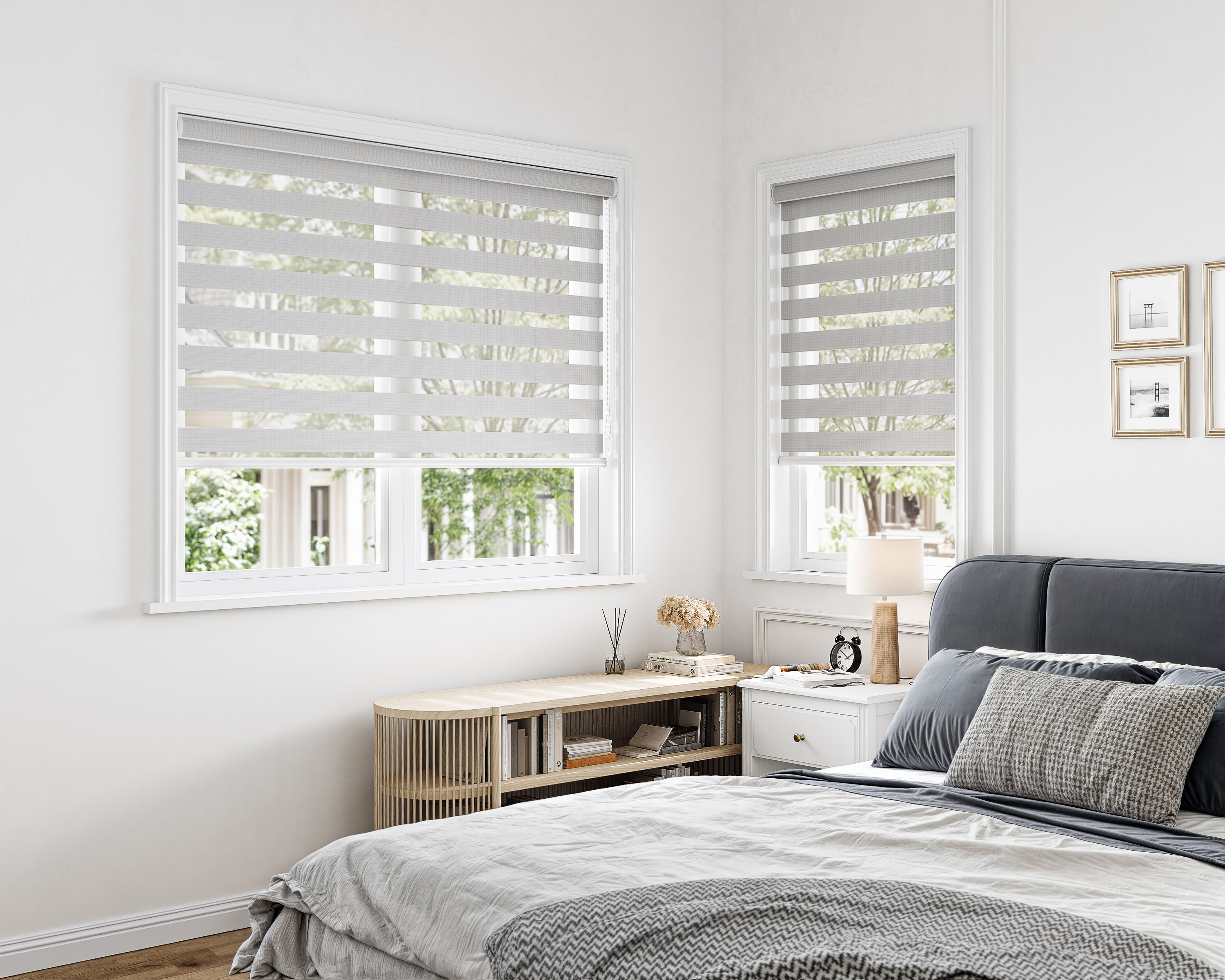
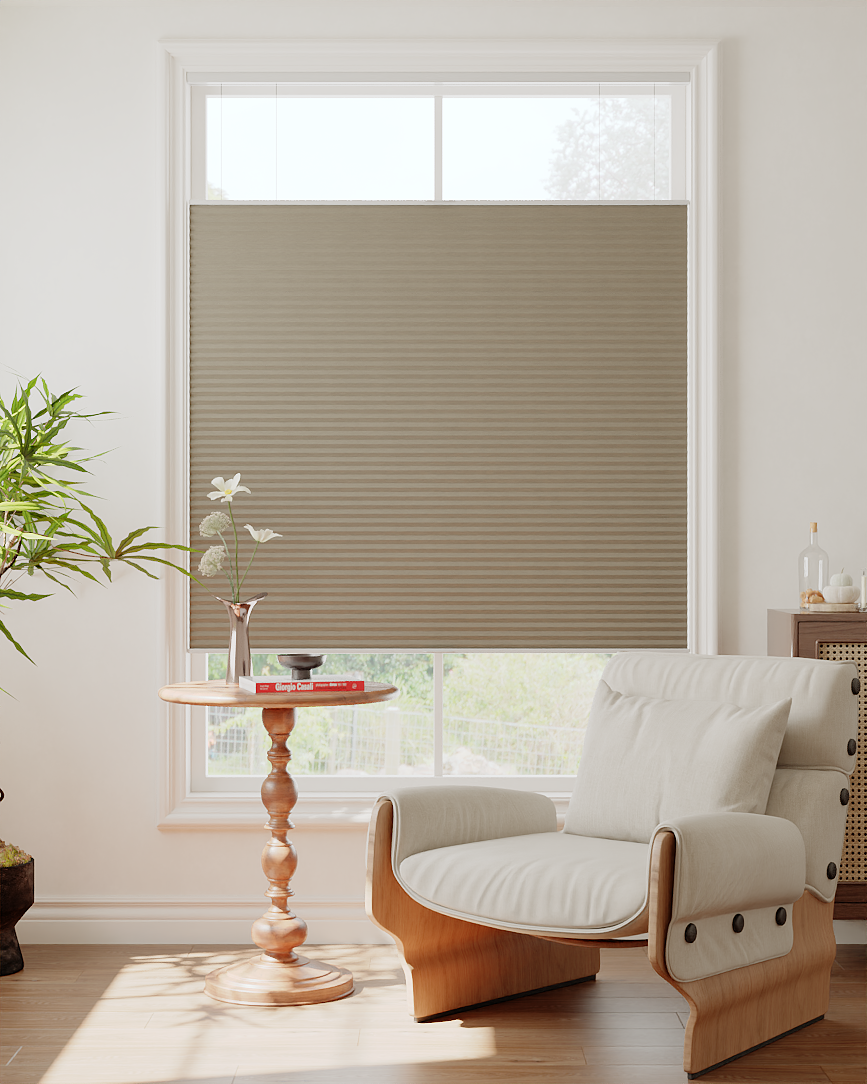
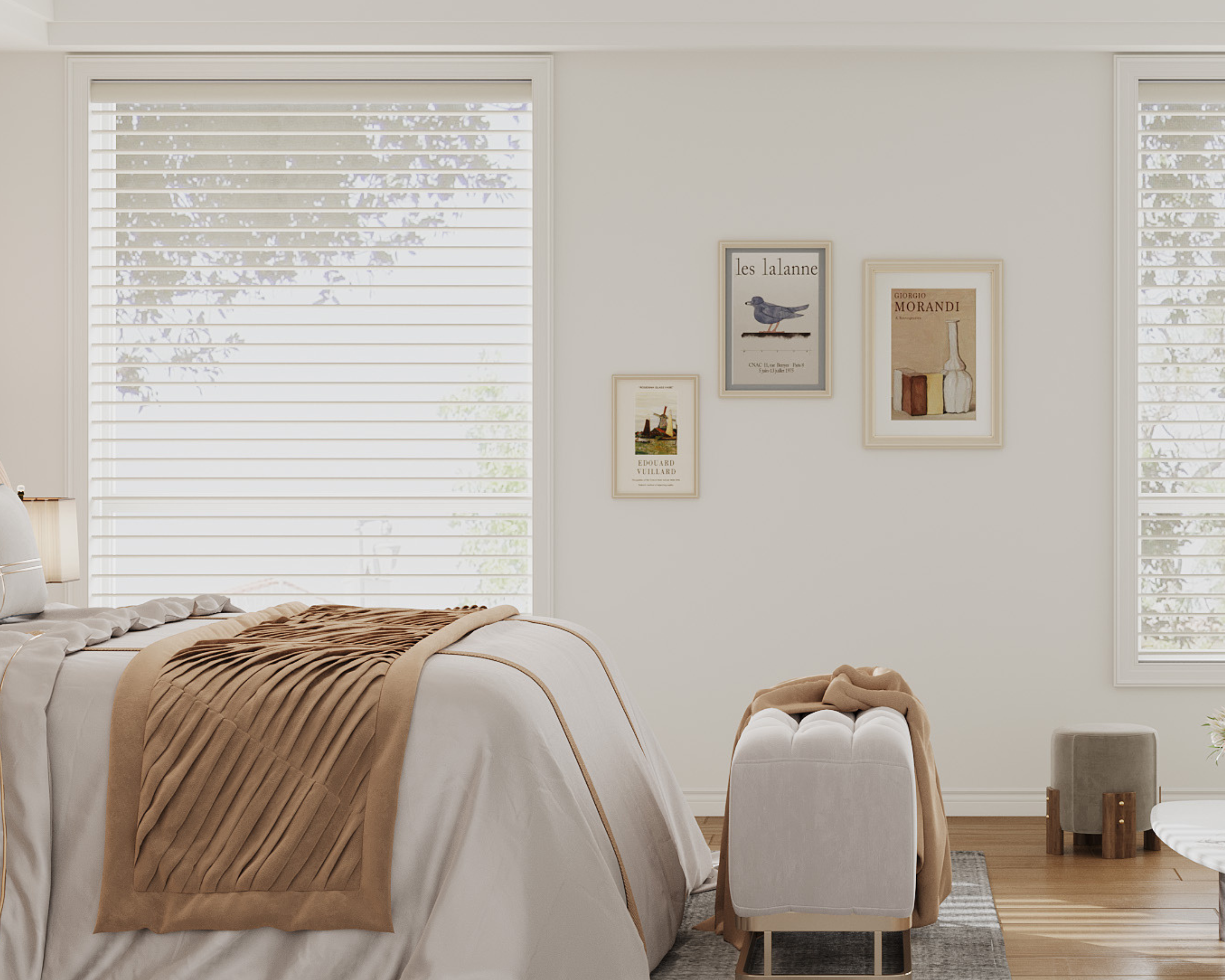
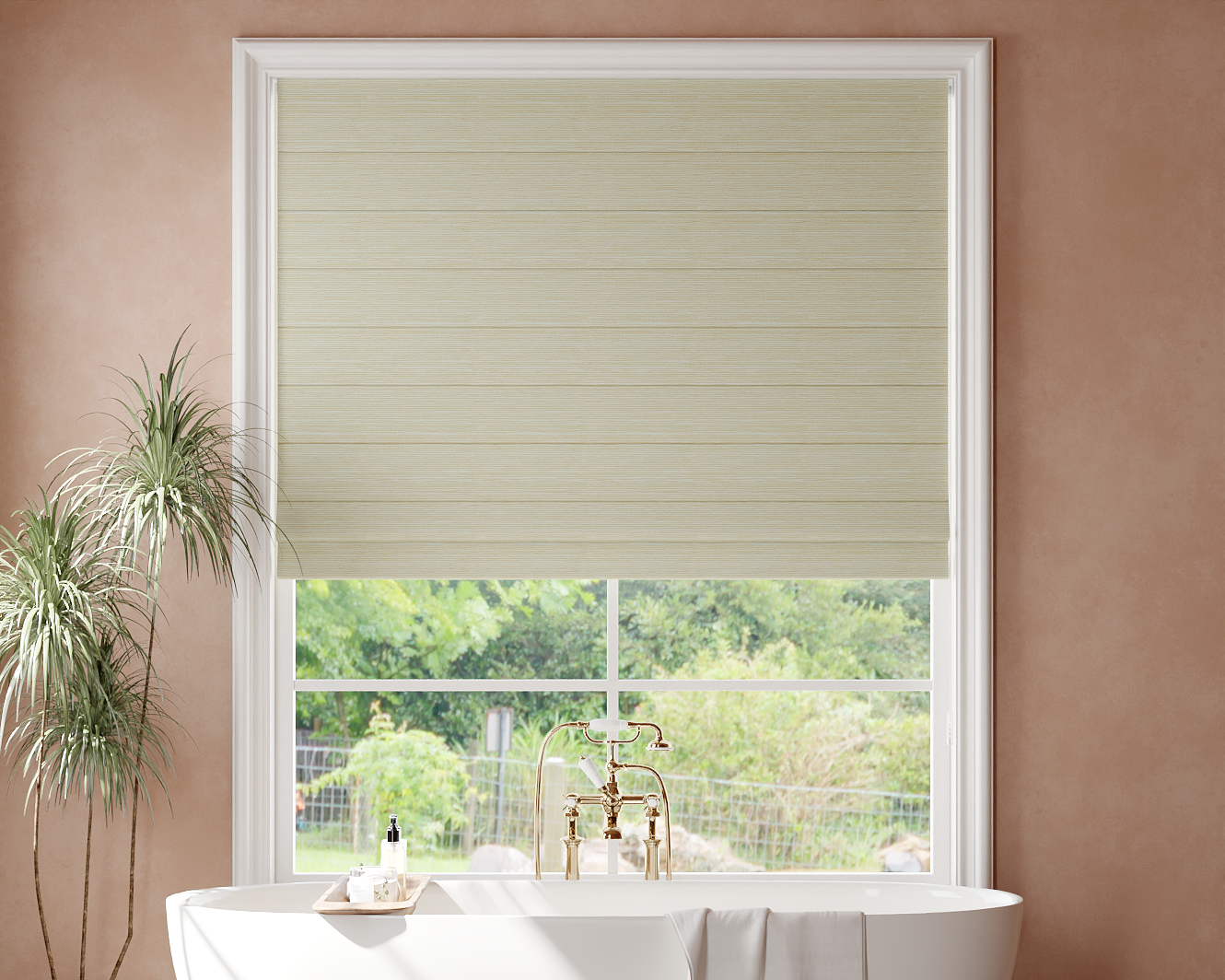
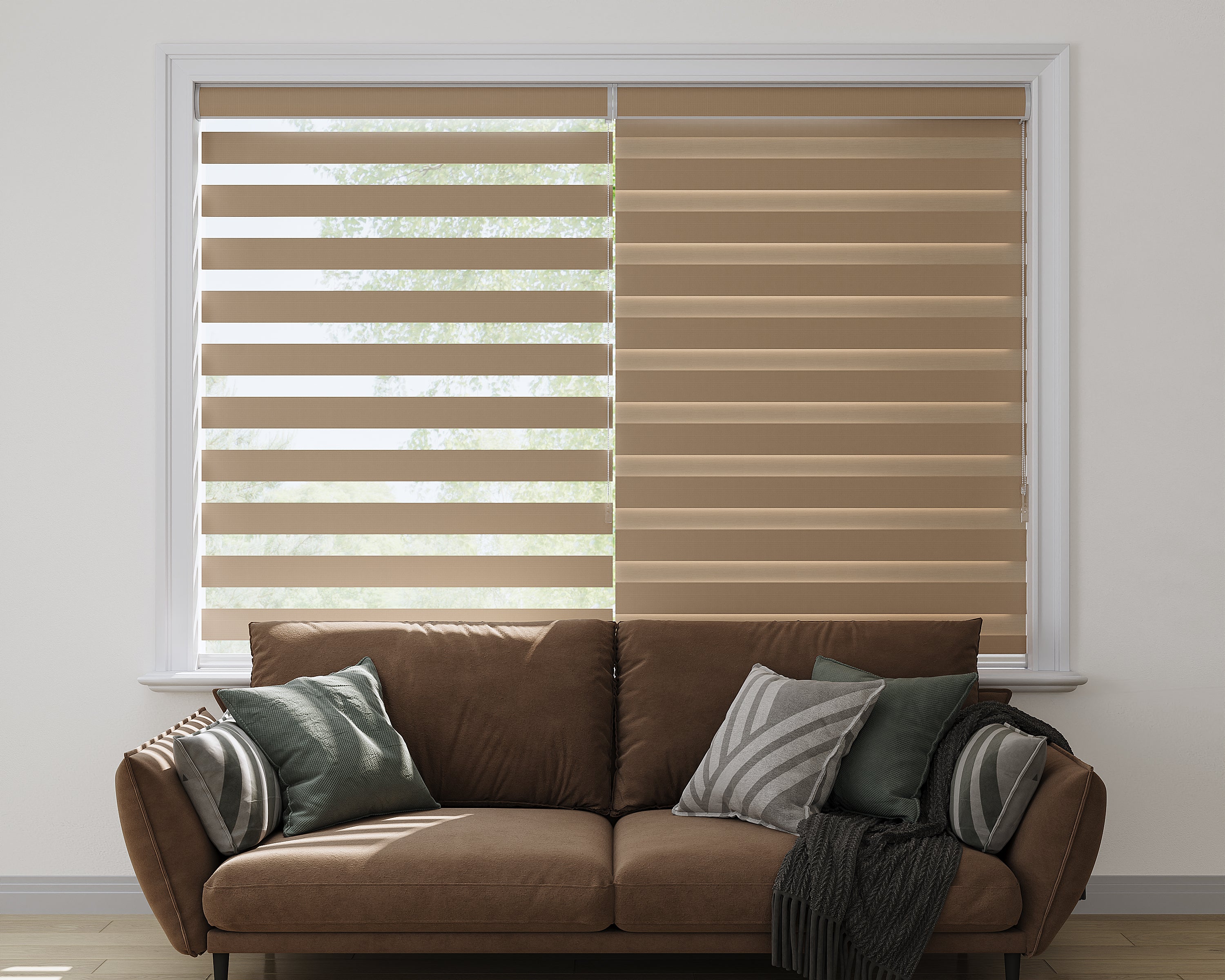
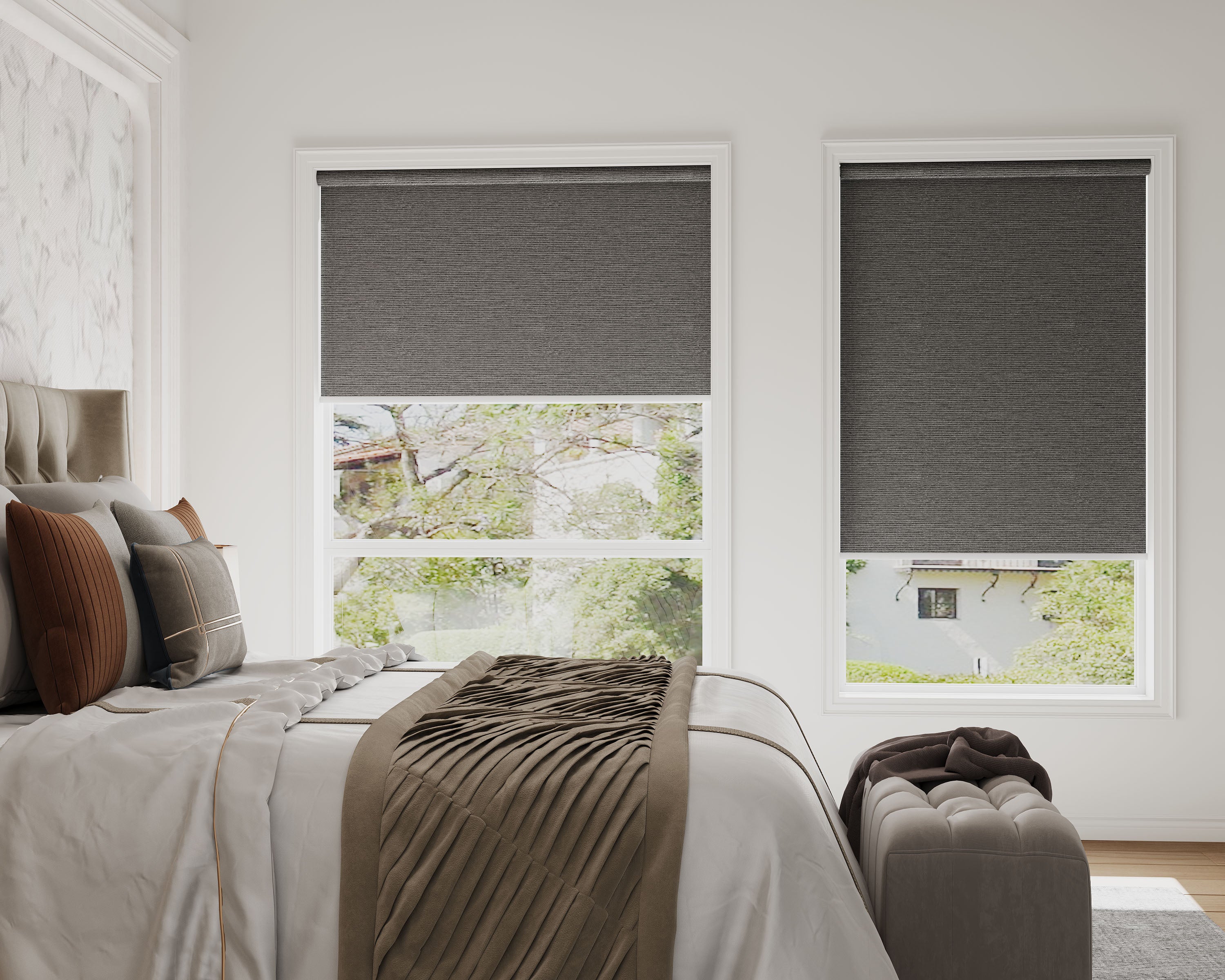
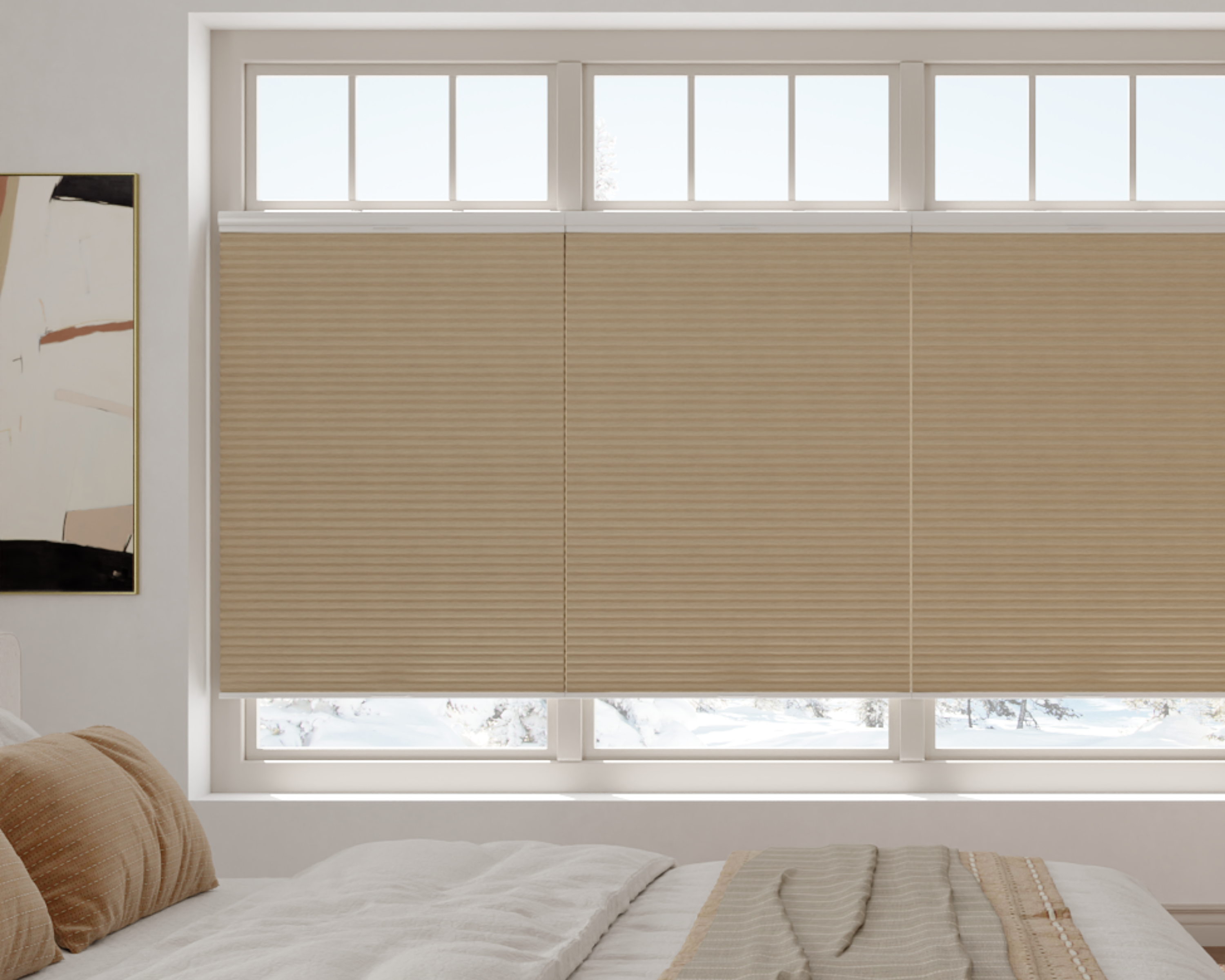
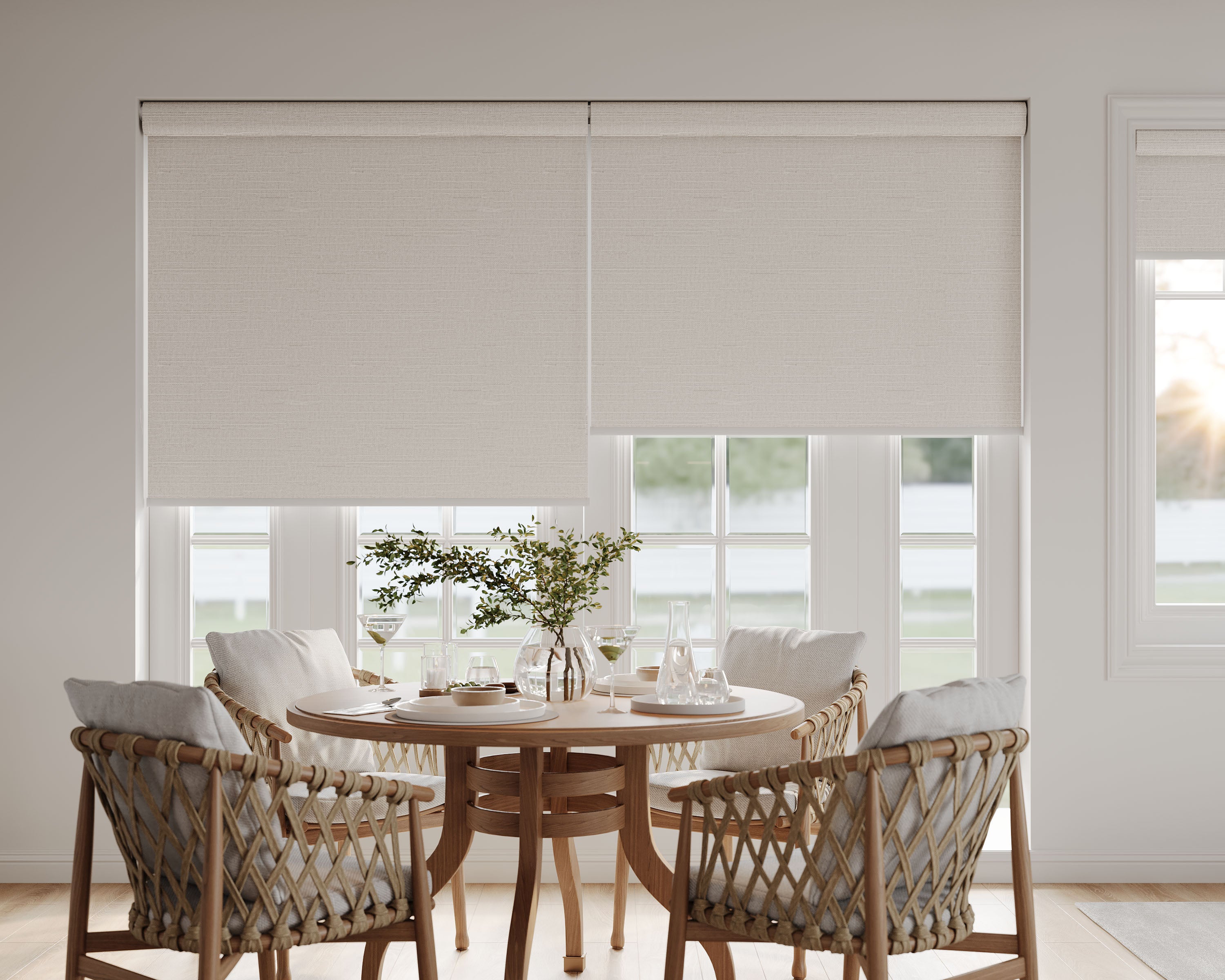


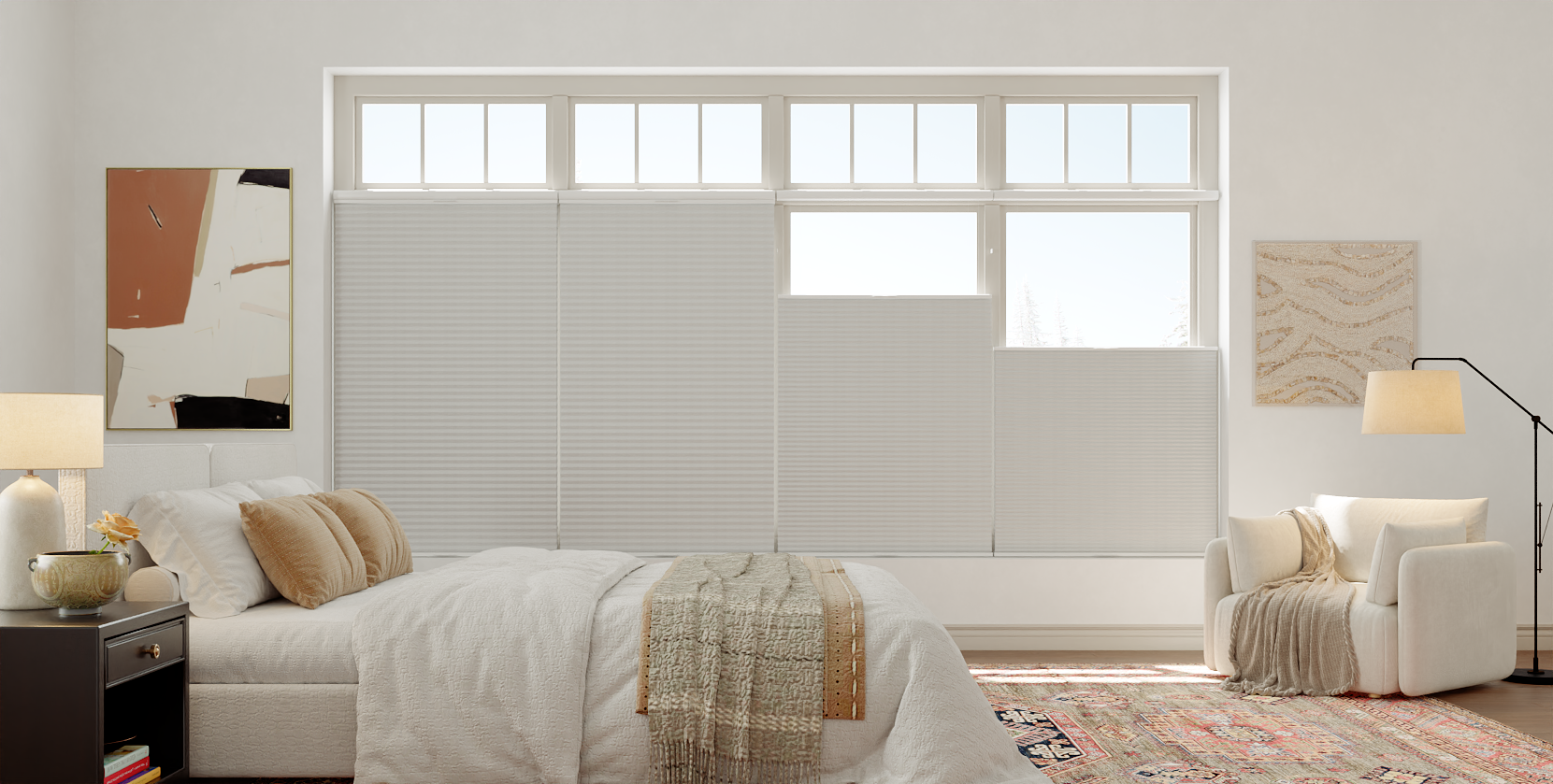


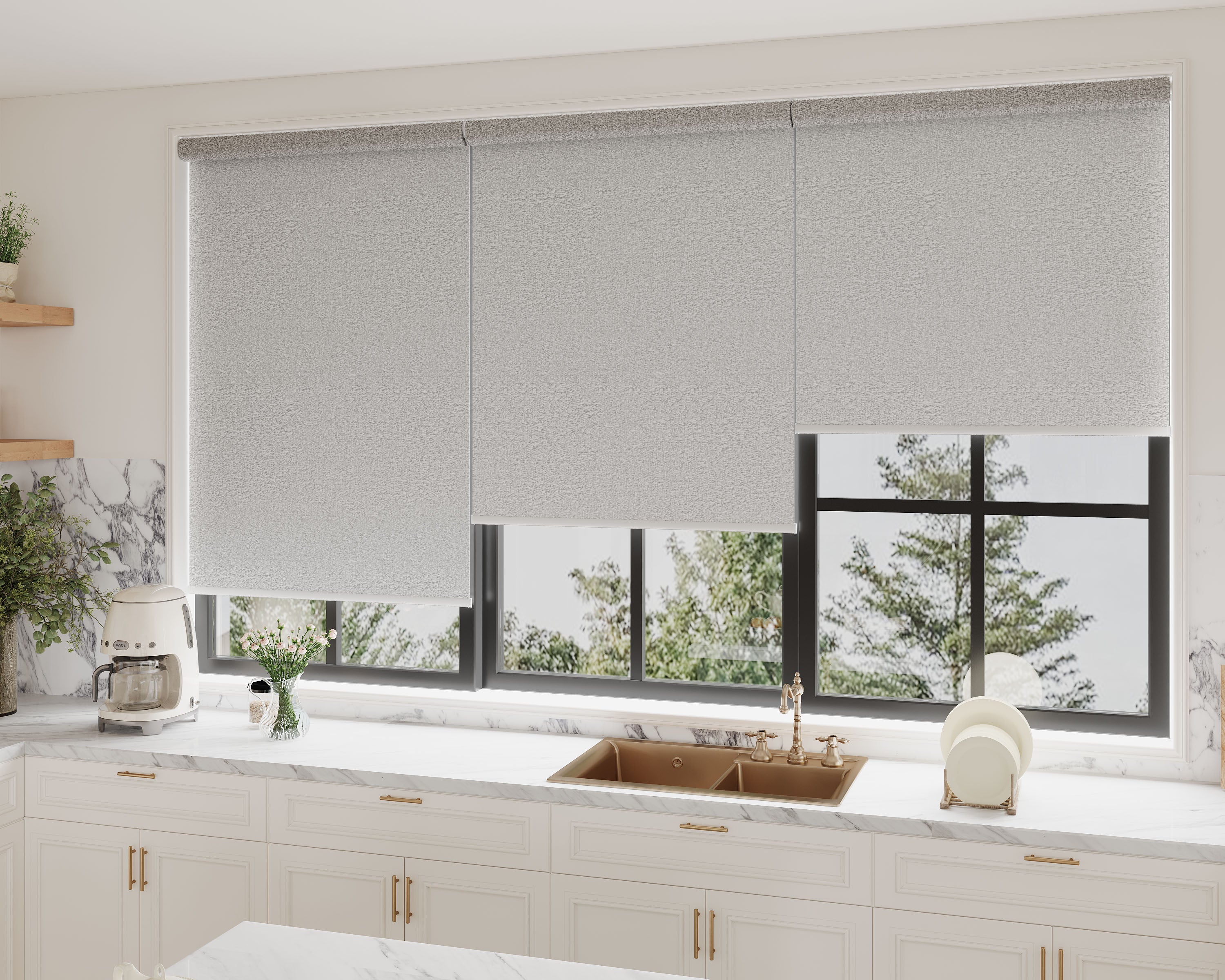

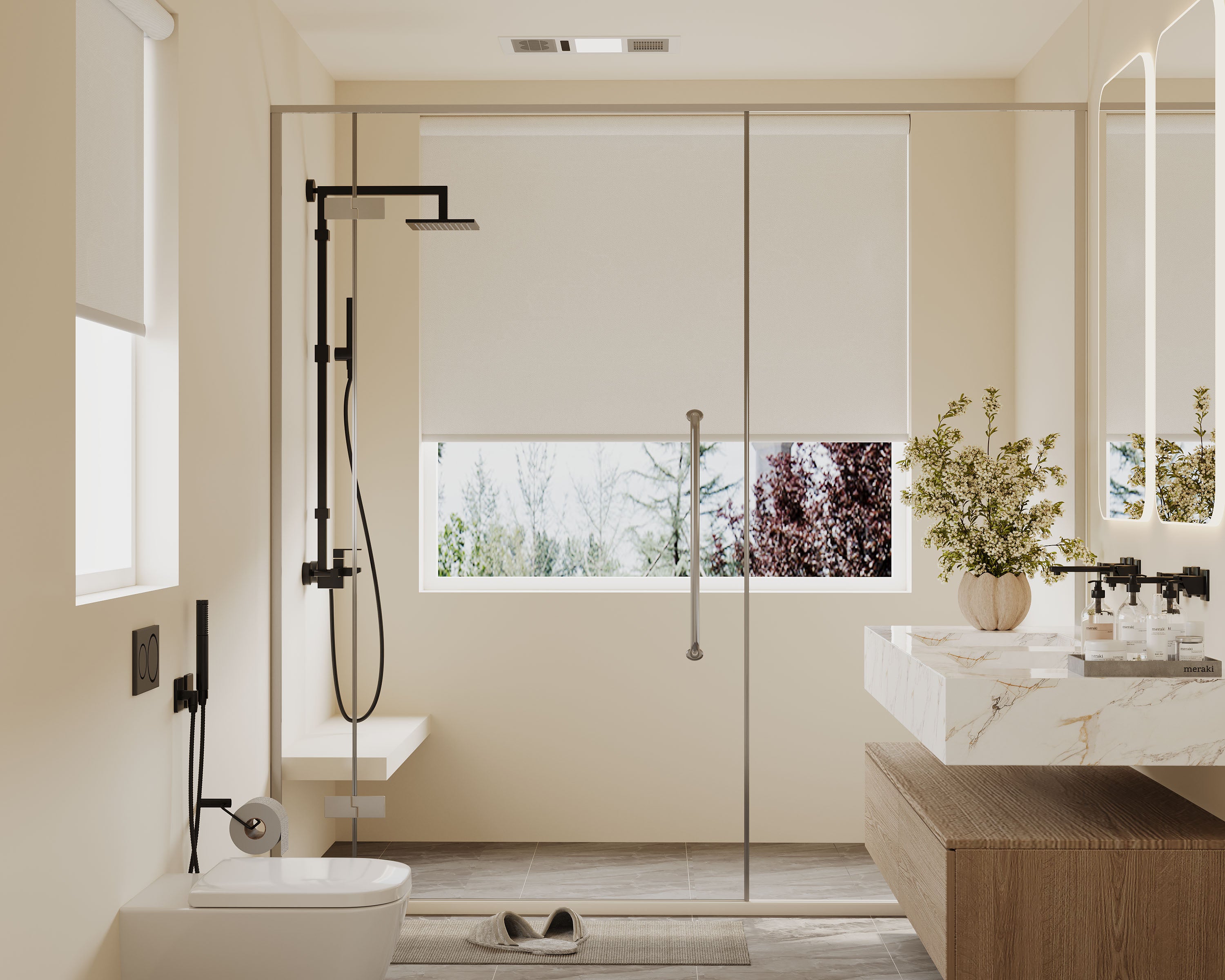


Natural-looking texture can soften a modern room without changing its clean lines. Separate the appearance you want from the fabric's actual composition: linen-look, wool-look, silk-like and woodgrain finishes do not necessarily contain those natural materials.
Start with custom roller shades for a flat textured surface, or zebra shades for a banded appearance. Choose the room's light and privacy requirements before selecting a finish.
Use texture to connect the window with the room
Modern interiors often combine smooth walls, glass and simple furniture. A visible weave or a warm neutral can introduce contrast without adding a strong pattern. Compare the scale of the texture with the room: a subtle weave can read differently at the window than in a close-up photograph.
Repeat one existing finish rather than matching everything. A warm beige shade can relate to timber furniture; a gray textured fabric can sit with stone or metal; a dark accent can echo a frame or cabinet handle. These are palette choices, not promises of thermal or acoustic performance.
Natural fiber and natural-looking finish are different choices
| Description | What it can help you choose | What still needs checking |
|---|---|---|
| Linen or a linen blend | Fiber content and a particular textile appearance | Actual blend, lining, care and opacity. |
| Linen-look or textured weave | The appearance of a weave | Whether the fabric contains linen at all. |
| Wool/silk texture | A visual or tactile effect | Actual composition; texture alone does not establish natural fiber. |
| Woodgrain print or texture | A wood-inspired pattern | It is not necessarily wood, bamboo or a woven-wood covering. |
If a natural material is essential to your project, request the actual composition for the selected fabric. If appearance is the priority, compare the samples rather than paying for a fiber name that does not solve a practical need.
Build a small sample palette
Compare a warm neutral, a cooler neutral and one accent at the actual window. For example, the ULURU1103 sample, ULURU1105 sample and ULURU1910 sample give you specific listings to investigate rather than relying only on a screen color.
For a wood-inspired direction, compare the BL5005 sample listing. Confirm the current sample identity, terms and composition on the listing. A fabric swatch helps assess color and feel; it is not a full shade, a fit test or proof of complete-assembly performance.
Place samples beside paint, trim, cabinets and upholstery. Look at them in daylight and under the room's evening lighting. A small piece can appear more or less prominent when repeated across an entire window, so consider the scale before ordering.
Pair texture with the right light control
A light-filtering textured fabric can keep a room bright, but privacy depends on weave and lighting. Test the material after dark with the lights on if the window faces a neighbor or public area. A blackout option changes light transmission, while edge gaps still depend on the mounting and dimensions.
Compare light-filtering roller shades for a continuous fabric surface. For adjustable bands, investigate light-filtering zebra shades or room-darkening zebra shades, matching the actual fabric and privacy needs rather than the texture label alone.
Consider care and placement before color
A textured finish for a dry living room may need a different care method from a covering near cooking splashes or bathroom moisture. Read the exact cleaning instructions and verify whether the selected fabric is intended for the location.
Natural or synthetic composition does not establish a universal health benefit. If certification matters, request the exact certificate and scope for the fabric. Low-emissions testing and restricted-substance testing answer different questions; neither proves a texture is natural or suitable for water exposure.
Current availability: bamboo is retired
SenseBlinds' bamboo range is retired. The educational distinction between bamboo, woodgrain and textured fabric remains useful, but it should not be read as a purchase route to an available bamboo shade.
For a current alternative with a continuous textured surface, compare the active light-filtering roller fabrics. The product describes its Shantung linen-inspired look and other woven series as polyester; a natural-looking texture does not make them bamboo or linen fiber.
If a folding shade suits the room better, explore the room-darkening Roman product and confirm the exact fabric composition, opacity and care requirements. Review current samples in the room and keep their series/color codes with the chosen active product. Use the sample listings' actual terms without assuming a particular price or availability.
A simple ordering sequence
First establish privacy, opacity and the model's fit. Next choose the fabric composition and care requirements you can live with. Then compare the short sample palette in the room and confirm the fabric works with the desired lift and dimensions.
Return to the roller shade collection once those decisions are clear. A restrained, coordinated texture can add the warmth you want without requiring every material in the room to match.
Frequently asked questions
Does a woodgrain shade contain wood?
Not necessarily. Woodgrain may describe a print or surface texture. Check the actual composition and distinguish it from a woven-wood product.
Are natural fibers always better?
The useful choice depends on the appearance, care, exposure and performance you need. Judge the finished fabric rather than assuming a natural or synthetic label establishes quality.
Can a sample prove nighttime privacy?
It can help you assess the fabric under relevant lighting, but installed coverage and edge sightlines also matter. Confirm the complete layout before treating the window as private.
